
Polished marble tile: A guide to choosing, styling, and caring for it
Key Takeaways
Polished marble tile brings natural veining and a bright, reflective finish to floors and walls. The best choice balances the look you want with the room’s use, installation needs, and care routine.
- Polishing gives marble a smooth, glossy surface that reflects light.
- Natural color and veining vary from tile to tile, so previewing the material helps with layout decisions.
- Polished marble can suit floors, walls, and backsplashes, but wet-floor traction deserves careful thought.
- Compatible setting materials, sealing, and gentle cleaning help protect the stone.
- Check current options, confirm quantities, and allow extra material for cuts and natural variation.
What polished marble tile is and how it looks
Polished marble tile pairs the natural pattern of stone with a smooth, light-catching surface. Its appearance can feel formal and luminous, yet the veining keeps it from looking uniform or manufactured. The right setting depends on how much shine you want and how the room is used. A sample can help you see the stone’s color and reflections in your own lighting.

How polishing creates a glossy, reflective surface
Polishing smooths the stone’s surface until it has a glossy finish that reflects light. That reflection can make a room feel brighter, particularly where daylight reaches the floor or wall. It also makes the marble’s natural pattern more visually prominent. The effect is crisp and elegant, though it will reveal dust, water spots, and surface wear more readily than a matte finish.
A polished surface is a finish choice, not a guarantee that every tile will look identical. Marble’s natural color and veining remain part of the design, and the light in a room can change how those details read through the day. If you are deciding between shine and a quieter appearance, compare polished with honed and polished marble finishes in a setting similar to your own.
How natural veining makes each tile distinctive
Marble forms with natural variations, so veins, tone, and texture shift between pieces. This variation gives a finished floor or wall depth, but it also means a small sample may not show the full range of a batch. A balanced layout usually comes from looking at several tiles together before installation, not choosing a single favorite piece and expecting every tile to match it.
For a calm, continuous impression, distribute stronger veins rather than clustering them in one area. A homeowner choosing a light entry floor, for example, might lay several tiles out first to see how the gray lines travel across the space. That quick visual check helps make the stone’s natural variation feel intentional.
How polished marble compares with honed and tumbled finishes
The finish changes the way marble looks and feels, even when the stone and color are the same. Polished marble is smooth and reflective; honed marble has a matte appearance; tumbled marble has a more aged, softened look. Comparing finish samples side by side can clarify which one suits the room and the overall design.
A polished finish can make a formal room or accent wall feel especially bright. Honed stone may feel more understated, while a tumbled finish can bring a relaxed, timeworn character. Your choice should account for both the look and how much ongoing attention you are comfortable giving the surface.
Where polished marble tile works best
Polished marble can bring a classic touch to several interior surfaces, from entry floors to backsplashes and feature walls. The smooth finish catches available light and puts natural veining in view. The best application depends on the room’s traffic, moisture, and footing needs. Consider the way people move through the space before choosing polished stone for a floor.
Creating an elegant look on floors and entryways
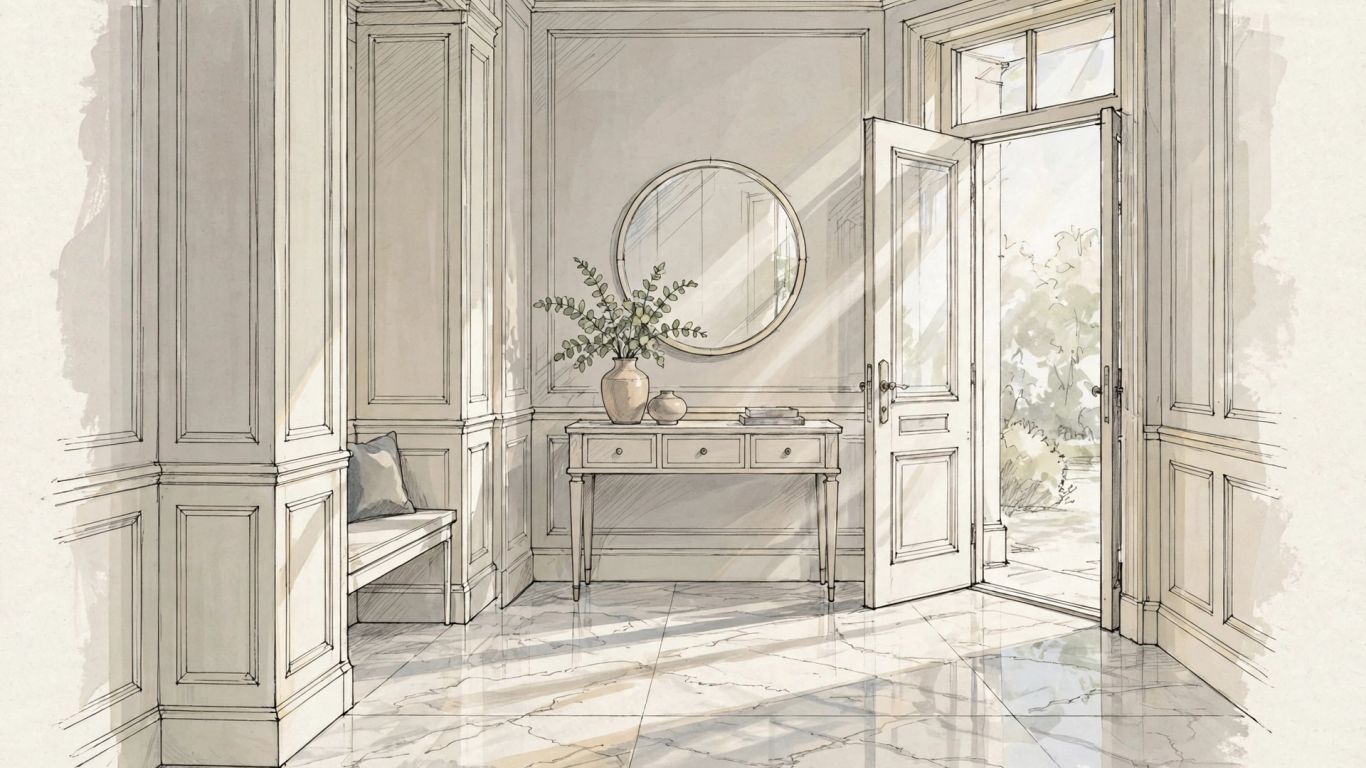
An entryway gives marble room to make an immediate impression. A polished floor can connect the foyer to nearby rooms, while a light stone can brighten a narrow hall. For a larger area, natural variation adds movement without relying on a busy pattern. Before deciding, think about how the floor will meet adjoining materials and where cuts will fall at doorways and edges.
Polished marble is also used in residential and commercial interiors, including areas such as kitchens, bathrooms, and entryways. In a high-traffic location, the stone’s maintenance and surface sensitivity should be weighed alongside its visual appeal. A planned layout and sensible entry mat can help limit grit tracked across the floor.
Adding a reflective finish to walls and backsplashes
Walls and backsplashes are a natural fit for polished marble when you want its shine without making it the main walking surface. A backsplash can bring veining into view at eye level, and a feature wall can create a focal point with relatively few materials. Smaller formats can add rhythm, while larger tiles make the stone’s natural pattern easier to read across a broader area.
For a simple kitchen scheme, pair a restrained cabinet color with marble that has a complementary background tone. The result can feel polished without competing with the rest of the room. Surfaces Galore offers marble tile and mosaic options for interior surfaces, including backsplashes and walls.
Using marble in bathrooms while accounting for wet-floor safety
Marble can give a bathroom a bright, cohesive look on walls, floors, and shower surrounds. But a glossy finish on a wet walking surface calls for particular attention to slip resistance. Ask about the specific tile and finish, and consider whether smaller mosaics or a different finish may be better suited to the shower floor. Do not assume that every polished tile has the same traction when wet.
A practical design might use polished marble on a vanity wall or bathroom surround, then select an appropriate floor surface based on the room’s conditions. Even in a beautiful bathroom, safe footing comes first. Sealing and routine care also matter because natural stone is porous and can be affected by stains or moisture.
Choosing a color, stone, and tile style
Color and format shape the mood of a marble installation as much as the finish does. White and pale gray stones can keep a room feeling open, while beige and darker options bring warmth or contrast. Natural veining varies, so view several pieces together when possible. The Marble Tiles collection at Surfaces Galore includes white, beige, and other marble options, as well as polished and honed finishes.
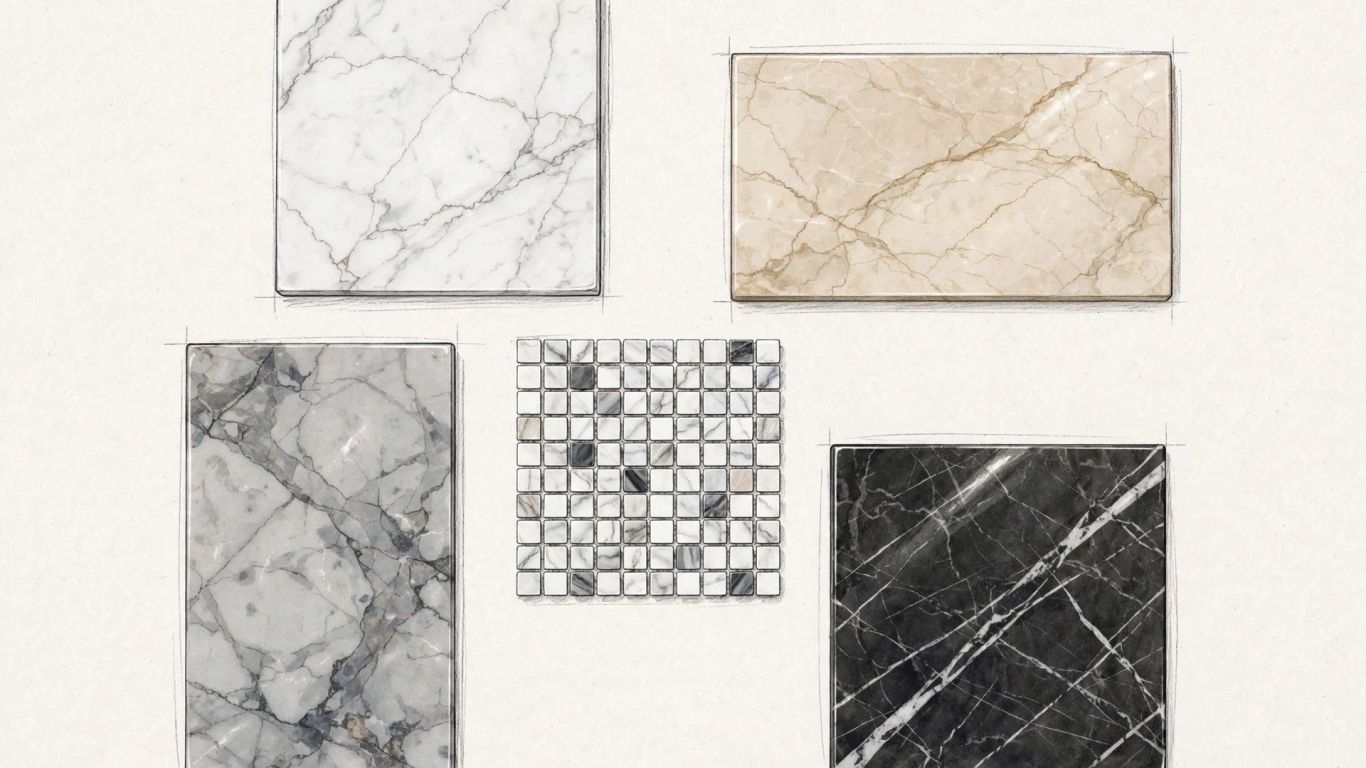
Comparing white, beige, gray, and darker marble options
White marble often gives a room a fresh, airy look, while beige tones bring warmth and blend easily with wood and earth-colored finishes. Gray can feel quiet and contemporary, or more classic depending on its veining. Darker marble adds contrast and can anchor a light palette, though its pattern and room lighting deserve a close look before committing.
This quick comparison can help narrow the palette, but it is not a substitute for viewing actual stone. Each natural tile varies, and the same color family may read differently under warm bulbs or cool daylight.
| Color direction | Visual impression | A useful design pairing |
|---|---|---|
| White | Bright and clean | Pale cabinetry or contrasting dark accents |
| Beige | Warm and welcoming | Wood tones and soft neutrals |
| Gray | Calm and versatile | White, black, or muted colors |
| Dark | Dramatic and grounded | Lighter walls and simple furnishings |
Use the table as a starting point, then compare samples against the fixed finishes in your room. A real sample makes it easier to judge undertones and the character of the veining before ordering.
Exploring Carrara, Calacatta, Statuario, and other looks
Carrara, Calacatta, and Statuario are familiar marble looks, each with its own range of color and veining. Carrara is often chosen for a classic light background and delicate gray movement; other selections can offer a more striking contrast or a distinct pattern. Names alone do not tell the whole story, so compare the actual tile and its variation before settling on a look.
A room with white walls might benefit from a gentle gray vein, while a simple vanity wall can carry a more pronounced marble pattern. For a large format, consider how the pattern will read across the full surface. The Carrara White 24x24 tile is one example of a larger format available in polished or honed finishes.
Coordinating tile sizes, mosaics, and patterned layouts
Tile size affects both the visual rhythm and the number of grout joints. Large-format pieces create a more expansive look, while small mosaics introduce detail and can follow curved or compact areas. Subway formats and patterned layouts offer another way to bring structure to a design. The right scale depends on the room, the surface, and the overall effect you want.
Surfaces Galore offers Marble Mosaic Tiles in a variety of styles, including herringbone, hexagon, basketweave, and penny round patterns. A mosaic can add movement to a backsplash or accent while keeping the material consistent with nearby tile. For any format, lay out the design in advance to see how pattern, color variation, and cut pieces will fall at the edges.
Weighing the benefits and practical considerations
Polished marble tile has a distinctive natural look and can give an interior a sense of refinement. It is also a natural stone that needs thoughtful selection and care. Its benefits are easiest to enjoy when expectations match the room’s demands. Consider the surface’s appearance, sensitivity, and maintenance together rather than judging it by shine alone.
Bringing natural character and lasting visual appeal to interiors
No two areas of natural marble have exactly the same combination of veining and tone, which gives an installation its individual character. Polished stone can brighten a room, and its classic appearance works with both traditional and contemporary interiors. With suitable installation and regular care, natural stone can remain an appealing part of a home for many years.
Think of a powder room where a small expanse of marble becomes the main visual detail, or an entry where repeated tiles create a more formal welcome. These are project examples, not a promise that every stone or installation will perform the same way. The actual result depends on the chosen material, how it is installed, and how it is used.
Understanding marble’s sensitivity to scratches, acids, and stains
Marble is more prone to scratching and staining than some harder surface materials, and acidic products can etch the stone. Lemon juice, vinegar, and harsh cleaners are poor choices for routine marble care. Spills are best wiped up promptly, particularly when they could stain or react with the surface. Sealing can help protect stone from stains and moisture, but it does not make marble impervious.
Knowing the material’s limits helps you decide where polished marble makes sense. A decorative wall or a lower-traffic interior may be easier to maintain than a surface exposed to frequent spills and abrasion. For a food-preparation area, use a separate cutting board and keep cleaning products appropriate for natural stone.
Considering slip resistance and maintenance in busy spaces
A polished surface can be slippery when wet, so busy floors and bathroom floors need special consideration. Ask for information about the specific tile and its intended use, particularly in showers or other wet areas. If polished marble does not suit the traction needs of a space, consider another finish or a smaller-format option suited to that application.
It helps to think through the daily routine before choosing the finish. In an active household, a few habits can reduce avoidable wear:
- Place mats at entrances to catch grit.
- Wipe up spills as soon as practical.
- Use soft cloths and stone-safe cleaners.
- Avoid dragging heavy objects across the surface.
These simple steps cannot prevent every mark, but they make routine care more manageable. For high-traffic areas, weigh the polished look against the level of maintenance the household is ready to keep up with.
Planning installation and protecting the finish
Careful preparation is part of the finished look, not an afterthought. Marble tiles need a clean, stable, level substrate and setting materials suitable for natural stone. Planning the layout before applying mortar helps manage color variation and cuts. Follow the product and installation-material instructions, or work with an installer experienced in natural stone.
Preparing the substrate and selecting compatible setting materials
The substrate should be clean, dry, sound, and level before tile is set. Uneven or unstable surfaces can contribute to cracking or lippage, where neighboring tile edges sit at different heights. Choose mortar and other setting materials rated for marble, and follow their manufacturer’s directions. Light-colored or translucent stone may need white thin-set mortar to reduce the risk of discoloration showing through.
Before installation, inspect the tile for cracks, chips, warping, or other concerns. A dry layout lets you review the distribution of veining, avoid awkward edge cuts, and blend natural variation across the project. These checks are especially useful when the stone will cover a large, visible area.
Sealing marble and choosing grout for the design
Sealer can help protect marble from stains and moisture, but the product must be appropriate for the stone and applied as directed. Confirm whether sealing is recommended before or after grouting, and allow each material to cure for the time specified by its manufacturer. Grout color can either blend with the tile or make the layout more pronounced, so test the combination if the color relationship matters to the design.
A narrow grout joint may create a quieter appearance, while a contrasting grout draws more attention to the tile pattern. The right choice depends on the tile’s dimensions and installation guidance. Sealing is useful protection, not a substitute for wiping spills or choosing compatible cleaners.
Avoiding installation issues that can affect the polished surface
Stone can chip or scratch during handling, cutting, or installation, so protect the tile and keep tools clean. A dry layout helps you identify cuts and blend variation before mortar is mixed. Use materials approved for natural stone, and take care not to leave grout or mortar residue on the polished face. Manufacturer instructions should guide the setting, curing, grouting, and sealing steps.
A steady process makes a difference. Work in manageable sections, check that tiles are level, and inspect the surface as you go. For a larger or more involved project, an installer familiar with marble can help address substrate preparation and layout details before the first tile is fixed in place.
Cleaning and maintaining polished marble tile
Polished marble stays at its best with gentle, regular care rather than aggressive scrubbing. Dust and grit can dull the surface over time, while acidic cleaners can etch it. Cleaning promptly and using products intended for natural stone helps protect the finish. Keep the care instructions for your specific tile and sealer available for reference.
Removing everyday dust and spills with stone-safe products
For routine cleaning, remove loose dust with a soft cloth or dust mop, then use a stone-safe, pH-neutral cleaner as directed. Avoid abrasive pads and common acidic cleaners such as vinegar or lemon-based solutions. Blot spills rather than spreading them over a larger area, and dry the surface if standing water is an issue. Gentle care is more suitable for marble than a harsh, all-purpose approach.
Material-specific routines matter beyond flooring, too. Guidance for a teak cutting board, a curly maple cutting board, and a brick-pattern end-grain board differs with the material and construction; gold-filled jewelry care likewise favors gentle cleaning and storage. Those are separate care topics, but the shared principle is simple: use a method suited to the material at hand.
Preventing etching and addressing stains carefully
Etching is a change to the stone’s surface caused by contact with acids; it is not simply a stain that can be lifted with stronger cleaner. Keep acidic liquids and cleaners away from marble, and wipe up spills promptly. If a stain remains, identify the likely cause and consult stone-care guidance before trying a treatment. An unsuitable product or abrasive tool can make the problem worse.
Some marks may need a professional stone-care assessment, especially if they are deep or cover a large area. Avoid improvised chemical mixtures. A careful, surface-appropriate response is safer than trying several aggressive treatments in succession.
Preserving shine with regular care and resealing when needed
Routine dust removal and stone-safe cleaning help the surface stay clear, but regular use can still change the appearance over time. Follow the sealer manufacturer’s guidance for checking and renewing protection; timing depends on the product and conditions rather than a universal schedule. High-use areas may need closer attention. Sealer can help with staining, but it does not prevent scratches or etching.
If the shine changes unevenly or the stone develops marks that ordinary cleaning does not resolve, ask a stone-care professional about suitable options. Avoid waxes or topical coatings unless the stone-care product instructions specifically recommend them. The aim is to preserve the character of the stone, not to cover it with an incompatible finish.
Sourcing polished marble tile for your project
Before ordering, confirm the stone, finish, format, and quantity you need. Natural marble varies, and current colors, sizes, and stock can change, so check the latest product details rather than relying on an old sample or image alone. Samples can help you compare the stone in your own light. Planning ahead also makes it easier to coordinate delivery with installation.
Checking current colors, sizes, finishes, and stock
Look closely at the available product details for color, format, finish, and intended application. If a project depends on a specific tone or veining pattern, ask what is currently available and whether a sample can be reviewed. Compare the tile with cabinets, paint, grout, and other fixed finishes in the room. Photos are useful for narrowing choices, but natural variation means the actual stone may differ from a screen image.
For a broader home renovation that includes energy upgrades as well as new finishes, a separate solar tile overview can help you explore that distinct material category. For marble, keep the decision focused on the stone’s own appearance, finish, and project requirements.
Estimating quantities and planning for extra tile
Measure the full area and account for borders, niches, transitions, and planned cuts before placing an order. Add extra material for cutting and natural variation, with the amount guided by the layout and installer. A straightforward rectangular room and a detailed mosaic pattern may need different allowances. Confirm the quantity with your installer before purchase, and keep a few spare tiles for future repairs if practical.
Order planning is also a good moment to check that the intended format and finish are available in the quantity required. Once installation begins, matching a particular natural stone can be difficult if the original material is no longer on hand. A little planning can prevent an avoidable pause mid-project.
Requesting a quote, bulk pricing, and nationwide shipping from Surfaces Galore
Surfaces Galore is an Anaheim, California-based direct importer and nationwide supplier of marble and travertine tile, mosaics, and moldings. The company serves homeowners and design professionals across the United States, with bulk discounts and cross-country shipping described in its project information. Check current stock, verify the order details, and ask about shipping and quantity pricing for your project before you buy marble tiles online in the USA.
When you are ready to discuss the stone and quantity, request a quote and include the format, finish, and project measurements. Confirm delivery timing and the condition of the material on arrival so the tile can be inspected before installation.
Conclusion
Polished marble tile offers natural pattern and a glossy finish that can bring a room into focus, but choosing well means looking beyond the shine. Compare samples, plan the layout and installation carefully, and use stone-safe care to help protect the surface. With the right material and preparation, marble can add an enduring, distinctive touch to an interior.
Frequently Asked Questions
Is polished marble tile suitable for floors?
It can be used on interior floors, including entryways, but consider traffic, maintenance, and the possibility of slipping when the surface is wet. Check the specific tile’s suitability for the intended area.
Does polished marble need to be sealed?
Sealing is commonly recommended to help protect natural stone from stains and moisture. Use a sealer intended for marble and follow its instructions, including any guidance on application and reapplication.
Can I use vinegar to clean polished marble?
No. Vinegar is acidic and can etch marble. Choose a cleaner made for natural stone and follow the product directions.
What is the difference between polished and honed marble?
Polished marble has a glossy, reflective finish, while honed marble has a matte appearance. The finish affects the look and may influence the best application for a particular space.
Will every marble tile look the same?
No. Natural marble varies in color, veining, and texture. View several tiles together and plan the layout before installation to understand how the variation will appear across the surface.
How should I handle a stain on marble?
Blot the spill and identify its likely source before choosing a treatment. Use stone-care guidance appropriate to the stain, and consult a professional if the mark is persistent or the right treatment is unclear.
How much extra tile should I order?
The amount depends on the room dimensions, layout, cuts, and tile format. Measure carefully and ask your installer to recommend an allowance for waste and natural variation.

Leave a comment