
Honed marble tile: benefits, design ideas, and how to choose the right stone

Key Takeaways
Honed marble has a quiet, matte appearance that can suit both traditional and contemporary rooms. A good result depends on choosing stone for the space, planning for natural variation, and following a realistic care routine.
- Honed marble has a matte surface, unlike the reflective shine of polished marble.
- Its softer look can make some small marks less noticeable, but it does not prevent etching, staining, or scratches.
- Suitability for floors, showers, and other wet areas depends on the specific tile and installation.
- Samples, a dry layout, and a little extra material can help manage natural variation and cuts.
- Use setting products and cleaners intended for natural stone, and follow the tile and sealer instructions.
What honed marble tile is and how it compares with polished marble
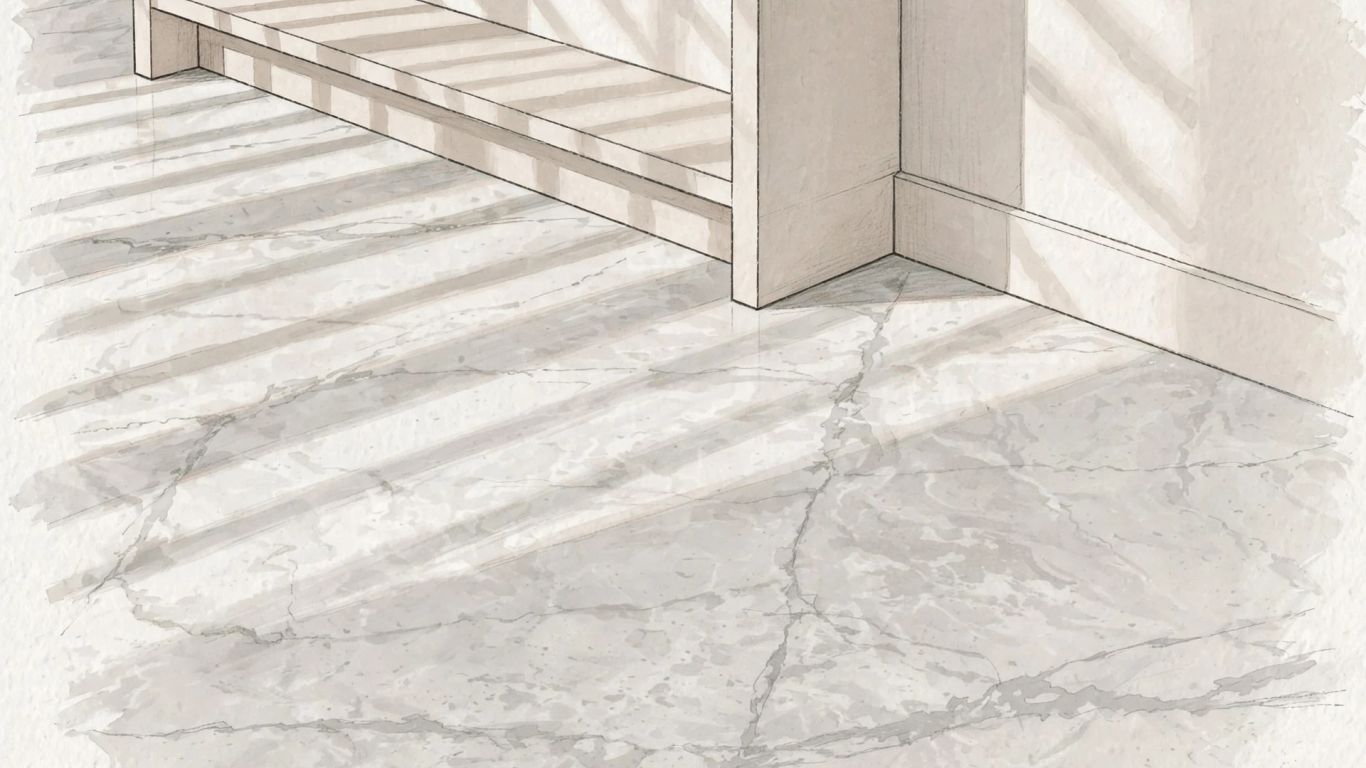
Honed marble tile has a smooth, matte surface rather than the pronounced shine of polished stone. The distinction changes the way light moves across a room and can make the veining feel softer. Both finishes reveal the natural character of marble, so the choice is as much about the atmosphere you want as it is about daily use.
How the matte finish is created
A honed finish is made by stopping the finishing process before the stone develops a reflective polish. The result is generally smooth to the touch, with a low-sheen or matte appearance. Natural veining remains visible, though it may read as quieter than it does on a polished surface.
The exact look can vary with the stone itself and the way it is finished. When choosing honed marble tile, compare a real sample in the room where it will be installed; the same piece can look different under warm evening lights and cool daylight.
Differences in shine, texture, and veining
Polished marble reflects more light, while honed marble tends to diffuse it. That difference can affect how prominent a vein looks and how much visual movement a floor or wall seems to have. Use the comparison below as a starting point, not a guarantee: individual stones and batches vary.
| Feature | Honed marble | Polished marble |
|---|---|---|
| Appearance | Matte or low sheen | Glossy, reflective sheen |
| Light | Softly diffused | More directly reflected |
| Veining | Can appear more muted | Can look more pronounced |
| Surface feel | Usually smooth, without a mirror-like shine | Smooth and glossy |
A finish is only one part of the decision. Looking at the tile’s color and veining alongside the room’s lighting will give you a clearer sense of the finished effect.
How honed and polished finishes affect everyday use
Honed surfaces can make minor smudges or small surface marks less conspicuous than they may be on a glossy tile, but marble still needs thoughtful care. Neither finish makes stone immune to stains or etching, and neither should be treated as a guarantee of traction in a wet area. For more perspective on everyday upkeep, this marble bathroom guide discusses cleaning, maintenance, stains, and etching.
Before choosing a finish for a bathroom or kitchen floor, check the product specifications and get advice from an experienced installer. The intended use, tile format, slope, and installation details all matter.
Benefits and considerations of honed marble
Honed marble brings natural veining and a quieter surface finish to a room without asking the stone to look perfectly uniform. That understated character works in a range of interiors, from classic bathrooms to pared-back kitchens. The trade-off is familiar to anyone choosing real marble: it is a natural material that calls for care, and the finish alone cannot remove every practical concern.
A soft, understated look for classic and modern interiors
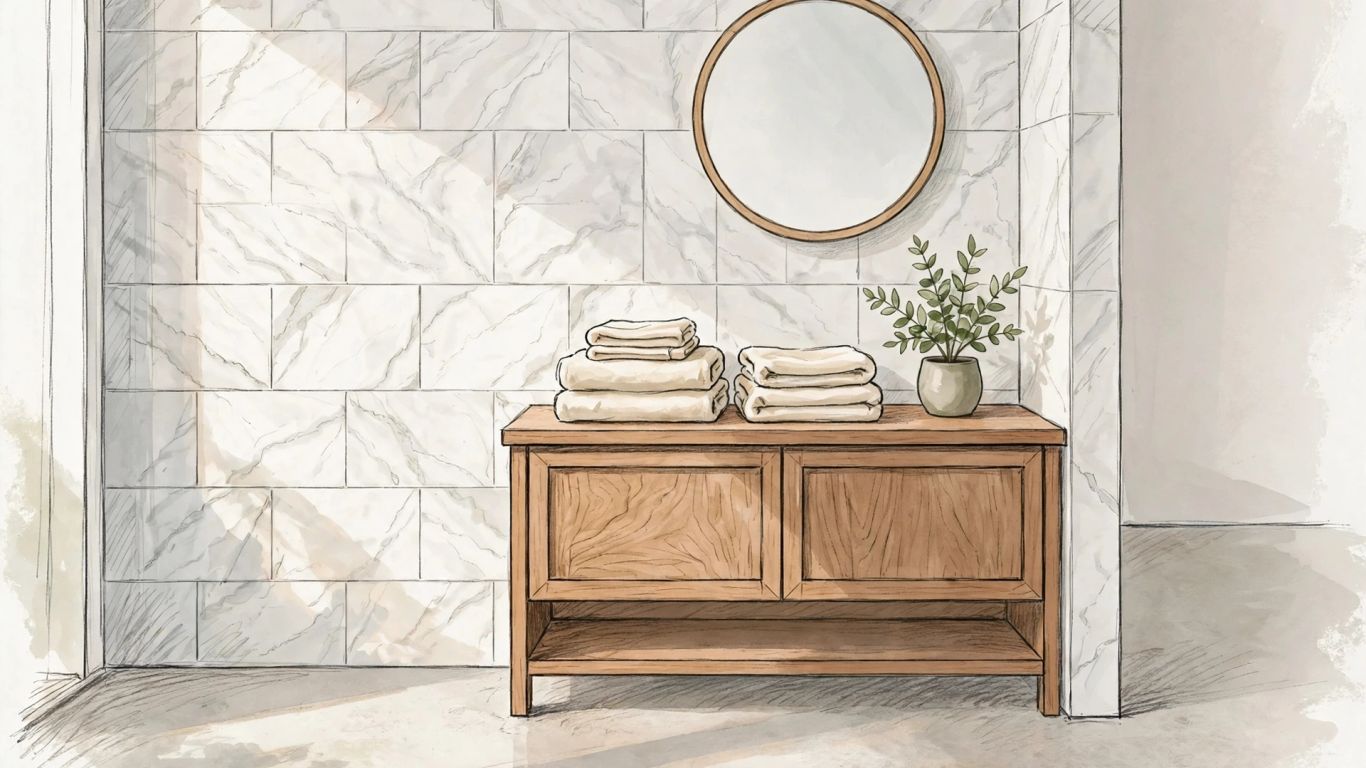
The matte appearance gives marble a gentler presence than a reflective finish, while its natural pattern keeps a surface from feeling flat. White and gray stones can feel crisp beside simple cabinetry; beige and warmer colors can make a room feel more relaxed. The balance of natural variation and a calm finish is part of the appeal.
For a classic white-and-gray direction, Carrara White marble tiles are one example of marble offered in both honed and polished finishes. Order a sample before settling on a palette, since veining and color can shift from tile to tile.
How the finish can make small marks less noticeable
A matte surface does not reflect light as sharply as a polished one, so small smudges and minor visual irregularities may draw less attention. That is a visual difference, not extra protection against damage. Marble can still scratch, stain, or etch, so it is sensible to choose a finish based on the look you prefer and the care you are prepared to give it.
In kitchens, consider how the tile will sit alongside other materials rather than treating every surface as a matching set. For a separate look at a wood surface used in food preparation, see this guide to walnut cutting boards.
Porosity, etching, and the importance of realistic care expectations
Marble is porous and can be affected by spills and acidic substances. Sealing can help protect the stone from stains, but it does not make the surface impervious or prevent etching. Wipe spills promptly, particularly in kitchens and bathrooms, and use products formulated for natural stone.
Expect the surface to develop signs of use over time. A careful cleaning and sealing routine can help preserve its appearance, but marble is a natural material, not a maintenance-free finish. That honest expectation makes it easier to decide whether honed marble is right for a busy household.
Why a honed finish does not automatically make a floor slip-proof
A matte finish is not, by itself, proof that a tile is safe for every wet-floor application. Traction depends on the tile and its surface, as well as installation conditions and how the floor is used. Check the specifications for the exact product and discuss wet-area suitability with your installer; do not rely on the word “honed” alone.
Where to use honed marble tile
Honed marble can be used in a range of interior settings, including floors, walls, backsplashes, and decorative features. The right application depends on the particular stone and tile, not just its appearance. Think about exposure to water, foot traffic, cleaning habits, and the practical requirements of the installation before committing to a location.
Bathroom floors, walls, and shower surrounds
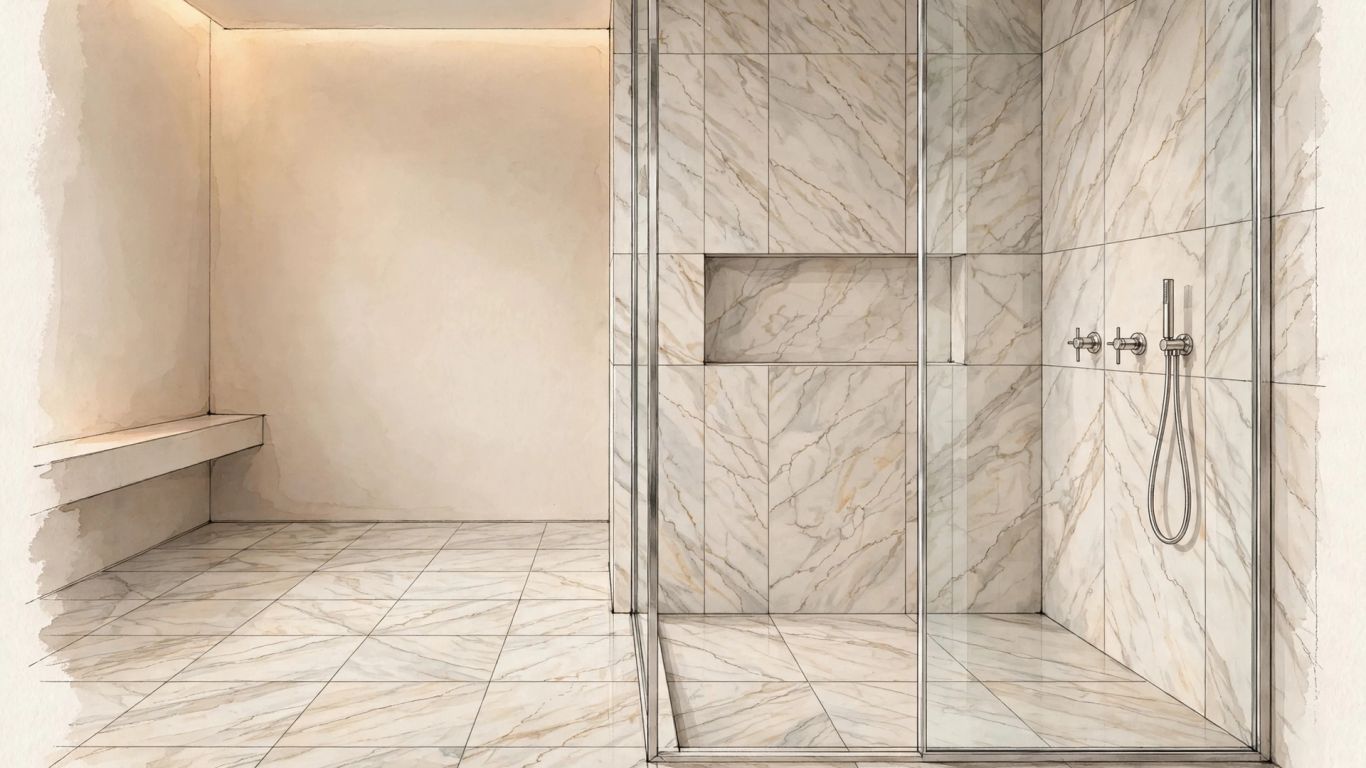
Marble can bring a cohesive, natural-stone look to a bathroom floor, wall, or shower surround. Wet locations need particular attention: confirm that the exact tile is rated for the intended use, and have the installer address waterproofing, drainage, and floor conditions. A honed surface should not be assumed to be slip-proof just because it is matte.
A backsplash can protect the wall behind a vanity while giving the room a finishing detail. For ideas on that specific surface, see this bathroom backsplash guide.
Kitchen backsplashes and other splash zones
A honed marble backsplash can soften the look of a kitchen and bring veining into view at eye level. It will still need prompt attention when splashed with food or acidic liquids, and suitable sealing and cleaning matter. Ask the installer about the tile and grout products recommended for the application.
If your kitchen palette includes wood, metal, or painted cabinetry, use samples to check how the materials look together in the room’s actual light. A simple combination often gives the stone’s natural pattern room to breathe.
Entryways, living spaces, and commercial interiors
Entryways and living areas can benefit from marble’s distinctive color and pattern, while a honed finish offers a less reflective look underfoot. For commercial interiors or other busy settings, consider traffic, maintenance expectations, and the tile’s product specifications before choosing. Durability and suitability should be judged for the specific stone and installation rather than assumed from the finish name.
A restrained layout can help a strongly veined stone feel composed. In a room with several materials or patterns, carrying one color from the marble into a trim or furnishing can create a subtle connection.
Choosing tile formats for floors, walls, and accent features
Large tiles create fewer grout lines, while mosaics can help shape an accent or suit areas where smaller pieces are preferred. The design should fit the scale of the room and the practical layout, including corners, drains, and edges. For examples of honed floor formats and mosaic choices, browse these honed marble floor tiles.
The format changes the visual rhythm of the installation, so compare it in context before ordering. A small sample or a drawn layout can help reveal whether a tile size feels balanced beside cabinetry, fixtures, or a doorway.
Colors, patterns, and design combinations
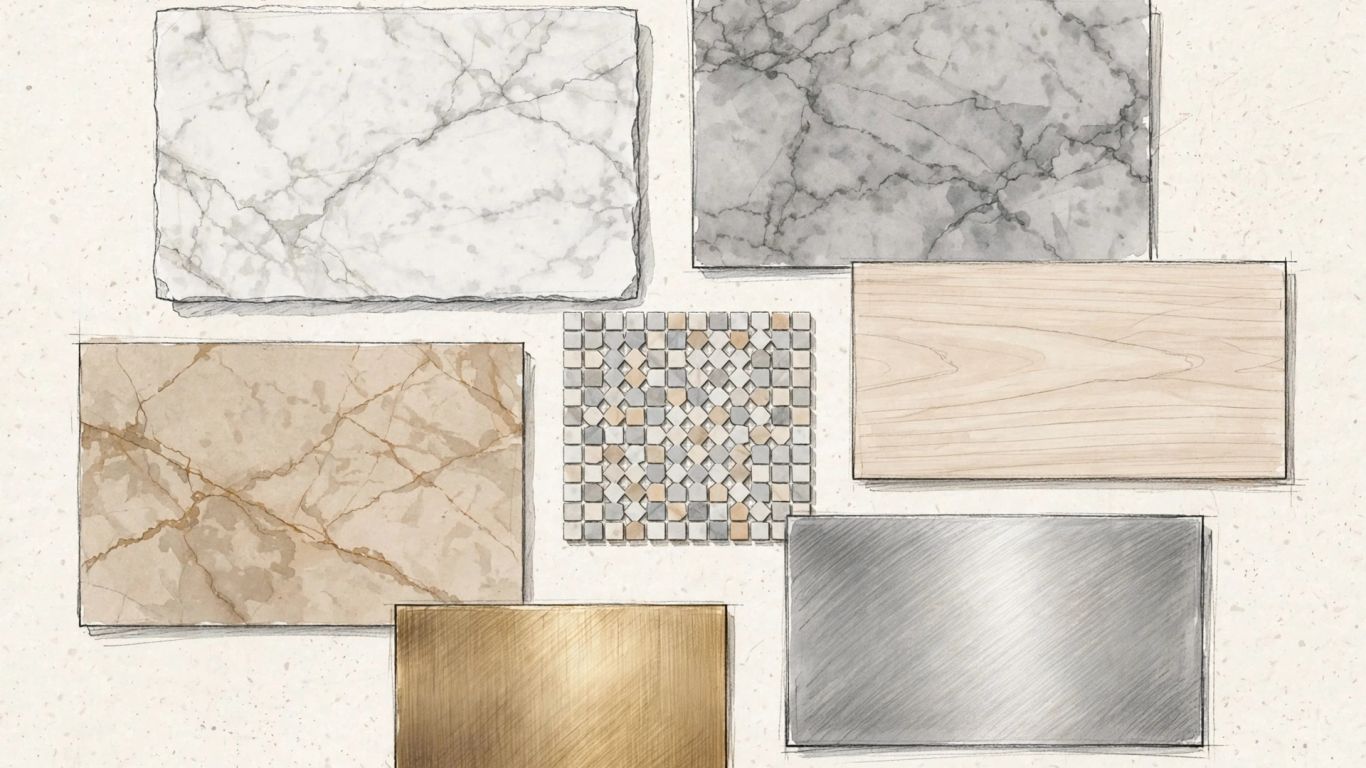
Marble’s palette ranges from cool white and gray to beige and other warm tones. Veining adds natural movement, while the finish influences how strongly that movement catches the eye. Choose combinations by looking at actual samples together, rather than relying on a color name or a screen image alone.
Pairing white and gray marble with contemporary finishes
White marble with gray veining works well alongside clean-lined cabinetry, simple metal details, and restrained paint colors. The honed surface can keep the overall impression soft rather than glossy. For a bolder contrast, a dark stone can appear in a small accent instead of competing across the whole room.
Carrara is a familiar starting point, but the veining varies naturally. Place samples beside the actual cabinet, floor, or wall colors before deciding whether the pattern feels quiet enough for the room.
Using beige and warm-toned marble for a softer palette
Beige marble can bring warmth to a room and pair comfortably with wood, cream, and muted earth tones. It is a useful direction when a crisp white palette feels too cool, or when you want a softer transition between stone and natural finishes. The amount and character of veining still vary, so assess the specific sample rather than relying on a broad color label.
Natural light can shift the appearance of warm stone throughout the day. Check samples in morning and evening light if you can, especially when the tile will cover a large floor or wall.
Creating contrast with dark stone, mosaics, or checkerboard layouts
A dark marble can anchor a lighter scheme, and a mosaic can bring a smaller-scale pattern to a backsplash, shower wall, or accent. Checkerboard layouts are another way to make contrast feel intentional. Before settling on a strong pattern, make sure the room has enough visual breathing space around it.
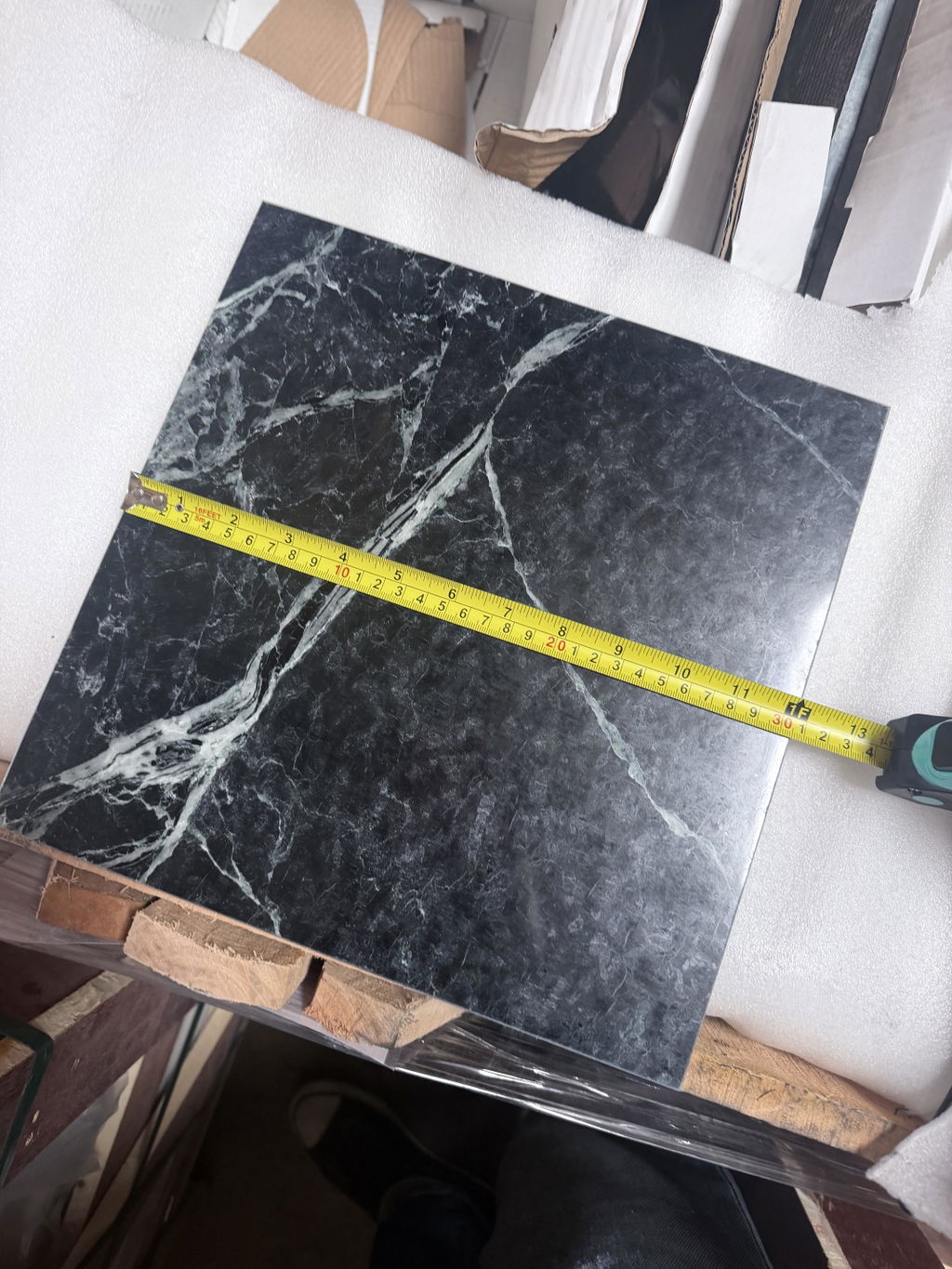
Black marble with white veining can provide a dramatic note; a Nero Marquina tile option is available in honed and polished finishes. Natural variation means the installed pieces will not all look identical, so review several tiles when planning a high-contrast layout.
Coordinating tile with marble trim and other natural stone details
Trim, thresholds, and other stone details can make a tile installation feel considered, but they do not need to match perfectly to look harmonious. Look for a shared undertone or a compatible veining scale. If the room already has more than one stone, repeating a color is often enough to tie the materials together.
Ask your installer to account for edges and transitions in the layout. Thinking about these details early can prevent an attractive field tile from ending at an awkward or unfinished edge.
How to select and plan your tile
A good plan starts with the room, the installation area, and the specific tile specifications. Natural marble varies in color and pattern, so samples and a dry layout are more useful than choosing from a single image. Planning ahead also helps with cuts, waste, and the possibility of needing a replacement tile later.
Matching tile size and pattern to the room
Consider room dimensions, doorways, fixtures, and the scale of nearby surfaces when selecting tile size. A large format can create a quieter field, while mosaics offer a finer pattern for accent areas. Layout lines and the position of cuts matter, too; a sketch or dry layout can help avoid narrow slivers at the edges.
If radiant heating is part of the renovation, coordinate the tile plan with the heating design and installer. This overview of home heating options can help with the separate decision about what system suits a home.
Reviewing veining and natural variation across samples
One tile cannot show the full range of a natural stone. Review several pieces, and if possible, arrange them as a small dry layout to see how color and veining work across a wider area. Mixing tiles from different boxes during planning can help create a more even distribution of variation.
A few practical checks can make sample review more useful:
- Look at samples in the room’s natural and artificial light.
- Compare several pieces rather than judging a single tile.
- Set samples beside cabinetry, paint, or other finishes.
- Discuss any visible cracks, chips, or unusual variation with the supplier before installation.
These simple steps help you make a decision based on the stone you will actually install, not an idealized image of it.
Estimating quantities and planning for cuts and future repairs
Measure the installation area carefully and allow for cuts and waste according to the layout and installer’s advice. A complex pattern, many corners, or a mosaic can affect the amount required. Ask how much extra to order and whether it is possible to keep a small number of tiles for future repairs.
If the renovation overlaps with a move, build delivery and installation dates into the schedule; this guide to international moving services covers that separate planning task. For projects that also change outdoor access or shade, readers in Denmark can find local information on tree care in Vejle.
Confirming suitability with the tile specifications and installer
Before ordering, confirm the tile’s intended use, size, finish, and care guidance against the requirements of the room. Ask your installer to review the substrate, installation method, and wet-area conditions. Product descriptions and samples are useful, but they do not replace advice about the specific site.
If anything about the application is unclear, resolve it before the tile is set. Natural stone is an investment in the look of a space, and careful planning is a practical way to protect that investment.
Installation, sealing, and ongoing care
The appearance of marble depends on more than the tile itself. A flat, stable substrate and compatible setting materials help create a sound installation, while sealing and stone-appropriate cleaning can support ongoing care. Follow the tile, setting-material, grout, and sealer instructions, and ask a qualified installer about details specific to the site.
Preparing a clean, level substrate
The surface beneath marble should be clean, sound, dry, and level. Dust, grease, old adhesive, or uneven areas can interfere with bonding or create problems once the tile is in place. Natural stone also needs a stable base, so have the installer assess the substrate and make any needed repairs or preparation before setting begins.
A dry layout before installation can help reveal awkward cuts and uneven distribution of color or veining. Inspect the tiles as they are laid out, and discuss any concerns before installation proceeds.
Choosing appropriate setting materials and grout
Use setting materials rated for natural stone and appropriate to the substrate and application. Light-colored or translucent marble may call for white thinset to reduce the risk of discoloration showing through; confirm compatibility with the product and installer. Grout choice and joint spacing should also follow the tile and material recommendations.
Avoid choosing adhesives or grout by habit alone. Material compatibility is a small detail that can have a visible effect on the finished surface, so check instructions before work starts.
Sealing marble and addressing spills promptly
A suitable sealer can help protect marble from staining, but it does not make the stone stain-proof or prevent etching. Follow the sealer manufacturer’s instructions for application, curing, and whether the stone needs resealing. In kitchens and bathrooms, wipe up spills promptly instead of allowing them to sit on the surface.
Build the care routine around the room’s use and the product guidance. A little attention after spills is more dependable than expecting a sealer to prevent every mark.
Cleaning with products formulated for natural stone
Use cleaners formulated for natural stone and avoid acidic products such as vinegar or lemon-based cleaners, which can etch marble. A soft cloth or mop and regular, gentle cleaning are usually more appropriate than harsh scrubbing. When uncertain, test a product in an inconspicuous area and check the stone-care instructions.
Keep care simple and consistent. The goal is to maintain the surface without introducing chemicals or tools that may damage its finish.
Buying honed marble tile for your project
Buying tile is easier when you compare the finish, size, variation, and intended use together. Look at samples and product specifications, then confirm quantities and delivery timing before placing a project order. For homeowners and design professionals alike, careful questions up front can make the selection feel much less daunting.
Comparing quality, finish, sizing, and current stock
Compare the actual finish and dimensions, and review multiple pieces for natural differences in color and veining. Check that the selected tile suits the intended application, especially for wet areas. Current availability can change, so verify stock and lead times before setting an installation date.
Surfaces Galore is a direct importer and nationwide supplier specializing in marble and travertine tiles, mosaics, and moldings. Its Marble Tiles collection includes honed and polished options in a range of colors and formats; review the relevant product details before choosing a tile for your room.
Requesting samples and a project quote
A sample makes it possible to see the stone in your own light and beside your other finishes. For a quote, have the approximate area, preferred format, finish, and project timing ready. Surfaces Galore offers samples and project quotes; confirm the details for the specific tile you are considering.
If you are ready to compare options, shop marble tiles and use samples to narrow down the finish and color that feel right for your project.
Planning bulk orders and nationwide delivery
For a larger installation, confirm the quantity, stock, and shipping arrangements before finalizing the schedule. Surfaces Galore ships nationwide, and bulk discounts are available according to project requirements; ask for current terms when requesting a quote. Leave time to inspect delivered tiles before installation, since natural variation is part of marble’s character.
Clear communication about the amount needed and the delivery window helps keep the next steps on track. If you are working with an installer, share the product details and delivery expectations before the order is placed.
Exploring honed marble options from Surfaces Galore
Surfaces Galore offers marble tiles in honed and polished finishes, with choices that include classic white and warmer tones. Compare the specifications, size, and appearance of each option, and request a sample if you want to see the surface in person. A thoughtful selection is a better starting point than choosing by finish name alone.
Ready to move from ideas to a real sample or project quote? Contact Surfaces Galore to explore current marble options and plan an order around your space.
Conclusion
Honed marble tile offers a matte, understated way to bring the color and veining of natural stone into a home or commercial interior. Compare samples, confirm the tile is suitable for its intended use, and plan for careful installation and ongoing care. With those details in place, you can choose a finish and format that feel at home in the room for years to come.
Frequently Asked Questions
Is honed marble tile completely matte?
Honed marble has a matte or low-sheen appearance rather than the reflective shine of polished marble. The exact look can vary with the stone and its finish.
Does honed marble hide scratches?
Its less reflective surface may make some small marks less noticeable, but it does not prevent scratches. Marble can still show wear, so choose it with realistic care expectations.
Is honed marble suitable for a shower floor?
It depends on the specific tile and installation. Check product specifications and consult an installer about wet-area suitability, traction, drainage, and waterproofing.
Does honed marble need to be sealed?
Sealing is commonly recommended for marble to help protect it from stains. Follow the tile and sealer instructions, and remember that sealing does not make the stone stain-proof or prevent etching.
How should honed marble be cleaned?
Use products formulated for natural stone and avoid acidic cleaners such as vinegar or lemon-based products. Wipe spills promptly and follow the care guidance for the tile and sealer.
Can honed marble be used in a kitchen?
It can be used for applications such as backsplashes and other interior surfaces, provided the specific tile is suitable for the location. Marble can etch or stain, so prompt cleanup and appropriate care are part of ownership.
How much extra marble tile should I order?
The amount depends on the room, tile format, layout, and expected cuts or waste. Measure carefully and ask your installer or supplier to recommend an allowance for the project.

Leave a comment