
Ivory travertine: a complete guide to styles, finishes, and applications

Key Takeaways
Ivory travertine pairs a quiet, warm palette with the distinctive variation of natural stone. The right format, finish, and installation plan help it feel at home in rooms from entryways to bathrooms.
- Soft ivory and beige movement make each piece subtly different.
- Tiles, mosaics, and slabs suit different scales and uses.
- Filled, honed, tumbled, and brushed finishes create distinct surface effects.
- Samples and a dry layout help you assess variation before installation.
- Confirm product details, stock, and project quantities before ordering.
What makes ivory travertine distinctive
Ivory travertine brings a light, gently warm foundation to a room without the uniformity of a manufactured surface. Its natural color shifts and markings keep broad areas from feeling flat, while the overall palette is easy to coordinate with wood, metal, and painted finishes. The effect can be quiet or richly textured, depending on the stone and how it is cut and finished.
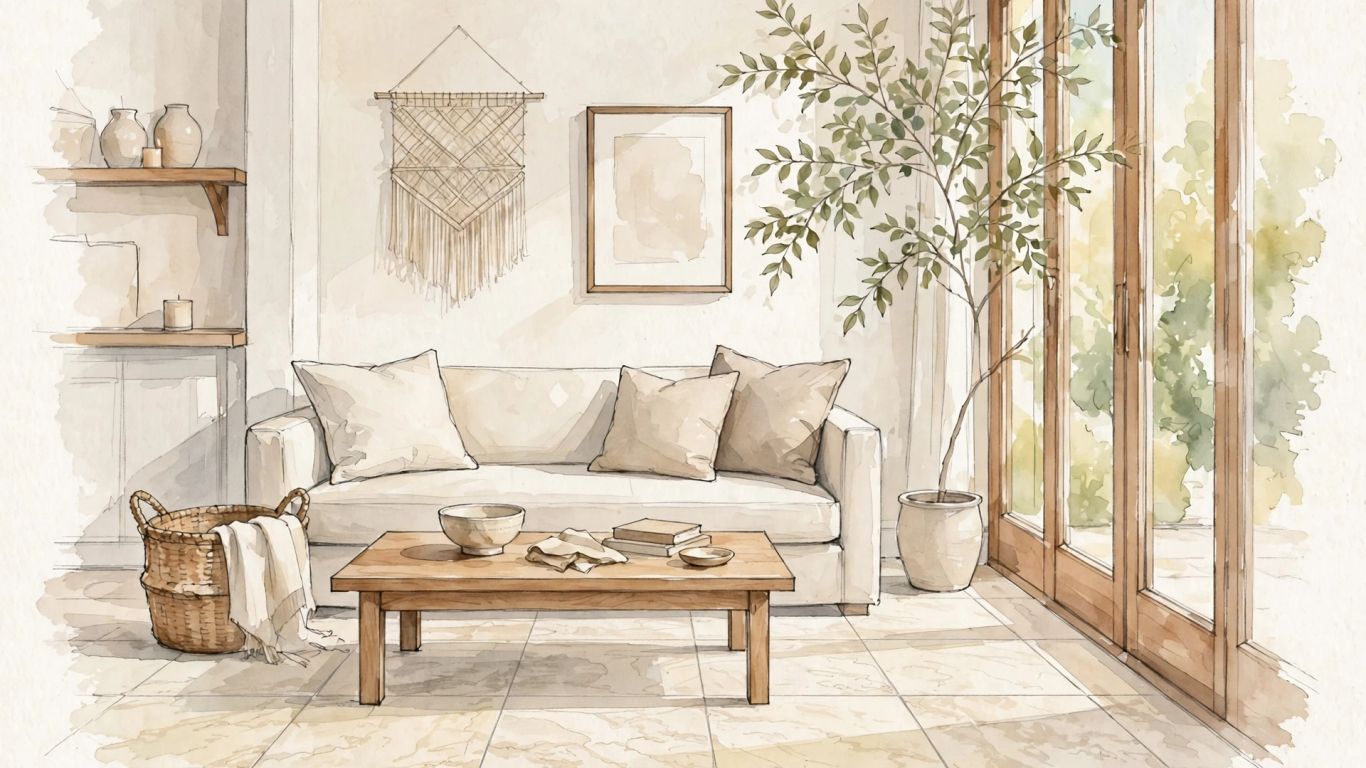
Soft ivory tones and natural variation
The color may read as creamy ivory in one light and closer to beige in another. Individual tiles can also vary in shade and veining, so a finished floor or wall has a relaxed, organic rhythm rather than a repeated pattern. That variation is part of the material’s appeal; it is worth viewing a sample in the room where the stone will be installed.
How pores and veining shape the stone’s character
Travertine forms with natural pores and channels, which contribute to its distinctive surface. Depending on the product, openings may be filled or remain visible, and veining may appear as delicate movement or more linear marks. Natural variation is part of the design: look at several pieces together to understand how the character will read across a larger installation.
Why it complements classic and contemporary interiors
Ivory’s understated warmth can sit comfortably beside traditional cabinetry and detailed trim, but it also works with clean-lined furniture and restrained palettes. The stone adds texture without forcing a room into one particular style. For broader inspiration beyond surface materials, readers may also explore 2026 jewelry trends, solar tiles, pharmaceutical sourcing, Inter match ratings, and board-and-train routines—very different topics, but reminders that design and planning often cross into other interests.
Choose the right ivory travertine product
Start with the surface and the scale of the project, then choose a product format that supports both. Field tile creates a clear, orderly plane; mosaics add smaller-scale detail, and slabs can reduce seams on a counter or vanity. Surfaces Galore offers Ivory Light Travertine tiles in various sizes and finishes, along with slabs and mosaics for different applications.
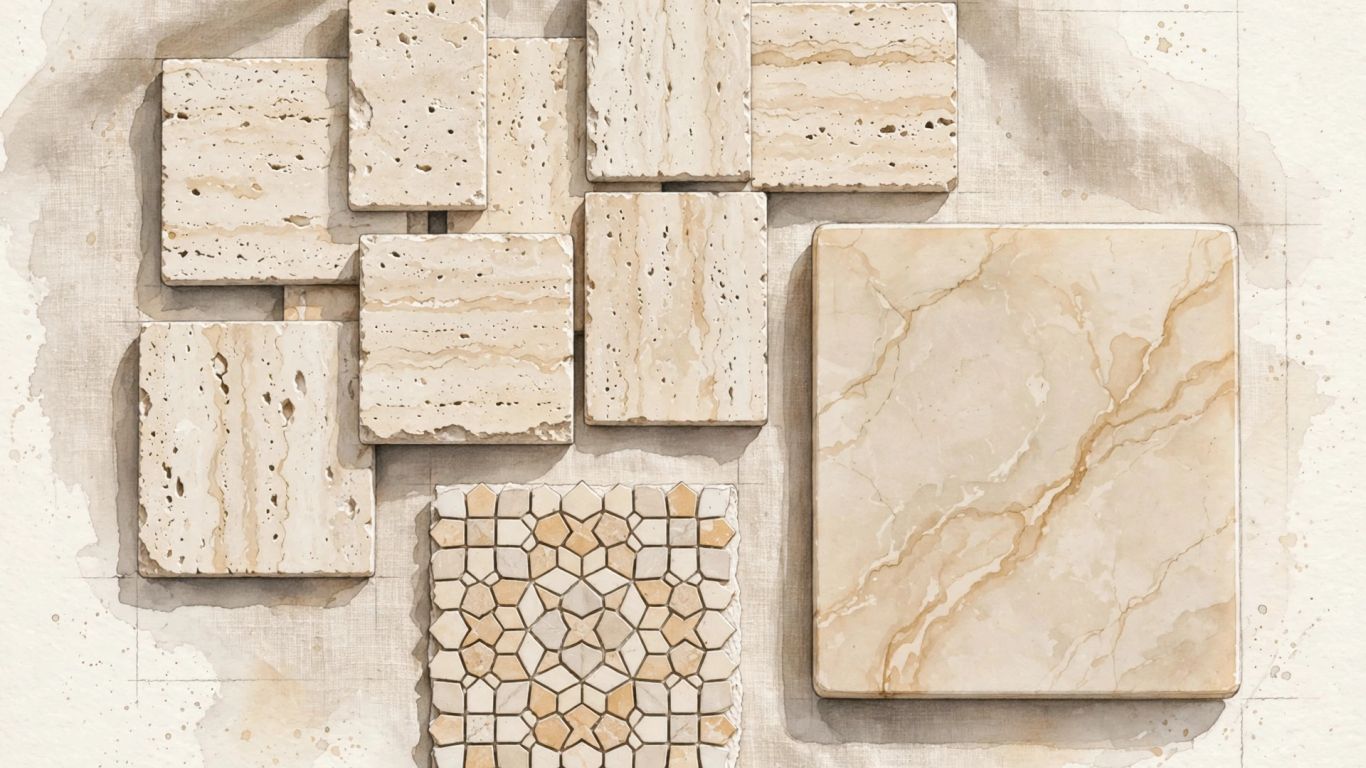
Tile sizes and formats for floors and walls
Larger tiles can make a room feel more continuous, while smaller formats introduce a denser grid and more grout lines. Consider the room dimensions, transitions, and edges before settling on a size. For a broader look at ivory tile formats, compare the visual effect of field tile with mosaics and patterned arrangements, then verify the actual dimensions of the product you plan to order.
Mosaics for backsplashes and shower floors
Mosaics bring pattern and scale into a backsplash, shower floor, or accent area, and the smaller pieces can follow a curved or angled surface more readily than large tile. They also create more grout joints, so include grout color and maintenance in the design decision. For a decorative alternative in a related warm palette, the La Travonya Versailles pattern shows how a multi-size arrangement can add movement without relying on a busy color contrast.
Slabs, trim, and decorative accents
A slab can create a broad, visually connected surface for a countertop or vanity, while trim and borders help finish the edges of a tiled area. Travertine slabs and mosaics are among the Ivory Light Travertine product types described by Surfaces Galore; confirm the product’s intended use and dimensions before specifying it. Smaller accents can bring the same stone into a niche or border without covering every surface in the room.
Compare finishes and patterns
Finish changes how ivory travertine looks and feels, and it can affect how its natural openings appear. A smooth matte face has a different presence from a brushed or tumbled surface, even when the stone color is similar. Compare options under the lighting and alongside the materials planned for the room, rather than choosing from a finish name alone.
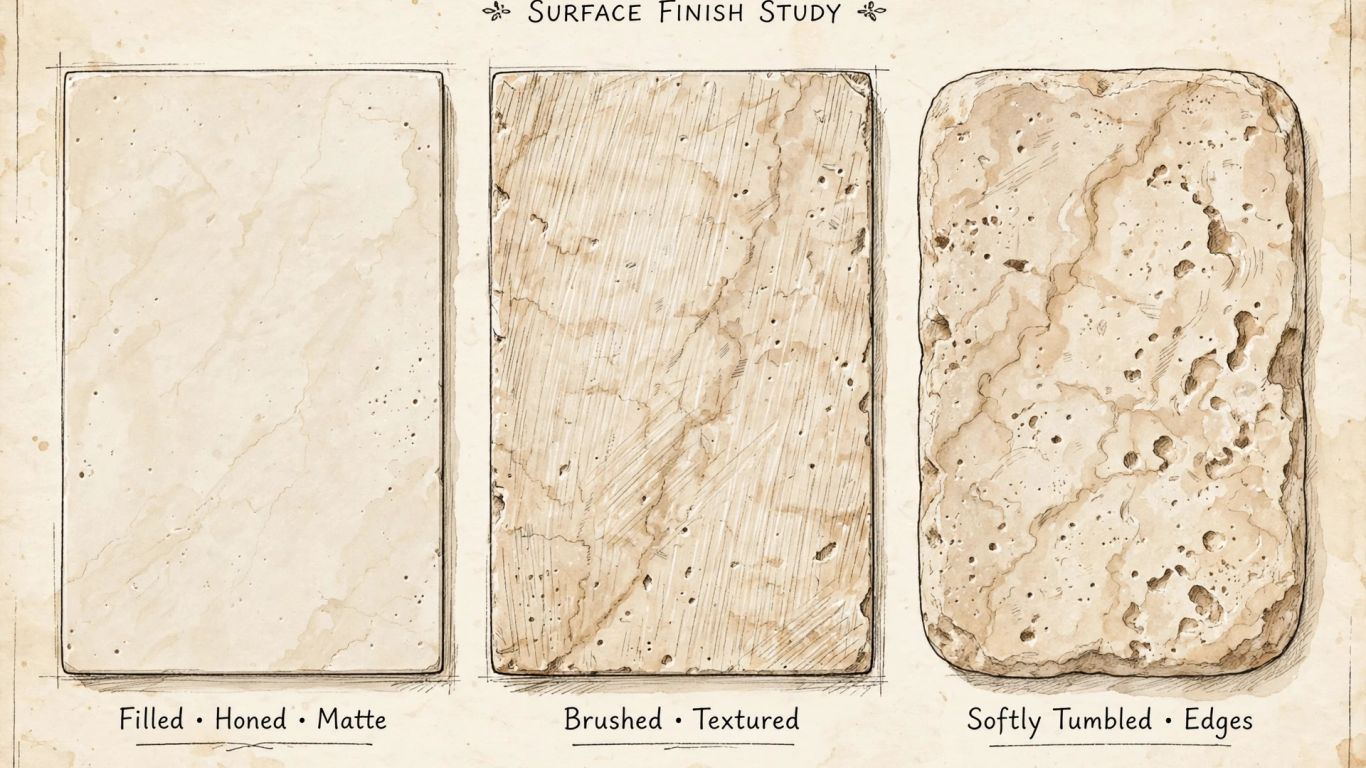
Honed and filled for a smooth, matte look
Filling closes the visible pores, while honing creates a smooth, matte appearance. Together, they give travertine a more even surface impression while keeping natural veining visible. The table below summarizes common visual differences; product details vary, so use it as a starting point rather than a substitute for checking a sample.
| Finish or layout | Typical visual character | Consider when |
|---|---|---|
| Filled and honed | Smooth, subdued, matte | You want a quieter surface appearance |
| Polished | Smoother, with more reflected light | A brighter, more formal look suits the room |
| Tumbled | Softened edges and an aged feel | You want a relaxed, textured character |
| Brushed | Noticeable surface texture | You prefer tactile detail and natural variation |
A sample lets you see how the actual finish responds to your room’s light. Also confirm whether the selected tile is filled, unfilled, or offered in more than one finish.
Tumbled and brushed for added texture
Tumbled stone has softened edges and an aged character, while brushing gives the surface a more tactile quality. Either can make the stone feel less formal than a smooth finish. These choices are especially noticeable on a larger uninterrupted area, so compare several pieces and consider how the floor or wall will meet adjacent materials.
French pattern and other layout options
A French pattern combines different tile sizes to form a repeating arrangement with more movement than a single-format grid. Straight-laid tile, a running bond, or a mosaic can create a quieter or more intricate effect. Before ordering, sketch the layout and check the edges: a pattern should work with the room’s dimensions, not just look appealing in a sample image.
Plan applications throughout the home
Ivory travertine can be considered for a range of interior surfaces, including floors, walls, and backsplashes. The best choice depends on the exact product, its finish, and the conditions of the room. In wet or exterior areas, confirm suitability and installation requirements with the supplier and installer instead of assuming every travertine product is interchangeable.
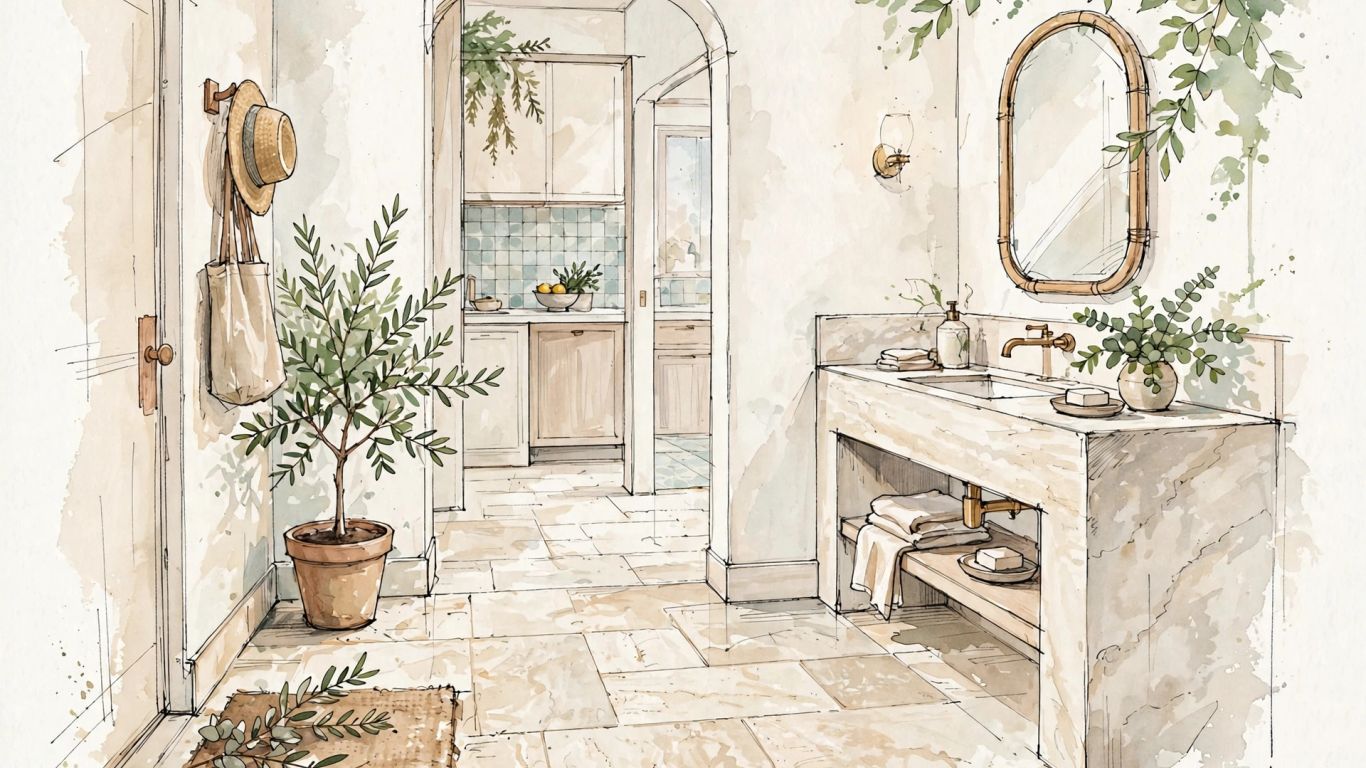
Flooring for entryways and living spaces
In an entryway or living area, the stone’s light tone can create a welcoming foundation, while natural variation gives the floor visual depth. Think through traffic, transitions to other flooring, and the finish’s feel underfoot. Lay out a few pieces before installation to see how their tones and markings balance across the space.
Bathrooms, showers, and wet areas
Travertine is used in bathroom floors, shower walls, and shower-floor products, but the suitability of a particular tile depends on its finish and intended use. Ask for product-specific guidance on wet-area installation, sealing, and maintenance. Smaller mosaics may be a practical design choice for a shower floor, but the complete assembly and slip considerations should be reviewed by a qualified installer.
Kitchen backsplashes and countertop considerations
A backsplash is a natural place to use ivory travertine’s gentle movement, especially beside simple cabinetry or a contrasting counter. Slabs can provide a more continuous look for countertops, but natural stone requires thoughtful care. Confirm the slab’s details and discuss sealing, spills, and cleaning practices with your stone professional before making a final selection.
Patios and other outdoor settings
Outdoor use calls for a product specifically suitable for exterior conditions, not merely a stone color or finish that looks right. Ask about the intended application, installation method, and local climate before choosing travertine for a patio or other exterior surface. A sample can help with color decisions, but it cannot replace product-specific technical guidance.
Evaluate care, installation, and long-term value
Natural stone can reward careful planning with a surface that feels individual rather than mass-produced. The same variation that makes travertine appealing means the installed result may not match a small sample exactly. Plan the order, layout, and maintenance approach together, and have qualified professionals review conditions specific to the project.
Sealing and routine cleaning basics
Sealing and regular care should follow the product and installer’s recommendations. Use cleaning products intended for natural stone, and avoid assuming that a household cleaner is suitable for travertine. Ask whether the selected finish or installation needs particular sealing steps, especially in kitchens, bathrooms, or other areas exposed to moisture and spills.
Substrate preparation and professional installation
A sound, properly prepared substrate and a carefully planned layout support a better installation. Before setting tile, inspect the material and dry-lay pieces to review color distribution, cuts, and transitions. For a natural stone project, professional installation can help address the details that depend on the site, product, and chosen pattern.
A short pre-installation review can prevent avoidable surprises:
- Check tiles for visible chips, cracks, or unusual warping.
- Dry-lay pieces to balance shade and veining.
- Confirm measurements, edges, transitions, and grout joints.
- Review substrate and installation requirements with the installer.
These checks are useful because the appearance and fit of natural stone are easier to assess before pieces are fixed in place. Ask questions about any questionable material before installation begins.
Natural variation, matching, and ordering extra material
Color, texture, and veining can vary among natural stone pieces, so inspect material from the intended order where possible. Ordering all needed material together can help maintain a more coherent look, while allowing for cuts and breakage reduces the risk of running short. Surfaces Galore notes that product sizes are nominal, so verify measurements and quantities for the specific order rather than relying only on a label.
Shop for ivory travertine with confidence
A confident purchase starts with details, not just a color name. Confirm the finish, dimensions, intended application, and current availability, then compare the stone with nearby materials in your project. Surfaces Galore is an Anaheim, California-based direct importer and nationwide supplier of natural stone, serving homeowners and design professionals across the United States.
Confirm dimensions, finish, and current inventory
Check the listed dimensions and finish against your plan, and ask whether the product is filled, honed, tumbled, or otherwise finished. Current stock can change, so verify availability and lead time before coordinating an installation date. Remember that nominal dimensions may differ from measured dimensions.
Request samples and project-specific pricing
A sample makes it easier to judge tone and texture in your own lighting. Compare it with flooring, cabinetry, grout, and other fixed finishes; if possible, view several pieces to understand natural variation. For a project quote, provide the area, preferred format, finish, and approximate quantity so pricing can be discussed in context.
Compare shipping, bulk discounts, and supplier support
For a larger renovation, ask how shipping and bulk pricing apply to the planned quantity, and clarify delivery timing before placing an order. Nationwide supply can make it possible to consider materials from outside your local market, but freight and site logistics still matter. Helpful supplier support means getting clear answers about product details, stock, and the next steps for ordering.
Explore Surfaces Galore’s nationwide selection
Surfaces Galore specializes in marble and travertine tiles, mosaics, and moldings, with a selection intended for projects across the United States. Browse current options, compare the available formats, and request a quote when you have a product and quantity in mind. For a considered purchase, ask questions early and check the material before installation.
Conclusion
Ivory travertine offers a warm, versatile starting point for a home project, with natural variation that gives each installation its own character. Compare formats and finishes in person where possible, confirm suitability for the intended setting, and plan carefully with your installer so the stone’s beauty carries through from selection to finished surface.
Frequently Asked Questions
Is ivory travertine a natural stone?
Yes. Travertine is a natural stone, so color, texture, pores, and veining can vary from piece to piece.
What colors are common in ivory travertine?
It generally has a light ivory or cream appearance, often with beige movement or subtle veining. The exact tone varies by product and lot.
What is the difference between filled and unfilled travertine?
Filled travertine has its visible pores filled, creating a more even surface. Unfilled stone retains more of its natural openings and texture.
Is honed travertine shiny?
Honed travertine usually has a smooth, matte appearance rather than a highly reflective one. Check a sample to see the specific product’s finish in your lighting.
Can ivory travertine be used in a shower?
Some travertine products are intended for shower applications, but suitability depends on the specific tile, finish, and installation. Confirm requirements with the supplier and a qualified installer.
How should ivory travertine be cleaned?
Follow the product and installer’s care instructions, and choose cleaning products made for natural stone. Ask whether sealing or other care steps are recommended for the chosen finish and location.
Does ivory travertine look exactly the same from tile to tile?
No. Natural color and pattern variation is characteristic of the stone, so the installed surface may differ from a single sample. Reviewing several pieces and dry-laying the design can help you plan the overall look.

Leave a comment