

Why Marble for Staircases Elevates Luxury Homes

Luxury homeowners across California are turning to marble staircases for their next bold upgrade. Marble remains one of the most coveted materials in American design, prized for its breathtaking patterns and lasting durability. With installation costs often exceeding $100 per square foot, a marble staircase goes beyond simple function by adding real visual drama and distinctive value to any home. This article guides you through the unique benefits, care essentials, and smart selection tips for choosing the ideal marble staircase.
Table of Contents
- Marble Staircases: Timeless Material Defined
- Popular Marble Types for Staircase Design
- Aesthetic and Structural Benefits of Marble
- Cost, Maintenance, and Safety Factors
- Comparing Marble to Other Luxury Materials
Key Takeaways
| Point | Details |
|---|---|
| Marble’s Unique Beauty | Marble staircases offer unparalleled aesthetic appeal due to their unique veining patterns and natural translucency. |
| Maintenance is Essential | Regular sealing and professional maintenance are critical to preserving marble’s appearance and structural integrity over time. |
| Investment Considerations | The cost of marble staircases varies significantly, with installation and ongoing maintenance requiring careful financial planning. |
| Comparative Material Insights | While granite is durable, marble’s artistic veining and natural beauty make it a superior option for luxury designs. |
Marble Staircases: Timeless Material Defined
Marble staircases represent the pinnacle of architectural elegance, transforming ordinary spaces into extraordinary statements of luxury. Derived from metamorphic stone with incredible historical architectural significance, marble has been prized since classical times for its unparalleled beauty and durability.
The unique composition of marble creates a stunning visual experience that goes far beyond simple functionality. Its natural veining patterns emerge from mineral impurities, producing intricate designs that make each staircase a one-of-a-kind masterpiece. White marble varieties like Carrara and Statuary offer pristine backgrounds with subtle gray or gold undertones, while darker marbles provide dramatic contrast in modern architectural settings.
Understanding marble’s complex nature is crucial for homeowners. While marble offers extraordinary aesthetic appeal, it requires careful maintenance. Environmental factors can impact marble surfaces, potentially causing surface roughening or discoloration over time. Proper sealing and periodic professional care are essential to preserving the stone’s inherent beauty and preventing long-term degradation.
Pro tip: Select marble with minimal veining if you prefer a more uniform appearance, or choose highly veined marble for a dramatic, statement-making staircase design.
Popular Marble Types for Staircase Design
Luxury homeowners have multiple exquisite marble options for creating stunning staircases, with each type offering unique aesthetic and structural characteristics. Marble varieties range widely in color, texture, and mineral composition, providing designers with extraordinary design flexibility.
Classic marble types for staircases include Carrara, Statuary, and Calacatta, each distinguished by its unique visual profile. Carrara marble features soft gray veining on a white background, creating a timeless and elegant appearance. Statuary marble offers a more pristine white surface with dramatic, bold veining that makes a strong architectural statement. Calacatta marble presents more dramatic and pronounced veining patterns, often featuring thick, gold or gray lines that create remarkable visual depth.
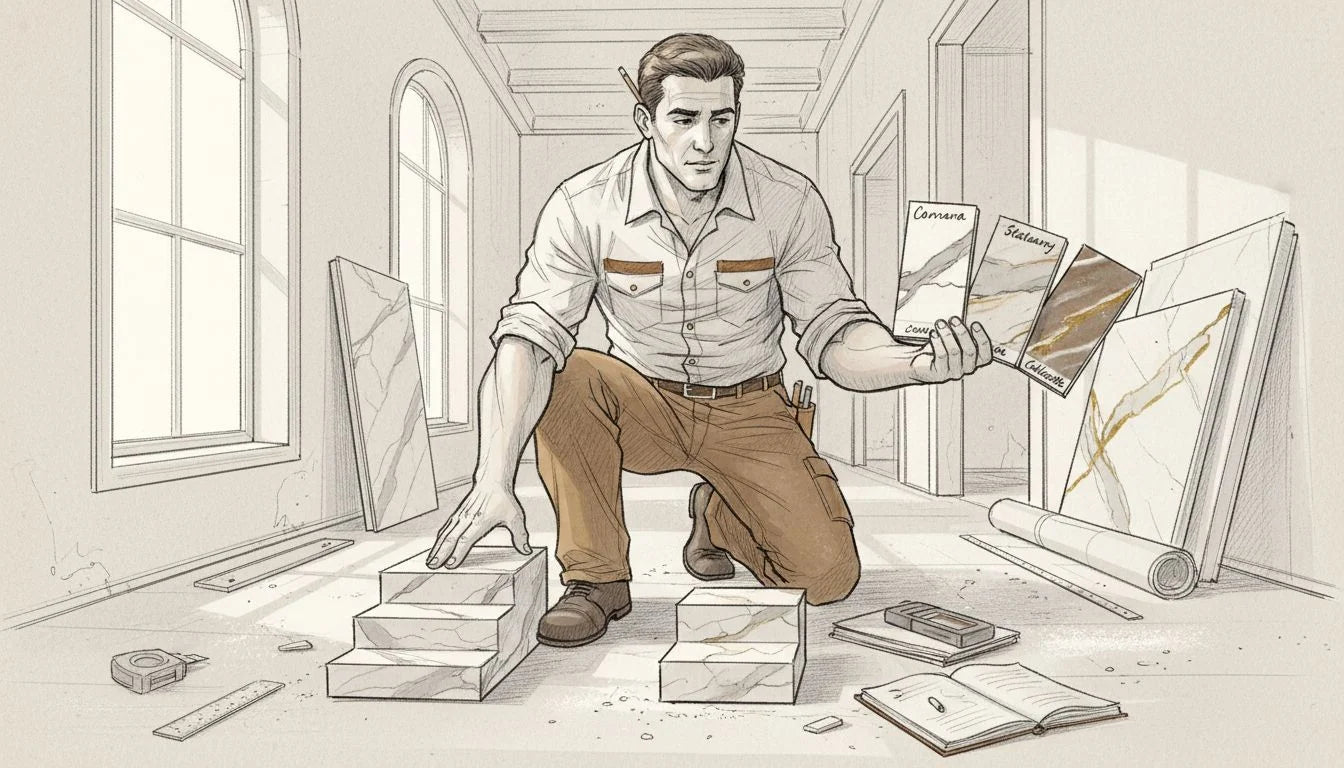
Understanding marble’s structural properties is crucial for selection. Calcite and dolomite marble types have different characteristics that impact their performance in staircase design. Calcite marble tends to be softer and more susceptible to environmental factors, while dolomitic marble offers superior resistance to wear and potential damage. Homeowners should consider factors like foot traffic, maintenance requirements, and aesthetic preferences when choosing their ideal marble staircase material.
Pro tip: Request small samples of different marble types and observe them in your home’s lighting to ensure the perfect visual harmony with your existing design elements.
Here’s a concise comparison of major marble types used in staircase design:
| Marble Type | Veining Pattern | Durability | Typical Color Tones |
|---|---|---|---|
| Carrara | Soft, subtle gray veins | Moderate longevity | White with light gray |
| Statuary | Bold, dramatic veining | High durability | Pristine white, strong veins |
| Calacatta | Thick, pronounced veins | Very resilient | White with gold or gray |
| Dolomitic | Minimal veining, uniform | Best for high wear | Various muted tones |
Aesthetic and Structural Benefits of Marble
Marble staircases represent the pinnacle of architectural sophistication, offering homeowners a unique combination of structural integrity and unparalleled visual appeal. Marble’s architectural qualities extend far beyond mere decorative function, providing a material that is both resilient and breathtakingly beautiful.
The aesthetic benefits of marble are profound and multifaceted. Its natural translucency creates a luminous effect that transforms staircases into sculptural elements within a home. Each marble slab features unique veining patterns, ensuring that no two staircases are identical. The subtle variations in color and texture allow marble to complement diverse interior design styles, from minimalist modern to classic traditional environments.
Structural advantages of marble staircases are equally impressive. The stone’s inherent strength allows for intricate carving and detailed design work that other materials cannot match. Marble’s durability means that a well-maintained staircase can last for generations, actually improving in character and appearance over time. Architects and designers appreciate marble’s ability to support complex architectural forms while maintaining exceptional structural performance.
Pro tip: Invest in professional sealing and periodic professional maintenance to preserve your marble staircase’s pristine appearance and structural integrity for decades.
Cost, Maintenance, and Safety Factors
Marble staircases represent a significant investment for luxury homeowners, with costs extending well beyond initial installation. Marble maintenance challenges require careful financial and practical planning to preserve the staircase’s long-term beauty and structural integrity. Typical installation costs range from $100 to $300 per square foot, depending on marble quality, complexity of design, and regional labor rates.
Maintenance is a critical consideration for marble staircases. The stone’s porous nature makes it susceptible to staining, etching, and environmental damage. Homeowners should budget for professional sealing every 6-12 months, which can cost between $500-$1,500 per application. Regular cleaning requires specialized marble-safe products to prevent surface degradation, adding another layer of ongoing maintenance expense.
Acid precipitation impacts create additional maintenance challenges, particularly for exposed staircases. Environmental factors like acid rain can gradually erode marble’s surface, requiring periodic professional restoration. Safety becomes paramount, with slip resistance and structural integrity demanding continuous professional assessment. Homeowners must invest in professional inspections, non-slip treatments, and potential surface refinishing to ensure both aesthetic appeal and user safety.
Pro tip: Request a comprehensive maintenance plan from your marble installation professional, including detailed cost projections for long-term care and preservation of your staircase.
Comparing Marble to Other Luxury Materials
Luxury home design demands materials that transcend mere functionality, and marble stands distinctively apart from alternative stone options. Marble’s unique characteristics distinguish it from granite, limestone, and engineered stone alternatives, offering unparalleled aesthetic versatility and timeless elegance.
Compared to granite, marble provides superior design flexibility. While granite offers exceptional durability, its uniform appearance lacks the nuanced translucency and intricate veining that make marble staircases truly remarkable. Engineered stone, though more consistent in pattern, cannot replicate marble’s natural depth and luminosity. The subtle color variations and fine grain of marble create visual narratives that transform staircases from mere structural elements into architectural statements.
Luxury staircase materials each present unique trade-offs. Granite provides superior scratch resistance, while marble offers unmatched elegance. Travertine presents a softer aesthetic but lacks marble’s ability to be polished to a high sheen. Quartzite delivers durability but misses marble’s historical prestige and refined visual complexity. These differences underscore marble’s unique position as a material that balances aesthetic sophistication with structural performance.
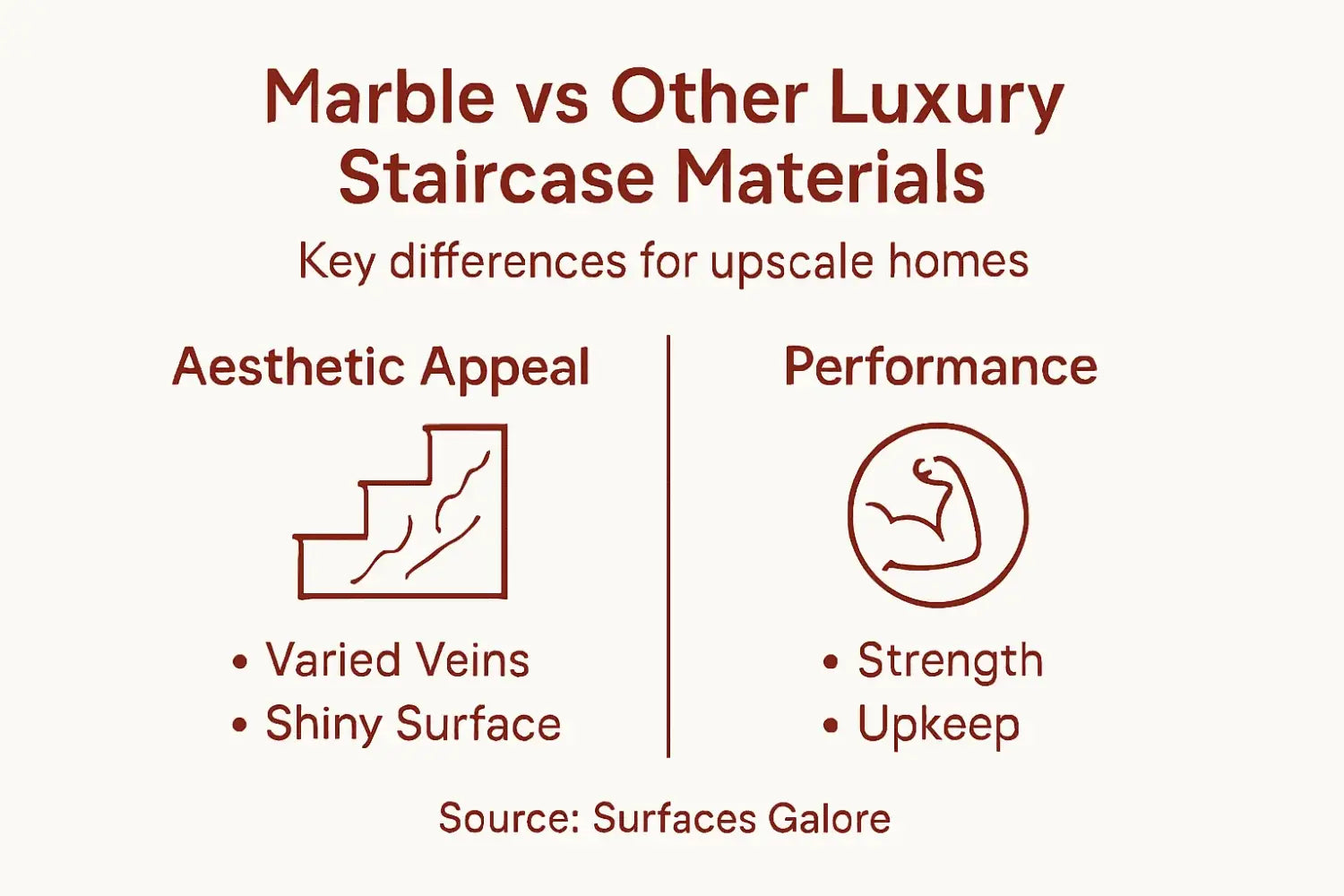
This table highlights key differences between top luxury staircase materials:
| Material | Aesthetic Strength | Maintenance Needs | Long-Term Value |
|---|---|---|---|
| Marble | Artistic veining, sheen | Professional, frequent care | Historic, prestigious |
| Granite | Uniform, strong colors | Low, basic cleaning | Excellent durability |
| Travertine | Subtle, rustic texture | Occasional care | Modest improvement |
| Quartzite | Opaque, bold hues | Simple, routine cleaning | Great for high traffic |
Pro tip: Request material samples from multiple stone types and observe them in your home’s specific lighting conditions to truly understand their visual and textural differences.
Elevate Your Home with Timeless Marble Staircases from Surfaces Galore
Are you ready to transform your staircase into a radiant centerpiece of luxury and durability? The article highlights the challenge homeowners face in selecting marble that not only captivates with its natural veining and timeless elegance but also stands strong against maintenance demands and environmental wear. At Surfaces Galore, we understand how crucial it is to find premium marble that balances beauty and structural integrity for high-traffic staircases.
Discover our exclusive selection of authentic marble and travertine tiles designed for lasting elegance. Whether you seek Carrara’s subtle gray veining or the dramatic patterns of Calacatta, our direct-imported stones bring your vision to life with durability that preserves your investment. Visit Surfaces Galore now to explore our collection and request samples to see how our natural stone complements your home’s style. Don’t wait to add that stunning architectural statement stairway that enhances both ambiance and value. Start your marble staircase journey today by browsing our premium offerings at Surfaces Galore and benefit from expert guidance tailored for homeowners like you aiming for timeless beauty.
Frequently Asked Questions
What are the key benefits of using marble for staircases?
Marble staircases elevate a home’s aesthetic appeal with their luxurious appearance and unique veining patterns. They offer both structural integrity and timeless beauty, making them a stunning architectural feature.
How do I maintain a marble staircase to preserve its appearance?
To maintain a marble staircase, you should have it professionally sealed every 6-12 months to protect against stains and environmental damage. Regular cleaning with marble-safe products is also essential to prevent surface degradation.
What types of marble are best for staircase design?
Popular marble types for staircase design include Carrara, Statuary, and Calacatta. Each variety offers different veining and durability characteristics, allowing homeowners to select based on aesthetic preference and structural needs.
How does marble compare to other luxury materials for staircases?
Compared to granite or engineered stone, marble offers superior aesthetic versatility and natural beauty. While granite is highly durable, it lacks the unique veining and artistic quality of marble. Engineered stone may be consistent but cannot replicate marble’s depth and luminosity.
Leave a comment