
Backsplash tile: How to choose marble and travertine for your kitchen

Key Takeaways
A natural-stone backsplash can bring distinctive pattern and texture to the kitchen, but the right choice depends on the room and the way you use it. Consider the whole project—from samples and layout to installation and care—before ordering.
- Marble offers varied veining and a classic, polished or understated look.
- Travertine brings warm tones and natural texture; limestone offers another subtle stone palette.
- Tile shape, pattern, and finish affect how the backsplash reads across the room.
- Measure carefully, plan cuts and edges, and order with natural variation in mind.
- Check installation and care recommendations for the specific stone you select.
Why choose natural stone for a backsplash
A backsplash is a relatively small surface, yet it can change how the entire kitchen feels. Natural stone adds variation that is difficult to replicate exactly, giving the wall its own character rather than a completely uniform appearance. Marble and travertine are popular choices for homeowners drawn to expressive veining, warm color, or tactile texture.
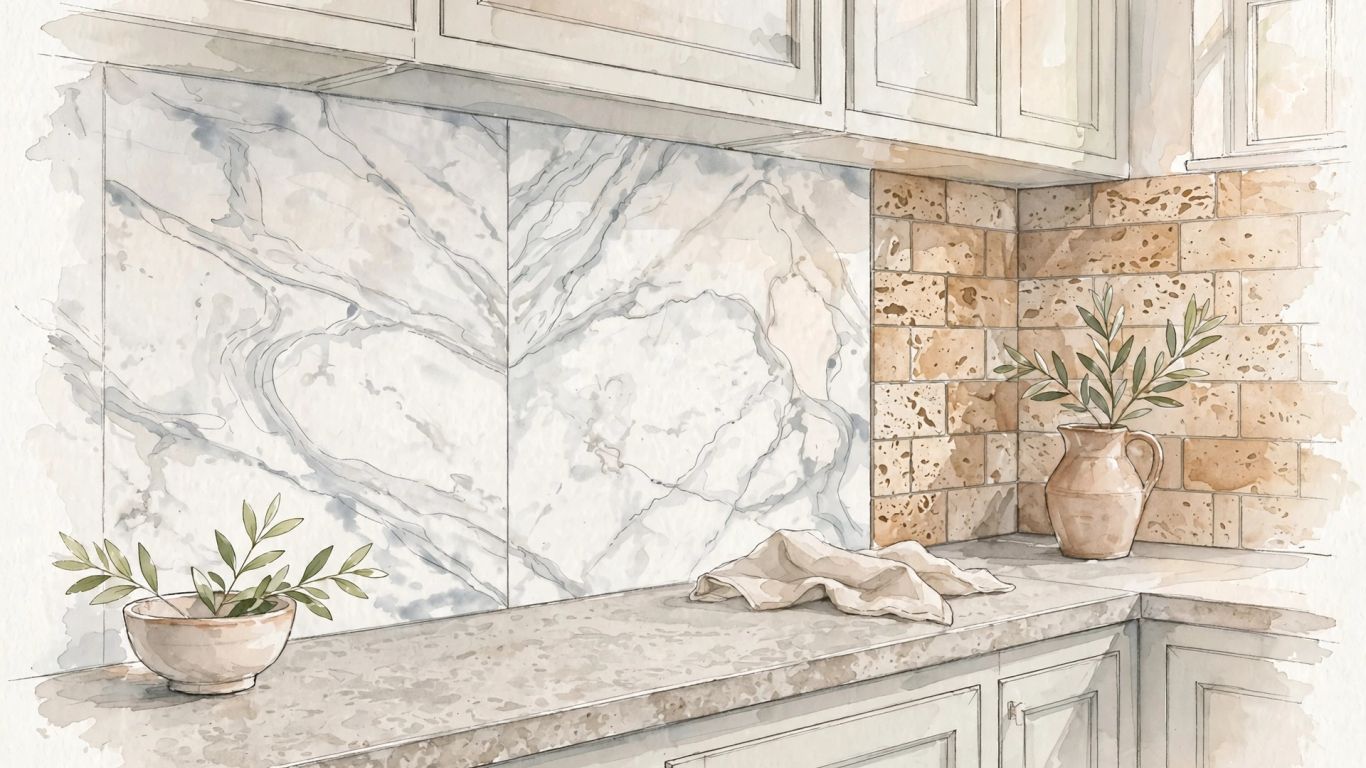
The appeal of marble’s veining and color variation
Marble’s appeal often starts with its veining: delicate lines, cloudy movement, or stronger contrasts that make each piece feel individual. A white or pale marble can sit quietly beside busy countertops, while a more dramatic selection can make the wall a focal point. Because natural stone varies, a sample helps you judge the color and pattern in your own kitchen light; natural variation is part of the design, not a defect to be erased.
How travertine adds warmth and texture
Travertine brings a different mood, with earthy color and a surface that can feel more textured than marble. Ivory, beige, and deeper brown tones can soften a kitchen with crisp cabinetry or complement wood finishes. For a real-world design scenario, imagine a simple white kitchen with a warm travertine backsplash: the stone adds visual depth without requiring a bold color on every surface. It is an illustrative pairing, not a promise that one combination suits every room.
Durability, maintenance, and long-term value
A backsplash sees splashes and cooking residue, so appearance is only part of the decision. Marble and limestone can be more prone to scratching and staining than some harder materials, while travertine requires sealing; the precise care routine depends on the selected stone and its finish. Stone can be a lasting design choice when installed and maintained appropriately, but it is sensible to consider upkeep alongside its initial appeal.
A practical rule helps keep expectations clear:
Choose the stone you will enjoy seeing, and learn how to care for it before it is installed.
That means asking about suitable sealers, cleaning products, and installation materials for the specific tile. A little preparation helps protect the finish and keeps the choice grounded in everyday use.
Choose a stone and color for your kitchen
Start with the materials already in the room: counters, cabinet fronts, flooring, and metal fixtures. Then decide whether the backsplash should blend into that palette or create a measured contrast. If you want to compare a few natural-stone looks, the La Travonya Travertine listing shows a filled-and-honed option with warm, earthy tones.
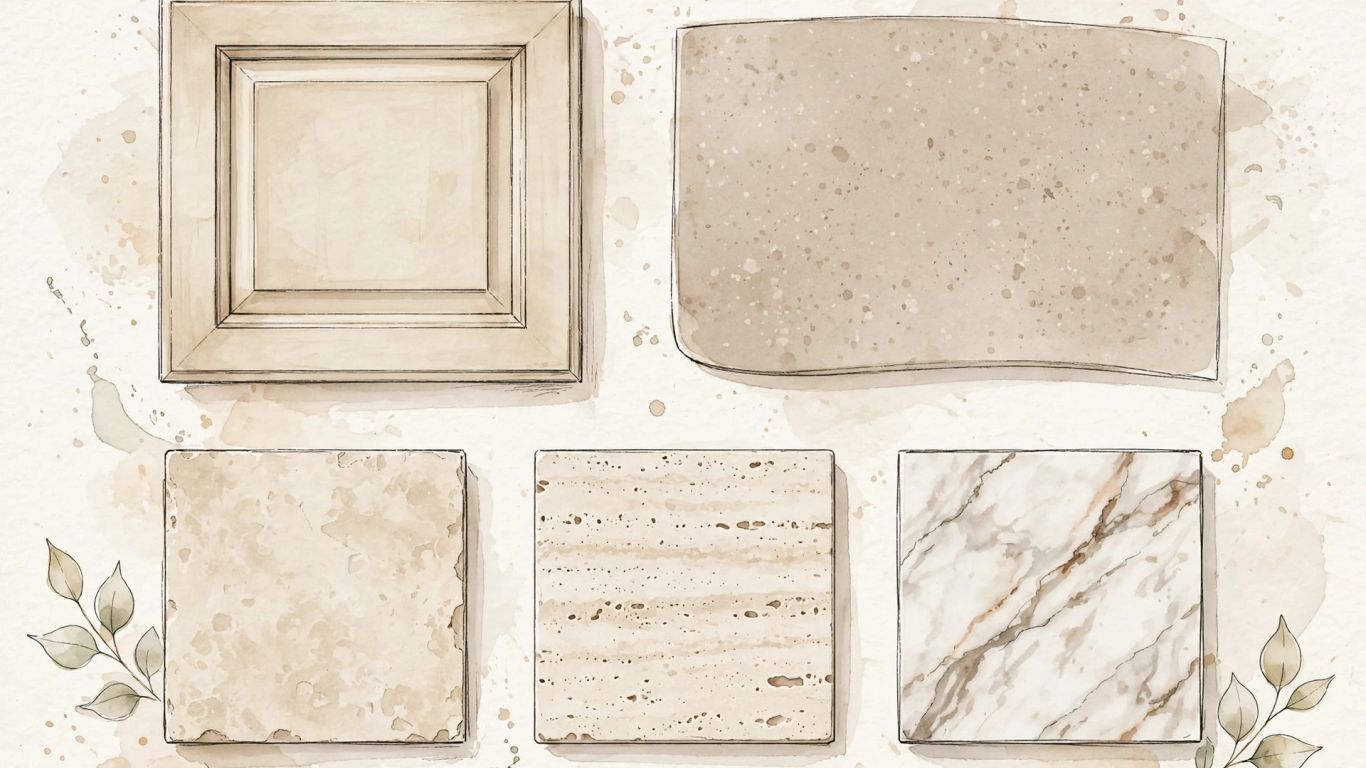
Compare marble, travertine, and limestone
These stones share a natural origin, but they create different visual impressions and have different care considerations. Think about the look you want first, then confirm the maintenance guidance for the actual tile rather than relying on a broad rule for an entire stone family. This compact comparison can help narrow the shortlist.
| Stone | Visual character | Consider as you choose |
|---|---|---|
| Marble | Veining and color movement, from subtle to pronounced | Ask about scratch, stain, and care considerations |
| Travertine | Warm, earthy tones and natural texture | Confirm sealing and finish recommendations |
| Limestone | A quiet, organic look with gentle color variation | Plan for care needs associated with a softer, more porous stone |
The table is a starting point, not a substitute for checking a specific product. A light marble may be the right visual fit for one kitchen, while a warmer travertine or limestone may make more sense in another.
Coordinate tile with countertops, cabinets, and fixtures
Bring together actual samples, or clear photographs, of the countertop and cabinet finishes before choosing tile. A backsplash that repeats one color from the counter can feel connected, while a contrasting tone can give the wall more definition. If you are weighing countertop materials too, this Cambria countertop overview can provide a separate point of comparison for kitchen planning.
For a small-kitchen example, a homeowner with patterned counters might choose a quieter stone and let the counter remain the visual lead. With a plain counter, a veined marble or decorative mosaic can add interest instead. Keep the fixture finish in view, too: stone undertones can read differently next to warm brass than beside cooler metal.
Explore light, dark, and neutral stone palettes
Light stone can help a compact kitchen feel open, while dark tile may frame a range or provide contrast against pale cabinetry. Neutral shades—ivory, beige, gray, and soft brown—offer a flexible middle ground, especially when other finishes already carry strong color. Browse backsplash color guidance as one way to think through harmony and contrast before settling on a palette.
Select a tile shape, pattern, and finish
The same stone can look quite different as a small mosaic, a rectangular tile, or a larger-format piece. Pattern changes the rhythm of the wall, while finish affects how the stone catches light and feels at a glance. Choose these details together so the finished backsplash feels intentional, rather than like several separate decisions made at different times.
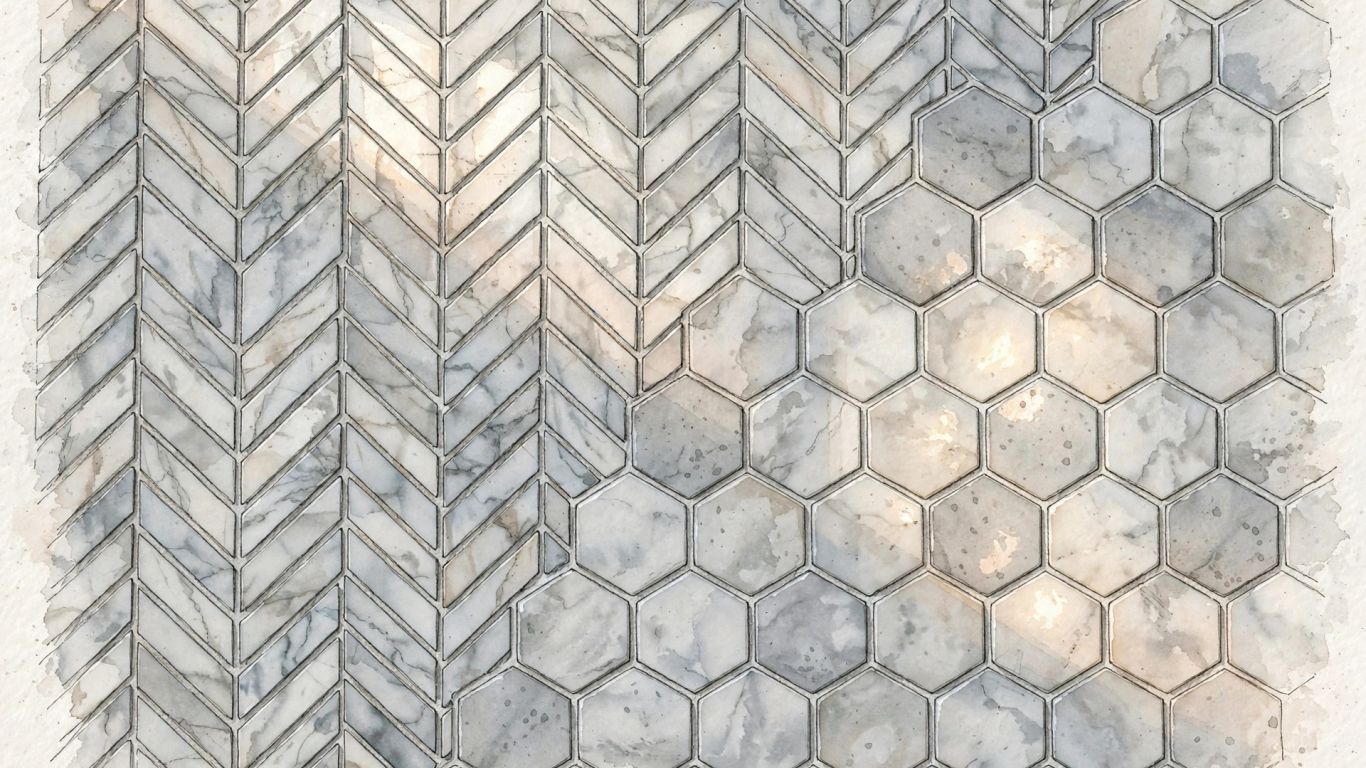
Use mosaics to add detail or create a focal point
Mosaics can introduce a fine pattern without adding a new color, or bring a decorative accent behind a range or sink. Marble mosaics include options such as herringbone, hexagon, basketweave, penny round, and arabesque patterns, with polished, honed, and tumbled finishes available in the collection described by Surfaces Galore. If a small-scale pattern appeals, compare La Travonya brick mosaic with a larger tile to see how the joint lines change the overall effect.
Keep the surrounding surfaces simple if the mosaic has a strong motif. A small, carefully placed feature can feel special; repeating a detailed pattern over a large wall may make the kitchen feel busier than you intended.
Compare subway, herringbone, and checkerboard layouts
Subway tile creates a familiar, orderly line, while herringbone brings more movement through its angled pieces. Checkerboard depends on contrast between two tile colors, so it can feel graphic even when the individual tiles are simple. Consider the room’s scale and the amount of visual activity already present before committing to one pattern.
A useful way to compare layouts is to look at the same two stone colors in each arrangement. If you are drawn to high contrast, a Nero Marquina herringbone mosaic offers one example of how a patterned stone can make a backsplash more expressive. A quieter field tile can still have character through its natural veining.
Choose among polished, honed, and tumbled finishes
Polished stone has a reflective surface; honed stone has a more subdued, matte appearance, and tumbled stone has an aged, textured look. The finish can shift the whole room’s mood, even when the stone color stays the same. For instance, a polished marble may feel formal and bright, while honed or tumbled stone can read softer and more relaxed.
Look at finish samples against the kitchen’s lighting, and ask how the chosen surface should be cleaned and maintained. A finish is not only a style choice; it is also part of the care conversation for the specific product.
Plan the backsplash layout
A little measuring before ordering can prevent awkward slivers at a cabinet edge or an unexpected shortage during installation. Sketch the wall in sections and note the countertop line, upper cabinets, windows, corners, and any range feature. A dry layout is useful for checking how veining and color variation distribute across the visible area.
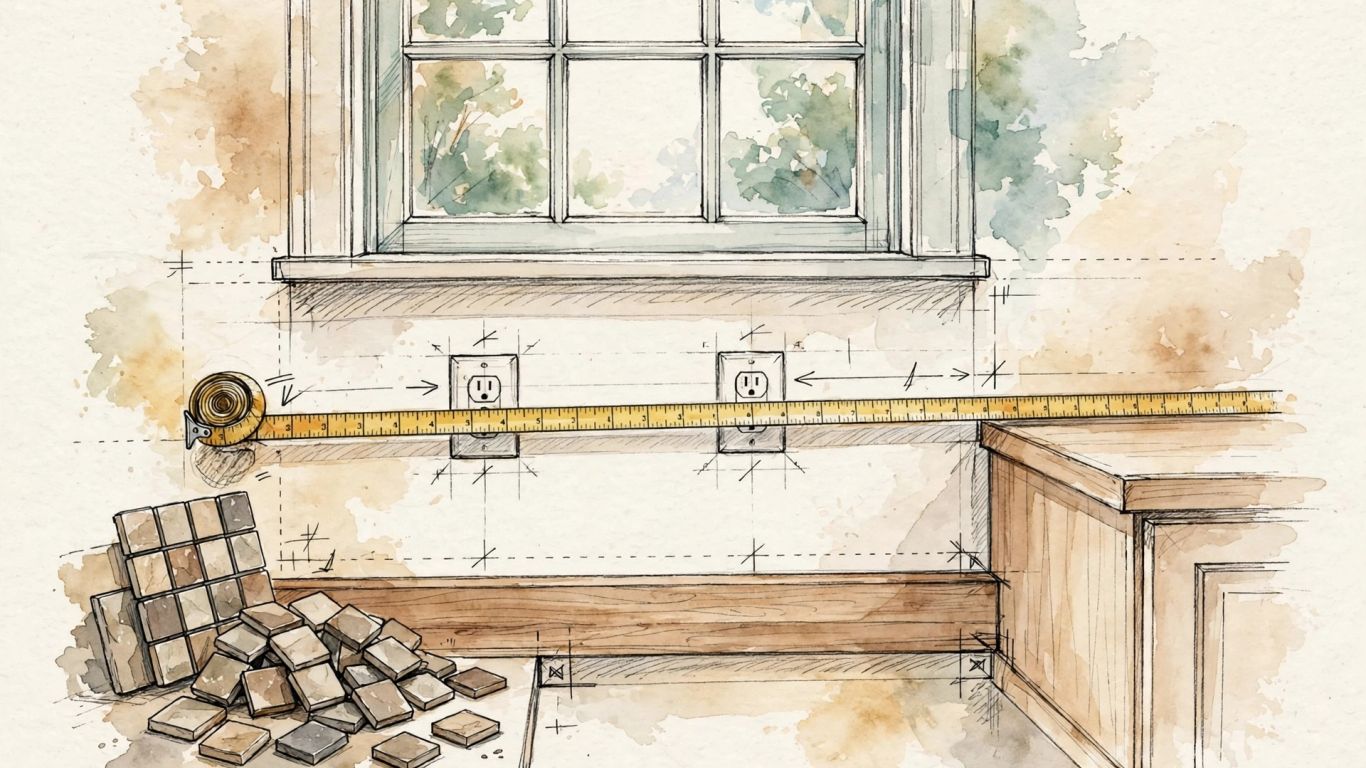
Measure the wall and estimate how much tile to order
Measure the width and height of each backsplash area, then calculate the square footage by multiplying the dimensions of each rectangle and adding the results. Subtract large openings only if appropriate to the project, and confirm the order quantity with the supplier or installer, since pattern, tile size, and cuts affect the amount needed. Natural stone varies, so ordering a reasonable allowance for cuts and waste is worth discussing before you buy.
For a dependable estimate, write down the details that affect the layout:
- Measure each wall section separately, including short returns.
- Record openings and interruptions, such as windows or a range hood.
- Note tile dimensions and the pattern you plan to use.
- Confirm the recommended overage with your installer or supplier.
Use those figures as a planning tool, not a final guarantee of quantity. If the layout includes many cuts or a diagonal pattern, have the installer check the estimate before placing the order.
Account for outlets, corners, and cabinet edges
Outlets and switches interrupt a tile pattern, so note their locations and heights on your sketch. Think through corners and exposed edges as well: a clean transition may need a trim piece or a carefully finished cut. If a two-cook kitchen is part of the same renovation, planning separate prep areas around an end-grain cutting board can help clarify which counter zones will be most active beside the backsplash.
A broader renovation schedule may also involve unrelated household choices. For example, someone comparing a Präventionskurs search is making a separate decision with its own location and eligibility considerations; keep it distinct from the tile specification rather than letting it distract from the measurements.
Decide where borders, trim, or a custom mosaic can fit
A border or listello can frame a mosaic or create a visual break between sections, but it should have a clear role in the layout. Consider placing it where it aligns naturally with a cabinet edge, window, or other architectural line. Decorative marble borders and travertine listellos are available in different sizes, colors, and finishes, so compare samples with the field tile before deciding.
For a client presentation, an interior designer may also be preparing studio materials such as Staples business cards. That branding task is separate from the backsplash itself, but keeping the tile board and finish notes together can make the design discussion easier to follow.
Understand installation and natural-stone care
Stone rewards thoughtful preparation. The substrate, setting materials, grout, and sealer all need to suit the chosen tile, and the stone should be inspected before installation. Natural color and pattern variation are expected, so a dry layout can help distribute pieces in a way that feels balanced.
Prepare the surface and plan for professional installation
The wall should be clean, stable, dry, and flat enough for the selected tile and installation method. Use setting materials rated for natural stone and follow their manufacturers’ instructions; a qualified installer can confirm compatibility and plan any necessary surface preparation. Before adhesive is applied, inspect the tiles and arrange them dry so the final layout avoids awkward cuts and concentrates attractive veining where it will be seen.
A short installation conversation can prevent avoidable surprises. Confirm the grout-joint plan, the treatment of cut edges, and how the installer will handle outlets and corners before the work begins.
Seal stone as recommended for the selected material
Sealing guidance depends on the specific stone, finish, and product instructions, so do not assume that every tile needs the same schedule. Travertine needs sealing according to the source guidance, and other stone selections should be treated as their product recommendations specify. Ask the supplier or installer which sealer is suitable and when it should be applied.
Keep the product details and care instructions with your renovation records. If an installer recommends a particular sequence for sealing and grouting, confirm it against the instructions for the materials being used.
Clean spills and everyday residue with stone-safe products
Wipe away cooking splashes and residue with products labeled as appropriate for natural stone. Avoid guessing that a household cleaner is suitable, especially if the stone maker or installer has given different instructions. A small test in an inconspicuous spot can help confirm that a product is compatible before it is used across the backsplash.
For a visual primer on natural-stone installation and care, this video search placeholder is included below.
Shop for backsplash tile with confidence
A strong order begins with a clear shortlist and a careful review of samples, quantity, and delivery details. Check current stock for the specific size, finish, and pattern you want, then make sure the order reflects the layout you have planned. Surfaces Galore is a direct importer and nationwide supplier of premium natural stone, including marble and travertine tiles, mosaics, and moldings.
Review samples, current stock, and natural variation
A sample lets you see a stone beside your own counter, cabinetry, and lighting rather than judging it from a screen alone. Natural stone varies in color, veining, and texture, so ask how the sample relates to current stock and review the product details before ordering. If the design uses a strong pattern, look at enough pieces to understand how the variation may appear across the full backsplash.
For a dramatic alternative to pale stone, compare a Nero Marquina black mosaic with a light marble sample. The contrast can be striking, but the right choice depends on the kitchen’s overall balance and the amount of pattern you want to see every day.
Compare pricing, bulk discounts, and shipping options
Compare the full project cost, not only the price per tile: quantity, trim, shipping, and any additional material for cuts all matter. Ask about bulk discounts where relevant, and confirm delivery timing and shipping arrangements before committing to a schedule. For a tile design professional, prompt communication on estimates can also matter; these quote follow-up tips offer a separate small-business perspective on keeping enquiries moving.
If you are browsing across the US, check whether the selected items are currently in stock and whether the shipping plan fits your project timeline. A clear written quote makes it easier to compare finishes and quantities without losing track of what each option includes.
Request a quote and confirm project details before ordering
Before placing an order, confirm the tile name, size, finish, quantity, and any trim or mosaic pieces in writing. It is also helpful to clarify the expected delivery details and whether all parts of the selection are available together. Surfaces Galore offers a range of marble and travertine tiles and decorative options; ask for current product and order information that matches your kitchen plan.
When the shortlist is ready, request a tile quote with your measurements, preferred finish, and planned quantity. That gives the seller the details needed to respond to the project you are actually doing, rather than a rough idea of it.
Shop Stone Tile
Browse the marble and travertine selection at Surfaces Galore, review current stock, and request a quote with your project details before placing an order.
Conclusion
The best backsplash tile is the one that suits your kitchen’s palette, pattern preferences, and appetite for natural-stone care. Compare marble, travertine, and limestone in person where possible, plan the layout carefully, and confirm installation and ordering details before the first tile goes on the wall.
Frequently Asked Questions
Is marble a good choice for a kitchen backsplash?
Marble can be a beautiful backsplash choice, with veining and color variation that give the wall distinctive character. Consider its care requirements and ask about the specific tile’s suitability before deciding.
What is the difference between marble and travertine?
Marble is often chosen for its veining and range of color movement, while travertine is associated with warm, earthy tones and natural texture. Their appearance and care needs vary by product and finish.
Does natural-stone backsplash tile need to be sealed?
Sealing requirements depend on the stone and product recommendations. Travertine needs sealing according to the guidance for the selected material; confirm the correct process with the supplier or installer.
Which backsplash finish is easiest to coordinate?
Honed finishes tend to have a subdued, matte look, polished finishes reflect more light, and tumbled finishes have an aged, textured appearance. Compare samples with the kitchen’s existing surfaces and lighting.
How do I estimate how much backsplash tile to buy?
Measure each wall section, calculate the area, and account for openings, pattern, and cuts. Ask the installer or supplier to review the quantity and recommended allowance before ordering.
Can a mosaic backsplash work in a small kitchen?
Yes, a mosaic can add detail in a small area, such as behind a range or sink. Consider the pattern scale and keep other finishes balanced so the room does not feel overly busy.
How should I clean a natural-stone backsplash?
Use cleaning products labeled as suitable for natural stone and follow the product or installer’s care instructions. If uncertain, check compatibility before using a cleaner across the surface.

Leave a comment