
Pet Stains on Marble: How to Remove Them and Prevent More

Pet accidents on marble leave two different kinds of damage, and each needs its own fix. A stain is color that soaked into the stone, usually a darker or yellowish spot. An etch is a dull, lighter patch where acid in the urine ate into the polished surface. Blot fast, flush with water and mild soap, and treat what remains as a stain first, then as an etch. Deep stains call for a poultice. Etching that will not polish out belongs to a stone professional. Choosing the right stone and finish up front makes all of this much easier to live with.
This guide is written for homeowners, designers, builders and property managers who have marble floors, bathroom tile, or backsplashes in homes with dogs and cats. It covers how to read the mark, what to clean with, what to avoid, and how to set up a surface that forgives accidents.
TL;DR
- Blot, never wipe. Flush the spot with water and a few drops of mild soap, rinse several times, and dry with a soft cloth.
- Skip vinegar, lemon and other acids, plus scouring powders. Acids can dull or etch calcareous stone like marble, and abrasives scratch it.
- Soaked-in urine stains are treated with a poultice: absorbent white material plus a cleaning agent, covered and left 24 to 48 hours, repeated if needed.
- A dull, lighter spot is an etch, not a stain. Cleaning will not remove it, and deep etching needs a stone restorer.
- Sealing and a honed finish make accidents easier to manage, but nothing makes marble immune to etching.
Table of Contents
- Why pets and marble do not always get along
- Stain, etch or residue: read the mark first
- Step by step: cleaning a fresh pet accident
- When urine has soaked in: the poultice method
- Etching: the damage cleaning cannot lift
- Preventing pet stains on marble
- Where in the home it matters most
- Planning a new project with pets in mind
- Our approach to pets and marble
- Finding marble that suits a home with pets
- A quick response plan to keep on hand
- FAQ
- Sources
Why pets and marble do not always get along
Marble is a calcium-based natural stone. That chemistry gives it the veining and glow people buy it for, and it also explains why it reacts to acids. It is also porous, which means liquids can travel into it before you notice them.
Pet urine hits marble in two ways at once. It carries color that can be absorbed into the pores, and it is acidic enough to attack the surface. The Natural Stone Institute, the trade association for the stone industry, lists urine among organic staining agents, which can leave a pinkish-brown discoloration. It also explains that an etch is caused by acids left sitting on the stone.

That is why a spot can look like a stain but behave like damage. If you scrub at it with the wrong product, you can turn a recoverable stain into a permanent dull patch.
The good news is that most pet accidents are fixable when caught early, and a few design choices reduce how often they happen at all.
Stain, etch or residue: read the mark first
Before you reach for a cleaner, figure out what you are looking at. The wrong treatment on the wrong problem wastes time and can make things worse.
| What you see | Likely cause | What it means |
|---|---|---|
| Darker, yellow or pinkish-brown spot | Stain: pigment absorbed into the stone | Needs cleaning, possibly a poultice |
| Dull, lighter, slightly rough patch where polish was | Etch: acid reacted with the surface | Cleaning will not fix it; needs re-polishing |
| Cloudy film or streaks | Residue from soap or cleaner | Rinse thoroughly and dry |
| Dark spot with a dull center | Both stain and etch | Remove the stain first, then address the etch |
The Natural Stone Institute notes that cleaner or soap can leave a film or streaks, and that some substances can both etch and stain. Light matters here. Look at the spot from a low angle. A dull patch reflects less light than the polished stone around it, and an etch often shows up best that way.
A simple habit helps: after cleaning and drying a spot, look at it again once the stone is fully dry. Wet stone hides etching and exaggerates stains.
Step by step: cleaning a fresh pet accident
Speed matters more than any product. The longer urine sits, the deeper it travels and the longer acid has to work.
- Blot, do not wipe. Use paper towels or a soft cloth. Wiping spreads liquid across the surface and into neighboring pores.
- Flush with water. Pour or wipe clean water over the spot to dilute what is left.
- Wash gently. The Natural Stone Institute recommends a neutral cleaner, stone soap, or mild liquid dishwashing detergent in warm water, applied with a soft cloth or clean rag mop.
- Rinse several times. Soap left behind becomes the next problem. Rinse with clean water until no suds or film remain.
- Dry thoroughly. Use a soft, dry cloth. Standing moisture can keep a stain visible and invite more discoloration.
The Natural Stone Institute’s care guidance lays out this same flush, wash, rinse and dry routine. For a full-room routine, our guides on how to clean marble flooring and cleaning marble tile without damaging the surface go through daily and weekly habits.
What to keep away from your marble
Well-meaning cleanup is behind many etched floors. Pet owners often reach for disinfectants and odor removers that are not made for stone.
- Vinegar and lemon: both are acids. The Natural Stone Institute warns they can dull or etch calcareous stone like marble.
- Scouring powders and creams: these can scratch the surface.
- Harsh multi-surface or bathroom sprays: if the label does not say it is safe for natural stone, leave it in the cabinet.
- Stiff brushes and abrasive pads: they dull polished finishes.
This also applies to “natural” kitchen remedies. A product being gentle on skin or common in a pantry says nothing about how it treats a calcium-based stone.
When urine has soaked in: the poultice method
If a stain is still visible after washing and drying, it has likely traveled below the surface. Surface cleaning cannot pull it back out. A poultice can.
A poultice is a paste made from an absorbent white material and a cleaning agent. As it dries on the stone, it draws the stain upward into the paste. According to the Natural Stone Institute’s stain removal guidance, the process runs like this:
- Mix an appropriate liquid cleaner or chemical with a white absorbent material until it forms a paste.
- Apply it about 1/4 to 1/2 inch thick over the stain, extending slightly past the edges.
- Cover with plastic and let it dry for about 24 to 48 hours.
- Remove the dried paste, rinse the area, and dry it.
- Repeat if the stain remains.
Which chemical for pet urine
For indoor organic stains, including urine, the Natural Stone Institute recommends 12% hydrogen peroxide, the hair-bleaching strength sold at beauty supply stores, with a few drops of ammonia. Treat this as a work-with-care step:
- Wear gloves and eye protection, and ventilate the room.
- Never mix ammonia with bleach or products containing chlorine.
- Chemicals can affect finishes, so follow the stone-care guidance closely and work carefully on a polished surface.
- Keep pets and children out of the room while the poultice is in place.
Patience is the hard part. Poultices often take more than one round, and an old, deep stain may never disappear entirely. The Natural Stone Institute says some stains may not be fully removable.
Etching: the damage cleaning cannot lift
If the spot is dull and lighter rather than dark, you are dealing with an etch. The acid dissolved a thin layer of the polished surface, so no cleaner will bring back the shine. Adding more cleaner or scrubbing harder only dulls the area further.
Light etching on a honed or matte surface may be barely visible. On a mirror-polished floor, even a small etch shows. The Natural Stone Institute advises contacting a stone dealer or restorer about etched areas, and that is the right call when:
- The dull patch is large or spread across several tiles.
- The stain is deep and has not responded to two or three poultice rounds.
- The etching remains after you have removed the stain.
- The marble is in a high-visibility spot like an entry, hotel lobby or primary bath.
A restorer can re-polish or re-hone the area so it blends with the rest of the floor. Marble is solid stone throughout, which is why surface refinishing is possible at all.
On large projects, spot repairs are far easier when you have a few spare tiles from the original lot. Natural stone varies from batch to batch, so a replacement tile bought years later may not match.
Preventing pet stains on marble
Prevention is mostly about slowing absorption, softening the look of any damage, and shortening the time between accident and cleanup.
Seal the stone, and keep the seal current
A penetrating sealer fills the pores below the surface so liquids soak in more slowly. That buys you time to blot a spill before it stains. Sealer does not stop acid from etching marble, though, so cleanup speed still counts. Reapplication frequency depends on the stone, the finish, the traffic and the product, so follow the sealer manufacturer’s directions. Our guide to testing sealer and rescuing stains on marble backsplashes walks through a simple way to judge whether a seal is still doing its job.
Choose a finish that hides wear
Polished marble shows every etch. Honed marble, which has a soft matte surface, hides small etches and scratches much better. For homes with pets, honed tile is a practical choice on floors where accidents happen. Mosaics and tumbled or textured finishes are even more forgiving, because the pattern, the grout lines and the surface variation break up the look of small marks.

Pick stone with movement
Veining, cloud patterns and tonal shifts help camouflage small marks. A uniform, solid white floor will show every blemish. A marble with active veining or a warm, mixed tone will not.
Think about grout
Grout is more porous than the stone around it, so it often takes the stain first and holds it. Sealing grout lines when you seal the tile, and cleaning them promptly, protects the part of the floor that stains most easily.
Set up the room
- Keep pet water and food bowls on a mat rather than directly on stone.
- Put washable rugs in spots where your pet tends to go.
- Keep cleaning supplies for stone in one place, so the right product is within reach when an accident happens.
- Clean up accidents the moment you see them, including those that happen while you are out. Check floors when you return.
- Train and schedule outdoor breaks, particularly for puppies and senior pets.
For a simple routine you can keep up, see our guide on streamlining marble maintenance.
Where in the home it matters most
Kitchen and entry floors. These are the zones where bowls, wet paws and accidents concentrate. Honed finishes and well-sealed grout lines do the most work here.
Bathrooms. Cats and dogs often visit bathroom floors, and the cleaning products stored in bathrooms can themselves etch stone. Keep acidic descaling products away from marble tile.
Backsplashes. Pets are less of a factor, but splashes and cleaners are. Wipe up acidic spills quickly.
Hotels and rental properties. Pet-friendly hospitality and rental properties need a written maintenance schedule so staff know what to use and what to avoid. Our guide to hotel marble maintenance lays out daily, quarterly and annual care that translates well to any high-traffic setting.
Travertine and limestone are calcium-based too, so the same principles apply. If your floors are travertine, see our notes on the best cleaner for travertine floors.
Planning a new project with pets in mind
If you are specifying marble for a family with animals, a few decisions at the start save repair costs later.
- Specify a honed or matte finish for floors in main living areas.
- Choose patterned stone over uniform solid colors where you can.
- Plan sealing at installation, for both tile and grout, and write the maintenance routine into the handoff to the owner.
- Order overage. Keep extra tiles from the same lot for future repairs.
- Match the stone to the zone. Use more forgiving mosaics and honed tiles where pets spend time, and reserve highly polished stone for lower-traffic rooms.
Designers and builders can pass this guidance on to clients as part of project documentation. It sets realistic expectations about natural stone and keeps small accidents from becoming warranty calls.
Our approach to pets and marble
We import natural stone directly, so we talk with homeowners, designers and contractors about this all the time: marble can live with pets, as long as it is chosen and cared for with pets in mind.
Our advice is to think about the finish before the color. A honed marble or a patterned mosaic gives you a surface that forgives the occasional accident, while keeping the character of real stone. Our inventory is premium only, not commercial grade, and we select architectural-grade material with strict quality assurance, so the tile you receive is chosen to perform in a real home.
Natural variation is part of what you are buying. No two tiles are identical, and that variation is a design asset in a home where life is not always tidy. We offer free sample shipping, so you can see a finish and veining in your own light, next to your own floors, before committing. Our team also supports custom projects and bulk orders for builders and trade customers.
Choose well, seal properly, clean quickly with stone-safe products, and marble will reward you for years.
John | Surfaces Galore
Finding marble that suits a home with pets
Surfaces Galore is a direct importer of marble, travertine and limestone tile, mosaics, moldings, pavers and pool coping, shipped nationwide. If you are choosing stone for a home with animals, start with marble tiles and mosaics, where you can compare finishes, shapes and patterns. Designers and contractors can ask about trade options and bulk quotes.

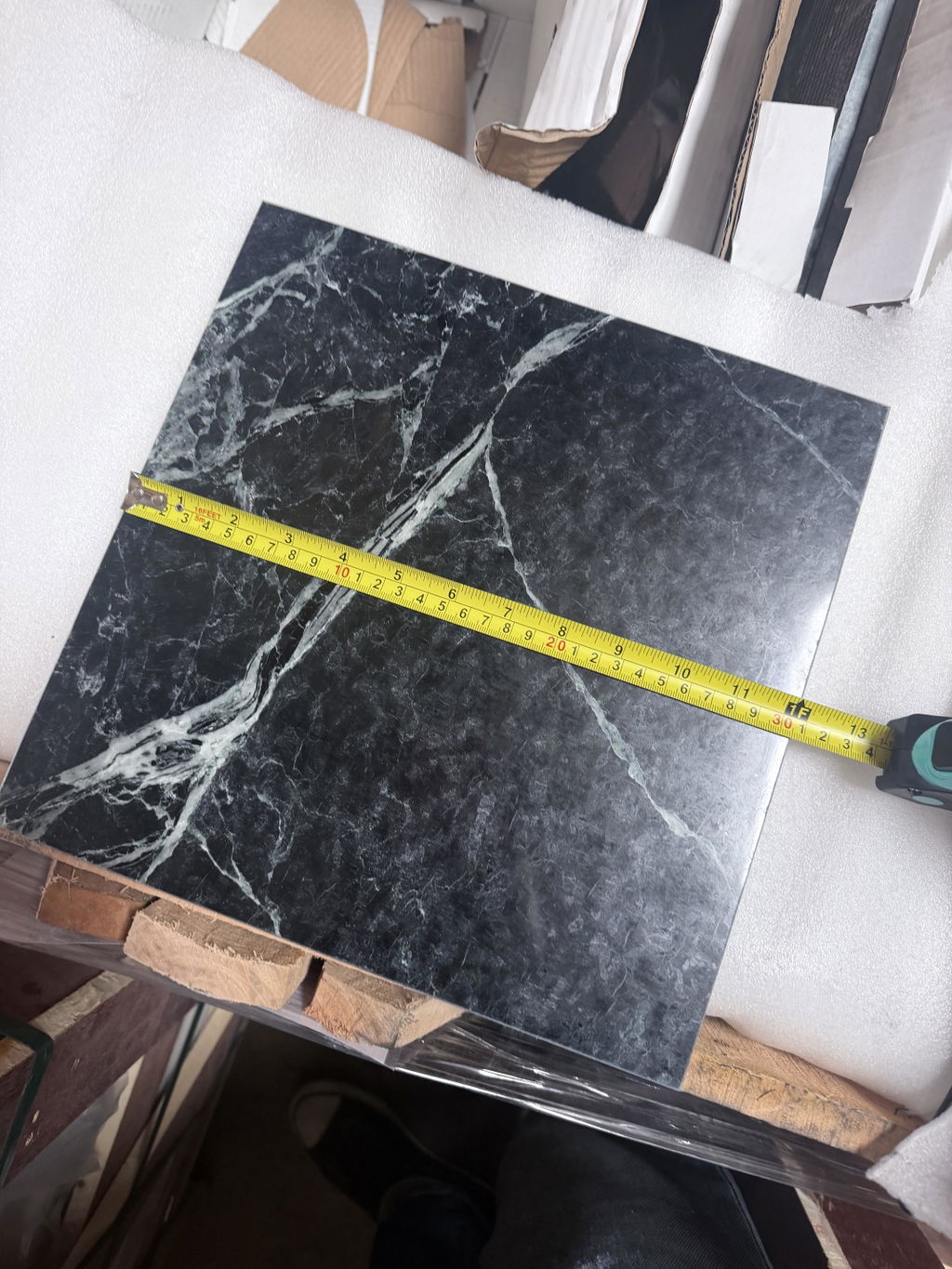
For a specific look, you might begin with a Rosetta Storm marble 12x12 polished tile for its movement, or a Crema Marfil marble mosaic in polished or honed finish, where the pattern helps hide small marks.
A quick response plan to keep on hand
Print or save this for everyone in the household, or give it to your property staff.
Within minutes
- Blot the spill with paper towels.
- Flush with clean water.
- Wash with stone-safe soap or neutral cleaner. Rinse and dry.
Within a day
- Look at the dry spot from a low angle. Dark means stain. Dull means etch.
- For a dark stain, prepare a poultice with 12% hydrogen peroxide and a few drops of ammonia on a white absorbent material, following the Natural Stone Institute’s instructions.
Within a week
- Repeat the poultice if needed.
- If the spot is still dull or stained, contact a stone restoration professional.
Ongoing
- Keep sealer current on stone and grout.
- Reorder stone-safe cleaner before you run out.
- Never use vinegar, lemon or abrasive powders.
For a deeper look at problems beyond pet accidents, our marble floor troubleshooting guide covers common issues and their fixes, and our overview of marble maintenance for lasting luxury covers the long game.
FAQ
Does pet urine permanently damage marble?
Not always. If you blot it up quickly and rinse it away, there may be no lasting mark. Urine that sits can stain the stone and etch the surface. Stains can often be lifted with a poultice, while etching typically needs to be re-polished by a professional.
Can I use vinegar or lemon to remove pet odor from marble?
No. Both are acids, and the Natural Stone Institute names them as substances that can dull or etch calcareous stone such as marble. Use a neutral cleaner, stone soap or mild dish detergent in warm water, rinse well and dry the area.
How do I know if the mark is a stain or an etch?
A stain is usually darker or yellowish and sits in the stone. An etch is a dull, lighter patch where the polish has worn away. Dry the area and look at it from a low angle. If it is dull rather than dark, it is an etch, and cleaning will not remove it.
Is honed or polished marble better with pets?
Honed marble is usually the more forgiving choice, because its matte surface hides small etches and scratches better than a mirror polish does. Both finishes are natural stone and both need sealing and prompt cleanup. Patterned and veined stone also helps disguise minor marks.
When should I call a professional?
Call a stone restoration professional when a stain has not responded to repeated poultice treatments, when etching covers a large area, or when the dull spot remains after you have removed the stain. The Natural Stone Institute recommends this for deep or stubborn stains and for etched areas that cannot be polished out.
Sources
- Natural Stone Institute: Learn About Cleaning Products for Natural Stone
- Natural Stone Institute: Remove Stains from Stone
Recommended
- How to Avoid Marble Damage: 10 Proven Tips for Homeowners
- Protecting Marble and Travertine from Damage
- Clean Marble Tile Safely Without Damaging Surfaces
- Clean Marble And Travertine Stone Surfaces
This article is provided for general informational guidance only. Natural stone varies in color, veining, texture and performance. For installation, sealing, cleaning and maintenance, follow the product manufacturer’s instructions and consult a qualified installer or stone-care professional. Always test cleaning and sealing products in an inconspicuous area first. Surfaces Galore is not responsible for damage, discoloration, etching, staining, installation issues or other problems resulting from

Leave a comment