
Crema Marfil and Dark Emperador Marble Mosaic: Design Ideas, Applications, and Buying Guide

Key Takeaways
Crema Marfil and Dark Emperador marble create a warm, flexible foundation for elegant interiors. The right pattern, finish, installation plan, and care routine will help the mosaic look beautiful for years.
- Cream and deep brown tones create a balanced, welcoming contrast.
- Natural veining ensures that every mosaic installation has its own character.
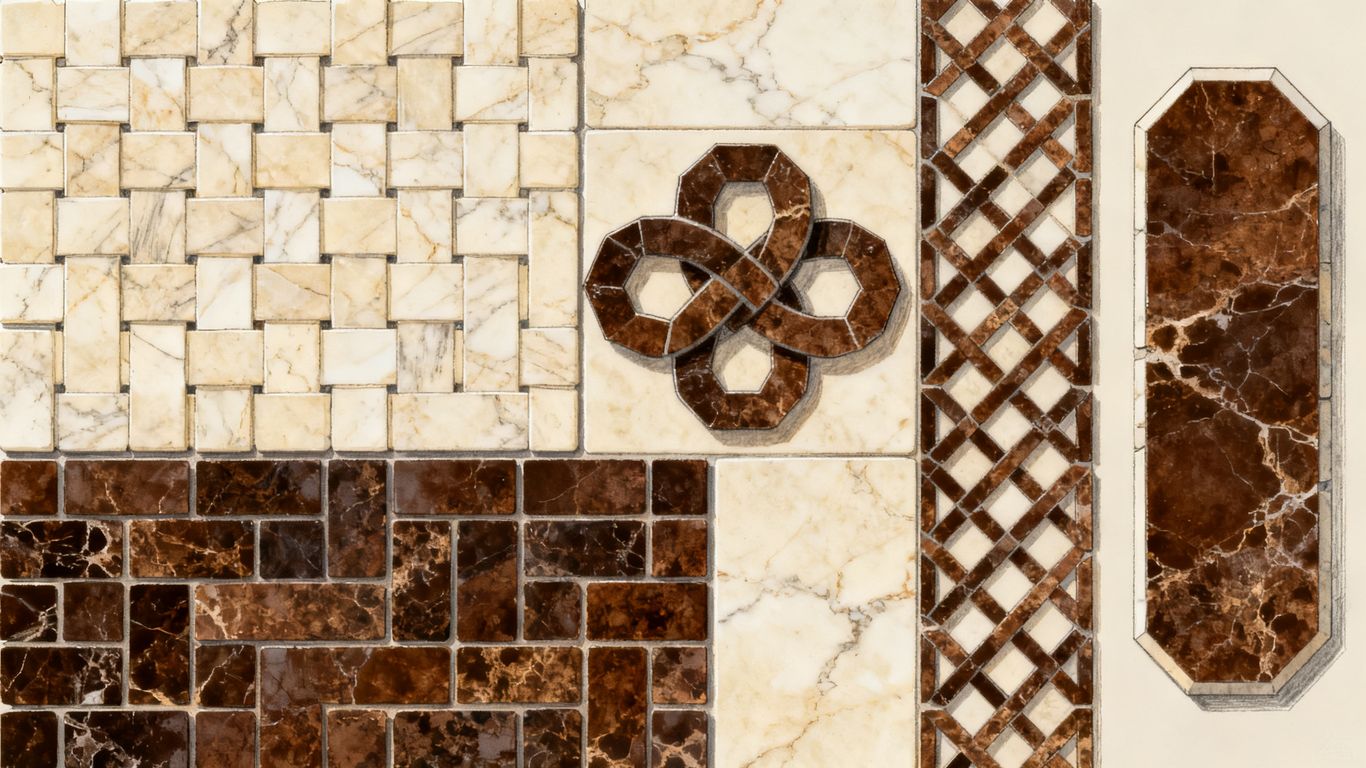
- Basketweave, knot, lattice, and elongated octagon layouts suit many design styles.
- Samples, dry-laying, surface preparation, and accurate quantity planning matter.
- Premium natural stone can be ordered for residential and commercial projects across the United States.
Why this marble mosaic combination stands out
The appeal of crema marfil and dark emperador marble mosaic comes from its confident contrast. Warm beige brings lightness, while rich brown adds depth and definition. Together, the stones create a finish that feels decorative without becoming overly busy. It is a practical choice for homeowners who want natural character rather than a flat, uniform surface.
Warm contrast between cream and dark brown tones
Crema Marfil is recognized for warm beige tones and subtle veining, while Emperador Dark is known for a deep brown background and intricate lighter veining. Placed together, they create a palette that works with wood, brass, bronze, black, and soft painted finishes. The result can feel traditional in one room and distinctly modern in another.
This contrast is especially effective where a room needs a visual anchor. A dark detail can frame a pale field, or the cream pieces can soften a larger brown pattern. The color relationship does the design work without requiring an elaborate surrounding scheme.
Natural veining for a one-of-a-kind look
Natural marble varies from piece to piece. Veins may be fine and quiet in one component, then more expressive in another. That variation gives a mosaic surface movement and prevents a repeated pattern from feeling mechanically printed.
Before installation, open the cartons and review the pieces together. A thoughtful blend helps distribute lighter and darker areas naturally, particularly across a backsplash, shower wall, or feature panel.
Timeless appeal for classic and contemporary interiors
The combination has an established, architectural quality, yet it does not depend on one period style. A polished basketweave can complement traditional millwork, while a honed geometric layout can sit comfortably beside streamlined cabinetry. The stones also transition well between adjoining spaces.
For a related mixed-stone direction, the Spanish Mix Marble Mosaic Tile combines Crema Marfil, Emperador Light, and Emperador Dark in a coordinated palette. That broader blend can be useful when a project needs more tonal variation than a two-stone design provides.
How the color balance influences room design
Use more Crema Marfil when the goal is a brighter, calmer surface. Increase the proportion of Dark Emperador when the room needs stronger framing or a dramatic focal point. Grout color also changes the reading of the pattern: a close match quiets the joints, while a contrasting grout makes each shape more visible.
The balance should relate to the room’s natural light. Darker layouts can feel rich in a well-lit space, while a smaller room may benefit from a cream-led pattern with brown accents.
Popular patterns and design applications
Pattern determines how the two stones interact across a surface. Small pieces create rhythm and detail, while larger geometric forms read more clearly from a distance. Consider the room’s viewing distance, scale, and amount of surrounding detail before choosing a layout. A strong pattern should support the architecture rather than compete with it.
Basketweave and knot mosaic layouts
Basketweave uses short strips and small squares to create an interlocking effect. A knot basketweave adds a more decorative, almost textile-like rhythm. The knot basketweave mosaic pairs creamy beige Crema Marfil with mocha-brown Dark Emperador and is described as suitable for indoor countertops, kitchen and bathroom backsplashes, and accent walls.
This pattern works well when the design needs movement without a sharp directional line. It is also a natural fit for bathroom floors, provided the selected finish and installation plan suit the intended use.
Lattice and elongated octagon patterns
Lattice layouts create a framed, repeating structure that can feel formal and orderly. Elongated octagons introduce a longer visual line, making them useful on floors, walls, and backsplashes where a classic geometric note is desired. The elongated octagon mosaic uses tan and brown tones and is presented as an option for kitchens, bathrooms, accent walls, and backsplashes.
When reviewing a complex design, inspect a full sheet rather than relying only on a small sample. The complete rhythm is easier to judge when several motifs connect across the surface.
Borders, listellos, and decorative accents
A border can define a shower niche, frame a backsplash, or separate two fields of tile. Listellos are particularly helpful when the main mosaic is visually active and needs a clean stopping point. Use a narrow accent around a larger installation, or reserve the pattern for a single architectural band.
Natural stone collections commonly include coordinating molding and trim, allowing the edge treatment to feel intentional. Keep the border proportionate to the room; an oversized band may make a compact space feel divided.
Coordinating floors, walls, and backsplashes
The same palette can connect several surfaces without repeating the exact pattern everywhere. For example, a small mosaic can anchor a backsplash, a simpler tile can cover the floor, and a border can echo the darker stone around a niche. This creates continuity while preserving hierarchy.
A useful planning comparison is below. It keeps the decorative surface in context rather than treating every application the same way.
| Application | Design priority | Practical question |
|---|---|---|
| Backsplash | Pattern and focal contrast | Will the layout relate to the cabinetry? |
| Bathroom floor | Finish and joint planning | Is the selected surface appropriate when wet? |
| Shower wall | Waterproofing and alignment | Is the substrate and waterproofing system ready? |
| Accent wall | Scale and viewing distance | Will the pattern remain balanced across the full area? |
After comparing these priorities, select one main focal surface and let the surrounding materials support it. That approach keeps the room expressive but composed.
Where to use Crema Marfil and Dark Emperador marble mosaic
This stone pairing can move easily from small accents to broad decorative fields. Its beige and brown palette works with warm cabinetry, neutral paint, and many metal finishes. The best location depends on how much pattern the room can carry and how the surface will be used. Always confirm application suitability with the tile professional and installation system selected for the project.
Kitchen backsplashes and feature walls
A kitchen backsplash is one of the most effective places to use a decorative marble mosaic. It sits at eye level, catches available light, and can connect countertops with cabinetry. A cream-led pattern keeps the wall open, while Dark Emperador accents add definition behind a range or sink.
For a larger feature wall, repeat the mosaic selectively rather than covering every surface. Leaving adjacent walls quiet gives the pattern room to read clearly.
Bathroom floors, shower walls, and niches
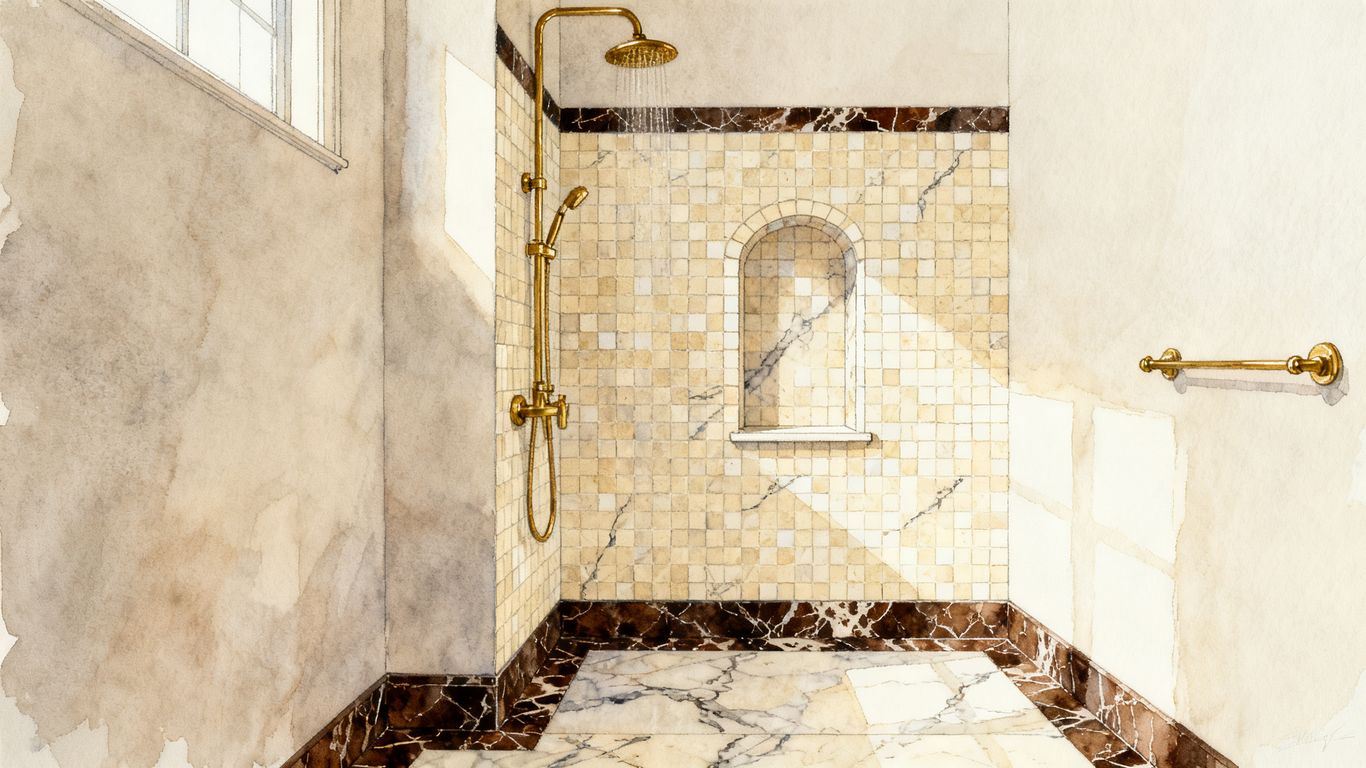
In bathrooms, mosaic sheets can bring detail to a shower wall, niche, or floor field. Small pieces also introduce more grout lines than large tile, which may help a layout feel appropriately scaled. The finish deserves careful attention, particularly in areas exposed to water.
A niche is an ideal place for a focused color contrast. Use the darker marble inside the niche and carry a cream tone across the surrounding wall, or reverse the arrangement for a brighter inset.
Entryways, powder rooms, and accent areas
An entryway can use the mosaic as a threshold or central field, creating a strong first impression without requiring a full-room installation. Powder rooms offer more freedom because their smaller scale often supports a bolder pattern. Accent areas such as a vanity wall or built-in shelf can carry the same palette in a controlled dose.
Plan transitions carefully where the mosaic meets other flooring. The edge should appear deliberate, not like an unfinished change in material.
Fireplace surrounds and architectural details
Marble mosaic can frame a fireplace, define a mantel wall, or highlight an architectural recess. Before selecting materials, confirm heat, clearance, and code requirements with the installer and fireplace professional. A restrained pattern often works best around a strong architectural feature.
For broader fireplace planning, custom fireplace surrounds offers an example of how a surround and coordinating trim can be considered as one visual composition. The mosaic itself can then supply texture and contrast within that framework.
How to choose the right mosaic for your project
Choosing a mosaic is not only a matter of color. Pattern scale, finish, sheet construction, installation conditions, and transitions all affect the finished appearance. Order samples when possible, and examine them in the room’s actual lighting. A thoughtful selection process reduces surprises after the material arrives.
Selecting a pattern that suits your interior style
Traditional interiors often suit basketweave, knot, and lattice arrangements because their repeating geometry feels established and decorative. Contemporary rooms may benefit from a restrained elongated octagon or a simple two-tone field. That distinction is not absolute; the surrounding cabinetry, lighting, and hardware can shift the character of the same pattern.
Start by identifying the room’s strongest existing line. The mosaic can echo that direction or intentionally soften it with a more interlocking design.
Comparing polished and honed finishes
Polished marble reflects more light and can make veining appear sharper. Honed marble has a softer, matte surface that generally feels quieter and more tactile. Neither finish is automatically right for every installation, so consider maintenance, lighting, slip concerns, and the intended location.
The Spanish Mix installation guide discusses substrate preparation, mortar, grouting, cleaning, and waste-factor planning for a related marble mosaic application. These practical details are worth reviewing before finalizing a finish.
Choosing tile size, sheet format, and layout direction
Small mosaic pieces create more visual texture and can follow gentle changes in a surface more easily. Larger motifs read with greater clarity and may feel calmer across a broad wall. Mesh-backed sheets can simplify alignment, but the seams between sheets still need to be blended carefully.
Plan the layout from visible edges and focal points. Avoid placing an awkward partial motif directly at the center of a wall or beside a highly visible cabinet line.
Planning transitions with marble tiles and molding
A mosaic often looks more complete when it has a clear edge. Marble molding, a slim listello, or a coordinated field tile can finish the installation and separate it from painted drywall or another stone. Bring samples of adjacent materials together before ordering.
For online buyers searching to buy marble tiles online USA, compare dimensions, finish, coverage, and trim availability rather than choosing from a photograph alone. Natural variation is part of the material’s appeal, but it should be considered in the layout plan.
Installation and maintenance considerations
Natural stone rewards careful preparation. The surface beneath the mosaic, the spacing between sheets, and the products used after installation all influence the final result. Experienced installers should review the specific stone, substrate, adhesive, grout, and wet-area requirements. Good planning is less visible than the finished pattern, but it protects the investment.
Preparing the surface for natural stone mosaic
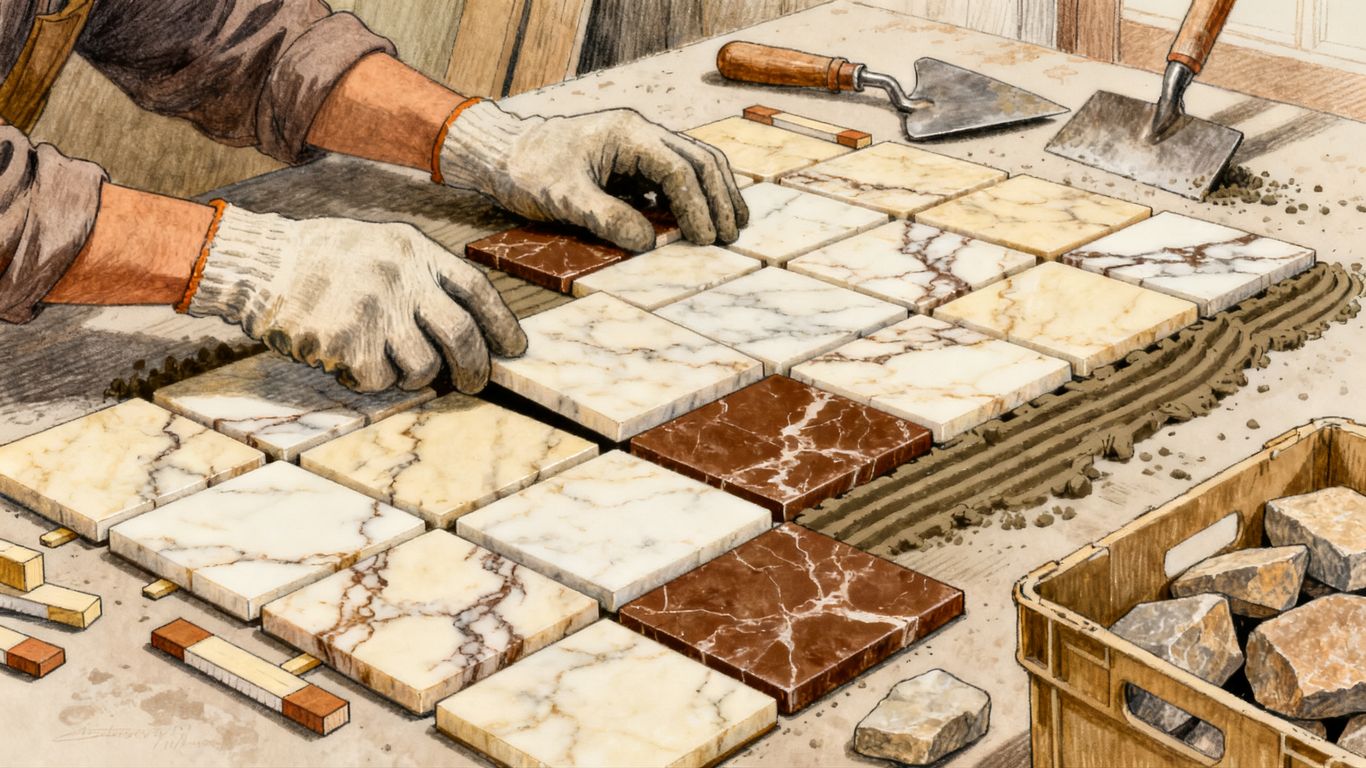
The substrate should be clean, sound, dry, and appropriately flat for the installation. Repair uneven areas before setting the mosaic, and use the required waterproofing system in showers and other wet locations. Dry-lay several sheets first to review color distribution and sheet alignment.
Natural marble can vary in shade and veining. Mixing pieces from multiple cartons during installation usually creates a more balanced overall field than using one carton at a time.
Creating consistent spacing and alignment
Sheet seams should disappear into the pattern. Use spacers where needed, check horizontal and vertical lines frequently, and avoid forcing sheets into place when the motif begins to drift. A small alignment error can become obvious after several rows.
A short installation checklist can keep the process orderly:
- Confirm the substrate is flat, clean, and suitable for natural stone.
- Dry-lay sheets and plan visible edges before applying mortar.
- Blend material from several cartons to distribute natural variation.
- Check sheet joints, grout spacing, and pattern direction as work progresses.
After these checks, allow the setting materials to cure according to the product instructions before grouting or sealing. Patience at this stage helps preserve crisp lines.
Sealing marble for easier everyday care
Marble is porous, so the installer should recommend an appropriate sealer for the stone and location. Sealing does not make marble maintenance-free, but it can make routine care easier and provide additional time to wipe away spills. The correct schedule depends on use, finish, and the sealer selected.
Apply products only to a clean, fully cured surface and follow the manufacturer’s directions. Test in an inconspicuous area first to confirm the appearance remains consistent.
Cleaning products and habits to avoid
Use a soft cloth or mop and a cleaner formulated for natural stone. Wipe spills promptly, particularly acidic or strongly colored substances. Avoid abrasive powders, harsh acids, and products that can dull or etch the marble surface.
The marble mosaic care guide is useful for reviewing inspection, preparation, installation, cleaning, and waste-factor considerations in a related natural stone application. Daily care should remain simple: remove grit, use suitable products, and do not let spills sit unnecessarily.
Design tips for a cohesive natural stone interior
The mosaic should feel connected to the room rather than isolated from it. Repeat one or two tones elsewhere, then allow the stone’s veining to provide the natural variation. A restrained supporting palette usually makes the marble appear richer. This is especially helpful when the pattern itself includes several small pieces.
Pairing the mosaic with neutral wall colors
Warm white, soft beige, mushroom, taupe, and muted greige can all support the cream and brown palette. Sample paint beside the actual stone because undertones can shift dramatically under artificial light. A very cool gray may make the beige appear more yellow, while a warm neutral can create a seamless transition.
Keep surrounding walls relatively quiet when the mosaic has a strong geometric pattern. The result will feel layered rather than crowded.
Coordinating cabinetry, fixtures, and hardware
Wood cabinetry can reinforce the natural warmth of the marble, while painted cream or white cabinetry keeps the room lighter. Bronze and brass bring out the brown veining; black hardware creates a sharper, more contemporary contrast. Choose one dominant metal and use secondary finishes sparingly.
The goal is coordination, not exact matching. A slight variation in wood or metal tone can make the natural stone feel more authentic.
Using lighting to highlight marble veining
Side lighting can reveal surface variation and make a polished mosaic sparkle. Under-cabinet lighting is particularly effective on kitchen backsplashes, while layered vanity lighting can help a bathroom mosaic remain legible without producing harsh glare. Test the stone under both daytime and evening conditions.
If the veining is subtle, directional light may bring out its movement. If the pattern is already strong, diffuse lighting can create a calmer presentation.
Balancing bold accents with simpler surrounding surfaces
A decorative mosaic needs visual breathing room. Pair it with simpler flooring, understated paint, or a quiet countertop so the eye has somewhere to rest. Repeating the dark brown in a small accessory or trim detail can make the installation feel intentional.
Avoid introducing too many competing patterns. A single expressive surface usually has more impact than several unrelated accents.
Ordering premium marble mosaic from Surfaces Galore
A successful order begins with a clear material plan. Confirm the pattern, finish, dimensions, coverage, installation location, and quantity before committing. Natural stone is sold by coverage and may require additional material for cuts, breakage, and future repairs. For homeowners, designers, and architects, early communication can make the purchasing process smoother.
Reviewing current Crema Marfil and Emperador Dark inventory
Surfaces Galore is an Anaheim, California–based direct importer and nationwide supplier of premium natural stone, including marble tiles, mosaics, and moldings. Its documented collection includes Crema Marfil mosaics and Emperador Dark mosaics, with products suited to applications such as backsplashes, shower floors, and accent areas.
Review current stock carefully because available sizes, finishes, and patterns can change. A sample or full sheet can provide a more reliable sense of color and veining than a screen image.
Requesting samples, project quantities, and quotes
Samples are useful for comparing the marble with cabinet doors, paint, grout, and lighting. For a larger renovation, prepare the room measurements, preferred finish, installation area, and estimated timing before requesting a quote. This makes it easier to discuss coverage and any extra material needed.
When a project involves several rooms, organize the quantities by location. That simple step helps prevent a backsplash order from being confused with a bathroom floor requirement. If you are also gathering unrelated planning resources, Ulu Yoga, State Farm insurance, Cove Beach, and the DBS Criminal Record Status Check are separate examples of information pages that should not be mixed into a material specification.
Exploring bulk discounts for residential and commercial projects
Larger orders may benefit from discussing project quantities in advance. Surfaces Galore serves homeowners, interior designers, and architects, and the business offers bulk discounts for residential and commercial projects according to the supplied business information. Ask for current pricing rather than assuming that a retail sample price applies to the full order.
A useful quote request includes the pattern name, finish, square footage, delivery ZIP code, and desired timing. You can also view marble options before narrowing the selection.
Shipping natural stone nationwide from Anaheim, California
Surfaces Galore ships natural stone nationwide from Anaheim, California, serving customers across the United States. Marble should be inspected promptly when it arrives, with cartons kept protected until installation. Confirm delivery details, receiving access, and the person responsible for checking the shipment before placing a large order.
For a complete renovation, schedule delivery with enough time for inspection and acclimation planning. That buffer allows the installer to identify concerns before mortar is applied.
Conclusion
Crema Marfil and Dark Emperador marble mosaic offers a durable, expressive way to bring warm contrast and natural veining into kitchens, bathrooms, entries, fireplaces, and accent spaces. By selecting the right pattern and finish, preparing the surface carefully, and ordering from a supplier that serves projects nationwide, you can create a natural stone interior with lasting visual character.
Frequently Asked Questions
Is Crema Marfil and Dark Emperador marble mosaic suitable for a backsplash?
Yes. The combination is well suited to backsplashes because its cream and brown tones create contrast while coordinating with many cabinet and countertop colors. Confirm the selected product, finish, and installation requirements with your installer.
Which pattern works best in a traditional interior?
Basketweave, knot, and lattice patterns often complement traditional interiors because their repeating geometry feels classic and decorative. The surrounding trim, cabinetry, and grout color will also influence the final style.
Can this marble mosaic be used on a bathroom floor?
Some marble mosaics can be used on bathroom floors, but suitability depends on the specific product, finish, wet conditions, and installation system. A qualified tile professional should confirm the choice before installation.
Should marble mosaic be polished or honed?
Polished marble reflects more light and gives veining a sharper appearance. Honed marble has a softer, matte look. Consider the room, maintenance expectations, lighting, and slip-related concerns when choosing between them.
How much extra mosaic should be ordered?
The required extra amount depends on the room shape, pattern complexity, cuts, and possible breakage. Measure carefully and ask the installer or supplier to review the quantity before ordering.
How should natural marble mosaic be cleaned?
Use a soft cloth or mop with a cleaner made for natural stone. Wipe spills promptly and avoid abrasive or acidic products that can scratch or etch the surface. Follow the sealer manufacturer’s care recommendations.
Does natural marble vary in color and veining?
Yes. Variation in tone, veining, and movement is a normal characteristic of natural marble. Reviewing samples, full sheets, or several cartons together helps you understand the range before installation.


Leave a comment