
Imported Stone Tile Grading Guide for Buyers

A beautiful stone installation can be decided long before the first tile is set. It comes down to selection: how consistently the material was sorted, how accurately it was cut, and whether the natural variation matches the look you approved. This imported stone tile grading guide explains what buyers, designers, and installers should assess when sourcing marble, travertine, or limestone for a serious project.
Natural stone is not a manufactured product with a single, fixed visual standard. Veining, fossils, pits, mineral movement, and shade variation are part of its character. Premium grading does not eliminate those traits. It selects and sorts material so the variation feels intentional, the dimensions are dependable, and the finished surface has the level of refinement your project requires.
What Stone Tile Grading Actually Means
Stone grading is often misunderstood because there is no single universal grading authority that defines every marble, travertine, or limestone tile sold in the United States. A label such as first quality, premium, commercial, or select can be useful, but it only has value when the supplier can explain the standards behind it.
For imported stone tile, grading generally reflects several factors: visual consistency, structural soundness, cut quality, thickness tolerance, calibration, finishing, and the amount of filling or repair present. The source quarry, block selection, factory sorting process, and packing controls all influence the final grade.
A premium grade should not be confused with a perfectly uniform grade. A Carrara marble can still show soft gray veining, while a Nero Marquina can have pronounced white movement. A filled travertine can retain natural pores. The question is whether those characteristics are appropriate for the named stone and whether the shipment has been selected consistently enough to create a polished installation.
The Imported Stone Tile Grading Guide: 6 Checks That Matter
1. Evaluate the visual range, not one tile
A single product image cannot show the full range of natural stone. Ask for a sample to confirm the general color, finish, and texture, then consider how the material will read across the entire room. This is especially important with highly active marbles, vein-cut travertine, and stones with strong tonal shifts.
Premium sorting usually means the tiles work together visually within the intended collection. It does not mean every piece is identical. In fact, material that looks unnaturally uniform may not deliver the authentic stone character many homeowners and designers are seeking.
For larger orders, review current lot imagery when available. The lot matters because blocks and production runs can vary. A sample is the right starting point; lot confirmation provides greater confidence when a project depends on a specific color direction.
2. Check calibration and dimensional consistency
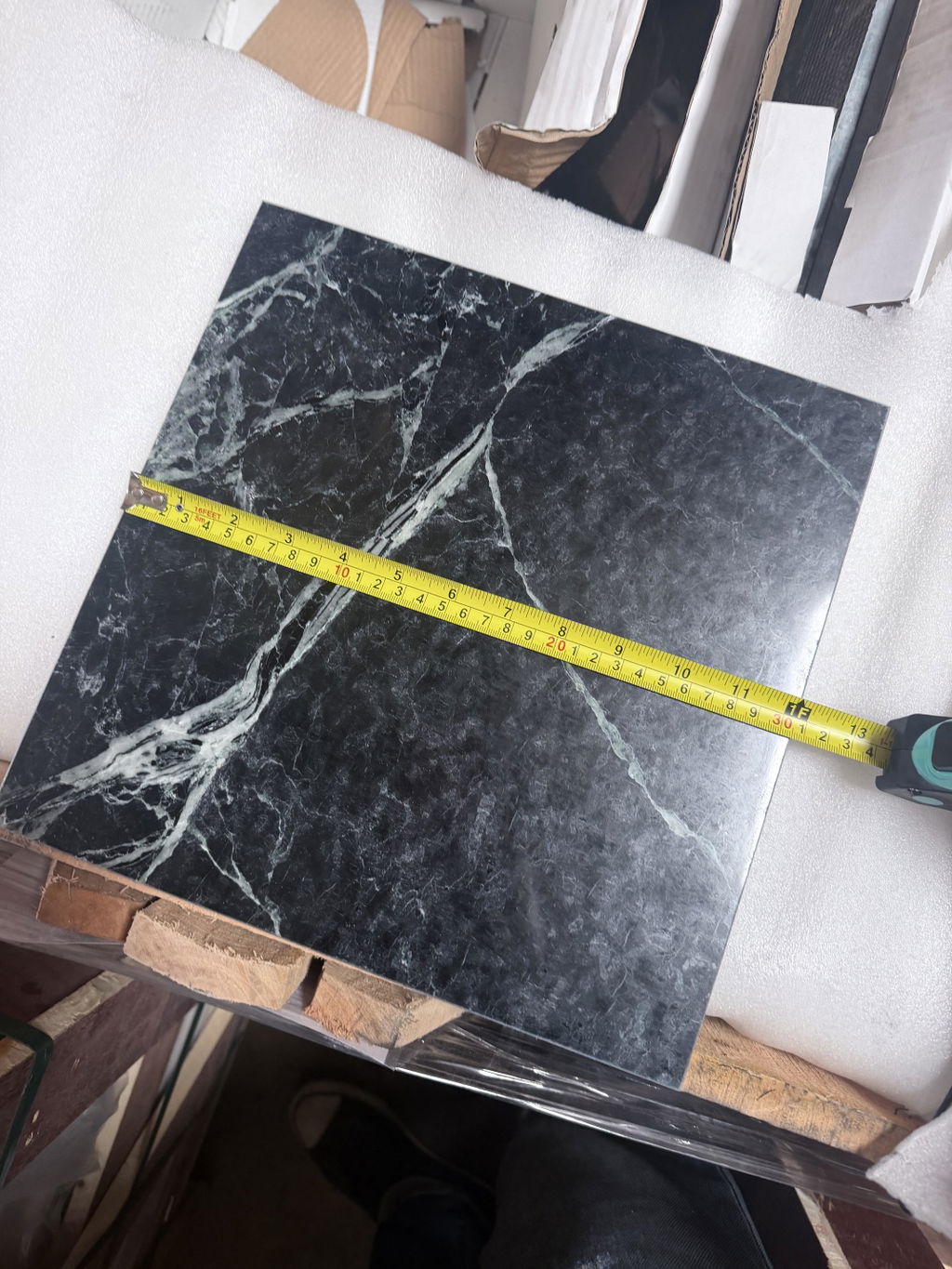
Calibration refers to the consistency of a tile's length and width. Natural stone tile is commonly cut to nominal sizes, meaning a tile sold as 12 by 12 may measure slightly under that dimension. What matters is that the pieces within a production lot are sufficiently consistent for the installation method and grout-joint expectation.
Tighter calibration supports a cleaner layout and more predictable grout joints. This matters most for rectilinear field tile, checkerboard floors, stacked mosaics, and contemporary installations where lines are meant to feel crisp. An experienced installer can accommodate reasonable variation, but excessive size inconsistency slows installation and can compromise the appearance of the floor or wall.
Also ask about thickness. Slight variation is normal in natural stone, particularly in tumbled and antique finishes. However, excessive thickness variation can require additional setting material and labor. Premium imported material should be sorted and cut with practical installation tolerances in mind.
3. Understand the finish before judging the surface
A polished marble should have a reflective, refined face, although it may still contain natural fissures or crystalline movement. Honed stone has a smooth matte surface and is often preferred for bathrooms, kitchens, and floors where a softer look is desired. Tumbled stone intentionally features eased edges, a weathered face, and greater surface variation.
The finish changes how grading should be evaluated. A tumbled travertine is not supposed to resemble a polished Thassos marble. Small edge softness and open texture may be appropriate in a rustic French pattern, while they would be unacceptable in a sleek polished mosaic.
Match the material to the application. Polished marble offers high visual impact on walls, fireplace surrounds, and lower-wear decorative surfaces. Honed or textured finishes can be a more practical choice for flooring and wet areas, depending on the stone, sealing plan, and project requirements.
4. Distinguish natural voids from poor-quality fill
Travertine is the stone most associated with filling. Its natural formation creates holes and channels, which can be left open, filled, or partially filled based on the product's intended look. Filled and honed travertine is popular because it offers a smoother, more usable surface while preserving the stone's natural movement.
The quality issue is not simply whether a tile has fill. It is whether the fill is stable, appropriate in color, and applied consistently. Weak or excessive filler, broad patching that distracts from the stone, or loose material around voids may signal lower-grade processing.
Marble and limestone can also have natural fissures, small pits, or mineral features. These are not automatically defects. A supplier should be clear about what is characteristic of that specific material and what exceeds normal variation. This transparency prevents a buyer from expecting a factory-perfect surface from a product formed over thousands of years.
5. Look closely at edges, corners, and backs
The face of the tile receives most of the attention, but its edges and back tell an equally useful story. Inspect samples for chipped corners, inconsistent bevels, rough saw marks, and fragile edge conditions. Small chips can occur during handling, but recurring damage across a shipment points to weak sorting, packaging, or transport controls.
The back of a stone tile does not need to be decorative. It should, however, be sound and suitable for bonding. Excessive cracking, loose layers, or poorly supported repairs are concerns. Natural veins and minor back variation are expected, particularly in certain marbles, but structural integrity should never be treated as optional.
Packaging also matters with imported stone. Proper cartons, palletization, edge protection, and insured shipping reduce the risk that premium material arrives as a costly problem. For time-sensitive renovation work, dependable fulfillment is part of product quality.
6. Compare grade against the actual project standard
The right grade depends on where the stone will be used and how closely it will be viewed. A boutique hotel lobby, a primary bathroom feature wall, and a historic-style patio do not require the same visual tolerance. Nor should they be priced as though they do.
For a high-visibility feature wall or checkerboard floor, prioritize color sorting, consistent finish, square cuts, and coordinated veining. For a tumbled French pattern or old-world backsplash, more texture and movement can enhance the design. A commercial-grade tile may suit a budget-driven or rustic application, but it can introduce more shade range, filling, and sizing variation than a refined residential project can comfortably absorb.
This is why low pricing alone is not a reliable comparison. Two tiles carrying the same stone name may differ significantly in selection, cutting, finish quality, packing, and usable yield. A lower upfront material price can disappear quickly if installers must sort heavily, make extra cuts, or work around inconsistent pieces.
Questions to Ask Before You Place an Order
Before specifying imported stone, confirm whether the tile is premium selected or commercial grade, whether it is calibrated, and how much visual variation is expected. Clarify the finish, nominal versus actual dimensions, thickness range, and whether travertine is filled, unfilled, or mixed fill.
For projects requiring a coordinated look, ask whether your order will ship from one current lot. If you are pairing field tile with mosaics, trim, shower niches, or corner shelves, confirm the intended color relationship. Natural stone accessories may not be an exact visual match, but they should complement the primary material rather than compete with it.
Ordering samples is a practical part of the specification process, not an afterthought. View them in the room where they will be installed, under daylight and evening lighting. Put them next to cabinetry, paint, metal finishes, and countertop selections. Stone often shifts warmer, cooler, lighter, or more dramatic depending on its surroundings.
Premium Stone Is Selected, Not Manufactured
The strongest stone installations do not fight natural variation. They use it with purpose. Premium material is the difference between variation that reads as rich and variation that reads as random.
Surfaces Galore focuses on premium imported stone rather than cheap commercial-grade material because a better tile produces a better finished space. Choose the grade that fits your design, order a sample before committing, and give your installer material that is worthy of the craftsmanship you expect.

Leave a comment