

Marble Efflorescence: What It Is and How to Fix It

TL;DR:
- Marble efflorescence is a reversible surface deposit caused by moisture carrying soluble salts to the surface. Removing it requires fixing the underlying moisture source and following proper cleaning techniques, not just scrubbing or sealing. Proper prevention includes addressing water intrusion, improving drainage, using low-salt materials, and applying sealers only after the stone dries completely.
Marble efflorescence is defined as white, powdery mineral salt deposits that form on marble surfaces when moisture carries soluble salts from within the stone or its substrate to the surface, where they crystallize as the moisture evaporates. The condition is one of the most common complaints from homeowners with marble floors, shower walls, and countertops. Understanding what causes marble efflorescence is the first step toward fixing it correctly. Most cases are reversible, but only when you address the moisture source rather than just the visible deposit.
What is marble efflorescence and why does it happen?
Marble efflorescence results from a straightforward chemical process. Moisture enters the marble or its underlying substrate, dissolves naturally occurring soluble salts, and then migrates toward the surface. When that moisture evaporates, the salts are left behind as a white crystalline crust.
Marble is composed primarily of calcium carbonate, which makes it both beautiful and porous. That porosity is the key vulnerability. Water finds microscopic pathways through the stone and through the mortar bed or grout beneath it. The wetter the environment, the more active the salt migration becomes.
Efflorescence causes in marble are not limited to the stone itself. Soluble salts in installation compounds like Portland cement mortar and standard grout migrate through moisture and deposit on the surface. This is why new marble installations in bathrooms or kitchens often show efflorescence within the first few months. The installation materials are frequently the primary salt source, not the marble tile itself.
Key contributing factors
Several conditions accelerate efflorescence in marble:
- High moisture exposure. Showers, outdoor patios, and basement floors are the highest-risk locations because water contact is frequent and prolonged.
- Poor drainage or waterproofing. Water that pools beneath a tile installation has nowhere to go except through the stone.
- Low-quality installation materials. Mortars and grouts with high soluble salt content dramatically increase efflorescence risk.
- Temperature fluctuations. Freeze-thaw cycles in exterior marble force moisture deeper into the stone and accelerate salt migration.
- Inadequate curing time. Rushing the installation process before mortar fully cures traps moisture beneath the tile.
Pro Tip: Ask your tile installer specifically about low-salt or polymer-modified mortars. Choosing installation materials with low soluble salt content is one of the most effective ways to reduce efflorescence risk before it starts.
How to identify marble efflorescence vs. other white stains
Efflorescence typically appears as white chalky or silvery deposits that look powdery or like cloudy patches. On polished dark marble, the contrast makes it especially visible. The texture ranges from a fine dust to a rough, gritty crust depending on how long the deposits have been forming.
Homeowners often confuse efflorescence with several other surface conditions. Getting the diagnosis right matters because each issue requires a different fix. Treating efflorescence like a mold problem, or mistaking etching for efflorescence, leads to wasted effort and potential surface damage.
The table below compares the most common white surface conditions on marble:
| Condition | Appearance | Texture | Reversible? | Cause |
|---|---|---|---|---|
| Efflorescence | White, chalky, powdery patches | Rough or gritty | Yes, with proper cleaning | Moisture carrying salts to surface |
| Etching | Dull, hazy spots or rings | Smooth but matte | Partially, with polishing | Acid contact dissolving calcium carbonate |
| Mildew or mold | Gray, black, or greenish spots | Slightly fuzzy | Yes, with disinfectant | Organic growth in damp conditions |
| Hard water deposits | White rings or scale buildup | Hard and crusty | Yes, with mild acid | Mineral deposits from tap water |
| Surface dirt or soap scum | Dull film, uneven coloring | Slippery or filmy | Yes, with cleaning | Residue from cleaning products or use |
The simplest field test for efflorescence: lightly scratch the white deposit with your fingernail. Efflorescence crumbles or flakes away. Etching does not. Mold may smear. Hard water scale resists scratching but dissolves with a drop of white vinegar.
Efflorescence indicates moisture presence but does not mean the marble is permanently damaged. The stone itself is typically unharmed. The deposit is sitting on top of the surface, not inside it. That distinction matters because it means the fix is achievable without professional restoration in most cases.
What are the best practices to remove marble efflorescence safely?
Safe efflorescence removal follows a specific sequence. Skipping steps or using the wrong tools causes more damage than the efflorescence itself. The goal is to lift the salt deposits without etching, scratching, or dulling the marble surface.
Follow these steps in order:
-
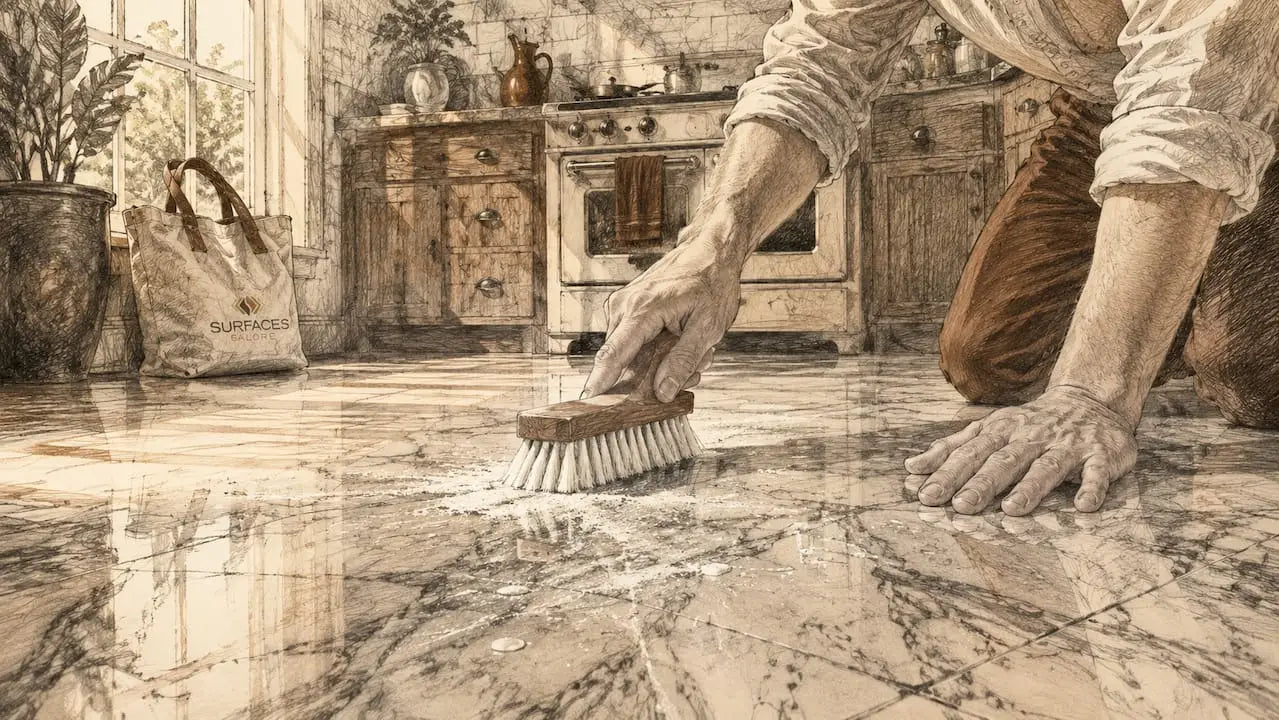
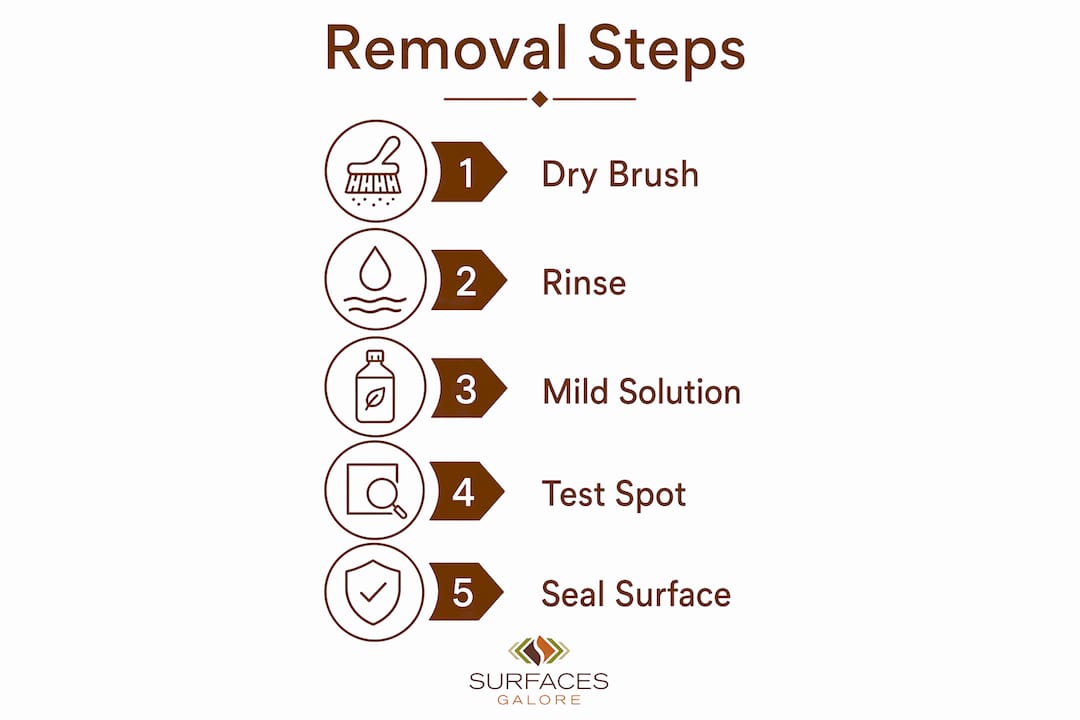
Dry brush the surface first. Use a stiff nylon bristle brush to remove loose deposits before introducing any moisture. Metal wire brushes embed rust particles into the marble surface, causing permanent rust stains that are far more difficult to remove than the original efflorescence. Never use metal tools on marble.
-
Rinse with clean water. After dry brushing, rinse the area with plain water to flush away loosened salts. Use a soft cloth or mop. Let the surface dry completely before evaluating what remains.
-
Apply a mild acid solution if deposits persist. A diluted solution of white vinegar and water at a ratio of 1 part vinegar to 5 parts water works for most residential marble. Apply the solution for 5–10 minutes, then rinse immediately and thoroughly. Leaving acid on marble longer than 10 minutes risks etching the surface.
-
Test on a hidden area first. Before treating a visible section, apply the cleaning solution to a grout joint or tile edge in a closet or behind furniture. A 2% acid solution is recommended for sensitive or colored stone. If the test patch shows any dulling or discoloration after drying, dilute the solution further or switch to a pH-neutral stone cleaner.
-
Work in small sections. Acid solutions should cover no more than 1–2 square feet at a time. This gives you control over the reaction and prevents the solution from drying on the surface before you can rinse it.
-
Rinse twice and dry thoroughly. After acid treatment, rinse the area twice with clean water to neutralize any remaining acid. Dry the surface with a clean cloth. Do not allow the marble to air-dry after acid cleaning because residual acid can continue reacting.
-
Evaluate and repeat if needed. Heavy or long-standing deposits may require two or three treatment cycles. Patience produces better results than aggressive scrubbing.
Pro Tip: For marble cleaning tips on polished surfaces, always finish with a pH-neutral stone cleaner after any acid treatment. This restores surface balance and protects the polish.
What not to do when removing efflorescence
Avoid these common mistakes:
- Strong acids like muriatic acid. These are appropriate for concrete but will etch and permanently dull marble.
- Pressure washing. High-pressure water forces moisture deeper into the stone and substrate, making future efflorescence worse.
- Scrubbing pads with abrasive surfaces. Steel wool and green scrubbing pads scratch polished marble permanently.
- Sealing before the surface is fully dry. Premature sealing traps moisture, leading to hidden stone decay and long-term deterioration beneath the surface.
How can homeowners prevent marble efflorescence from recurring?
Preventing marble efflorescence long term requires addressing moisture, not just the visible deposits. Cleaning the surface without fixing the moisture source creates a maintenance cycle where deposits return every few weeks or months. Homeowners fall into this maintenance trap when they treat the symptom rather than the cause.
The most effective prevention strategies are:
- Identify and stop moisture intrusion. Check for leaking pipes, inadequate shower waterproofing, or poor exterior drainage near marble surfaces. A plumber or waterproofing contractor can identify sources that are not visible from the surface.
- Improve ventilation in wet areas. Bathrooms and kitchens with poor airflow stay damp longer after use. Exhaust fans rated for the room size reduce ambient moisture significantly.
- Use low-salt installation materials on new projects. Choosing low-salt admixtures during installation reduces efflorescence risk at the source. This is the single most cost-effective prevention step on new builds or renovations.
- Apply a penetrating sealer after the marble is fully dry. A quality penetrating sealer slows moisture absorption without trapping existing moisture. Sealing is effective only after the stone is completely dry and moisture sources are remediated. Sealing damp marble makes the problem worse.
- Monitor grout lines regularly. Cracked or missing grout allows water to bypass the surface layer and reach the substrate directly. Regrouting damaged areas is one of the simplest and most overlooked prevention steps.
The table below outlines a practical maintenance schedule for marble in wet areas:
| Task | Frequency | Purpose |
|---|---|---|
| Inspect grout lines for cracks | Every 3 months | Prevent water infiltration through substrate |
| Clean surface with pH-neutral cleaner | Weekly | Remove residue before it bonds to surface |
| Check for early efflorescence signs | Monthly | Catch deposits before they harden |
| Reapply penetrating sealer | Every 1–2 years | Maintain moisture resistance |
| Inspect waterproofing membrane | Every 2–3 years | Verify substrate protection in wet areas |
Controlling the moisture pathway is the critical step because water evaporation is what leaves crystallized salts behind. Remove the water pathway and you remove the mechanism that creates efflorescence. Sealing and cleaning are maintenance tools, not substitutes for proper moisture control.
For homeowners with marble in wet areas like showers or pool surrounds, a penetrating sealer combined with proper waterproofing beneath the tile is the most reliable long-term solution. These two layers work together: the waterproofing membrane stops bulk water, and the sealer handles surface moisture and minor splashing.
Understanding marble surface treatments available for different environments helps homeowners choose the right product for their specific installation. Not all sealers perform equally in high-humidity or exterior conditions.
Key Takeaways
Marble efflorescence is a reversible surface condition caused by moisture-driven salt migration, and it requires fixing the moisture source before any cleaning or sealing will produce lasting results.
| Point | Details |
|---|---|
| Efflorescence is surface-level | Salt deposits sit on top of marble and do not indicate permanent stone damage. |
| Moisture is the root cause | Stopping water intrusion is the only way to prevent deposits from returning. |
| Use nylon brushes, not metal | Metal tools embed rust particles into marble, creating permanent secondary stains. |
| Seal only dry marble | Sealing over damp stone traps moisture and causes hidden decay beneath the surface. |
| Installation materials matter | Low-salt mortars and grouts reduce efflorescence risk before it starts. |
What I have learned from years of watching homeowners fight efflorescence
The most common mistake I see is treating efflorescence as a cleaning problem when it is actually a moisture problem. Homeowners scrub the deposits off, apply a sealer the same afternoon, and feel satisfied. Three weeks later the white patches are back. The cycle repeats until someone finally checks the waterproofing or the grout lines.
The second mistake is reaching for strong acids. I understand the impulse. The deposits look stubborn and a stronger cleaner feels like a faster solution. But muriatic acid on marble is a permanent mistake. The etching it causes cannot be reversed without professional grinding and repolishing, which costs far more than the original efflorescence problem ever would have.
What actually works is patience and sequence. Dry brush first. Rinse. Test a mild solution on a hidden spot. Work in small sections. Rinse twice. Let the stone dry completely before you even think about sealing. This process takes longer than a quick scrub, but it produces results that last.
The other thing I want homeowners to know is that repeated sealing without drying can cause salts to build up behind the polished surface, eventually leading to spalling and long-term deterioration. A sealer is not a fix. It is a maintenance tool that works only when the underlying conditions are right.
If deposits keep returning after proper cleaning and sealing, call a waterproofing professional before spending more money on cleaning products. The answer is almost always in the substrate, not on the surface.
— cihan
Surfacesgalore and your marble maintenance
Marble is a long-term investment, and keeping it free of efflorescence starts with quality stone and the right installation approach.

Surfacesgalore is a direct importer of premium natural stone, including marble tiles, limestone, and travertine, shipped nationwide from Anaheim, California. Whether you are restoring an existing installation or planning a new one, the team at Surfacesgalore can help you choose the right stone and care products for your specific environment. Explore the full marble tile collection and find the quality that makes long-term maintenance straightforward rather than frustrating.
FAQ
What does marble efflorescence look like?
Efflorescence appears as white, chalky, or powdery patches on the marble surface. It may look like a dusty film or a rough crystalline crust, and it is most visible on polished dark marble.
Is marble efflorescence permanent damage?
Efflorescence is not permanent damage. It is a surface deposit of mineral salts that can be removed with proper cleaning, provided the underlying moisture source is also addressed.
What causes white stains on marble floors?
White stains on marble floors are most commonly caused by efflorescence, hard water deposits, or etching from acidic cleaners. Efflorescence is the result of moisture carrying soluble salts from the stone or substrate to the surface.
How do I fix efflorescence on marble safely?
Start with dry brushing using a nylon bristle brush, then rinse with water, and apply a diluted white vinegar solution for 5–10 minutes if deposits remain. Always test on a hidden area first and rinse thoroughly after any acid application.
When should I seal marble to prevent efflorescence?
Seal marble only after the surface is completely dry and any moisture intrusion sources have been fixed. Sealing damp marble traps moisture beneath the surface and worsens long-term deterioration.
Leave a comment