
Marble Surface Finishes Explained: Choosing for High-End Spaces

Nearly every American luxury home project in Southern California features marble surfaces that set the tone for refinement and value. Choosing the right marble finish is not just about looks, it impacts durability, maintenance, and even safety. With more than six distinct finish options available, designers and contractors can unlock unique design languages that subtly shape the entire atmosphere of kitchens and bathrooms. This guide clarifies key finish characteristics and insider strategies for selecting the most resilient and stunning marble treatments.
Table of Contents
- Defining Marble Surface Finishes In Design
- Distinct Types Of Marble Finishes Compared
- Polished, Honed, Tumbled: Key Attributes
- Brushed, Leathered, Distressed: Specialty Looks
- Best Finish Choices For Kitchens And Baths
- Common Pitfalls And Maintenance Insights
Key Takeaways
| Point | Details |
|---|---|
| Surface Finishes Matter | Marble surface finishes are strategic choices that influence both aesthetics and functionality, affecting light interaction and texture. |
| Consider Practicality | When selecting a finish, evaluate maintenance and durability alongside aesthetic appeal to ensure suitability for specific environments. |
| Different Finishes, Different Uses | Primary finishes like polished and honed cater to specific needs; polished is ideal for luxury, while honed is preferred for its slip resistance in moisture-prone areas. |
| Maintenance is Essential | Protect marble surfaces from acid etching and environmental damage through regular sealing, immediate spill control, and careful cleaning practices. |
Defining Marble Surface Finishes in Design
In the world of high-end design, marble surface finishes represent far more than aesthetic choices – they are strategic decisions that transform raw stone into architectural statements. Surface treatments influence marble’s visual and functional characteristics through precise techniques that modify the stone’s texture, reflectivity, and performance.
Marble surface finishes encompass a spectrum of treatments that fundamentally alter how the stone interacts with light, touch, and environmental conditions. Professional designers recognize that each finish – from ultra-reflective polished surfaces to subtle matte textures – communicates a distinct design language. Polished finishes create dramatic, luminous appearances with high color saturation, while honed finishes offer understated sophistication with reduced glare and enhanced slip resistance.
The selection process involves carefully evaluating multiple factors beyond pure aesthetics. Designers must consider practical elements like maintenance requirements, durability, and contextual appropriateness. Marble’s crystalline structure responds differently to various finishing techniques, allowing skilled artisans to reveal or subdue the stone’s inherent beauty through strategic surface treatments.
Pro Tip: When selecting a marble surface finish, always request material samples and observe them under the specific lighting conditions of your intended space to understand their true visual and textural characteristics.
Distinct Types of Marble Finishes Compared
Surface treatments for marble reveal an intricate range of aesthetic and functional options that transform raw stone into design masterpieces. Designers and architects have multiple finish types to choose from, each delivering unique visual and performance characteristics that can dramatically alter a space’s ambiance and functionality.
The primary marble surface finishes include polished, honed, satin, brushed, tumbled, leathered, and distressed treatments. Polished finishes create a mirror-like, reflective surface that intensifies color depth and reveals intricate veining patterns, making them ideal for luxurious spaces seeking dramatic visual impact. Honed finishes, by contrast, offer a smooth, matte appearance with reduced reflectivity, providing a more understated and contemporary aesthetic that conceals minor surface imperfections.
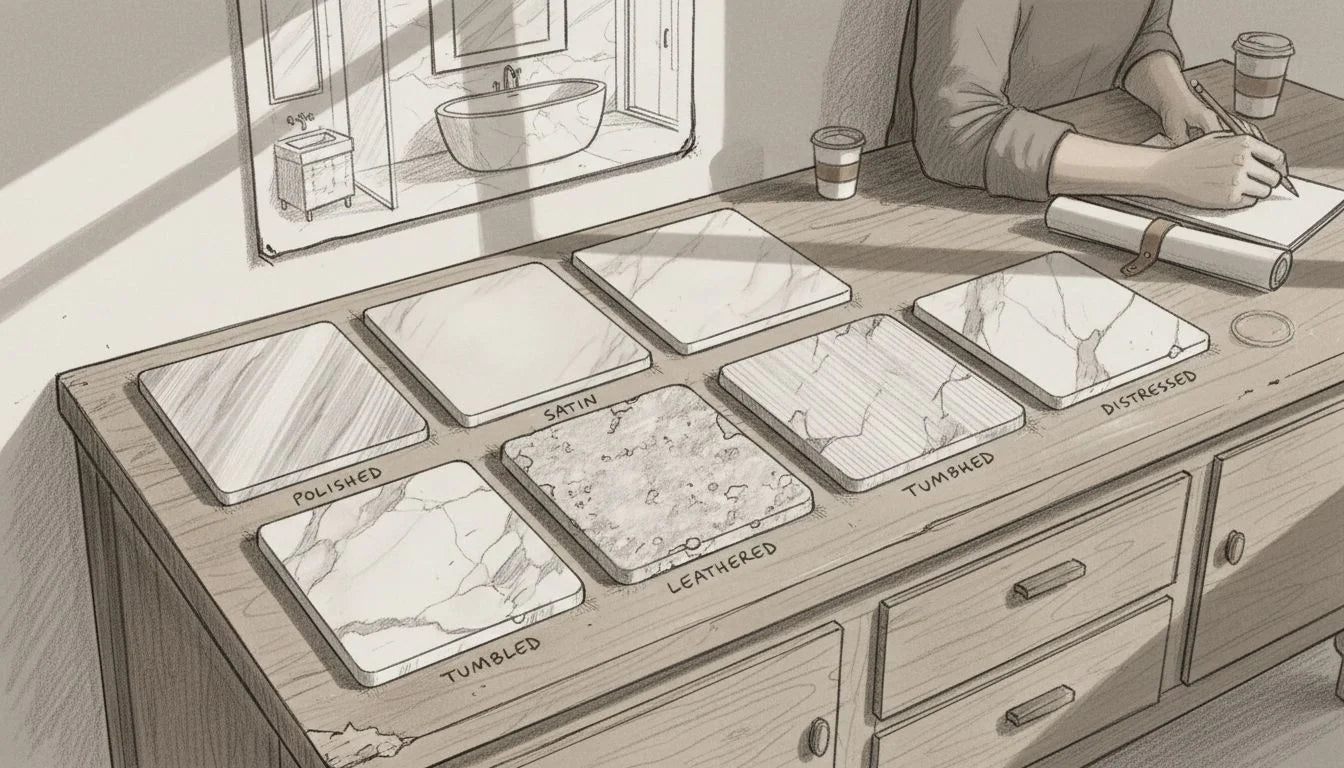
Specialty finishes like brushed and leathered treatments introduce additional textural dimensions to marble surfaces. Brushed finishes create a soft, slightly textured look with minimal sheen, while leathered finishes produce a unique tactile experience with a subtle, undulating surface that captures light in sophisticated ways. These specialized techniques showcase marble’s remarkable versatility in responding to different design intentions and functional requirements.
Pro Tip: Always request physical samples of different marble finishes and observe them under your project’s specific lighting conditions to truly understand their visual and textural nuances.
Polished, Honed, Tumbled: Key Attributes
Marble surface finishing techniques represent sophisticated transformations that dramatically alter stone’s visual and functional properties. Each finish – polished, honed, and tumbled – delivers unique aesthetic and performance characteristics that enable designers to customize marble’s appearance and functionality for specific architectural contexts.
The polished finish creates a mirror-like surface that dramatically amplifies marble’s natural color depth and veining patterns. Characterized by an ultra-smooth, glossy appearance, polished marble reflects light intensely, making spaces feel brighter and more expansive. In contrast, the honed finish produces a soft, matte surface with minimal reflectivity, offering a more understated and contemporary aesthetic that effectively conceals minor surface imperfections and provides enhanced slip resistance.
The tumbled finish introduces an entirely different design language, mechanically distressing marble to produce a weathered, antiqued appearance. Tumbling processes create soft edges and textured surfaces that evoke a sense of history and organic aging. This finish is particularly compelling in spaces seeking to communicate rustic elegance, with its slightly rough texture and muted color palette providing a sophisticated alternative to more polished treatments.
Pro Tip: Request marble samples in multiple finishes and observe them under your specific project’s lighting conditions to fully appreciate how each treatment transforms the stone’s inherent characteristics.
Brushed, Leathered, Distressed: Specialty Looks
Specialty marble surface finishes represent sophisticated design techniques that transform natural stone into unique architectural expressions. These advanced treatments go beyond traditional polishing methods, offering designers unprecedented opportunities to create distinctive, textural experiences within high-end spaces.
The brushed finish employs specialized abrasive brushes to generate a gently textured surface with minimal sheen. Characterized by soft, subtle linear patterns, this finish reduces surface glare while maintaining marble’s inherent elegance. In contrast, the leathered finish introduces a more pronounced tactile dimension, using precision tools to create an undulating surface that captures light dramatically while effectively masking fingerprints and minor surface imperfections.
Distressed treatments simulate intentional aging through mechanical or chemical processes, producing a weathered aesthetic that communicates rich historical narrative. These techniques intentionally create subtle irregularities, soft edges, and muted color variations that evoke a sense of organic evolution, making each marble piece feel uniquely crafted and deeply storied.
Pro Tip: Examine specialty marble finish samples under various lighting conditions to fully appreciate how texture, reflection, and color interact in different architectural environments.
Best Finish Choices for Kitchens and Baths
Kitchen and bath marble selections demand careful consideration of both aesthetic appeal and practical performance. The unique demands of these high-moisture environments require strategic finish choices that balance visual elegance with functional durability, protecting the stone while maintaining its inherent beauty.
For kitchen countertops, polished marble offers unparalleled visual drama with its glossy surface that dramatically reflects light and showcases intricate veining. However, this finish requires meticulous maintenance, as its high-gloss surface can reveal etching, scratches, and stains more readily. Alternatively, honed marble provides a sophisticated matte appearance with superior slip resistance, making it an excellent choice for kitchen flooring and bathroom surfaces where moisture and safety are primary concerns.
Design professionals prioritize finish durability when selecting marble for wet environments. Textured finishes like leathered or brushed marble can effectively mask water spots, fingerprints, and minor imperfections while offering enhanced grip and a more forgiving surface. These specialty finishes not only provide practical benefits but also introduce unique tactile experiences that elevate the overall design aesthetic of kitchens and bathrooms.
Here’s a concise comparison of primary marble finishes with their best-use environments:
| Finish Type | Surface Appearance | Ideal Application | Notable Advantage |
|---|---|---|---|
| Polished | Glossy, reflective | Luxury kitchens, walls | Intensifies color and veining |
| Honed | Matte, smooth | Bathrooms, flooring | Conceals scratches, slip-resistant |
| Tumbled | Textured, antiqued | Rustic interiors, backsplashes | Evokes historical character |
| Leathered | Textured, undulating | Countertops, wet zones | Masks fingerprints, tactile depth |
| Brushed | Soft texture, low sheen | Feature walls, vanities | Reduces glare, subtle elegance |
Pro Tip: Always request a sample of your chosen marble finish and test it under actual kitchen or bathroom lighting conditions to fully evaluate its performance and aesthetic qualities.
Common Pitfalls and Maintenance Insights
Marble surface maintenance requires strategic understanding of the stone’s inherent chemical vulnerabilities. Unlike more resilient surfaces, marble’s calcium carbonate composition makes it exceptionally sensitive to environmental and chemical interactions, demanding proactive and knowledgeable care to preserve its aesthetic integrity.
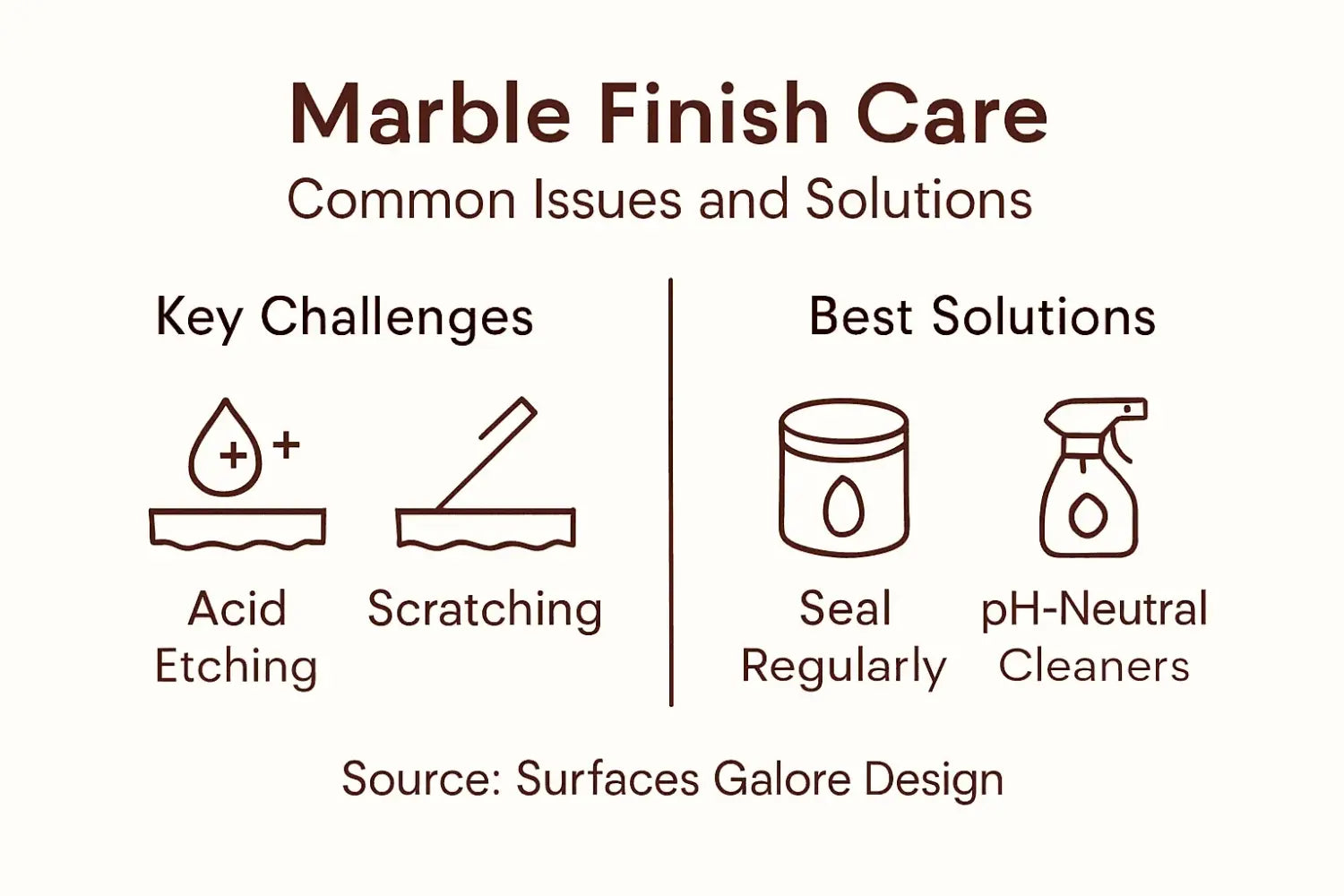
The most critical maintenance challenge involves preventing acid etching, which occurs when acidic substances like citrus juices, vinegar, wine, or harsh cleaning chemicals contact the marble surface. These substances rapidly dissolve the stone’s surface, creating permanent dull spots, discoloration, and micro-erosions that compromise the marble’s pristine appearance. Polished finishes are particularly vulnerable, showing damage more dramatically than honed or textured surfaces.
Marble surfaces are vulnerable to environmental degradation from atmospheric pollutants, humidity fluctuations, and temperature variations. Professional conservationists recommend comprehensive protection strategies, including regular professional sealing, using pH-neutral cleaning solutions, immediate spill management, and avoiding abrasive cleaning tools that can scratch or damage the delicate surface.
Review the maintenance challenges and care tips associated with marble finishes:
| Challenge | Most Affected Finish | Recommended Solution |
|---|---|---|
| Acid etching | Polished | Immediate spill cleanup |
| Surface scratches | Polished, honed | Use pH-neutral cleaners |
| Water spots | Polished, leathered | Regular sealing and drying |
| Fingerprints | Polished | Soft microfiber cloths |
Pro Tip: Create a dedicated marble care kit with pH-neutral cleaner, soft microfiber cloths, and a quality stone sealer to ensure consistent, gentle maintenance for your marble surfaces.
Elevate Your Design with Expertly Finished Marble from Surfaces Galore
Choosing the perfect marble surface finish is a crucial step to balance elegance and durability in your high-end spaces. This article highlights the challenges of selecting finishes like polished, honed, or leathered marble while managing maintenance and visual impact. At Surfaces Galore, we understand how important it is to find authentic, premium natural stone that matches your design vision and practical needs.
Explore our carefully curated collection of marble tiles and decorative pieces designed to bring timeless beauty with finishes that perform in kitchens, baths, and living areas. Whether you need a glossy polished finish that intensifies veining or a textured leathered stone that masks fingerprints and enhances grip, Surfaces Galore has the quality and variety to complete your project with confidence. Visit Surfaces Galore today to discover your ideal marble finish and experience our nationwide shipping built to support designers, architects, contractors, and homeowners alike. Don’t settle for less when your space deserves the best — start your transformation now.
Frequently Asked Questions
What are the main types of marble surface finishes?
The primary marble surface finishes include polished, honed, satin, brushed, tumbled, leathered, and distressed treatments. Each type offers unique visual and functional characteristics suitable for different design objectives.
How does a polished marble finish differ from a honed finish?
A polished finish creates a glossy, mirror-like surface that enhances color depth and veining, making it ideal for luxurious spaces. In contrast, a honed finish provides a smooth, matte surface with reduced reflectivity, offering a more understated aesthetic and better slip resistance.
Which marble finish is best for high-moisture areas like kitchens and bathrooms?
For high-moisture areas, honed marble is often recommended because it has superior slip resistance and doesn’t show scratches as readily as polished finishes. Textured finishes like leathered or brushed can also provide practical benefits while adding visual interest.
What are common maintenance challenges for marble finishes?
Common maintenance challenges include preventing acid etching, which occurs from contact with acidic substances, and addressing surface scratches and water spots. Regular sealing and using pH-neutral cleaners can help maintain the marble’s appearance and integrity.

Leave a comment