
Modern Mosaic Ideas for Stunning Home Interiors

TL;DR:
- Modern mosaic ideas use natural stone and recycled materials to create durable, stylish surfaces for home interiors. Geometric, organic, and minimalist patterns enhance kitchens, bathrooms, and entryways, with material choice and placement impacting the design’s impact. Proper installation and maintenance ensure these mosaics provide lasting beauty and visual interest.
Modern mosaic ideas refer to contemporary applications of mosaic art that use natural stone, recycled glass, ceramics, and mixed materials to enrich home interiors with lasting style. The industry term for this practice is tesserae-based surface design, and it covers everything from marble shower niches to geometric kitchen backsplashes. Natural stone varieties like marble, travertine, and limestone remain the gold standard for durability and visual depth, while sustainable materials like recycled glass push creative mosaic projects into new territory. Whether you are renovating a kitchen, redesigning a bathroom, or adding an accent wall, the right mosaic approach transforms a flat surface into a focal point.
1. What are the top modern mosaic materials?
Natural stone mosaics like marble, limestone, and travertine deliver timeless elegance with modern versatility, making them the best mosaic materials for upscale kitchen and bath remodels. Each stone type brings a distinct character. Marble offers crisp veining and a polished finish. Travertine adds warmth with its pitted, earthy texture. Limestone sits between the two, with a matte surface that suits minimalist spaces.
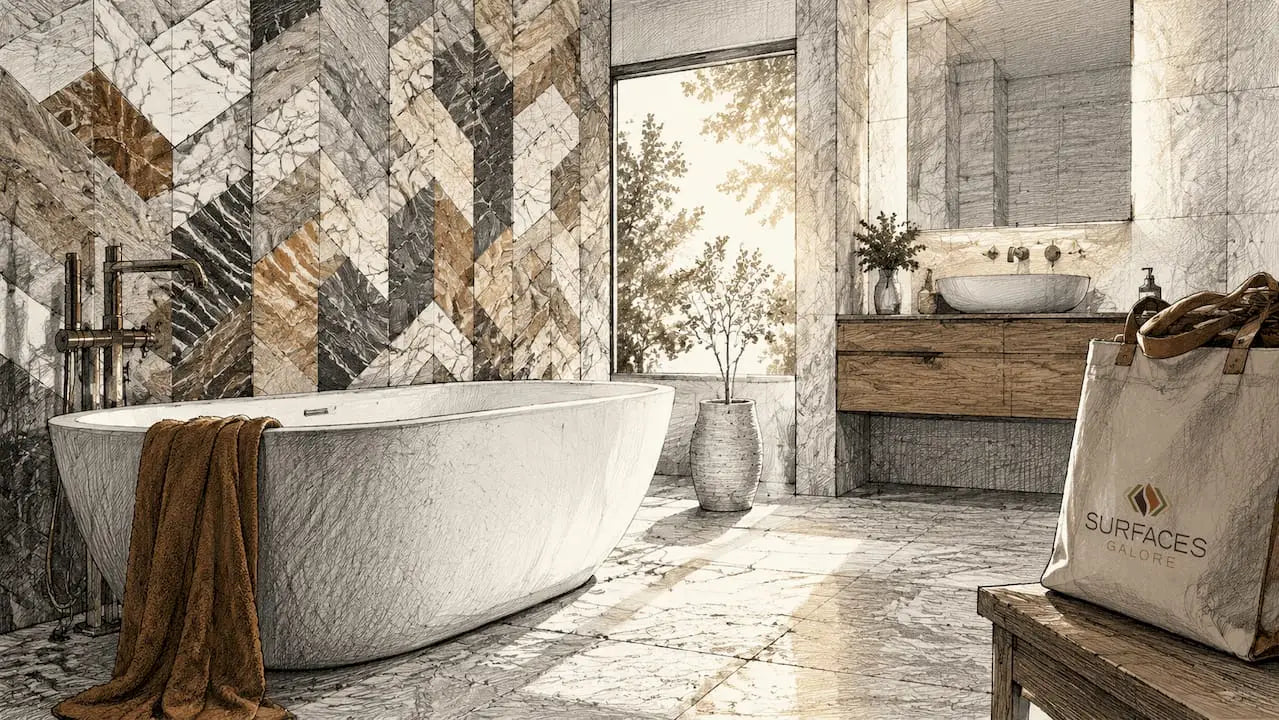
Beyond natural stone, contemporary mosaic designs increasingly rely on sustainable options. Modern mosaic artists use recycled glass, ceramics, and even discarded electronic components to create textures that mass-produced tiles cannot replicate. This shift toward unconventional materials is redefining what mosaic surfaces can look and feel like.
Mixed-material mosaics combine stone with glass or ceramic to add depth through contrast. A marble field tile paired with iridescent glass inserts, for example, catches light differently at different times of day. That interplay makes a surface feel alive rather than static.
For wet areas like showers and kitchen backsplashes, material performance matters as much as appearance. Applying mosaics in kitchens and bathrooms requires moisture resistance and easy maintenance, which favors dense natural stones and vitrified glass over porous ceramics.
- Marble: High polish, bold veining, ideal for feature walls and shower floors
- Travertine: Warm tones, natural pitting, best for rustic-modern and spa-style spaces
- Limestone: Matte finish, neutral palette, suits Scandinavian and minimalist interiors
- Recycled glass: Reflective, eco-friendly, adds color pop to backsplashes
- Ceramic: Affordable, wide color range, works well for DIY modern mosaics on furniture and outdoor pieces
Pro Tip: Seal natural stone mosaics with a penetrating stone sealer before grouting. This prevents grout from staining the stone surface and makes cleanup far easier.
2. Which design patterns make the biggest impact?
Geometric mosaic patterns, including triangles, hexagons, and abstract angular shapes, are trending in modern home interiors for their structured yet artistic appeal. These patterns work especially well in kitchens and bathrooms, where clean lines reinforce a contemporary aesthetic. A hexagon marble mosaic floor, for instance, reads as both classic and current.
Organic and nature-inspired patterns take the opposite approach. They use earth tones and irregular shapes to create calming, naturalistic effects. Think river-stone arrangements in a shower floor or leaf-shaped ceramic pieces set into a garden wall. These designs feel less constructed and more discovered.
Minimalist styles strip the pattern back to its simplest form. A single-color marble mosaic in a running-bond layout, for example, adds texture without visual noise. This approach suits open-plan spaces where the mosaic needs to complement rather than compete.
Bold statement patterns work best as accent walls or backsplashes. A large-format geometric mosaic behind a kitchen range or a floor-to-ceiling abstract design in an entryway commands attention without requiring additional decoration.
| Pattern style | Best application | Key material |
|---|---|---|
| Geometric (hexagon, triangle) | Bathroom floors, kitchen backsplashes | Marble, limestone |
| Organic (irregular, nature-inspired) | Shower walls, garden features | Travertine, ceramic |
| Minimalist (running bond, single color) | Open-plan living areas, entryways | Limestone, recycled glass |
| Bold statement (large-scale abstract) | Accent walls, range hoods | Mixed stone and glass |
- Pair geometric patterns with grout in a contrasting color to sharpen the design lines
- Use organic patterns in spaces where you want a relaxed, spa-like atmosphere
- Reserve bold statement patterns for one surface per room to avoid visual overload
3. How to create DIY modern mosaic projects with lasting quality
A well-executed DIY mosaic starts with a flat, clean, and stable base surface. Wood, concrete board, and sealed MDF all work well. Avoid applying mosaics directly to drywall in wet areas, since moisture will eventually compromise the bond.
The basic process follows four steps. First, cut or arrange your tiles on a flat surface to test the layout before committing to adhesive. Second, transfer the design onto fiberglass mesh using a sticky adhesive, which holds tiles in place and makes the whole sheet easier to move and install. Third, press the mesh-backed mosaic onto the prepared surface using thinset mortar or a suitable mosaic adhesive. Fourth, apply grout once the adhesive has cured fully.
Grout selection is where many DIY projects succeed or fail. Sanded grout is the right choice for most mosaic work because it fills larger gaps between tiles and holds up under foot traffic and moisture. Pre-mixed grout suits small projects and is ready to use straight from the container. Dry powder grout costs less per square foot and makes more sense for larger installations. Color-matching your grout to the dominant tile tone unifies the design. Choosing a contrasting grout color, on the other hand, sharpens every individual tile shape.
- Plan your layout on paper or a flat surface before cutting any tile
- Cut tiles with a tile nipper for curves or a wet saw for straight lines
- Arrange tiles on adhesive fiberglass mesh to lock in the design
- Apply adhesive to the base surface and press the mesh sheet firmly into place
- Allow full cure time before grouting, typically 24 hours
- Mix and apply grout, pressing it into all gaps with a rubber float
- Wipe excess grout with a damp sponge before it hardens
- Seal the finished surface once grout has cured completely
DIY mosaic projects work beautifully on tabletops, picture frames, planters, and birdbaths. These smaller surfaces let you practice technique before tackling a kitchen backsplash or bathroom floor.
Pro Tip: When mixing ceramic and glass tiles in the same project, account for their different thicknesses. Use a slightly thicker adhesive bed under thinner glass pieces so the finished surface sits level.
4. Where to apply mosaics for maximum visual impact
The kitchen backsplash is the most popular location for contemporary mosaic designs, and for good reason. It sits at eye level, covers a manageable surface area, and gets seen constantly. A mosaic backsplash installation behind the range or sink creates a focal point that anchors the entire kitchen design.
Bathroom applications offer even more creative range. Shower niches, floor insets, and feature walls all benefit from mosaic work. A marble mosaic shower floor adds grip through its grout lines while delivering a spa-quality look. Shower niches lined with a contrasting stone mosaic draw the eye and define the space.
Entryways and hallways are underused locations for mosaic art. A mosaic medallion set into a stone or hardwood floor makes an immediate impression on anyone entering the home. Accent walls in living rooms and dining rooms work similarly, providing a textured backdrop that no paint color can match.
Lighting placement affects how a mosaic reads in a room. Raking light from a side-mounted fixture emphasizes texture and depth. Overhead lighting flattens the surface. For maximum visual impact, position light sources at an angle to the mosaic rather than directly in front of it.
- Kitchen backsplash: Use moisture-resistant materials and a grout rated for food-prep areas
- Shower floor and niche: Choose slip-resistant finishes and small tile formats for better grip
- Entryway floor medallion: Select dense stone like marble or limestone for high-traffic durability
- Accent wall: Mix tile sizes and materials to create depth and visual interest
- Outdoor features: Use frost-resistant ceramics or sealed natural stone for planters and garden walls
Maintenance for natural stone mosaics in high-use areas is straightforward. Reseal stone surfaces annually in wet areas and every two to three years in dry locations. Clean with a pH-neutral stone cleaner rather than acidic products, which etch marble and limestone surfaces.
5. Inspiring examples of contemporary mosaic ideas
The most memorable contemporary mosaic designs share one quality: they use unexpected materials or combinations to create something that feels genuinely original. Recycled and unconventional materials are redefining texture possibilities beyond traditional tile formats, and that shift is showing up in residential interiors as well as gallery installations.
One standout example comes from the DIY space. A creator used thrifted china plates combined with sparkly polymer clay shapes and colorful rock chips to build a mosaic birdbath that went widely shared online. The project proved that sustainable, secondhand materials can produce results as visually striking as premium tile work.
In upscale kitchens and baths, the most compelling designs integrate natural stone mosaics with custom layouts. A Calacatta marble hexagon floor paired with a travertine wall mosaic in a contrasting pattern creates layered visual interest without clashing. Surfacesgalore offers custom mosaic design guidance for exactly these kinds of multi-material projects, helping homeowners coordinate stone selections across a full room.
For mosaic art inspiration that extends beyond the floor and wall, consider incorporating mosaic-style wall art into the design scheme. A piece like an African mosaic tribal canvas can echo the geometric patterns in a stone mosaic floor, creating a visual conversation between the art and the architecture.
“The most powerful mosaic designs do not shout. They reward the person who looks closely, revealing new details, colors, and textures with every glance. That quality of discovery is what separates a truly great mosaic from a decorative surface.”
- Recycled glass mosaic backsplash in a coastal kitchen, using sea-glass tones to mirror the view
- Travertine mosaic medallion in an entryway, set into a limestone floor for a tonal contrast
- Geometric marble mosaic shower wall paired with a simple limestone floor for visual balance
- Mixed ceramic and stone mosaic planter as a garden focal point, combining vintage and modern pieces
Key takeaways
The best modern mosaic ideas combine natural stone materials, purposeful pattern selection, and proper installation technique to create surfaces that last decades and improve with age.
| Point | Details |
|---|---|
| Material choice drives durability | Natural stone like marble and travertine outperforms ceramic in wet, high-traffic areas. |
| Pattern scale affects room perception | Geometric patterns sharpen a space; organic patterns soften it. Match the pattern to the room’s mood. |
| Grout selection is non-negotiable | Sanded grout fills gaps reliably; color-match or contrast intentionally to control the final look. |
| Location determines material spec | Wet areas need moisture-resistant, sealed stone; entryways need dense, durable stone for foot traffic. |
| Sustainable materials expand design range | Recycled glass and secondhand ceramics create textures that standard tile cannot replicate. |
Why I think most homeowners underestimate mosaic design
Most homeowners treat mosaics as a finishing detail. They pick a backsplash tile last, after every other decision is made, and then wonder why the room feels disconnected. The mosaic should be one of the first decisions, not the last. It sets the color palette, the texture register, and the overall mood of the space.
I have seen this play out repeatedly. A homeowner chooses a stunning Calacatta marble mosaic for a shower floor, then pairs it with a plain white wall tile that makes the floor look like an afterthought. The fix is simple: let the mosaic lead and build the rest of the room around it.
The other mistake I see constantly is avoiding natural stone because of perceived maintenance complexity. Sealed marble and travertine mosaics in a bathroom require one annual resealing. That is a 20-minute task. The visual return on that investment lasts for decades. Surfacesgalore’s mosaic design resources make material selection and maintenance planning straightforward, even for first-time buyers.
My honest advice: do not default to the safe choice. A bold geometric marble mosaic or a mixed-material travertine and glass design will outlast every trend because it is grounded in real material quality. The rooms that photograph well five years from now are the ones where someone made a confident, specific choice today.
— cihan
Natural stone mosaics from Surfacesgalore
Surfacesgalore stocks premium marble, travertine, and limestone mosaics direct from the source, which keeps prices accessible without compromising on quality. Every collection is curated for homeowners and designers who want materials that perform as well as they look.
Whether you are planning a kitchen backsplash, a bathroom floor, or a custom entryway medallion, Surfacesgalore carries the stone to match your vision. Browse the full natural stone mosaic collection to find the right material, format, and finish for your project. The team ships nationwide from Anaheim, California, and provides expert guidance on material selection and installation for every order.
FAQ
What materials work best for modern mosaic designs?
Natural stone mosaics like marble, travertine, and limestone are the top choice for durability and elegance. Recycled glass and ceramic work well for creative mosaic projects where color variety and sustainability matter.
What grout should I use for a DIY mosaic project?
Sanded grout is the standard choice for mosaic work because it fills gaps reliably and holds up under moisture and traffic. You can color-match it to your tile or choose a contrasting shade to define each individual piece.
Where is the best place to install a mosaic in a home?
Kitchen backsplashes and bathroom shower floors are the highest-impact locations for mosaic installation. Entryway floor medallions and accent walls also deliver strong visual results with the right material and pattern choice.
How do I maintain natural stone mosaics in a bathroom?
Reseal natural stone mosaic surfaces annually in wet areas using a penetrating stone sealer. Clean with a pH-neutral cleaner to avoid etching marble or limestone with acidic products.
Can I mix different mosaic materials in one project?
Yes, mixing materials like marble and recycled glass or travertine and ceramic creates depth and visual contrast. Account for differences in tile thickness by adjusting the adhesive bed so the finished surface sits level.

Leave a comment