
Nero Marquina Marble: Pick 3/4in, Seal Before Grout for Designers

Nero Marquina is a deep-black Spanish marble prized for its dramatic white calcite veining, and it works best indoors on countertops, vanities, backsplashes, and accent walls where regular sealing fits into the maintenance routine. It’s a striking choice for kitchens and baths built around contrast, but it etches with acidic spills and needs consistent care. Nero Marquina is available in multiple formats and finishes and can be shipped nationwide.
TL;DR:
- Nero Marquina marble’s veining and contrast vary widely between slabs, making full inspection essential before purchase.
- Its polished finish enhances the black color and white veins for maximum visual impact, while honed reduces glare and masks fingerprints.
- Sealing protects against stains but does not prevent etching from acids, requiring a maintenance routine of regular resealing and spill cleanup.
- It performs best in indoor applications like countertops and accent walls, with outdoor use risking appearance changes due to UV and weather exposure.
- Ordering directly from Surfaces Galore ensures consistent quality, fast sample access, and accurate pricing based on the specific format and finish.
Table of Contents
- What Formats and Finishes Does Nero Marquina Marble Come In?
- Where Does Nero Marquina Marble Come From?
- Where Should You Use Nero Marquina Marble?
- How Do You Install and Maintain Nero Marquina Marble?
- What Should You Check Before Ordering Nero Marquina Marble?
- Why Surfaces Galore Backs This Guide
- Why Nero Marquina Marble Gets Chosen (And Sometimes Regretted)
- Get Nero Marquina Marble From a Direct Importer
- Sources
- FAQ
What Formats and Finishes Does Nero Marquina Marble Come In?
Nero Marquina ships in a handful of practical formats, and knowing which one fits your project saves you a redo down the line. Slab thickness commonly runs from 3/8 inch up to 1 1/4 inches depending on the application. Thinner stock suits wall cladding and backsplashes; anything load-bearing on a countertop or floor should land closer to 3/4 inch or above.
Finish changes both the look and the upkeep:
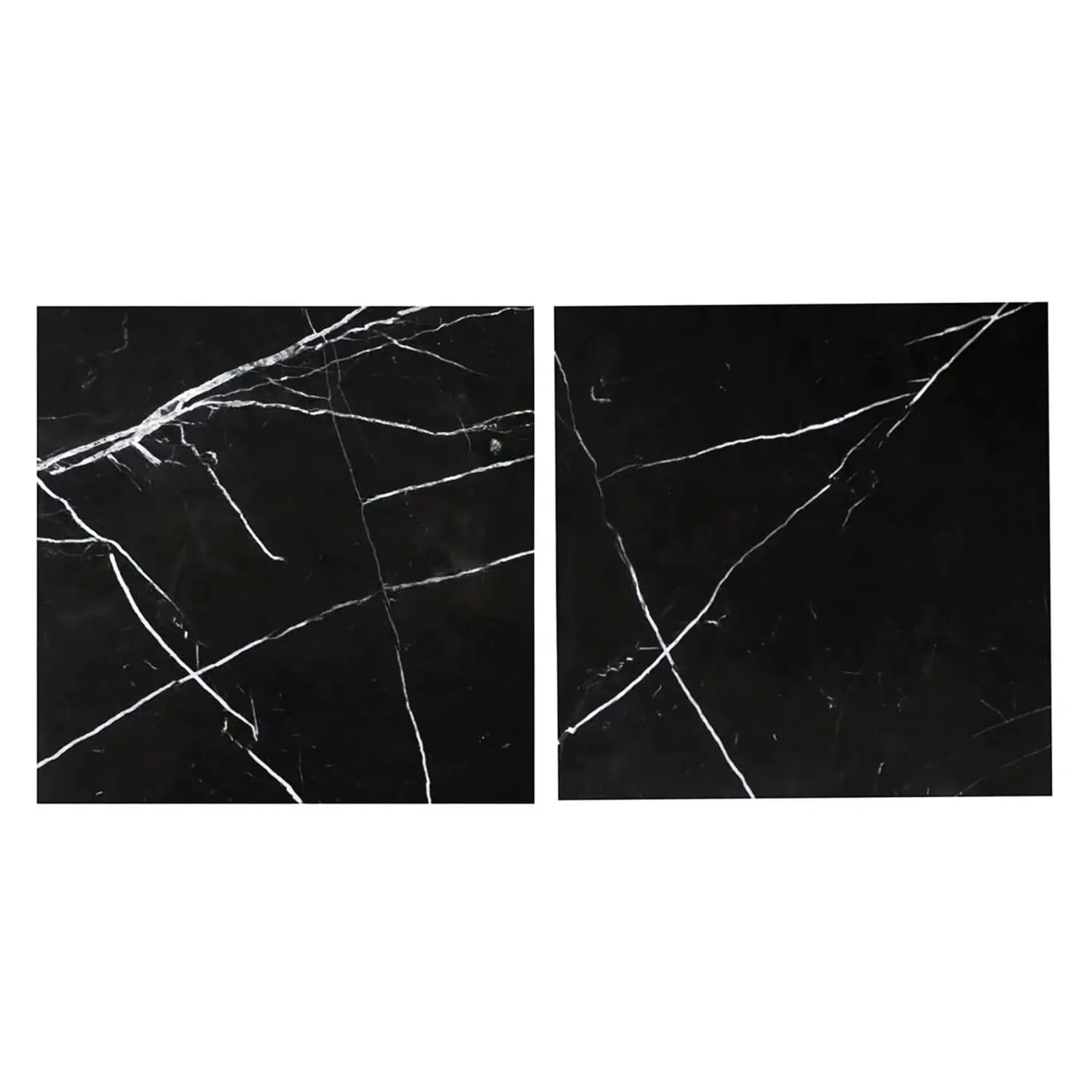
- Polished brings out the deepest black and the sharpest contrast against the white veining, which is why it dominates countertop and vanity applications.
- Honed knocks down the glare and hides fingerprints and water spots better, a real advantage in busy kitchens.
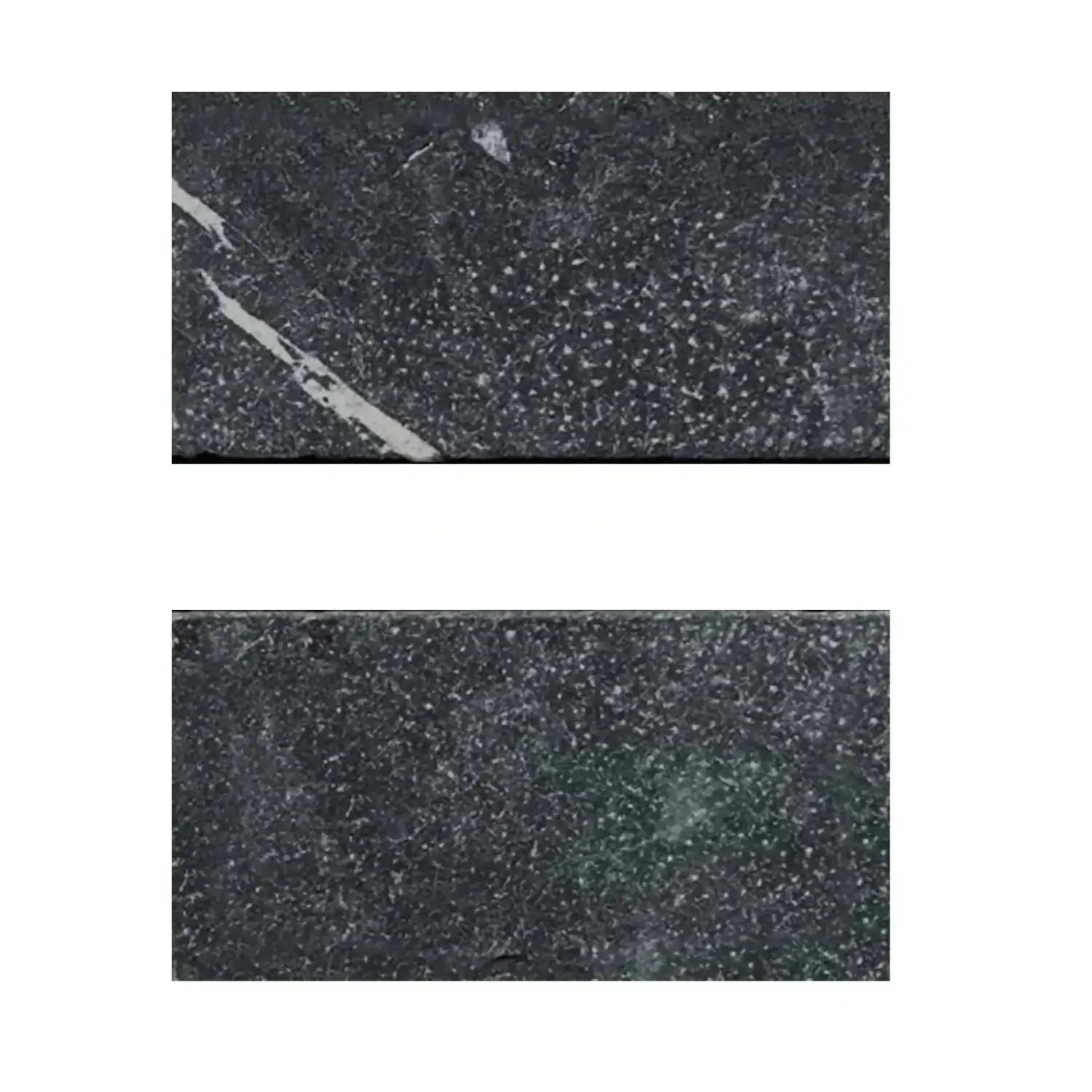
- Tumbled softens the edges and surface texture, giving small-format tile an aged, handmade look that reads well in mosaics and shower floors.
Surfaces Galore carries three ready-to-order Nero Marquina SKUs that cover most residential and commercial jobs: the 3x6 tumbled tile for accent bands and small wet-area installs, the 24x24 polished or honed tile for flooring and large-format wall work, and the 12x24 polished or honed tile for backsplashes and countertop-adjacent surfaces. Standard sizes typically sit in stock with short lead times; large custom orders or matched-vein slab work often run on a special-order timeline, so confirm availability before you finalize an install date.
Where Does Nero Marquina Marble Come From?
The stone is quarried near Markina in the Basque Country of northern Spain, and that geology is exactly why the look is so distinctive. The black base color comes from bituminous content trapped in the limestone as it formed, while the bright white veins running through it are calcite deposits that crystallized along fracture lines over millions of years, according to background on the quarry region.
No two slabs read quite the same:
- Vein density and contrast shift from block to block, sometimes even within the same lot.
- Some sections lean toward tight, spidery white lines; others show broader, bolder streaks.
- Because of that natural range, full-slab inspection matters far more here than it does with a uniform stone like granite.
Finish choice also changes what you perceive. A polished surface reads darker and glossier, pushing the white veins forward for maximum drama, while honed stone mutes that contrast slightly and gives a softer, more matte depth to the black.
Where Should You Use Nero Marquina Marble?
Nero Marquina earns its keep indoors, in kitchens, bathrooms, and feature walls, and it struggles anywhere exposed to constant sun or weather, since UV and temperature swings can alter its appearance over time. The best applications lean on contrast and restraint rather than covering every surface in it:
- Kitchen islands, vanity tops, and shower niches where the black reads as a focal point.
- Backsplashes and accent walls paired against lighter cabinetry or tile.
- Checkerboard or basketweave floor patterns mixed with a white marble for graphic punch.
- Fireplace surrounds and powder room walls, where high traffic and spills aren’t a daily concern.
Designers typically pair it with Bianco Carrara or Calacatta to keep the black from overwhelming a room, and that pairing also happens to be the easiest way to soften maintenance anxiety since the lighter stone carries most of the visual weight. If you’re weighing broader design directions, our guide to marble applications walks through more layout ideas. For a busy family kitchen with a low tolerance for maintenance, granite or a porcelain slab that mimics black marble may serve you better than the real stone.
Pro Tip: Use Nero Marquina as the accent, not the whole room. A single island, one accent wall, or a border inlay delivers the drama without turning maintenance into a full-time job.
How Do You Install and Maintain Nero Marquina Marble?
Getting the install right up front is what keeps this stone looking good for decades instead of showing gray grout haze after year one. Follow these steps in order:
- Pre-seal before grouting. Installers commonly apply a sacrificial sealer coat to the tile face before grout goes down, which keeps pigment from soaking into the stone’s pores. That coat gets stripped during initial cleanup, leaving the surface clean.
- Choose an impregnating sealer for the final application. Penetrating sealers soak into the stone and repel water and oil without leaving a surface film, which is the standard recommendation for indoor marble.
- Run a water-drop test annually. Drop water on the surface; if it beads for 15 to 20 minutes, the seal is holding. If it darkens the stone quickly, it’s time to reseal.
- Reseal on a schedule that matches traffic. Depending on use and sealer type, reseal frequency typically runs anywhere from 6 months to 3 years.
- Clean with pH-neutral products only, and wipe up wine, citrus, and vinegar immediately since sealing does not stop etching, only staining.
Here’s the trade-off buyers need to understand upfront: sealing protects against stains and grout discoloration, but it does nothing to prevent etch marks from acids. That means your real maintenance plan is spill response and a sealing calendar, not a sealer alone. Our marble maintenance guide and countertop installation guide both go deeper into the specifics for kitchen and vanity settings.
What Should You Check Before Ordering Nero Marquina Marble?
Ordering black marble sight unseen is the fastest way to end up with a mismatched slab in your kitchen. Before you commit:
- Request physical samples in the finish you plan to use, not just a photo. Polished and honed samples of the same stone can look surprisingly different in person.
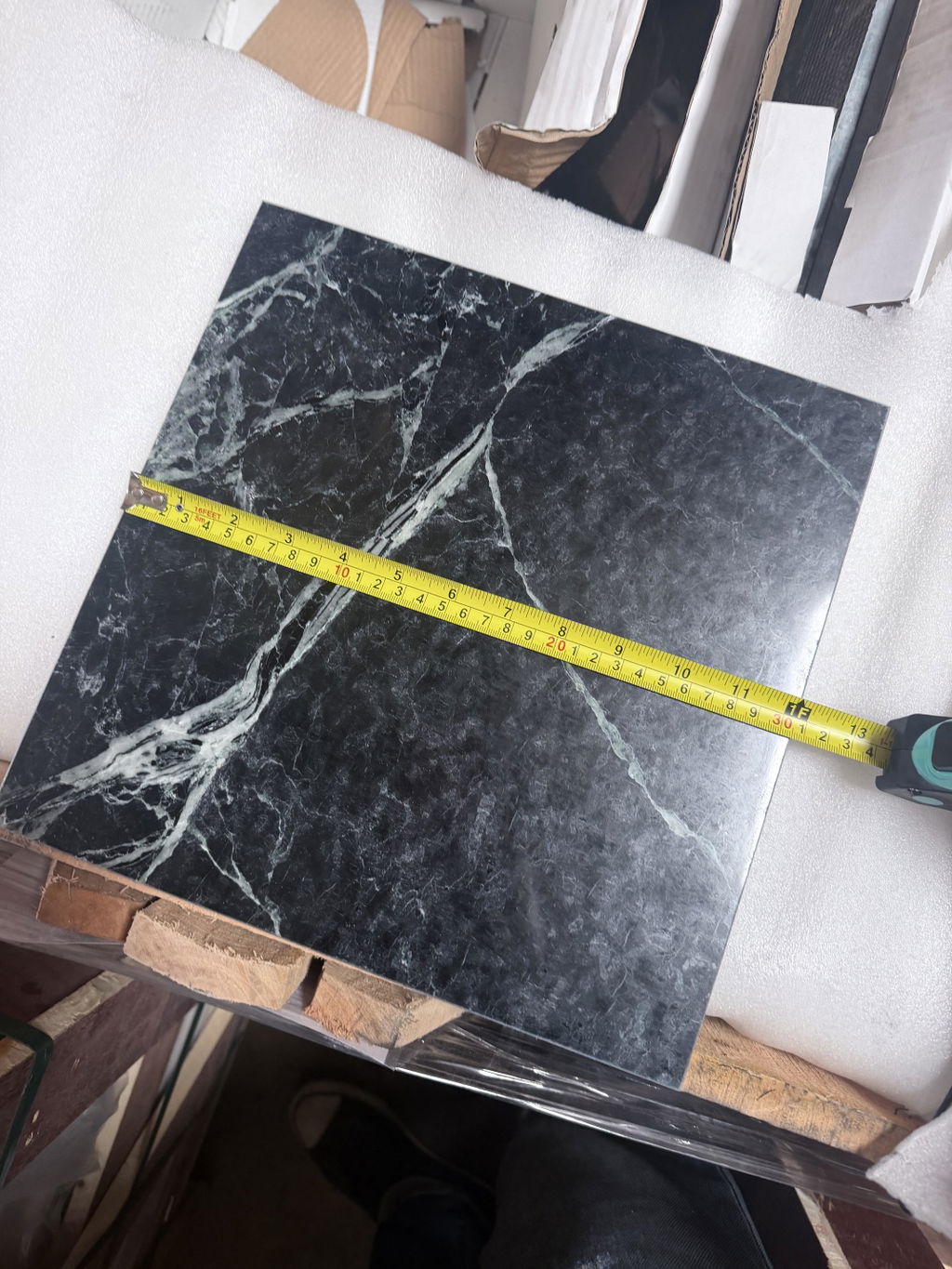
- For slab work, ask for high-resolution photos with lot numbers, or inspect the full slab in person, since veining and contrast vary from block to block.
- Check thickness, edge condition, and finish consistency against your spec before the material leaves the warehouse.
- Reserve adjacent slabs if you need a bookmatched look, since matching veining after the fact rarely works.
- Order 10 to 15% extra material to cover cuts, waste, and any future repairs, particularly on complex layouts.
Pricing depends heavily on grade, finish, thickness, and import costs, so expect a range rather than a flat number, and get a quote against your exact specs. Direct-import stone also carries its own shipping timeline, so build in lead time for both standard stock and any custom slab order. Surfaces Galore runs a sample program alongside its full product catalog to help you confirm the look before you commit to a full order.
Why Surfaces Galore Backs This Guide
This natural stone is imported directly and shipped nationwide, so the Nero Marquina you see quoted online is the same lot available to order, not a listing pulled from a third-party warehouse with unknown provenance. This direct-import model also facilitates faster sample requests and trade quotes than going through multi-layered distributors.
The three SKUs covered here, the 3x6 tumbled, the 24x24 polished or honed, and the 12x24 polished or honed, cover the bulk of what designers and contractors actually specify for kitchens, baths, and accent walls. For broader design context, our wet-area marble guide and white marble pairing examples round out the planning process before you place an order.
Why Nero Marquina Marble Gets Chosen (And Sometimes Regretted)
Most guides to this stone undersell the maintenance conversation because it’s easier to sell drama than discipline. The truth is that Nero Marquina rewards people who plan for its upkeep and punishes anyone who buys it expecting granite-level indifference to spills. If you’re the type who wipes counters after cooking and doesn’t leave a wine glass sweating on the vanity overnight, this stone will look better in ten years than most alternatives. If that’s not your household, the etching will show up within months, not years.
The other thing people underestimate is how much finish choice changes the maintenance equation, not just the look. A honed surface hides the inevitable etch marks far better than a mirror-polished one, because the matte texture doesn’t rely on a flawless reflective plane to look intentional. Anyone installing this in a working kitchen should think hard about giving up some of that polished drama for honed forgiveness. For pairing decisions and accent-wall placement, treating black marble as a design accent, not a full room finish, keeps both the aesthetics and the maintenance burden in check. That is the real skill in specifying this stone well.
— John | Surfaces Galore
Get Nero Marquina Marble From a Direct Importer
Buying black marble through a middleman adds cost and slows down sample requests, which is exactly the friction Surfaces Galore removes for homeowners, designers, and contractors ready to specify Nero Marquina. As a direct importer, Surfaces Galore sources the stone from the quarry side and ships it nationwide, so the price you see reflects import cost rather than a chain of markups.
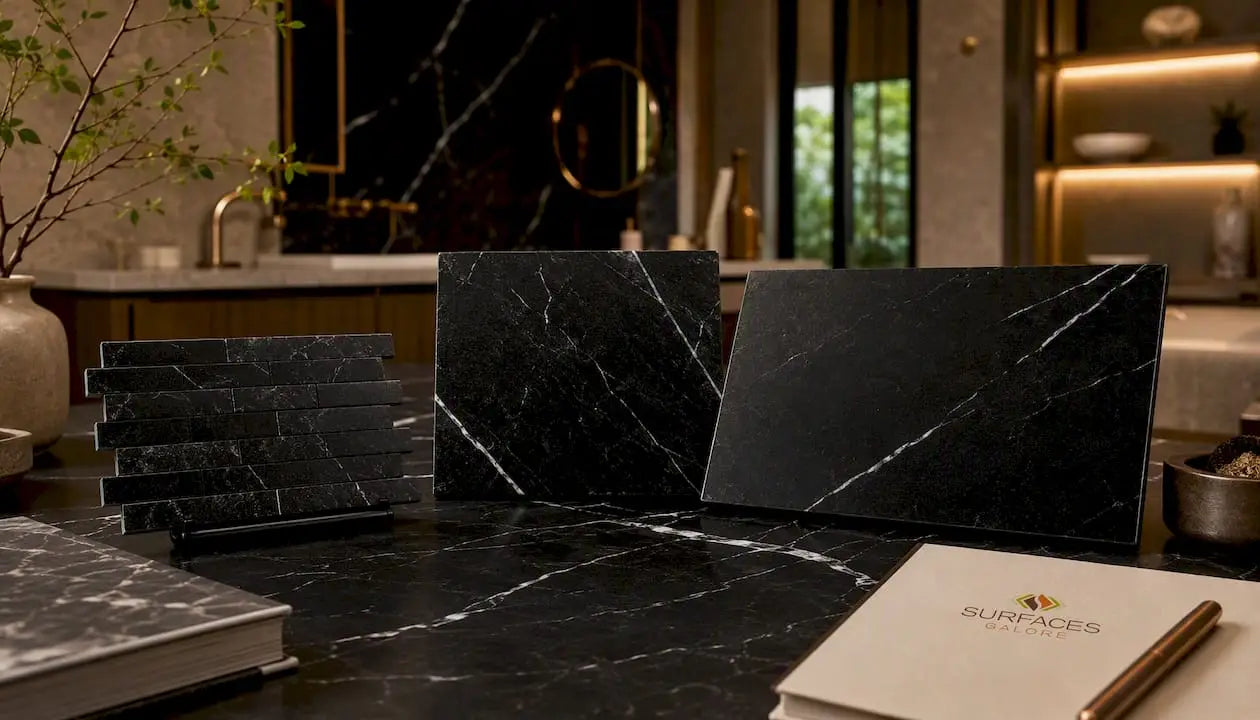
Whether you’re speccing a single vanity top or bidding a full commercial installation, the catalog covers the format range this article walked through: 3x6 tumbled for accents, 24x24 polished or honed for flooring, and 12x24 polished or honed for countertops and backsplashes. Trade accounts get quote support for bulk orders, and anyone weighing a room’s overall palette can browse interior door and trim color guidance to see how black marble reads against different finish schemes. Request a physical sample today to check the vein pattern and finish against your project before you order.
Sources
- Nero Marquina marble — Wikipedia
- Nero Marquina — Marmo Alberti
- Do marble tiles need sealing? — FlooringClarity (2025-10-18)
- Nero Marquina marble: A deep dive — Rarity Marble
- Nero Marquina marble: A complete guide — Nova Tile & Stone
FAQ
Is Nero Marquina a Marble?
Yes. Nero Marquina is a true black marble quarried in the Markina area of the Basque Country in Spain, with its black tone coming from bituminous content in the stone and its white veins formed from calcite.
Is Nero Marquina Marble Expensive?
It sits in the higher tier of marble pricing because of import costs, grading, and the demand for its distinctive look, though exact pricing varies by finish, thickness, and grade. Request a quote against your specific format and finish for an accurate number.
What Is the Highest Quality Marble in the World?
There’s no single agreed-upon “highest quality” marble since quality depends on the application, but Nero Marquina is widely recognized as a top-tier black marble for its density and dramatic veining, while Calacatta and Carrara hold similar reputations among white marbles. The right choice depends on your project’s color palette, traffic level, and maintenance plan.
Recommended
- Matching Marble Slabs for Seamless Luxury Surfaces
- How to seal grout lines for durable, beautiful tile
- Examples of Marble Applications: 2026 Design Guide
- Seal Marble Tiles to Protect Your Investment
This article is provided for general informational guidance only. Natural stone varies in color, veining, texture and performance. For installation, sealing, cleaning and maintenance, follow the product manufacturer’s instructions and consult a qualified installer or stone-care professional. Always test cleaning and sealing products in an inconspicuous area first. Surfaces Galore is not responsible for damage, discoloration, etching, staining, installation issues or other problems resulting from

Leave a comment