

Ordering Natural Stone Step by Step for Designers

Sourcing the perfect natural stone can be a defining moment for California interior designers focused on luxury residential renovations. Each project brings its own set of demands, from ensuring material durability in San Francisco’s humid climate to capturing just the right color palette for a Malibu estate. By focusing on dimensional stone standards and expert evaluation, you protect your vision while guaranteeing exceptional results for even the most discerning clients.
Table of Contents
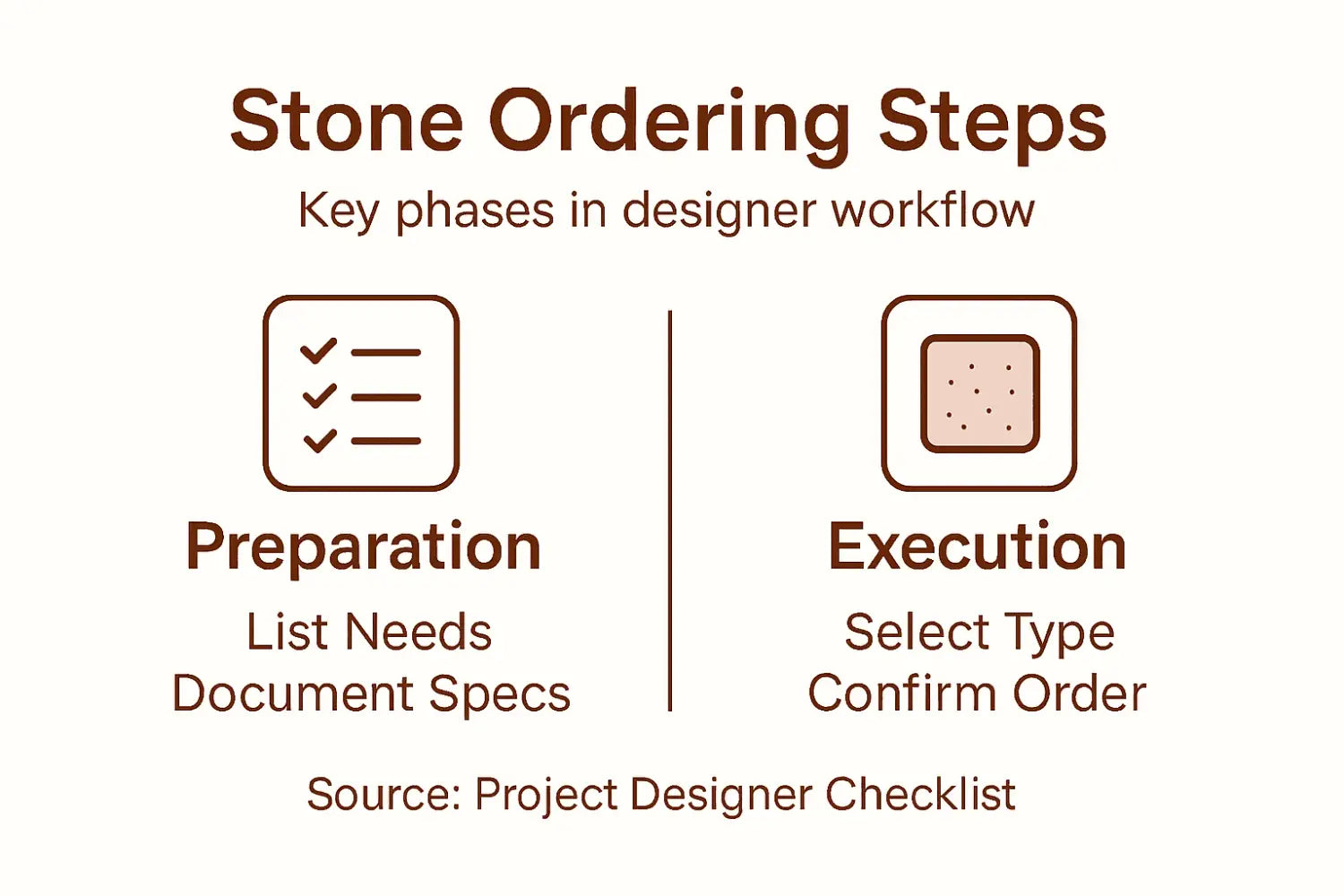
- Step 1: Assess Project Needs And Specifications
- Step 2: Select Appropriate Natural Stone Products
- Step 3: Request Samples And Review Quality
- Step 4: Finalize Quantity And Order Details
- Step 5: Confirm Delivery And Inspect Upon Arrival
Quick Summary
| Key Point | Explanation |
|---|---|
| 1. Define Project Needs | Assess project specifications to guide stone selection effectively. |
| 2. Choose Suitable Stone | Match stone types to specific design needs, including durability and aesthetics. |
| 3. Evaluate Samples Thoroughly | Request full-size samples for accurate quality assessment before ordering. |
| 4. Plan Order Details | Calculate exact material quantities and specifications to ensure an accurate order. |
| 5. Inspect Upon Delivery | Conduct a detailed inspection of materials upon arrival to confirm quality and accuracy. |
Step 1: Assess Project Needs and Specifications
Designing with natural stone requires precise planning and comprehensive understanding of your specific project requirements. In this crucial first stage, you will systematically evaluate the unique demands of your interior design project to ensure optimal stone selection and performance.
Begin by conducting a thorough analysis of your project specifications. This involves examining critical factors such as location, environmental conditions, expected foot traffic, and intended aesthetic outcomes. For professional designers, understanding dimensional stone standards becomes paramount. The consensus standards developed by ASTM International provide essential guidance for selecting appropriate stone materials that meet rigorous quality and durability criteria.
Key evaluation parameters include:
- Surface area requirements
- Expected moisture exposure
- Temperature fluctuation ranges
- Structural load-bearing needs
- Color and texture compatibility with design scheme
- Budget constraints
- Maintenance expectations
Carefully document these specifications to create a comprehensive project profile. This detailed assessment will serve as your roadmap for selecting the perfect natural stone materials that not only meet aesthetic preferences but also guarantee long-term performance and durability.
Pro tip: Create a digital or physical project specification worksheet that captures all critical parameters before beginning material selection to streamline your design process.
Step 2: Select Appropriate Natural Stone Products
With your project specifications carefully documented, you are now ready to dive into selecting the perfect natural stone products that will transform your design vision into reality. This critical step involves matching your precise project requirements with the right stone materials that balance aesthetic appeal, performance, and practicality.
Start by leveraging the types of natural stone guide to understand the unique characteristics of different stone varieties. Each stone type offers distinct properties that can dramatically impact your design outcomes. Consider factors such as:
- Durability for high-traffic areas
- Moisture resistance for bathrooms and kitchens
- Color and texture alignment with design aesthetic
- Maintenance requirements for long-term performance
- Cost considerations within project budget
- Structural compatibility with intended application
Pay special attention to the stone’s origin, natural variations, and potential performance under specific environmental conditions. Professional designers recognize that no two stone slabs are identical, making visual inspection and physical sample testing crucial before making a final selection.
Successful stone selection requires balancing aesthetic preferences with functional performance requirements.
Carefully compare multiple stone samples side by side, examining their unique characteristics under different lighting conditions and against your project’s specific design context.

Pro tip: Always request full-size stone samples and evaluate them in the actual project space to understand how light, surrounding materials, and environmental factors will interact with the stone.
Here’s a quick comparison of popular natural stone types for interior design projects:
| Stone Type | Ideal Use Cases | Key Benefits | Main Consideration |
|---|---|---|---|
| Marble | Bathrooms, flooring | Elegant appearance | Sensitive to acids |
| Granite | Kitchens, hallways | High durability | Requires sealing |
| Limestone | Living rooms, walls | Warm natural look | Prone to scratching |
| Slate | Entryways, patios | Slip-resistant surface | Limited color range |
| Travertine | Showers, accents | Unique pitted texture | Needs regular maintenance |
Step 3: Request Samples and Review Quality
Now that you have identified potential natural stone options, it is crucial to obtain physical samples to thoroughly evaluate their suitability for your project. Requesting and meticulously reviewing samples allows you to make an informed decision that goes beyond catalog images and digital representations.
Professional designers understand the importance of stone quality evaluation through comprehensive sample assessment. When requesting samples, follow these critical steps:
- Request full-size samples representative of your intended application
- Examine samples under multiple lighting conditions
- Check for color consistency and natural variations
- Inspect surface finish and texture details
- Verify dimensional accuracy and tolerances
- Test samples against your project’s specific environmental conditions
Carefully observe each sample’s characteristics, paying close attention to subtle nuances that might impact your design. Natural stone variations mean no two pieces are identical, so understanding these unique qualities becomes essential for achieving your desired aesthetic and functional outcomes.
Professional sample review involves more than visual inspection - it requires a comprehensive understanding of stone performance and design integration.
Don’t hesitate to request multiple samples from different stone sections to ensure you have a comprehensive view of potential variations and characteristics.
Pro tip: Create a systematic sample evaluation sheet that scores each stone sample across key performance and aesthetic criteria to facilitate objective comparison.
Step 4: Finalize Quantity and Order Details
With your sample selection complete, you are now ready to transform your design vision into a precise stone order. This critical stage requires meticulous planning to ensure you receive exactly the right materials for your project, avoiding costly delays or unexpected shortages.
Professional designers understand the importance of stone procurement planning to minimize installation challenges. When finalizing your order, consider these essential calculation strategies:
- Measure project area with precise digital tools
- Add 10-15% extra material for cuts and potential wastage
- Document exact stone type and finish specifications
- Confirm dimensional requirements for each stone piece
- Specify surface area and total square footage
- Include detailed installation zone measurements
Breakdown your quantity calculations methodically, accounting for complex geometric spaces, intricate cutting requirements, and potential material variations. Professional stone orders require more than simple area measurements - they demand strategic planning that anticipates potential installation complexities.
Accurate quantity planning prevents project delays and unexpected material shortages, saving time and budget.
Ensure your documentation includes comprehensive details about stone type, finish, dimensions, and any specific fabrication requirements to streamline the procurement process.
Pro tip: Create a detailed digital spreadsheet with exact measurements, including a dedicated column for estimated waste percentage to help your stone supplier understand your precise requirements.
Step 5: Confirm Delivery and Inspect Upon Arrival
After carefully planning and ordering your natural stone, the final critical stage involves meticulously verifying the delivered materials. This process ensures that your investment meets the exact specifications and quality standards you require for your design project.
Prepare to conduct a comprehensive visual and dimensional inspection when your stone arrives. While no specific research citation is available, industry best practices recommend a systematic evaluation approach:
- Unpack materials in natural, well-lit environment
- Compare delivered stone against original order specifications
- Check for consistent color and texture variations
- Measure each stone piece for precise dimensional accuracy
- Inspect surfaces for potential manufacturing defects
- Document any discrepancies immediately with detailed photographs
Carefully examine each stone piece against your project’s original design requirements. Professional designers understand that subtle variations can significantly impact the overall aesthetic and functional performance of the installation.
Thorough delivery inspection protects your project investment and prevents potential costly reinstallation or design compromises.
Immediately communicate with your stone supplier about any significant deviations or quality concerns, providing clear documentation and photographic evidence to support your observations.
Pro tip: Create a standardized stone delivery inspection checklist in advance, allowing for systematic and objective evaluation of each stone piece upon arrival.
Use this summary table to track each project step, whom it’s for, and its main outcome:
| Step | Who Benefits | Primary Project Outcome |
|---|---|---|
| Assess Needs and Specs | Designer, client | Defined project requirements |
| Select Stone Products | Designer, supplier | Best material choice |
| Review Samples and Quality | Designer, client | Confident aesthetic match |
| Finalize Order Details | Designer, supplier | Accurate material procurement |
| Delivery and Inspection | Designer, installer | Quality materials on-site |
Transform Your Natural Stone Project with Surfaces Galore
Ordering natural stone step by step can seem complex with so many critical factors like dimensional stone standards, sample quality assessment, and precise quantity planning. If you want to avoid costly mistakes and delays, sourcing your materials from a trusted supplier who understands these challenges is essential. Whether you need elegant marble or unique travertine tiles, selecting authentic and durable natural stone products that align perfectly with your design goals is key to success.
At Surfaces Galore, we specialize in providing premium natural stone directly imported with nationwide shipping from Anaheim, California. Our extensive selection of marble, travertine mosaic, and decorative pieces gives you confidence every step of the way—from sample review through final delivery inspection. Benefit from expert guidance and a seamless order process tailored to professional designers and contractors.
Ready to simplify your natural stone ordering process and elevate your next project with exquisite materials? Visit Surfaces Galore now to explore our collections and take advantage of our unparalleled quality and service. Let us help you turn your detailed design plans into timeless reality with stones chosen exactly right for your needs.
Frequently Asked Questions
How do I assess my project needs and specifications for natural stone?
Begin by analyzing critical factors such as location, expected foot traffic, and aesthetic goals. Document key specifications like surface area requirements and budget constraints to create a comprehensive project profile.
What should I consider when selecting natural stone products?
Consider durability, moisture resistance, and maintenance requirements relevant to your space. Match the stone’s color and texture with your design scheme while keeping cost considerations in mind.
How do I request samples and evaluate their quality?
Request full-size samples of the stones you’re considering and examine them under various lighting conditions. Pay attention to color consistency, surface finish, and dimensional accuracy when reviewing each sample.
What steps should I take to finalize my order details?
Accurately measure your project area and document the exact specifications of each stone type, including any required finishes. Add 10-15% to account for cuts and potential wastage to ensure you order enough material for your project.
How can I inspect my natural stone delivery upon arrival?
Conduct a thorough inspection by unpacking the materials in a well-lit area and comparing them against your order specifications. Check for color consistency, measure dimensional accuracy, and document any defects immediately with photographs.
Leave a comment