
Designers & Contractors: Bardiglio Marble Importer Specs, Mohs 3–4

Bardiglio marble is a blue-grey stone quarried in the same Carrara district as classic white marble, sold mainly in two visual grades: cloudy Nuvolato and more uniform Imperiale. It works best on feature walls, bathroom surrounds, mosaics, and decorative floors, and it’s a riskier pick for kitchen counters because it etches like any calcitic marble. Pick honed finishes for higher-traffic areas and budget for periodic resealing from day one.
TL;DR:
- Nuvolato grade offers more variation in veining and movement, making it ideal for accent walls but less suitable for large, matching installations.
- Imperiale grade provides a more uniform grey tone, best for large projects requiring consistency across multiple slabs or tiles.
- Polished finishes emphasize depth and veining but are more prone to showing etch marks, while honed finishes conceal light acid damage better.
- Bardiglio’s technical specs include Mohs 3 to 4 hardness and low porosity, but it remains vulnerable to acid etching and requires regular resealing every one to two years.
- Proper slab inspection, matching lot numbers, and avoiding exposure to acids and abrasive cleaners are essential for long-term maintenance and achieving a seamless look.
Table of Contents
- What Is Bardiglio Marble and Where Does It Come From?
- What Formats and Finishes Does Bardiglio Come In?
- What Are the Technical Specs and Durability Ratings for Bardiglio?
- Where Does Bardiglio Marble Work Best in a Home or Commercial Space?
- How Do You Care for and Seal Bardiglio Marble Long-Term?
- What Should You Ask Before Buying Bardiglio Marble?
- Is Bardiglio Marble Quarried and Sourced Responsibly?
- Why We Recommend Bardiglio to Designers and Contractors
- Shop Bardiglio Marble Tiles and Slabs at Surfaces Galore
- Sources
- FAQ
What Is Bardiglio Marble and Where Does It Come From?
Bardiglio comes out of the Apuan Alps, the same mountain range that produces Carrara’s famous white stone. The grey and blue tone isn’t a dye or a treatment. It comes from fine mineral and organic inclusions locked into the stone as it formed, the same geological process that gives white Carrara its softer veining, but with a heavier dose of dark minerals threading through the calcite.
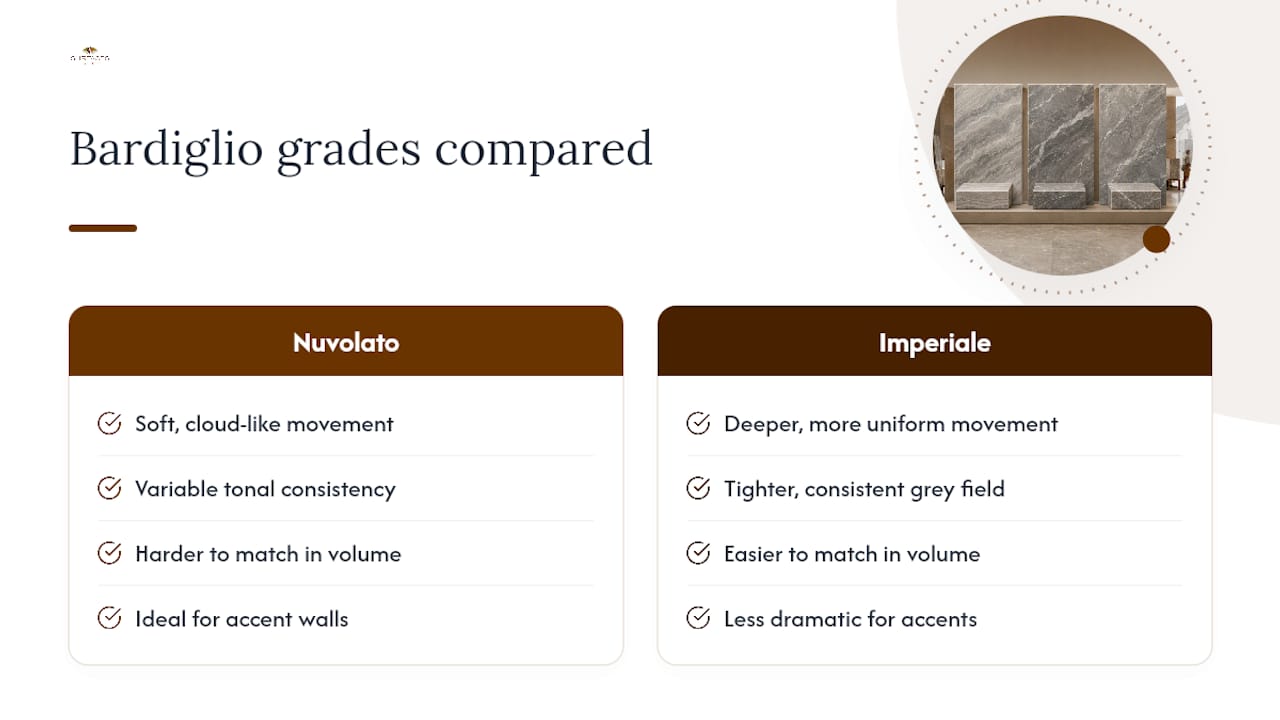
Two grades dominate the market, and the difference matters more than most buyers realize until they’re standing in a stone yard staring at mismatched slabs. Nuvolato shows soft, cloud-like movement, lighter grey fields interrupted by darker streaks that drift across the surface. Imperiale runs deeper and more consistent, with a tighter grey field and less dramatic contrast.
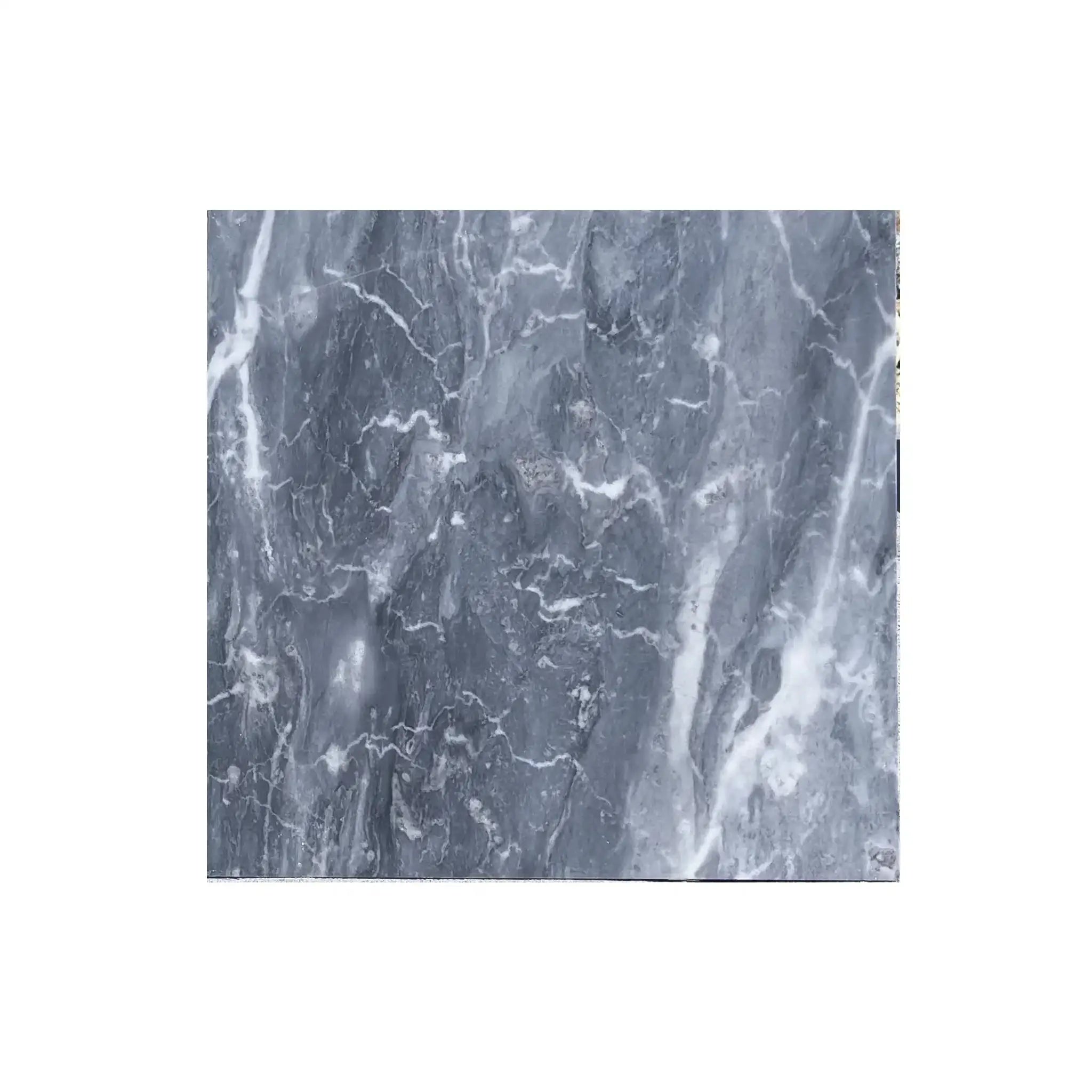
That distinction drives ordering strategy. Nuvolato’s movement makes every slab a little different, which is a selling point for a single accent wall but a headache if you need six matching vanity tops. Imperiale’s uniformity makes it easier to order in volume and keep a consistent look across a large kitchen or a hotel lobby floor. If bookmatching is part of the plan, request slabs cut sequentially from the same block regardless of which grade you choose.
What Formats and Finishes Does Bardiglio Come In?
Bardiglio Nuvolato typically ships in modular tile sizes that cover most residential and commercial layouts, plus mosaics and full slabs for larger installations. Standard tile formats include 12x12, 12x24, and 18x18, which cover most flooring and wall cladding jobs without heavy cutting waste.
- Tiles: 12x12, 12x24, and 18x18 inches, polished or honed, suited to floors, shower walls, and backsplashes.
- Mosaics: hexagon, herringbone, and small-format basketweave patterns, popular for shower floors and accent bands.
- Slabs: typically 3/4 inch to 1 1/4 inch for countertops and vanity tops, thinner gauges for wall cladding.
- Trim and edge profiles: bullnose and ogee edges for countertops, thin reveal strips for transitions between materials.
Finish choice changes both the look and the maintenance workload. Polished surfaces show off the depth of the grey and the contrast in the veining, but they also show etch marks more readily. Honed finishes mute the shine and do a better job of hiding light acid etching, which makes them a smarter call for kitchen-adjacent spaces. Leathered and brushed finishes add texture and work well on floors where slip resistance matters more than mirror shine.
What Are the Technical Specs and Durability Ratings for Bardiglio?
Bardiglio rates about Mohs 3 to 4 on the hardness scale, which puts it solidly in marble territory, softer than granite or quartzite but perfectly workable for most residential and light commercial applications. That hardness range means it will scratch under enough abuse, so knife work directly on a Bardiglio countertop is a bad idea regardless of finish.
Fast fact: Technical production data on Bardiglio shows low open porosity and strong compressive strength in many tested specimens, which supports its use in flooring and cladding when the stone is properly fabricated and sealed.
Porosity varies by block and quarry lot, but low absorption generally means better resistance to moisture staining and frost damage compared to more porous stones. That’s good news for exterior cladding in temperate climates, though any marble installed outdoors in a freeze-thaw region needs a sealer rated for that exposure.
The real vulnerability is acid, not water. Like every calcitic marble, Bardiglio etches when it contacts vinegar, citrus, wine, or most acidic cleaners. The reaction dulls the polish and leaves a matte mark that won’t wipe away. The mid grey tone actually works in your favor here. Etch marks show up far less obviously on Bardiglio than they do on bright white Carrara or Statuario, which is part of why designers keep specifying it for busy kitchens and bars despite the same chemical vulnerability. Some fabricators offer specialized AntiEtch treatments for countertops that see heavy acid exposure. Ask about it before installation, since it’s far easier to apply during fabrication than after the stone is set.
Where Does Bardiglio Marble Work Best in a Home or Commercial Space?
Bardiglio earns its keep on vertical surfaces and detail work more than on hard-use horizontal ones. Feature walls, fireplace surrounds, and full bathroom cladding let the veining read at scale without exposing the stone to the acids and impact that a kitchen counter takes daily.
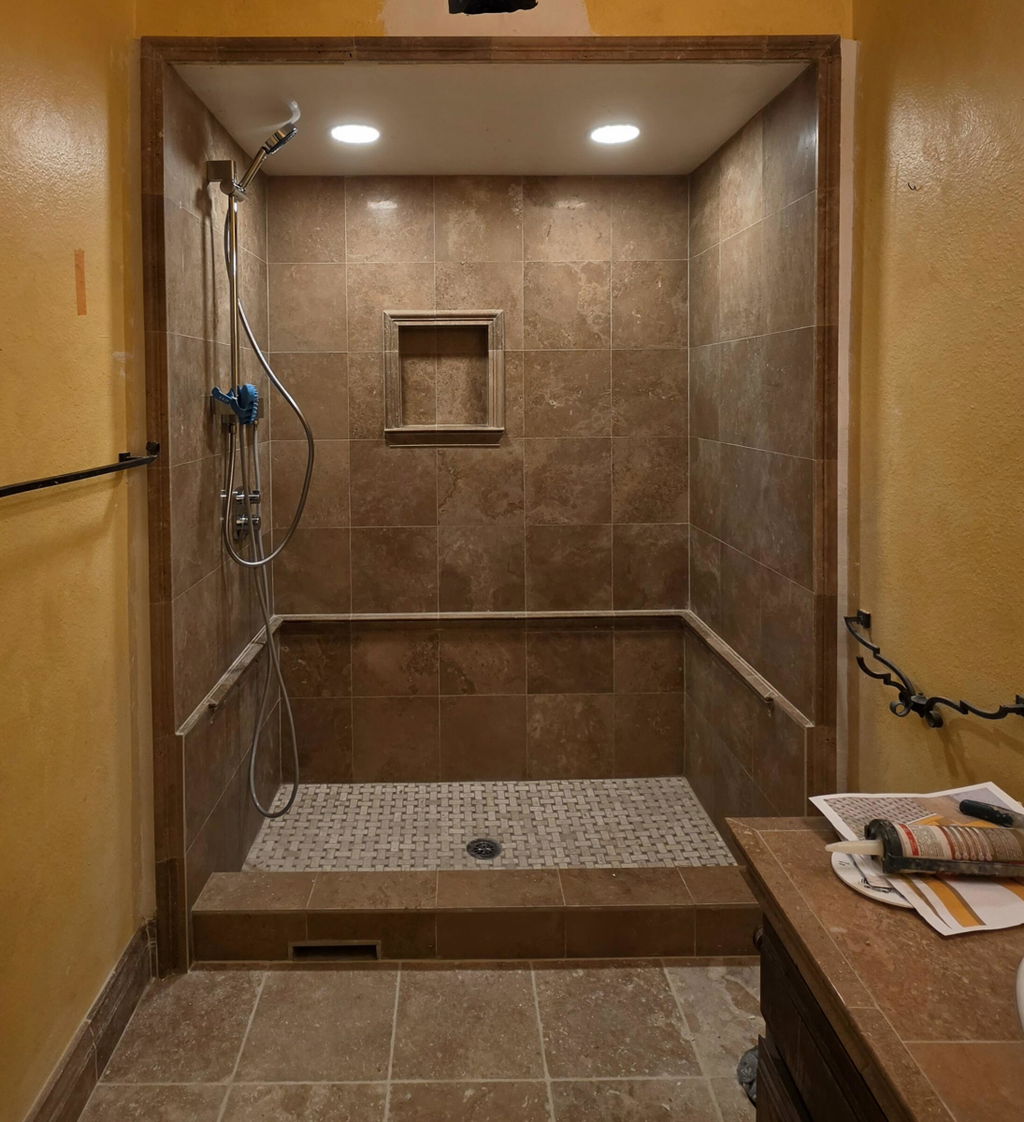
- Bathroom surrounds and shower walls: honed or polished Nuvolato reads as a quiet, upscale backdrop for fixtures.
- Fireplace surrounds: Imperiale’s steadier grey field suits a formal living room better than a busy veining pattern.
- Mosaic accents: small-format Bardiglio mosaics on a shower floor or backsplash add texture without overwhelming a room.
- Bookmatched feature panels: sequential slabs mirrored around a center seam turn a single wall into the visual anchor of a room.
- Kitchen counters: workable, but only for owners who accept some patina over time and commit to a regular resealing routine.
Pairing Bardiglio with a bright white marble like Statuario or Carrara creates the kind of high-contrast look designers reach for when a project needs to feel both modern and classical at once, grey vanity with white walls, or a Bardiglio floor beneath white perimeter cabinetry.
Pro Tip: When ordering slabs for a bookmatched wall or island, ask the fabricator for consecutive slabs off the same block and confirm the lot numbers match before cutting starts. A single mismatched slab in the middle of a mirrored pattern is nearly impossible to fix after installation.
How Do You Care for and Seal Bardiglio Marble Long-Term?
Daily cleaning is simple: a pH-neutral stone cleaner and a microfiber cloth handle everyday dust and grime without stripping the sealer. Blot spills immediately, especially anything acidic like wine, coffee, or tomato sauce, rather than wiping them across the surface.
- Test absorption before sealing. Drop a few tablespoons of water on the stone. If it darkens within a few minutes, the surface needs a fresh coat of sealer.
- Reseal on a schedule, not a guess. Most residential Bardiglio installations need resealing every one to two years, sooner in high-moisture spots like a shower floor.
- Choose a penetrating sealer, not a topical coating. Penetrating sealers soak into the stone’s pores and don’t peel or yellow the way surface coatings can over time.
- Learn to tell an etch from a stain. An etch is a dull, matte spot where the polish is gone; a stain sits on top and often has color. Light etching on honed or leathered finishes can sometimes be buffed out with a marble polishing powder, but deeper etching on polished stone usually needs a professional refinishing pass.
Skip vinegar, lemon-based cleaners, and abrasive scrub pads entirely. They’re common kitchen staples and exactly the wrong products for a calcitic stone like Bardiglio. Stick to cleaners formulated for natural stone, and keep a soft cloth on hand for quick spill response. For a deeper walk-through of sealing intervals and daily habits, Surfaces Galore’s guide on marble maintenance covers the same territory in more depth.
What Should You Ask Before Buying Bardiglio Marble?
Slab inspection catches the problems that photos and small samples hide. Walk the slab yard if you can, or ask for high-resolution photos of the actual slabs being reserved for your order, not stock catalog images. Look at color consistency across the full slab, veining density and direction, any visible micro-fissures, and whether resin repairs are already present.
- Confirm whether slabs have been reinforced with epoxy resin or fiberglass mesh backing, standard practice for slabs with natural fissures headed into structural applications.
- Ask for sequential, same-block slabs if bookmatching is part of the design, and get the lot numbers in writing.
- Check the supplier’s sample policy. A physical sample tells you far more about veining and tone than a screen ever will.
- Ask about crate protection, protective film, and how the shipment is packed. Proper crating and film protection during transit prevents scratching and moisture exposure that can ruin an otherwise perfect slab before it reaches the job site.
- Get a straight answer on lead times. Imported natural stone typically runs longer than domestic quartz, and rush orders on custom-cut pieces can add weeks.
- Ask about trade and volume pricing if you’re ordering for a multi-unit project or a commercial build.
Sourcing guides for Bardiglio consistently recommend strict acceptance criteria for slab inspection, especially on large orders where one bad slab can throw off an entire bookmatched installation.
For fabrication-specific questions around bookmatching and custom cuts, Surfaces Galore’s custom fabrication guide walks through what to expect from quote to install.
Is Bardiglio Marble Quarried and Sourced Responsibly?
Marble quarrying in the Apuan Alps, including the Bardiglio deposits, operates under Italian and European Union environmental regulations that govern extraction limits, water runoff, and dust control. Quarrying is inherently resource-intensive: it requires cutting into a mountainside, moving significant volumes of rock, and using water and energy to cut and polish the final product.
The stone’s durability partially offsets that footprint. A properly sealed and maintained Bardiglio surface can last decades, sometimes generations, in a home, which spreads the environmental cost of extraction over a much longer service life than a lot of manufactured surfacing materials. Natural stone also doesn’t off-gas volatile organic compounds the way some resin-based composite surfaces do, which matters for indoor air quality in tightly sealed modern homes.
Sourcing ethics come down largely to which quarry and processing facility a block passes through. Reputable importers work with quarries that document labor practices and environmental compliance, and buyers who care about this should ask their supplier directly about quarry provenance rather than assuming all Italian marble comes from the same operation. Waste reduction matters too. Fabricators who nest cuts efficiently and reuse offcuts for smaller mosaic pieces or trim reduce the amount of quarried stone that ends up as scrap. If sourcing transparency matters for your project, ask your supplier where specifically the block originated and how the slab was processed before it reaches the U.S.
Why We Recommend Bardiglio to Designers and Contractors
As a direct importer, Surfaces Galore works with Bardiglio at the source, which means fewer middlemen between the quarry and your job site and more consistency from one order to the next. That matters most on large projects, where a mismatched pallet of tile can derail an installation schedule.
We steer most residential bathroom and accent-wall projects toward Nuvolato for its movement and character, and we point commercial jobs, hotel lobbies, and large-format flooring toward Imperiale when a client needs visual consistency across dozens of pieces. Trade customers ordering for multi-unit builds benefit most from requesting samples up front and locking in a bulk quote before slab allocation, since Bardiglio lot availability shifts as quarries release new blocks. Getting fabrication guidance early, especially around bookmatching and edge profiles, saves rework later.
— John | Surfaces Galore
Shop Bardiglio Marble Tiles and Slabs at Surfaces Galore
Bardiglio Nuvolato tile is often available for nationwide shipping at competitive pricing, which means you may be buying closer to quarry cost instead of paying markup through multiple distributors.
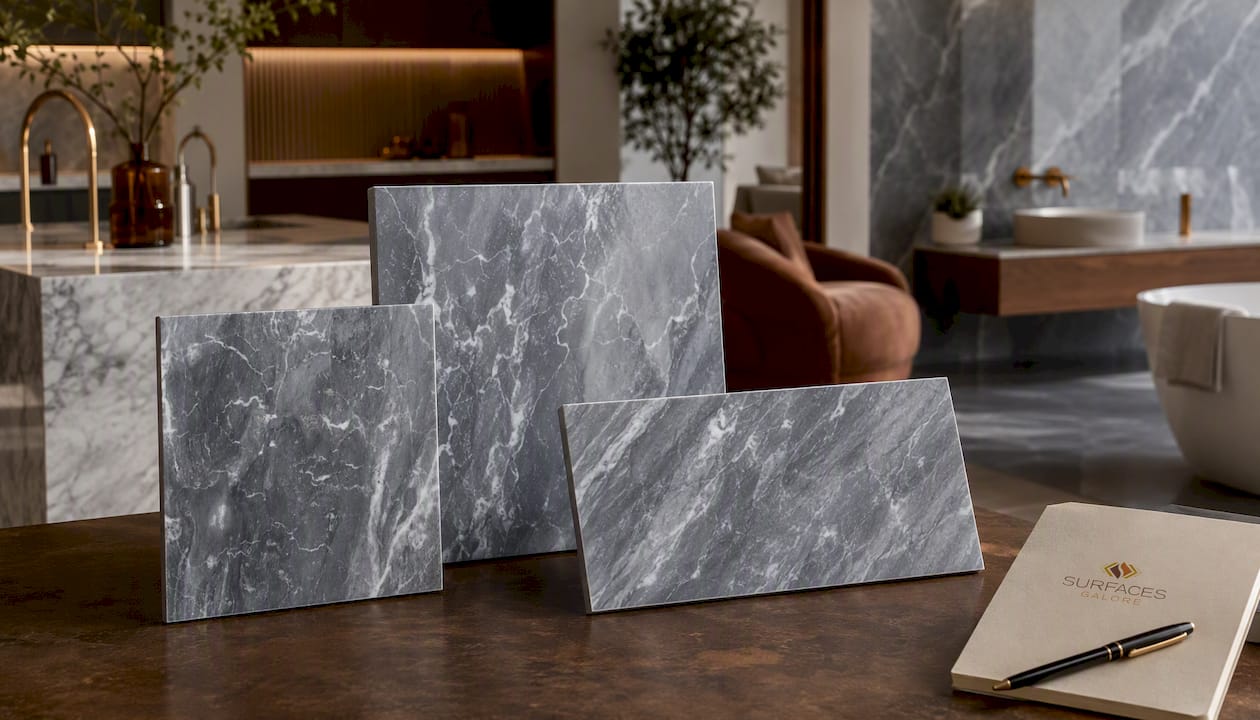
Three formats cover most residential and commercial layouts. The 12x12 Bardiglio Nuvolato tile, available polished or honed, suits bathroom floors and smaller accent areas where a tighter grid pattern looks cleaner. The 18x18 Bardiglio Nuvolato tile fits larger floor plans and open living areas where fewer grout lines read as more upscale. The 12x24 Bardiglio Nuvolato tile works well for shower walls and linear layouts, including herringbone patterns that showcase the stone’s movement.
Order a physical sample before committing to a full pallet. Veining and tone shift from lot to lot, and a sample in your actual lighting tells you more than any photo. Trade customers and contractors can request a bulk quote directly through suppliers for volume pricing and shipment scheduling on larger jobs. Reach out through the product pages above to check current stock, get a lead time estimate, and start the sample process today.
Sources
For deeper technical specifications on hardness, porosity, and recommended finishes, the Stone Intelligence technical data sheet on Bardiglio covers care and etch-resistance treatments in detail. For quarry origin and the history behind the Nuvolato and Imperiale grades, see Marmi di Carrara’s collection notes. For sourcing and slab inspection standards on large orders, review the Bardiglio sourcing guide from Stone Trades.
- Bardiglio (Bardiglio Imperiale) Marble — Technical Data & Care Guide | Stone Intelligence
- BARDIGLIO | Marmi di Carrara since 1956 - Premium Grey Marble Collection
- Bardiglio Carrara Marble Top Quality Italian Marbles Slabs Blocks
FAQ
What Is the Highest Quality Marble in the World?
There’s no single “highest quality” marble across the board; quality depends on the application. For pure whiteness and fine grain, Statuario and Calacatta from Carrara are widely considered top-tier, while Bardiglio is prized specifically for its grey tone and durability in design schemes that call for contrast rather than brightness.
What Does Vinegar Do to Marble?
Vinegar is acidic and will etch calcitic marble like Bardiglio on contact, dulling the polish and leaving a permanent matte mark. Wipe up any vinegar-based spill immediately and never use vinegar or citrus cleaners on marble surfaces.
Is Italian Marble Valuable?
Italian marble, including Bardiglio from the Apuan Alps, carries strong market value due to its quarry provenance, consistent quality control, and centuries-long reputation in architecture and design. Pricing varies by grade, format, and finish, with slabs generally costing more than modular tile due to fabrication and shipping complexity.
Which Is the Best Italian Marble for Grey Design Schemes?
For grey-toned interiors, Bardiglio stands out among Italian marbles because it offers the movement and depth of Carrara-region stone without the stark brightness of white marble. Choose Nuvolato for visual movement and Imperiale for a more uniform, consistent grey across large installations.
How Often Should You Reseal Bardiglio Marble?
Most residential Bardiglio installations need resealing every one to two years, though high-moisture areas like shower floors may need it sooner. A simple water-drop test tells you when the surface needs fresh sealer.
Recommended
- Spec Ready Crema Marfil Marble for Designers & Contractors, 3 Grades
- Marble classifications explained for architects
- Pure White Thassos Marble Buying Guide
- Italian Carrara Marble: Properties, Grades, and Design Uses
This article is provided for general informational guidance only. Natural stone varies in color, veining, texture and performance. For installation, sealing, cleaning and maintenance, follow the product manufacturer’s instructions and consult a qualified installer or stone-care professional. Always test cleaning and sealing products in an inconspicuous area first. Surfaces Galore is not responsible for damage, discoloration, etching, staining, installation issues or other problems resulting from

Leave a comment