
Stone Tile Cost Estimating Guide for U.S. Projects

Premium natural stone tile generally runs within a moderate to high cost range per square foot installed for most U.S. residential projects, with the final number driven by three variables above all others: the material unit cost, the condition of the substrate, and the complexity of the installation. A straightforward travertine floor in good-substrate conditions lands near the low end; large-format Italian marble in a shower with a failing subfloor pushes well past $50. Get those three line items separated on every bid before you compare quotes.
Typical installed cost ranges: Premium natural stone tile projects usually fall between $15–$50 per square foot installed in the U.S., covering material, substrate prep, and labor. High-end marble or complex patterns can exceed $50/sq ft, especially with rare origins, large formats, or intricate layouts.
Table of Contents
- 1. Line-item cost components you should request separately
- 2. Typical material and installed costs by stone type
- 3. How region and schedule affect your installed price
- 4. How to measure, order, and specify tiles accurately
- 5. When to hire a pro and what to demand in writing
- 6. Ongoing costs: sealing, cleaning, and lifetime value
- 7. Worked example: 100 sq ft bathroom line-item estimate
- Key Takeaways
- What most cost guides get wrong about stone tile
- Surfacesgalore: premium natural stone, shipped nationwide
- Useful sources
- FAQ
1. Line-item cost components you should request separately
Bundled bids hide costs. When a contractor quotes a single per-square-foot number, you cannot tell whether substrate prep is included, whether disposal is priced in, or whether the waterproofing membrane is even on their radar. Tile installation costs can swing from a few hundred dollars to tens of thousands depending on scope, which is exactly why line-item quotes matter.
Request these items as separate lines on every bid:
- Tile material (unit cost × ordered quantity)
- Waste allowance (typically 10–20% of tile quantity)
- Thinset/adhesive (type matters: large-format stone needs medium-bed mortar)
- Grout (sanded vs. unsanded, epoxy for wet areas)
- Sealing (initial application + product spec)
- Trim and edge pieces (bullnose, pencil liner, thresholds)
- Demolition (existing floor removal, disposal of debris)
- Substrate prep (leveling, backer board, self-leveling underlayment)
- Waterproofing membrane (wet areas: showers, mudrooms)
- Delivery and freight (per-job fixed cost, can add $50–$400 depending on distance and site access)
- Disposal/haul-away
- Contractor overhead and warranty
Sample line-item RFQ template:
| Line Item | Unit | Qty | Unit Rate | Subtotal |
|---|---|---|---|---|
| Tile material | sq ft | — | $__ | $__ |
| Waste allowance (10%) | sq ft | 10 | $__ | $__ |
| Thinset/mortar | sq ft | — | $__ | $__ |
| Grout | sq ft | — | $__ | $__ |
| Initial sealing | sq ft | 100 | $__ | $__ |
| Substrate prep | sq ft | 100 | $__ | $__ |
| Waterproofing membrane | sq ft | 100 | $__ | $__ |
| Demolition | sq ft | 100 | $__ | $__ |
| Delivery/freight | job | 1 | $__ | $__ |
| Disposal | job | 1 | $__ | $__ |
| Total | $__ |
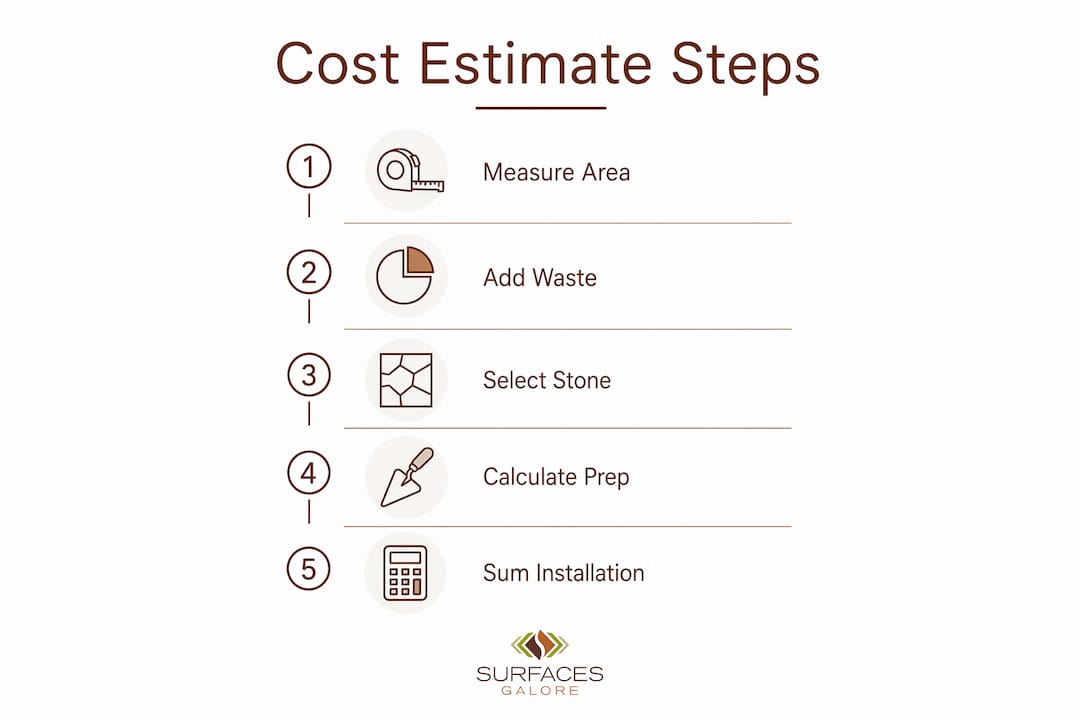
Pro Tip: If a bid has no substrate prep line item, treat it as a red flag. Substrate work is often the most expensive surprise on a stone project, and omitting it from the quote does not mean it will not be needed.
2. Typical material and installed costs by stone type
Natural stone retail prices range from $4.45 to $40/sq ft, with a retail median around $12/sq ft. Origin and finish move that number dramatically: Italian-origin stone carries a median near $28/sq ft, while domestic stone averages closer to $7/sq ft for comparable categories.
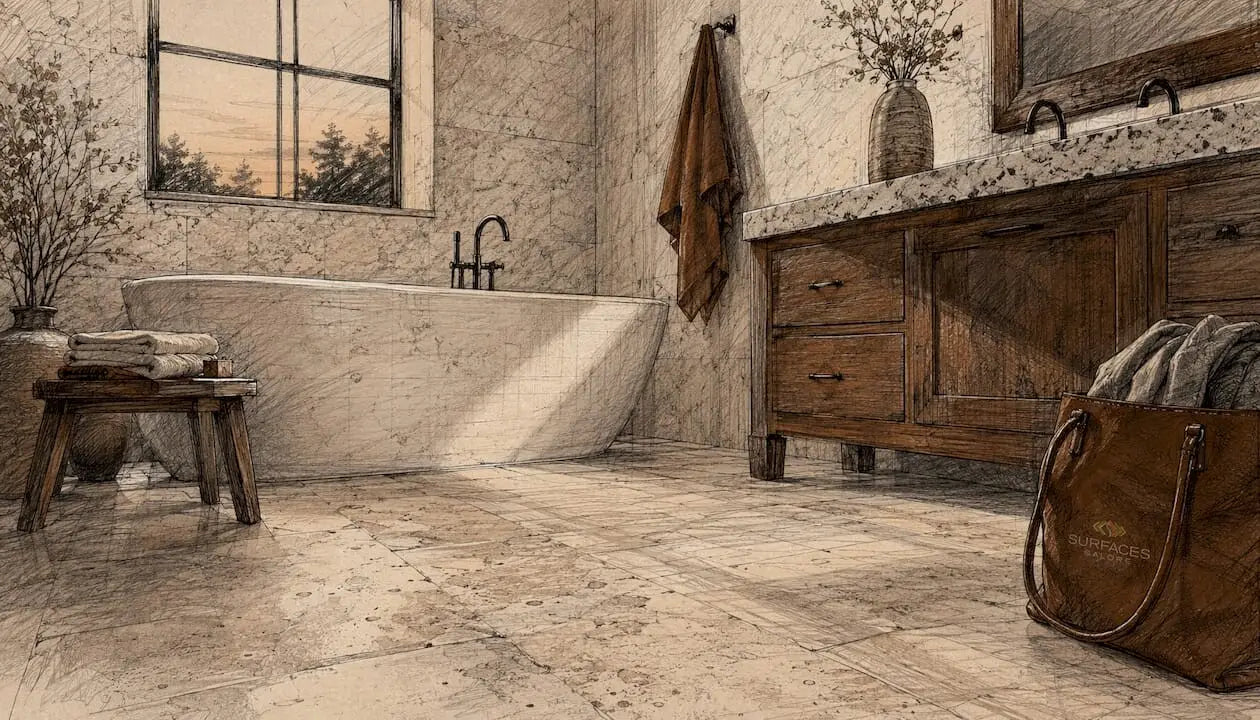
| Stone Type | Material Cost/sq ft | Installed Cost/sq ft | Best Use | Durability & Maintenance | Lead Time |
|---|---|---|---|---|---|
| Travertine | $7–$30 | $15–$50 | Floors, showers, patios | Moderate; reseal every 1–3 years | 2–4 weeks |
| Limestone | $6–$16 | $15–$50 | Floors, walls, countertops | Good; reseal every 2–5 years | 2–4 weeks |
| Marble | $10–$40+ | $15–$50+ (high-end can exceed $50) | Feature walls, baths, kitchens | High maintenance; polish/seal annually | 3–6 weeks |
| Slate | $10–$35 | $15–$50 | Floors, outdoor, showers | Very durable; low sealing need | 2–3 weeks |
| Quartzite | $15–$40 | $15–$50 | Countertops, floors | Extremely hard; low maintenance | 3–5 weeks |
A few notes worth knowing. Travertine standard grade runs $7–$15/sq ft for material and $17–$35/sq ft installed for a 100 sq ft space. Polished travertine costs more than honed, and rare colors like blue ($18–$30/sq ft) dwarf the common beige ($6–$16/sq ft). For limestone vs. travertine, limestone typically sits lower on material cost but may require less frequent sealing. Format size matters too: large-format tiles (24×24 and up) require flatter substrates and more skilled setting, which adds to labor.
For a deeper look at how each stone type performs across applications, the types of natural stone guide at Surfacesgalore covers marble, limestone, travertine, and more with design context.
3. How region and schedule affect your installed price
Regional labor and permitting differences create 10–25% swings in installed prices across U.S. markets. The Northeast and West Coast consistently run higher; the South and Midwest offer more competitive rates.
Regional installed cost bands (mid-range stone, standard installation):
- Midwest: $6.50–$20/sq ft installed
- South: $6.75–$21/sq ft installed
- West: $7.50–$23/sq ft installed
- Northeast: $8–$24/sq ft installed
Timeline affects cost just as much as geography. Imported stone, particularly Italian marble, can carry 3–6 week lead times from order to job site. Rush orders add freight surcharges. Scheduling an installer before your tile arrives locks in a crew date but risks a gap fee if delivery slips.
Procurement timeline checklist:
- Request samples and confirm shade/lot selection
- Confirm slab or tile availability with supplier
- Place tile order (allow full lead time, no shortcuts)
- Confirm substrate prep scope with installer
- Schedule installer to begin 1–2 weeks after confirmed delivery
- Verify permit requirements with local building department
Permits for tile work are typically required only when structural changes are involved, but wet-area inspections apply in some jurisdictions. Budget $100–$400 for permits where required.
4. How to measure, order, and specify tiles accurately
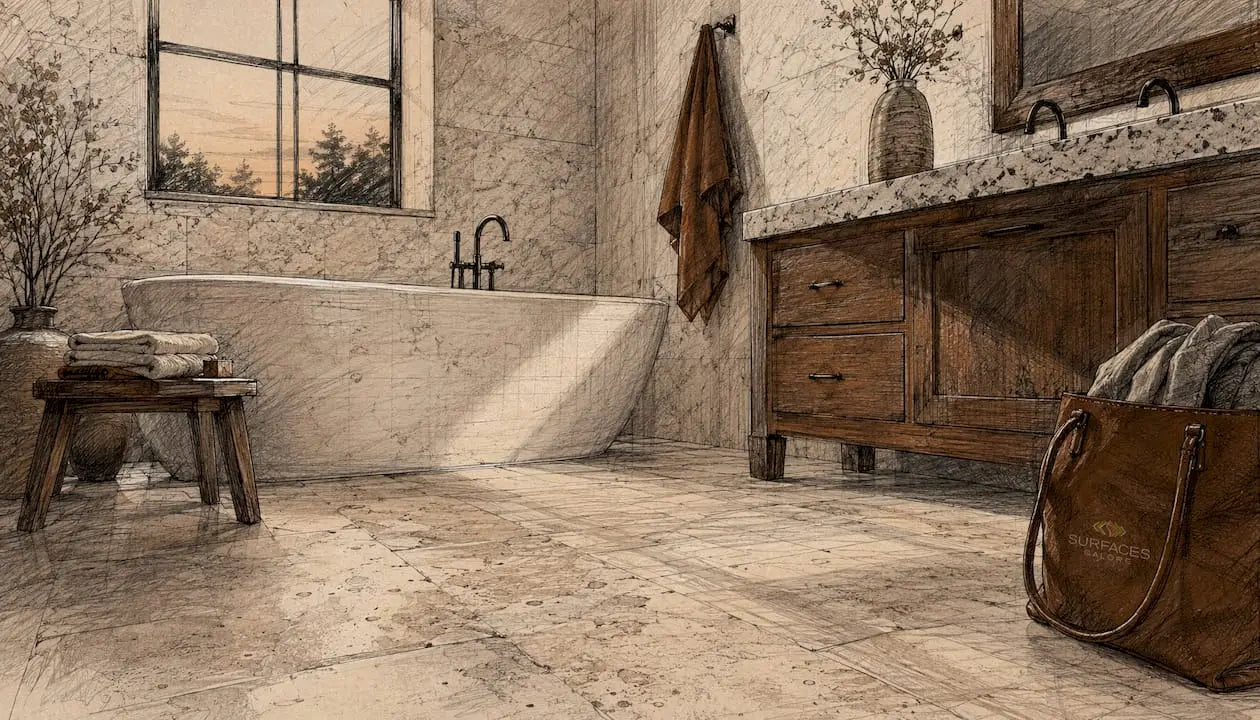
Accurate measurement prevents two expensive problems: running short mid-project and over-ordering by so much that you absorb the cost of a full extra box. Start with the net square footage of the room, then apply a waste factor before ordering.
Step-by-step measurement:
- Measure length × width for each rectangular section; add irregular areas separately
- Subtract fixed obstructions (islands, built-ins) larger than 2 sq ft
- Add 10% waste for straight-lay patterns
- Add 15–20% for diagonal, herringbone, or chevron layouts (more cuts, more offcuts)
- Add 5% for mosaic or small-format stone (more grout joints, more edge cuts)
- Round up to the nearest full box
Example: 100 sq ft bathroom, herringbone pattern = 100 × 1.15 = 115 sq ft to order.
Complex patterns like herringbone materially increase both material waste and labor time. Herringbone and chevron installations can raise labor costs significantly compared with a standard straight-grid layout. The Surfacesgalore guide on ordering extra tile walks through waste calculations by pattern type in detail.
Ordering specs to include in every RFQ:
- Tile thickness (3/8" vs. 1/2" affects setting bed depth)
- Surface finish (honed, polished, brushed, tumbled)
- Gauged vs. gauged-and-calibrated (calibrated edges reduce lippage risk)
- Shade lot and batch number (critical for large orders)
- Quantity of repair/replacement stock to hold back
Pro Tip: Order one extra box as a repair reserve and store it in the same climate as the installation. Stone from a different production lot may not match, even from the same supplier.
5. When to hire a pro and what to demand in writing
Some scope is reasonable for an experienced DIYer. Demolition of existing tile, hauling debris, and basic surface cleaning are manageable tasks that can trim $2–$4/sq ft off the labor bill. What demands a professional: large-format stone setting (flatness tolerances are unforgiving), waterproofing in wet areas, and any installation where substrate failure would mean tearing out finished stone.
Contractor estimate checklist — require these in writing:
- Separate line items for demo, substrate prep, waterproofing, labor, and cleanup
- Substrate flatness tolerance they will achieve (industry standard: no more than 1/8" variance over 10 feet; self-leveling compounds add $2–$5/sq ft when needed)
- Who supplies the waterproofing membrane and what product
- Payment schedule (avoid paying more than 30% upfront)
- Warranty terms and duration
- Disposal and cleanup included or billed separately
Questions to ask before signing:
- What substrate flatness will you guarantee before setting tile?
- Which waterproofing system do you use in wet areas?
- Do you have references for similar natural stone projects?
- How do you handle tile breakage or shade variation discovered mid-install?
- Is travel or minimum-job-size fee included in this quote?
Red flags to walk away from:
- Bid significantly below all others with no explanation
- Vague scope (“tile installation, all in”)
- No substrate prep line item
- No references for natural stone work specifically
- Pressure to pay the full amount upfront
For DIY demolition guidance before a pro takes over, the step-by-step tile demo guide at Surfacesgalore covers safe removal methods that do not damage the substrate.
6. Ongoing costs: sealing, cleaning, and lifetime value
Natural stone is a long-term investment. Marble, limestone, and travertine installed correctly and maintained properly last 50–100 years. The ongoing cost is real but manageable when you budget for it upfront.
Routine maintenance costs:
- Initial sealing: included in installation cost or $0.50–$2.50/sq ft separately
- Resealing: travertine every 1–3 years; limestone every 2–5 years; marble annually in high-use areas
- Grout refresh or regrout: $6–$15 per linear foot
- Crack repair or chip fill: $20–$60 per area
- Professional deep clean: $1–$3/sq ft periodically
Finish choice directly affects maintenance frequency. Polished marble shows etching from acids (citrus, wine) more visibly than honed marble, which is why honed finishes are increasingly preferred for kitchen floors. In bathrooms, honed or brushed finishes also offer better slip resistance than polished surfaces. Travertine’s natural porosity means it absorbs stains faster than denser limestone, making sealing discipline more critical.
5-year lifecycle cost estimate (per sq ft, 100 sq ft bathroom):
| Stone | Sealing Cycles | Resealing Cost | Repairs (est.) | 5-Year Add-On |
|---|---|---|---|---|
| Travertine | 2–4 | $100–$400 | $50–$400 | $0.50–$2.50/sq ft |
| Limestone | 1–2 | $50–$400 | $30–$100 | $0.50–$2.50/sq ft |
| Marble | 3–5 | $100–$400 | $100–$400 | $2–$5/sq ft |
7. Worked example: 100 sq ft bathroom line-item estimate
This template uses a mid-grade travertine in a standard bathroom with a concrete subfloor in acceptable condition. Substitute your material price and local labor rate where indicated.
Assumptions: 100 sq ft net area, 10% waste allowance, straight-lay pattern, concrete subfloor, wet-area waterproofing required.
| Line Item | Unit | Qty | Unit Rate | Subtotal |
|---|---|---|---|---|
| Travertine tile (standard grade) | sq ft | — | — | — |
| Thinset (medium-bed mortar) | sq ft | — | — | — |
| Grout | sq ft | 100 | — | $100 |
| Initial sealing | sq ft | 100 | — | $100 |
| Waterproofing membrane | sq ft | 100 | — | $100–$400 |
| Substrate prep (concrete, acceptable) | sq ft | 100 | — | $100–$400 |
| Demolition (existing vinyl) | sq ft | 100 | $2.50 | $100–$400 |
| Installation labor | sq ft | 100 | $6–$16 | — |
| Delivery/freight | job | 1 | $100–$400 | $100–$400 |
| Disposal | job | 1 | $150 | $150 |
| Contingency (10%) | — | — | — | $384 |
| Total | ~$4,222 |
Per sq ft installed: ~$42. Swap in a higher-grade travertine at $20/sq ft and the total climbs to roughly $5,322. Use a limestone at $6/sq ft and it drops to around $3,562. The labor and prep lines stay nearly constant, which illustrates why material selection alone does not tell the full story.
Key Takeaways
Premium natural stone tile costs $15–$50/sq ft installed for most U.S. projects, covering material, substrate prep, and labor. High-end marble or complex patterns can exceed $50/sq ft. | Substrate prep is non-negotiable | Self-leveling and waterproofing add $2–$5/sq ft and prevent costly failures. | | Regional price variation | Installed costs vary 10–25% by U.S. region; Northeast and West run highest. | | Always request line-item bids | Bundled quotes hide substrate and waterproofing costs; compare bids item-for-item. | | Surfacesgalore sourcing | Surfacesgalore ships marble, limestone, and travertine nationwide with a sample and trade pricing process. |
What most cost guides get wrong about stone tile
The conventional wisdom treats material cost as the headline number. Pick a cheaper stone, save money. That logic breaks down fast on real projects.
Substrate preparation in premium stone work frequently equals the tile cost itself. A $10/sq ft travertine on a subfloor that needs self-leveling, a new backer board, and a waterproofing membrane can land at $35/sq ft installed before you account for labor. The stone was the cheapest part of that equation.
The other thing guides understate: pattern complexity is a budget multiplier, not just an aesthetic choice. Herringbone and chevron layouts raise both waste and labor. A client who chooses herringbone to save money on a simpler stone often ends up spending more than they would have on a straight-lay premium marble. The math does not favor complexity at the low end of the material budget.
What actually protects your budget is a contractor who separates every line item and a supplier who controls lot consistency. Shade variation discovered mid-install, after the first 60 sq ft are set, is an expensive problem. Lot-controlled ordering from a supplier who manages shade matching from the start eliminates it.
Surfacesgalore: premium natural stone, shipped nationwide
Surfacesgalore imports marble, limestone, and travertine directly, which means the price you pay reflects the stone, not a distributor’s markup. For designers and contractors pricing projects, that difference shows up in the material line item on every estimate.
The sample process is straightforward: request samples before committing to a full order, confirm shade and finish in your actual lighting conditions, and lock in your lot. Trade pricing is available for qualifying professionals. Surfacesgalore ships nationwide from Anaheim, California, so lead times are predictable whether your project is in Miami or Minneapolis.
Ready to price your next stone project? Shop natural stone tiles or request a project quote directly at Surfacesgalore.com.
Useful sources
- Stone tile installation cost, U.S. practical price guide — regional labor and permitting multipliers
- Stone tile flooring cost, realistic price guide 2026 — line-item breakdowns and delivery cost ranges
- Natural stone prices 2026: cost data by size, finish, and origin — retail and commercial price medians by origin and finish
- Travertine tile cost 2026 — grade-by-grade and finish-by-finish price tables
- Limestone vs. travertine price, typical costs 2026 — side-by-side material and installed cost comparison
- Tile installation labor cost calculator 2026 — baseline labor rates and pattern complexity multipliers
- 2026 tile floor installation cost — substrate flatness standards and self-leveling cost thresholds
- Quarry stone price guide for U.S. buyers 2026 — material, labor, and freight ranges by stone type
- Surfacesgalore natural stone tile sample process — sample ordering, lot control, and approval workflow
“Pricing within the natural stone tiles market is notoriously non-uniform, governed by a matrix of factors that create a wide spectrum of price points. At the foundational level, price is determined by the stone type, its rarity, and its country of origin.” — Natural Stone Tiles Market in the United States, IndexBox
FAQ
What is the average installed cost of natural stone tile in the U.S.?
Most premium natural stone tile projects run $15–$50 per square foot installed, covering material, substrate prep, and labor. High-end marble or complex patterns can exceed $50/sq ft.
How much waste allowance should I add when ordering stone tile?
Add 10% for straight-lay patterns, 15–20% for herringbone or chevron, and 5% extra for mosaics. Always hold back one box as a repair reserve.
Why do two contractor bids for the same stone tile differ so much?
Bundled bids often exclude substrate prep, waterproofing, or disposal. Request separate line items for every cost component so you can compare quotes on equal terms.
How often does natural stone tile need to be resealed?
Travertine typically needs resealing every 1–3 years; limestone every 2–5 years; marble annually in high-use areas. Finish type and traffic level affect the interval.
Where can I source premium marble, limestone, and travertine with reliable lot control?
Surfacesgalore imports marble, limestone, and travertine directly and offers a sample process with lot-controlled ordering, shipping nationwide from Anaheim, California.

Leave a comment