
Travertine marble: how to choose the right natural stone for your project

Key Takeaways
Travertine is a distinctive natural stone, with colors, patterns, and finishes that can shape the feel of a room. A little care in comparing samples and planning installation can make it easier to choose well.
- Travertine and marble are related natural stones, but differ in how they form and in their characteristic appearance.
- Travertine ranges from warm ivory and beige to walnut and silver-gray, with natural variation from tile to tile.
- Finish and intended location matter: consider texture, moisture, traffic, and maintenance before ordering.
- Samples, accurate measurements, and a planned layout help you assess color and reduce surprises during installation.
- Compare product specifications, current stock, and shipping options before buying travertine marble for your project.
What “travertine marble” means
The phrase “travertine marble” is common in searches and product conversations, but travertine and marble are distinct natural stones. They share a connection to limestone and can both bring depth and variation to an interior. Knowing what sets travertine apart makes it easier to compare materials and choose a surface that suits your space.
How travertine and marble form
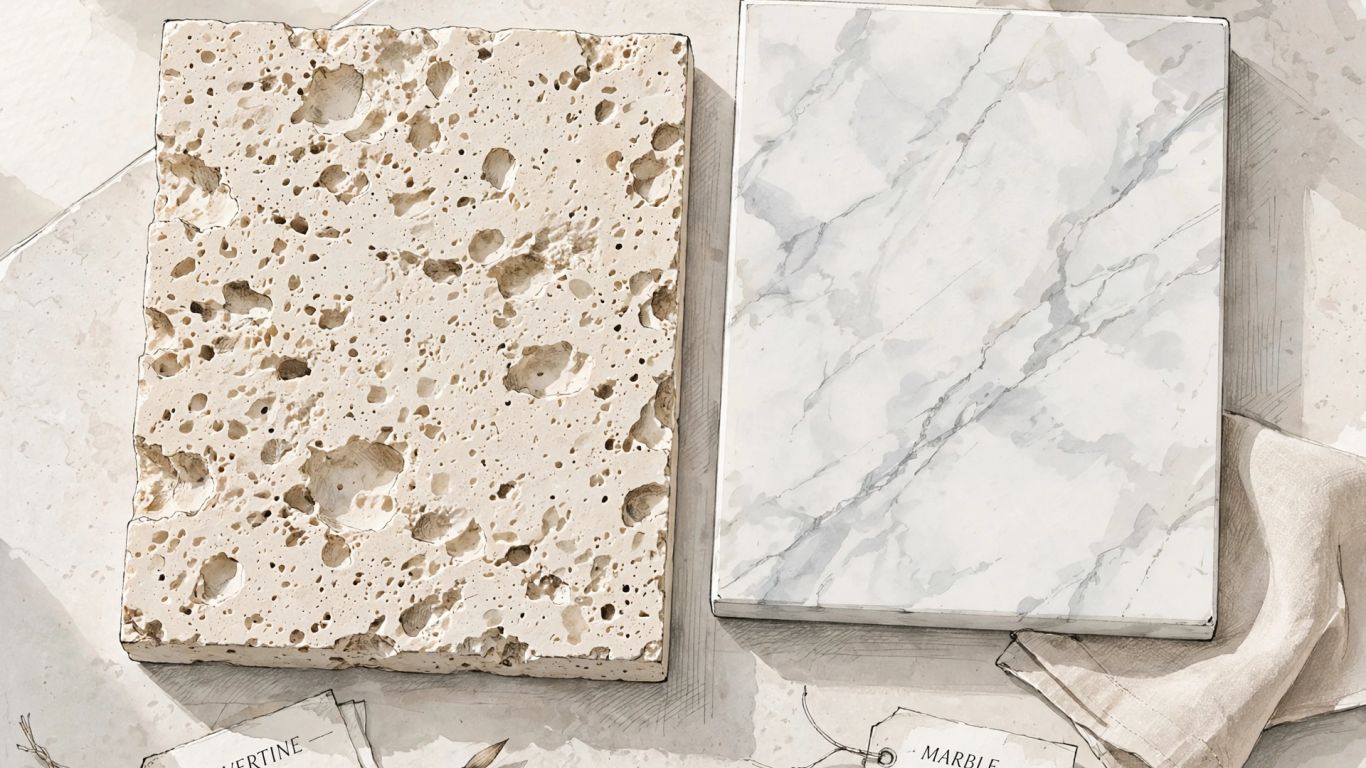
Travertine forms as calcium carbonate-rich water deposits minerals, often around springs, rivers, lakes, and caves. Marble begins as limestone that changes under heat and pressure. These different processes leave each stone with its own visual character: travertine often has small pores and a softly layered appearance, while marble is frequently recognized by its flowing veins. For a concise comparison of travertine and marble, consider both the stone’s formation and the look you want in the finished room.
Key differences in texture, veining, and appearance
Travertine is known for its natural pores, soft color shifts, and earthy character. Depending on how it is cut, the pattern may appear cloudlike or take on a more linear flow. Marble often has more pronounced veining, though both stones vary from piece to piece. A honed travertine can feel quietly matte; a polished surface reflects more light and gives the pattern a different presence.
Why travertine is sometimes grouped with marble
The two names are often used together because both are classic natural stones used in flooring, walls, and decorative details. They also share a limestone connection and can be offered in polished or honed finishes. In everyday shopping, people may use “travertine marble” as shorthand for natural stone with a refined, timeless look. Still, it is worth checking the actual material description so the product, care needs, and appearance match what you have in mind.
How to identify the stone you’re considering
Start with the product listing and ask whether it identifies the stone as travertine, marble, or another material. Then look closely at photos and, where possible, inspect a sample: travertine commonly has visible pores or filled areas, while marble is often selected for its distinctive veining. The words “filled,” “unfilled,” “honed,” and “tumbled” describe features or finishes, not a different stone type. A useful broader overview of travertine stone can help you compare its natural surface character with what you see in a sample.
Colors, patterns, and finishes to compare
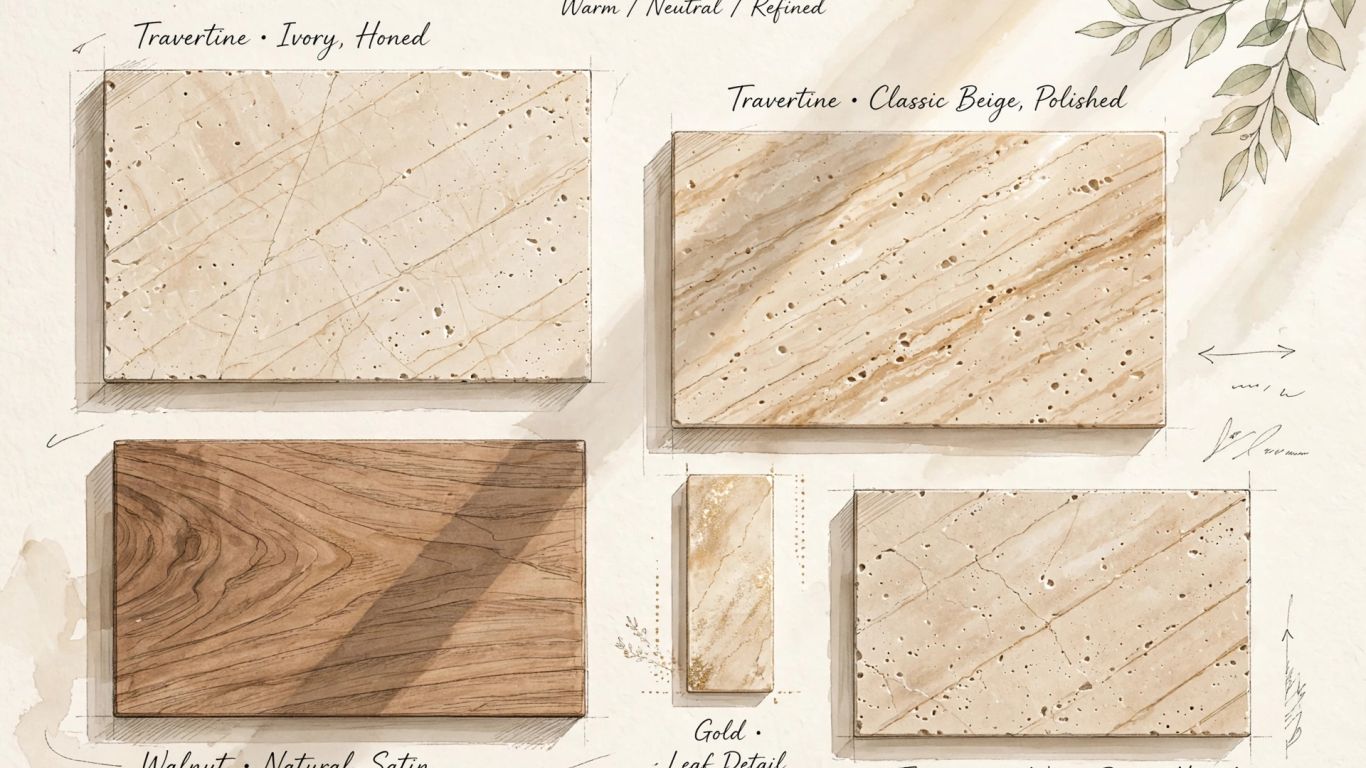
Color and finish are not small details; together, they set the mood of the installation. Travertine can look soft and sunlit, richly earthy, or cool and contemporary, depending on the variety and surface treatment. Since natural stone varies, use a sample to judge how a particular piece looks in your own light.
Warm ivory, beige, walnut, and gold tones
Ivory and beige travertine bring a gentle brightness without the uniform look of a manufactured surface. Walnut and gold tones introduce more depth, and mixed-color options can combine several earthy notes in one pattern. Think about nearby wood, paint, and cabinetry: a warm tile can make a cool room feel more inviting, while a pale ivory surface can keep a compact space feeling open. For one example of a warm, textured finish, compare La Travonya Travertine, available in a brushed and chiseled style.
Silver-gray and other cooler color options
Silver-gray travertine offers a quieter, cooler palette, and can sit comfortably alongside black, white, or natural wood. It is a useful choice when beige tones feel too warm for the design. Even within a cooler color family, individual pieces can have subtle changes in tone and pattern, so check more than one sample if consistency matters. Consider the room’s natural and artificial lighting before settling on a shade.
Vein-cut patterns and their linear look
A vein-cut surface brings the stone’s natural layers into a more linear pattern. The effect can feel orderly and architectural, especially across a floor or wall with a broad, uninterrupted view. A cross-cut pattern tends to look softer and more cloudlike, so it may suit a space where you want less directional movement. If you are comparing patterns and surface finishes, this quick guide can help make the differences easier to picture:
| Choice | Visual character | A useful starting point |
|---|---|---|
| Vein-cut | Long, directional lines | Feature walls and broad floors |
| Cross-cut | Softer, cloudlike movement | Rooms with a relaxed, organic feel |
| Filled and honed | Smooth, matte appearance | A quieter, more even surface |
| Tumbled | Textured, gently aged look | Rustic or informal settings |
Treat these descriptions as a way to narrow your options, not a promise that every tile will look identical. Natural variation is part of the material, and the actual sample remains the best reference for color and pattern.
Polished, honed, brushed, and tumbled finishes
Finish changes how travertine catches light and feels underfoot. Polished stone has a brighter sheen, while honed stone is smoother and matte. Brushed and tumbled surfaces show more texture and a softer, aged character. Compare these choices alongside the room’s use, not just its style; a finish that looks right on a wall may feel different on a floor. A filled and honed tile, for example, gives you a chance to consider a smoother surface in a warm, natural palette.
Where travertine works best
Travertine can be used in a range of indoor and outdoor settings, but the right selection depends on the particular product and the conditions where it will be installed. Start with the purpose of the surface, then check its finish and product specifications. A little planning helps the stone look at home rather than simply filling a space.
Flooring for living areas, entries, and hallways
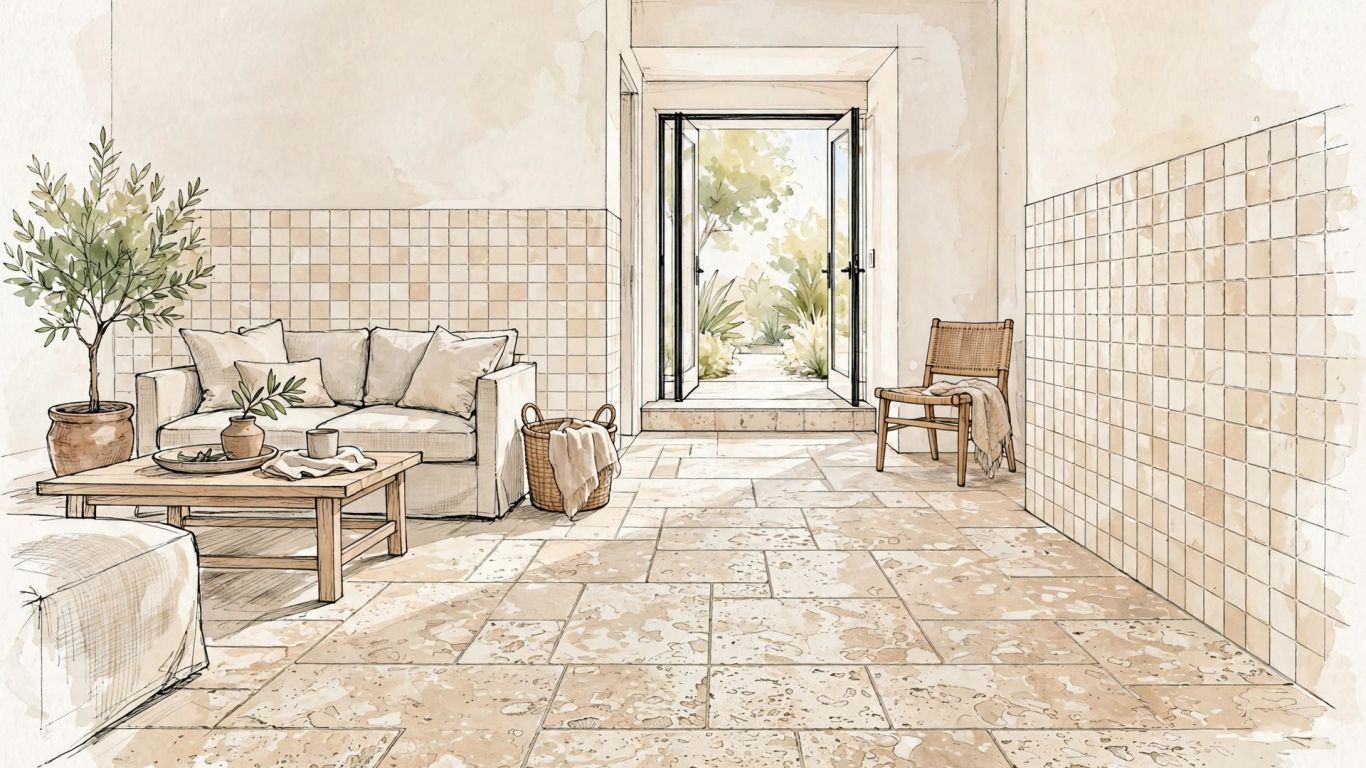
Travertine brings natural color variation and texture to entryways, living rooms, and hallways. For a busy area, consider the expected foot traffic and ask whether the chosen tile and finish are suitable for that use. Larger formats can create a more open visual rhythm, while smaller pieces or a patterned layout add detail. If the household includes pets, floor choice is only one part of making a room work well; some owners also look into Austin Texas K9 for dog training in Georgetown, Texas.
Bathroom floors, shower walls, and mosaics
A bathroom can pair larger travertine tiles with a mosaic detail, or use small-format stone to add visual interest. For a wet area, check the specific product’s suitability and consider how its texture and care requirements fit your routine. Travertine mosaics are offered in a range of layouts and finishes, including tumbled and honed styles. If you are planning the vanity area as well, this bathroom backsplash guide covers material, height, and design considerations for the wall behind a sink.
Kitchen backsplashes and decorative wall features
A travertine backsplash can add warmth behind a counter or range, and a mosaic can create a more intricate accent. Consider how the stone’s color and pattern relate to cabinetry and other surfaces, and ask about sealing and cleaning recommendations for the intended location. A stone backsplash also leaves room for contrasting materials: a carefully made end-grain cutting board can bring a different wood texture to the counter without competing with the wall’s natural variation.
Patios, pool areas, and other outdoor spaces
Travertine appears in outdoor flooring and pool-area projects, where its natural color and surface texture can suit an open-air setting. Outdoor performance depends on the particular product and local conditions, so confirm suitability rather than assuming every tile is designed for every exterior use. Good planning also considers drainage, site preparation, and the finished transitions between surfaces. These hardscape design principles offer a useful reminder to think about the setting as well as the stone.
Benefits and practical considerations
Travertine’s appeal comes from its natural variation, warm palette, and versatility across many kinds of spaces. It is also a material that deserves a little planning: porosity, finish, location, and maintenance all affect how it will perform over time. Read the product details and plan for care before installation rather than treating those questions as an afterthought.
Natural variation and the character of each tile
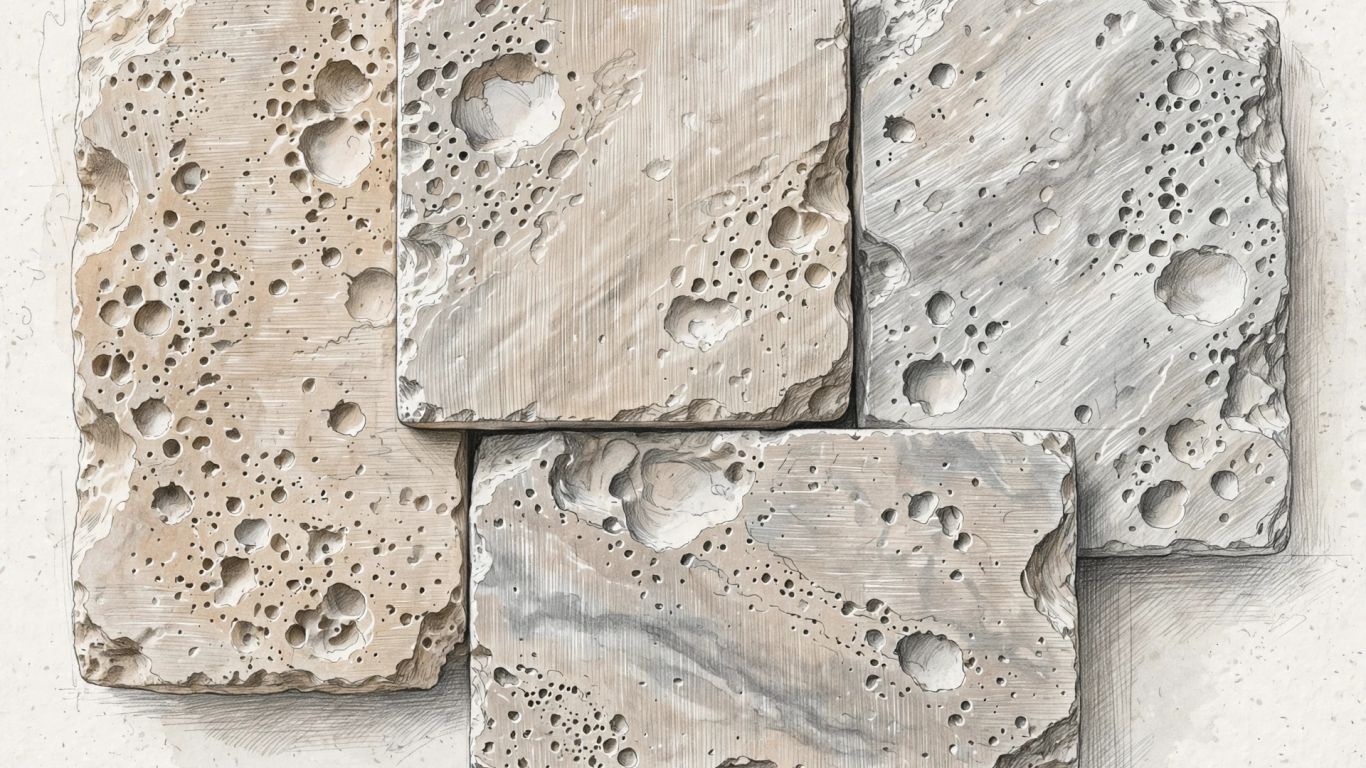
No two natural-stone tiles are exactly alike. Small shifts in tone, veining, and surface texture can give a floor or wall a layered, collected appearance. That variation is part of the appeal, but it also means a single product photo may not show every possible detail. Inspect the available pieces and plan the layout so the overall blend feels intentional. A dry layout can help you distribute color variation before anything is fixed in place.
Durability for residential and commercial projects
Travertine is used in both residential and commercial settings, including floors and walls. Durability, however, depends on the product, the installation, the amount of traffic, and the way the surface is maintained. A hallway, a decorative wall, and a low-use guest bathroom have different demands. Match the tile to the space and ask for product-specific guidance rather than relying on a broad description of the stone alone.
Porosity, sealing, and moisture considerations
Travertine is porous, and sealing can help protect it from moisture and stains. The right sealer and schedule depend on the product and its use, so follow the manufacturer’s instructions and confirm recommendations with a qualified installer. In showers and other wet areas, think about the complete installation—not only the stone—including the substrate, grout, drainage, and care routine. Product specifications are the place to confirm suitability for a particular wet or outdoor application.
How finish and location affect everyday maintenance
A textured surface may hold more dirt in its crevices than a smoother one, while a polished finish can make marks more noticeable. Location matters too: an entryway usually needs more frequent attention than a decorative wall. For everyday care, follow the product guidance, use a cleaner suitable for natural stone, and avoid assumptions about how often the surface needs resealing. The simplest routine is the one that matches the finish and the way the room is actually used.
How to choose travertine for your project
The best choice is the one that brings together the look you love and the practical needs of the installation. Begin by narrowing the color and pattern, then compare formats and finishes for the location. Samples and careful measurements can turn a broad inspiration into a more confident order.
Match color and pattern to your design style
Start with the other materials in the room: flooring, cabinetry, paint, and natural light. Ivory and beige often create a calm, warm foundation; walnut or gold adds richness; silver-gray can feel more restrained and contemporary. Decide whether you want the pattern to lead the room or sit quietly behind other details. Then look at samples beside the actual finishes they will meet, since the same stone can read differently under different lighting.
Select tile, mosaic, trim, or a larger-format option
Choose the format that suits both the surface and the scale of the room. Large tiles may make a floor feel more continuous, while mosaics work well for smaller details and decorative layouts. Trim and moldings can provide a finished edge or transition where a plain tile stops. Surfaces Galore offers travertine tiles, mosaics, and moldings, so compare the available formats with the details of your design before settling on a single material.
Check dimensions, finish, and product suitability
Confirm the listed dimensions and finish, and check that the product is suitable for its intended installation. A name such as “honed” or “tumbled” describes a surface treatment, but does not by itself confirm that a tile suits a shower floor, patio, or other specific use. If you are considering a mosaic, look at both the stone and the pattern; a 1x2 brick mosaic provides a different scale and rhythm from a large-format tile. Ask questions about installation and care before ordering if any part of the specification is unclear.
Plan quantities and review samples before ordering
Measure the area, account for cuts, and ask your installer or supplier how much extra material is appropriate for the layout. A dry layout can help you assess the overall blend and avoid awkward cuts at edges. Before placing a larger order, review a sample and compare it with the room’s lighting and adjacent materials. A compact checklist keeps the practical details together:
- Measure each surface and note openings, edges, and transitions.
- Confirm tile size, finish, and product suitability for the location.
- Review samples in the room and check natural color variation.
- Ask your installer how much extra to plan for cuts and waste.
That preparation makes it easier to compare a sample with the final installation and to order with a clear understanding of the project’s needs. For sample planning, some shoppers also keep a small travel kit together; a travel shaving routine is an example of a separate packing checklist, though stone samples should be assessed in the project space.
Buying travertine marble from a stone supplier
A supplier can help you move from inspiration to a product that fits the project’s size, finish, and timing. Compare the actual specifications and current availability rather than relying only on a broad collection description. If you are searching to buy marble tiles online in the USA, apply the same care to travertine: confirm the stone type, finish, quantity, and shipping details before you order.
Compare available collections and current stock
Look across formats and finishes, and compare the characteristics that matter for your room: color, pattern, dimensions, and intended use. Current availability can change, so confirm what is in stock when you are ready to plan an order. Surfaces Galore offers natural-stone products including travertine tile, mosaics, and moldings; its collection is a starting point for comparing styles and formats. If you are still weighing the material itself, this guide to travertine and marble design covers differences in appearance, cost, and use.
Ask about bulk pricing and custom-cut options
For a larger project, ask whether bulk pricing is available and provide an accurate estimate of the quantity you need. If the design calls for a particular shape or detail, ask about custom-cut natural-stone pieces, including mosaics, borders, and specialty shapes. Surfaces Galore offers custom-cut natural stone pieces, so sharing a drawing, dimensions, or photos can help clarify what you have in mind. An early conversation is useful if the design combines standard tile with made-to-fit elements.
Arrange shipping for projects across the United States
If you are ordering from outside the supplier’s local area, confirm the shipping arrangement, expected timing, and how the order will be protected in transit. Nationwide shipping can make natural stone available for projects across the United States, but the details for a particular order should be confirmed directly. Compare the shipping plan with your installation schedule and make sure there is time to inspect the material before work begins.
Request a quote from Surfaces Galore for your project
A clear quote request can include the product or look you are considering, the project location, dimensions, planned quantity, and preferred finish. If you are undecided, note which colors or formats you want to compare and ask about samples. This gives the supplier a useful starting point for discussing availability, pricing, and delivery. When you are ready, request a travertine quote with the details of your project.
Ready to take the next step? Contact Surfaces Galore to discuss your project and request a quote for travertine tile, mosaics, or a custom-cut natural-stone piece.
Conclusion
Travertine marble may be a familiar search phrase, but choosing travertine well means looking closely at the stone itself: its color, natural variation, finish, and suitability for the space. Compare samples, plan quantities, and confirm product details before ordering. With those decisions in hand, it is easier to find a surface that feels right at home and will be cared for appropriately.
Frequently Asked Questions
A few practical questions come up often when comparing travertine for a renovation. Product details and installation conditions can vary, so use these answers as a starting point and confirm specifics for the stone you choose.
Is travertine the same as marble?
No. Travertine and marble are distinct natural stones, though both have a connection to limestone and are used in interior design. Their formation, texture, and typical appearance differ.
Why do people search for “travertine marble”?
The phrase is often used informally when someone is looking for classic natural stone with a refined appearance. For a purchase, check the product description to confirm whether the material is travertine or marble.
Does travertine come in different colors?
Yes. Common options include ivory, beige, walnut, gold, and silver-gray, with natural variation in each stone. A sample is a helpful way to assess the actual color and pattern.
Which travertine finish should I choose?
Polished finishes are brighter, honed finishes are matte, and brushed or tumbled finishes have more visible texture. The best option depends on the look you want and the intended location; check product specifications for suitability.
Can travertine be used in a bathroom?
Travertine is used in bathrooms, including on floors, walls, and in mosaics. Confirm that the specific product and finish suit the location, and plan for appropriate installation, sealing, and care.
Does travertine need to be sealed?
Travertine is porous, and sealing can help protect it from stains and moisture. Follow the product and sealer instructions, and ask a qualified installer what schedule is appropriate for your application.
How much extra travertine should I order?
The amount depends on the area, layout, tile size, and number of cuts. Measure carefully and ask your installer or supplier to recommend an allowance for cuts and waste before ordering.

Leave a comment