
Travertine stone tile: a guide to styles, finishes, applications, and care

Key Takeaways
Travertine brings natural variation and an earthy character to floors, walls, and outdoor spaces. Choosing the right color, finish, and installation plan helps the stone feel at home in your project.
- Expect natural variation in color, veining, and surface texture.
- Choose a finish based on the look you want and how the space will be used.
- Match tile size and pattern to the room before ordering.
- Plan for cuts, natural variation, installation, and sealing.
- Review samples and product details before committing to a full quantity.
What makes travertine stone tile distinctive
Travertine stone tile has a soft, organic look that can feel equally at home in a relaxed kitchen or a more formal entryway. Its tones and markings are formed by nature, so individual tiles will not look perfectly uniform. That variation is part of the appeal, but it also makes sample review and thoughtful layout planning worthwhile.
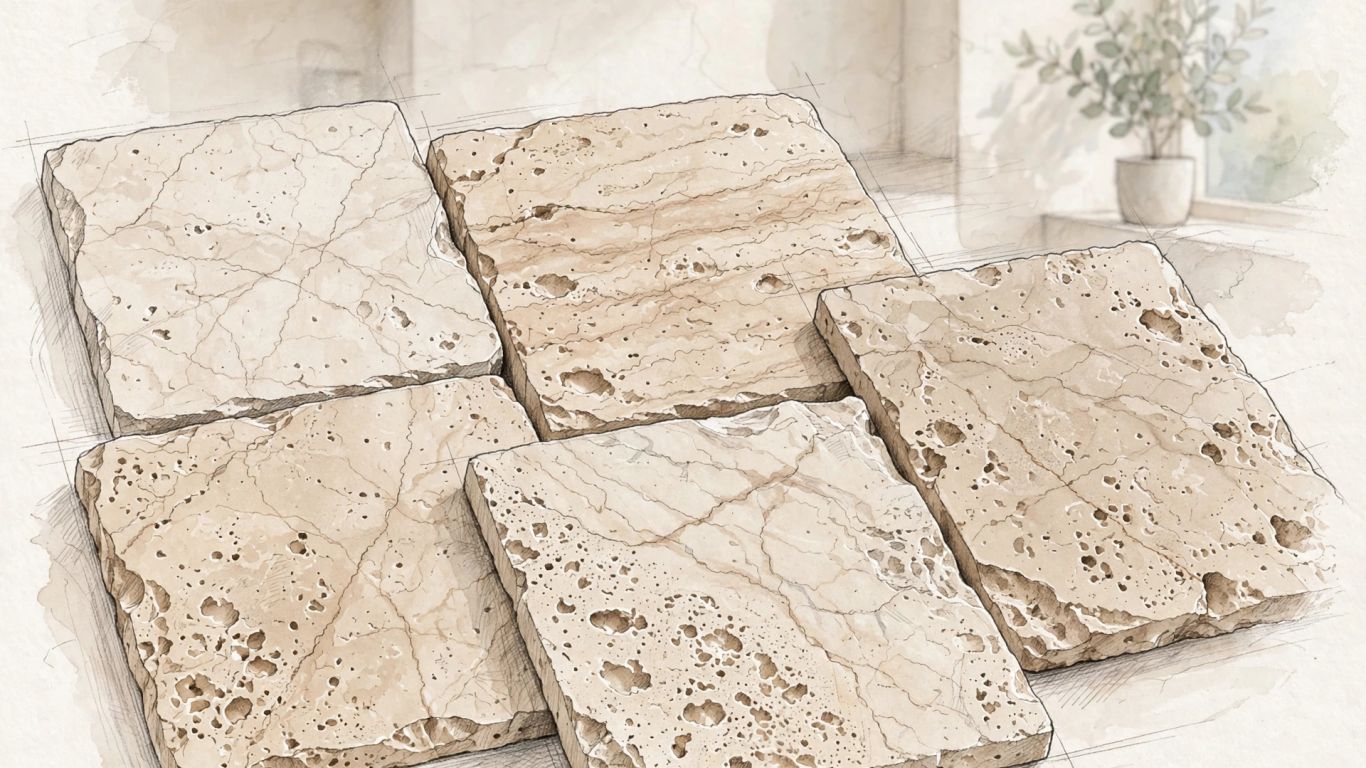
How travertine forms and varies naturally
Travertine is a type of limestone that forms as mineral-rich water deposits calcium carbonate over time. As it develops, small voids and other natural features can contribute to its characteristic texture. The stone is then cut and finished for use as tile, and its appearance will vary from piece to piece.
That variation is easy to see when several tiles are laid side by side. A dry layout helps you decide how to distribute the most distinctive pieces and make the overall pattern feel balanced before installation begins.
Color, veining, and texture to expect
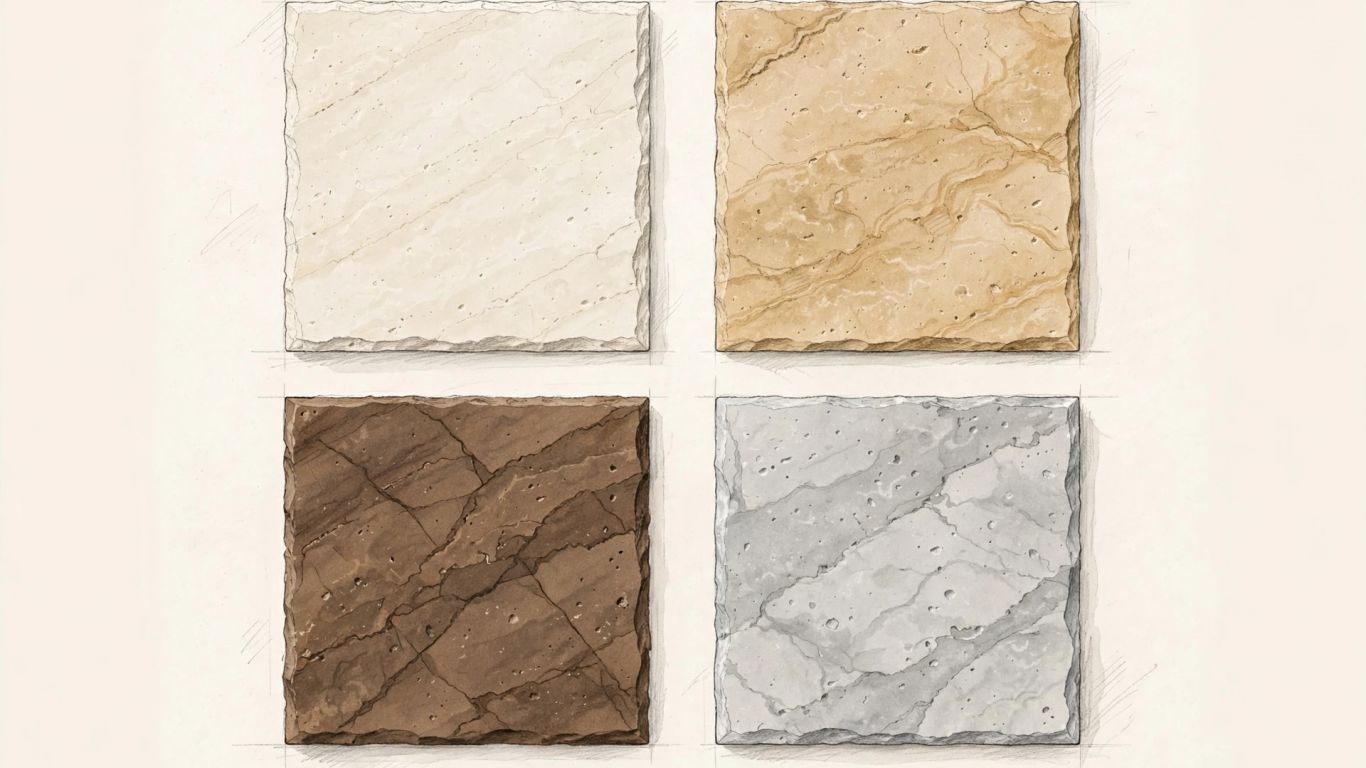
The palette ranges from creamy ivory and beige to gold, walnut, and silver-gray. Some pieces have subtle, cloudlike movement; others show more distinct bands or veins. Natural pores, fine markings, and gentle shifts in tone give the surface depth that printed patterns rarely reproduce in exactly the same way.
If you are considering a particular shade, look at a sample in the room where it will be installed. Daylight, warm bulbs, grout color, and nearby finishes can all change how the stone reads. A few tiles viewed together offer a more useful impression than a single small image on a screen.
Durability and suitability for everyday spaces
Travertine is a durable natural stone used in homes and commercial spaces, including floors, walls, and outdoor settings. Like other porous stone, it needs appropriate installation and care. The best choice depends on the room, the finish, and how much foot traffic or moisture the surface will face.
Consider the whole experience, not just the first impression. A finish suited to the room can make regular cleaning and everyday use feel more manageable, while a well-planned layout lets the natural variation work as part of the design.
Choose a color and style for your project
Color sets the mood before furniture or fixtures enter the picture. Light travertine can keep a room feeling open, while deeper browns bring an enveloping warmth. The best starting point is to compare the stone with the fixed elements already in the space, such as cabinetry, counters, and wall color.
Ivory and light travertine for bright interiors
Ivory and pale beige tones bring a quiet brightness to interiors and pair easily with wood, painted cabinetry, and neutral fabrics. They can soften a room without making the stone feel plain; natural veining and small shifts in tone still give the surface character. For an example of a light, honed option, La Travonya 12x12 filled and honed tile offers warm, earthy tones and natural variation.
A light tile can also make a compact room feel more open, especially when the layout has fewer visual interruptions. Check samples in both natural and artificial light, since a cream undertone may look warmer at night than it does in the afternoon.
Noce, walnut, and mixed tones for added warmth
Noce and walnut shades add depth and a grounded feel, especially alongside warm wood or cream-colored walls. Mixed-tone selections can bring several related colors into one surface, creating an easy connection between different materials in the room. A varied palette also makes natural movement feel intentional rather than like a mismatch.
When comparing darker samples, place them beside the room’s existing finishes. A deep brown can read rich and dramatic in a bright space, or visually heavier in a room with limited daylight. Testing the combination at home is a simple way to avoid surprises.
Silver and vein-cut travertine for a contemporary look
Silver-gray travertine offers a cooler alternative to the familiar beige palette. Vein-cut stone reveals more linear patterns, making it a natural option for a contemporary interior or a feature wall where directional movement matters. The effect can feel crisp without losing the character of natural stone.
Consider how the veins will run across adjoining tiles. A dry layout lets you decide whether to align the pattern for a more continuous look or vary it for a relaxed, less formal composition.
Mosaics and French patterns for decorative layouts
Mosaics bring smaller shapes and more detail to backsplashes, shower walls, and accent areas. French, or Versailles, patterns combine different tile sizes to create a more classic rhythm across a floor or patio. Both approaches can add visual interest, so give them enough room to read clearly.
For a traditional multi-size layout, the La Travonya Versailles pattern set uses a honed finish. The word “brick” can describe a tile arrangement, but that is separate from the construction of a brick-pattern end-grain cutting board; the materials and project requirements are entirely different. For broader inspiration on stone formats and finishes, explore travertine tile options.
Compare finishes and their best uses
The finish changes how travertine looks and feels underfoot. Some surfaces are smooth and understated; others have more texture and a gently aged appearance. Think about the room’s use alongside its style, especially where water or frequent cleaning is part of daily life.
Honed and filled for a smooth, matte surface
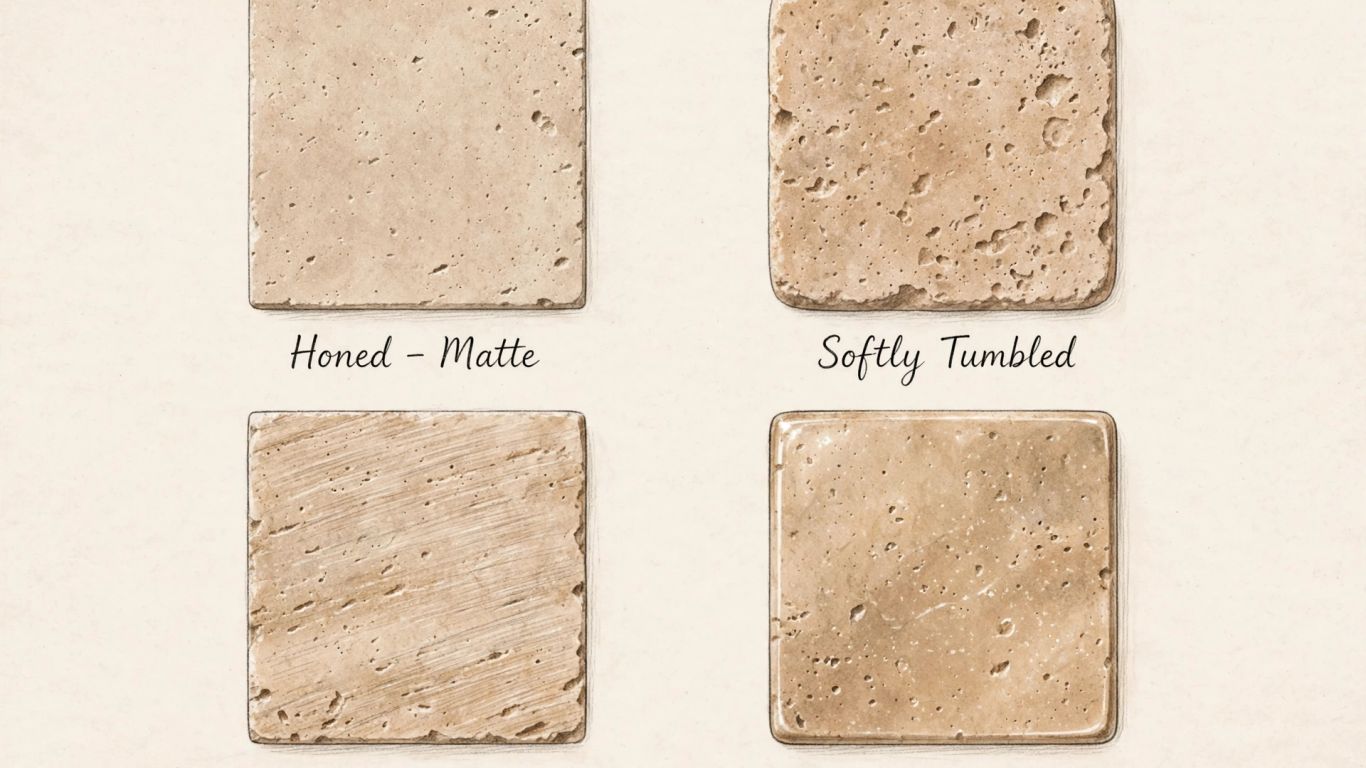
Honed travertine has a smooth, matte appearance rather than a strong shine. Filling the stone’s natural voids creates a more even surface, which many people prefer for indoor floors and walls. It keeps the stone’s natural color and movement visible while offering a cleaner-lined finish.
A filled-and-honed tile can suit a kitchen, living area, or bathroom wall where a softer surface is the goal. For another option, La Travonya 12x24 filled and honed tile combines a larger format with warm, earthy tones.
Tumbled and brushed for a textured, rustic effect
Tumbled finishes have a softened, timeworn quality, while brushed surfaces have a tactile texture. These looks complement rustic interiors and traditional outdoor settings, but the exact feel varies between products. Review samples closely to understand the edge, texture, and surface character before choosing.
A textured finish can make small marks and natural variation feel at home in the design. It also changes how dust or residue settles, so consider the cleaning routine as part of the decision rather than an afterthought.
Polished finishes for a more reflective appearance
A polished finish reflects more light and can make the stone’s colors and veins appear more pronounced. It creates a dressier effect on walls or selected interior surfaces. In a room with strong natural light, reflections may become a noticeable part of the overall look.
The visual appeal is only one consideration. For floors in areas where water may be present, compare product specifications and finish options carefully rather than choosing by shine alone.
How texture can affect traction and cleaning
Texture affects both how a surface feels and how easily it can be wiped clean. The table below offers a starting point for comparing common finish choices; product specifications and suitability can differ, so confirm details for the tile you select.
| Finish | General appearance | Points to consider |
|---|---|---|
| Honed and filled | Smooth, matte surface | A more even feel for many indoor applications |
| Tumbled | Softened, aged character | Texture may take more attention during cleaning |
| Brushed | Tactile, subtly textured surface | Compare the feel and care guidance for the specific tile |
| Polished | Reflective, refined appearance | Confirm suitability wherever water or traction is a concern |
For wet or outdoor locations, look for a finish and product specified for that application. A sample underfoot can help you assess the feel, while manufacturer guidance can clarify maintenance and installation requirements.
Find the right application for travertine tile
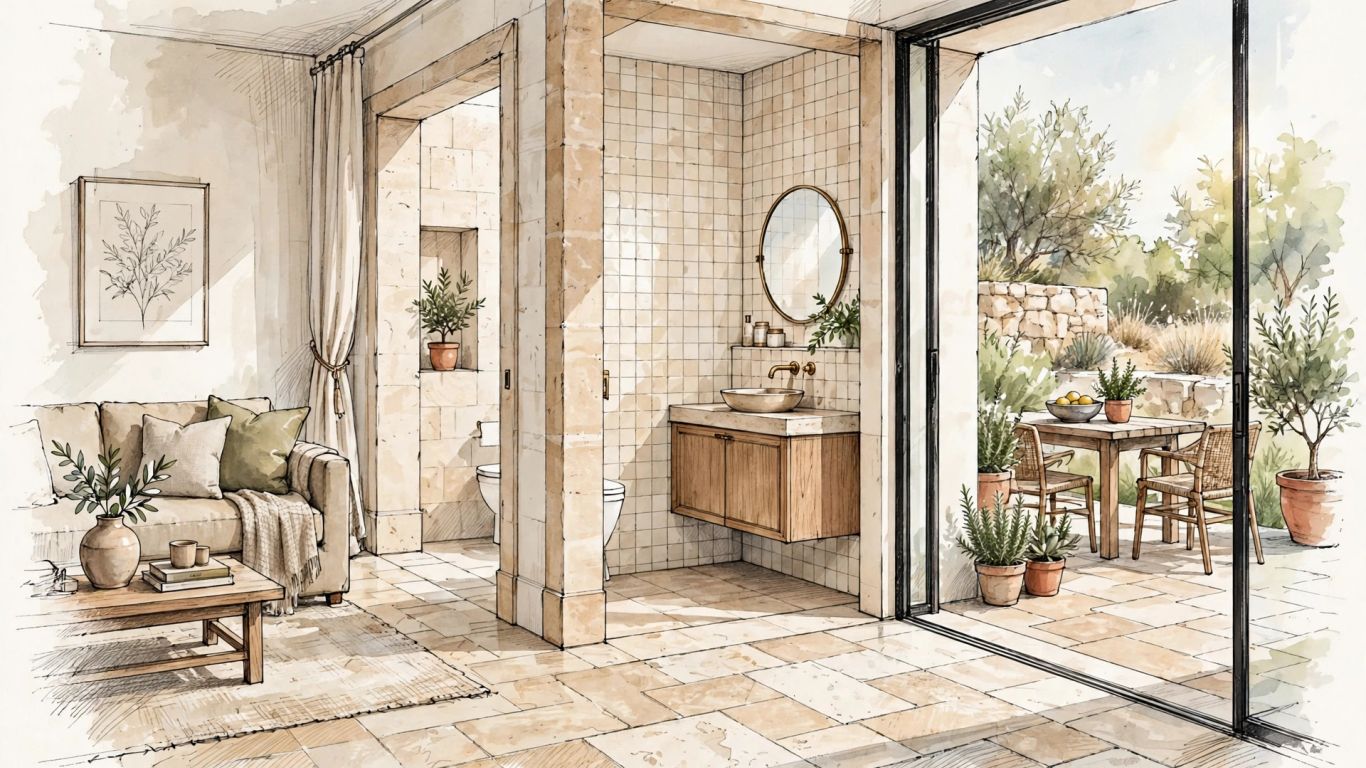
Travertine’s range of colors, formats, and finishes makes it a versatile option for many parts of a home. The room determines which details matter most: ease of cleaning in a kitchen, a considered finish in a shower, or an exterior rating for an outdoor installation. Use the intended application to narrow the options before settling on a particular style.
Floors in living areas, kitchens, and entryways
Travertine can bring a natural, welcoming foundation to living rooms, kitchens, and entryways. Larger tiles create a calmer visual field, while smaller formats or patterns add more movement. In an entry or kitchen, weigh the finish and cleaning needs against the look you want.
Before installing, inspect the pieces and arrange them in a dry layout. Mixing tiles from different boxes can help spread natural color variation across the room, while checking the layout can prevent narrow or awkward cuts at the edges.
Bathroom walls, shower floors, and backsplashes
In bathrooms, travertine can be used on walls, floors, and backsplashes, but each area has different exposure to water and cleaning products. Select materials suited to the specific surface and follow product and installation guidance for wet locations. Mosaics can offer smaller pieces for shower floors and detailed accents.
For wall planning, this bathroom backsplash guide covers choices such as tile placement, wet-area preparation, and edge finishing. A little attention to those transitions can help the finished room feel deliberate rather than pieced together.
Patios, pool areas, and other outdoor settings
Travertine is used for patios and pool areas, but exterior conditions matter. Confirm that the tile or paver is intended for outdoor use and appropriate for the local climate and installation conditions. Surface texture, drainage, and the way the stone will be maintained should all inform the choice.
A tumbled or textured look may suit a relaxed outdoor setting, while a more uniform finish can feel tailored. Do not assume that every product is interchangeable outdoors; check specifications for the selected material and application.
When to consider mosaics, trim, or accent pieces
Mosaics, trim, and accent pieces can give a room a finished edge or a focal point without covering every surface in a busy pattern. A border can frame a larger field of tile, while a mosaic can introduce texture on a backsplash or niche. Keep the palette connected so the accent complements the main stone.
Surfaces Galore offers travertine tiles, mosaics, and moldings, giving shoppers a range of stone formats to consider together. If a project also involves a roof, keep material-specific planning separate: installing clay tile roofing has its own structural and weather-protection considerations and is not the same task as setting floor or wall tile.
Plan your selection, installation, and budget
A good tile plan starts with the room dimensions and ends with a clear order quantity. Include the pattern, grout joints, edges, and any transitions in the early decisions. Natural variation is part of travertine’s appeal, so planning the layout before installation gives you more control over the final composition.
Match tile size and pattern to the room
Large-format tiles can make an open room feel quieter, while smaller formats create more joints and visual detail. A French pattern brings movement through its mix of sizes, and a mosaic naturally draws attention to a smaller area. Consider the room’s scale, the shape of its edges, and how the tile will meet adjoining surfaces.
Make a simple layout sketch and, when possible, dry-lay the pieces before setting them. Keep a tile pattern distinct from unrelated uses of the phrase, such as a brick-pattern roof tile system; each application has its own installation details.
Calculate coverage and allow for cuts and replacement pieces
Measure the area carefully, then account for cuts, layout choices, and the possibility of future replacement pieces. The extra amount depends on the room’s shape and the pattern, so ask an installer or supplier to help confirm a suitable quantity. Do not rely on the exact floor area alone when placing an order.
A practical project checklist can keep the estimate organized:
- Measure each wall or floor area separately.
- Note doorways, niches, edges, and other cut-heavy areas.
- Add material for the selected pattern and installation waste.
- Keep a few spare tiles, if practical, for future repairs.
Use the checklist as a planning aid, then compare the final quantity with your installer’s recommendation. For a closer look at ordering, La Travonya 18x18 filled and honed tile product information notes natural variation and the need to plan for cuts and extra material.
Confirm substrate, installation, and sealing requirements
The substrate, mortar, grout, and sealing plan should suit the selected stone and the location. Inspect tiles for chips, cracks, and other concerns before installation, and follow the manufacturer’s instructions for installation materials and sealer. Natural stone is porous, so sealing can help protect it from stains and moisture; the appropriate schedule depends on the product and use.
A qualified installer can assess the substrate and explain how the tile should be set. If your renovation also involves scheduling unrelated services, even dog training in Georgetown follows a different process and scope; keep the stone installation plan specific to the room and material.
Compare upfront cost with long-term design value
Compare more than the price per square foot. Include installation, the selected finish, pattern complexity, shipping, and extra material in the project estimate. Travertine’s natural variation and enduring style can be part of its value, but a realistic budget starts with the full installed project rather than the tile alone.
Samples can help you decide whether the actual color and texture suit the room before you order the project quantity. They also let you compare grout and nearby finishes at home, where the lighting is familiar.
Care for travertine and choose a supplier
Care begins with knowing the stone and finish you selected. Use products intended for natural stone, wipe up spills promptly, and follow the sealer and maintenance guidance supplied for the tile. When sourcing material, review current product details and quantities early so the selected finish and format can be considered alongside the project schedule.
Clean stone with appropriate products and methods
Use a soft cloth or mop and a cleaner approved for natural stone. Avoid assuming that a household cleaner is suitable; follow the product guidance and test a new cleaning method in an inconspicuous area. Regular dust and grit removal can also help keep a floor looking its best.
For daily care, gentle methods are usually a better starting point than harsh scrubbing. If residue or a stain is difficult to remove, check with a stone-care professional before trying a stronger product.
Understand sealing and ongoing maintenance needs
Travertine is porous, and sealing helps protect the stone from stains and moisture. Follow the sealer manufacturer’s directions and ask whether the chosen product should be resealed based on use and wear. A busy kitchen or wet bathroom may need closer attention than a low-traffic wall.
Keep notes on the sealer used and the date of application. A simple record makes it easier to follow the recommended maintenance schedule instead of relying on guesswork.
Check current stock, finish options, and project quantities
Before ordering, confirm the current stock, size, finish, and quantity for the specific product. Ask how natural variation appears across the selection and whether the available pieces will cover the planned layout. If you are undecided, request a sample and compare it in the intended room.
Surfaces Galore is a direct importer and nationwide supplier of natural stone, with travertine tiles, mosaics, and moldings among its offerings. Its Anaheim, California base serves customers across the United States; checking current availability and project quantities is a practical step before finalizing a selection.
Request a quote and compare shipping or bulk pricing nationwide
When you have a product and estimated quantity in mind, request a quote and ask about shipping and any applicable bulk pricing. Compare the complete delivered order rather than the tile price alone, and confirm the finish and quantity before purchase. You can request a travertine quote to start that conversation.
Planning a renovation trip may call for its own packing routine, such as this travel shaving guide, but the tile order itself comes down to the product details, quantity, and delivery arrangements. Clear questions up front make it easier to compare options and keep the project moving.
Conclusion
Travertine stone tile offers a distinctive mix of natural color, texture, and timeless appeal, with options for many indoor and outdoor settings. Compare samples, finishes, and product requirements before ordering, then plan installation and care around the specific stone you choose. For your project, Surfaces Galore can help you explore current travertine options and request a quote for the quantity you need.
Frequently Asked Questions
Travertine is a natural stone with many possible colors, finishes, and applications. These answers cover common questions to help you compare choices and plan your project.
What is travertine stone tile?
Travertine stone tile is tile cut from travertine, a natural limestone formed through mineral deposits. Its color, veining, and texture vary naturally from piece to piece.
Does travertine tile need to be sealed?
Travertine is porous, and sealing helps protect it from stains and moisture. Follow the product and sealer instructions, and ask an installer about maintenance based on the location and use.
Is travertine suitable for bathrooms?
Travertine can be used in bathrooms on floors, walls, backsplashes, and some shower applications. Confirm the product is appropriate for the intended wet area and follow installation and sealing guidance.
Can travertine be used outdoors?
Some travertine products are suitable for outdoor settings such as patios and pool areas. Check the product specifications for exterior use and local climate conditions before ordering.
What is the difference between honed and tumbled travertine?
Honed travertine generally has a smooth, matte appearance. Tumbled travertine has a softer, more aged look and a more textured feel; compare samples to understand the difference in person.
How do I choose a travertine color?
Consider the room’s lighting, nearby materials, and the atmosphere you want to create. Compare samples beside cabinetry, counters, or flooring in the space before making a final choice.
How much extra tile should I order?
The amount depends on the room shape, tile size, and layout pattern. Measure carefully, include material for cuts and waste, and confirm the final quantity with your installer or supplier.

Leave a comment