
Travertine Pool Decks Explained: Style, Safety, Value

Nothing compares to the sensation of stepping out onto a pool deck that stays cool and looks stunning all season. For luxury homeowners in Southern California, finding a durable yet sophisticated surface for outdoor living is a priority. With its earthy elegance and natural slip resistance, travertine pool decking offers both comfort and lasting style, giving your backyard a timeless touch that stands up to daily use and bright, sunny days.
Table of Contents
- Defining Travertine Pool Decks And Common Myths
- Distinct Colors, Finishes, And Installation Types
- Key Features: Cooling, Slip-Resistance, Durability
- Design Versatility For Southern California Homes
- Cost Comparison, Maintenance, And Common Pitfalls
- Choosing Between Travertine And Alternatives
Key Takeaways
| Point | Details |
|---|---|
| Travertine Durability | With proper sealing and maintenance, travertine can last decades and withstand harsh conditions typical of Southern California. |
| Natural Cooling Properties | Travertine remains cool underfoot even in high temperatures, making it ideal for outdoor pool areas. |
| Aesthetic Versatility | The variety of colors and finishes available allows homeowners to customize their pool deck to complement their home’s design. |
| Investment Considerations | Although the initial cost is higher, the long-term value and reduced maintenance needs often justify the investment in travertine. |
Defining Travertine Pool Decks and Common Myths
Travertine is a remarkable natural stone with unique properties that make it an exceptional choice for pool deck surfaces in Southern California luxury homes. Formed from mineral deposits around natural springs, this stone offers homeowners a sophisticated and functional outdoor flooring solution.
Travertine pool decks are distinguished by their distinctive characteristics:
- Natural, earthy aesthetic with rich visual texture
- Inherent slip-resistant surface properties
- Cool temperature even under direct sunlight
- Sophisticated, high-end appearance
- Durability when properly maintained
Contrary to popular misconceptions, travertine is not a fragile material. While it requires proper sealing and maintenance, it can provide a long-lasting, elegant pool deck surface. Different geological formations create unique color variations, meaning homeowners can select from a range of natural stone appearances.
Common myths about travertine pool decks often stem from misunderstandings about its composition and care requirements. Many people incorrectly believe that travertine is too delicate for outdoor use or impossible to maintain. In reality, with proper sealing and periodic maintenance, travertine can withstand Southern California’s challenging climate while maintaining its beautiful appearance.
Pro tip: Always work with a professional stone specialist who understands the nuanced sealing and maintenance requirements specific to travertine pool deck installations.
Distinct Colors, Finishes, and Installation Types
Travertine pool decks offer homeowners an extraordinary range of design possibilities, featuring multiple color palettes and finish options that can transform outdoor living spaces. The natural stone’s versatility allows for personalized aesthetic expressions that complement Southern California’s luxurious landscape design sensibilities.
Travertine color variations include:
- Creamy beige tones
- Rich walnut browns
- Elegant silver grays
- Warm rust and ivory hues
- Subtle natural veining patterns
The finish selection dramatically influences the pool deck’s character and performance. Different finishes provide unique textural experiences, from smooth and sophisticated to rustic and aged:
This table summarizes the range of finishes and their functional benefits for travertine pool decks:
| Finish Type | Appearance | Surface Feel | Ideal For |
|---|---|---|---|
| Honed | Smooth, matte look | Moderately smooth | Modern spaces, moderate slip resistance |
| Tumbled | Textured, aged appearance | Rougher, more grip | Pool surrounds needing maximum safety |
| Brushed | Slightly rough, natural texture | Gentle grip | Transitional designs, extra foothold |
| Polished | Glossy, reflective finish | Very smooth | Decorative uses, less foot traffic |
- Honed finish: Smooth, matte surface with moderate slip resistance
- Tumbled finish: Aged, textured appearance with enhanced grip
- Brushed finish: Slightly rough texture that increases traction
- Polished finish: Sleek, reflective surface with elegant sheen
Installation patterns are equally diverse, allowing homeowners to create distinctive visual landscapes. Designers can arrange travertine pavers in classic grid layouts, herringbone patterns, or more creative arrangements that highlight the stone’s natural beauty and complement the surrounding architectural elements.
Pro tip: Consider selecting multiple travertine tones and arranging them in a sophisticated pattern to create visual depth and interest in your pool deck design.
Key Features: Cooling, Slip-Resistance, Durability
Travertine pool decks stand out as an exceptional outdoor flooring solution, offering remarkable performance characteristics that make them ideal for Southern California’s demanding climate. The natural stone’s unique properties provide homeowners with a combination of aesthetic appeal and practical functionality.
Key performance features of travertine pool decks include:
- Exceptional heat resistance
- Natural cooling properties
- Superior slip-resistant surface
- High durability under harsh conditions
- Resistance to pool chemical exposure
The stone’s most impressive attribute is its natural cooling capability. Unlike concrete or darker materials that absorb and radiate heat, travertine remains remarkably cool, even during intense Southern California summers. Its porous structure allows for natural temperature regulation, ensuring comfortable barefoot walking around pool areas.
Durability is another critical advantage of travertine pool decks. When properly sealed and maintained, these natural stone surfaces can withstand decades of exposure to sunlight, pool chemicals, and heavy foot traffic. The stone’s inherent strength means minimal maintenance and long-term performance, making it an intelligent investment for luxury outdoor spaces.
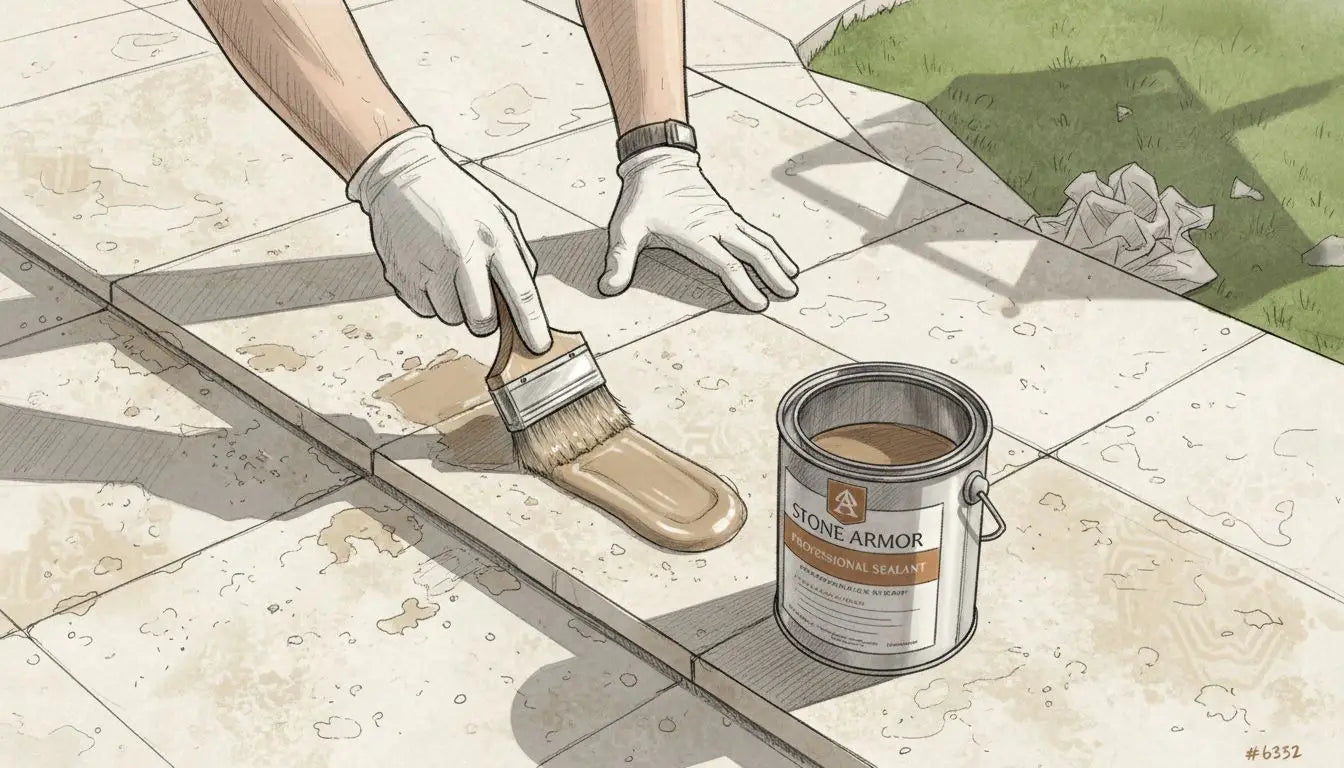
Pro tip: Have your travertine deck professionally sealed every two to three years to maximize its durability and maintain its protective properties.
Design Versatility for Southern California Homes
Travertine pool decks represent an exceptional design solution that seamlessly integrates with diverse architectural styles, making them particularly well-suited for Southern California’s dynamic residential landscapes. The natural stone’s inherent adaptability allows homeowners to create truly personalized outdoor living spaces that reflect individual aesthetic preferences.
Design versatility of travertine pool decks encompasses multiple elements:
- Mediterranean-inspired warm color palettes
- Contemporary minimalist design options
- Rustic and traditional layout possibilities
- Adaptable to various landscaping themes
- Complementary to both modern and classic home architectures
Color variations play a critical role in travertine’s design flexibility. From light cream and soft beige to rich walnut and sophisticated gray tones, homeowners can select shades that either harmonize with existing architectural elements or create striking visual contrasts. The stone’s natural variations ensure that each installation feels unique and tailored to the specific property.
Installation patterns further enhance travertine’s design potential. Designers can create intricate layouts ranging from classic grid arrangements to complex herringbone or fan-shaped configurations, allowing for remarkable customization. This flexibility makes travertine an ideal choice for Southern California homes seeking to balance aesthetic sophistication with practical outdoor living solutions.
Pro tip: Consult with a design professional to explore custom color and pattern combinations that best complement your home’s architectural style and surrounding landscape.
Cost Comparison, Maintenance, and Common Pitfalls
Travertine pool decks represent a sophisticated investment that requires careful financial and maintenance considerations. Understanding the long-term value and potential challenges is crucial for Southern California homeowners seeking to make an informed decision about their outdoor living spaces.
Cost considerations for travertine pool decks include:
- Higher upfront installation expenses
- Moderate long-term maintenance costs
- Potential increased property value
- Repair and replacement expenses
- Comparative pricing with alternative materials
While travertine typically costs more initially compared to concrete or brick alternatives, its durability and aesthetic appeal can offset the higher upfront investment. Homeowners should anticipate spending approximately 30-50% more during initial installation, but the stone’s longevity and visual sophistication often justify the additional expense.
Maintenance is a critical factor in preserving travertine’s beauty and structural integrity. Regular sealing every two to three years is essential to prevent staining, protect against pool chemical damage, and maintain the stone’s natural appearance. Neglecting proper sealing can lead to significant deterioration, potentially resulting in costly repairs or complete replacement of the pool deck surface.
Pro tip: Budget for professional sealing and annual maintenance to protect your travertine pool deck investment and prevent expensive long-term damage.
Choosing Between Travertine and Alternatives
Homeowners considering pool deck materials face a nuanced decision, with multiple factors influencing their choice between travertine and alternative surfaces. Understanding the unique strengths and limitations of each material is crucial for making an informed investment in your outdoor living space.
Key comparative characteristics include:
- Heat management performance
- Initial installation costs
- Long-term maintenance requirements
- Slip resistance
- Aesthetic versatility
- Durability under environmental stress
Travertine stands out compared to concrete and standard pavers by offering superior thermal performance. Unlike concrete, which can become uncomfortably hot during intense Southern California summers, travertine remains remarkably cool, providing a more comfortable walking surface. Its natural porosity allows for better heat dissipation, making it an ideal choice for barefoot pool environments.
When evaluating alternatives, homeowners should consider the trade-offs carefully. Concrete pavers might offer lower initial expenses, but they lack travertine’s natural cooling properties and elegant appearance. Standard brick and aggregate surfaces often struggle with heat retention and slip risks, whereas travertine provides a sophisticated, safer surface that enhances both functionality and visual appeal of outdoor living spaces.
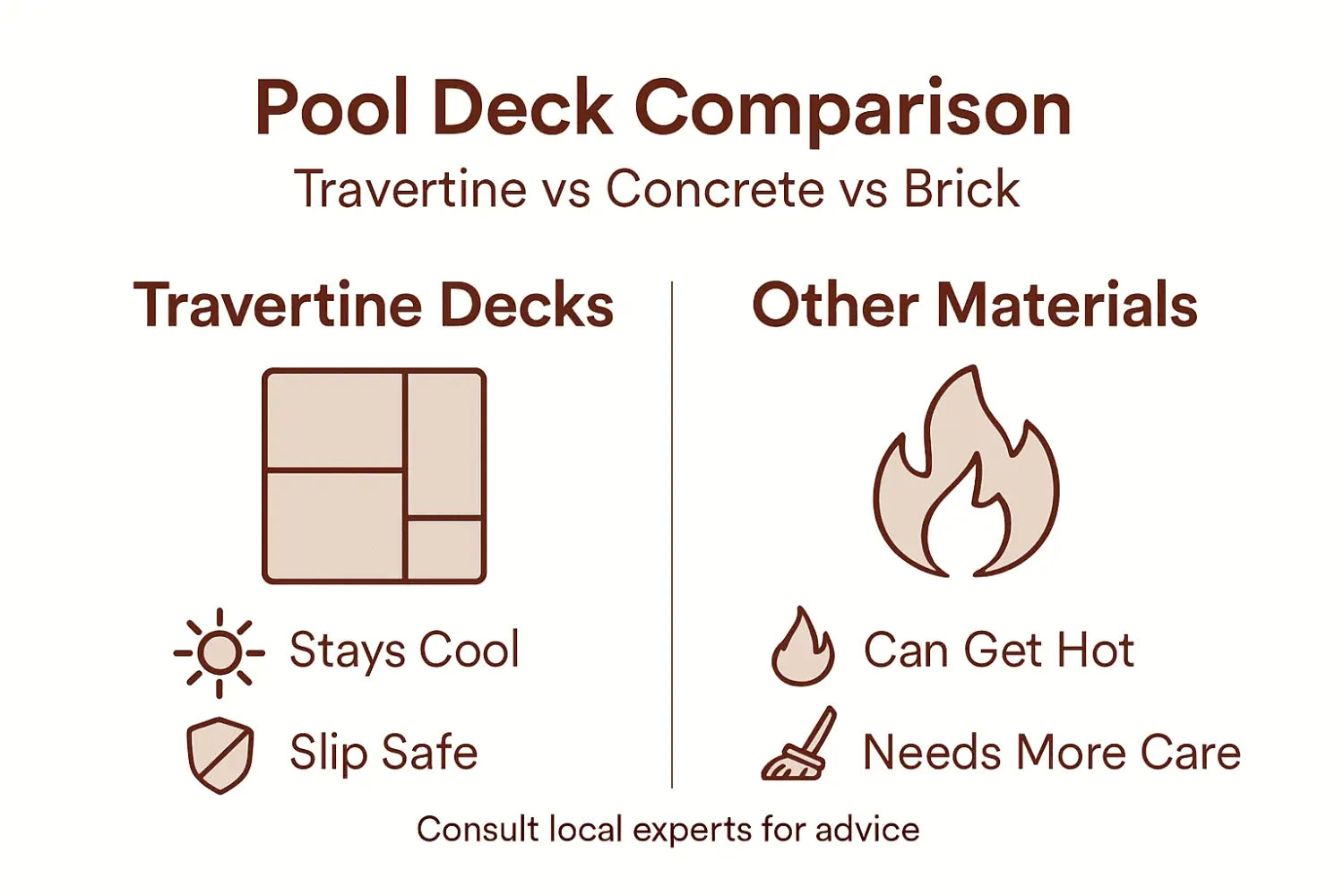
Here’s how travertine pool decks compare to common alternatives:
| Attribute | Travertine | Concrete Pavers | Brick/Aggregate |
|---|---|---|---|
| Surface Temperature | Naturally stays cool, even in heat | Can become very hot in summer | Often uncomfortably warm |
| Slip Resistance | High slip resistance, especially tumbled | Moderate slip resistance | Varies, less slip resistant |
| Long-Term Durability | Lasts decades with proper maintenance | May crack or shift over time | Prone to wearing, can fade or chip |
| Aesthetic Appeal | Luxurious, unique natural patterns | Uniform, less variation in design | Traditional, but limited color options |
Pro tip: Request material samples and conduct on-site temperature testing before making a final decision to understand how different pool deck materials perform in your specific microclimate.
Elevate Your Pool Deck with Authentic Travertine from Surfaces Galore
The article highlights the challenges homeowners face when choosing a pool deck surface that balances style, safety, and lasting value. Many seek a natural stone that remains cool under Southern California sun, offers superior slip resistance, and showcases unique color variations and finishes. Travertine is a top choice but requires sourcing premium quality stone and professional care to maximize durability and beauty.
At Surfaces Galore, we understand these goals deeply. As a leading direct importer of authentic travertine tiles and decorative pieces, we provide homeowners, designers, and contractors with access to premium natural stone at competitive prices. Our collection features a wide range of travertine colors and textures ideal for creating sophisticated, slip-resistant pool decks that stand the test of time. With our commitment to quality and nationwide shipping, your project can benefit from elegant stone designed for long-term performance and style.
Explore our extensive offerings and bring your travertine pool deck vision to life today. Discover premium travertine solutions that combine natural cooling, durability, and aesthetic versatility.
Start transforming your outdoor space with confidence by requesting samples and expert guidance from Surfaces Galore now. Visit Surfaces Galore and make your pool deck a lasting masterpiece.
Frequently Asked Questions
What are the benefits of using travertine for pool decks?
Travertine offers several benefits for pool decks, including a natural cooling capability that keeps surfaces comfortable underfoot, excellent slip resistance due to its textured finishes, high durability when properly maintained, and a luxurious appearance that enhances outdoor aesthetics.
How should I maintain my travertine pool deck?
To maintain a travertine pool deck, you should have it professionally sealed every two to three years to protect against stains and chemical damage. Regular cleaning with a soft broom or mop and using pH-balanced cleaners are also important to keep the surface looking its best.
Is travertine too fragile for outdoor use?
Contrary to common myths, travertine is not too fragile for outdoor use. With proper sealing and maintenance, it can withstand harsh climates and heavy foot traffic while maintaining its beautiful appearance.
How does travertine compare to other pool deck materials?
Travertine outperforms materials like concrete and standard pavers in terms of heat management and slip resistance. It remains cooler under the sun and offers a more luxurious, unique appearance than many alternatives, making it an attractive choice for outdoor spaces.

Leave a comment