
Travertine Tile Grades: Impact on Value and Design

Most American homeowners are surprised to learn that over 90 percent of travertine on the market is classified into distinct grades that directly impact both appearance and performance. With so many options available, choosing the right quality can make a dramatic difference in the final look and durability of your project. Exploring how these grades affect style, structure, and long-term value will help you make smart decisions about your travertine investment.
Table of Contents
- What Are Travertine Tile Grades?
- Premium, Standard, and Commercial Grades Compared
- Key Features That Determine Grade
- How Grades Affect Price and Performance
- Avoiding Common Mistakes When Selecting Grades
Key Takeaways
| Point | Details |
|---|---|
| Understand Travertine Grades | Travertine is classified into three grades: Commercial, Standard, and Premium, each reflecting specific quality and aesthetic characteristics. |
| Evaluate Key Features | Important factors include color consistency, structural integrity, and surface quality, which collectively determine grade classification. |
| Consider Price and Performance | Higher grade tiles generally cost more but offer better durability and lower maintenance, influencing overall project value. |
| Avoid Common Selection Mistakes | Focus on long-term performance and aesthetic compatibility rather than just initial cost to ensure successful project outcomes. |
What Are Travertine Tile Grades?
Travertine tile grades represent a critical classification system that evaluates the quality, appearance, and structural integrity of natural stone tiles before they reach architectural and design markets. These grades provide professionals and homeowners with essential insights into the material’s potential performance, aesthetic characteristics, and overall value.
Travertine tiles are typically categorized into three primary grades: Commercial Grade, Standard Grade, and Premium Grade. Each grade reflects specific characteristics related to the stone’s surface condition, color consistency, structural uniformity, and potential natural imperfections. Choosing the right travertine flooring tile for your home becomes significantly easier when understanding these distinctions.
The grading process involves comprehensive visual and structural assessments that examine multiple factors. Inspectors evaluate aspects such as:
- Surface smoothness and evenness
- Color and pattern consistency
- Presence of natural fissures or fill requirements
- Structural integrity and potential for chipping
- Uniformity of thickness and dimensional stability
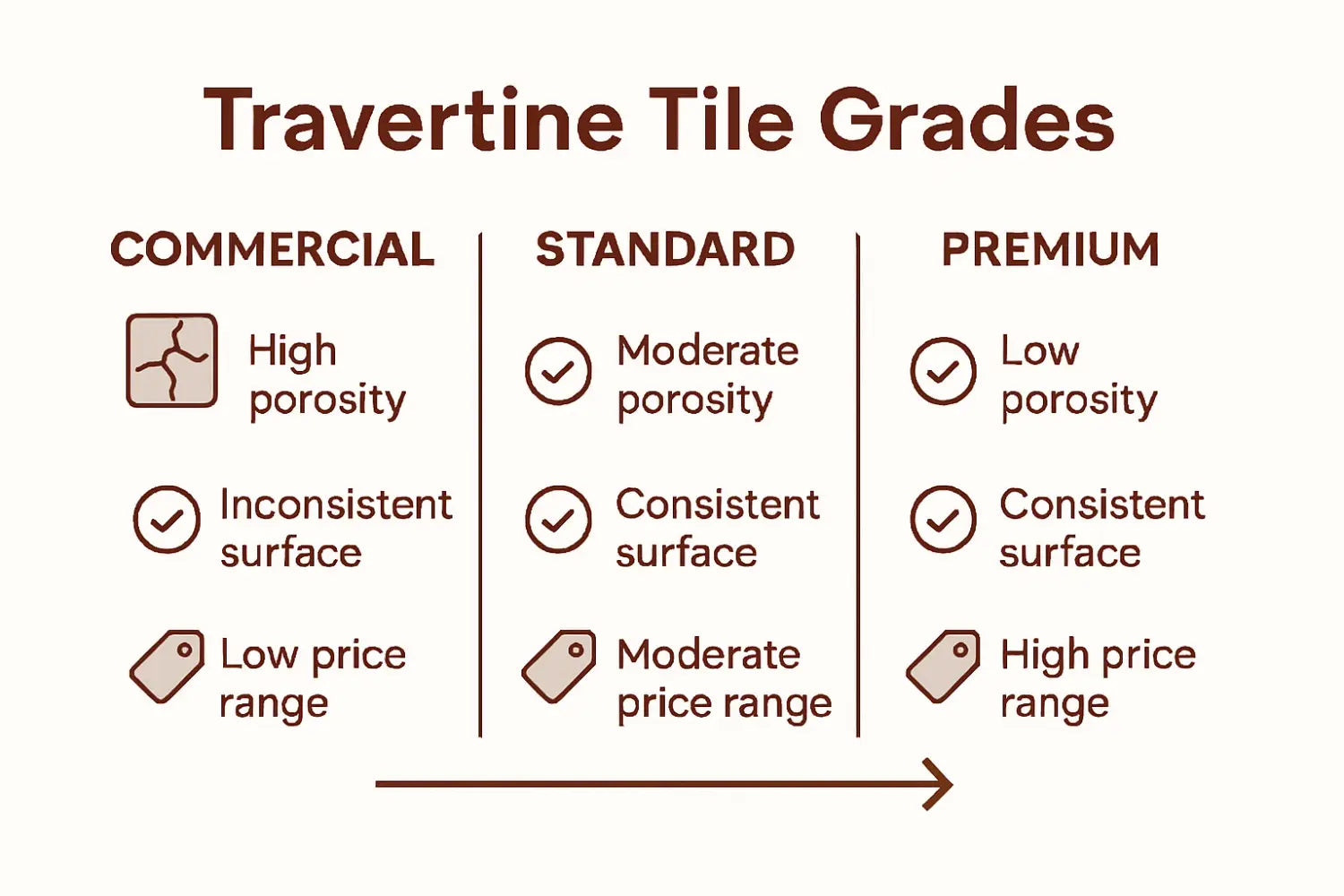
Commercial grade tiles typically represent the most economical option, featuring more visible natural variations and potential minor imperfections. Standard grade tiles offer improved consistency and fewer surface irregularities, making them suitable for residential applications. Premium grade travertine represents the highest quality, featuring exceptional color uniformity, minimal natural variations, and superior structural characteristics that make them ideal for high-end architectural and design projects.
Understanding these grades allows designers, architects, and homeowners to make informed decisions about material selection, ensuring that their natural stone investment meets both aesthetic and functional requirements. By carefully evaluating travertine tile grades, professionals can select materials that align perfectly with their design vision and performance expectations.
Premium, Standard, and Commercial Grades Compared
Travertine tile grades represent a sophisticated spectrum of quality that significantly impacts both aesthetic appeal and long-term performance. Marble and Travertine Differences and Benefits provides additional context for understanding these nuanced material classifications.
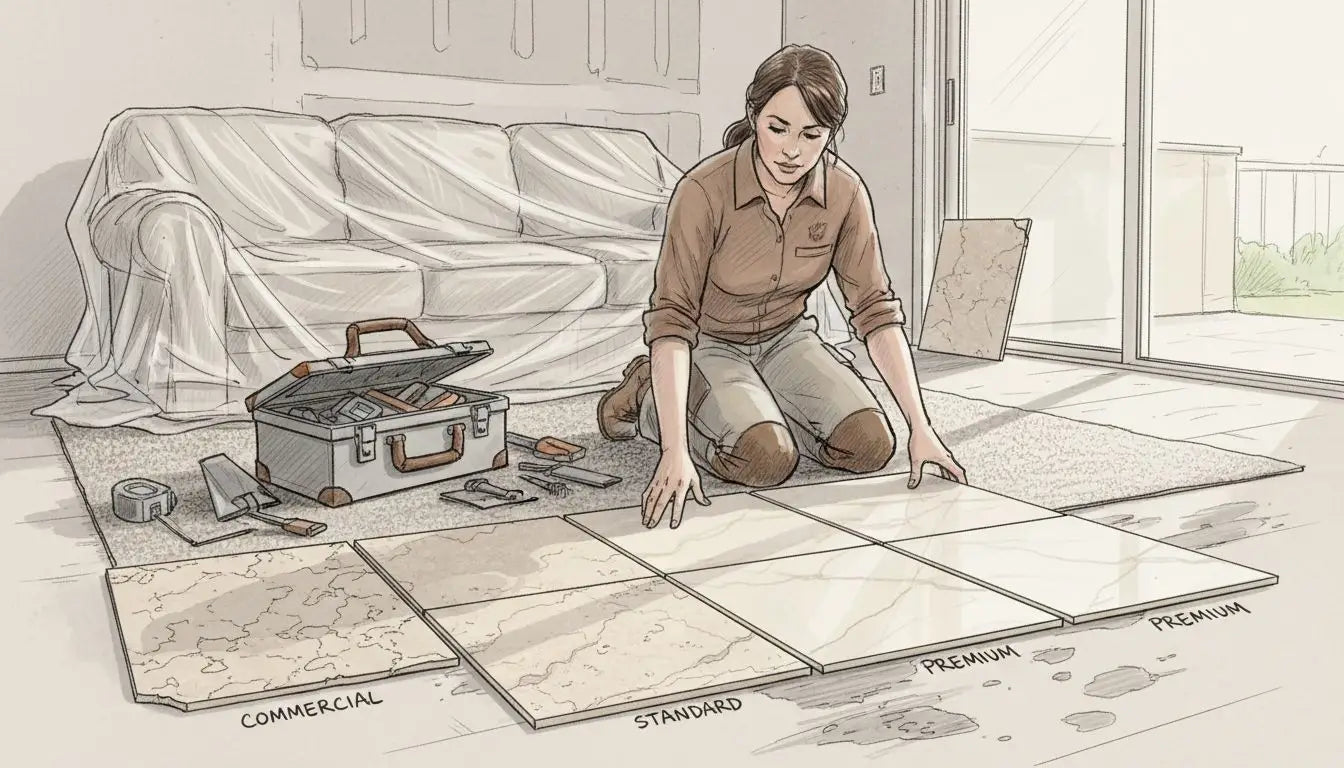
To help professionals and homeowners navigate these distinctions, here’s a comprehensive breakdown of each grade’s defining characteristics:
Commercial Grade Travertine
- Most budget-friendly option
- Highest number of visible natural imperfections
- Significant color and texture variations
- Potential structural inconsistencies
- Recommended for low-traffic areas or temporary installations
Standard Grade Travertine
- Moderate pricing
- Fewer surface imperfections
- More consistent color and pattern
- Suitable for residential applications
- Minor fill requirements
- Balanced between affordability and aesthetic quality
Premium Grade Travertine
- Highest quality classification
- Exceptional color uniformity
- Minimal natural variations
- Superior structural integrity
- Ideal for high-end architectural projects
- Precise manufacturing standards
- Minimal to no fill requirements
The progression from commercial to premium grades reflects increasingly stringent selection criteria. Professionals must carefully evaluate these grades based on specific project requirements, budget constraints, and desired aesthetic outcomes. Understanding these nuanced differences enables more informed decision-making, ensuring that selected travertine tiles not only meet functional needs but also align with design vision and performance expectations.
By comprehensively analyzing each grade’s unique characteristics, designers and homeowners can strategically select travertine tiles that balance visual appeal, durability, and investment value. The right grade transforms natural stone from a mere building material into a sophisticated design element that enhances architectural spaces.
Key Features That Determine Grade
Determining the grade of travertine tiles involves a comprehensive evaluation of multiple critical characteristics that collectively assess the stone’s quality, aesthetic potential, and structural integrity. Travertine Selection Criteria Guide offers additional insights into the nuanced assessment process that professionals use to classify these natural stone materials.
The key features that significantly influence travertine tile grading can be categorized into several primary assessment criteria:
Visual Characteristics
- Color consistency
- Pattern uniformity
- Presence of natural veining and variations
- Surface texture and finish
- Overall aesthetic appeal
Structural Integrity
- Thickness uniformity
- Dimensional stability
- Potential for chipping or cracking
- Structural density
- Edge and corner precision
Surface Quality
- Number and size of natural fissures
- Fill requirements
- Surface smoothness
- Presence of natural pits or holes
- Overall surface evenness
Manufacturing Precision
- Cutting accuracy
- Tile edge refinement
- Dimensional tolerances
- Consistency across tile batches
- Precision of surface treatment
Each of these features undergoes meticulous inspection by skilled professionals who carefully evaluate the stone’s characteristics against established industry standards. The grading process is not merely a visual assessment but a comprehensive analysis that considers both aesthetic and functional attributes of the travertine tile.
Professionals utilize sophisticated measurement techniques and visual inspection protocols to ensure that each tile meets the specific requirements for its designated grade. This rigorous evaluation process guarantees that travertine tiles not only meet aesthetic expectations but also provide the structural performance required for various architectural and design applications.
How Grades Affect Price and Performance
Travertine tile grades represent a critical intersection between economic investment and material performance, with each grade delivering distinct value propositions for different architectural and design applications. Choosing the Right Travertine Flooring Tile for Your Home provides essential context for understanding how grade selection impacts overall project outcomes.
Price Progression Across Grades The relationship between travertine tile grades and pricing follows a predictable hierarchy:
-
Commercial Grade: $3-$7 per square foot
- Most budget-friendly option
- Significant cost savings
- Highest price variability
-
Standard Grade: $7-$15 per square foot
- Moderate pricing
- Balanced cost-to-quality ratio
- Consistent performance characteristics
-
Premium Grade: $15-$30 per square foot
- Highest price point
- Minimal long-term maintenance costs
- Superior durability and aesthetic value
Performance Characteristics by Grade Each grade delivers distinctly different performance attributes that directly influence long-term installation success:
-
Commercial Grade
- Limited durability
- Higher maintenance requirements
- Recommended for temporary or low-traffic installations
-
Standard Grade
- Moderate durability
- Balanced performance
- Suitable for residential environments
-
Premium Grade
- Maximum durability
- Minimal maintenance needs
- Ideal for high-traffic commercial and luxury residential settings
The strategic selection of travertine tile grades involves carefully weighing initial investment against anticipated performance expectations. Professionals must consider not just upfront costs but long-term value, including maintenance expenses, replacement frequency, and aesthetic longevity.
Ultimately, understanding the nuanced relationship between grade, price, and performance empowers designers and homeowners to make informed decisions that align with both budgetary constraints and design vision. The right grade transforms travertine from a simple building material into a sophisticated, enduring architectural element that delivers exceptional value across residential and commercial applications.
Avoiding Common Mistakes When Selecting Grades
Selecting the appropriate travertine tile grade requires careful consideration and strategic decision-making to prevent costly errors that could compromise project outcomes. Marble and Travertine Differences and Benefits highlights the importance of understanding material nuances before making critical selection choices.
Top Mistakes Professionals and Homeowners Make
-
Prioritizing Price Over Performance
- Selecting the lowest grade without considering long-term implications
- Overlooking maintenance and replacement costs
- Underestimating durability requirements
-
Mismatching Grade with Application
- Using commercial-grade tiles in high-traffic areas
- Selecting premium tiles for temporary installations
- Ignoring specific environmental conditions
-
Neglecting Aesthetic Compatibility
- Choosing tiles without considering overall design context
- Failing to review color and pattern variations
- Overlooking how different grades interact visually
Critical Evaluation Strategies
- Conduct thorough site assessments
- Understand specific performance requirements
- Request comprehensive grade samples
- Consult with professional stone specialists
- Consider long-term maintenance expectations
Professionals must approach grade selection as a holistic decision-making process that balances aesthetic preferences, functional requirements, budgetary constraints, and anticipated usage patterns. A strategic approach involves comprehensive evaluation of multiple factors beyond initial cost considerations.
Successful travertine tile selection demands a nuanced understanding of how different grades perform under varied conditions. By avoiding common pitfalls and adopting a methodical assessment approach, designers and homeowners can select tiles that deliver exceptional value, durability, and visual appeal across residential and commercial environments.
Choose the Right Travertine Tile Grade with Confidence
Selecting the perfect travertine tile grade can feel overwhelming when balancing factors like durability, aesthetic appeal, and budget. This article highlights key challenges such as understanding commercial, standard, and premium grades, managing natural variations, and avoiding costly mistakes that compromise both value and design. If you want to ensure your project achieves timeless beauty without sacrificing quality or style visit Surfaces Galore to explore our premium natural stone options.

Discover authentic travertine tiles crafted to meet your exact needs with expert guidance on grade selection. Whether you are a designer, architect, contractor, or homeowner you can confidently select tiles that align perfectly with your vision. Start exploring our collections today and transform your space with elegant, durable travertine. Take the next step and learn more about choosing the right travertine flooring tile or dive deeper into travertine selection criteria to find your ideal solution now.
Frequently Asked Questions
What are the different grades of travertine tiles?
The three primary grades of travertine tiles are Commercial Grade, Standard Grade, and Premium Grade. Each grade reflects varying levels of quality, appearance, and structural integrity.
How does the grade of travertine tile affect its price?
The price of travertine tiles typically increases with the grade, ranging from $3-$7 per square foot for Commercial Grade, $7-$15 per square foot for Standard Grade, and $15-$30 per square foot for Premium Grade.
What performance characteristics should I consider when choosing travertine tile grade?
When selecting a travertine tile grade, consider durability, maintenance needs, and suitability for the intended installation area. Higher grades, such as Premium Grade, offer maximum durability and minimal long-term maintenance.
How can I avoid common mistakes when selecting travertine tile grades?
To avoid mistakes, be sure to prioritize performance over price, match the tile grade with its application, and consider aesthetic compatibility with your overall design. Conduct site assessments and consult with professionals if needed.

Leave a comment