

Types of Stone Cladding: 2026 Guide for Homeowners

TL;DR:
- Stone cladding involves applying natural or engineered stone panels to walls for protection and decoration. The best choice depends on climate, structural capacity, and desired aesthetics, with granite and slate offering superior durability. Proper system design, waterproofing, and careful installation are crucial for long-lasting, high-quality results.
Stone cladding is defined as the application of natural or engineered stone materials as thin veneers or panels onto wall surfaces, serving both protective and decorative functions. The types of stone cladding available today span six primary natural stones: marble, limestone, travertine, granite, slate, and sandstone. Each carries distinct visual character, structural properties, and maintenance demands. Natural stone cladding contributes to property value while offering fire resistance, UV stability, and timeless aesthetic appeal. Whether you are finishing a residential facade or designing a commercial lobby, the stone type and installation system you choose will define both the look and the longevity of the project.
What are the main types of stone cladding?
Natural stone used for wall cladding falls into three geological categories: sedimentary, metamorphic, and igneous. Each category behaves differently under weather, load, and moisture. Understanding these differences helps you match the right stone to your specific project conditions.
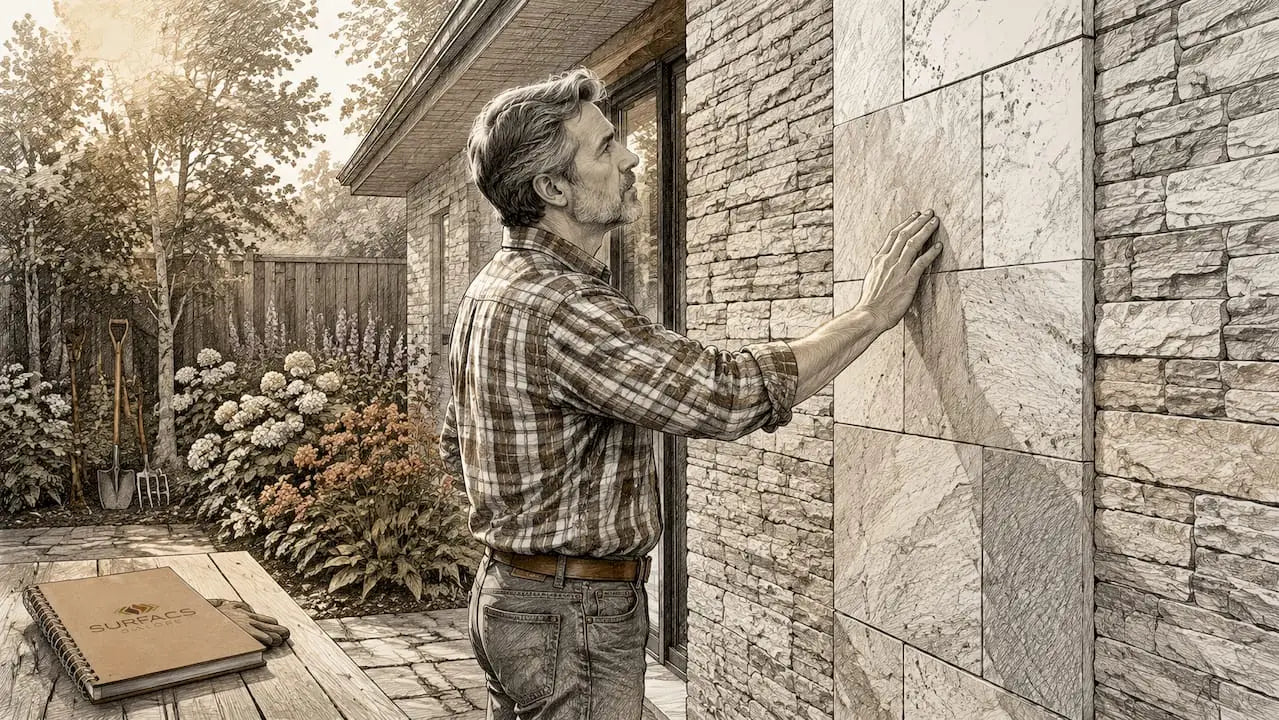
Sedimentary stones: limestone, sandstone, and travertine
Sedimentary stones form from compressed organic material and mineral deposits over millions of years. They tend to be softer, more porous, and warmer in tone than other stone categories.
- Limestone is a calcium carbonate stone with a fine, consistent grain. It ranges from pale cream to warm buff and gray. Limestone works well on facades, feature walls, and interior accent panels. Its porosity requires sealing for exterior use.
- Sandstone is composed of compacted sand grains, giving it a gritty, textured surface. Colors span rust, gold, brown, and gray. It is widely used in residential facades and garden walls across Australia and the American Southwest.
- Travertine is a porous limestone variant formed near hot springs. It features natural voids and a layered, organic texture. Filled and honed travertine panels are popular for both interior feature walls and exterior cladding in dry climates.
Metamorphic stones: slate and marble
Metamorphic stones form when existing rock is transformed by heat and pressure deep within the earth. This process creates denser, more crystalline structures.
- Slate splits naturally into flat, thin sheets, making it one of the most practical stones for cladding panels. It is dense, low-porosity, and highly resistant to frost and moisture. Colors range from charcoal and blue-gray to green and rust.
- Marble is recrystallized limestone with distinctive veining. It offers unmatched visual drama but requires more maintenance than slate or granite. Marble cladding is most common in interior feature walls, hotel lobbies, and high-end residential facades.
Igneous stones: granite and basalt
Igneous stones cool from molten rock, producing the hardest and most weather-resistant natural stone options available.
- Granite is the benchmark for exterior durability. It resists scratching, staining, and freeze-thaw cycles. Granite cladding suits commercial buildings, high-traffic facades, and projects in extreme climates.
- Basalt is a dark, fine-grained volcanic stone. It is denser than granite in many applications and offers a contemporary, uniform appearance. Basalt panels are gaining traction in modern commercial architecture.
The table below summarizes key physical properties across these stone categories.
| Stone | Category | Porosity | Hardness | Best Use |
|---|---|---|---|---|
| Granite | Igneous | Very low | Very high | Exterior facades, commercial |
| Basalt | Igneous | Low | High | Modern facades, commercial |
| Slate | Metamorphic | Low | High | Exterior walls, feature panels |
| Marble | Metamorphic | Medium | Medium | Interior feature walls, lobbies |
| Limestone | Sedimentary | Medium-high | Medium | Facades, interior cladding |
| Travertine | Sedimentary | High | Medium-low | Interior walls, dry-climate exteriors |
| Sandstone | Sedimentary | High | Medium-low | Residential facades, garden walls |
No single stone is universally best; granite and slate lead in extreme climates, while softer sedimentary stones need more maintenance in wet or freezing conditions.
How do stone cladding materials compare in aesthetics, durability, and cost?
Choosing among the best stone cladding options requires weighing three factors together: visual character, long-term performance, and total installed cost. No stone wins on all three. The right choice depends on your climate, budget, and design intent.
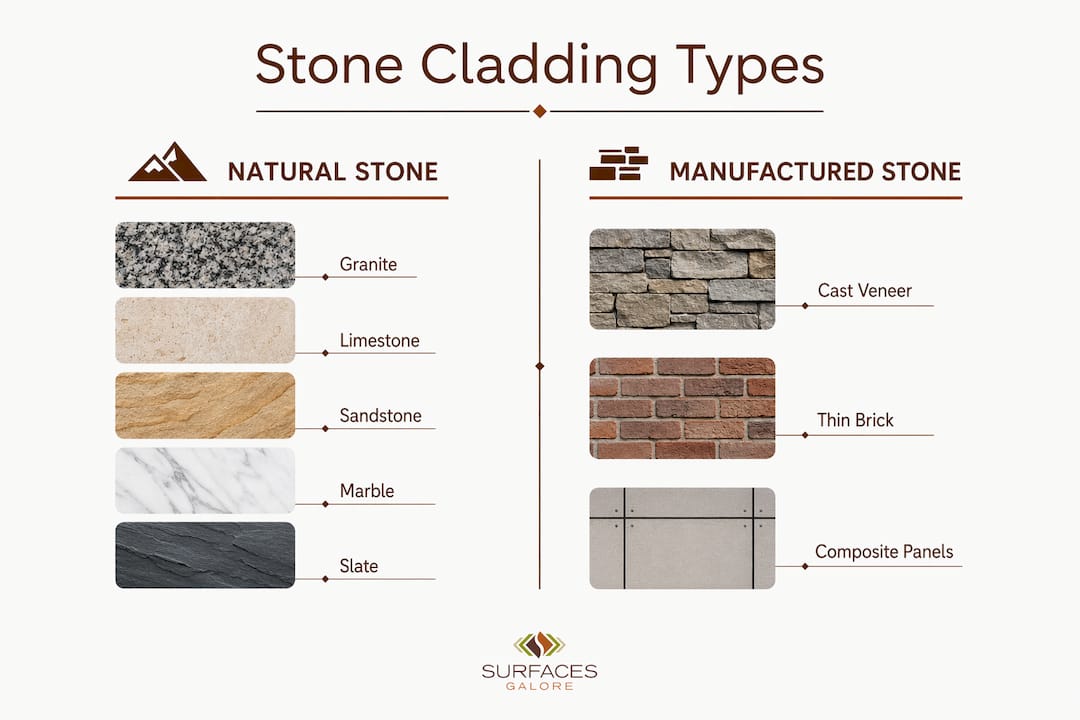
Granite
Granite offers the highest durability of any natural stone cladding material. It resists UV fading, acid rain, and freeze-thaw damage with minimal maintenance. Colors range from speckled black and gray to warm pink and red. The finish options include polished, flamed, and brushed. Polished granite suits contemporary commercial facades. Flamed or brushed finishes work better for exterior residential applications because they reduce slip risk and glare.
Limestone
Limestone delivers a refined, understated look that suits both traditional and contemporary architecture. Its color palette stays within cream, buff, and gray tones. UK limestone facade costs range from £220 per square meter for engineered lightweight panels to £850 per square meter for traditional Portland stone mechanical fix installations. That cost spread reflects the significant impact of the panel system, not just the stone itself.
Sandstone
Sandstone brings warmth and texture to facades that polished stones cannot replicate. Its natural variation in color and grain makes each installation unique. Sandstone is moderately priced but requires sealing and periodic maintenance in wet climates. It performs well in dry, temperate regions.
Marble
Marble is the most visually striking option but the most demanding to maintain outdoors. Acid rain and moisture gradually etch polished marble surfaces. For exterior use, honed marble is the practical choice. Marble cladding is best reserved for sheltered facades, covered entryways, and interior feature walls where its veining can be fully appreciated.
Travertine
Travertine offers an organic, layered texture that no other stone replicates. Polished travertine is generally avoided for exterior applications due to slipperiness and higher maintenance demands. Honed or brushed travertine finishes balance visual appeal with practical durability for outdoor use. For a deeper look at how travertine performs in current design contexts, the travertine design guide from Surfacesgalore covers finish options and trending applications in detail.
Slate
Slate is the most practical natural stone veneer type for exterior cladding in wet or cold climates. Its low porosity and natural cleft surface require almost no sealing. Slate cladding panels are relatively lightweight compared to granite or thick limestone, which reduces structural load requirements.
Pro Tip: In Australia, natural stone cladding materials are priced between $59 and $160 per square meter excluding installation. Always budget an additional 40–60% on top of material cost to cover labor, substrate preparation, and sealing.
Natural stone veneer vs. manufactured stone: what is the real difference?
Natural stone veneer types and manufactured stone veneer are both sold as cladding products, but they are fundamentally different materials. Knowing the distinction protects you from making a costly specification error.
Natural stone veneer
Natural stone veneer is quarried stone cut to thin panels, typically 18–30mm thick, with water absorption rates below 0.5% for quality exterior grades. Each panel is unique. Natural stone offers authentic texture, proven weather resistance, and a lifespan measured in decades. The trade-off is weight. Full natural stone panels add significant structural load, which requires proper engineering assessment before installation on existing walls.
Manufactured stone veneer
Manufactured stone veneer is made from Portland cement, aggregates, and iron oxide pigments cast into molds. It is lighter than natural stone, typically 50–75% lighter per square foot. This weight reduction simplifies installation and reduces structural demands. Manufactured stone is also more consistent in color and shape, which some designers prefer for controlled aesthetics. The cost per square foot is generally lower than natural stone.
The key drawbacks of manufactured stone include shorter lifespan, lower fire resistance ratings in some products, and a visual quality that experienced eyes can distinguish from authentic stone. Natural stone, by contrast, deepens in character over time.
- Choose natural stone veneer when: authenticity matters, the project is high-visibility, the budget supports it, and structural capacity exists.
- Choose manufactured stone veneer when: weight is a constraint, budget is tight, and the installation is in a low-exposure area.
- Avoid manufactured stone on: fully exposed exterior facades in freeze-thaw climates, where moisture infiltration behind panels accelerates deterioration.
Pro Tip: If you are retrofitting cladding onto an older residential wall, get a structural engineer to assess load capacity before specifying natural stone panels. Engineered lightweight panel systems can reduce installation time and structural requirements significantly compared to traditional mechanical methods.
For a clear breakdown of natural stone categories and technical terminology, the natural stone terminology guide from Surfacesgalore is a practical reference.
What are the key stone cladding installation considerations?
Stone cladding installation tips matter as much as stone selection. A well-chosen stone installed poorly will fail. A modest stone installed correctly will last for generations. The following steps define a sound installation process.
-
Assess the substrate. The wall behind the cladding must be structurally sound, clean, and free of movement. Cracked or unstable substrates cause cladding failure regardless of adhesive quality.
-
Install a waterproof membrane. Installing a waterproof membrane behind the cladding is mandatory to prevent water ingress and structural damage over time. This step is non-negotiable for exterior applications.
-
Choose the right fixing method. Mechanical fixing with stainless steel anchors suits heavy natural stone panels on commercial facades. Adhesive methods using polymer-modified mortars work for lighter panels and interior applications. Never use standard cement mortar alone on exterior stone cladding.
-
Account for weight and structural load. Natural stone panels are heavy. A 30mm granite panel weighs approximately 75–80 kg per square meter. Confirm your wall structure can carry that load before ordering materials.
-
Seal porous stones before and after installation. Limestone, sandstone, and travertine require a penetrating sealer applied before grouting and again after installation. Reapply sealer every 3–5 years depending on exposure.
-
Follow local building codes. Fire resistance ratings, wind load requirements, and cladding attachment standards vary by state and municipality. Confirm compliance before finalizing your specification.
Pro Tip: The panel system choice often has a bigger financial and structural impact than the stone material alone. Specify engineered lightweight panel systems when feasible to reduce both cost and structural demands.
The most common installation errors are skipping the waterproof membrane, using the wrong adhesive for the stone weight, and failing to allow for thermal expansion joints in large exterior installations. Each of these errors leads to cracking, delamination, or water damage within a few years.
What are the 2026 design trends for stone cladding?
The dominant direction in 2026 stone cladding design is tactile authenticity. Homeowners and commercial developers are moving away from high-gloss polished surfaces toward finishes that emphasize the natural character of the stone.
- Warm earthy neutrals lead color choices. Limestone in buff and warm gray, travertine in ivory and walnut, and sandstone in rust and honey are the most requested palettes for residential facades and alfresco feature walls.
- Honed and brushed finishes dominate exterior applications. Polished finishes are reserved for sheltered interior walls. Honed and brushed surfaces offer better grip, lower maintenance, and a more organic visual quality outdoors.
- Ledgestone and stacked panel formats are growing. These formats create strong shadow lines and dimensional texture on feature walls, both indoors and out. They work particularly well on fireplace surrounds, entry facades, and commercial reception walls.
- Integration with timber and glass is a defining 2026 aesthetic. Stone cladding paired with warm timber battens and large glass panels creates a material contrast that reads as both contemporary and grounded. Limestone and travertine are the most common stone choices in these combinations.
- Sustainability is influencing stone sourcing decisions. Buyers are asking more questions about quarry origin, transportation distance, and stone longevity. Natural stone, with its multi-decade lifespan, presents a strong case against synthetic alternatives on lifecycle grounds.
Commercial lobbies and hotel interiors continue to favor large-format marble and limestone panels for their visual impact. Residential projects are leaning toward smaller, more textured formats that feel personal rather than institutional.
Key takeaways
The best stone cladding choice is determined by climate, structural capacity, and finish selection, not stone type alone.
| Point | Details |
|---|---|
| Stone category defines performance | Igneous stones like granite lead in durability; sedimentary stones need sealing and more maintenance. |
| Panel system matters as much as stone | Engineered lightweight systems reduce structural load and cost compared to traditional mechanical fixing. |
| Waterproofing is non-negotiable | A waterproof membrane behind exterior cladding prevents water ingress and long-term structural damage. |
| Finish choice affects outdoor suitability | Honed and brushed finishes outperform polished surfaces for exterior durability and safety. |
| Cost varies widely by stone and method | Australian material costs range from $59 to $160 per square meter before installation is factored in. |
Why the stone is only half the decision
I have reviewed enough stone cladding projects to know that most specification regrets come from the same place: choosing a beautiful stone without thinking through the system around it. A client picks marble for a coastal facade because it photographs well. Two years later, the surface is etched from salt air and the grout joints are cracking from thermal movement. The stone was not wrong. The system was.
The single most underrated factor in any cladding project is moisture management. Not the stone type, not the color palette, not the finish. Moisture. Water that gets behind cladding panels and has nowhere to go will destroy any stone over time, regardless of how hard or dense it is. A proper waterproof membrane and a correctly detailed drainage cavity are worth more than upgrading from limestone to granite.
My second observation is about climate honesty. Granite and slate genuinely belong in cold, wet, or coastal environments. Travertine and limestone belong in dry, temperate climates or sheltered interior applications. When you force the wrong stone into the wrong climate, you create a maintenance burden that compounds every year. The natural stone types guide from Highline Stone Care covers this well for urban environments where pollution and freeze-thaw cycles add extra stress to exterior stone.
Finally, I would push back on the idea that trends should drive stone selection. The 2026 preference for warm earthy neutrals and tactile finishes is a sound direction, but it should confirm a choice you were already making for structural and climatic reasons. Stone cladding lasts 30, 40, sometimes 50 years. The trend cycle does not.
— cihan
Discover authentic natural stone at Surfacesgalore
Surfacesgalore is a direct importer of premium natural stone based in Anaheim, California, shipping nationwide to homeowners, designers, architects, and contractors. The collection covers marble, limestone, and travertine tiles, mosaics, and decorative pieces, all sourced for authenticity, durability, and design versatility. Whether you are specifying a residential feature wall or a commercial lobby floor, Surfacesgalore offers quality stone at prices that reflect direct importer access rather than retail markup. Explore the full range of natural stone collections and find the material that fits your project’s aesthetic and performance requirements. The team is available to support your selection from first sample to final installation.
FAQ
What is the most durable type of stone cladding?
Granite is the most durable natural stone cladding material, offering high resistance to UV exposure, acid rain, and freeze-thaw cycles. Slate is the best choice for wet or cold climates due to its low porosity and natural cleft surface.
How thick should natural stone cladding panels be?
Natural stone exterior wall panels typically range from 18mm to 30mm in thickness. Thinner panels reduce structural load but require mechanical fixing systems to maintain long-term stability.
Do i need to seal stone cladding?
Porous stones including limestone, sandstone, and travertine require a penetrating sealer before and after installation. Granite and slate have low porosity and need minimal sealing, though a light application extends their lifespan outdoors.
What is the difference between natural stone veneer and manufactured stone veneer?
Natural stone veneer is quarried stone cut to thin panels, offering authentic texture and a lifespan of several decades. Manufactured stone veneer is cast from cement and pigments, weighs significantly less, and costs less, but lacks the longevity and visual depth of natural stone.
What stone cladding works best for exterior facades in 2026?
Granite, slate, and honed limestone are the leading choices for exterior facades in 2026. Honed and brushed finishes are preferred over polished surfaces for durability, lower maintenance, and better performance in varying weather conditions.
Leave a comment