

What Is a Feature Wall? A Homeowner's Design Guide

TL;DR:
- A feature wall is a deliberately designed wall that acts as the room’s focal point using distinct materials or textures. It shapes the room’s ambiance, provides visual interest, and often incorporates architectural elements to create depth.
A feature wall is an intentionally designed wall that serves as the dominant focal point in a room, using distinct color, texture, pattern, or architectural materials to create visual interest and anchor the space. Unlike a plain painted surface, a feature wall is a deliberate design choice that shapes how a room feels and functions. Designers like Amilia Gani note that feature walls transform ambiance and depth while grounding furniture layout and spatial flow. Whether you use marble, wood paneling, or a bold paint color, the result is a room that feels considered rather than accidental.
What is a feature wall and how does it work in a room?
A feature wall is defined as a single wall treated differently from the others to draw the eye and organize the room’s visual hierarchy. The industry term used by interior designers is “feature wall,” though you may also hear it called a focal wall or statement wall. These terms describe the same concept: one wall that carries more visual weight than the rest. Feature walls add ambience, depth, and personality, making rooms feel unique and memorable.
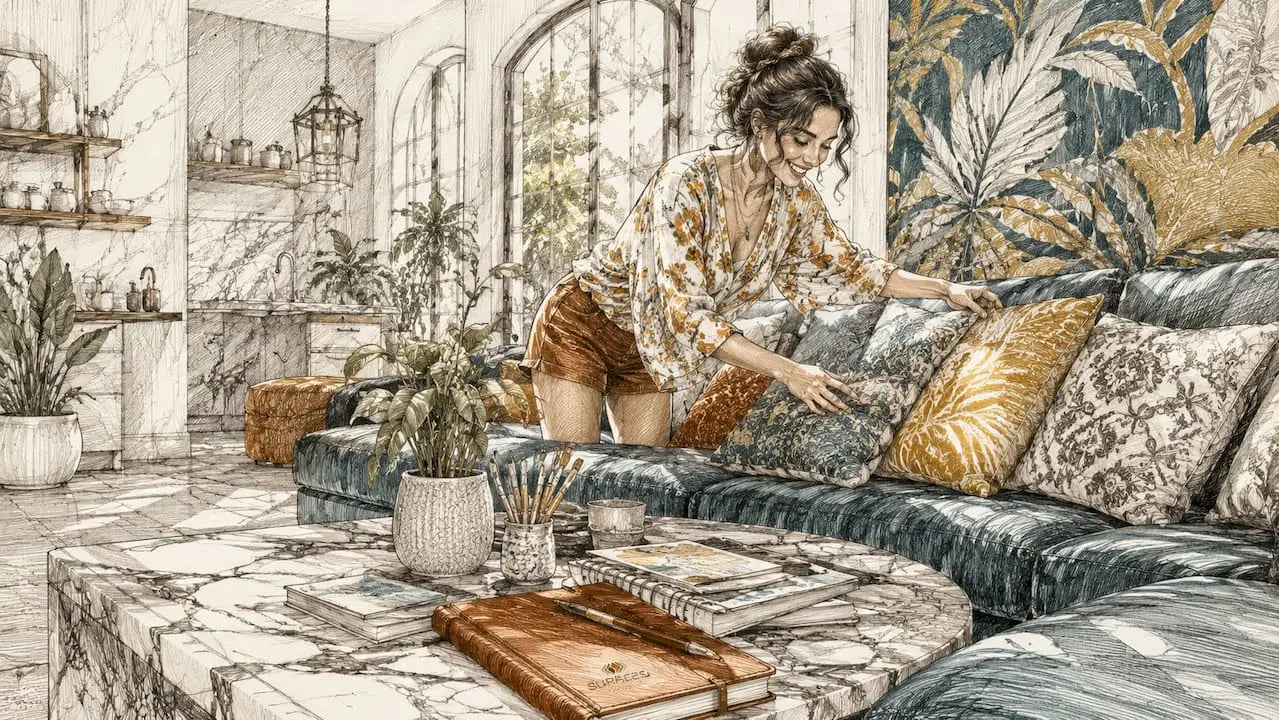
The core principle behind a feature wall is balance. A room without a focal point feels flat and directionless. A well-placed feature wall gives the eye somewhere to land, which makes the entire space feel more organized. This is why interior designers treat the feature wall as a structural decision, not just a decorative one.
Feature walls work across every room type. In a living room, the wall behind the sofa or fireplace is the natural candidate. In a bedroom, the wall behind the headboard anchors the sleeping area. In a dining room, the wall facing the entrance sets the tone the moment you walk in.
How does a feature wall differ from an accent wall?
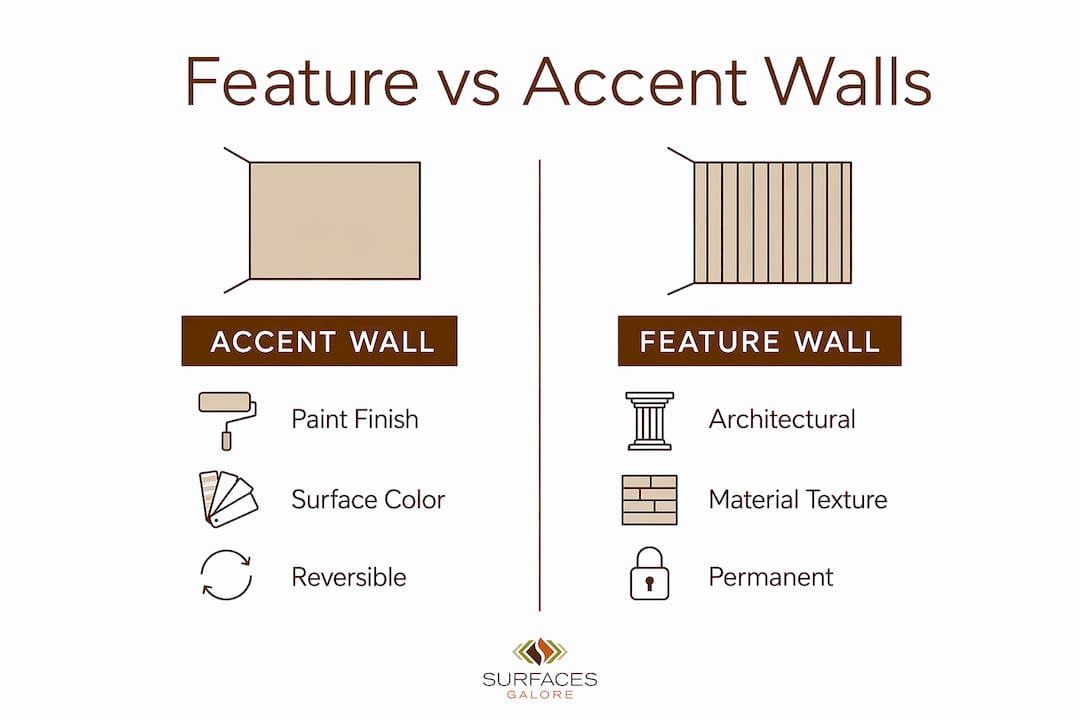
The terms “feature wall” and “accent wall” are often used interchangeably, but they describe different levels of design commitment. Accent walls involve only surface treatment with color or finish, such as a single painted wall in a contrasting shade. Feature walls go further by incorporating architectural elements like paneling, millwork, trim, built-in shelving, or natural stone cladding.
The practical difference matters when you are planning a project. An accent wall is reversible with a coat of paint. A feature wall is more integrated into the room’s architecture and carries a stronger design intention. OKANAGAN OUTDOOR & INTERIORS CO. highlights this distinction as critical for homeowners planning renovations, because the two approaches differ in cost, permanence, and visual impact.
| Point | Accent wall | Feature wall |
|---|---|---|
| Primary treatment | Paint or surface finish | Architectural elements, materials, or texture |
| Design depth | Surface level | Integrated into room structure |
| Reversibility | High, repaint to change | Lower, involves installation |
| Visual impact | Moderate color contrast | Strong focal point with dimension |
| Common materials | Paint, simple wallpaper | Stone, paneling, millwork, built-ins |
The table above shows that feature walls influence room proportion and feel in ways that a simple accent wall cannot. If you want a wall that genuinely changes how a room reads architecturally, a feature wall is the right approach.
What materials work best for feature walls?
Feature walls commonly use painted finishes, wallpaper, fluted panels, cabinetry, floor tiles, murals, or natural stone like marble. Each material brings a different level of texture, permanence, and visual weight. The right choice depends on your room’s existing style, your budget, and how long you plan to stay in the space.
Paint and wallpaper
Paint is the most accessible starting point for feature wall ideas. A deep, saturated color on one wall can shift the entire mood of a room without major expense. Wallpaper adds pattern and texture that paint cannot replicate, from geometric prints to botanical murals. The limitation of both is that they sit on the surface rather than adding physical dimension.
Natural stone: marble, limestone, and travertine
Natural stone is the most durable and visually striking material for a feature wall. Marble brings veining and depth that no manufactured product replicates. Limestone offers a softer, more matte finish that suits transitional and Mediterranean interiors. Travertine, with its natural pitting and warm tones, works particularly well in living rooms and bathrooms. Surfacesgalore specializes in all three, supplying marble accent wall tiles and mosaics to homeowners and designers nationwide from its Anaheim, California base.
Natural stone is also the material most likely to increase a home’s perceived value. It reads as permanent and high-quality, which is why designers specify it for primary bedrooms, entry halls, and living rooms where first impressions matter most.
Wood paneling and millwork
Wood paneling, shiplap, and decorative molding add architectural character that paint alone cannot achieve. Fluted panels are particularly popular in 2026 interiors because they create vertical rhythm and shadow lines that change with the light throughout the day. Millwork and wainscoting work well in formal dining rooms and studies where a sense of craftsmanship is the goal.
Statement options for renters and bold designers
- Fretwork partitions: freestanding or wall-mounted lattice screens that add texture and pattern without permanent alteration, making them ideal for renters.
- Statement curtains: floor-to-ceiling fabric panels in a bold color or pattern create a soft feature wall effect that is fully reversible.
- Murals: hand-painted or printed murals turn a wall into a piece of art, working best in rooms with minimal competing decoration.
- Mixed materials: combining stone tile with wood trim or metal accents creates a layered feature wall that reads as custom and considered.
Pro Tip: When mixing materials on a feature wall, limit the combination to two primary materials. A third material almost always creates visual noise rather than depth.
How do you choose the right wall for a feature wall?
Choosing the wrong wall is the most common mistake homeowners make when designing a feature wall. The best wall is the one that already draws the eye when you enter the room. That is usually the wall directly opposite the entrance, or the wall behind the room’s primary furniture piece.
Follow these steps to identify and confirm the right wall:
- Stand at the room’s entrance. The wall your eye travels to first is your natural focal point. Work with that instinct rather than against it.
- Identify the anchor furniture. Position the feature wall behind key furniture such as a sofa or bed. This creates a visual backdrop that makes the furniture feel intentional and grounded.
- Check the natural light. A wall that receives direct morning or afternoon light will show texture and color at their best. North-facing walls in low-light rooms benefit from lighter, reflective materials like polished marble or pale limestone.
- Look for existing architectural features. A wall with a fireplace, built-in shelving, or a large window already has a head start as a focal point. A feature wall treatment reinforces what is already there rather than competing with it.
- Avoid walls with too many interruptions. Walls broken up by multiple doors, outlets, or switches are harder to treat as a unified feature. A cleaner wall surface gives your chosen material room to breathe.
Feature walls can zone open-plan spaces, helping define areas like reading nooks or dining zones within a larger room. This is one of the most practical applications of the concept for open-plan homes. Using a feature wall to signal a zone is more effective than furniture placement alone because it works vertically, not just horizontally.
Pro Tip: In open-plan spaces, carry one color or material from the feature wall into surrounding soft furnishings. This ties the zone together without closing it off from the rest of the room.
What are best practices for designing and implementing a feature wall?
A well-executed feature wall requires planning before any material touches the wall. Rushing the preparation stage is the single biggest reason feature walls look amateur rather than professional.
- Create a mood board first. Collect images of feature walls you respond to and identify the common thread. Is it the material, the color, the scale, or the texture? Naming what you like helps you avoid expensive mistakes.
- Prepare the surface properly. Fill any cracks or holes, sand the surface smooth, and apply a primer coat before any paint, wallpaper, or adhesive. Skipping this step causes finishes to peel or look uneven within months.
- Apply paint with wet-edge technique. Edge precision and wet-edge painting technique are critical for painted feature walls. Cut in cleanly along the ceiling, floor, and adjacent walls before rolling. Maintain a wet edge by working in sections without letting the paint dry between passes. Visible lap marks are the most common sign of a rushed paint job.
- Install stone or paneling from the center out. When tiling with natural stone or fitting panels, start from the visual center of the wall and work outward. This keeps the layout symmetrical and avoids narrow cuts at the edges where they are most visible.
- Seal natural stone after installation. Marble, limestone, and travertine are porous materials. Apply a penetrating stone sealer after installation and reseal annually in high-traffic or high-humidity areas. This protects the surface from staining and extends the life of the installation significantly.
- Step back and assess at each stage. Check your work from the room’s entrance, not just up close. A feature wall is experienced from a distance, so small inconsistencies that look minor at arm’s length can read as major flaws from across the room.
Feature walls are shifting toward integrated architectural treatments aligned with room shape and existing features like fireplaces or shelves. This trend reflects a broader move away from random decorative walls toward walls that feel like they were always meant to be there. The best feature walls look inevitable, not added on.
Pro Tip: For natural stone feature walls, use large-format tiles rather than small mosaics as the primary field material. Large tiles minimize grout lines and let the stone’s natural veining read as a continuous surface.
Choosing the right natural stone for your space involves matching the stone’s tone and finish to the room’s light conditions and color palette. A honed limestone reads very differently from a polished marble, even in the same color family. Testing a sample on the actual wall before committing to full installation saves both money and frustration.
Renters face a specific constraint: most leases prohibit permanent wall alterations. Non-permanent treatments like fretwork partitions or statement curtains can serve as feature walls by introducing texture and color without drilling or adhesive damage. These options are fully reversible and can move with you to the next home.
Key takeaways
A feature wall is defined by architectural intent: it uses materials, texture, or built-in elements to create a focal point that organizes the entire room around it.
| Point | Details |
|---|---|
| Definition clarity | A feature wall goes beyond surface color to include architectural materials and built-in elements. |
| Right wall selection | Choose the wall your eye naturally lands on when entering the room, ideally behind anchor furniture. |
| Material range | Options span paint and wallpaper to natural stone like marble, limestone, and travertine for lasting impact. |
| Preparation matters | Proper surface prep, priming, and wet-edge technique determine whether the result looks professional or amateur. |
| Renter-friendly options | Fretwork partitions and statement curtains create feature wall effects without permanent wall changes. |
Why intentional design always beats following trends
Feature walls get dismissed as a trend every few years, and every few years they come back. The reason is simple: the underlying design principle is sound. Every room needs a focal point. A feature wall is just the most direct way to create one.
What I have seen change is the quality of execution. The feature walls that age badly are the ones that were chosen for novelty rather than purpose. A bright orange accent wall in a room with no other warm tones looks like a mistake within two years. A marble or travertine wall behind a fireplace looks better in ten years than it did on day one.
The materials you choose carry the most weight in this decision. Paint is forgiving and cheap to change. Natural stone is a commitment, but it is also the material that rewards you longest. I have seen natural stone in living rooms outlast three rounds of furniture and two complete repaints of the surrounding walls without looking dated. That is the definition of a good design investment.
For renters, the instinct to avoid feature walls entirely is understandable but unnecessary. A freestanding fretwork screen in front of a wall, or a set of floor-to-ceiling curtains in a textured fabric, creates the same visual effect without touching the wall. You can take it with you when you leave. The design principle works regardless of whether the treatment is permanent.
The one mistake I see most often is placing a feature wall on a wall that already competes with another focal point. Two strong visual anchors in one room cancel each other out. Pick one wall, commit to it fully, and let the rest of the room support it. That restraint is what separates a room that feels designed from one that just feels busy.
— cihan
Natural stone feature walls at Surfacesgalore
Surfacesgalore carries a curated selection of marble, limestone, and travertine tiles, mosaics, and decorative pieces suited for feature wall projects of every scale. Each stone is imported directly, which means the quality and pricing reflect what designers and contractors actually need rather than what retail markups allow.
Whether you are planning a marble statement wall in a primary bedroom or a travertine backdrop in a living room, Surfacesgalore ships nationwide from Anaheim, California to homeowners, designers, and contractors. Browse the natural stone tile collections and find the material that fits your space, your light, and your timeline.
FAQ
What is a feature wall in simple terms?
A feature wall is one wall in a room that is treated differently from the others using color, texture, or materials to create a visual focal point. It anchors the room and gives the eye a clear place to land.
How is a feature wall different from an accent wall?
An accent wall uses only surface color or finish, while a feature wall incorporates architectural elements like paneling, stone cladding, or built-ins. Feature walls have more visual depth and are more integrated into the room’s structure.
What are the best materials for a feature wall?
Natural stone such as marble, limestone, and travertine are the most durable and visually striking choices. Paint, wallpaper, wood paneling, and fluted panels are also widely used depending on budget and design intent.
Can renters create a feature wall without damaging walls?
Yes. Fretwork partitions, statement curtains, and freestanding screens create feature wall effects without permanent alteration, making them fully reversible options for renters.
Which wall in a room should be the feature wall?
Choose the wall your eye naturally moves to when you enter the room, typically the wall opposite the entrance or behind the room’s primary furniture piece such as a sofa or bed.
Leave a comment