

What Is Split Face Stone? A Guide for Designers

TL;DR:
- Split face stone is natural stone fractured along mineral planes, creating a rugged, textured surface. It offers depth, durability, and resistance to fire, pests, and UV exposure, making it ideal for interior and exterior design. Modern modular panels simplify installation, and proper maintenance involves gentle cleaning and periodic sealing.
Split face stone is defined as natural stone mechanically fractured along internal mineral cleavage planes, producing a rugged, high-relief surface that exposes authentic mineral aggregates and color variations. Unlike sawn or polished finishes, this fracturing method follows the stone’s natural grain, creating a three-dimensional texture that no synthetic material can replicate. Architects, designers, and homeowners choose it for feature walls, exterior facades, fireplaces, and landscaping where raw visual depth matters. Surfacesgalore carries a range of authentic natural stone options, including materials well-suited to this finish, for projects across the country.
What is split face stone and how is it made?
Split face stone, also called “split-faced” or “rock-faced” stone in industry terminology, is produced by mechanically fracturing stone blocks along their natural mineral cleavage planes rather than cutting them with a saw. The result is a surface with pronounced ridges, valleys, and exposed mineral crystals that give each piece a completely unique appearance. No two panels look identical, which is precisely what makes this finish so appealing for high-end residential and commercial design.

The fracturing process is controlled but not perfectly predictable. Workers or machines apply force at calculated points to split the stone cleanly along its weakest structural lines. This reveals the interior mineral composition of the stone, including quartz veins, feldspar crystals, or calcite deposits depending on the stone type. The exposed face carries the raw character of the earth, not a factory finish.
It helps to understand how this finish differs from similar options. There is an industry distinction between “rock-faced” and “split-faced” stone: rock-faced offers more pronounced chiseled, rustic textures, while split-faced is generally flatter and more modular. Knowing this distinction helps you specify the right finish for your project before ordering materials. For a broader overview of how different finishes compare, the natural stone finishes guide from Surfacesgalore is a useful reference.
What are the main features and benefits of split face stone?
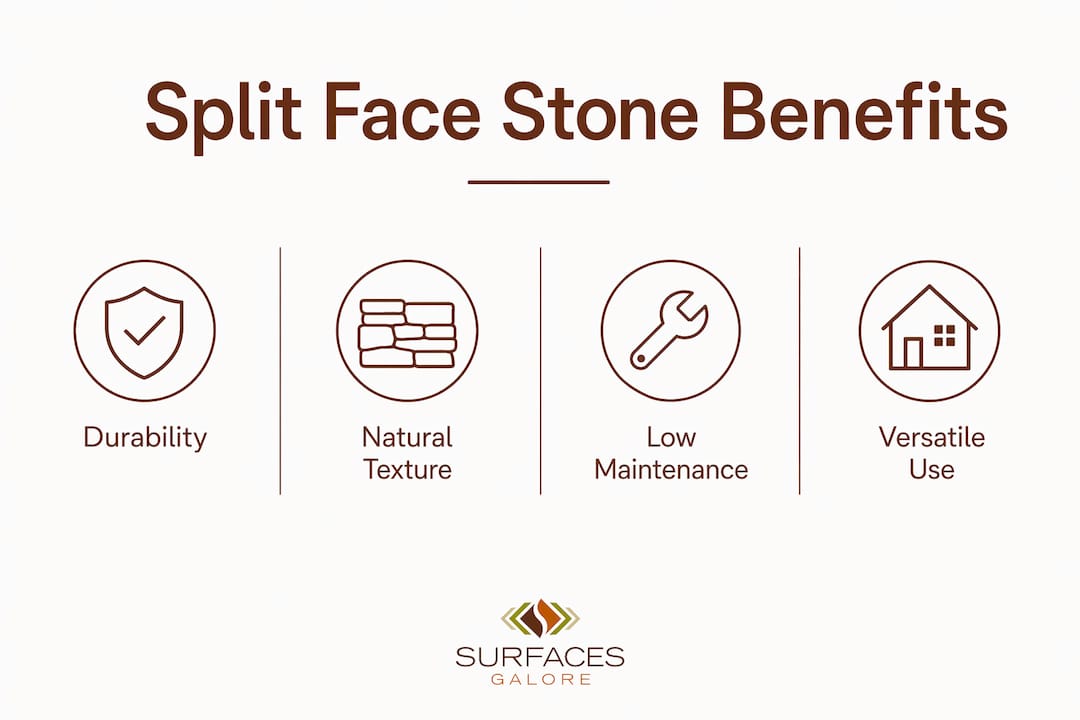
Split face stone delivers a set of performance and aesthetic advantages that polished or honed finishes simply cannot match. Its dimensional depth creates dynamic light and shadow effects throughout the day, giving walls and facades an organic, living quality that shifts with the angle of sunlight. Synthetic alternatives, including manufactured stone veneer and ceramic tile, cannot replicate this effect because their surfaces are cast from molds rather than fractured from real stone.
Durability and natural resistance
Split face stone offers fire, pest, and UV resistance, making it one of the most structurally reliable exterior cladding materials available. Its non-reflective surface prevents the glare and hotspots associated with polished finishes, which matters in sun-heavy climates like Southern California. These properties combine to deliver decades of structural longevity with minimal intervention.
The key benefits of split face stone include:
- Textural depth: The high-relief surface creates a three-dimensional appearance that reads as architectural detail, not just surface decoration.
- Light diffusion: The rough texture scatters light rather than reflecting it, reducing glare on exterior walls and interior feature surfaces.
- Fire resistance: Natural stone does not combust, making it a safe choice for fireplace surrounds and exterior walls in fire-prone regions.
- Pest resistance: Stone does not absorb moisture the way wood does, so it does not attract termites or other wood-boring insects.
- UV stability: The color of natural stone does not fade under prolonged sun exposure the way painted or synthetic surfaces do.
- Long-term value: While upfront costs are higher, durability and low maintenance deliver strong long-term value and improve property market appeal.
Pro Tip: If you are comparing split face stone to smooth or polished finishes for an exterior application, factor in glare reduction. Polished stone on a south-facing wall can create uncomfortable reflections for neighbors and passersby, a problem split face stone eliminates entirely.
The comparison with smooth finishes is worth spelling out clearly. Polished stone reflects light uniformly, which works well for interior floors and countertops where brightness is desirable. Split face stone absorbs and scatters light, which works better for walls, facades, and any surface where visual texture matters more than sheen. For a direct comparison of how finishes behave differently, see Surfacesgalore’s breakdown of polished versus honed finishes.
Which stone types are used for split face finishes?
Split face stone is commonly sourced from granite, limestone, sandstone, travertine, marble, and quartzite, each offering different performance characteristics suited to particular applications. Selecting the right stone type is as important as selecting the finish itself. The wrong pairing, such as using limestone on a harsh coastal exterior, can lead to premature weathering and costly repairs.
| Stone Type | Key Characteristics | Best Applications |
|---|---|---|
| Granite | Extremely hard, dense, frost-resistant | Exterior facades, harsh climates |
| Quartzite | High hardness, excellent UV stability | Outdoor walls, pool surrounds |
| Limestone | Softer, warm tones, easier to work | Interior feature walls, fireplaces |
| Travertine | Porous, warm color palette, natural pitting | Interior accent walls, spa spaces |
| Sandstone | Earthy tones, moderate hardness | Garden walls, landscaping |
| Marble | Elegant veining, moderate hardness | Interior feature walls, luxury interiors |
Granite and quartzite are the preferred choices for harsh climates because their density resists freeze-thaw cycles and moisture absorption. Limestone offers softer aesthetics and warmer tones that suit interior spaces well, but it requires sealing in wet environments. Travertine, a material Surfacesgalore specializes in, brings a warm, organic character to interior accent walls and spa-style bathrooms. For more on how travertine and marble perform in split face applications, the Surfacesgalore article on split face marble covers the specifics in detail.
Sandstone is a popular choice for garden walls and landscaping features because its earthy tones blend naturally with outdoor environments. Marble in a split face finish is less common but striking in luxury interior applications where the exposed veining creates a dramatic focal point. Understanding natural stone authenticity matters here because the quality of the source stone directly affects how cleanly it fractures and how consistent the finished surface looks across a large installation.
How is split face stone installed in modern projects?
Modern split face stone installation has moved well beyond traditional masonry techniques. Engineered Z-shaped modular ledger panels now combine the aesthetic depth of traditional stacked stone with faster, easier installation. These panels interlock along their edges, eliminating visible seams and reducing the labor required compared to setting individual stones one by one.
The standard installation process follows these steps:
- Surface preparation: The substrate, typically cement board, concrete block, or a properly waterproofed wall, must be clean, flat, and structurally sound before any stone is applied.
- Layout planning: Dry-fit panels across the wall before applying adhesive to confirm the pattern, check corner alignments, and identify any cuts needed.
- Adhesive application: Apply a polymer-modified mortar or stone adhesive to the back of each panel using a notched trowel. Full coverage prevents hollow spots that can cause cracking over time.
- Panel placement: Press each panel firmly into position and check for level as you go. The Z-shaped interlocking edges align automatically when panels are placed correctly.
- Corner and edge finishing: Use purpose-made corner pieces or cut panels at 45-degree angles to create clean, finished edges. This step has the biggest impact on the final appearance.
- Grouting or dry-stack finish: Split face stone is often installed dry-stack style with no visible grout, which emphasizes the natural texture. If grout is used, choose a color that complements the stone rather than contrasting with it.
- Sealing: Apply a penetrating stone sealer after installation to protect the surface from moisture and staining, particularly for interior applications near kitchens or bathrooms.
Pro Tip: For exterior installations in freeze-thaw climates, use a vapor-permeable sealer rather than a film-forming sealer. Film-forming sealers can trap moisture behind the stone, leading to spalling when temperatures drop.
Split face stone applications span a wide range of project types. Feature walls in living rooms and entryways are the most common residential use. Exterior facades on commercial buildings, hotels, and upscale residential properties use it for curb appeal and weather resistance. Fireplace surrounds benefit from the material’s fire resistance and visual weight. Landscaping applications include retaining walls, garden borders, and outdoor kitchen cladding. For a broader look at how designers are using decorative stone in 2026, Surfacesgalore’s decorative stone guide for designers covers current trends in detail.
What maintenance does split face stone require?
The same texture that makes split face stone visually compelling also creates a maintenance challenge. Deep crevices accumulate debris, dust, pollen, and organic matter over time, and standard flat-surface cleaning methods do not reach into the ridges effectively. Homeowners often overlook this reality until after installation, which is why understanding care requirements upfront saves frustration later.
Effective maintenance for split face stone includes the following practices:
- Soft brush cleaning: Use a stiff-bristled but non-metallic brush to dislodge debris from crevices. Metal brushes can scratch the stone surface and leave rust marks on lighter-colored materials.
- Low-pressure rinsing: A garden hose or low-pressure washer removes loosened debris without forcing water deep into the stone or behind the panels. High-pressure washing can dislodge mortar and damage the stone face.
- Frequency: Outdoor installations in dusty or high-pollen environments benefit from a light rinse monthly and a full brush cleaning twice per year. Interior feature walls typically need only a dry brush or vacuum with a soft attachment every few months.
- Sealing schedule: Penetrating sealers on porous stones like limestone and travertine should be reapplied every two to three years depending on exposure. Granite and quartzite are denser and require less frequent sealing. For a full breakdown of why sealing matters, Surfacesgalore’s guide on why seal natural stone explains the process clearly.
- Stain treatment: Address stains promptly with a pH-neutral stone cleaner. Avoid acidic cleaners like vinegar or citrus-based products, which etch limestone, travertine, and marble surfaces.
- Avoid common mistakes: Do not use steam cleaners on split face stone. The combination of heat and moisture can cause thermal shock in some stone types and may loosen adhesive behind modular panels.
The maintenance burden for split face stone is genuinely low compared to painted or wood-clad surfaces, which require repainting or refinishing every few years. Natural stone does not peel, fade, or rot. The primary task is keeping the textured surface clean, which is straightforward with the right tools and a consistent schedule.
Key takeaways
Split face stone is the most durable, texture-rich natural stone finish available for both interior and exterior applications, combining fire resistance, UV stability, and architectural depth that synthetic materials cannot replicate.
| Point | Details |
|---|---|
| Core definition | Split face stone is natural stone fractured along mineral cleavage planes to produce a rugged, high-relief surface. |
| Stone type selection | Choose granite or quartzite for harsh exteriors; use limestone or travertine for interior warmth and softer aesthetics. |
| Modern installation | Z-shaped modular ledger panels reduce labor and create seamless visual results compared to traditional masonry. |
| Maintenance approach | Use soft brushes and low-pressure rinsing; reseal porous stones every two to three years to maintain longevity. |
| Long-term value | Higher upfront cost is offset by decades of durability, zero fading, and strong curb appeal. |
Why split face stone deserves more credit than it gets
I have worked with natural stone long enough to notice a pattern: homeowners and even some designers treat split face stone as a specialty item, something dramatic and difficult, reserved for high-budget commercial projects. That perception is wrong, and it costs people some genuinely beautiful results.
The truth is that split face stone is one of the most forgiving materials to design with. Its texture is inherently organic, which means minor installation imperfections read as character rather than mistakes. A slightly uneven panel on a polished marble wall looks like an error. The same variation on a split face travertine feature wall looks intentional. That tolerance for real-world installation conditions is a practical advantage that rarely gets discussed.
What I find most underappreciated is the way split face stone changes throughout the day. A wall that looks gray and flat at noon looks warm and deeply textured at 4 p.m. when the sun hits it at a low angle. That dynamic quality is what separates it from every tile or panel product on the market. You are not buying a static surface. You are buying something that responds to its environment.
My recommendation for anyone considering this material: do not default to the most common stone type in your region. Think about what the light in your specific space does at different times of day, then select a stone color and texture that responds well to that light. Surfacesgalore’s team can help you work through that selection process with samples and project-specific guidance.
— cihan
Discover split face stone at Surfacesgalore
If this material has caught your attention, Surfacesgalore makes it straightforward to find the right option for your project. As a direct importer of premium natural stone based in Anaheim, California, Surfacesgalore ships authentic materials nationwide to homeowners, designers, architects, and contractors.

The collection includes marble, limestone, and travertine in a range of finishes, with split face options suited to both interior feature walls and exterior cladding. Every piece is sourced for authenticity and quality, so what you see in the sample is what arrives on site. Browse the full natural stone collection and request samples to see how the texture and color perform in your specific lighting conditions before committing to a full order.
FAQ
What is the split face stone definition in construction?
Split face stone is natural stone fractured along its mineral cleavage planes to produce a rough, high-relief surface. The process exposes the stone’s interior mineral composition, creating a texture that is unique to each piece.
How does split face stone vs veneer compare for exterior walls?
Split face stone is genuine natural stone with structural density and natural resistance to fire, UV, and pests. Manufactured stone veneer is a cast concrete product that mimics the look but does not offer the same durability or long-term value.
What are the most common split face stone applications?
The most common applications include interior feature walls, exterior building facades, fireplace surrounds, retaining walls, and outdoor kitchen cladding. Modular ledger panels make installation practical for all of these uses.
How often does split face stone need to be sealed?
Porous stones like limestone and travertine require resealing every two to three years. Dense stones like granite and quartzite need sealing less frequently, typically every four to five years depending on exposure conditions.
Is split face stone suitable for DIY installation?
Modular Z-shaped ledger panels make split face stone accessible for experienced DIYers on interior walls. Exterior installations, particularly in freeze-thaw climates, are better handled by a professional mason to avoid moisture and adhesion issues.
Leave a comment