
Top Advantages of Tile Mosaics for Homes and Designers

Tile mosaics deliver both functional performance and high design flexibility in a single surface material. For bathrooms, kitchens, and feature zones, they offer slip resistance, adaptability to curves and slopes, and a lifespan measured in decades when installed correctly.
The core advantages at a glance:
- Unmatched aesthetic customization across patterns, colors, and natural stone types
- Superior slip resistance in wet areas due to frequent grout lines
- Ability to wrap curves, niches, and sloped shower floors without cutting waste
- Long service life when substrate and maintenance are correct
- Positive impact on home resale value and buyer perception
- Sustainable material choice with low replacement frequency
These qualities make mosaics especially well-suited to shower floors, kitchen backsplashes, and any zone where detail scale and surface performance both matter.
Key Takeaways
Tile mosaics combine functional performance and design flexibility in a way no other tile format matches, making them the strongest choice for wet areas, feature zones, and high-value renovations.
| Point | Details |
|---|---|
| Best applications | Shower floors, kitchen backsplashes, niches, and entry insets where detail scale and traction matter most. |
| Lifespan expectation | Well-installed natural stone and porcelain mosaics last 25–50+ years with correct substrate and maintenance. |
| Maintenance reality | Natural stone mosaics need resealing every 12–18 months in wet areas; porcelain requires no sealing. |
| Primary selection rule | Match material porosity and finish to the application: honed stone or porcelain for wet floors, polished stone for walls. |
| Surfacesgalore | Direct importer of calacatta gold, carrara white, thassos white, and travertine mosaics, shipped nationwide. |
Table of Contents
- What mosaic tiles are and how you choose the right format
- The main advantages of tile mosaics, explained with real examples
- Where tile mosaics make the most sense in your home
- Lifespan, maintenance cadence, and cost considerations
- When mosaics may not be the right choice
- How to select mosaic materials and keep them looking their best
- Installation considerations: DIY, pro hire, and safety codes
- A designer’s honest take on when mosaics earn their place
- Natural stone mosaics from Surfacesgalore
- Sources
- FAQ
What mosaic tiles are and how you choose the right format
Mosaic tiles are small-format units, typically ranging from 3/8 inch to 2 inches per chip, mounted on mesh or paper sheets for easier installation. Common layouts include square grid, hexagon, herringbone, and penny round. The sheet format is what separates mosaics from standard tile work: you set an entire sheet at once, which keeps spacing consistent and speeds up installation on complex surfaces.
Material choice drives performance more than any other variable. Scientific analysis of mosaic materials confirms that adhesive compatibility and material porosity are central to long-term stability, which is why matching the stone or tile type to the environment matters before anything else.
| Material | Best uses | Maintenance level | Slip resistance notes |
|---|---|---|---|
| Natural stone (marble, travertine) | Accent walls, backsplashes, feature floors | Moderate (seal every 12–18 months) | Honed or textured finish recommended for wet floors |
| Porcelain | Wet floors, high-traffic areas | Low | Excellent; rated for wet areas |
| Glass | Backsplashes, pool waterlines | Low | Not recommended for floors |
| Metal | Accent inserts, kitchen backsplashes | Low | Decorative use only |
When to prefer marble mosaic over porcelain or glass: Calacatta gold marble and carrara white marble mosaics deliver warmth and veining that no porcelain can fully replicate, making them the right call for high-end bathrooms and feature walls. For wet shower floors where maintenance is a concern, porcelain mosaic gives you the same small-format traction benefit with less upkeep. Glass belongs on backsplashes and pool waterlines, not underfoot.
The main advantages of tile mosaics, explained with real examples
1. Aesthetic customization and scale
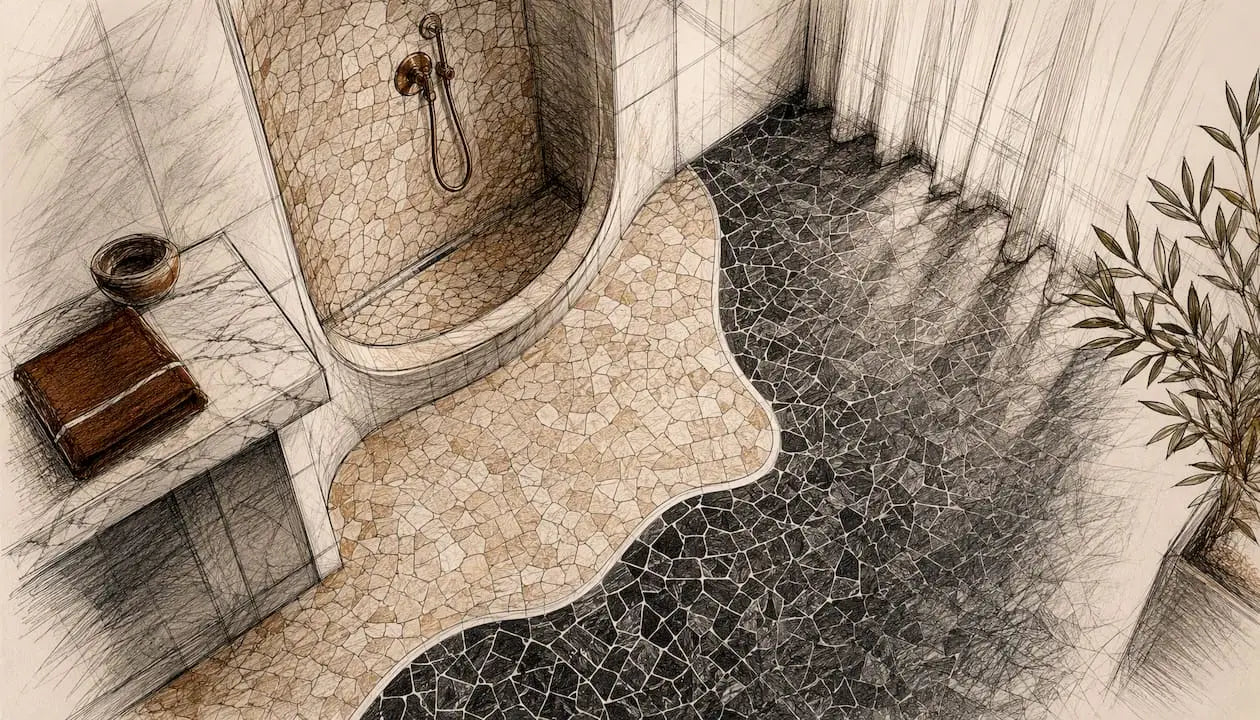
No other tile format gives you this much control over pattern, color, and visual texture at small scale. You can run a herringbone in thassos white marble across a shower niche, shift to a square grid in carrara white on the floor, and use a nero marquina insert as a border. All within a single bathroom. The range of mosaic pattern options available in natural stone alone covers everything from classic to contemporary.
2. Slip resistance and drainage in wet areas
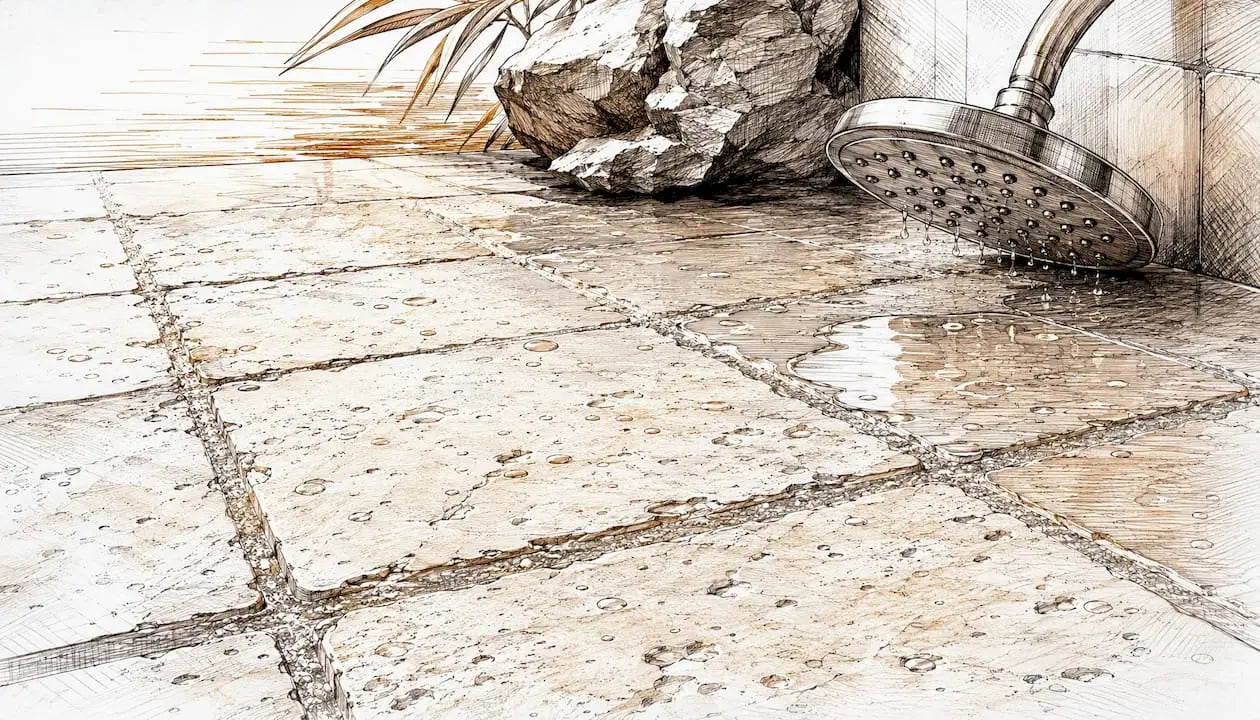
More grout lines mean more texture underfoot. Industry guidance confirms that mosaics’ increased grout-line frequency improves traction in showers and wet zones compared with large polished tiles. This is the primary reason designers specify 1-inch or 2-inch mosaics for shower floors rather than 12x24 slabs. The ADA Standards for Accessible Design also inform slip-resistance requirements for accessible projects, and mosaic formats align well with those surface criteria.
3. Versatility around curves, niches, and slopes
Small units conform to curved walls, sloped shower pans, and irregular niches without the cracking risk that comes with cutting large-format tiles. Practical installation guides highlight this adaptability as one of the strongest functional arguments for mosaics in complex wet-area layouts. A 1-inch hex mosaic can follow a shower curb radius that would require a dozen cuts in a 6x6 tile.
4. Durability and long service life
When substrate preparation and mortar selection are correct, mosaic tile installations last for decades. NPS Preservation Brief 40 documents that ceramic and natural tile floors, including mosaic assemblies, achieve long lifespans when installed on stable substrates with appropriate maintenance. The historical record goes further: Roman mosaic floors excavated in Rutland survived nearly two millennia, demonstrating what correct material specification and detailing can achieve.
5. Zoning and visual scale control
A mosaic field can define a zone without a physical barrier. A 12-inch band of ming green marble mosaic at a bathroom threshold reads as a rug. A calacatta gold marble mosaic backsplash behind a range draws the eye without competing with cabinetry. This zoning function is one of the most underused advantages in residential design.
6. Maintenance and stain performance by material
Glass and porcelain mosaics are non-porous, so they resist mold and staining with basic weekly cleaning. Natural stone mosaics require periodic sealing, typically every 12–18 months in wet areas, and a pH-neutral cleaner to avoid etching. Conservation literature supports careful cleaner selection as a key factor in reducing long-term surface damage. The maintenance gap between stone and porcelain is real, but manageable if you build it into your project plan from the start.
7. Resale value and buyer perception
Upscale kitchens and bathrooms with natural stone mosaic details consistently attract stronger buyer interest. A calacatta gold marble mosaic backsplash or a thassos white shower floor signals quality in a way that ceramic subway tile does not. The design impact of mosaics on perceived value is well-documented in design media, and real estate professionals frequently cite stone tile as a value-positive finish.
8. Sustainability and material longevity
Natural stone is quarried rather than manufactured, requires no polymer binders, and lasts long enough that replacement is rarely necessary within a home’s lifetime. This contributes to overall building performance and thermal improvements similar to those discussed in how new interior doors improve energy efficiency in older homes. A porcelain mosaic floor that lasts 30 years without replacement has a lower lifetime environmental footprint than a vinyl floor replaced three times in the same period. Longevity is the sustainability argument that often gets overlooked in favor of recycled-content claims.
Pro Tip: Choose a grout color within two shades of your stone tone. It keeps the visual field clean, reduces the contrast that makes grout staining visible, and still delivers the slip-resistance benefit of frequent grout lines.
Where tile mosaics make the most sense in your home
Mosaics perform best where surface complexity, wet conditions, or design detail demand a small-format solution. Creative applications around the home show how versatile the format really is:
- Shower floors: The slip-resistance and slope-following ability of 1-inch or 2-inch mosaics make them the standard choice. Use porcelain for low-maintenance; use honed marble for a spa feel.
- Shower walls and niches: Mosaics wrap niches cleanly and create accent zones without grout-line mismatches.
- Kitchen backsplashes: A calacatta gold marble mosaic or arabescato corchia mosaic behind a range becomes the room’s focal point. Glass mosaic works here too, with zero porosity.
- Powder rooms: Full-wall mosaic in thassos white or crema marfil creates a jewel-box effect that larger tiles cannot achieve.
- Fireplace surrounds: Natural stone mosaics in emperador dark or rosso levanto add warmth and texture around a firebox.
- Entryway insets: A mosaic “rug” in the entry sets a tone for the whole house. Bardiglio marble or nero marquina in a geometric pattern reads as intentional design, not decoration.
- Pool waterlines: Glass mosaic at the waterline handles chemical exposure and UV better than most alternatives.
For a high-end backsplash, calacatta gold marble mosaic is the material that photographs best and holds its value longest. For wet-floor durability, porcelain mosaic is the practical default.
Lifespan, maintenance cadence, and cost considerations
Well-installed natural stone and porcelain mosaics routinely last multiple decades when substrate and maintenance are appropriate. The NPS Preservation Brief confirms that correct substrate and mortar selection are the primary determinants of lifespan, not the tile format itself.
| Factor | Natural stone mosaic | Porcelain mosaic |
|---|---|---|
| Upfront material cost | Higher | Moderate |
| Installation labor | Moderate to high | Moderate |
| Reseal cadence (wet areas) | Every 12–18 months | Not required |
| Expected lifespan (well-installed) | 25–50+ years | 25–50+ years |
| Grout maintenance | Annual inspection | Annual inspection |
The main lifetime cost driver is maintenance, not the tile itself. Resealing marble in a shower takes roughly two hours per year and costs under $50 in materials. Skipping it for several years is where the real damage and cost accumulate. Pool mosaic longevity guidance makes the same point for aquatic environments: finish and substrate detailing determine lifespan far more than the tile brand.
On ROI: natural stone mosaic in a primary bathroom or kitchen backsplash is among the highest-return finish upgrades in residential renovation. Buyers recognize the material, and it photographs well for listings.
When mosaics may not be the right choice
Mosaics are not the answer for every project. Here is where the trade-offs become real:
- Higher installation cost: More pieces, more grout lines, and mesh alignment all add labor time compared with large-format tile.
- Grout maintenance in wet areas: More grout lines mean more surface area for mold and staining if the bathroom is not ventilated and cleaned regularly.
- Soft stone porosity: Marble and travertine mosaics in wet areas require consistent sealing. If a homeowner will not commit to that cadence, porcelain is the better call.
- Very high-traffic commercial floors: Large-format porcelain or stone slabs outperform mosaics in heavy foot-traffic environments where grout joint wear becomes a maintenance burden.
- Tight budgets: The combination of material cost and installation labor makes mosaics a premium choice. Budget projects are better served by larger-format tile with a mosaic accent strip.
- Uneven installation risk: A poorly set mosaic floor with lippage or inconsistent grout joints looks worse than a simple large-format floor. Skill matters more here than with standard tile.
Pro Tip: In wet areas, specify epoxy grout rather than cement-based grout. Epoxy grout is non-porous, resists mold without sealing, and holds color far longer. The upfront cost is higher, but it eliminates the most common long-term complaint about mosaic maintenance.
How to select mosaic materials and keep them looking their best
Material selection checklist
Before specifying a mosaic, work through these criteria:
- Wet or dry application? Wet areas need a slip-rated finish (honed, textured, or matte) and a low-porosity material or consistent sealing plan.
- Porosity and sealing commitment: Marble, travertine, and limestone are porous. If the homeowner will not seal annually, choose porcelain.
- Finish: Polished finishes are beautiful on walls; honed or textured finishes are safer underfoot. Types of stone mosaics for kitchens and baths covers this in detail.
- Visual scale: Small chips (3/8 inch to 1 inch) read as texture from a distance. Larger chips (2 inch) read as pattern. Match chip size to the room’s scale.
Maintenance routine for natural stone mosaics
- Daily: Wipe down wet surfaces after use to prevent mineral deposit buildup.
- Weekly: Clean with a pH-neutral stone cleaner. Never use vinegar, bleach, or citrus-based products on marble or travertine.
- Every 12–18 months (wet areas): Apply a penetrating stone sealer. Conservation guidance supports conservative, non-damaging intervention as the best long-term strategy.
- Annually: Inspect grout joints for cracking or discoloration. Regrout any compromised sections before moisture penetrates the substrate.
Stone-specific notes: Carrara white marble suits accent walls and backsplashes where its soft gray veining reads as elegant rather than busy. Thassos white mosaic is the brightest natural stone available, making it ideal for small bathrooms that need to feel larger. Nero marquina delivers high contrast as a border or insert but shows water spots on polished finishes, so specify honed in wet areas.
Pro Tip: Use an impregnating sealer, not a topical coating, on natural stone mosaics. Topical coatings peel and trap moisture; impregnating sealers penetrate the stone and let it breathe while blocking stain absorption.
Installation considerations: DIY, pro hire, and safety codes
Installation checklist
- Substrate: Concrete backer board or uncoupling membrane for floors; cement board for wet walls. Drywall is not acceptable in wet areas.
- Waterproofing: Apply a waterproof membrane behind all wet-area tile before setting. This step is non-negotiable.
- Mortar: Use a white polymer-modified thinset for light-colored stone to avoid bleed-through. Match trowel notch to chip size.
- Slope and drainage: Shower floors need a minimum 1/4-inch-per-foot slope to the drain. Mosaics follow this slope more easily than large-format tile.
- Grout selection: Unsanded grout for joints under 1/8 inch; sanded or epoxy for wider joints.
DIY vs. professional installation
Backsplashes and small accent areas are reasonable DIY projects, especially with mesh-mounted sheets. A DIY backsplash workflow can save meaningful labor cost on straightforward installs. Wet floors, full shower enclosures, and custom water-jet inlays require professional installation. The waterproofing layer and slope work alone justify the hire.
For complex or luxury mosaic projects, a professional installer with stone experience is the right call.
ADA note: The ADA Standards for Accessible Design specify surface requirements for accessible routes. For projects requiring universal access, consult those standards when selecting mosaic finish and grout joint width. Mosaics with textured or honed finishes and tight grout joints generally meet slip-resistance criteria.
A designer’s honest take on when mosaics earn their place
The conventional wisdom treats mosaics as a decorative upgrade, a way to add visual interest. That framing undersells them. The functional case, slip resistance, slope adaptability, and the ability to wrap a niche without a single awkward cut, is often stronger than the aesthetic one. Where I see mosaics misused is in large open floor fields where the grout maintenance burden becomes disproportionate to the visual payoff. A 200-square-foot mosaic floor in a family bathroom is a maintenance commitment most homeowners underestimate.
The smarter move, and the one I come back to in most projects, is to use mosaics where they solve a problem that larger tile cannot: the shower floor, the niche, the curved wall, the entry inset. Let the rest of the room breathe with larger format stone or tile, and let the mosaic zone do its job as both a functional surface and a focal point. That restraint is what separates a room that photographs well from one that actually lives well.
Natural stone mosaics from Surfacesgalore
Surfacesgalore imports authentic natural stone mosaics directly, which means you get genuine calacatta gold marble, carrara white marble, thassos white, nero marquina, and travertine mosaics at prices that reflect the direct-import model rather than a distributor markup. The collection covers marble mosaic sheets, marble trim moldings, and custom mosaic designs for both residential and commercial projects, shipped nationwide from Anaheim, California.
Whether you are finishing a primary bathroom shower floor or specifying a kitchen backsplash, the right stone is in the collection. Selection depends on your application and maintenance commitment, and the product pages include material notes to help you match the two. Shop natural stone tiles today and find the mosaic that fits your project.
Sources
- Preservation Brief 40: Ceramic Tile Floors — NPS
- ADA Standards for Accessible Design — ADA
- Rutland Roman mosaics discovery briefing — University of Leicester
- Mosaic analysis and imaging — ISIS, STFC
- Conservation methods relevant to mosaics — Wellcome Open Research
FAQ
What are the main advantages of tile mosaics in bathrooms?
Tile mosaics offer superior slip resistance from frequent grout lines, easy adaptation to sloped shower floors and curved niches, and strong design flexibility across natural stone, porcelain, and glass materials.
What are the disadvantages of mosaic tiles?
The primary drawbacks are higher installation labor cost, more grout surface area to maintain, and the sealing requirement for natural stone in wet areas. Epoxy grout and consistent resealing address most of these concerns.
What is the lifespan of mosaic tiles?
Well-installed natural stone and porcelain mosaics typically last 25–50 years or more. The NPS Preservation Brief 40 confirms that substrate preparation and maintenance cadence are the main determinants of lifespan.
When should you choose porcelain mosaic over marble mosaic?
Choose porcelain when the application is a high-traffic wet floor or when the homeowner cannot commit to annual resealing. Choose marble when aesthetic warmth, veining, and resale appeal outweigh the maintenance requirement.
Do tile mosaics increase home resale value?
Natural stone mosaic details in primary bathrooms and kitchens consistently attract stronger buyer interest and are recognized as a premium finish, particularly calacatta gold marble and carrara white marble applications.

Leave a comment