

Bathroom tiles: how to choose natural stone for a timeless design

Key Takeaways
Marble and travertine can both bring lasting character to a bathroom, but the right choice depends on the surface, finish, and care routine. Start with how the room will be used, then build a palette that feels considered rather than overmatched.
- Marble offers expressive veining and a broad range of colors and finishes.
- Travertine brings warm, earthy tones and naturally varied texture.
- Choose tile size and surface finish with wet-area safety and drainage in mind.
- Order enough material for cuts, layout choices, and replacement pieces.
- Compare samples in your bathroom’s light before committing to a full order.
Compare marble and travertine bathroom tiles
The best bathroom tiles do more than set a color scheme: they establish how the room feels underfoot and how much variation you see from one surface to the next. Marble tends to read as refined and dramatic, while travertine usually feels warmer and more relaxed. Both are natural stones, so each piece has its own character. Samples help reveal those differences before they cover a floor or wall.
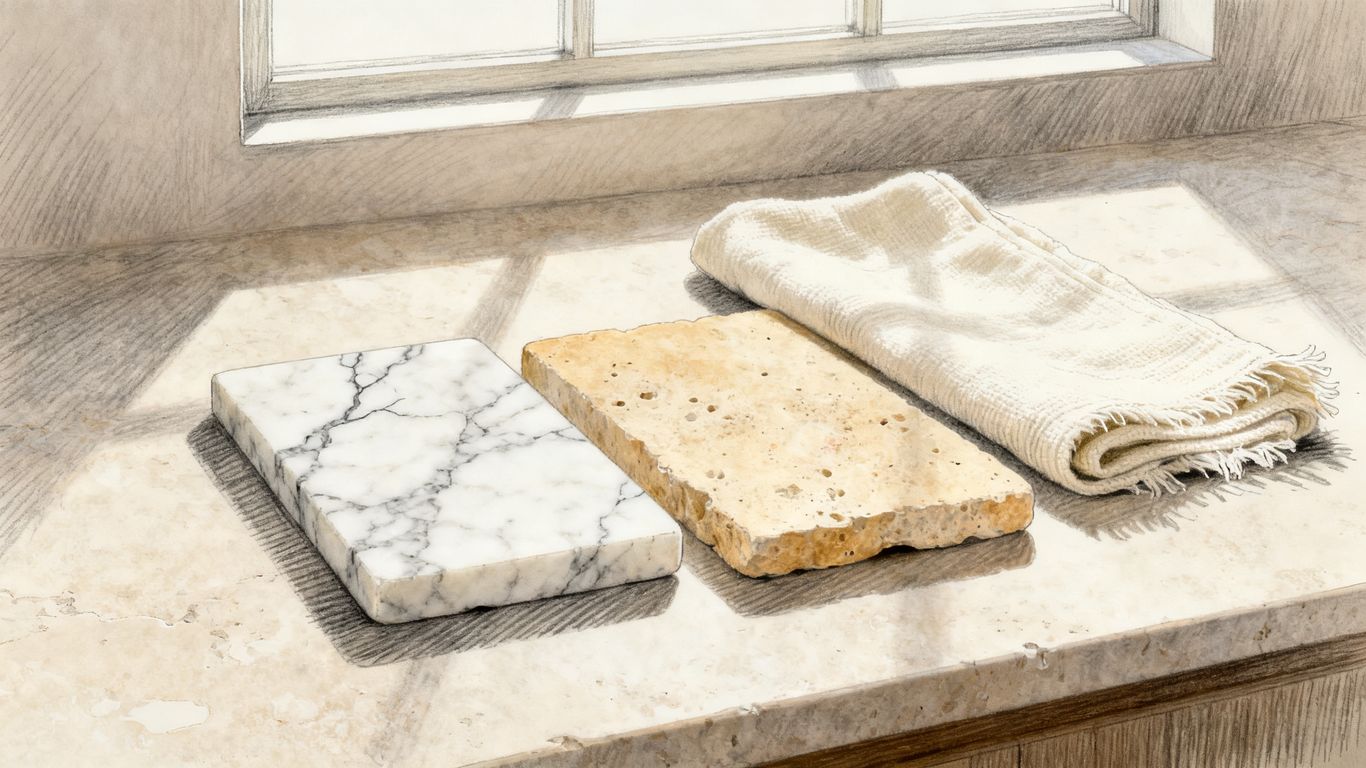
Marble’s veining, color range, and polished or honed finishes
Marble’s veining can be quiet and fine or bold enough to become the room’s main event. White and gray varieties create a crisp, classic look, while beige and darker marbles bring a deeper mood. A polished finish reflects more light; a honed finish looks softer and matte. For a closer look at a familiar option, Carrara White Marble has a white base and delicate gray veining.
Travertine’s warm tones, natural texture, and distinctive character
Travertine often brings a grounded palette of ivory, beige, walnut, and other earthy tones. Its natural texture gives a room a more relaxed, organic feel, and variation from tile to tile is part of the appeal. The finish changes the impression: honed and filled surfaces feel smoother, while tumbled finishes have a more aged, tactile look. For example, Antico Onyx Travertine has warm tones and an intricate natural pattern.
How to weigh appearance, maintenance, and project priorities
The choice is not just a question of which stone looks prettier in a photograph. Consider how much natural variation you want, how the finish will feel in use, and whether you are comfortable following stone-care guidance. Marble and travertine are porous materials, so appropriate sealing and gentle cleaning are part of living with them. A sample in your own light can make the decision much easier than comparing small images on a screen.
Match tile type and format to each bathroom area
A bathroom works best when each tile choice suits its location, rather than when one format is forced across every surface. Floors, shower walls, niches, and transitions have different visual and practical demands. Large field tiles can create a quieter expanse, while smaller pieces add detail and provide more grout joints. Think through the whole room before selecting individual products.
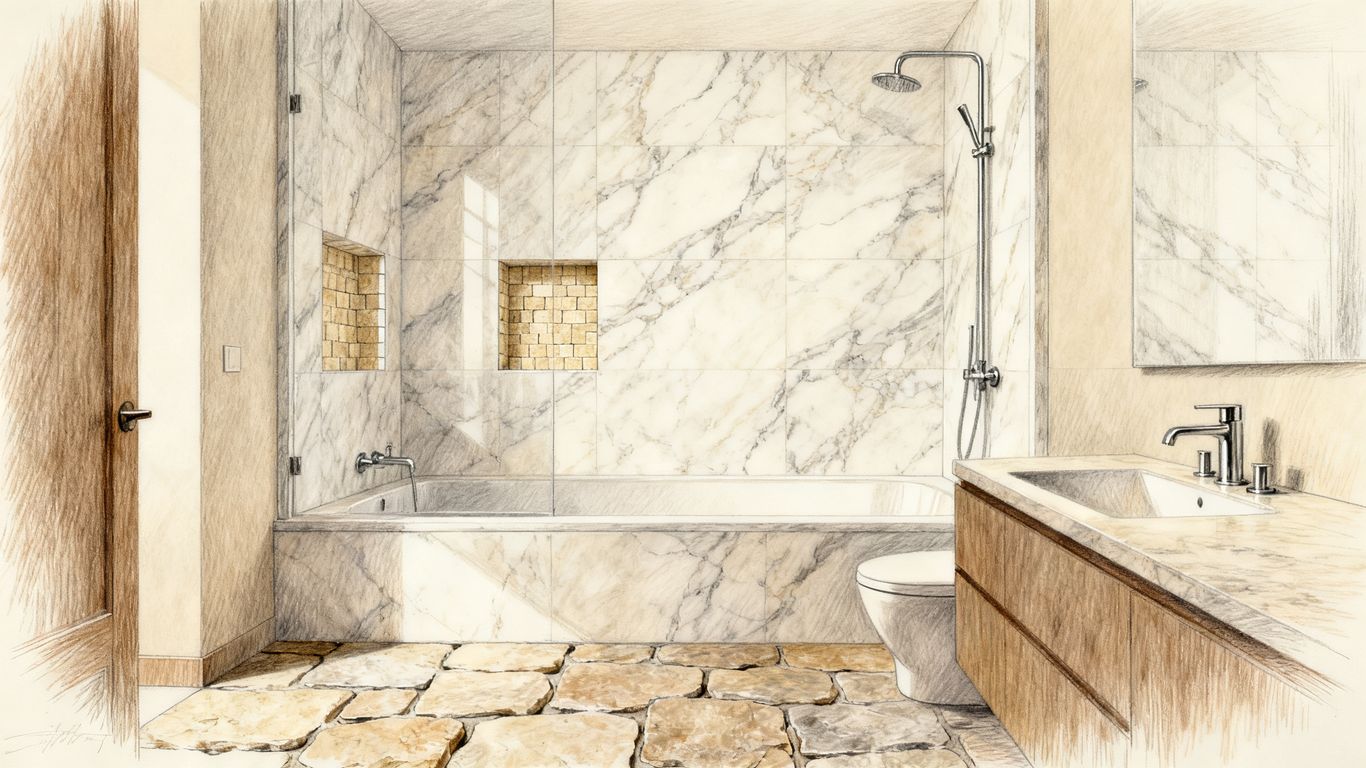
Floor tiles for the main bathroom and powder room
For a main bathroom floor, consider the room’s traffic, water exposure, tile finish, and the overall maintenance routine you can manage. A powder room may offer more freedom to make a bold pattern or let expressive veining take center stage. In either space, view the actual tile and check its product guidance before purchase. A natural stone sample can also help you judge how the surface and color read in the room.
Wall tiles for shower surrounds and feature walls
Shower walls and feature walls are good places to use larger tiles when you want a calmer, less interrupted surface. The stone’s natural variation still creates interest, so the layout does not need to be busy to feel distinctive. Choose a finish and format appropriate to the intended application, and confirm product specifications for the installation. A restrained wall tile can also give a patterned floor room to breathe.
Mosaics for shower floors, niches, and decorative details
Mosaics bring smaller-scale pattern and texture to shower floors, niches, and other accents. Their many joints can help a layout follow a shaped or sloped area, but they do not replace checking the tile’s suitability and installation requirements. Marble and travertine mosaics come in patterns such as herringbone, hexagon, basketweave, and penny round. Keep the surrounding surfaces simpler when the mosaic has a strong geometry.
Coordinating trim, thresholds, and other finishing pieces
Edges and transitions are small details, but they affect whether a tiled room feels finished. Plan how tile meets a doorway, tub, shower opening, or adjacent flooring before work begins. Coordinating stone trim or a threshold can make those junctions feel intentional; contrasting material can work too, if it is chosen deliberately. Include the finishing pieces in the material plan, not as an afterthought.
Choose finishes and patterns with safety in mind
Finish and pattern are design choices, but in a bathroom they also affect how a surface feels and functions. A glossy surface has a different look from a matte one, and a textured tile feels different underfoot. Tile size and grout joints influence the visual rhythm as well. Consider all three together, especially wherever water is likely to collect.
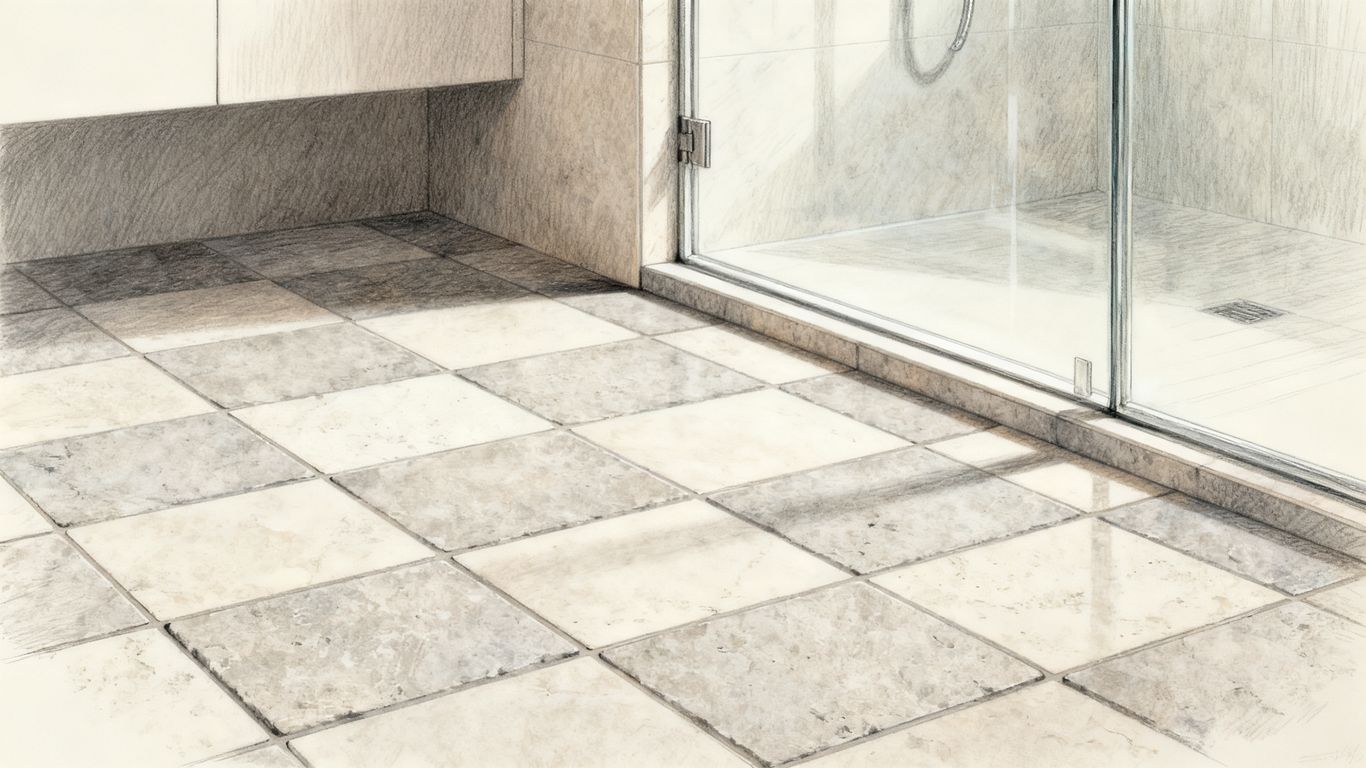
How polished, honed, brushed, and tumbled finishes look and feel
Polished stone is smooth and reflective, which can give a bathroom a formal, luminous quality. Honed stone has a matte appearance and a softer visual effect. Brushed finishes introduce texture, while tumbled surfaces look more weathered and rustic. The finish can change both the look and the feel of a stone, so compare samples rather than choosing from a name alone.
Why tile size, grout joints, and surface texture matter in wet areas
Wet-area choices deserve a practical check before the aesthetic decision is final. Smaller tiles usually create more grout joints, while larger formats reduce the number of visible divisions; neither is automatically right for every location. Surface texture, grout layout, drainage, and installation all affect the finished floor. Review product specifications and ask a qualified installer to confirm that the selected tile and layout suit the application.
Using checkerboard, herringbone, or Versailles patterns effectively
A checkerboard layout feels crisp and traditional, while herringbone adds movement without requiring a large color range. Versailles patterns create a more varied, old-world rhythm, especially with stone in warm or mixed tones. One pattern is often enough to define the room; repeating strong layouts across floor, walls, and niche can make the space feel visually crowded. Let the pattern have a clear role, then keep other surfaces quieter.
Build a cohesive bathroom color and material palette
A cohesive bathroom does not need to be a single shade or stone throughout. It needs a few choices that relate to one another: the tile’s undertone, the fixture finish, the cabinetry, and the amount of pattern in view. Natural stone already provides variation, so even a restrained palette can feel rich. Start with the stone you are most drawn to and build outward from there.
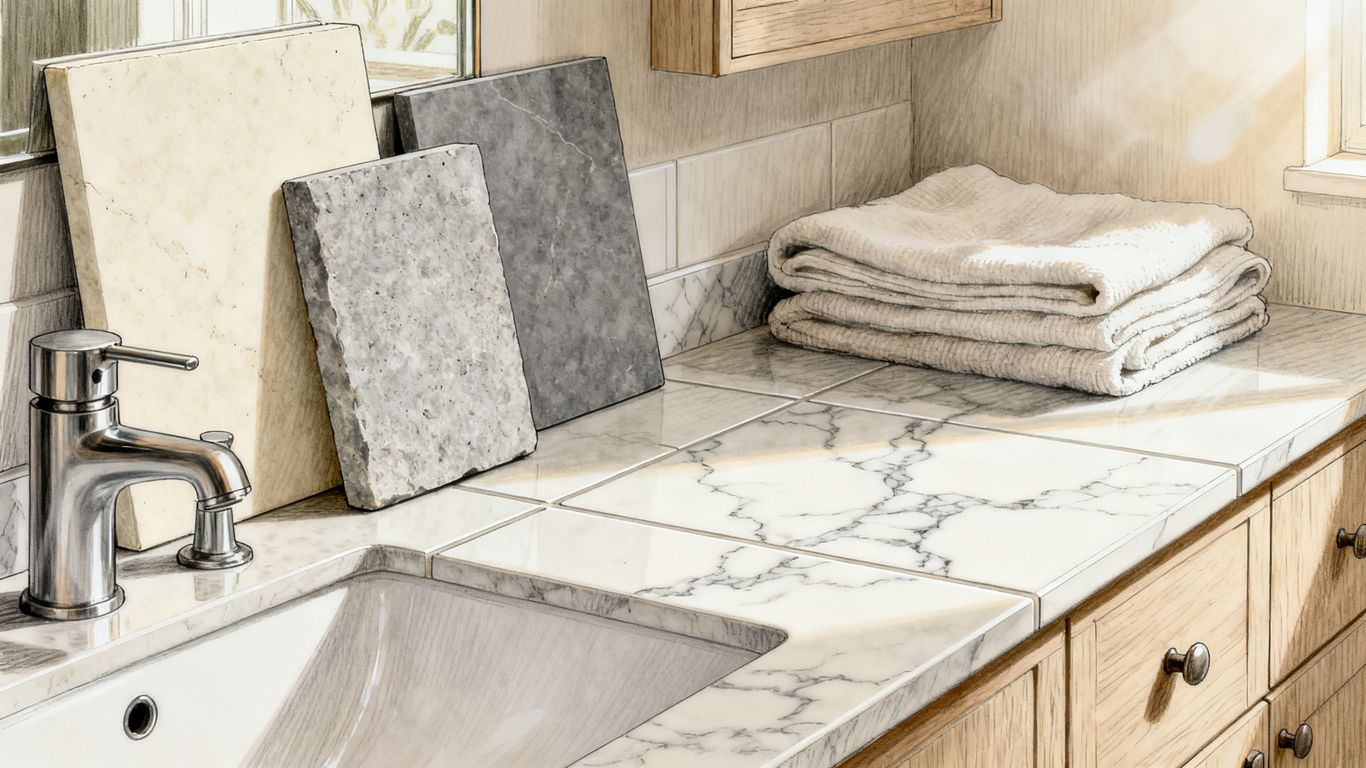
Pairing white, beige, gray, and darker stone with fixtures
White and gray stone can sit comfortably beside chrome or nickel finishes, while beige and ivory tones often feel at home with warmer metals and wood. Darker stone makes a stronger statement and can look especially balanced when other surfaces are kept simple. These are starting points, not rules: place samples beside fixture and cabinet finishes to see how undertones interact in the actual room. Lighting can shift those colors noticeably.
Balancing bold veining and varied natural stone patterns
When a stone has prominent veining, give it enough uninterrupted space to be appreciated. Pair a dramatic feature wall with a calmer floor, or let a patterned floor take the lead while walls stay understated. Natural stones vary, so examine multiple pieces or a representative sample when possible. That preview helps set realistic expectations for the finished mix.
Combining field tiles, mosaics, and accents without visual clutter
A simple way to combine formats is to assign each one a clear purpose: field tile for the broad surfaces, mosaic for a contained detail, and trim for a clean edge. Then repeat a color or stone family to connect them. Before finalizing, lay samples together and look at the palette from the doorway as well as up close. A short visual check often shows whether one element is competing for attention.
Plan quantities, installation, and ongoing care
Natural stone rewards careful planning before the first tile is set. Measurements, substrate preparation, layout, and care instructions all affect the finished result. Because stone pieces can vary, reviewing the actual material and discussing the installation plan with a professional helps prevent avoidable surprises. Allow time for those decisions before ordering.
Measuring the space and allowing for cuts and extra material
Measure each tiled surface separately, noting openings, niches, returns, and areas that may need cuts. A simple area calculation gives a starting quantity, but the layout and tile format affect how much extra material is sensible. It is wise to confirm the waste allowance with the installer before placing an order. Use this short checklist to prepare the conversation:
- Measure floor and wall areas separately, including niches and returns.
- Record the tile size, orientation, and intended pattern.
- Ask the installer to estimate cuts and the appropriate extra quantity.
- Keep a few spare pieces for future repairs when practical.
That estimate is more useful than a room-wide guess because it accounts for the details that shape the cut plan. Confirm the final quantity against the installer’s layout before ordering.
Preparing the substrate and planning the tile layout
A sound, appropriately prepared substrate is the foundation for a lasting installation. The installer should review the surface, the tile’s requirements, and the room’s layout before work starts. Dry-laying or planning key cuts in advance can help avoid awkward slivers at visible edges. For additional project context, Carrara White Marble 6x6 Tumbled Tile has guidance covering preparation, layout, installation, and sealing.
Sealing natural stone and following care guidance for the selected finish
Natural stone is porous, and sealing helps protect it against stains and moisture. Follow the stone and sealer manufacturers’ directions for application and resealing intervals, since use and product recommendations can differ. Clean with a pH-neutral product intended for stone, and avoid acidic cleaners such as vinegar or lemon. Keep the specific finish in mind, as surface texture and sheen can affect how routine marks appear.
Discussing installation requirements with a qualified professional
A qualified installer can check that the stone, setting materials, substrate, layout, and grout choices work together for the particular bathroom. Share the product specifications and discuss wet-area details before installation begins. Broader bathroom remodel planning can help frame decisions about layout and project priorities, while tile selection still benefits from advice specific to the material and site. A bathroom renovation also sits within larger household decisions: Barcelona property guidance and own-occupation disability coverage concern separate planning needs, not tile performance.
Source bathroom tiles for your project
Once the design is taking shape, compare real options by stone type, size, finish, and intended use. Samples make it easier to assess color and texture at home, and current stock matters when setting a project schedule. Ask for a quote based on the measured quantity and confirm delivery details before ordering. That extra conversation can help align the material choice with the practical plan.
Comparing current marble and travertine options, sizes, and finishes
Compare the actual stone options rather than relying on names alone: a marble’s veining and a travertine’s warm variation can each look different under bathroom lighting. Review available sizes and finishes for the exact product, then narrow the choice to a few samples. A bathroom tile selection guide offers another perspective on coordinating materials, finishes, and patterns; your final decision should still be based on the selected stone’s specifications.
Checking stock, sample availability, and project quantities
Ask whether samples are available and whether the quantity you need is in stock. A sample lets you compare the surface and color in the room, while a confirmed quantity helps keep the order aligned with the installer’s estimate. Surfaces Galore provides product samples, and its Anaheim-based team can help with product questions. For useful general inspiration, explore tumbled marble tile and compare its finish with your preferred options.
Requesting quotes, bulk pricing, and nationwide shipping from Surfaces Galore
Surfaces Galore is a direct importer and nationwide supplier of marble and travertine tiles, mosaics, and moldings. Request a quote with the product, finish, size, and project quantity in hand, and ask about bulk pricing and shipping for your location. The site also describes nationwide freight and insured logistics; confirm the details for your order. If you are weighing property decisions, a Barcelona home-buying guide is a separate resource, while video testimonial services and a separate online topic have no bearing on which stone suits a bathroom.
When you are ready to compare options, request a project quote and share your planned quantity and finish preferences with Surfaces Galore.
Conclusion
The most timeless bathroom tiles are the ones that suit the room as well as the design: choose marble or travertine for the character you want, match formats to each surface, and take time to review samples, installation needs, and care guidance before ordering.
Frequently Asked Questions
Is marble a good choice for bathroom tiles?
Marble can bring distinctive veining and a classic look to a bathroom. Since natural stone is porous, plan for sealing and follow care instructions suited to the specific product and finish.
Is travertine suitable for bathroom floors and walls?
Travertine is used for floor and wall applications, including bathrooms. Check the specifications for the tile and intended location, and consult an installer about the finish and installation requirements.
Which finish should I choose for a bathroom floor?
Compare the appearance and surface texture of available finishes, and verify product suitability for the intended wet area. A sample and professional advice can help you make a considered choice.
Are large or small tiles better for a shower floor?
The best format depends on the layout, slope, drainage, tile product, and installation plan. Smaller pieces create more grout joints, but the installer should confirm the most suitable option for the specific shower.
Do marble and travertine tiles need sealing?
Natural stone is porous, and sealing helps protect it from stains and moisture. Follow product and sealer instructions for application and ongoing maintenance.
How much extra tile should I order?
The extra amount depends on the room measurements, tile size, pattern, and number of cuts. Ask the installer to estimate a suitable allowance based on the planned layout.
How can I tell which stone color will work in my bathroom?
Place samples beside the fixtures, cabinetry, and other finishes, then view them in the room’s lighting. Comparing them in context is more reliable than choosing from a screen alone.
Leave a comment