
Breccia Oniciata Marble – Italian Marble Story

The Day Stone Began to Speak: A Story of Marble, Memory, and Meaningful Design
On a quiet morning before the showroom opened, the light entered through the front windows in long, patient bands. It slid across polished slabs, paused on veining, and settled into colors that seemed older than architecture itself. To most visitors, the room was a gallery of surfaces. To Elena, the senior design consultant, it was a library of stories.
That morning, a couple arrived with sketches for a new home, a list of practical questions, and a shared hope that their rooms would feel timeless rather than trendy. They wanted beauty, but not excess. Character, but not chaos. Materials that would age with dignity and still feel current decades later. Elena smiled because she had heard that wish before. It usually meant one thing: they were ready to understand marble not just as a product, but as a narrative.
This is that story—the story of how marble transforms spaces, why certain varieties continue to captivate architects and homeowners, and how the right stone can turn a kitchen, bath, foyer, or feature wall into something unforgettable. Along the way, we will step through some of the most admired names in natural stone, from dramatic reds to serene greens, from cloud-like whites to expressive grays. If you are planning a renovation, sourcing for a client, or simply learning what defines exceptional interiors, this guide is designed to help you choose with confidence.
Why Marble Still Defines Luxury in Modern Interiors
Long before trend reports and social media inspiration boards, marble had already earned its place in the built world. Palaces, civic buildings, sculptures, and sacred spaces relied on it not only for prestige, but for permanence. Today, the context has changed, yet the appeal remains the same. Marble offers depth that manufactured materials often struggle to imitate. Its veining is not printed. Its movement is not repeated on command. Every slab is singular.
For homeowners and designers, this uniqueness matters. In an age of mass production, marble introduces individuality. It can anchor minimalist interiors, soften contemporary lines, or enrich classic spaces with texture and warmth. Whether installed as flooring, countertops, fireplace surrounds, vanity tops, wall cladding, staircases, or statement furniture, it communicates refinement without needing explanation.
Still, beauty alone is not enough. Good design depends on fit, function, finish, and maintenance expectations. Choosing the right marble means understanding color harmony, application suitability, edge details, slab variation, and sealing requirements. The best projects begin when aesthetics and practicality meet.
A Walk Through the Showroom: Eight Remarkable Stones and the Stories They Tell
Elena invited the couple to walk with her. “Do not start by asking what is popular,” she said. “Start by asking what kind of feeling you want your home to hold.” With that, she led them to the first slab.
1. The Golden Glow of Breccia
At the far end of the room stood a dramatic surface alive with honey, cream, amber, and soft ivory movement. Elena placed her hand lightly on the stone and introduced it by its full name: Breccia Oniciata Marble – Italian Marble.
“This is for rooms that deserve warmth,” she said. “Not loudness—warmth.” The couple leaned in. The stone’s brecciated composition created a painterly effect, almost as if fragments of earth had been gathered and reassembled into a harmonious whole. It was elegant, yes, but also welcoming.
In design terms, this marble works beautifully in formal entryways, luxurious bathrooms, feature walls, and hospitality-inspired living spaces. It pairs especially well with brushed brass, walnut cabinetry, soft beige textiles, and layered lighting. Designers often choose it when they want a golden palette that feels natural rather than overly glossy.
From an SEO and sourcing perspective, this variety attracts attention because clients searching premium Italian stones often seek richness beyond black-and-white contrasts. If your project calls for warmth with undeniable European character, this is a compelling option to explore.
2. The Historic Red That Commands Attention
They moved next to a deeper, earthier statement stone. Elena introduced Rosso Verona Marble, a material long appreciated for its brick-red to terracotta character and fine visual texture. Unlike some highly dramatic marbles, it does not rely on chaotic veining to make an impression. Its strength lies in its grounded confidence.
“This is a designer’s secret for spaces that need gravity,” Elena explained. “It can make a room feel rooted.”
She described how it performs in flooring, stair treads, fireplace facings, and traditional or transitional interiors where warm architecture, plaster walls, aged metals, and timber beams are part of the larger composition. In commercial settings, it can create a memorable atmosphere in boutiques, wine bars, and reception areas seeking a cultivated European sensibility.
Rosso tones in natural stone can be transformative because they bring emotion into a design language often dominated by neutrals. Used thoughtfully, they add depth and distinction. Used excessively, they can overwhelm. Elena advised balance: pair a rich red marble with calm adjacent materials and intentional lighting.
3. The Dramatic Elegance of Coastal Red
Just beside it stood another red, but this one carried a very different mood. “Meet Rosso Levanto Marble,” Elena said. The slab shimmered with deep burgundy and wine-dark tones crossed by crisp white veining. It was theatrical, polished, and impossible to ignore.
If Rosso Verona Marble was dignified and earthy, Rosso Levanto Marble was expressive and formal. It belongs in powder rooms designed to surprise, hotel-style bars, furniture inlays, feature walls, and fireplace surrounds intended to become the visual center of a room. It also works beautifully in smaller doses: a console top, a backsplash panel, a framed insert, or a niche.
Elena emphasized an important principle for luxury design: drama needs discipline. Strong marble benefits from clear context. Repetition of one or two supporting tones—such as warm white, dark wood, or antique brass—can help a bold slab look curated instead of chaotic. For homeowners who want one unforgettable moment in the home, Rosso Levanto Marble often becomes that moment.
4. A Mediterranean Red with Enduring Versatility
The next slab glowed in a lively, sophisticated red that felt sunlit rather than brooding. “This is Rojo Alicante Marble,” Elena said. “A classic for anyone who wants warmth, personality, and versatility.”
Its coloration can range from rich reddish hues to softer red-brown notes, often enlivened by pale veins or fossil-like details. Designers appreciate how adaptable it is. It can feel traditional in one setting and refreshingly contemporary in another, depending on finish and pairing.
Rojo Alicante Marble is often selected for bathrooms, floors, staircases, decorative wall panels, and accent applications where color is welcome but still needs to feel enduring. It can complement cream stones, textured woods, taupe upholstery, and even black metal detailing. For Mediterranean-inspired spaces, it is especially effective, but it is not limited to that style.
Elena encouraged the couple to imagine not just a material, but an atmosphere. “A house should not only look complete,” she said. “It should feel inhabited even when it is new.” This marble, with its warmth and classic character, helps create that feeling.
5. A Quiet Green That Changes the Energy of a Room
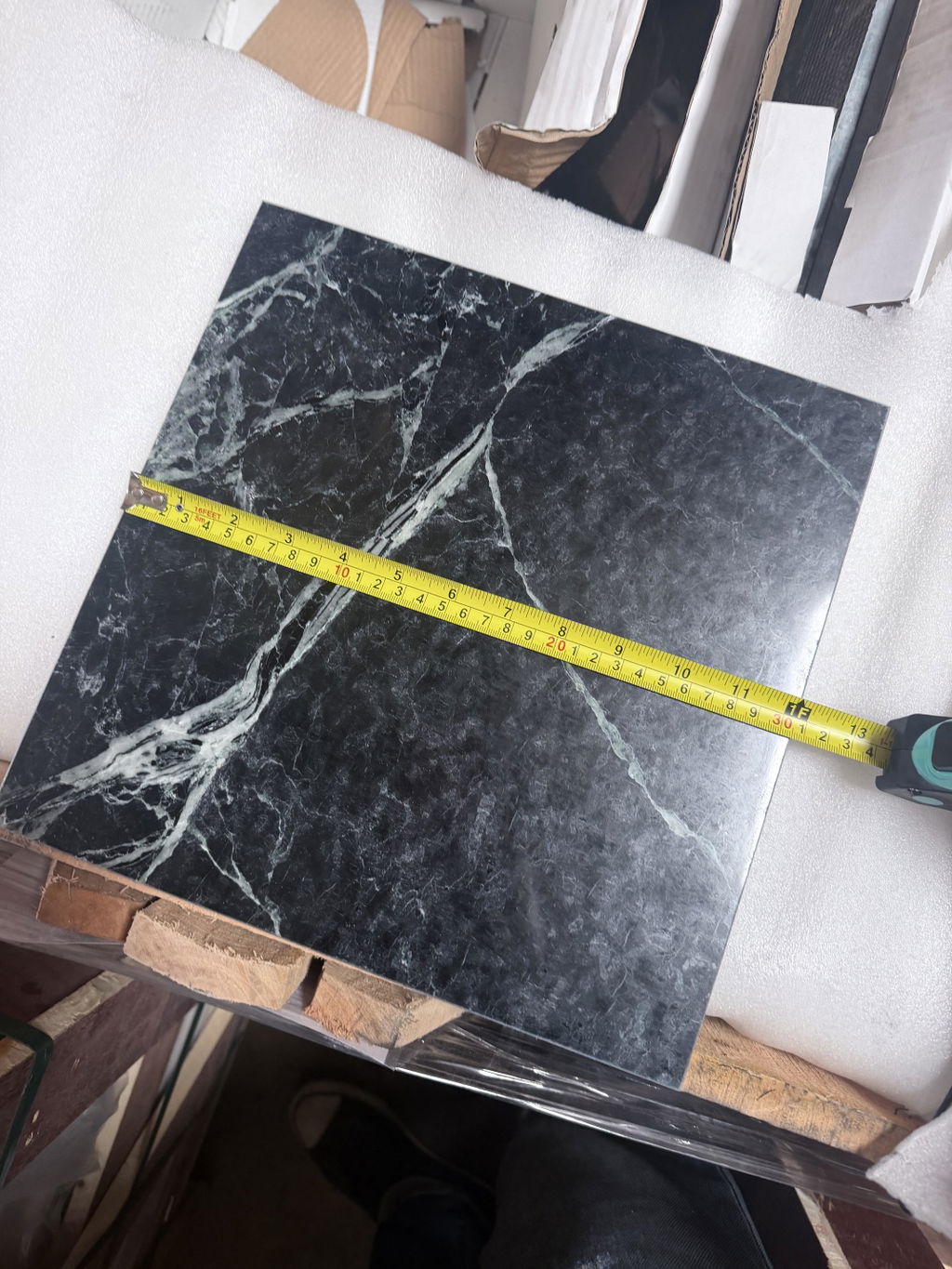
Then they reached a slab that softened the entire mood of the showroom. “Now,” Elena said, “we shift from heat to calm.” Before them was Ming Green Marble, known for its gentle green background and delicate white variation.
The couple paused longer here than anywhere else. Green marble has a rare quality: it feels both decorative and restorative. It introduces color without the aggression sometimes associated with bold stone. In bathrooms, spas, vanity walls, and serene kitchens, it can foster an atmosphere of balance and sophistication. It also pairs wonderfully with light oak, matte nickel, soft whites, and organic textiles.
From a design strategy standpoint, green marble performs especially well in biophilic interiors—spaces that seek a closer visual relationship with nature. It can also add freshness to heritage settings, bridging old-world materials with modern restraint. Honed finishes often highlight its gentle personality, while polished surfaces increase reflectivity and formality.
6. The Poetry of White Movement
The next slab looked almost like a cloudbank caught in stone. Elena introduced Arabescato (Italian) Marble, admired for its luminous white background and sweeping gray veining. “This,” she said, “is movement with grace.”
Arabescato (Italian) Marble is beloved by homeowners and architects who want brightness, pattern, and unmistakable Italian pedigree. It is often chosen for waterfall islands, feature backsplashes, statement bathrooms, and bookmatched wall installations. Because the veining can be dramatic without becoming harsh, it suits spaces that want visual interest while retaining a refined, airy quality.
It also photographs beautifully, which matters more than ever in a digital-first design culture. Yet Elena reminded the couple that the true value of such marble is not just in images. It is in how the slab changes throughout the day, how morning light reveals one pattern and evening light another. Natural stone rewards attention over time.
7. The Gray Marble of Subtle Authority
When they arrived at the gray section, Elena gestured to a slab with soft, smoky elegance: Bardiglio (Italian) Marble. “This is for people who appreciate restraint,” she said. “It never begs for attention, but it always earns it.”
Bardiglio (Italian) Marble offers nuanced gray tones that range from pale silver to deeper charcoal, often with flowing white or darker linear veining. It is a favorite in contemporary bathrooms, sophisticated flooring programs, monochromatic kitchens, and interiors where texture matters more than overt color contrast.
One of its greatest strengths is flexibility. It can support bold design elements elsewhere in the room or carry an entire scheme through tonal layering. Combined with black fixtures, it feels crisp and urban. With oak and linen, it becomes softer and more residential. With polished chrome and glass, it leans toward classic modernism.
For designers managing large-scale projects, gray marble like this also offers a practical visual advantage: it can create continuity across multiple rooms without becoming monotonous.
8. The Icon of White Marble Luxury
At last, Elena led them to a slab that seemed to gather all the light in the room. “Every showroom has a legend,” she said. “Ours is Statuary - Statuario White (Italian) Marble.”
Its crisp white field and bold gray veining have made it one of the most coveted materials in high-end interiors. It is timeless, architectural, and instantly recognizable to those who know stone. In grand kitchens, boutique hotel bathrooms, feature walls, and luxury retail environments, it conveys prestige with extraordinary clarity.
Yet prestige alone is not the reason it remains beloved. It is the balance. Statuary - Statuario White (Italian) Marble can feel dramatic and serene at once. It elevates spaces without making them feel distant. It is often the stone chosen when a client wants one enduring investment material that will still look compelling years from now.
How to Choose the Right Marble for Your Space
The couple had now seen beauty in many forms, but beauty does not automatically become a specification. Elena sat with them at the consultation table and outlined a professional approach to marble selection.
Consider the Emotional Goal
Ask what the room should communicate. Warmth? Serenity? Formality? Boldness? The answer will narrow your palette quickly.
Evaluate the Application
Countertops, walls, floors, vanities, staircases, and fireplaces all have different performance expectations. Finish, thickness, and edge profile should align with use.
Review Slab Variation
No two slabs are identical. Always review current inventory, especially for heavily veined or color-rich materials.
Think About Lighting
Natural and artificial light can dramatically change how marble reads. View slabs in conditions similar to the installation environment whenever possible.
Coordinate Supporting Materials
Cabinetry, metal finishes, paint, textiles, and flooring all influence the final effect. Marble should lead or support the scheme intentionally.
Plan for Maintenance
Natural stone benefits from proper sealing, thoughtful cleaning, and informed daily use. Educated ownership preserves beauty.
Design Tips for Lasting Impact
- Use statement marble strategically: One unforgettable installation can be more powerful than overusing multiple dramatic surfaces.
- Match finish to mood: Polished marble feels formal and reflective; honed marble often feels softer and more contemporary.
- Request samples but choose from slabs: Small samples help with color direction, but slab viewing is essential for understanding movement and character.
- Balance strong veining with simple forms: Clean cabinetry and restrained hardware can help expressive marble remain elegant.
- Work with experts: Professional guidance reduces costly mistakes in layout, fabrication, and application suitability.
From Showroom to Home: The Ending Every Good Design Story Deserves
By noon, the couple had made their decision. For the kitchen island, they selected Arabescato (Italian) Marble. For the powder room vanity, they chose Rosso Levanto Marble as a jewel-box statement. For the primary bath floor, they fell in love with the calming presence of Ming Green Marble. Their choices were different in color and mood, yet together they told a coherent story: bright where the home gathered, dramatic where it surprised, serene where it restored.
Before they left, Elena offered one final thought. “The best stone is not the one everyone recognizes,” she said. “It is the one that makes your space feel complete.”
That is the enduring lesson of marble. It is not merely a surface selection. It is a design decision that shapes atmosphere, memory, and daily experience. Whether you are drawn to the golden richness of Breccia Oniciata Marble – Italian Marble, the grounded heritage of Rosso Verona Marble, the theatrical confidence of Rosso Levanto Marble, the sun-warmed versatility of Rojo Alicante Marble, the tranquil grace of Ming Green Marble, the luminous movement of Arabescato (Italian) Marble, the understated strength of Bardiglio (Italian) Marble, or the iconic prestige of Statuary - Statuario White (Italian) Marble, the right material can transform a room into a lasting expression of taste.
If you are ready to begin your own design story, now is the perfect time to explore our curated marble collection, request expert guidance, and compare slabs for your upcoming project. Contact our team for personalized recommendations, sourcing support, and design insight tailored to your vision. Luxury begins with a thoughtful choice—and your next space deserves nothing less.

Leave a comment