
Calacatta Gold Quartz vs. Marble: How to Choose the Right Luxury Surface

Key Takeaways
Calacatta Gold creates a refined interior with a luminous white field and expressive gold movement. The right choice depends on whether you prefer natural variation or the consistent performance of engineered quartz.
- Marble offers authentic geological character and one-of-a-kind veining.
- Calacatta Gold quartz provides a marble-inspired appearance with consistent patterning.
- Slabs suit expansive countertops and islands, while tiles and mosaics offer flexible layouts.
- Polished and honed finishes create noticeably different moods and maintenance needs.
- Careful measuring, sealing, and professional installation protect the investment.
Understanding the Calacatta Gold look
Calacatta Gold is prized for its clean white background and warm, dramatic veining. It can make a room feel brighter without becoming plain. Whether the material is natural marble or engineered quartz, the look works best when the surrounding design gives the pattern room to breathe.
White backgrounds and dramatic gold veining
The contrast is the first thing people notice. A pale ground reflects light across a countertop, wall, or floor, while gold and gray movement adds depth and direction. The effect can feel soft in a small backsplash or theatrical across a full island.
A useful design approach is to repeat one of the stone’s secondary tones in hardware, lighting, or woodwork. That creates continuity without making every element compete with the surface. For a more detailed kitchen plan, a stone backsplash guide can help with layout, preparation, grouting, and sealing considerations.
Why the pattern feels timeless and luxurious
Calacatta Gold combines a classical marble palette with a more expressive vein structure. It feels established rather than trendy, yet it can sit comfortably beside contemporary cabinetry and simple architectural lines. The natural pattern becomes the focal point, so fewer decorative elements are usually needed.
Its sense of luxury also comes from scale. A large, uninterrupted field lets the veins travel across the room, while smaller pieces create rhythm and repetition. Both approaches can be elegant when the pattern is planned rather than left to chance.
How natural variation affects each slab or tile
Natural marble is never perfectly uniform. Veins may be fine, sweeping, concentrated, or relatively quiet from one piece to the next. This variation is part of the material’s appeal, but it should be reviewed before installation so the final arrangement feels intentional.
Ask to inspect samples or available pieces in the project’s lighting. Note the background tone, vein direction, and any areas that should be reserved for visual emphasis. Natural stone is an investment in character as much as in surface area.
Calacatta Gold quartz and marble compared
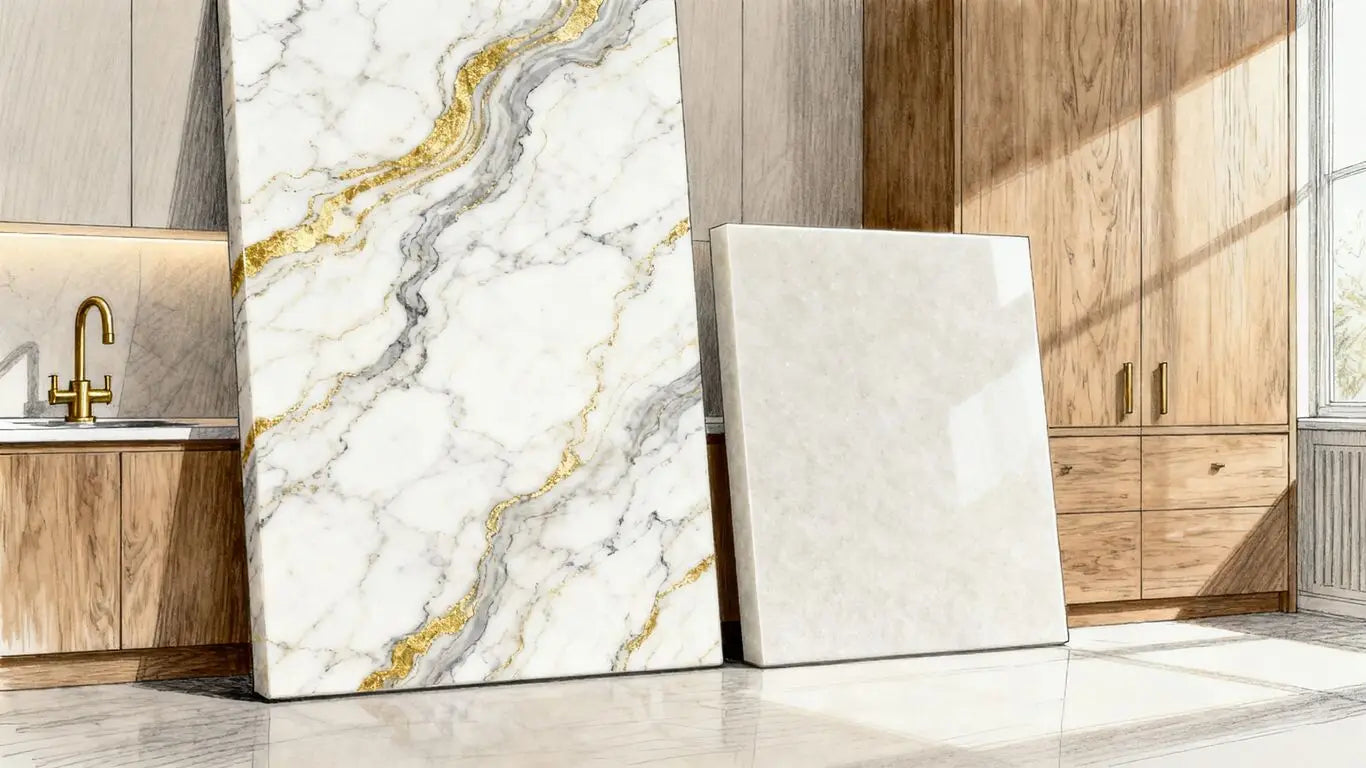
The phrase calacatta gold quartz describes an engineered surface designed to echo the appearance of Calacatta Gold marble. Marble, by contrast, is quarried natural stone shaped into tiles or slabs. Neither is automatically right for every room; the better selection follows the project’s use, maintenance expectations, budget, and desired degree of variation.
Differences in composition and appearance
Quartz is manufactured from a mixture of materials formed into a slab, allowing makers to control background color and vein placement. Natural marble is formed by geological processes, so its movement is less predictable and each lot has its own personality.
Engineered surfaces can offer a more repeatable visual, which helps when several areas must coordinate. Marble brings depth that changes subtly across every tile or slab. Compare full-size samples when possible, since a small sample cannot show the full direction of a dramatic vein.
Durability, maintenance, and everyday performance
Both materials can serve beautiful residential interiors, but their care requirements differ. Marble is porous and can be sensitive to acidic substances, so sealing and prompt cleanup are part of responsible ownership. Quartz is generally selected by buyers seeking a lower-maintenance, more consistent countertop surface.
The room matters as much as the material. A lightly used powder room may welcome expressive marble, while a busy kitchen may call for a surface chosen around daily habits. Use the following comparison as a starting point rather than a substitute for product-specific guidance.
| Consideration | Natural marble | Engineered quartz |
|---|---|---|
| Pattern | Unique geological movement | More controlled, repeatable appearance |
| Care | Regular sealing and gentle cleaning | Generally simpler routine care |
| Character | Every piece varies | Consistent design language |
| Best fit | Statement interiors and authentic stone projects | Coordinated, lower-maintenance surfaces |
The table clarifies the central trade-off: marble gives more individuality, while quartz can simplify coordination and everyday upkeep. Review finish, fabrication requirements, and the manufacturer’s care instructions before committing.
Choosing between engineered and natural stone character
Choose marble when the changing rhythm of the veins is part of the design brief. Choose quartz when visual consistency, simpler maintenance, or predictable slab selection carries greater weight. A thoughtful decision also considers edge details, backsplash transitions, and how much of the surface will be visible.
For an example of an engineered option, Calacatta Gold quartz is described as a polished, veined countertop material available in a jumbo slab size. It can be useful to compare that kind of controlled presentation with several natural marble pieces viewed together.
Why authenticity matters for luxury interiors
Authenticity is more than a label. Genuine natural marble has geological variation, tactile depth, and a surface story that cannot be duplicated exactly. Buyers who want those qualities should verify the material, origin information, finish, dimensions, and available lot before ordering.
A broader natural stone buyer’s guide offers a useful reminder to examine provenance and craftsmanship when evaluating stone products. The same care belongs in an architectural surface purchase, especially when the material will define a prominent room.
Design applications for a Calacatta Gold-inspired space
Calacatta Gold can move through an entire home without looking repetitive. The key is to change the scale, finish, or layout as the room changes. A quiet tile installation may support a dramatic slab elsewhere, creating a connected design rather than a matched set.
Kitchen countertops and statement islands
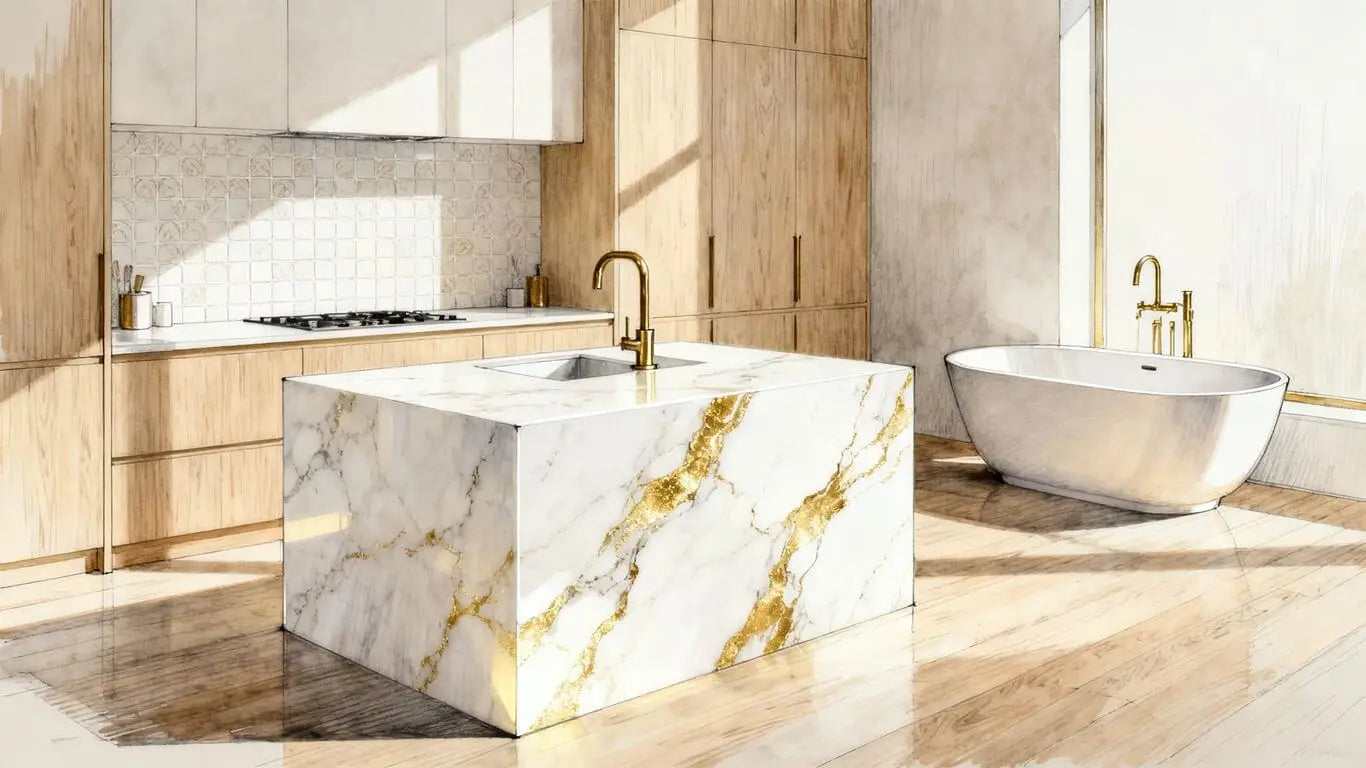
A slab is especially effective on an island because its broad surface allows the veining to unfold. Waterfall edges, restrained cabinetry, and warm metal accents can reinforce the stone’s golden movement. In a smaller kitchen, a backsplash or compact work surface may provide the same visual impact with less material.
Before choosing a slab, map sinks, cooktops, seams, and overhangs. The most attractive vein is not always the easiest area for fabrication, so design and practical planning should happen together.
Bathroom walls, shower surrounds, and backsplashes
In bathrooms, pale Calacatta Gold surfaces create a calm, luminous envelope. Large-format pieces reduce visual interruptions, while smaller tiles can give shower floors and niches a more tactile pattern. The stone’s warm veining also pairs well with cream, soft gray, and natural wood tones.
Moisture makes installation discipline essential. Confirm the substrate, slope, grout, and sealing plan before work begins. A well-planned wall can feel luxurious without relying on excessive decoration.
Marble flooring, mosaics, and feature walls
Flooring establishes the room’s rhythm, so tile size and vein density deserve close attention. Larger tiles feel quiet and expansive; mosaics add movement around entries, shower floors, or a narrow accent zone. For planning a kitchen floor, this natural stone flooring guide is a helpful companion to decisions about layout, finish, installation, and care.
A feature wall can use the stone as art. Keep adjacent surfaces calm, then let the Calacatta Gold installation carry the room’s strongest visual statement. This approach works in foyers, dining areas, bathrooms, and commercial interiors.
Coordinating trim, moldings, and accent materials
Trim should support the primary stone rather than introduce a competing pattern. Marble moldings, simple painted surfaces, warm timber, and understated metals can all work when their undertones are considered. Sample the complete palette together, including grout and lighting.
If the stone has strong gold movement, repeat that warmth sparingly. A brass light, oak detail, or cream textile may be enough. The goal is balance, not visual matching at every turn.
Selecting Calacatta Gold marble products
Product format shapes both the appearance and the installation process. Tiles divide the pattern into an ordered field, slabs create continuity, and mosaics bring fine detail. Begin with the room’s dimensions and focal points, then select the format that supports the architecture.
When tiles are the best fit for a project
Tiles are practical for floors, walls, backsplashes, and projects that need manageable pieces. They also make it easier to create borders, staggered layouts, or transitions between rooms. Available sizes can change the perceived scale of the space, so test a dry layout before ordering.
For a classic square format, Calacatta Gold 24x24 tiles provide a useful reference for planning material inspection, waste, substrate preparation, and installation. Smaller formats can create more grout rhythm and help navigate compact areas.
When slabs create a seamless visual statement
Slabs suit islands, countertops, vanities, and feature walls where uninterrupted movement is the priority. Fewer seams allow the eye to follow the veining across a larger plane. Slab selection should include careful review of dimensions, openings, edge profiles, and vein placement.
This format also requires close coordination among the designer, fabricator, installer, and homeowner. A beautiful slab can lose its effect if the layout ignores a prominent cutout or places a strong vein in an unintended location.
Using mosaics to add detail and dimension
Mosaics are ideal when the design needs a smaller moment of pattern. They can frame a backsplash, enrich a shower floor, or define a niche without covering every surface in dramatic movement. Their repeated geometry gives natural stone a more tailored character.
Consider grout color, sheet alignment, and transitions at corners. A Calacatta Gold mini brick tile suits designs that want a narrow, linear rhythm, while diamond, chevron, hexagon, and other patterns create different visual energy.
Comparing polished and honed finishes
Polished marble has a reflective surface that heightens color and vein contrast. Honed marble is softer and more muted, with a smooth low-sheen appearance that can feel relaxed and architectural. The choice affects lighting, slip considerations, fingerprints, and how prominently the pattern reads.
Order samples in both finishes and view them beside cabinetry, flooring, and hardware. A glossy finish may suit a formal wall, while a honed finish can temper a busy floor or make a large room feel quieter.
Planning installation and long-term care
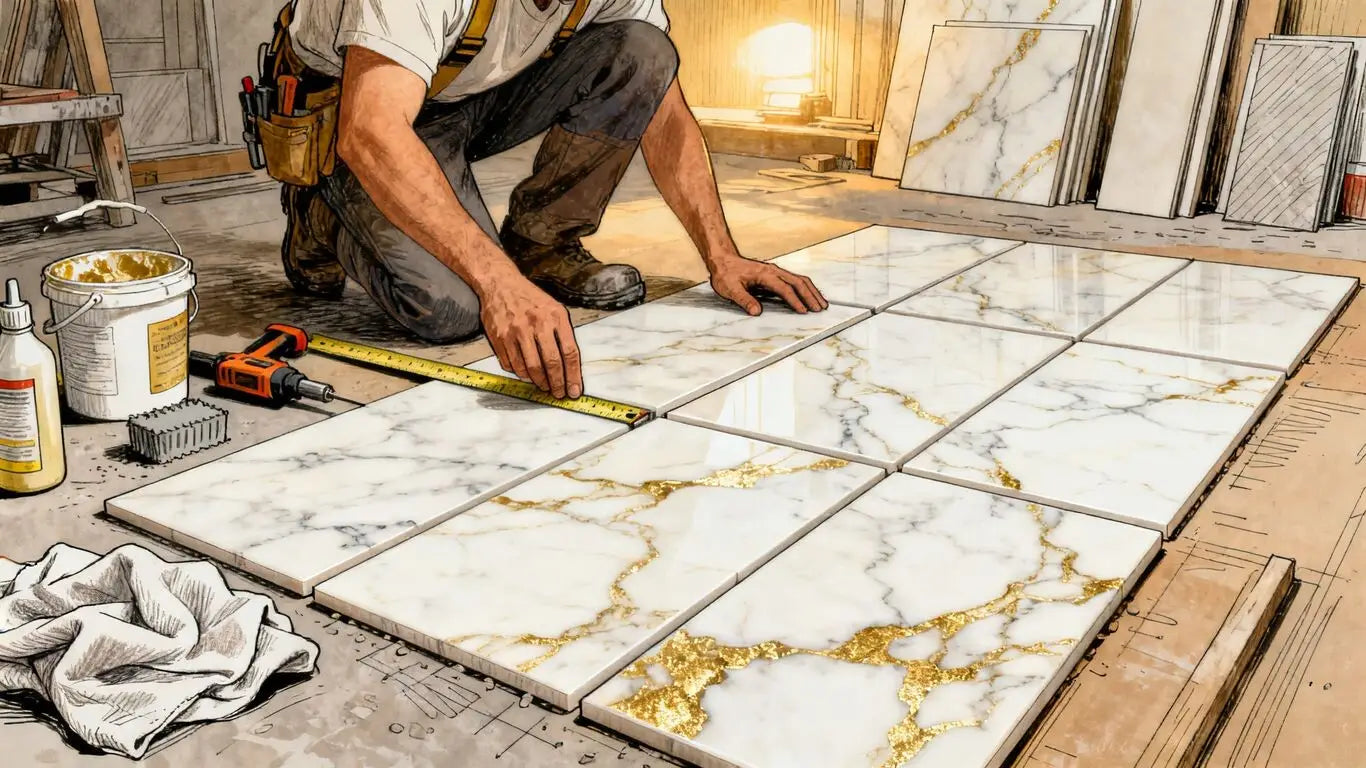
Good planning protects the beauty purchased at the design stage. Measure carefully, inspect material before setting, and make the installation sequence clear to everyone involved. Natural stone rewards patience; rushing layout or surface preparation can compromise the final result.
Measuring quantities and accounting for natural variation
Calculate the surface area, then add a suitable waste allowance for cuts, breakage, pattern selection, and natural variation. The required allowance depends on room shape, tile size, layout, and the amount of vein matching. Never order solely from a rough visual estimate.
For a 12-by-24 floor or a 4-by-12 backsplash, the layout may produce different offcuts and alignment challenges. Dry-fit visible areas, reserve material for repairs where possible, and confirm nominal dimensions against the actual shipment.
Sealing marble surfaces for lasting beauty
Marble should be evaluated for its porosity and sealed according to the stone and product instructions. Sealing does not make marble impervious, but it can provide additional time to wipe away spills. Always test products in an inconspicuous area and follow the sealer manufacturer’s directions.
The installation guide for white backsplash cleaning also reinforces the value of identifying the stone, using gentle cleaners, and maintaining grout. Those habits begin immediately after installation, not months later when a stain appears.
Cleaning routines for floors, walls, and backsplashes
Dust and grit should be removed with a soft tool so they do not scratch the surface underfoot. Use a pH-neutral stone cleaner or the method recommended for the specific material, and wipe spills promptly. Avoid acidic or abrasive household products unless a stone-care professional confirms compatibility.
A simple routine is easier to maintain than an elaborate one:
- Sweep or dust floors regularly to remove abrasive particles.
- Wipe walls and backsplashes with a soft cloth and suitable stone cleaner.
- Dry wet areas after use, especially around grout and shower transitions.
- Recheck high-use surfaces periodically for signs that resealing is needed.
These steps keep daily care manageable while preserving the finish. For kitchens with reflective cabinetry, a glossy kitchen design guide can also help coordinate light, cleaning, and surrounding finishes.
Working with qualified installation professionals
Natural stone installation involves substrate preparation, cutting, setting, grouting, sealing, and sometimes detailed vein planning. A qualified professional can evaluate the site and coordinate fabrication with the chosen format. Confirm responsibilities in writing, including measurements, material inspection, waste, and final sealing.
Supplier guidance can support the process, but the installer remains responsible for site-specific workmanship. Review the material before installation and address concerns before pieces are permanently set.
Why source Calacatta Gold marble from Surfaces Galore
Surfaces Galore serves homeowners, designers, and architects seeking premium natural stone for residential and commercial work. The company is based in Anaheim, California, and focuses on imported marble and travertine tiles, mosaics, and moldings. That direct-importer position can be useful when a project needs both visual quality and practical purchasing support.
Authentic imported marble from a trusted supplier
Surfaces Galore sources Calacatta Gold marble products intended for floors, walls, countertops, backsplashes, shower floors, and accent areas. The collection includes tiles, slabs, mosaics, and bricks, with various sizes and finishes available across the range. Buyers can compare formats according to the room instead of forcing one product type into every application.
For a smaller wall or backsplash, Calacatta Gold 4x12 tiles show how a narrow format can carry a white base with gold and gray movement. Authenticity and the specific available lot should remain central to the selection process.
Nationwide shipping from Anaheim, California
Surfaces Galore ships natural stone nationwide from Anaheim, California. Cross-country delivery makes the supplier relevant to projects beyond Southern California, whether the order is for a homeowner renovation or a larger design specification. Confirm current availability, lead time, packaging, and delivery details before scheduling installation.
Samples can also help remote buyers assess undertone and finish before purchasing larger quantities. That small step often prevents an expensive mismatch between the screen image and the room.
Bulk pricing for designers, builders, and large projects
Surfaces Galore offers bulk pricing for designers, builders, and large projects. This is especially relevant when a design uses repeated tile formats, multiple bathrooms, a broad floor area, or several coordinated stone applications. Request quantities early so the quote reflects the actual scope and desired finish.
When comparing prices, include waste, freight, fabrication, installation, and replacement material in the project budget. A lower unit price is not the only measure of value; consistency, service, and the ability to secure enough material matter as well.
Requesting a quote or checking current inventory
Surfaces Galore invites customers to request a quote, review current inventory, or explore the online collection before placing an order. Share the room dimensions, preferred format, finish, quantity, and delivery location so the conversation starts with useful project information. If you plan to buy marble tiles online USA-wide, verify stock and shipping details before finalizing your installation date.
For a direct next step, request a quote with your measurements and product preferences. The team can then help you review suitable Calacatta Gold marble options while you confirm the details that belong to your project.
Conclusion
Choosing between calacatta gold quartz and marble is ultimately a decision about character, care, and context. Quartz offers a controlled marble-inspired look, while natural marble brings authentic variation and a distinctive sense of place. By matching the format, finish, installation plan, and maintenance routine to the room, you can create a luxury surface that remains beautiful and useful for years.
Frequently Asked Questions
Is Calacatta Gold quartz the same as Calacatta Gold marble?
No. Calacatta Gold quartz is an engineered surface designed to resemble the appearance of Calacatta Gold marble, while marble is natural stone quarried from the earth. Their pattern consistency, care requirements, and material character differ.
Which material is better for a busy kitchen?
The better choice depends on household habits and maintenance preferences. Engineered quartz is often considered for consistent appearance and simpler routine care, while marble may suit homeowners who appreciate natural variation and are prepared to seal and care for it properly.
Does Calacatta Gold marble vary from piece to piece?
Yes. Vein direction, density, background tone, and movement can vary between marble tiles and slabs. Reviewing the actual material and planning the layout before installation helps create a more cohesive result.
Is polished or honed marble easier to maintain?
Neither finish eliminates the need for appropriate stone care. Polished marble is more reflective and can make marks or etching more visible, while honed marble has a softer appearance. The right choice depends on the room, finish preference, and cleaning routine.
Are slabs or tiles better for a backsplash?
Both can work. Slabs provide fewer grout lines and a continuous visual field, while tiles offer more sizing, layout, and replacement flexibility. The backsplash dimensions and desired design scale should guide the decision.
How much extra marble should be ordered?
A waste allowance is normally needed for cuts, breakage, layout decisions, and natural variation. The correct amount depends on the room shape, tile size, pattern, and whether the design requires vein matching, so it should be calculated from a finalized layout.
How should Calacatta Gold surfaces be cleaned?
Use a soft cloth or mop with a cleaner approved for the specific stone and finish. Wipe spills promptly, remove grit from floors, and avoid acidic or abrasive products that may etch or scratch natural marble. Follow the sealer and stone-care instructions for the selected material.

Leave a comment