

Filled And Honed Travertine: What Designers Need To Know

Selecting the right stone can shape the entire feel of a luxury kitchen or bathroom. For interior designers in Southern California, balancing natural beauty with practical durability drives every material choice. Filled and honed travertine stands out by transforming raw porosity into a sleek, refined surface that still celebrates the timeless character of this Italian favorite. Discover what makes this finish so effective for upscale residential projects seeking elegance and reliability.
Table of Contents
- Defining Filled And Honed Travertine
- How Filling And Honing Processes Work
- Key Benefits For Upscale Interiors
- Filled Vs Unfilled Travertine Compared
- Selecting Premium Travertine For Projects
Key Takeaways
| Point | Details |
|---|---|
| Filled and Honed Process | This method enhances travertine’s durability and aesthetic, making it ideal for upscale residential projects. |
| Maintenance Advantages | Filled and honed travertine requires significantly less upkeep compared to unfilled alternatives, making it a practical choice for homeowners. |
| Visual Appeal | The uniform, refined look of filled and honed travertine suits contemporary designs while retaining the stone’s natural warmth. |
| Investment in Quality | Premium travertine offers long-term value through durability and reduced maintenance costs, justifying the initial investment. |
Defining Filled And Honed Travertine
Filled and honed travertine represents a thoughtfully processed version of natural travertine stone, engineered specifically for designers working on upscale residential projects where both refinement and durability matter. Unlike raw travertine fresh from the quarry, this material undergoes two distinct processing steps that transform its character. The first step involves filling, where natural voids and cavities inherent to travertine’s porous nature get addressed with resin or cement-like compounds. The second step, honing, smooths and refines the surface to achieve that signature matte finish. Together, these processes create a stone that maintains travertine’s authentic personality while delivering the polished sophistication your clients expect in high-end kitchen and bathroom applications.
Travertine naturally contains visible pores and holes formed during its geological creation. The honing process reduces this porosity appearance without eliminating the stone’s characteristic texture, striking a balance between refinement and authenticity. When you see filled travertine advertised, the material has already passed through quality control where those natural cavities were stabilized with compatible materials. This stabilization matters for your projects because it prevents debris from settling into surface voids over time, reducing maintenance headaches your clients would otherwise face. The honing completes the transformation by creating a uniformly smooth surface that feels refined underfoot and looks intentional rather than weathered. You’re not fighting the stone’s nature here; you’re enhancing its best qualities for residential living.
What distinguishes filled and honed travertine from unfilled alternatives becomes immediately apparent when comparing samples side by side. Unfilled travertine retains all those natural pits and crevices, offering rustic charm but requiring more intensive sealing and maintenance. Filled and honed travertine, by contrast, presents a more controlled aesthetic with enhanced surface durability and style that adapts seamlessly to contemporary upscale designs while respecting the material’s organic origins. For Southern California residential projects where homeowners expect luxury finishes paired with practical longevity, this middle ground between raw and overly processed strikes the right chord. Your clients get the authenticity of natural stone without the vulnerability of exposed cavities, making it an intelligent choice for high-traffic bathrooms and kitchen backsplashes.
Pro tip: Request filled and honed samples sealed and unsealed from your supplier so you can show clients exactly how the material responds to water and light in both states, making the maintenance conversation concrete rather than theoretical.
How Filling And Honing Processes Work
Understanding the mechanics behind filled and honed travertine gives you the knowledge to specify with confidence and communicate value to your clients. The process unfolds in two deliberate stages, each addressing specific challenges inherent to natural travertine’s porous character. The filling stage tackles those natural cavities and voids that make raw travertine problematic for refined interiors. The honing stage then transforms the surface into the smooth, sophisticated finish your clients expect. Together, these steps create a material that looks intentional rather than unfinished, while maintaining the authentic warmth travertine brings to luxury residential projects.
Filling begins with meticulous surface preparation. The stone gets cleaned and dried thoroughly to remove any dust or moisture that would interfere with adhesion. Technicians then apply color matched filler materials such as epoxy or cement-based grout directly into each void and cavity. This filler is chosen to match the travertine’s natural tones as closely as possible, ensuring the repairs blend seamlessly rather than standing out like obvious patches. After the filler cures completely, workers grind the excess flush with the surrounding surface, creating an even plane across the entire tile or slab. This step stabilizes the stone and prevents future degradation where water or debris might otherwise settle into exposed cavities.
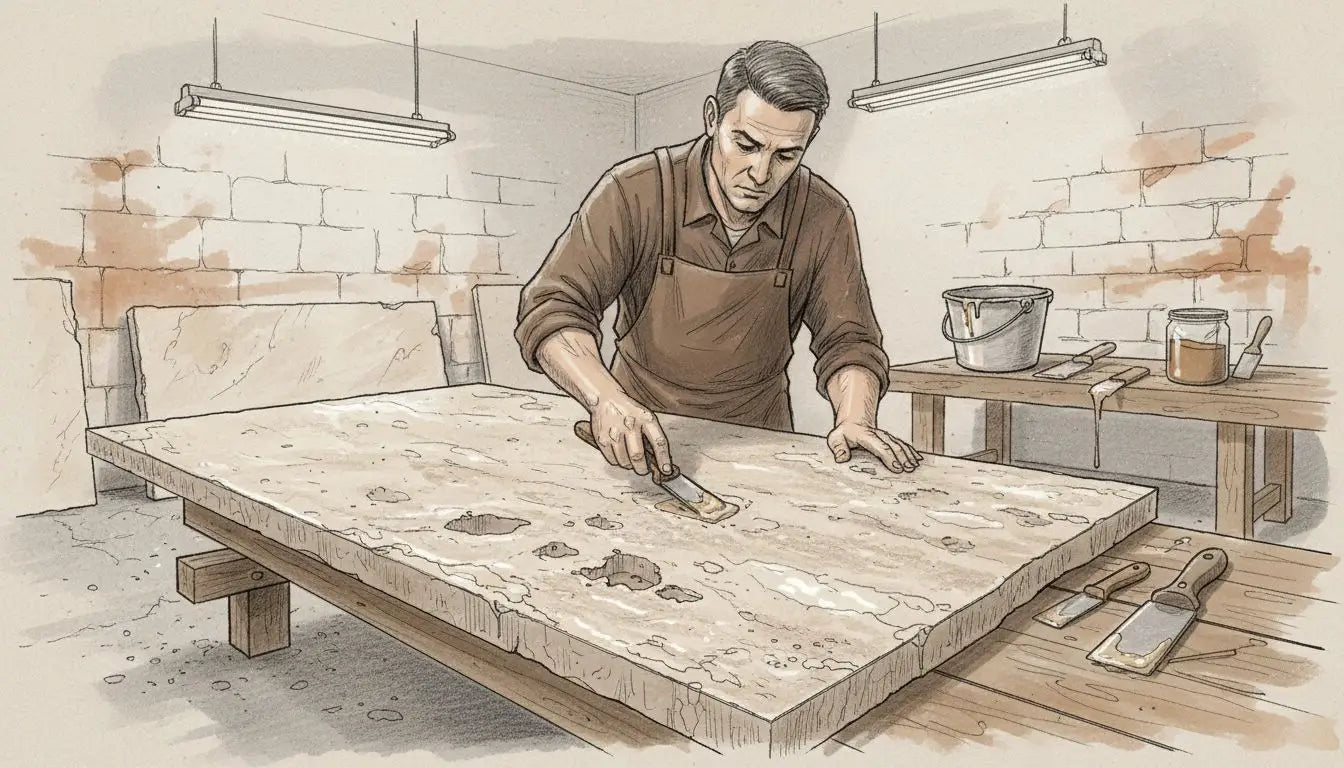
Honing represents the second transformative phase. Rather than a simple polish that adds shine, honing is a controlled abrasion process using progressively finer grit pads that gradually refine the surface texture. The technician starts with coarser grits to level everything, then moves through medium grades, and finishes with fine grits to achieve that characteristic matte finish. This sequential approach creates a uniformly smooth surface that feels refined underfoot while maintaining travertine’s subtle texture and organic character. Unlike polishing, which produces a reflective sheen, honing creates that sophisticated low luster perfect for contemporary upscale bathrooms and kitchens. For your Southern California clients, this finish strikes the right balance between refined and livable—it photographs beautifully without looking overly processed or slippery underfoot.
The entire process requires precision and expertise. Variable curing times, filler compatibility, and grit sequencing all influence the final result. Rushed or poorly executed filling creates voids that reappear after installation, leading to costly callbacks. Inconsistent honing produces surfaces that look blotchy or uneven under certain lighting. This is why sourcing travertine from established suppliers like Surfaces Galore matters for your reputation. The difference between mediocre and excellent filled and honed travertine often comes down to whether the producer invested in proper equipment, skilled labor, and quality control—factors your clients never see but always feel when they interact with the finished surface.
Pro tip: During project specification, request material certifications or test reports showing the filler used and its performance characteristics, which provides documentation that your material meets durability standards and protects you from future disputes about material quality.
Key Benefits For Upscale Interiors
Filled and honed travertine delivers tangible advantages that justify its place in upscale residential projects, especially for the demanding Southern California market where clients expect both beauty and performance. The processing that transforms raw travertine into filled and honed material directly addresses the material’s natural limitations while preserving what makes travertine so desirable in the first place. Your clients get a stone that performs reliably in high-moisture environments without sacrificing the organic warmth and visual interest that attracted them to travertine initially. Understanding these benefits helps you position filled and honed travertine confidently against competing materials.
The most immediate advantage is the sleek, uniform appearance that filled and honed travertine achieves. Raw travertine’s exposed cavities create visual inconsistency that reads as rustic in some contexts and unfinished in others. Once the voids are filled and the surface is honed, the material presents a controlled, intentional aesthetic that photographs beautifully and feels deliberate rather than haphazard. This uniformity matters psychologically to your clients. They perceive filled and honed travertine as a refined choice, appropriate for luxury bathrooms and kitchens where design coherence matters. Beyond aesthetics, reduced natural porosity improves stain and moisture resistance, meaning your clients spend less time battling water rings, soap buildup, and stubborn stains that would otherwise mar the surface. The filling process directly addresses travertine’s main functional vulnerability, transforming it from a high-maintenance statement piece into a genuinely practical material for everyday living.
Maintenance demands drop significantly with filled and honed travertine compared to unfilled alternatives. The sealed cavities prevent debris from settling into the surface, eliminating the tedious vacuuming and brushing unfilled travertine requires. Your clients can clean with standard stone cleaner and a soft cloth rather than fussing with specialized tools designed for porous stone. This practical advantage translates into happier clients who actually enjoy their beautiful spaces rather than resenting the upkeep. The honing process also creates a surface texture that feels refined underfoot in bathrooms and kitchens. Unlike polished travertine that becomes slippery when wet, honed surfaces provide appropriate slip resistance while maintaining that sophisticated low luster that reads as intentional design rather than weathered accident.
Durability extends the material’s visual lifespan dramatically. The sealed voids and refined surface resist the settling dust and mineral deposits that accumulate in unfilled travertine over time. Where unfilled travertine might look noticeably aged after five years in a busy household, filled and honed travertine maintains its appearance with routine care across decades. This longevity makes it a sound investment for clients viewing their homes as lasting spaces rather than temporary design exercises. When you specify filled and honed travertine for kitchen backsplashes, bathroom walls, or feature flooring, you’re selecting a material that will look intentional and maintained years into the future.
Pro tip: When presenting filled and honed travertine samples to clients, place them next to unfilled samples and pour water on both to demonstrate the moisture resistance difference visually; this tangible comparison builds confidence in the performance investment and prevents second guessing after installation.
Filled Vs Unfilled Travertine Compared
The choice between filled and unfilled travertine represents one of the most consequential decisions you’ll make when specifying stone for upscale residential projects. While both originate from the same natural material, the processing path dramatically alters how the stone performs, looks, and feels in your client’s home. Understanding the practical differences moves this from an abstract aesthetic choice into a strategic specification decision that protects your reputation and your client’s satisfaction. When you grasp what truly separates these two options, communicating the value of filled travertine becomes straightforward rather than subjective.
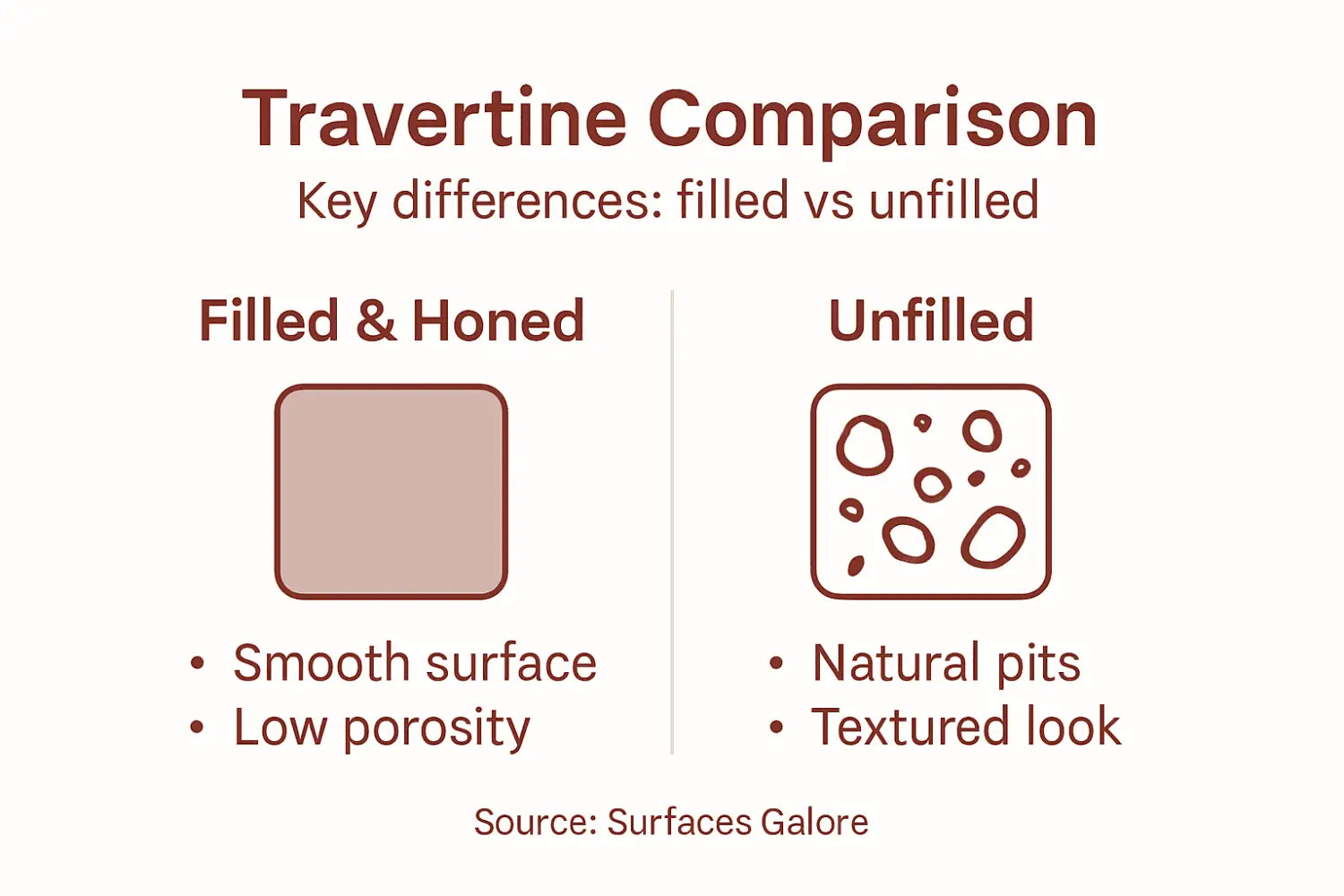
Unfilled travertine presents a rustic, textured aesthetic with all its natural cavities and pits fully exposed. This creates visual interest and undeniable character, making unfilled travertine ideal for applications where rustic charm outweighs practical concerns. Bathrooms and kitchens, however, present problems unfilled travertine struggles to solve. Those exposed cavities become dirt traps where dust, soap scum, and mineral deposits accumulate relentlessly. Your clients end up vacuuming and brushing the stone repeatedly just to maintain basic cleanliness. Water seeps into the voids, requiring aggressive sealing and resealing cycles that become expensive and tedious over time. The maintenance burden transforms what initially felt like authentic character into constant frustration. In contrast, filled travertine addresses these exact problems. The sealed voids eliminate hiding places for debris, water penetrates only into the filler material rather than the stone itself, and routine cleaning becomes genuinely routine rather than archaeological excavation. When choosing the right travertine flooring tile for kitchen and bathroom applications, the maintenance differential alone often justifies the filled option.
Cost differences between filled and unfilled travertine matter, but the comparison requires nuance. Raw unfilled travertine typically costs less initially, creating the impression of value. However, that savings evaporates when you factor in sealing expenses, professional cleaning services, and eventual replacement of prematurely aged material. Filled and honed travertine carries higher upfront costs but delivers dramatically lower lifecycle costs. Your clients enjoy years of beautiful surfaces requiring only basic care, whereas unfilled travertine demands increasingly intensive intervention to prevent degradation. When presenting these options to design-conscious clients in Southern California, frame this as an investment decision rather than a commodity purchase. They’re not simply buying material; they’re buying years of aesthetic satisfaction paired with practical maintainability.
The visual experience differs substantially between the two formats. Unfilled travertine creates obvious texture and variation that feels bohemian or Mediterranean depending on context. Filled and honed travertine presents a refined, controlled aesthetic that photographs beautifully under any lighting condition. The uniform surface reads as intentional design rather than raw material. For contemporary upscale interiors where visual coherence matters, filled and honed travertine delivers the sophisticated appearance clients expect from premium materials. The matte honed finish adds another layer of refinement absent from both polished and unfilled alternatives, creating that perfect balance between luxurious and livable.
Here’s a comparison of filled and honed travertine versus unfilled travertine for upscale interiors:
| Aspect | Filled & Honed Travertine | Unfilled Travertine |
|---|---|---|
| Visual Appeal | Uniform, refined matte look | Rustic, textured surface |
| Maintenance Effort | Easy routine cleaning | Requires frequent deep cleaning |
| Moisture Resistance | High, fewer stains | Low, prone to water marks |
| Long-Term Costs | Lower lifecycle expenses | Higher due to maintenance |
| Typical Applications | Luxury bathrooms, kitchens | Accent walls, outdoor areas |
Pro tip: Create a comparison chart showing total cost of ownership across ten years including initial material, installation, sealing, professional cleaning, and potential restoration costs for both filled and unfilled options; this transparent breakdown convinces cost conscious clients that filled travertine represents genuine value rather than premium pricing.
Selecting Premium Travertine For Projects
Selecting the right travertine for your projects requires more than pointing at a color swatch and hoping for the best. Premium travertine demands evaluation across multiple technical and aesthetic dimensions, each influencing how the finished project performs and appears. Your reputation as a designer depends on making informed choices that align with project requirements rather than settling for whatever is readily available. The process becomes systematic once you understand what separates premium material from mediocre alternatives.
Grade and quality standards provide the foundation for evaluation. Premium travertine exhibits low porosity, consistent coloration, and minimal surface filling, making it suitable for upscale residential applications where durability and aesthetics matter equally. High-grade material means fewer surprises during installation and better performance over time. Examine color uniformity carefully by viewing multiple samples under different lighting conditions. Natural variation is part of travertine’s charm, but premium material demonstrates controlled variation rather than chaotic mixing of warm and cool tones within a single slab. Look for consistent veining patterns and minimal surface defects. Request samples cut from the actual material batches your fabricator will be using, not generic showroom samples that may represent optimistic outcomes rather than realistic production reality.
Pore density and surface characteristics deserve careful attention. While filled and honed travertine reduces porosity concern, premium material starts with inherently lower pore density, requiring less filling intervention to achieve consistent results. Ask your supplier about the source quarry and extraction methods. Material from established quarries with controlled extraction tends to offer more predictable consistency than opportunistic sourcing from multiple sources. The cutting method matters as well. Diamond wire cutting produces cleaner, more uniform surfaces compared to traditional quarry methods. Finish type should align with project requirements. For kitchen backsplashes and bathroom walls in Southern California upscale interiors, honed finishes typically outperform polished alternatives by reducing slipperiness while maintaining sophisticated aesthetics.
Budget constraints often influence material selection, but premium travertine represents value rather than luxury expense when you factor in longevity and client satisfaction. Lower-cost alternatives may appear economical until installation reveals inconsistent coloration, excessive porosity requiring aggressive filling, or surface defects requiring costly remediation. When specifying for high-end residential projects, position premium material as an investment in project success rather than a cost line item. Request detailed specifications from suppliers including pore density data, filler type and percentage, and finish documentation. This documentation protects you by creating accountability and providing reference standards if disputes arise during or after installation. Work with suppliers who provide consistent quality across orders rather than those treating each shipment as a surprise.
Below is a summary of the key decision criteria for selecting premium travertine in residential projects:
| Decision Factor | Premium Travertine | Standard Travertine |
|---|---|---|
| Surface Porosity | Low, needs less filling | High, frequent filling |
| Color Uniformity | Consistent across batches | Mixed tones, less predictable |
| Durability | Withstands daily use | May degrade over time |
| Supplier Quality | Strict standards, certifications | Variable, less documented |
| Project Value | High investment returns | May require costly fixes |
Pro tip: Request small format samples from your fabricator cut from actual slab inventory designated for your project, then mock up a small section of the proposed installation in your client’s space under their actual lighting conditions; this eliminates assumptions and builds confidence that the final result will satisfy expectations.
Elevate Your Design with Filled and Honed Travertine from Surfaces Galore
Designing upscale residential spaces means balancing natural beauty with lasting performance. Filled and honed travertine addresses the challenge of raw stone’s porous surface by enhancing durability and reducing maintenance without losing its authentic charm. If maintaining a sleek, uniform aesthetic with superior moisture resistance and ease of care is your goal, then specifying quality filled and honed travertine is essential.
At Surfaces Galore, we specialize in premium natural stone directly imported to meet exacting standards for color consistency, porosity, and finish. Our travertine tiles and mosaics undergo precise processing to deliver that perfect honed matte look while ensuring voids are carefully filled for long-term resilience. Whether you are a designer, architect, or homeowner seeking timeless elegance and practical longevity, our curated selection supports sophisticated kitchen and bathroom applications tailored to Southern California lifestyles.
Discover the difference authentic, filled and honed travertine can make in your next project. Explore our full range of natural stone options and request samples today at Surfaces Galore. Build confidence with material that combines style and substance for lasting beauty. Visit us now and bring your vision to life with stone crafted for excellence.
Frequently Asked Questions
What is filled and honed travertine?
Filled and honed travertine is a processed version of natural travertine stone where natural voids are filled with resin or cement-like materials, and the surface is honed to a smooth, matte finish, enhancing both its aesthetics and durability.
What are the benefits of using filled and honed travertine in upscale designs?
Filled and honed travertine offers a sleek, uniform appearance, reduced maintenance needs, and improved moisture resistance compared to unfilled alternatives, making it a practical choice for luxury kitchens and bathrooms.
How does filled and honed travertine compare to unfilled travertine?
Filled travertine has sealed voids, requiring less maintenance and providing better moisture resistance, while unfilled travertine retains its natural texture but may trap dirt and require more intensive cleaning and sealing.
What processes are involved in filling and honing travertine?
The filling process involves applying color-matched filler to voids in the travertine, followed by grinding to create a level surface. Honing uses progressively finer grit pads to achieve a smooth matte finish without creating a shine.
Recommended
- Choosing the Right Travertine Flooring Tile for Your Home
- Silver Travertine: 2025 Sleek Flooring, Modern Wall & Soph…
- The Enduring Appeal of Travertine Tile in Modern Homes
- Tumbled vs Honed Tile Understanding the Differences
- Collaborating with Interior Designers | FrameTheWorld
- Interior Decoration for Investment Properties in Lagos | Riva Prime
Leave a comment