

How to Choose Backsplash Tiles for Kitchen Designs: Materials, Styles, and Installation

Key Takeaways
A successful backsplash balances practical protection with the look and feel of the rest of the kitchen. Compare materials, finishes, layouts, and care needs before settling on a tile.
- Choose a tile suited to cooking splashes and the amount of cleaning you want to do.
- Compare natural stone’s distinctive color and texture with its sealing and care needs.
- Test samples beside cabinets and countertops in your kitchen’s actual lighting.
- Plan the tile layout, outlets, edges, and extra material before installation.
- Confirm quantities, current availability, and delivery details before placing an order.
1. Understand what a kitchen backsplash needs to do
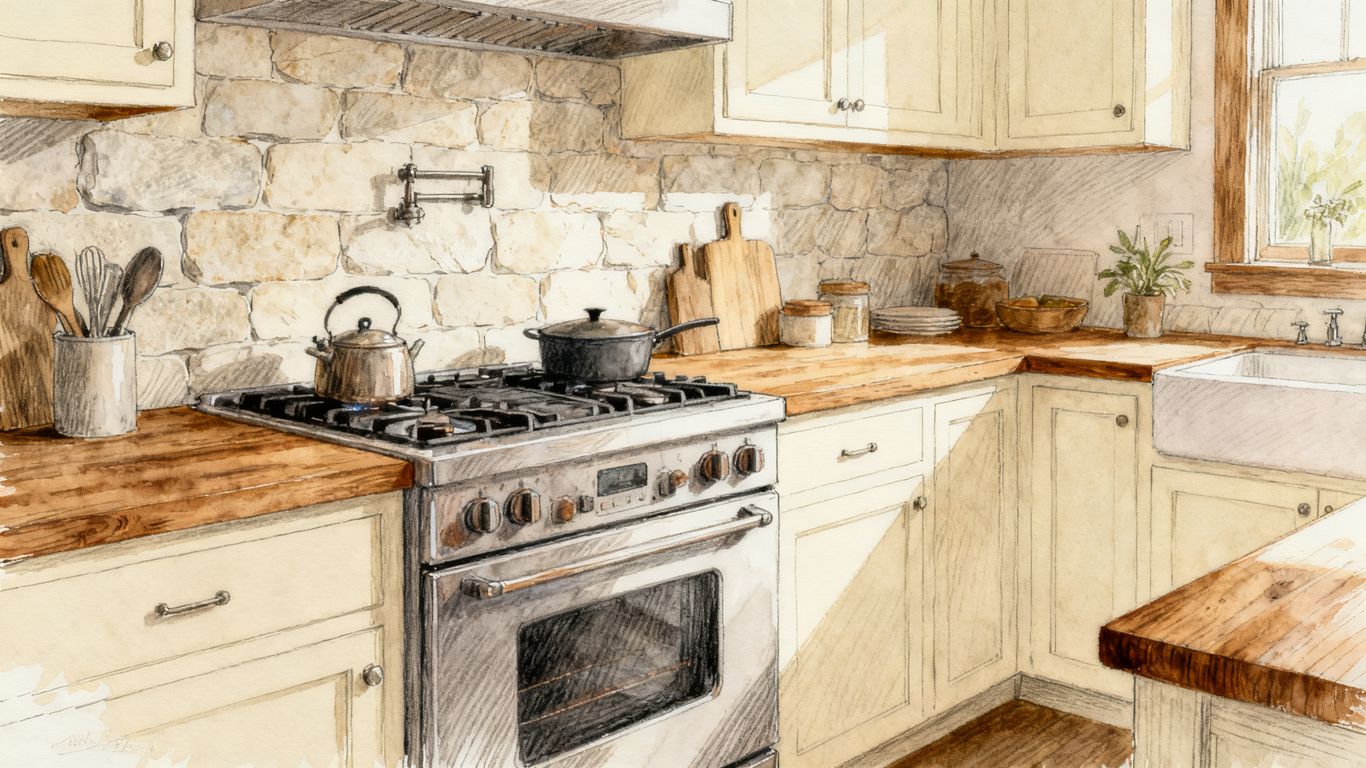
A backsplash is a hardworking surface, but it also connects the main visual elements of a kitchen. The right choice can make cabinets and countertops feel like a considered pair rather than separate decisions. Start by thinking about where cooking messes land, then consider the overall mood you want the room to have. The best backsplash tiles for kitchen projects meet both needs without making the space feel overdesigned.
Protect walls from splashes, heat, and everyday messes
Behind a sink or cooktop, tile helps shield the wall from water, food splashes, and routine cleanup. Materials and grout joints can vary in how easily they show residue, so consider how you actually use the kitchen. A surface that looks lovely in a sample should also feel manageable on a busy weekday. Aim for easy daily upkeep as well as a look you’ll enjoy seeing every day.
Coordinate the backsplash with countertops, cabinets, and appliances
Look at the countertop and cabinet colors together before choosing tile. If those surfaces have pronounced veining or a strong color, a quieter backsplash may help the room feel balanced; more restrained cabinetry can leave room for patterned stone or a mosaic. Lighting changes how finishes and colors read, so compare a sample at different times of day. For a wider design perspective, see these notes on kitchen tile color and lighting.
When the backsplash is part of a bigger renovation, it helps to consider it alongside cabinetry and other decisions. These overviews of kitchen renovation planning, custom kitchen cabinets, and a Dallas remodel touch on how material choices fit into a larger kitchen project. For commercial kitchens, planning commercial LED fixtures may also be part of the lighting conversation.
Decide how far the tile should extend around the kitchen
A standard backsplash often runs from the countertop to the underside of upper cabinets, while a taller section behind the range can create a focal point. You might also continue tile around a window or along a short return wall for a more finished edge. Map the visible wall areas first, including spaces where the upper cabinets stop. A consistent endpoint usually looks intentional; abrupt changes in height can make the installation feel unfinished.
2. Compare backsplash tile materials
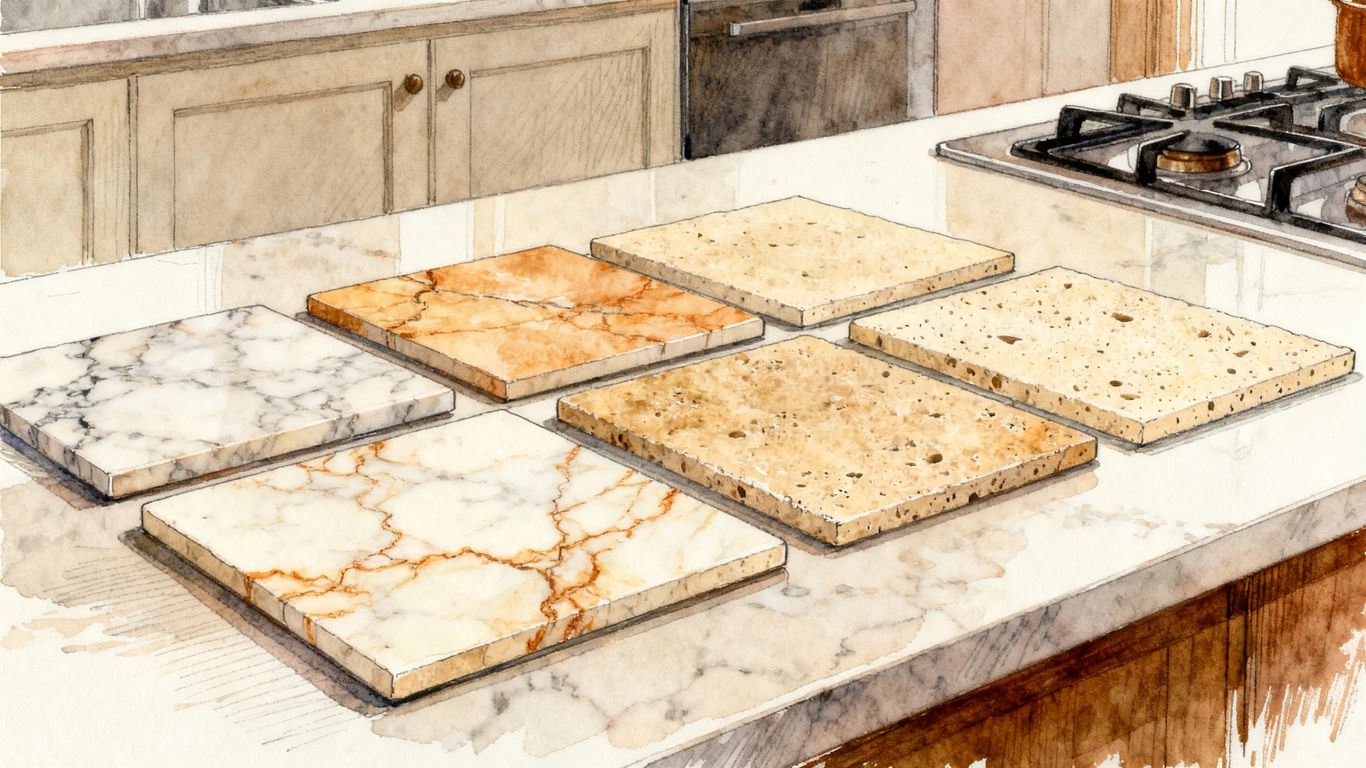
Material affects more than appearance: it influences the variation you see from tile to tile, the surface feel, and the care routine. Marble and travertine bring natural patterns and color variation, while other tile materials can offer a different balance of maintenance, price, and style. Compare the options in person when possible, since a small sample can reveal texture that a photo misses. Surfaces Galore is a direct importer specializing in natural stone, including marble and travertine tiles and mosaics.
Choose marble for distinctive veining and timeless appeal
Marble is a natural stone with distinctive veining, so pieces from the same selection can vary in pattern. Light marble can brighten a backsplash and sit comfortably in traditional or contemporary kitchens, while more dramatic veining creates a stronger feature. Marble is also more prone to scratching and staining than some harder stones, and its porous surface may need sealing. Choose it for its individual character with a clear-eyed view of the care involved.
Consider travertine for warm color and natural texture
Travertine has a naturally warm, earthy character that can soften a crisp kitchen palette. Its varied tones and surface texture work well in both simple tile arrangements and mosaics, and it is used for wall applications as well as floors. As a porous natural stone, it needs sealing to help protect against stains and moisture. A sample will help you decide whether its organic variation feels calm and cohesive with your cabinets.
Weigh natural stone against other tile materials for care and cost
Compare candidates using the things that matter most in your home: look, upkeep, and overall project cost. The table is a useful starting point, not a substitute for checking the specifications of a particular tile.
| Material | Visual character | Care to consider |
|---|---|---|
| Marble | Distinctive natural veining | Porous; sealing may be needed, and it can scratch or stain |
| Travertine | Warm tones and natural texture | Porous; sealing is recommended |
| Ceramic or porcelain | Broad range of colors and styles | Check product guidance for cleaning and installation |
Think about the full installation cost as well as the tile price: pattern complexity, cuts, grout, and professional labor can all affect the budget. For a natural-stone example, Carrara chevron mosaic offers a look at how a patterned marble tile can shape a backsplash. Select the material you are comfortable caring for, not just the one that looks best in a single photograph.
3. Select colors and finishes that suit your kitchen
Color and finish are best judged in context, not in isolation. A tile sample can shift in appearance beside a dark cabinet, a veined countertop, or warm under-cabinet lighting. Think about whether the backsplash should blend in or draw attention, then check your preferred finish under the light you use most. Surfaces Galore lists marble and travertine in finishes including polished, honed, and tumbled options.
Pair light stone with dark cabinets or bold countertops
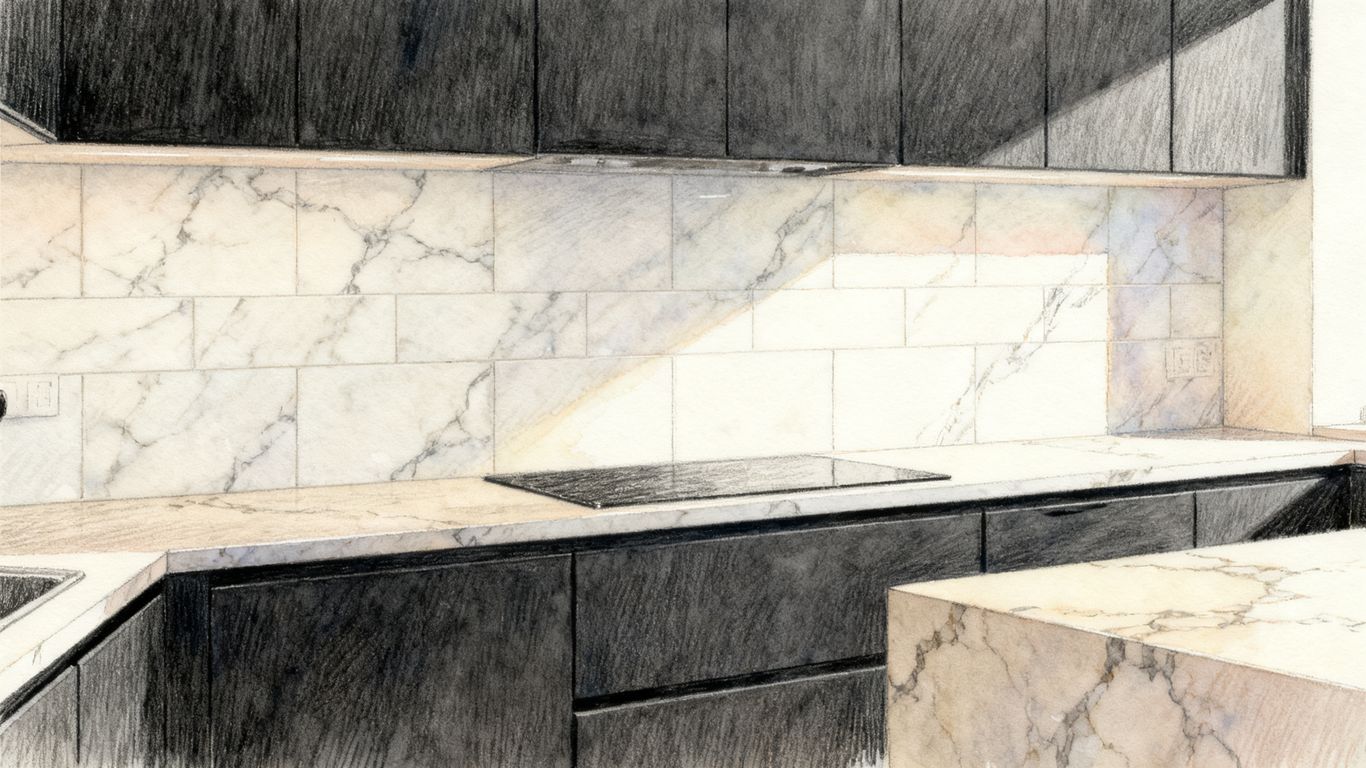
Light stone can create a gentle contrast against dark cabinets, giving the kitchen a brighter band without competing with the cabinetry. When the countertop has bold veining or color, look for a backsplash whose pattern echoes one subtle tone rather than repeating every detail. A sample placed upright against the wall is more revealing than one viewed flat on a table. Check it next to cabinet doors and countertop pieces before making a decision.
Use warm travertine tones to soften a neutral palette
Ivory, beige, and other warm travertine tones can bring softness to kitchens built around white, gray, or wood finishes. Natural variation keeps a neutral palette from feeling too uniform, while a simple layout helps the stone’s character remain easy on the eye. If the cabinets already have a warm undertone, compare samples in the same light to avoid an unexpected mismatch. A small difference in undertone can change the whole impression.
Compare polished, honed, and tumbled finishes
A polished finish has a smooth, reflective appearance; honed stone is matte and softer-looking; tumbled stone has an aged, textured character. Each finish gives the same stone a different presence, and grout color can shift the effect again. Lay samples beside the countertop and view them with the kitchen lights on and off. Take your time—subtle finish differences often matter more once the tile covers a larger wall.
4. Explore tile shapes, patterns, and layouts
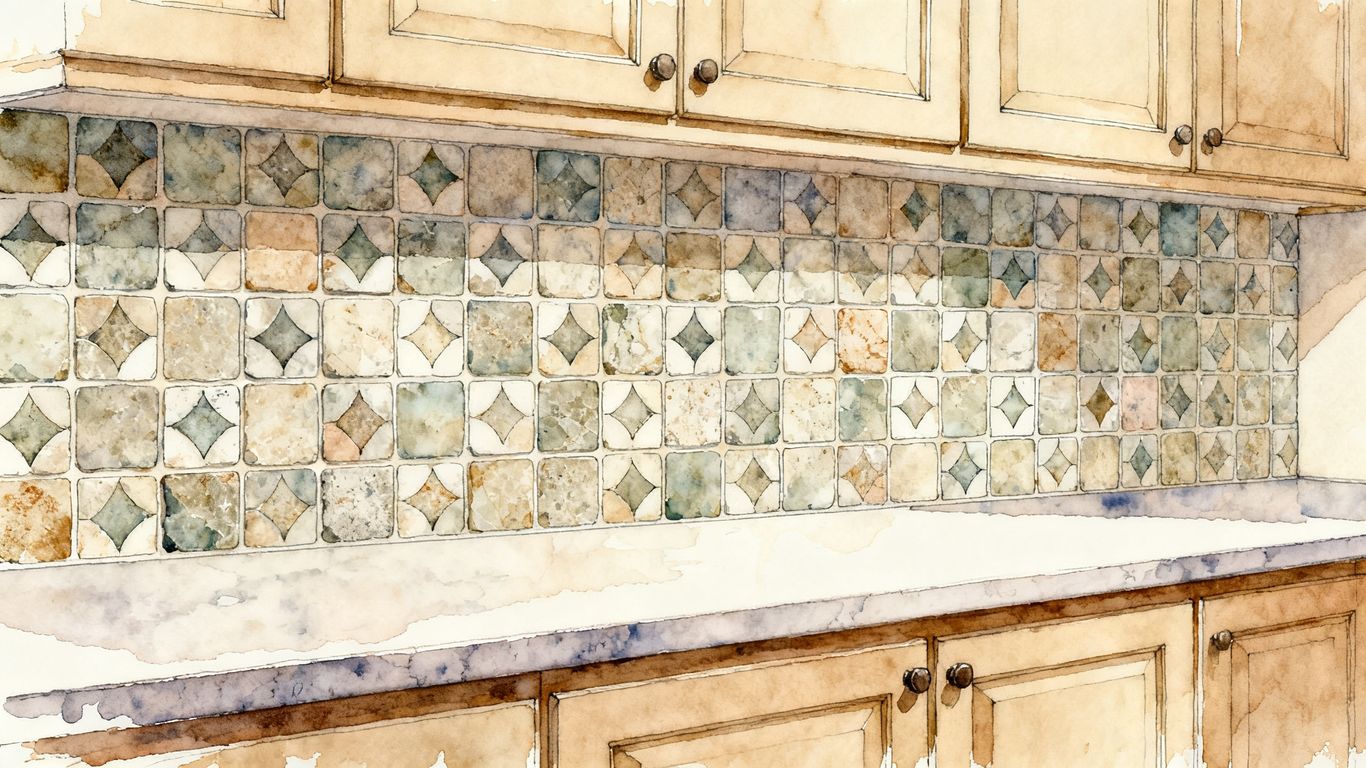
The layout influences how busy, classic, or handcrafted a backsplash feels. A straightforward tile can look polished when its lines are carefully aligned, while a small mosaic adds detail through its shape and rhythm. Consider the scale of the wall and the number of visual patterns already present in the kitchen. The right layout gives the space a focal point without making every surface compete.
Create a classic look with subway tile or a straight-set layout
A horizontal subway layout feels familiar and orderly, while a straight-set arrangement emphasizes clean rows and consistent grout lines. Either can suit a range of cabinet styles; proportions and grout color help determine whether the result feels traditional or more modern. Dry-lay a few rows before setting the tile, especially where the pattern meets a corner or outlet. This quick check can prevent narrow slivers at the edges.
Add detail with herringbone, hexagon, or basketweave mosaics
A herringbone layout creates directional movement, a hexagon mosaic adds a geometric outline, and basketweave brings a more traditional interlaced effect. These patterns can make a compact backsplash feel special, though they require careful planning around edges and electrical outlets. For a natural-stone example, marble mosaic tiles show how a basketweave can combine contrasting stone tones. Let one pattern carry the visual interest and keep nearby finishes quieter.
A short visual reference can help you picture how layout choices change the finished wall. Use the video prompt as a starting point, then compare the ideas with your own kitchen’s proportions.
Use a checkerboard pattern or custom mosaic as a focal point
Checkerboard tile creates a strong, graphic effect, while a custom mosaic can bring several colors or shapes into one defined area. Both options work best when you decide where the feature begins and ends before ordering. A range wall or a section behind open shelving can make a natural focal area. Keep the surrounding tile, cabinetry, and countertop relatively calm so the pattern has room to read.
5. Plan for installation and long-term care
Good preparation helps the finished backsplash look deliberate and makes ordering easier. Measure the wall carefully, note interruptions, and plan for the tile pattern before buying materials. Natural stone requires suitable setting materials and care, so follow the product and installation guidance rather than guessing. For a complex layout or unfamiliar material, consult a professional installer.
Measure the backsplash area and account for outlets and edges
Measure each wall section separately, multiplying its width by height to estimate the area, then account for outlets, windows, and exposed ends. Avoid subtracting every small opening automatically; cuts and breakage may use up some of that material. Patterned layouts can also require extra tile to align the design at edges. The Tile Calculator can help estimate tile counts, boxes, and a waste allowance from your project dimensions.
A concise measuring list keeps the details from slipping through the cracks:
- Record the width and height of each wall section.
- Mark outlets, switches, windows, and cabinet boundaries.
- Note corners, exposed edges, and any change in tile height.
- Add a suitable allowance for cuts, breakage, and pattern matching.
Use those notes to compare your estimate with the supplier’s packaging and project guidance. Ordering a little extra is generally more practical than discovering that a small shortage interrupts the installation.
Choose suitable setting materials and grout for the project
Use setting materials intended for the tile and the surface receiving it, and follow the manufacturer’s instructions. Mortar type, trowel size, joint spacing, and grout selection can all affect the finished appearance. Dry-fitting a section helps you spot awkward cuts before adhesive is applied. For natural stone, checking the installation guidance for the specific product is especially worthwhile.
Seal and clean natural stone according to its finish and care needs
Marble and travertine are porous stones, so sealing can help protect against stains and moisture. Follow the sealer’s instructions and confirm how often the surface needs attention; the appropriate schedule depends on the product and use. For routine cleaning, use a pH-neutral, stone-appropriate cleaner and avoid acidic options such as vinegar or lemon. Small, consistent care habits help preserve the stone’s finish.
6. Choose and order backsplash tiles with confidence
A tile decision feels more settled once you have seen the material in your own kitchen and confirmed the project quantity. Samples let you compare color, veining, and texture beside the actual countertop and cabinetry. Before ordering, check current availability, ask about bulk pricing if the project needs a larger quantity, and confirm delivery details for your location. Surfaces Galore offers marble and travertine products, samples, and nationwide shipping; ask the team about current stock and a project quote.
Request samples to compare color and texture in your kitchen
Place samples upright against the backsplash wall rather than viewing them only on a countertop. Check them in daylight and under your evening lighting, and compare them with cabinet doors, hardware, and countertop material. Natural stone varies, so a sample helps you understand its color and texture without promising that every tile will be identical. You can browse tile collections while narrowing your shortlist.
Check current stock, project quantities, and bulk pricing
Once the design is settled, confirm the product’s current availability and calculate the order using the measured area, tile format, and layout. Ask whether bulk pricing applies to your project quantity, and verify that all boxes come from a suitable lot for a cohesive appearance. If you are deciding between two formats, compare their cuts and waste before choosing. That extra check can make the order more accurate.
Ask about quotes, shipping, and delivery for your location
Before completing the purchase, ask for a quote and confirm shipping cost, timing, and delivery arrangements for your address. Larger orders may require planning for the delivery location and how the materials will be received. Keep the product name, finish, quantity, and any special notes together when you contact the supplier. Clear details make it easier to confirm that the order matches your plan.
Conclusion
Choosing backsplash tiles for kitchen designs comes down to finding a thoughtful balance of protection, material, color, layout, and care. Compare samples in place, measure carefully, and confirm the details before ordering; when you are ready, request a quote for marble or travertine tiles that suit your kitchen.
Frequently Asked Questions
What tile material is best for a kitchen backsplash?
There is no single best material for every kitchen. Consider the look you want, how much maintenance you are comfortable with, your budget, and the product’s installation guidance.
Is marble a practical choice for a kitchen backsplash?
Marble can be a beautiful backsplash material, but it is porous and more prone to scratching and staining than some harder stones. Sealing and suitable cleaning can help protect it, so consider whether its care needs fit your routine.
Does travertine need to be sealed?
Travertine is porous, and sealing helps protect it from stains and moisture. Follow the care directions for the specific tile and sealer you choose.
How do I choose a backsplash color that matches my kitchen?
Compare tile samples against your cabinets and countertop in the kitchen’s actual lighting. A quiet tile can balance a bold countertop, while a more patterned option can add interest to simpler surfaces.
Should backsplash tile match the countertop?
It does not need to match exactly. Coordinating an undertone or a subtle color in the countertop can create a cohesive look, while a considered contrast can add definition.
How much extra tile should I order?
The amount depends on the tile size, layout, cuts, and chance of breakage. Measure the area, include a waste allowance appropriate to the pattern, and confirm your estimate before ordering.
How should I clean natural stone backsplash tile?
Use a pH-neutral cleaner made for stone and follow the product’s care guidance. Avoid acidic household cleaners such as vinegar or lemon, which can affect natural stone.
Leave a comment