

Travertine tile: A complete guide to styles, finishes, and choosing the right stone

Key Takeaways
Travertine tile brings natural variation and an earthy palette to a wide range of spaces. The best choice balances the look you love with the room’s demands and your comfort with routine stone care.
- Expect each tile to vary naturally in tone and pattern.
- Compare color, cut, finish, size, and layout together.
- Match the surface and stone specifications to the room’s use.
- Plan for sealing, careful cleaning, and extra material for cuts.
- View samples and confirm current stock before placing a larger order.
What travertine tile is and why it stands out
Travertine tile is a natural stone with a softly textured look and a palette that often feels at home with wood, plaster, and other natural materials. Its color and markings are formed by nature, so the floor or wall reads as a collection of related pieces rather than a perfectly repeated pattern. That variation is part of its appeal, but it also makes choosing a sample and planning the layout worthwhile. The right selection can bring warmth to a contemporary room just as easily as to a more traditional one.
How travertine forms and gets its natural character
Travertine is a form of limestone associated with mineral deposits from groundwater and hot springs. Over time, those deposits create layers, pores, and varied markings that give the stone its distinctive surface. The geological story is visible in the finished tile: some pieces have fine linear movement, while others have a more mottled, open character. Those differences make travertine feel grounded and individual rather than factory-uniform.
What to expect from natural color and pattern variation
No two pieces are perfectly alike, even within a single selection. A box may include subtle shifts in shade, veining, and texture, so it helps to look at several tiles together before settling on a layout. A dry arrangement lets you distribute strong markings and blend tonal differences across the surface. Natural variation is part of the design, not a defect, though any piece with damage or an appearance you did not expect should be reviewed before installation.
Benefits for residential and commercial spaces
Travertine’s earthy colors work across a broad range of interiors, and the stone is used for floors, walls, backsplashes, and outdoor applications. It can read as quiet and understated in a light neutral palette, or more rustic when the finish and pattern bring its texture forward. That flexibility makes it a useful material to consider for a home renovation or a commercial interior. For a wider look at natural-stone flooring and outdoor uses, browse this travertine and limestone overview.
Considerations for durability, sealing, and upkeep
Travertine is a durable natural stone, but it is porous and needs appropriate care. Sealing helps protect it from stains and moisture; how often to reseal depends on the product, location, and use, so follow the sealer and stone guidance for your specific installation. Use cleaners intended for natural stone, and avoid treating the surface like a material that needs no maintenance. Before choosing, consider whether the care routine suits the way the room is used every day.
Travertine tile colors and styles
Color changes the mood of a room before the pattern or furniture does. Travertine ranges from pale ivory and cream to beige, gold, silver-gray, and deep brown Noce tones, with some varieties blending several hues. Because natural stone varies from piece to piece, a named color is a starting point, not a guarantee that every tile will look identical. Compare multiple pieces and view them alongside the materials already planned for the space.
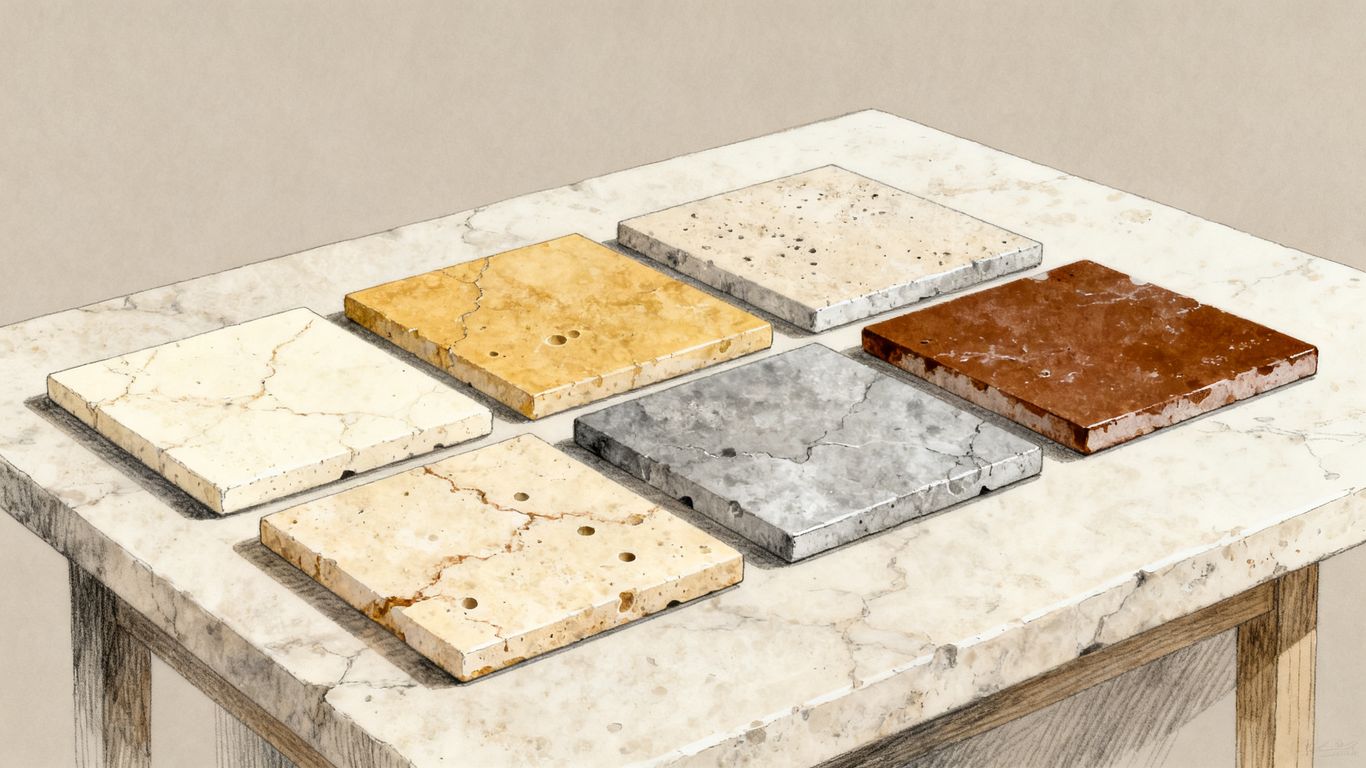
Compare ivory, beige, gold, silver, and Noce tones
Ivory and pale beige can keep a room feeling light, while deeper beige and gold bring a toastier warmth. Silver travertine introduces gray and cooler undertones; Noce tends toward richer brown. A simple comparison can help narrow the palette before you order samples or plan a full room.
| Tone | General impression | Pairing idea |
|---|---|---|
| Ivory | Light and softly warm | Pale walls, light oak, or cream cabinetry |
| Beige | Balanced and versatile | Natural wood and warm whites |
| Gold | Sunny and expressive | Muted neutrals and aged-metal details |
| Silver | Cool and understated | Charcoal, white, and cooler woods |
| Noce | Deep and earthy | Cream walls and warm wood furnishings |
Use these descriptions as a first filter, then compare actual pieces in your room. Surfaces Galore offers Ivory Light Travertine tiles in a soft ivory tone with subtle veining, while its Silver Travertine selection is described as silver-gray with distinctive veining. The stone’s actual appearance can still vary, so sample viewing matters.
Choose between classic and vein-cut patterns
A classic or cross-cut appearance tends to show a more clouded, open arrangement of color and markings. Vein-cut stone presents the layers in a more linear direction, creating long bands that can feel tailored or architectural. Either can work in a traditional or modern setting; the deciding factor is often whether you want the stone to blend into the room or create a stronger visual rhythm. When considering a vein-cut option, check how the direction of the markings will run across the planned installation.
Explore varieties such as Malibu, Scabos, and Philadelphia
Collection names can help distinguish a particular look, but viewing the material is still the surest way to judge color and movement. Malibu is described in warm beige, tan, and creamy hues; Scabos brings a lively blend of reds, browns, and golds; Philadelphia is associated with warm beige tones. These examples illustrate how broad the travertine palette can be, from restrained neutrals to a more colorful mix. Compare a sample with your cabinetry, paint, and flooring before deciding which character feels right.
Coordinate stone color with cabinetry, walls, and furnishings
Start with the large, fixed surfaces in the room: cabinets, wall color, counters, and any adjoining floor. A light travertine can soften strong wood grain, while a darker or more varied stone may need simpler furnishings to keep the space from feeling busy. Bring samples into the room and check them beside those materials, rather than choosing from a screen alone. For broader kitchen planning context, this Dallas kitchen remodel guide discusses material and layout decisions; the specific tile selection should still be based on your project and stone samples.
Finishes, sizes, and tile patterns
Finish changes the way travertine catches light and feels underfoot, while size and layout affect the visual scale of the room. Polished stone reflects more light; honed stone has a smoother matte appearance, and brushed or tumbled finishes add more tactile character. Tile formats range from small mosaics to larger pieces, and a pattern can make those same colors feel either orderly or relaxed. Choose these details together, since finish, format, and layout shape the overall impression.
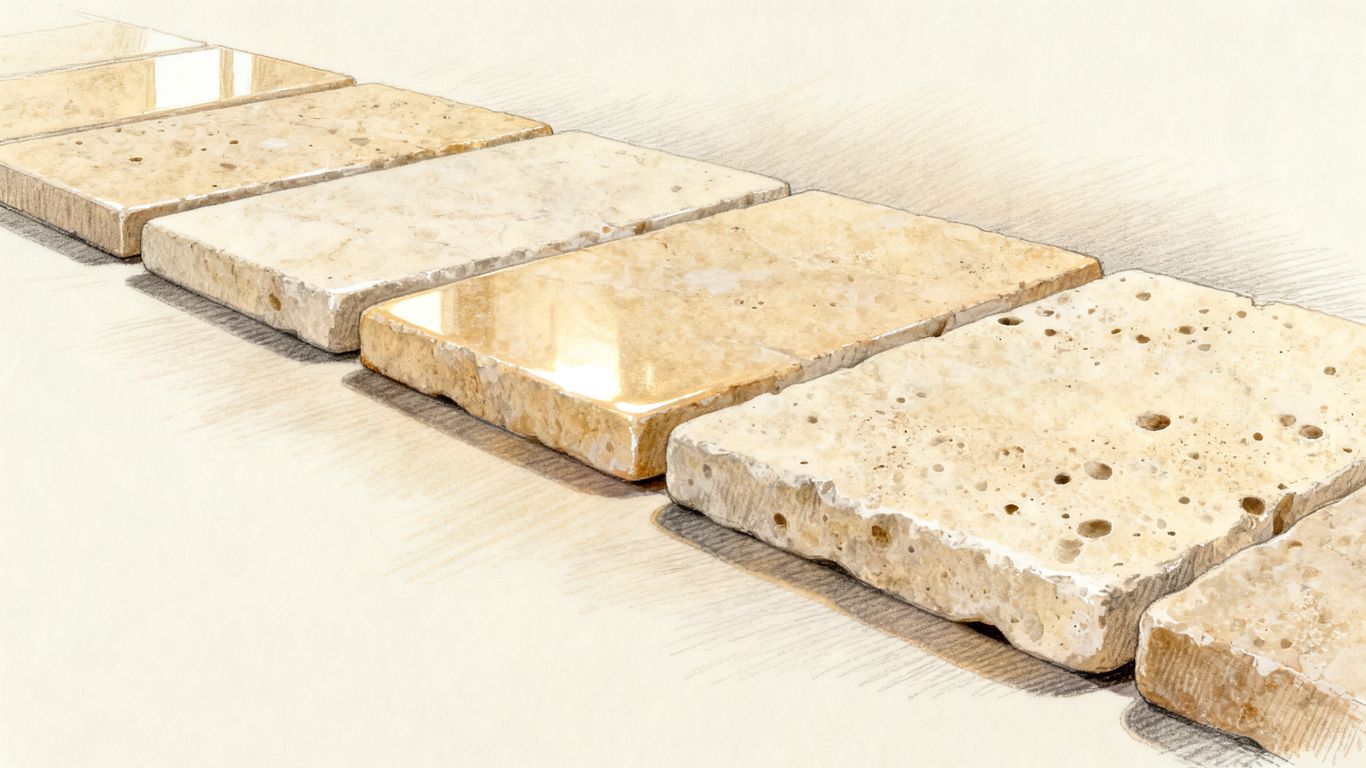
Select polished, honed, brushed, or tumbled finishes
A polished surface has a glossy appearance, while honed travertine is smoother-looking and matte. Brushed stone has a textured feel, and tumbled tile leans toward a softened, rustic character. The right finish depends on the look you want and the product’s suitability for the intended location. For outdoor or wet areas, confirm product specifications and consider options identified as slip-resistant rather than assuming every finish performs the same way.
Match tile size to the room and visual scale
Larger tiles can create a quieter field with fewer grout lines, while smaller formats bring more repetition and detail. Room dimensions, transitions, and the amount of cutting needed all matter; a size that looks balanced in a sample can read differently across a whole floor. For example, the La Travonya 18x18 honed tile is one option to compare when considering a larger-format look. Check the listed dimensions and finish for any particular product before planning around it.
Use French pattern layouts for a varied, classic look
A French pattern, also called a Versailles pattern, combines several tile sizes in a repeating arrangement. It creates a varied surface that can feel established and relaxed, especially with a natural stone whose color changes gently from piece to piece. The layout needs advance planning because the pieces must be arranged in the intended sequence. The La Travonya Versailles pattern set offers a reference for exploring this format and its installation considerations.
Add detail with mosaics, borders, and trim
Mosaics can introduce a smaller-scale pattern on a backsplash, shower wall, or accent area, while borders and trim define an edge or transition. Travertine mosaics come in different shapes and patterns, so they can echo the larger tile or deliberately create contrast. A narrow border may be enough to frame a field without making the room feel overdesigned. If you want a compact detail in a backsplash, compare the La Travonya brick mosaic with the main tile and grout color before committing.
Where travertine tile works best
Travertine can suit a range of interior and exterior settings, but suitability depends on the individual product and its specifications. Floors, walls, and backsplashes each place different demands on the surface, and outdoor areas call for particular attention to finish and intended use. Think through water exposure, foot traffic, cleaning, and the visual relationship to adjacent materials before choosing. A sample helps you judge the stone’s appearance; product information helps you decide where it belongs.
Create warm, durable floors in living spaces
In living rooms, entryways, and other shared spaces, travertine adds a natural surface with warm, varied character. A consistent layout can let the stone’s markings do the work, while a French pattern gives the floor more movement. Consider foot traffic and the maintenance routine before selecting a finish, and inspect tiles for cracks, chips, or excessive warping before installation. For a fireplace renovation, this Saratoga fireplace surround guide offers adjacent design inspiration for coordinating a focal point with its surrounding room.
Design bathroom floors, shower walls, and accents
Travertine can be used in bathrooms for floors, shower walls, and decorative accents, provided the chosen product and installation suit the location. For a shower floor, surface texture and slip considerations deserve particular attention; for walls, color and pattern may take precedence. Sealing and ongoing care should be part of the plan, especially in areas exposed to moisture. If the project involves a full bathroom remodel, this bathroom renovation planning resource covers contractor selection and project scope.
Add natural texture to kitchen backsplashes
A travertine backsplash brings visible texture to a kitchen without requiring stone across every surface. Mosaics can add detail behind a range or sink, while larger tiles create a quieter backdrop for cabinets and counters. Consider splashes, cooking residue, and cleaning needs when choosing a finish and grout color. A sample held against cabinet and counter materials can quickly show whether the stone reads too warm, too cool, or just right.
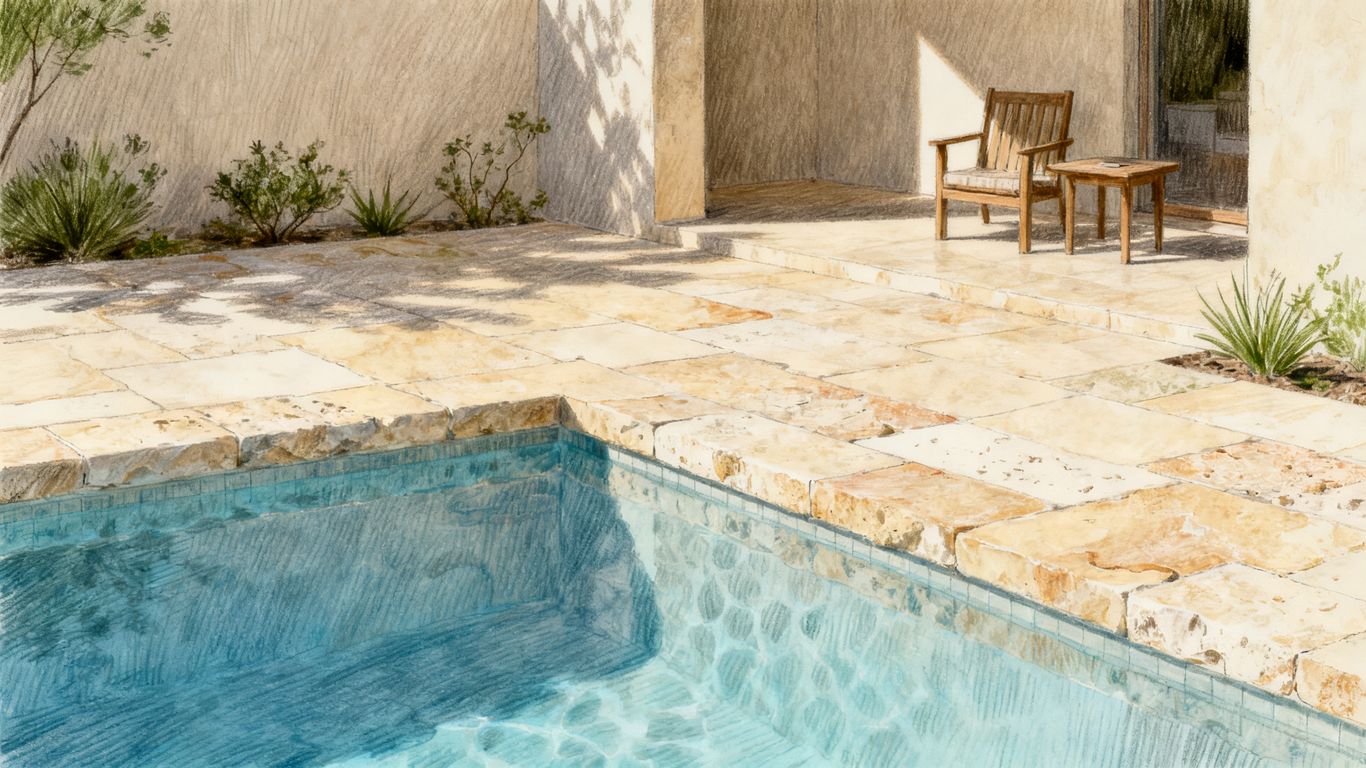
Choose suitable options for patios and pool areas
Travertine is used outdoors for patios and pool areas, but not every tile is intended for every exterior application. Check product specifications for outdoor suitability, finish, and any care guidance, then consider drainage and the surrounding conditions as part of the installation plan. Textured and identified slip-resistant options may be worth comparing for areas where people walk with wet feet. This commercial lighting selection guide is a separate planning reference for projects that also involve lighting; use stone-specific product details to make the tile decision.
How to choose travertine tile for your project
A good selection begins with the room, not just a color name. Decide where the stone will go, how the space is used, and how much natural variation you want to see across a wall or floor. Then narrow the options by finish, format, and layout, keeping maintenance and product suitability in view. Taking those steps before ordering can help avoid surprises once the material arrives.
Balance appearance, use, and maintenance needs
Begin by describing the look you want in plain terms: pale and quiet, warm and rustic, or strongly patterned. Then consider how the room functions and whether the proposed finish suits its exposure and traffic. A polished floor, a textured patio, and a kitchen backsplash do not have identical priorities. A practical shortlist can keep the decision grounded:
- Choose the room and intended application first.
- Decide how much color and pattern variation feels comfortable.
- Compare finishes for appearance, texture, and product suitability.
- Include sealing and stone-safe cleaning in your upkeep plan.
Once those basics are clear, compare the remaining options side by side. This is usually more useful than trying to choose from a long list of colors without a specific room in mind.
Confirm tile dimensions, finish, and available stock
Check the product’s listed dimensions, finish, and intended applications before placing an order. Natural stone has variation, and the sample may not show every difference present in a larger quantity, so ask about current stock and review available product details. Also confirm whether the tile is filled, unfilled, or described with another surface treatment; those details affect how it looks and feels. A product name alone is not a substitute for checking the specification.
Estimate quantities and plan for extra material
Measure the area carefully, account for openings and edges, and add an allowance for cuts, breakage, and future matching needs. The right extra amount depends on the room shape, tile format, and pattern; a complex layout may require more than a simple rectangular floor. The Tile Calculator can help estimate tile and box quantities from room dimensions, tile size, and a chosen waste allowance. Treat the result as a planning estimate and verify box coverage and product details before ordering.
Compare samples under your project’s lighting
Natural and artificial light can shift how a stone’s undertones appear. Place samples beside fixed finishes at different times of day, and look at them both close up and from across the room. If you are choosing a multi-piece layout, compare several tiles together so you can see the range of variation. An in-person sample is a small step that can make a large order feel much more certain.
Installation, care, and buying travertine tile
A successful stone project depends on preparation as much as selection. Inspect the tiles, plan the layout, use materials intended for natural stone, and follow the product and setting-material instructions. After installation, sealing and gentle, stone-appropriate cleaning help protect the surface. When buying, confirm dimensions, stock, quantities, shipping details, and any price terms before the project schedule is set.
Prepare the surface and select compatible installation materials
The substrate should be suitable for the installation, clean, and properly prepared before tile is set. Dry-lay the pieces first to check the pattern, distribute natural color variation, and avoid awkward cuts at edges. Select mortar, grout, and other materials according to the stone and the installation conditions, following their manufacturers’ directions. The La Travonya 4x4 installation guide gives a product-specific reference for inspection, layout, preparation, and installation steps.
Follow sealing and routine cleaning guidance
Because natural stone is porous, sealing helps protect travertine from stains and moisture. Follow the sealer’s directions for application and curing, and ask for product-specific guidance rather than assuming every tile has the same requirements. For everyday care, use a cleaner made for natural stone and wipe spills promptly. The frequency of resealing depends on use and conditions, so assess the surface regularly and follow the care guidance for the materials installed.
Understand project costs, shipping, and bulk-order pricing
The total project budget includes more than the tile: quantities, layout, installation materials, labor, freight, and any extra pieces all contribute. Ask for a quote based on the product, finish, quantity, and destination, and confirm shipping timing before aligning it with an installer’s schedule. Surfaces Galore is an Anaheim, California-based direct importer and nationwide supplier of natural stone, and the business describes bulk discounts and cross-country shipping as part of its service. For larger orders, request current pricing and stock details directly rather than relying on an estimate.
Explore Surfaces Galore’s collection and request a quote
Surfaces Galore offers travertine tiles, mosaics, slabs, and pavers in a range of finishes and colors, including options for interior and outdoor applications. Compare the collection with your room requirements, request a sample if you want to see the stone in person, and confirm product specifications before ordering. For project-specific pricing and availability, request a travertine quote with the finish and quantity you have in mind.
Conclusion
Travertine tile offers natural color, texture, and pattern variation that can make floors, walls, and outdoor spaces feel welcoming and individual. Choose with the room’s use and care requirements in mind, compare samples in your own lighting, and confirm specifications and quantities before ordering. With a considered finish and layout, the stone’s natural character can become a lasting part of the space.
Frequently Asked Questions
Is travertine tile suitable for floors?
Travertine is used for floors, but the right product and finish depend on the room, traffic, and care expectations. Confirm the tile’s specifications and intended application before selecting it.
Does travertine tile need to be sealed?
Travertine is porous, and sealing helps protect it from stains and moisture. Follow the stone and sealer instructions, including guidance on when to reseal.
What is the difference between honed and tumbled travertine?
Honed travertine has a smoother, matte appearance, while tumbled tile has a more textured, softened, rustic look. The specific feel and appearance can vary by product.
Which travertine color is easiest to coordinate?
Ivory and beige are versatile neutral starting points, while gold, silver, and Noce create distinct warmer or cooler effects. Compare samples against the room’s fixed finishes before deciding.
Can travertine be used in bathrooms?
Travertine is used for bathroom floors, shower walls, and accents. Choose a product suitable for the location, consider slip and moisture requirements, and plan for sealing and routine care.
Can travertine tile be used outdoors?
Some travertine products are suitable for patios and pool areas. Check the product specifications for outdoor use and follow installation and maintenance guidance for the site conditions.
How much extra travertine tile should I order?
The amount depends on the room shape, tile dimensions, pattern, and expected cuts or breakage. Measure carefully, include a reasonable waste allowance, and verify the quantity against the product’s box coverage.
Leave a comment