

Stone: How to Choose Natural Stone for Your Home

Key Takeaways
Natural stone brings color, texture, and variation that can make a room feel distinctly yours. The right choice balances the look you love with how the space will be used and cared for.
- Match stone type and finish to the room’s traffic, moisture, and exposure.
- Compare color, veining, and texture in samples under your home’s lighting.
- Account for sealing, cleaning, waste, delivery, and installation when budgeting.
- Confirm sizes, finishes, stock, and lot consistency before placing an order.
- Ask questions early and get project quantities and installation details in writing.
Understand the main types of natural stone
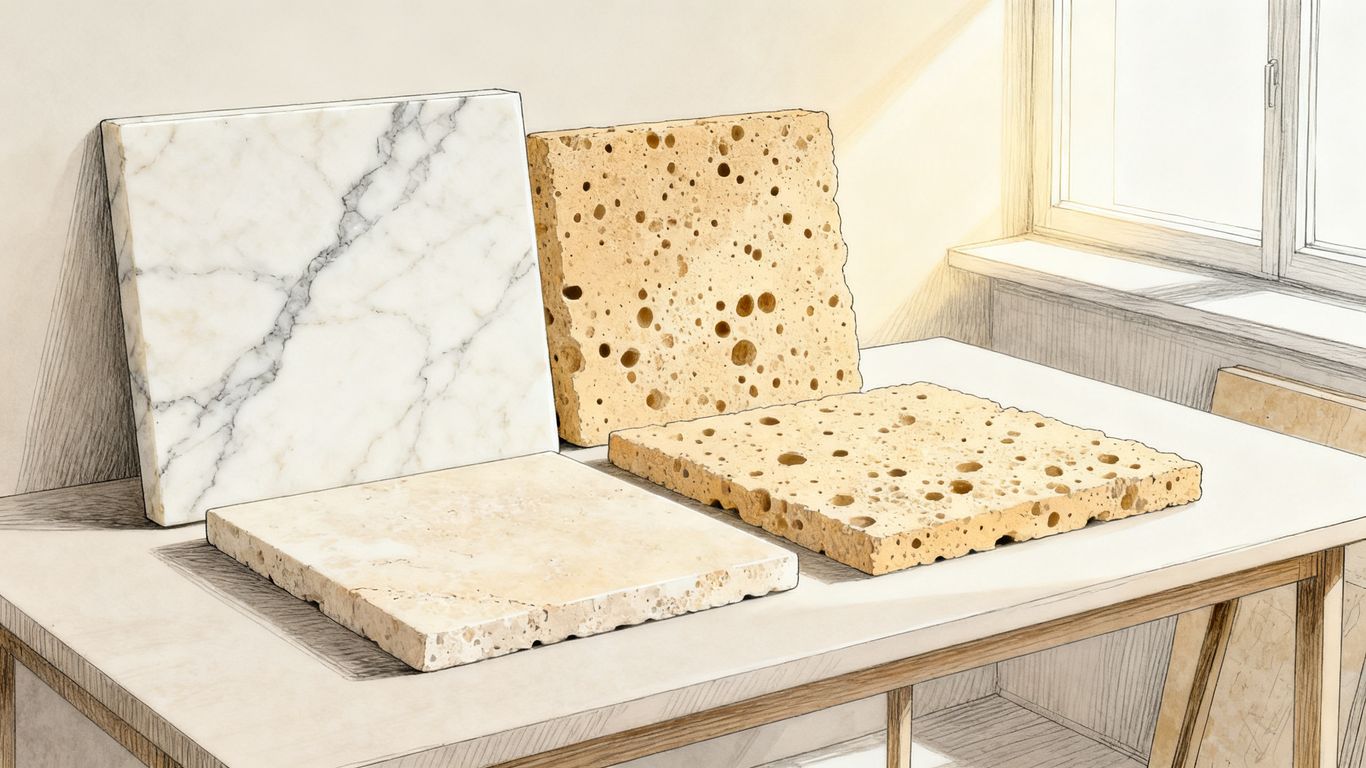
Natural stone is formed with its own color shifts, markings, and texture, so no two pieces look exactly alike. Marble, travertine, limestone, granite, and slate each bring a different character and set of practical considerations. Start by thinking about the atmosphere you want, then consider how much wear and upkeep the material will face. A little comparison makes it easier to choose a stone that feels right long after installation.
Marble for distinctive veining and elegant interiors
Marble is known for expressive veining and a polished, classic presence, though honed surfaces offer a softer, matte look. It can bring a bright, clean feel to a bathroom, fireplace surround, or feature wall, while darker varieties create a more dramatic mood. Surfaces Galore offers marble tiles and mosaics in a range of natural colors and patterns. If you are considering a focal point, explore fireplace surround ideas alongside the stone’s color and veining so the surrounding details feel intentional.
Travertine for warm, textured floors and outdoor spaces
Travertine’s earthy tones and natural texture suit rooms that call for warmth rather than a highly formal finish. Depending on the finish and product specifications, it can be considered for interior floors, walls, patios, and pool areas. Surfaces Galore specializes in travertine tiles, mosaics, and moldings, with finishes that range from smooth and honed to visibly textured. Browse natural-stone inspiration to see how varied stone surfaces can influence a room or outdoor setting.
Limestone for a soft, understated look
Limestone tends to have subtle color variation and a quiet, organic appearance, making it a natural fit for restrained palettes. It is softer and more porous than some other stones, so the finish and the amount of daily wear matter when choosing where to use it. For a low-traffic room or a wall application, its gentle texture can add depth without taking over the design. Ask about care requirements before settling on a particular limestone product.
Granite, slate, and other stones for added variety
Granite and slate offer alternatives when you want a different visual character or performance profile. Granite is known for hardness and resistance to heat and scratches, while slate is durable and can provide a naturally textured, slip-resistant surface. The table below offers a starting point, not a substitute for checking the exact stone and finish you plan to buy.
| Stone | Visual character | Considerations |
|---|---|---|
| Granite | Varied colors and natural patterns | Hard and resistant to heat and scratches |
| Slate | Deep tones and textured surfaces | Often chosen where slip resistance matters |
| Sandstone | Rustic, layered appearance | Sealing may be needed |
| Soapstone | Smooth, matte look | Naturally resistant to heat and stains |
Use these broad differences to narrow your shortlist, then check product details for the intended application. Natural material varies, so inspect actual samples before committing to a large order.
Match stone to the space
A stone that looks beautiful in a sample can behave differently in a busy kitchen or a wet shower. Think about foot traffic, standing water, sunlight, and the way a space is cleaned before choosing a material or finish. Product specifications matter, especially for outdoor use and areas with frequent moisture. When the intended use is clear, it becomes easier to compare options without being distracted by appearance alone.
Choose flooring for traffic, moisture, and wear
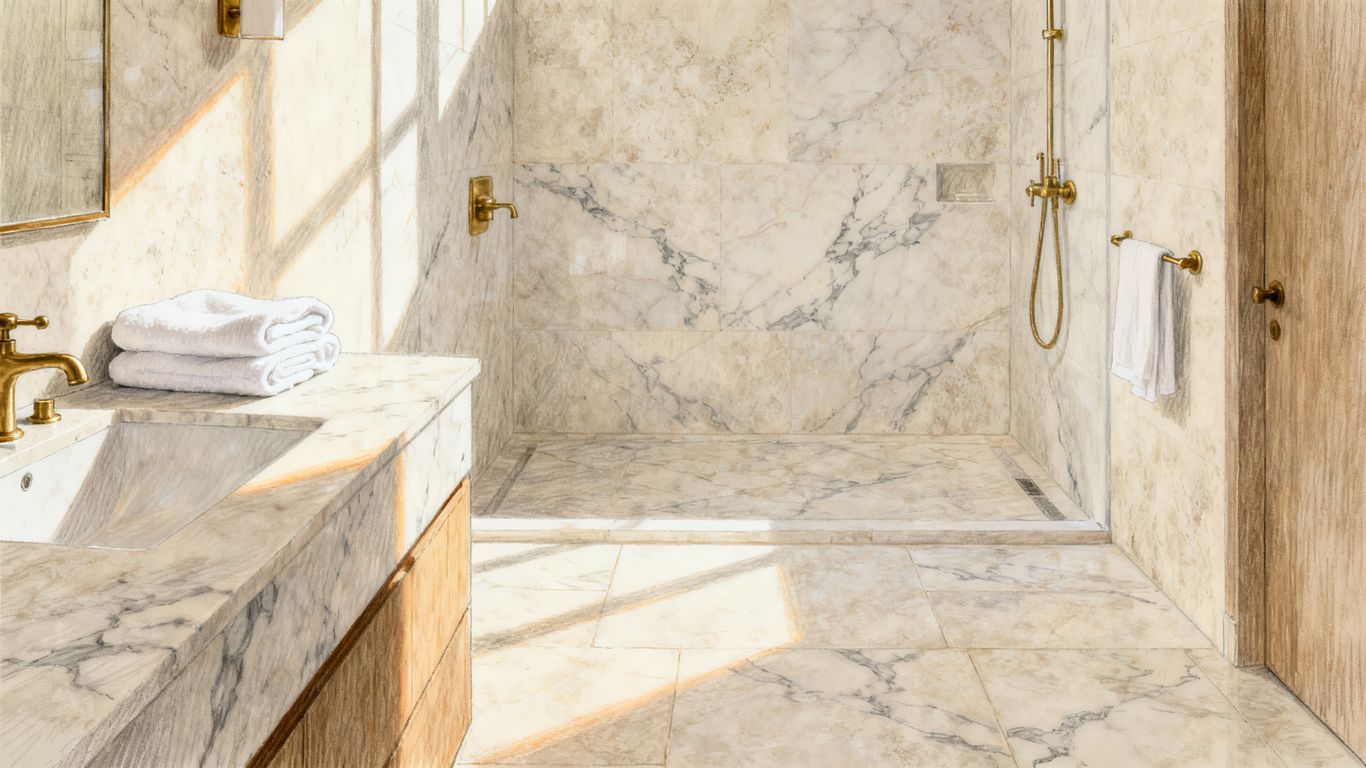
Hallways, kitchens, and entryways see more daily wear than a guest room, so durability and maintenance deserve attention. Granite is notably hard, while marble and limestone are softer and can be more prone to scratching or staining. In a bathroom or other damp area, a textured or honed finish may be preferable to a highly polished one; confirm suitability for the specific product and conditions. For a renovation that involves a contractor, bathroom contractor planning can help frame questions about scope, materials, and installation responsibilities.
Compare stone options for bathroom walls and showers
Bathroom walls let you enjoy expressive veining or color without putting the stone under the same direct wear as a floor. Shower floors need a different level of care: the chosen surface must be appropriate for wet use, and grout lines and drainage should be considered as part of the full installation. Samples can reveal whether a pale marble reads warm or cool beside the fixtures and paint. Ask an installer to confirm that the stone, setting materials, and waterproofing plan work together.
Select surfaces for kitchens and entertaining areas
Kitchen surfaces should suit both the room’s look and the habits of the people using it. Granite is known for heat and scratch resistance, while marble may be more susceptible to etching and staining; stone selection and care expectations should be part of the decision. If you are weighing countertop materials, a quartz and granite comparison can help you frame the broader choice without losing sight of the stone’s own pattern and feel. For a backsplash or serving area, samples can help coordinate the stone with cabinetry and lighting.
Consider weather exposure for patios and exterior features
Outdoor stone needs to suit the local weather, intended use, and installation conditions. Travertine and pavers are used in outdoor settings, but exact product specifications should guide the choice, particularly around pools and areas that stay wet. Consider texture underfoot, water movement, and how the stone will meet doors, planting beds, or other surfaces. A material selected for its outdoor performance can still bring the natural warmth that makes a patio feel connected to the home.
Compare appearance, finishes, and formats
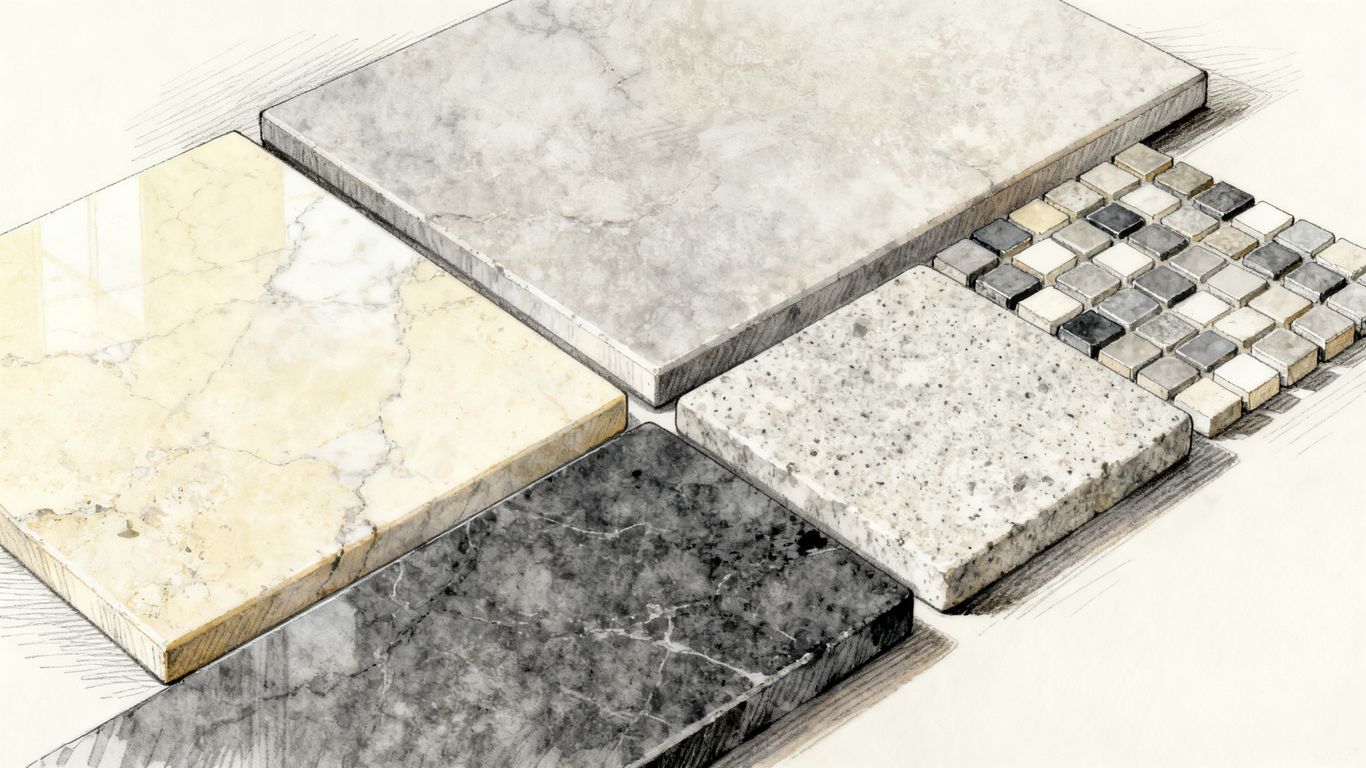
Stone’s character comes from more than its base color: veining, texture, finish, and tile size all affect the final result. A polished surface reflects light; a honed one feels quieter and more matte. Format changes the rhythm of a room, from small mosaics to larger field tiles or patterned layouts. Compare these elements together so the sample you love also makes sense at the scale of the project.
Coordinate color and veining with your design
Look at the stone beside the colors and materials that will remain in the room, such as wood, cabinetry, paint, and metal fixtures. Marble’s veining can become a focal point, while limestone’s subtler markings may sit more quietly in a restrained palette. For a stronger look, darker stone can add contrast; for a calmer one, stay close to the room’s existing tones. You can also explore Statuario White marble as one example of a pale stone with visible veining.
Choose between polished, honed, tumbled, and textured finishes
A finish changes how stone feels and how it catches light. Polished surfaces are smooth and reflective, while honed finishes are matte; tumbled and other textured options have a more aged or tactile appearance. The best match depends on the look, location, and care you are comfortable with. Finish names can vary by product, so check the actual sample and product details rather than relying on the label alone.
Explore tiles, mosaics, moldings, and ledger panels
Format helps determine how much detail a stone brings into the room. Larger tiles create broad visual planes, while mosaics can add pattern and suit compact areas or accents; moldings and ledger panels provide other ways to finish edges and feature walls. For planning quantities, the Tile Calculator can help estimate tiles and boxes from room dimensions, tile size, and a waste allowance. Its estimate is a useful starting point, but confirm your final order with the installer’s layout and cutting plan.
Use samples to assess stone in your home’s lighting
A small sample is a practical way to see how stone changes through the day. Set it near the intended installation area and look at it in morning, afternoon, and evening light, next to nearby finishes. Pay attention to both color and surface texture; a pattern that appears subtle in a showroom may read more strongly across a larger floor. If you are comparing samples, keep them together so the differences are easy to judge.
Evaluate durability and maintenance
Natural stone is not one uniform material: porosity, hardness, and finish vary, even within the same broad stone category. That variation affects how a surface responds to spills, scratches, and regular cleaning. Consider the care you are willing to give the material, not only how it looks on installation day. With realistic expectations and suitable products, stone can remain an appealing part of a home for years.
Understand porosity, staining, and scratch risks
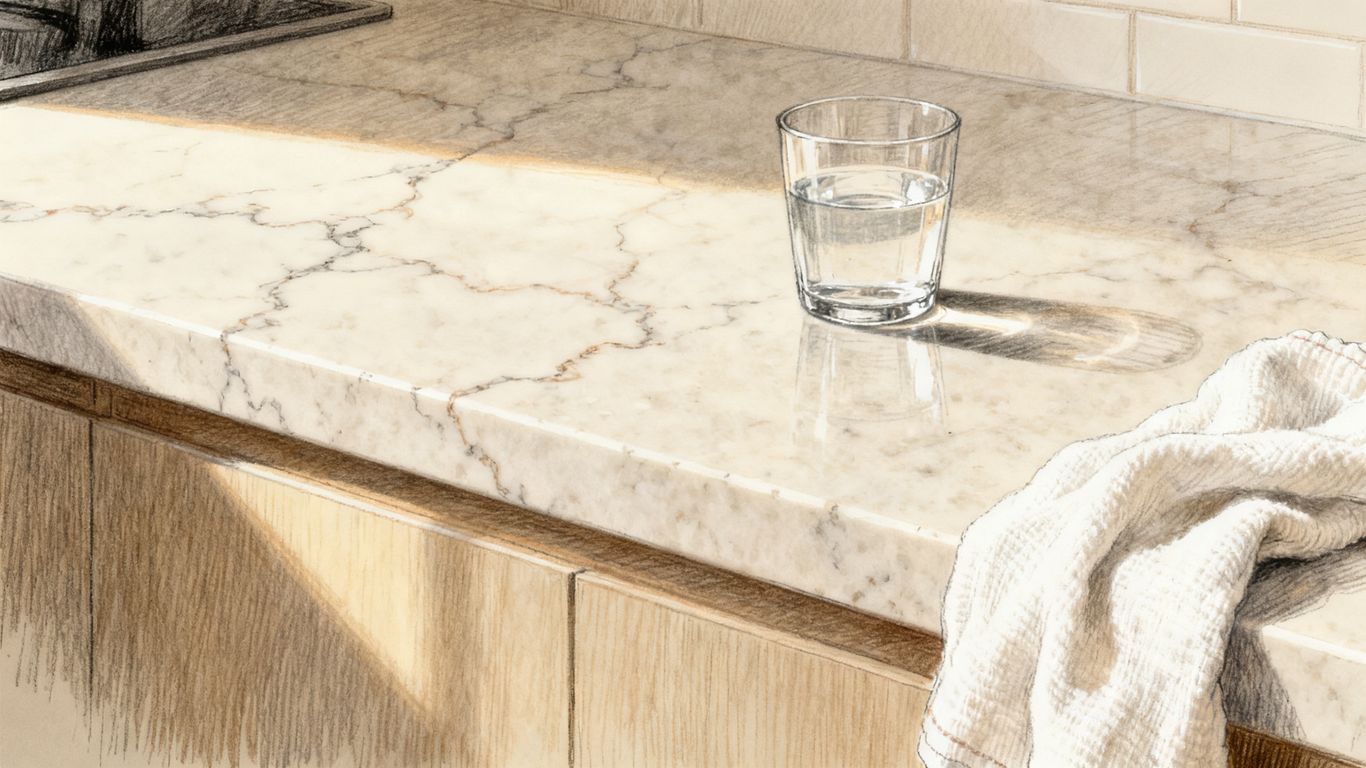
More porous stones, including marble and limestone, can be more vulnerable to staining and may need sealing. Softer stones can also scratch more readily than harder options such as granite. In kitchens, bathrooms, and entryways, think about what regularly touches the surface and how quickly spills can be cleaned. Ask for care guidance specific to the stone and finish rather than assuming all natural stone behaves alike.
Decide when sealing is needed
Sealing can help protect porous stone against stains and moisture, but the need and schedule depend on the material, product, location, and use. Check the manufacturer’s guidance before installation and use a compatible sealer where recommended. Some guidance suggests periodic resealing, but there is no single interval that fits every stone and household. A small test in an inconspicuous spot can help confirm how a product behaves before broader application.
Use pH-neutral cleaners and avoid acidic products
For routine care, use a cleaner intended for natural stone and follow its directions. Acidic products such as vinegar or lemon-based cleaners can damage susceptible stone, so they are best avoided unless the stone manufacturer explicitly approves them. Wipe spills promptly, especially in food-preparation areas, and use soft cloths or pads that will not scratch the finish. These simple habits help preserve the surface without turning maintenance into a complicated routine.
Balance upkeep with the look and performance you want
A high-contrast marble may be worth the extra attention if its veining is central to the design; a harder stone may make more sense for a heavily used work surface. Make the trade-off explicit before you order: visual character, expected wear, cleaning habits, and sealing needs all belong in the decision. If you prefer a tactile finish, also consider how it will feel to clean and use every day. The most satisfying choice is one whose upkeep matches your household, not an idealized version of it.
Plan project costs and installation
The purchase price is only one part of a stone project. Tile size, finish, pattern, cutting, delivery, substrate preparation, and labor can all affect the total. Natural variation and installation cuts also mean the planned area is not always the exact quantity to order. Build a little room into the budget and discuss the layout with your installer before materials are finalized.
Set a materials budget based on stone type and format
Compare the cost of the actual stone, size, finish, and format rather than comparing stone types in the abstract. Mosaics, larger tiles, and more involved layouts can affect material needs and labor. For a project budget, note the room dimensions, chosen product, planned pattern, and any edge or trim pieces. Those details make a quote more useful and help prevent surprises later.
Account for waste, delivery, and professional installation
Cutting, breakage, and natural variation can mean ordering more than the measured floor or wall area. The appropriate waste allowance depends on the room shape, layout, joint spacing, and installer’s plan, so confirm the quantity with a professional. Delivery and crating should be included in the project budget, along with any installation labor and substrate work. Ordering extra material may also be useful for future repairs, since later batches can vary in appearance.
Confirm substrate, mortar, grout, and edge requirements
Natural stone needs a stable, suitable surface and setting materials compatible with the stone. Confirm substrate preparation, mortar, grout, and edge details with the installer and follow the manufacturers’ instructions. Light-colored or translucent stone may call for a specific mortar choice, so do not assume one setting product suits every material. For a closer look at preparation and fitting, review marble installation guidance before the work begins.
Request a quote and ask about bulk pricing
A quote is easier to assess when it identifies the stone, finish, size, quantity, delivery, and any related project requirements. If several rooms or a larger area are involved, ask whether bulk pricing is available and how stock or lot consistency will be handled. Before you approve the order, compare the estimate with the installer’s takeoff and clarify who is responsible for confirming quantities. For the room’s overall feel, it can also help to consider lighting specifications, since lighting changes how stone color and texture appear.
- Measure each floor or wall area and note openings or unusual angles.
- Confirm the tile layout, finish, and installation direction with your installer.
- Add a project-specific allowance for cuts and breakage.
- Check that delivery costs and timing fit the installation schedule.
Use these steps as a conversation guide, not a substitute for a professional measurement. A quick review before ordering can prevent avoidable delays and make the final layout easier to manage.
Find and order stone with confidence
A confident order starts with clear product details and a sample you have actually seen. Confirm the finish, size, quantity, and current availability, then ask how natural variation is handled across the lot. Delivery timing matters too, particularly when an installer is already scheduled. Taking time to verify these details can make the process feel more straightforward from selection through arrival.
Check current stock, sizes, finishes, and lot consistency
Before placing an order, confirm the product’s current stock, available sizes, finish options, and the quantity needed for your layout. Natural stone varies in color and texture, so ask how material from different lots may look together and whether the order can be supplied from a consistent lot. Keep product details with your project notes so your installer can check the material on arrival. Surfaces Galore is a direct importer and nationwide supplier specializing in premium natural stone, including marble and travertine tiles, mosaics, and moldings.
Review supplier experience and customer service
A useful supplier conversation should leave you with clear answers about product details, availability, delivery, and next steps. Ask whether someone can help with dimensions or installation questions, and confirm what information is needed for a quote. If you are ordering from outside California, make sure the delivery plan and timing work for your location. A stone tile collection is a practical place to compare available styles before requesting a quote.
Arrange samples and inspect them before ordering
Look at the sample where the stone will be installed, not only under showroom lighting. Check color, veining, texture, and finish next to the room’s fixed materials, then view it at more than one time of day. Samples are especially helpful when you are choosing between similar pale stones or comparing polished and honed options. Keep in mind that a sample cannot show every variation in a full shipment, so confirm expectations about natural variation when ordering.
Confirm crating, insured shipping, and delivery timelines
Before purchase, ask how the stone will be packed, whether the shipment is insured, and when it is expected to arrive. Confirm that someone can receive and inspect the delivery and that the timing leaves room for any project preparation. Surfaces Galore describes its orders as professionally crated and insured, and offers nationwide freight shipping; confirm current details and timelines for your specific order. Clear arrangements make it easier to coordinate delivery with the installer and avoid rushing the material check.
Conclusion
Choosing natural stone is a balance of beauty, practical performance, and care. Compare samples in your own space, confirm the product details and installation plan, and leave room in the budget for delivery and cutting; when the right stone meets the needs of the room, its natural variation becomes part of what makes the home feel personal.
Frequently Asked Questions
Which natural stone is best for a busy floor?
The right choice depends on traffic, moisture, finish, and your comfort with upkeep. Granite and slate are often considered for durability, while product specifications and a qualified installer can help confirm suitability for your particular room.
Is marble a good choice for a bathroom?
Marble can create an elegant bathroom, especially on walls or as an accent. Because it can be prone to scratching and staining, consider the finish, location, sealing guidance, and how much maintenance you are willing to do.
What is the difference between honed and polished stone?
Polished stone has a smooth, reflective surface, while honed stone has a matte appearance. The choice affects the room’s look and feel, so compare samples and check the product’s recommended uses.
Does natural stone need to be sealed?
Some natural stones are porous and benefit from sealing to help protect against stains and moisture. Follow the product guidance for the specific stone and use conditions, including how often resealing may be appropriate.
How much extra stone should I order?
The amount depends on the room shape, pattern, tile size, cutting needs, and possible breakage. Ask your installer to calculate a project-specific allowance before placing the order.
Can natural stone be used outdoors?
Many natural stone products are used outdoors, but not every stone or finish suits every climate or application. Check product specifications for the intended use and confirm installation requirements with a professional.
How should I clean natural stone?
Use a cleaner intended for natural stone and follow its directions. Avoid acidic products unless the stone manufacturer says they are safe, and wipe spills promptly to reduce the chance of staining.
Leave a comment