

Travertine tile: a complete guide to styles, uses, and choosing the right stone

Key Takeaways
Travertine brings natural color and texture to floors, walls, and outdoor areas. The right choice depends on the room, the finish, and how you plan to care for the stone.
- Travertine’s pores, veining, and color shifts are natural features, not flaws.
- Color, cut, pattern, and finish all affect the final look.
- Match the stone’s texture and intended use to the room and its conditions.
- Review samples, plan the layout, and confirm product-specific installation guidance.
- Measure carefully, account for cuts and waste, and confirm stock before ordering.
What travertine tile is and why it stands out
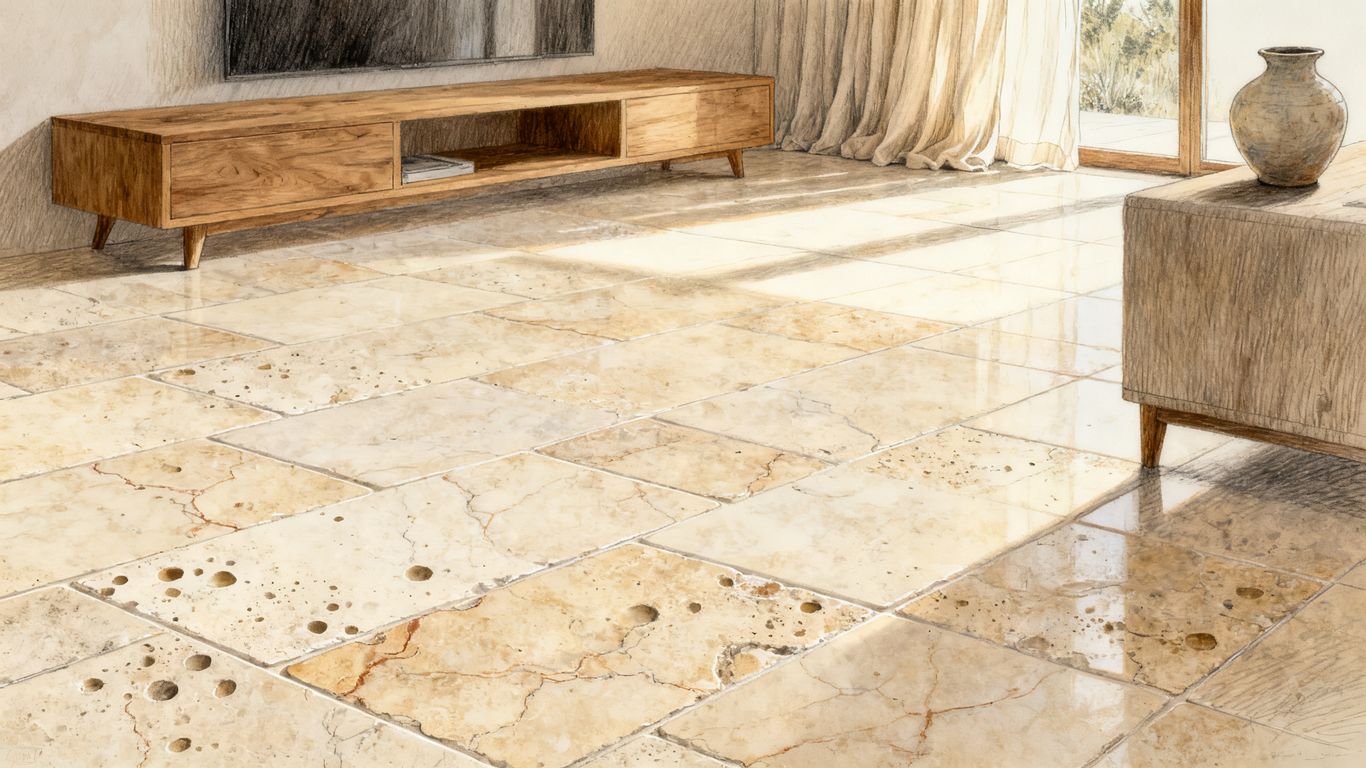
Travertine tile is a natural stone with an earthy palette and a surface that can feel softly textured or smooth, depending on how it is finished. It brings variation that manufactured materials cannot exactly repeat, so a finished floor or wall has its own character. The stone can suit classic and contemporary rooms alike. Before choosing it, it helps to understand what gives travertine its appearance and what that means for everyday care.
How travertine forms and varies naturally
Travertine forms as mineral-rich water deposits calcium carbonate over time, often around springs and other water sources. As the stone develops, small cavities, layers, and mineral traces create differences from piece to piece. Those geological conditions vary, so two tiles from the same selection may not have identical color or markings. That variation is part of the material’s appeal, but it is worth considering when planning a large, continuous surface.
Distinctive pores, veining, and color variation
Travertine is recognized for its pores, flowing lines, and shifts between light and dark tones. Some products have open cavities, while filled options present a smoother face; the choice changes both the look and feel. Veins may appear as gentle bands or stronger lines, and a tile’s orientation can alter how those lines read across a room. Natural variation is part of the design, so inspect a useful spread of pieces rather than relying on a single tile to predict the whole installation.
Durability and performance in everyday spaces
Travertine is used in homes and commercial spaces, including floors, walls, and outdoor applications. Its suitability depends on the particular product, finish, installation, and conditions in the room. Like other natural stone, it is porous and needs appropriate care; sealing helps protect against stains and moisture. For areas exposed to water or frequent foot traffic, check the product guidance and discuss surface texture, slip resistance, and maintenance with a qualified installer before buying.
How travertine compares with other natural stone
Travertine is a type of limestone, with a recognizable porous structure and warm, often earthy color range. Other natural stones have their own patterns, hardness, and care needs, so the best choice is not simply a matter of which one looks most luxurious. Think about the room first, then compare samples for tone, texture, and upkeep. If you are considering a stone fireplace surround, custom fireplace details can also help you think through how tile or stone might relate to the room’s focal point.
Popular travertine colors, cuts, and patterns
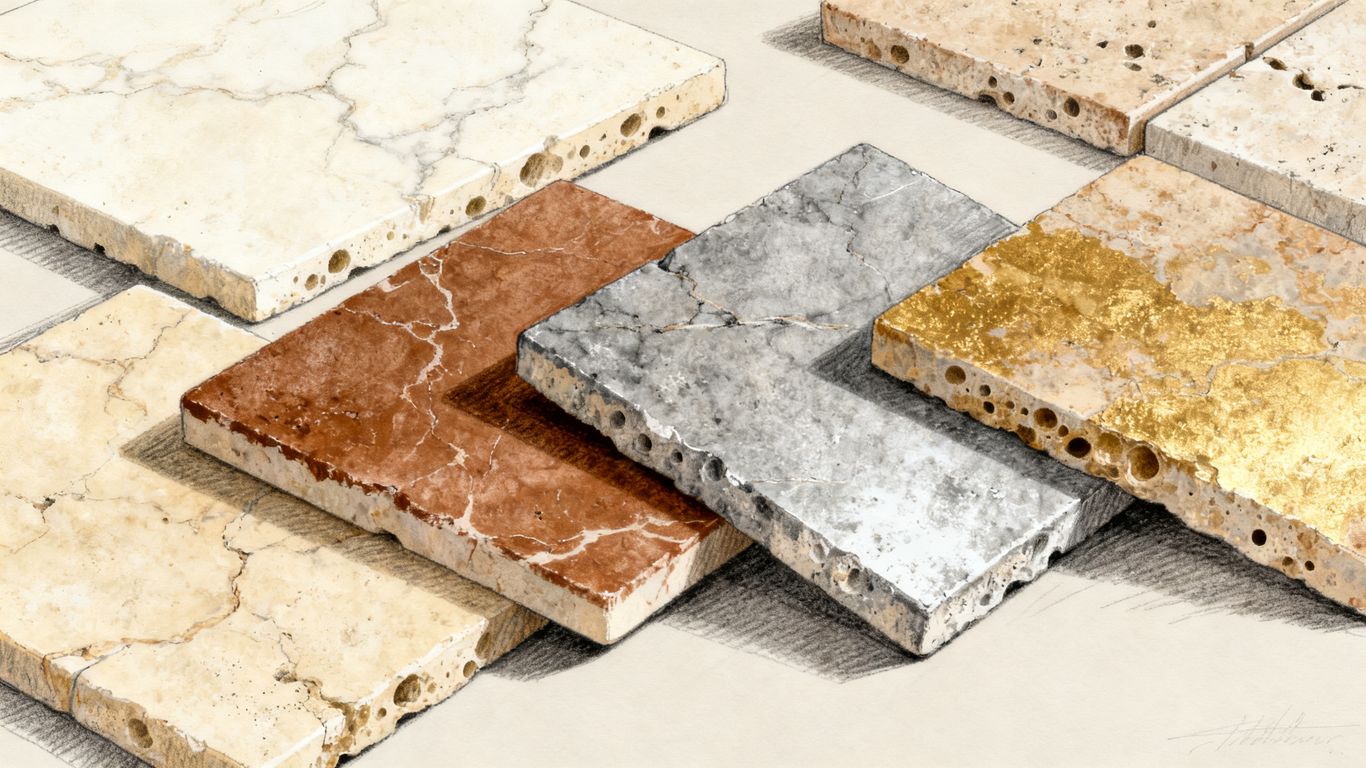
Travertine selections range from pale ivory and beige to rich brown, cool silver-gray, and mixed tones. Cut and layout matter just as much as color: the same stone can look calm and linear or more cloudlike, depending on how it is sawn and arranged. Take time to consider the scale of the room and the effect you want from across the space. Samples and a planned dry layout make those decisions easier to judge.
Ivory, beige, Noce, silver, and mixed tones
Ivory and beige travertine bring a light, warm foundation that pairs easily with wood, painted finishes, and many cabinet colors. Noce offers deeper brown tones, while silver travertine shifts toward gray. Mixed selections combine several earthy hues for a more varied, expressive surface. Surfaces Galore’s travertine collection includes options such as Ivory and Noce, alongside a range of finishes and patterns; compare actual samples with the fixed finishes in your room, since lighting can make stone appear warmer or cooler.
| Color family | General impression | Often considered for |
|---|---|---|
| Ivory | Light and softly warm | Bright floors and walls |
| Beige | Neutral and earthy | Living areas and kitchens |
| Noce | Deep brown and grounded | Contrast and traditional schemes |
| Silver | Cool gray with natural variation | Modern or understated interiors |
| Mixed tones | A lively blend of earthy shades | Feature areas and patterned floors |
Use the table as a starting point, not a strict rule: a sample can look quite different beside your own cabinetry, grout, or natural light. Viewing several pieces together will give you a better sense of how much variation to expect.
Vein-cut and cross-cut appearances
Vein-cut stone reveals the layers in a more linear arrangement, creating pronounced stripes or bands. Cross-cutting exposes a broader view of those layers and often gives the surface a softer, cloudlike movement. Neither look is inherently better; one may feel architectural and directional, while the other can read as more relaxed. When possible, look at a group of tiles together and consider which direction the pattern should run in the room.
French pattern, subway, and other layout options
A French, or Versailles, pattern combines pieces of different sizes in a repeating arrangement that gives a floor a traditional rhythm. Subway formats create cleaner lines on walls, while mosaics allow more detailed patterns on smaller surfaces or accents. Surfaces Galore offers travertine products in patterns and sizes that include French pattern, subway, and mosaics. For example, a La Travonya Travertine 6-by-6 tumbled tile gives a sense of how a smaller format can bring natural variation into a floor or wall layout.
How to review samples and plan for natural variation
Samples let you see the stone’s texture and color in person, but one piece cannot show the full range of a natural lot. Lay several samples together in the room, check them in daylight and evening light, and compare them with nearby materials. If you are choosing a filled, honed look, this honed-filled travertine tile gives one example of a smooth, matte surface and a light beige palette. A larger viewing area can help you decide whether the amount of variation feels pleasing or too active for the space.
Choosing a finish for your project
Finish changes how travertine feels underfoot and how it reflects light. It can also affect how visible the stone’s pores and texture are. The best finish is the one that suits your design and the room’s practical needs, not simply the one that looks attractive in a product photograph. Ask for the product-specific care and use guidance before settling on a finish.
Honed and filled for a smoother, matte surface
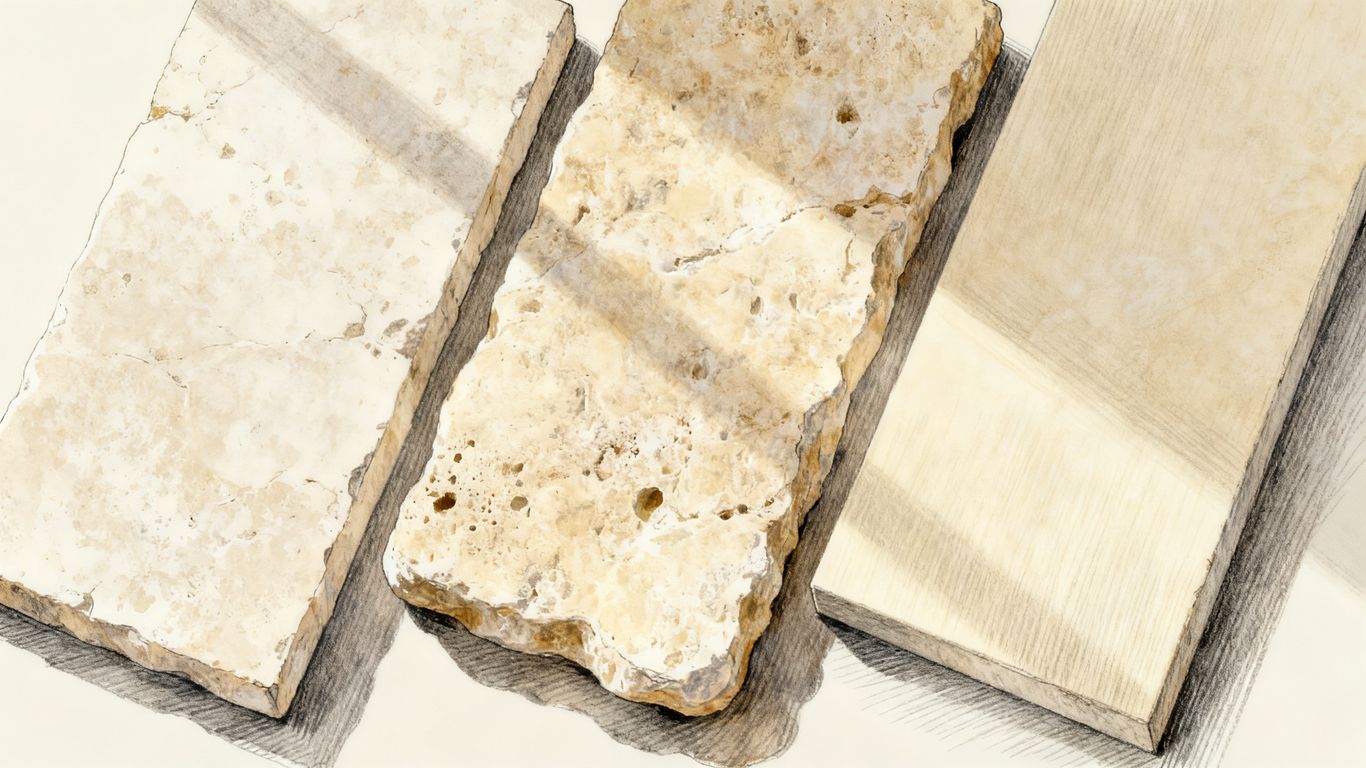
Honed and filled travertine has a smoother face, with natural voids filled to create a more even surface. Its matte appearance works well when you want the stone’s color and pattern without a glossy sheen. It can be a considered option for interiors where a softer visual finish feels right. Compare the tile in person, since the degree of color and surface variation still depends on the particular stone.
Tumbled for a rustic, textured look
Tumbled travertine has a more aged, textured appearance, often with softened edges that give a floor or wall a relaxed, established feel. It can add character to traditional rooms, patios, and other spaces where a less formal finish is welcome. The product’s specific texture and intended application should guide the decision, especially in wet areas. La Travonya Travertine is one tumbled tile format to compare when considering a smaller-scale option for a floor, backsplash, or wall accent.
Polished and brushed finishes for different design effects
Polished travertine reflects more light and gives the stone a more refined, glossy appearance. Brushed finishes retain tactile texture while creating a more softened surface than a polished one. These effects can change how the same color reads, especially in rooms with strong daylight or layered lighting. Surfaces Galore lists polished, honed, brushed, chiseled, and tumbled finishes in its travertine selection; confirm which finish is available for the specific tile you are considering.
Matching finish and texture to the room’s needs
Think about how the space is used, how much moisture it sees, and how much texture you want to feel. A decorative wall can prioritize visual effect, while a floor needs a closer look at the product’s intended use and maintenance. Rather than deciding by appearance alone, compare the finish with the room’s daily routines and your comfort with ongoing care. The right balance should feel natural in the space and manageable over time.
Where travertine tile works best
Travertine can bring warmth to many parts of a home, from a living room floor to a kitchen backsplash or outdoor patio. The best placement depends on the particular product’s specifications and the conditions it will face. Natural variation also means the stone can serve as a quiet background or a feature in its own right. These applications are starting points for planning, not a substitute for checking use guidance for the tile you choose.
Floors and walls in living spaces
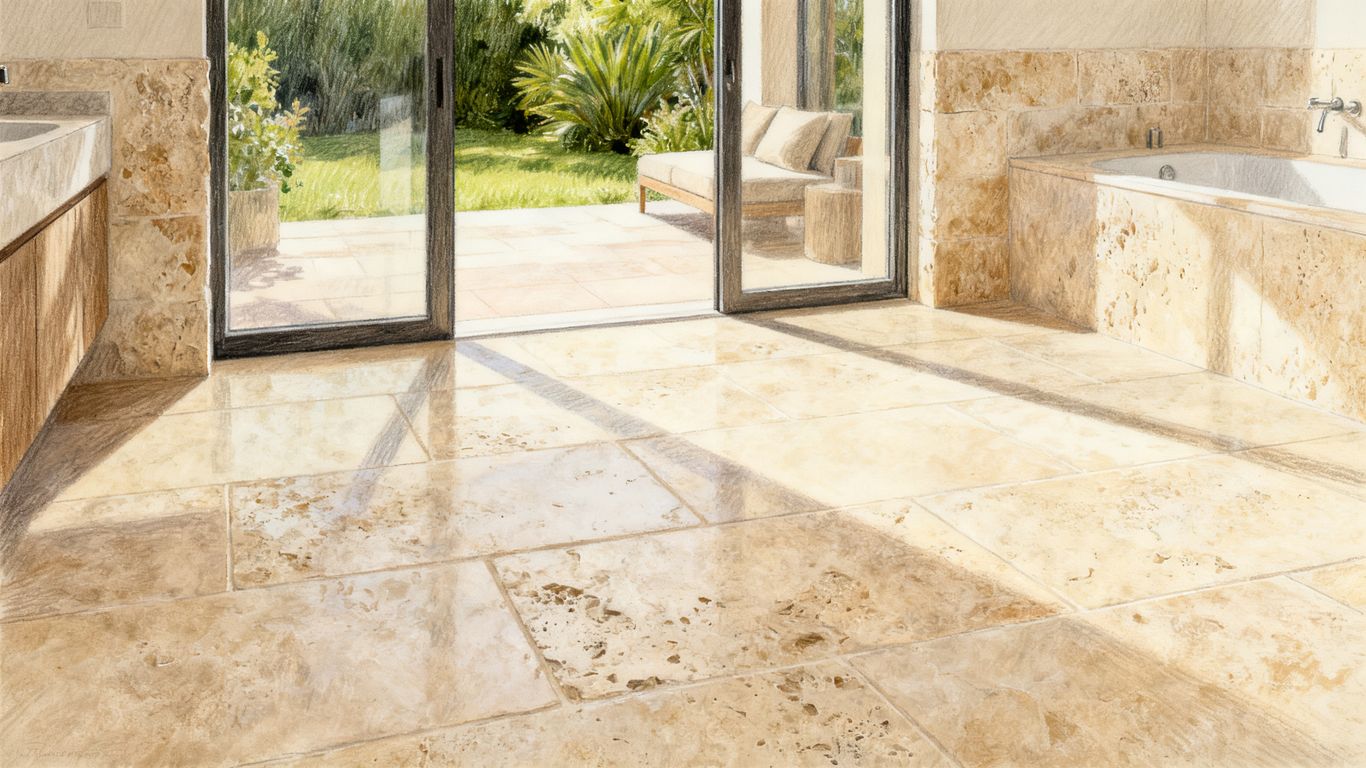
In living spaces, travertine can cover a broad floor or add texture to a feature wall. Larger formats may create a calmer visual rhythm, while smaller pieces and varied patterns bring more detail. Plan the layout in relation to doorways, thresholds, and adjoining rooms so that the stone feels connected to the rest of the interior. Where stone is part of a fireplace feature, fireplace surround planning can help frame decisions about how finishes meet the focal point.
Bathroom floors, shower walls, and mosaics
Travertine appears in bathroom floors, shower walls, and mosaics, where its earthy color can create a quiet, spa-like mood. Moisture makes product selection, installation, sealing, and cleaning guidance especially important. Check that the specific tile and finish are recommended for the intended application, and have a qualified installer assess the assembly. If the bathroom is part of a larger renovation, this bathroom remodeling advice is a useful prompt to plan scope and contractor communication alongside material choices.
A mosaic can add pattern in a shower or accent area without covering every surface in small-format stone. Surfaces Galore’s travertine mosaic collection includes options described for floors, walls, backsplashes, and accent features; verify suitability for your exact location before ordering.
Kitchen backsplashes and decorative features
A travertine backsplash brings natural texture into a kitchen without requiring the stone to cover a large area. Mosaics, subway formats, and larger tiles each create a different balance of pattern and open space. Coordinate the stone with cabinet color, counters, grout, and lighting, then view the combination together if possible. For broader renovation decisions, a Dallas kitchen remodel guide offers a useful planning lens for how material selections fit into a kitchen project.
Patios, pool areas, and other outdoor applications
Travertine is also used for patios, pool areas, and other outdoor spaces. Outdoor conditions vary, so confirm that a particular tile or paver is intended for the exposure and surface where it will be installed. Texture, drainage, weather, and maintenance all deserve attention before committing to an exterior layout. In a commercial setting, coordinating stone choices with commercial LED fixtures can be part of planning a cohesive outdoor or shared space, though each material should be selected for its own requirements.
How to plan for installation and maintenance
Thoughtful preparation helps protect the appearance of natural stone and makes installation more predictable. Before work begins, inspect the material, agree on a layout, and confirm the requirements for the substrate, setting materials, grout, and sealer. Natural color variation is expected, so planning how tiles are distributed matters. For product-specific details, follow the supplier’s and installer’s guidance rather than applying a one-size-fits-all rule.
Preparing the substrate and selecting a qualified installer
The substrate needs to be suitable, stable, and prepared for the selected tile and installation setting. A qualified installer can assess the surface, recommend appropriate materials, and explain how the stone’s thickness and format affect the work. Inspect tiles before installation and set aside any pieces that concern you so questions can be resolved before they are fixed in place. Clear communication up front can prevent avoidable surprises later.
Choosing grout, layout, and edge details
Grout color and joint width influence the finished pattern, while edge details determine how the installation meets adjoining surfaces. Dry-laying the tiles before setting them lets you adjust the layout, balance color variation, and avoid awkward narrow cuts where possible. For a practical pre-installation sequence, use these steps as a starting point:
- Inspect the tiles for visible damage or unusual variation.
- Arrange pieces dry to review the pattern and distribute color.
- Confirm grout, transitions, and exposed edges with the installer.
- Set aside extra material for cuts, breakage, and future repairs.
Once the layout looks balanced, confirm the details with the installer and the product guidance. The final arrangement should account for the room as it is, including transitions and exposed edges, rather than relying only on a diagram.
Sealing travertine and following product-specific guidance
Travertine is porous, and sealing helps protect it against stains and moisture. The appropriate sealer and timing depend on the product and installation, so follow the manufacturer’s directions and any guidance provided by your installer. Do not assume every tile or finish takes sealer in exactly the same way. Keep the product information with your project records so future care can follow the same recommendations.
Cleaning spills and caring for the surface over time
Promptly wiping spills and using care guidance intended for natural stone can help preserve the surface. Avoid guessing at cleaning products; confirm compatibility before using a new cleaner, particularly on a recently installed or sealed surface. Routine care is easier when household members know what the stone needs and what to avoid. Over time, follow the product-specific directions for resealing or other maintenance rather than relying on a fixed schedule for every installation.
How to choose and order travertine tile
A successful order starts with the project details: the room, the dimensions, the desired finish, and the intended use. Then compare the actual product specifications, available quantities, and delivery needs. Because natural stone varies, it is sensible to confirm the current selection and review samples before committing to a large order. A little planning now can make installation smoother and reduce the risk of running short.
Confirming tile size, thickness, finish, and intended use
Check the tile’s stated dimensions, thickness, finish, and recommended application before comparing prices. Make sure the size and format suit the layout, and verify that the product is appropriate for the room or outdoor setting. If you are comparing similar-looking options, note differences in filled or unfilled surfaces and in the way each finish feels. These details help ensure the material you order matches the design you have in mind.
Estimating quantities, waste, and project requirements
Measure the area carefully and include the extra material needed for cuts, layout choices, and possible breakage. The amount of overage depends on the room shape and pattern, so ask your installer what is appropriate rather than treating one percentage as universal. A Tile Calculator can help estimate tile and box quantities from room dimensions, tile size, and a waste allowance. Use the result as a planning aid, then verify the final order against your measurements and product packaging.
Comparing stock, pricing, and bulk-order options
Compare the full project requirements, not just the unit price: availability, finish, quantity, shipping, and the possibility of ordering additional material all matter. For larger projects, ask about current stock and bulk-order options before finalizing the schedule. Keep the tile, grout, and delivery details together so the installer can confirm the plan. A consistent batch can be helpful for a continuous area, while natural variation still means that individual pieces will differ.
Requesting a quote and arranging nationwide delivery from Surfaces Galore
Surfaces Galore is a direct importer and nationwide supplier of natural stone, including travertine tiles, mosaics, and moldings. When you request pricing, share the product, finish, quantity, and project location so the order can be discussed with the right details in hand. You can request a quote once your measurements and selection are ready, and confirm delivery timing and current stock before placing the order.
Choose Your Travertine
Share your project details and selected finish when you request project pricing, then confirm the material and delivery details before ordering.
Conclusion
Travertine tile offers natural warmth, distinctive variation, and a range of finishes and formats for indoor and outdoor projects. Compare samples, confirm the product’s intended use, plan installation and care, and order enough material for the layout you have chosen; those steps help turn the stone’s individual character into a thoughtful, lasting part of your space.
Frequently Asked Questions
Is travertine tile suitable for floors?
Travertine is used for floors, but suitability depends on the specific product, finish, location, and installation. Check the product guidance and consult a qualified installer before choosing tile for a particular floor.
What is the difference between filled and unfilled travertine?
Filled travertine has natural surface voids filled to create a smoother face. Unfilled travertine retains more open pores and a more textured appearance. The exact look varies by product.
Does travertine tile need to be sealed?
Travertine is porous, and sealing helps protect it from stains and moisture. Follow product-specific guidance for the appropriate sealer, application, and maintenance.
What colors does travertine come in?
Common choices include ivory, beige, brown tones such as Noce, silver-gray, and mixed earthy colors. Natural variation means each selection and even individual pieces may differ.
Can travertine be used in a bathroom?
Travertine is used in bathrooms, including floors, shower walls, and mosaics. Confirm that the particular product is intended for the location and follow suitable installation and care guidance.
How should travertine samples be reviewed?
View several pieces together in the room, under different lighting, and beside nearby finishes. A single sample cannot show the full range of natural color and pattern variation.
How much extra travertine tile should I order?
The amount depends on the area, tile format, room shape, and layout. Ask your installer to estimate a suitable allowance for cuts and breakage, and confirm the quantity before placing the order.
Leave a comment