
Marble Bathroom Tile Trends That Look Built In

A marble bathroom should not look like a catalog page copied room for room. The strongest marble bathroom tile trends pair unmistakable natural stone with thoughtful scale, finish, and layout - details that make a shower, vanity wall, or floor feel designed for the house. For homeowners, designers, and trade professionals, the goal is no longer simply to add marble. It is to specify premium material in a way that will still look intentional years from now.
Marble Bathroom Tile Trends Moving Beyond Basic White
White marble remains a leading choice, but the current direction is more nuanced than a field of small polished Carrara subway tile. Buyers are using veining as an architectural feature, combining formats, and selecting honed finishes that bring a calmer, more tailored look to wet spaces.
The difference begins with material quality. Natural marble has movement, tonal range, and variation from piece to piece. That is the point. Premium-grade stone should be sorted and presented with a clear expectation of its character, not treated as a printed surface that repeats every few tiles. Ordering samples before a full specification is the practical way to assess veining, background color, and finish under the actual lighting of the room.
Honed finishes lead the way
Honed marble is one of the most durable style decisions in contemporary bathrooms. Its soft, matte surface reduces glare and lets the stone's veining read naturally, whether the selection is Carrara, Calacatta, Dolomite, or another white marble. It also works especially well in rooms with warm wood cabinetry, unlacquered brass, matte black fixtures, and plaster-inspired wall colors.
Polished marble still earns its place. It reflects light beautifully in smaller powder rooms and delivers a more formal finish on walls, vanity backsplashes, and decorative mosaics. The trade-off is that a polished floor can show water spotting, residue, and fine surface wear more readily. In a primary bath, many designers reserve polish for walls and choose honed tile for the floor and shower.
Larger formats create quieter luxury
Large-format marble is replacing busy, grout-heavy layouts in many premium renovations. Twelve-by-twenty-four-inch and eighteen-by-eighteen-inch tiles, as well as larger sizes where the room and installation allow, create longer visual lines and fewer interruptions across the floor. This approach gives veined marble room to perform.
Large tile is not automatically right for every bathroom. A compact shower floor needs enough grout joints for traction and proper slope to the drain, making mosaic formats the smarter specification. Similarly, a vintage-inspired bath may look more credible in basketweave, hexagon, or small-format stone. Use large marble where it improves proportion, not merely because it is current.
Statement Veining, Used With Restraint
Calacatta and other dramatic white marbles continue to define high-impact bathrooms. Strong gray or gold veining can turn a shower wall into the focal point of a room without relying on decorative wallpaper or oversized hardware. Bookmatched slabs remain a premium option around a vanity or in a full-height shower, but marble tile offers more flexibility for projects that require a controlled budget, manageable shipping, and easier replacement planning.
The most convincing tiled version of this trend considers layout before installation begins. Vein direction should be discussed with the installer, especially on large rectangular tiles. A vertical orientation can make a low ceiling feel taller, while a horizontal layout can visually widen a narrow bath. Random placement may be appropriate for quieter Carrara, but highly veined material benefits from dry laying and deliberate sequencing.
For a balanced result, pair statement marble with restrained companions. A bold Calacatta shower can sit comfortably beside a simple honed white marble floor. If both the floor and walls use active veining, simplify the vanity, lighting, and paint colors so the room does not feel overworked.
Checkerboard Floors Return With Better Proportion
Checkerboard is back, but the best versions are grounded in real stone and a disciplined palette. Marble checkerboard flooring in white and gray, white and black, or creamy white and warm brown brings structure to bathrooms that need personality without sacrificing longevity. Nero Marquina paired with Thassos creates crisp contrast, while softer combinations produce a more relaxed European feel.
Scale determines whether a checkerboard reads refined or overly busy. Larger squares generally suit spacious primary baths, entries, and dressing areas. Smaller squares can work in powder rooms, especially when the walls remain quiet. In either case, stone thickness, edge consistency, and calibrated sizing matter. A poorly matched checkerboard exposes every irregularity in the grid.
This is also a trend with practical limitations. Checkerboard is strongest on a relatively open floor plane. It can lose impact when broken apart by a large island tub, multiple door swings, and many cabinetry returns. Consider using it in the main floor zone while specifying a coordinating mosaic in the shower.
Mosaics Make the Shower Feel Finished
Marble mosaics are no longer limited to a narrow accent strip. They are being used as full shower floors, feature walls, recessed niches, and vanity backsplashes. Herringbone, basketweave, penny rounds, hexagons, and geometric patterned mosaics create the fine-scale detail that larger wall tiles cannot provide.
A shower floor is where beauty and performance must meet. Small mosaics follow the slope to the drain more effectively than large tiles, and the additional grout lines improve underfoot grip. Choose a finish and pattern that support the room's use, then confirm that the installer follows the appropriate waterproofing, setting material, grout, and sealing recommendations. Premium marble deserves premium installation practices.
There is a clear design advantage to repeating a mosaic in one or two purposeful locations. A herringbone shower floor can reappear inside the shampoo niche, for example, connecting the room without introducing a second unrelated pattern. What looks custom is often simply a matter of repeating the right detail.
Warm Marble and Mixed Stone Palettes
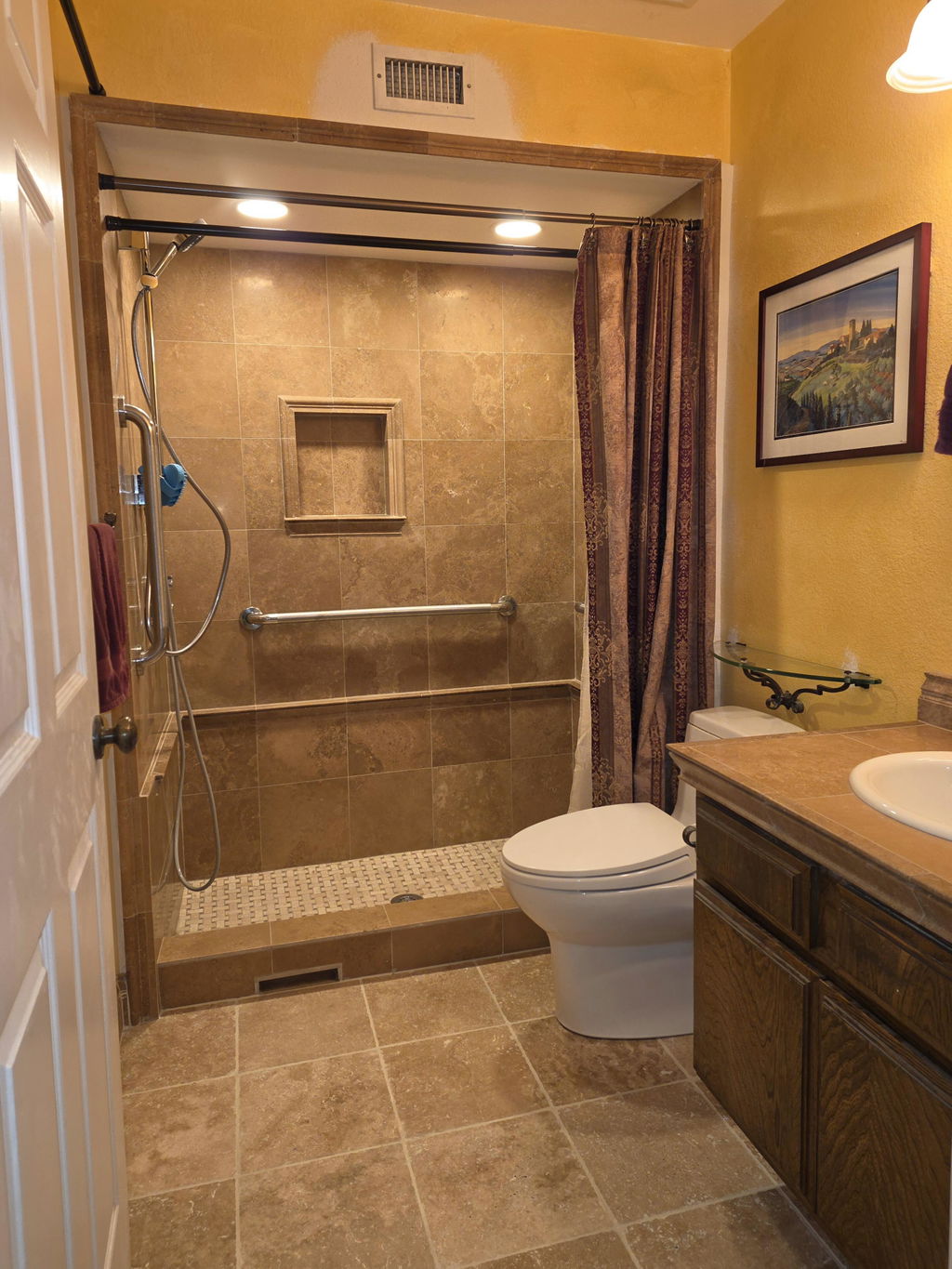
Cool gray-and-white bathrooms have staying power, but warmer marbles are gaining ground. Cream, beige, taupe, and soft brown stone choices create bathrooms that feel less stark and more residential. These tones pair naturally with oak vanities, antique brass, aged bronze, and warm white paint.
This does not mean every project needs a beige bathroom. A warm marble floor can be paired with crisp white wall tile, or a white marble shower can be grounded by a Noce, beige, or taupe mosaic detail. The key is to match undertones. Blue-gray Carrara and yellow-cream stone may clash when placed side by side, while a deliberately neutral bridge - such as soft brushed nickel or warm white grout - can help a mixed palette feel coherent.
Natural stone also makes tonal variation an asset rather than a problem. A floor with gentle shifts from cream to sand has more depth than a perfectly flat color, particularly in daylight. This is why sample review and lot awareness are essential when specifying stone online.
Architectural Details Are Part of the Tile Plan
The marble itself is only one part of a finished bathroom. Cleanly framed niches, corner shelves, threshold pieces, baseboards, chair rails, and trim can determine whether the installation feels custom or improvised. Current projects are favoring integrated details: a matching marble niche sill, a properly finished curb, and trim pieces selected to resolve exposed edges rather than relying on an afterthought metal profile.
These details should be planned before tile is ordered. Measure the niche location, shower curb, vanity splash, transitions, and any exterior corners, then account for cuts and waste. A contractor may be able to fabricate certain pieces, but factory-cut trim and purpose-built accessories can provide a more consistent appearance and reduce jobsite surprises.
For trade buyers and homeowners managing a renovation, reliable sourcing matters as much as the visual direction. Specify samples early, confirm the needed quantities and related trim, and protect the project with properly insured delivery. Surfaces Galore supplies premium natural stone tile for buyers who want importer-level selection without accepting commercial-grade shortcuts.
The right marble trend is the one that suits the architecture, daily use, and level of maintenance a client is prepared to give it. Start with a stone you would still choose without the trend label, then use finish, format, mosaic, and trim to make it belong in the room.

Leave a comment