
Marble as a Sustainable Surface: Value and Impact

Choosing the right surface material is often the make-or-break moment for California designers committed to eco-conscious home renovations. The demand for truly sustainable solutions in kitchens and bathrooms means every product choice carries environmental weight. With its natural origin, remarkable durability, and the ability to be reused or recycled, marble stands out as a genuinely sustainable surface that supports both your client’s vision and the planet’s well-being.
Table of Contents
- What Makes Marble a Sustainable Surface
- Types of Marble and Sourcing Practices
- Lifecycle, Durability, and Environmental Impact
- Comparing Marble to Other Eco-Friendly Surfaces
- Best Practices for Sustainable Marble Selection
Key Takeaways
| Point | Details |
|---|---|
| Sustainability of Marble | Marble is an environmentally responsible choice due to its natural origin and minimal processing, resulting in lower emissions and a reduced carbon footprint. |
| Longevity and Waste Reduction | Marble’s durability allows it to last over 50 years, significantly reducing the frequency of replacements and associated waste compared to synthetic alternatives. |
| Thermal Efficiency | The natural insulation properties of marble help moderate indoor temperatures, reducing energy consumption for heating and cooling. |
| Recyclability and Second Life | Marble can be repurposed or recycled, supporting a circular lifecycle that minimizes landfill waste associated with other materials. |
What Makes Marble a Sustainable Surface
Marble stands out as one of the most environmentally responsible choices for interior surfaces. Unlike manufactured materials requiring energy-intensive processing, marble is quarried in its finished form, minimizing industrial impact.
Several key factors make marble genuinely sustainable for residential and commercial projects.
Natural Origin and Minimal Processing
Marble requires no petroleum-based resins or synthetic additives. Natural stone like marble arrives essentially complete from quarrying, eliminating complex manufacturing steps that drain energy resources.
This straightforward process means:
- No VOC emissions during production or installation
- No toxic off-gassing in your home or office
- Reduced carbon footprint compared to engineered surfaces
- Preservation of natural geological formations
Long-Term Durability Reduces Replacement Waste
Marble’s most valuable sustainability asset is its lifespan. A well-maintained marble surface lasts 50+ years, often spanning multiple generations without replacement.
When you install marble, you’re making a decision that reduces waste dramatically. Consider this: a synthetic countertop replaced every 10-15 years generates far more waste and environmental strain than marble lasting a lifetime.
Marble tile durability supports this long-term value, making it a genuinely sustainable investment for California designers focused on reducing environmental impact.
Thermal Mass Benefits
Marble’s density provides natural insulation properties. The stone absorbs and releases heat gradually, reducing demand on heating and cooling systems.

In California’s variable climate, this thermal contribution lowers energy consumption year-round. Bathrooms and kitchens with marble surfaces maintain more stable temperatures naturally.
Recyclability and Second-Life Potential
Marble never truly ends its useful life. Damaged or outdated marble can be:
- Repurposed into new installations
- Ground into aggregate for landscaping
- Salvaged for decorative applications
- Reused in restoration projects
This circular lifecycle eliminates the landfill waste associated with most synthetic materials.
Marble’s combination of longevity, minimal processing, and recyclability creates a genuinely sustainable material profile that benefits both your project and the environment.
Pro tip: When specifying marble for sustainable projects, prioritize locally quarried or regionally sourced stone to reduce transportation emissions, and work with suppliers like Surfaces Galore who stock quality natural stone efficiently for faster project delivery.
Types of Marble and Sourcing Practices
Marble varies significantly in composition, color, and origin. Understanding these differences helps California designers specify the right stone for each project while supporting sustainable sourcing practices.
Primary Marble Varieties
Marble is classified into three main categories based on geological formation and composition:
- Calcite marble: Composed primarily of calcium carbonate, offering softer texture and varied veining patterns
- Dolomite marble: More durable and dense, resistant to acid etching in kitchens and bathrooms
- Serpentine marble: Contains magnesium silicate, providing deeper color ranges and superior hardness
Each variety performs differently in residential applications. Calcite works beautifully for bathroom vanities, while dolomite suits high-traffic kitchen counters.
Here is a concise comparison of marble varieties used in design:
| Marble Type | Key Mineral | Ideal Use Area |
|---|---|---|
| Calcite Marble | Calcium carbonate | Bathroom vanities |
| Dolomite Marble | Dolomite | Kitchen countertops |
| Serpentine Marble | Magnesium silicate | High-traffic surfaces |
Sourcing Practices and Geographic Origins
Marble sourcing has evolved significantly. Historically, Italy and Greece dominated marble production, but today’s sustainable designers often consider domestic marble quarries in the United States. The U.S. marble industry, particularly around Sylacauga, Alabama, produces exceptional quality stone used in national monuments.
Domestic sourcing offers real benefits:
- Reduced transportation emissions compared to imported stone
- Support for local quarry operations and American workers
- Faster project timelines with domestic supply chains
- Easier verification of sustainable quarrying practices
Understanding Quality and Transparency
The marble mining and manufacturing process matters significantly for sustainable projects. Responsible suppliers document quarry locations, extraction methods, and worker practices.
When specifying marble, ask your supplier about:
- Quarry location and operating practices
- Transportation distance to your project
- Water usage and waste management at source
- Worker safety and fair labor standards
Sustainable marble sourcing balances aesthetic value with environmental responsibility, ensuring your material choices reflect your design principles.
Pro tip: Request marble samples from multiple sources and compare their sustainability documentation; suppliers with transparent quarry information and domestic options often deliver better environmental outcomes for your California residential projects.
Lifecycle, Durability, and Environmental Impact
Marble’s true sustainability emerges when you consider its complete lifecycle. While extraction and processing require energy and water, marble’s exceptional longevity dramatically reduces its overall environmental burden over decades of use.
Understanding the Full Lifecycle
Life cycle assessments of marble production reveal that energy consumption during processing and transportation represent the primary environmental costs. However, this initial investment is offset by marble’s 50+ year lifespan.
The lifecycle stages include:
- Quarrying and extraction
- Processing and finishing
- Transportation to distribution centers
- Installation in your home
- Decades of use with minimal maintenance
- Potential recycling or repurposing
Durability as the Sustainability Game Changer
Marble’s durability is what makes it genuinely sustainable. A marble countertop installed today will likely outlive multiple replacements of synthetic alternatives.
Consider the math: if a laminate countertop lasts 10-15 years and requires replacement, you’re generating waste and environmental impact repeatedly. Marble lasting 50+ years eliminates that cycle entirely.
Proper sealing and maintenance are critical. With appropriate care practices, marble remains functional and beautiful for generations.
Transportation and Energy Efficiency
Transportation represents a significant environmental factor. Sourcing marble regionally reduces shipping distances and associated emissions substantially.
California designers benefit from domestic marble availability, minimizing transportation impact compared to importing European stone across the Atlantic.
The Long-Term Value Calculation
When evaluating sustainability, calculate the environmental cost per year of use, not just at purchase. A marble surface lasting 50 years spreads its initial environmental footprint across five decades.
This dramatically improves its sustainability profile compared to materials requiring replacement every 10-15 years.
Marble’s environmental impact decreases significantly over time as its durability extends use phases, making it one of the most sustainable choices available for residential surfaces.
Pro tip: Document your marble installation with photos and specifications; this information becomes valuable if you ever need to maintain, repair, or repurpose the material, maximizing its lifecycle value.
Comparing Marble to Other Eco-Friendly Surfaces
Marble isn’t the only sustainable option available, but it stands apart in several meaningful ways. Understanding how marble compares to alternatives helps California designers make informed choices aligned with project goals and client values.
Marble vs. Sustainably Sourced Wood
Wood flooring and countertops appeal to many designers for their warmth and renewable origin. However, wood requires more frequent replacement than marble, typically lasting 15-25 years before refinishing or replacement becomes necessary.
Marble’s advantages over wood include:
- Superior durability in moisture-prone bathroom environments
- Resistance to staining and bacterial growth
- No refinishing required across its 50+ year lifespan
- Better performance in high-traffic kitchen areas
Marble vs. Recycled Materials
Recycled glass, recycled tile, and reclaimed materials offer lower extraction impacts initially. However, life cycle assessment methodologies/Book%3A_Sustainability_-A_Comprehensive_Foundation(Cabezas)/09%3A_Problem-Solving_Metrics_and_Tools_for_Sustainability/9.02%3A_Life_Cycle_Assessment) reveal that durability ultimately determines true sustainability over decades.
Recycled materials often require protective coatings, sealers, and more frequent maintenance than marble. Their shorter service lives mean higher cumulative environmental costs across 50 years.
Marble vs. Engineered Stone
Quartz and engineered stone offer impressive durability and stain resistance. They’re manufactured from recycled content, which sounds sustainable initially.
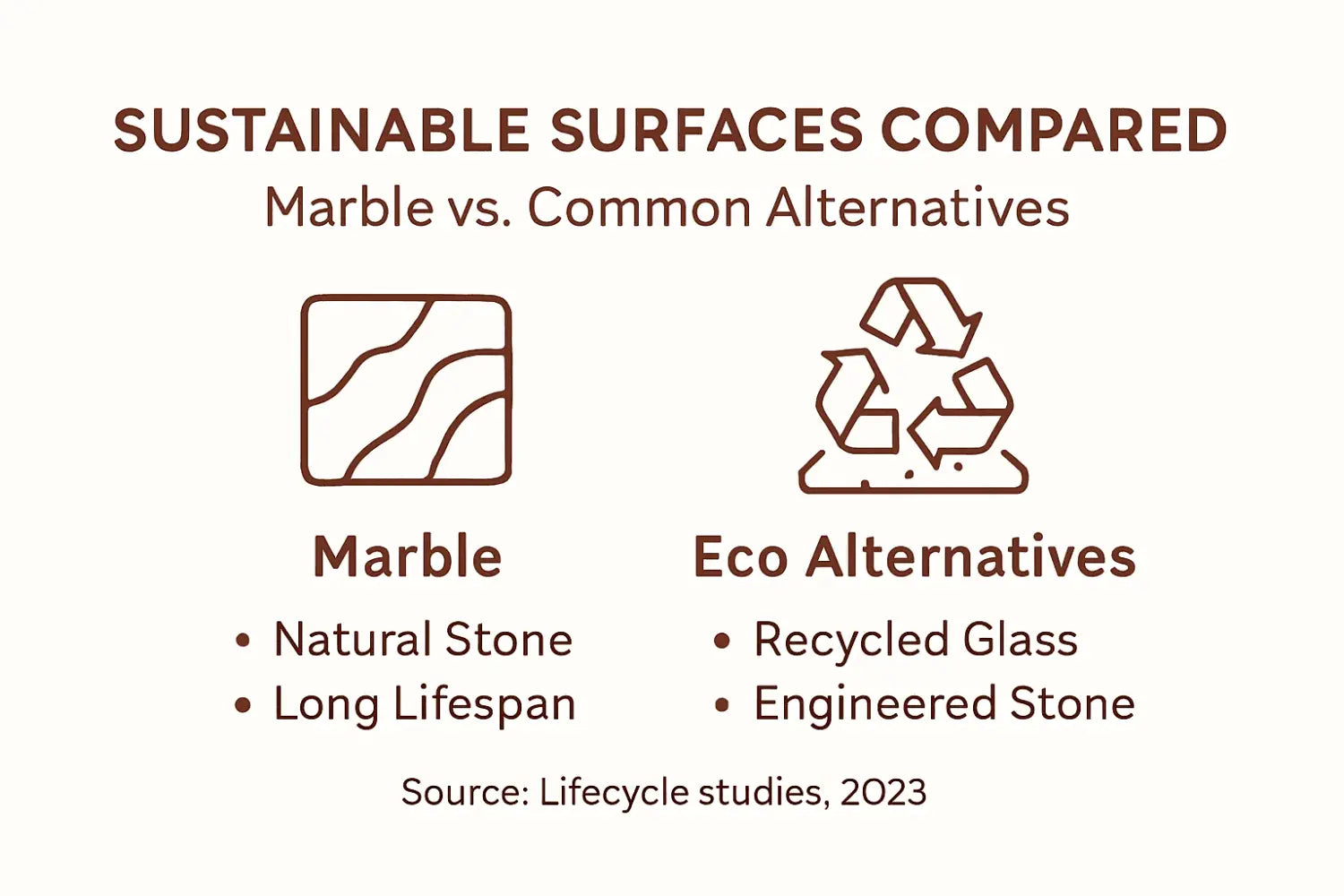
The reality: engineered surfaces use petroleum-based resins, emit volatile organic compounds during installation, and eventually end up in landfills. Marble’s natural origin and recyclability advantages make it a genuinely circular choice.
The Durability Factor
When comparing surfaces fairly, calculate environmental impact across decades of use, not just at installation. Marble’s exceptional longevity justifies its processing footprint.
A surface replaced three times over 60 years carries triple the environmental burden of marble installed once.
Marble’s sustainable advantage grows stronger over time; a material lasting 50+ years spreads its environmental impact across more years than alternatives requiring replacement.
Pro tip: When presenting marble options to clients, compare cost-per-year and environmental impact-per-year rather than upfront price; this demonstrates marble’s superior long-term value and sustainability profile.
Best Practices for Sustainable Marble Selection
Selecting marble sustainably requires more than checking a “green” box. It demands thoughtful consideration of environmental impacts, sourcing ethics, and long-term project goals. California designers can implement several concrete practices to ensure their marble choices align with genuine sustainability.
Evaluate Sourcing and Transportation
Where marble originates matters significantly. Domestically quarried marble from Alabama or California reduces transportation emissions compared to importing European stone across continents.
Ask suppliers these critical questions:
- Where is the marble quarried?
- What distance will it travel to your project?
- What extraction and quarrying methods are used?
- Are workers treated fairly with safe conditions?
Consider Embodied Energy and Long-Term Impact
Sustainable material selection integrates environmental footprints like embodied energy, emissions, and resource depletion. However, this upfront cost matters less than the total impact across marble’s 50+ year lifespan.
Calculate true sustainability by dividing environmental impact by years of use. Marble’s exceptional durability dramatically improves this calculation.
Specify Minimal Finishing and Processing
Request marble with minimal processing beyond quarrying and basic finishing. Excessive polishing, honing, and treatment add energy consumption and chemical use without enhancing long-term sustainability.
Natural or lightly finished surfaces reduce processing impact while maintaining beauty.
Verify Supplier Transparency
Responsible suppliers readily share sustainability documentation. Request certifications, quarry information, and environmental impact data before committing.
Transparency signals genuine commitment to sustainable practices rather than greenwashing claims.
Prioritize Design Longevity
Specify marble styles and colors that transcend trends. Timeless marble texture options ensure your installation remains beautiful for decades, maximizing the sustainability value of your material choice.
Trendy selections requiring replacement reduce marble’s environmental advantage significantly.
The following table summarizes sustainability best practices for marble selection:
| Practice | Why It Matters | Sustainability Impact |
|---|---|---|
| Source Locally | Reduces transportation emissions | Lower carbon footprint |
| Request Minimal Processing | Limits energy and chemical use | Decreases embodied energy |
| Verify Supplier Transparency | Confirms ethical practices | Ensures responsible quarrying |
| Choose Timeless Styles | Avoids trendy short-lived designs | Extends surface service life |
Sustainable marble selection succeeds when designers collaborate with informed suppliers, verify environmental claims, and prioritize long-term design durability over short-term cost savings.
Pro tip: Request marble samples with full supplier documentation including quarry location, transportation distance, and processing methods; comparing multiple suppliers with verified sustainability information ensures your selection genuinely reflects sustainable values.
Discover Sustainable Elegance with Marble from Surfaces Galore
Choosing marble as your surface material addresses key challenges such as durability, environmental impact, and sourcing transparency highlighted in the article. You want a surface that lasts a lifetime, reduces replacement waste, and lowers carbon footprints through regional sourcing. At Surfaces Galore, we specialize in premium natural stone products that meet these sustainability goals with authentic marble tiles and mosaics sourced responsibly. Our dedication to quality and ethical quarrying ensures your project shines with timeless beauty and eco-conscious value.
Elevate your design with durable, elegant marble delivered nationwide from Anaheim, California. Don’t compromise on sustainability or style when you can have both. Explore our extensive selection today at Surfaces Galore and make a lasting impact on your project’s environmental footprint. Act now to secure the finest natural stone that combines beauty, resilience, and responsible sourcing.
Frequently Asked Questions
What are the sustainability benefits of using marble as a surface?
Marble is a sustainable surface because it is quarried in its natural form, requiring minimal processing and producing no VOC emissions. Its long lifespan of over 50 years significantly reduces waste compared to synthetic alternatives, making it an environmentally responsible choice.
How does marble compare to other eco-friendly materials like wood or recycled materials?
Compared to wood, marble offers superior durability in moisture-prone areas and requires no refinishing, lasting significantly longer. When compared to recycled materials, marble’s durability and lower maintenance needs enhance its long-term sustainability, despite the initial processing energy.
What should I consider when sourcing marble for my project?
When sourcing marble, consider the quarry’s location, transportation distance, extraction methods, and ensure that the supplier provides transparent sustainability documentation. Prioritize minimally processed marble to reduce environmental impact.
How can I maximize the durability of my marble surfaces?
To maximize durability, ensure proper sealing and maintenance of your marble surfaces. Additionally, choose timeless designs that avoid trends, as this will extend the marble’s aesthetic appeal and functional lifespan significantly.

Leave a comment