
What Is Marble Tile Calibration and Why It Matters

Every California contractor knows the frustration when marble tiles just will not lay flat, causing lippage and uneven grout lines that ruin a high-end finish. For interior designers and installers working in residential renovations, the difference between a flawless floor and a disappointing result often comes down to one thing: consistent thickness and flatness of marble tiles. Understanding marble tile calibration gives you the power to deliver projects with predictable quality, minimize installation headaches, and keep your clients happy and impressed.
Table of Contents
- Defining Marble Tile Calibration and Its Purpose
- How Marble Tiles Are Calibrated During Production
- Calibration Versus Rectification: Key Differences
- Why Calibrated Marble Tiles Install Better
- Surfaces Galore’s Commitment to Tile Quality and Consistency
Key Takeaways
| Point | Details |
|---|---|
| Marble Tile Calibration Ensures Consistency | Calibration standardizes the thickness, flatness, and dimensions of tiles, resulting in uniformity across orders and improved installation outcomes. |
| Eliminates Installation Challenges | Using calibrated tiles reduces the risk of lippage and installation issues, allowing for a smoother and faster installation process. |
| Documented Standards Protect Reputation | Reliable calibration practices prevent warranty disputes and enhance client satisfaction, making it a critical factor in supplier selection. |
| Supplier Commitment Matters | Choosing suppliers that prioritize calibration standards ensures consistency and quality in material, leading to better project outcomes. |
Defining Marble Tile Calibration and Its Purpose
Marble tile calibration sounds technical, but it’s really about one thing: making sure every tile that leaves a factory is predictable and consistent. At its core, calibration is a measurement process that assigns precise values to the physical properties of tiles by comparing them against reference standards. For marble, this means standardizing thickness, flatness, and dimensions so that when you order 200 tiles, the 200th tile performs and looks identical to the first.
The purpose of marble tile calibration goes beyond just checking a box on a quality report. Imagine you’re a contractor in Los Angeles preparing to install marble in a kitchen where millimeter precision matters. Uncalibrated tiles create a nightmare: some tiles sit slightly proud of the plane, others sink below where they should be, and your grout joints become uneven messes. With calibrated tiles, you’re working with pieces that fit together like they were meant to. The Natural Stone Institute emphasizes that marble tile calibration ensures consistent thickness and flatness of stone tiles, which reduces installation issues and improves aesthetic outcomes. When tiles are calibrated, your installation team knows exactly what they’re working with, which means faster schedules, fewer callbacks, and a finished product that actually looks like the designer intended.
In practical terms, calibration serves three critical functions for your projects. First, it meets industry and performance standards that clients expect, which protects your reputation and reduces warranty disputes. Second, it eliminates the guesswork during installation. Calibrated tiles mean you can use thinner mortar beds, achieve tighter grout joints, and rely on consistent substrate preparation without babying each individual piece. Third, it maintains the visual integrity of marble itself. Natural stone has character, but that character should be controlled through calibration, not left to chance. When you’re specifying marble for high-end residential work, your clients aren’t paying premium prices for inconsistency. They’re paying for the timeless beauty that only comes when craftsmanship meets precision.
Understanding how marble tile selection involves choosing calibrated products becomes essential when you realize that not all marble suppliers prioritize this process equally. Some importers cut corners on calibration to reduce costs, which shows up in your labor hours and customer satisfaction. This is where working with suppliers who take calibration seriously makes a tangible difference in your bottom line and your reputation.
Pro tip: When sourcing marble for California projects, ask suppliers specifically about their calibration specifications and tolerance ranges. Request documentation showing thickness and flatness measurements, and compare these standards across vendors before committing to large orders.
How Marble Tiles Are Calibrated During Production
The calibration process begins long before tiles reach your jobsite. When raw marble blocks arrive at a fabrication facility, they’re massive and irregular, nothing like the finished product you’ll install. The transformation happens through a carefully controlled sequence of mechanical steps that gradually refine the stone into tiles that meet exacting specifications. The process starts with sawing, where large blocks are cut into slabs using diamond-tipped saws. These slabs then move through additional cutting stages where they’re divided into individual tile sizes. At each step, precision matters because even small deviations compound as the marble moves through production.

Once tiles reach their rough dimensions, the real calibration work begins. Workers feed the tiles through mechanical grinding and polishing equipment that removes high spots and evens out the surface to achieve the thickness tolerances and flatness requirements specified by industry standards. This isn’t a quick process. Tiles pass through multiple grinding stations, each with progressively finer abrasives, gradually transforming raw stone into tiles with consistent dimensions. The grinding process is where thickness gets dialed in to within fractions of a millimeter. Modern facilities use computer-controlled equipment that monitors and adjusts grinding depth automatically, ensuring every tile meets the target thickness rather than relying on manual adjustments that can vary from operator to operator.
After grinding, the tiles move to polishing stages where the surface texture and shine are refined according to the finish specification. A honed marble tile requires different polishing than a high-gloss polished finish, and the machinery adjusts accordingly. Throughout this entire process, quality control teams use precision measuring instruments to verify that each tile meets flatness, thickness, and dimensional requirements. These measurements aren’t random spot checks. Most reputable suppliers measure multiple points across each tile’s surface and thickness to ensure consistency. The data gets recorded and archived, which is why you can request calibration documentation from quality suppliers. When a fabricator takes calibration seriously, they’re not just processing tiles. They’re building a documented quality trail that proves every tile meets specifications.
Here’s where this matters for your projects: the quality of calibration directly affects how forgiving your installation becomes. Tiles that are properly calibrated require less mortar manipulation to achieve a flat plane. Your grout joint lines stay consistent. You can work faster because you’re not constantly checking and rechecking every tile placement. When specifying marble for your residential renovation work, understanding that custom size marble tile projects benefit greatly from verified calibration specifications helps you set proper expectations with clients and fabricators. Some suppliers offer calibrated tiles as a premium option with documented tolerance ranges. Others claim calibration but provide no proof. The difference shows up in your labor costs and customer satisfaction.
Pro tip: Before committing to a marble supplier for a large project, request their calibration test certificates showing actual thickness and flatness measurements across a sample of tiles, then compare these specifications across your shortlist of vendors.
Calibration Versus Rectification: Key Differences
These two terms get used interchangeably in casual conversation, but they describe fundamentally different processes in marble tile production. Understanding the distinction matters because it affects what you’re actually getting when you specify tiles for your projects. Calibration is a measurement and verification process. You’re checking tiles against reference standards to ensure thickness, flatness, and dimensions fall within acceptable ranges. It’s about quantifying accuracy and ensuring consistency. Rectification, by contrast, is a physical correction process. You’re actively machining or altering the tile to fix geometric issues. Think of calibration as testing and rectification as fixing.
In practical terms, calibration is a systematic comparison process that documents whether tiles meet standards without necessarily changing them if they’re already compliant. A calibrated tile is one that’s been measured, verified, and documented as meeting specifications. Rectification goes further. It involves actively machining tile edges to make them perfectly square, grinding surfaces to eliminate warping, or cutting tiles to exact dimensions if they’ve drifted outside tolerance ranges. When a supplier says they “rectify” tiles, they’re telling you they’re performing corrective machining operations to bring tiles into conformity. This is why rectified tiles often cost more than simply calibrated ones. The additional machining step requires more equipment time and material removal.
For your California residential renovation projects, this distinction translates into real installation differences. Calibrated but not rectified tiles might have slightly irregular edges or minor variations in squareness, which you manage through careful layout and grout joint width adjustments. Your experienced installation crew can work with this because they understand how to adapt. Rectified tiles, with their machine-squared edges, allow tighter grout joints and faster installation because you’re not constantly adjusting for edge variations. However, rectified tiles work best when you’re using them for large-format applications where tight joints look intentional and modern. For smaller format marble tiles in traditional applications, calibrated tiles often provide better authenticity because they retain more of the stone’s natural character. The tradeoff is that rectification focuses on geometric conformity rather than preserving the visual qualities that make natural marble special in the first place.
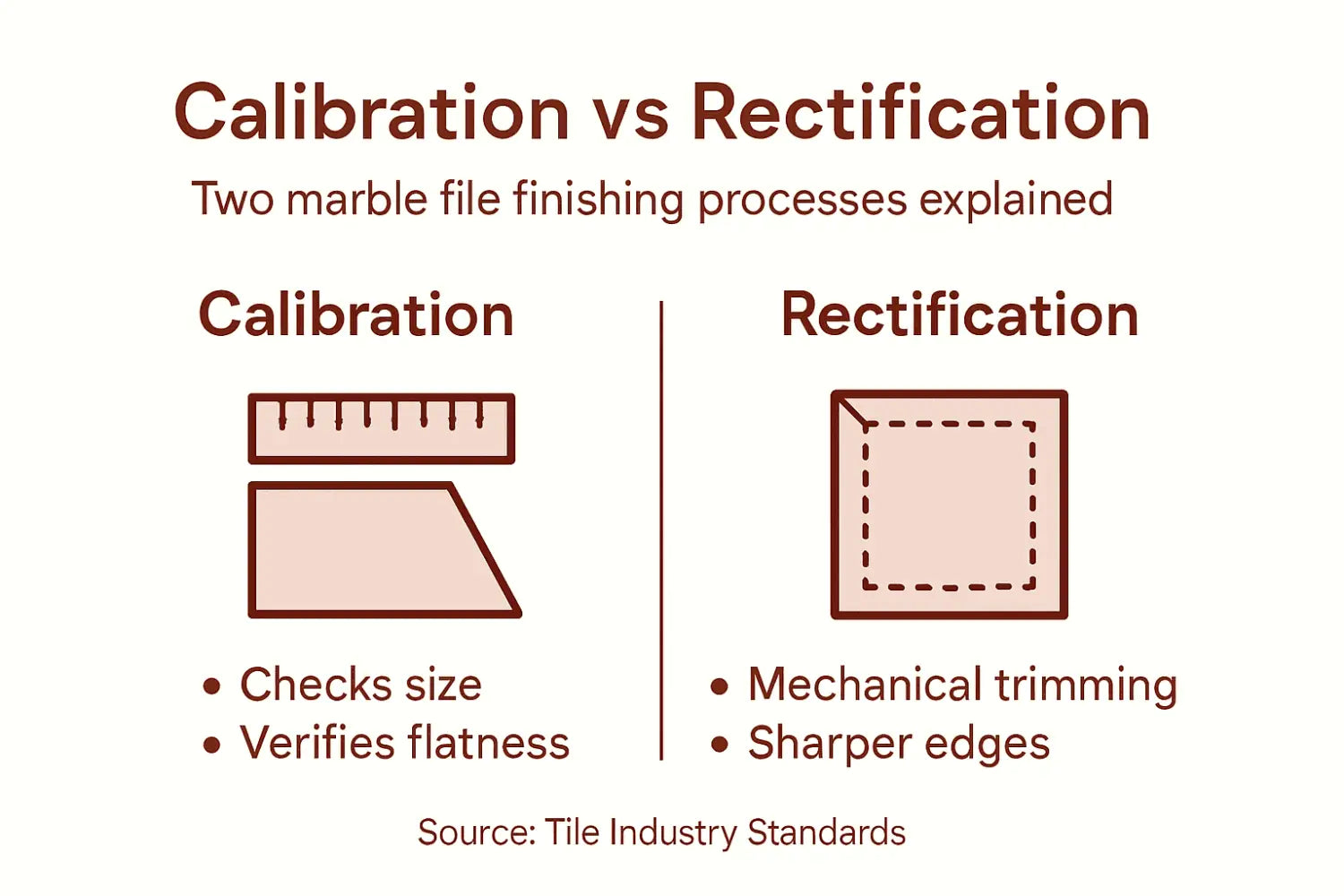
The cost difference between calibrated and rectified tiles reflects this reality. Rectified tiles require additional processing, which means additional labor, equipment wear, and material loss from machining. When budgeting, expect rectified marble to run 15 to 30 percent higher than calibrated tiles from the same supplier. For high-end kitchen installations where you want uniform grout lines and a contemporary aesthetic, the investment in rectified tiles often makes sense. For bathrooms with varied tile sizes and traditional design sensibilities, calibrated tiles typically deliver better value without sacrificing installation quality. The key is knowing which approach aligns with your project goals and specifying accordingly rather than assuming one is universally better than the other.
Here’s how marble tile calibration compares to rectification for project planning:
| Aspect | Calibration | Rectification |
|---|---|---|
| Primary Purpose | Measurement and verification | Machining to correct geometry |
| Cost Impact | Lower overall costs | 15–30% higher price |
| Edge Consistency | Minor edge variations remain | Edges are perfectly squared |
| Best Use Case | Traditional designs, value-focused projects | Modern designs, tight grout lines |
Pro tip: When requesting quotes from marble suppliers, specifically ask whether they’re offering calibrated or rectified tiles, then request samples of both so you can evaluate edge quality and visual character differences before committing to a large order.
Why Calibrated Marble Tiles Install Better
Calibrated marble tiles transform the installation experience from frustrating to predictable. The core reason is simple: consistent thickness and flatness eliminate lippage, which is the enemy of professional marble installations. Lippage occurs when tile heights vary unevenly, creating visible steps where tiles meet. Walk into a bathroom with bad lippage and your eye catches it immediately, even if you can’t articulate exactly what looks wrong. The surface feels rough underfoot, grout lines appear uneven, and the whole installation looks amateur. Calibrated tiles prevent this because they’re all the same thickness within tight tolerances. When every tile sits at the same height, your mortar bed becomes thinner and more consistent, which also means faster setting times and fewer adjustments during installation.
The installation speed difference is significant. With uncalibrated tiles, your crew spends time shimming and adjusting each piece individually, checking elevations constantly, and managing varying mortar depths to compensate for thickness differences. They’re essentially solving a puzzle where the pieces don’t quite fit the expected dimensions. With calibrated tiles, the dimensional accuracy allows your installers to work more efficiently. They can apply thinner, more consistent mortar beds because they’re not compensating for thickness variations. This reduces material waste, speeds up the process, and produces that smooth, professional surface that justifies the premium clients pay for marble. Beyond speed, calibrated marble tiles enhance compatibility with adhesives and substrates, which is critical for lasting installations. When tiles are dimensionally consistent, the bond between tile and substrate becomes uniform, reducing the risk of hollow spots or delamination that can emerge months or years later.
There’s also a visual and structural advantage worth mentioning. Even grout lines become achievable with calibrated tiles because you’re not constantly adjusting joint width to accommodate edge variations. This matters especially for contemporary designs where tight, uniform grout lines are intentional design elements. For traditional spaces, consistent grout lines maintain visual harmony that makes the marble feel intentional and refined rather than awkwardly assembled. The structural integrity improves as well. When tiles are precisely dimensioned, they distribute loads more evenly across the substrate. Uneven tiles create stress concentrations at high points, which can lead to cracks or failures over time. Proper dimensional accuracy directly translates to improved installation results, maintaining both aesthetic integrity and long-term performance.
From a practical project standpoint, calibrated tiles also reduce your callback risk. Homeowners and designers notice the quality of workmanship immediately. A floor that’s smooth and level with consistent grout lines looks expensive. One with lippage and variable grout lines looks cheap, regardless of the actual marble quality. When you specify calibrated tiles, you’re protecting your reputation and reducing the likelihood of disputes about installation quality. The small premium you pay for calibrated tiles pays for itself through faster labor, less material waste, and client satisfaction. This is especially true for kitchen counters and bathroom floors where surface quality directly affects how clients perceive the entire renovation.
Pro tip: On your next estimate, factor in labor time savings from using calibrated marble tiles, which typically reduces installation time by 15 to 25 percent compared to uncalibrated materials, then present this efficiency gain to clients as justification for specifying quality products.
Surfaces Galore’s Commitment to Tile Quality and Consistency
When you work with Surfaces Galore as a California designer or contractor, you’re partnering with a supplier that treats calibration and consistency as non-negotiable standards, not optional extras. Based in Anaheim and operating as a direct importer of premium natural stone, Surfaces Galore has built its reputation on understanding what installers and designers actually need in the field. That understanding translates into a rigorous commitment to stringent quality control measures that begin the moment marble arrives from quarries and continue through every stage of fabrication and shipping. The company emphasizes calibration of marble tiles to ensure consistency in thickness, flatness, and finish across every order, which directly addresses the installation challenges you face on residential renovation projects throughout the region.
The practical difference shows up immediately when you unbox a shipment. Surfaces Galore’s quality assurance process includes detailed material inspection, precise manufacturing controls, and comprehensive testing protocols that verify flatness, thickness tolerance, and finish quality before tiles ship to your projects. This isn’t casual oversight. Every batch gets measured and documented, which means you can request calibration certificates that prove your tiles meet specifications. When you’re managing tight schedules and tight budgets, knowing you can trust tile consistency eliminates the variable that causes most installation headaches. The company’s approach also addresses a problem many designers face when sourcing from multiple suppliers over the course of a renovation season: color and finish consistency across orders. Industry best practices for quality tile installation emphasize the importance of sourcing from suppliers who maintain reliable controls, which is exactly where Surfaces Galore’s commitment matters. When your first order of Calacatta marble matches your second order placed three months later, you’re not scrambling to explain color variations to unhappy clients.
What makes Surfaces Galore stand out for your specific market is that the company understands the California residential renovation environment. You’re dealing with high-end expectations, demanding designers, and homeowners who’ve invested significant resources in their projects. When you specify marble from a supplier whose calibration standards reduce installation problems and enhance durability, you’re protecting not just the project but your professional reputation. The company’s inventory includes both calibrated standard sizes and options for custom sizes that require verified calibration specifications, which gives you flexibility whether you’re working with traditional bathroom layouts or designing something more contemporary and unique. The direct importer model also means you’re not dealing with middlemen who’ve already taken their margin. You’re working with someone who controls the quality from source through delivery, which translates into more competitive pricing without sacrificing the standards that matter.
The relationship between Surfaces Galore and designers like you works best when you treat calibration as a specification requirement rather than a nice-to-have feature. When preparing estimates and project timelines, factor in the efficiency gains from consistent tiles. When presenting material options to clients, explain why calibrated marble justifies its cost through faster installation and superior finish quality. When building long-term supplier relationships, recognize that Surfaces Galore’s commitment to consistency means you can confidently specify their products across multiple projects without worrying about batch-to-batch variations. The company ships nationwide, so whether your projects are in coastal California or inland, you’re getting the same quality standards that make installation predictable and results professional.
Key benefits of choosing a supplier with strict calibration standards:
| Benefit | Installation Impact | Client Result |
|---|---|---|
| Documented thickness consistency | Fewer height adjustments needed | Fewer callbacks and complaints |
| Flatness verification | Easier substrate prep | Cleaner visual outcome |
| Color/finish matching over time | Smooth reordering for add-ons | Confident material selection |
Pro tip: Before your next major marble project, contact Surfaces Galore directly to request calibration documentation and samples from recent inventory, then compare these specifications against other suppliers to quantify the consistency advantage that justifies the investment.
Experience the Difference Calibrated Marble Tiles Make in Your Projects
The challenge of inconsistent marble tile thickness and flatness can turn any installation into a costly and frustrating task. When tiles are not calibrated properly, issues like uneven grout lines and lippage become a daily struggle on job sites. If you value precision, efficiency, and the timeless beauty that calibrated marble delivers, you understand how critical it is to source tiles that meet strict measurement standards. Surfaces Galore specializes in premium calibrated marble tiles designed to give you consistent thickness and flatness so your installations look seamless and last longer.
Choose Surfaces Galore because:
- We guarantee documented calibration ensuring every tile meets your project’s exacting requirements
- Our direct importer model means better pricing without compromises on quality or consistency
- We provide detailed calibration certificates so you can trust what you are ordering

Don’t let tile inconsistencies slow down your next residential renovation. Explore how our precisely calibrated marble tiles can help you reduce labor time and enhance finished aesthetics. Visit Surfaces Galore to request samples and calibration documentation today. Take control of your project’s quality and impress your clients with flawless marble installations.
Learn more about the calibration process and why it matters at What Is Marble Tile Calibration and Why It Matters. Discover why working with a trusted supplier who understands tile consistency is your best step forward.
Frequently Asked Questions
What is marble tile calibration?
Marble tile calibration is a measurement process that ensures consistency in the thickness, flatness, and dimensional properties of marble tiles, guaranteeing that each tile performs and looks identical to the others.
Why is calibration important for marble tiles?
Calibration is crucial because it alleviates installation challenges such as uneven grout lines and lippage. It ensures that tiles fit together smoothly, which leads to faster installation and enhances the overall aesthetic of the project.
How does marble tile calibration differ from rectification?
Calibration is a verification process that checks tiles against standards for consistency, while rectification involves actively machining tiles to correct geometric issues, ensuring perfectly square edges and uniform dimensions.
What are the benefits of using calibrated marble tiles for installation?
Using calibrated marble tiles reduces the risk of installation errors, allows for thinner mortar beds, ensures consistent grout joint widths, and improves the overall aesthetic and durability of the flooring or surface, leading to greater client satisfaction.

Leave a comment