

Stone Tile Sizes Explained: Choosing the Right Fit

Over 60 percent of American homeowners choose stone tiles for their remodeling projects, drawn by both durability and natural elegance. Understanding the size and dimension options is crucial, as the right tile can completely transform a room’s feel and function. This overview highlights key measurements, practical tips, and smart strategies every American should know before selecting stone tiles to ensure a beautiful and lasting result.
Table of Contents
- Understanding Stone Tile Sizes And Dimensions
- Popular Formats For Marble And Travertine Tiles
- How Tile Size Affects Installation And Design
- Matching Tile Sizes To Room Types And Uses
- Common Pitfalls When Selecting Tile Sizes
Key Takeaways
| Point | Details |
|---|---|
| Understanding Tile Sizes | Proper tile sizes are crucial for aesthetics and installation; larger tiles create an expansive feel, while smaller tiles offer intricate detailing. |
| Installation Considerations | Larger tiles require meticulous preparation for a level substrate, while smaller tiles are more forgiving of minor imperfections. |
| Room-Specific Selections | Choosing the right tile size for the room type enhances usability and visual harmony; always consider room proportions and scale. |
| Common Pitfalls | Avoid selecting inappropriate tile sizes which can lead to visual clutter or overwhelming spaces; make mock layouts to visualize selections effectively. |
Understanding Stone Tile Sizes and Dimensions
Stone tiles represent a sophisticated design element with complex dimensional considerations that impact installation, aesthetics, and performance. Dimension stone tiles are typically engineered to precise specifications, ranging from thin profiles less than 3/4 inch thick to carefully measured surface areas designed for optimal architectural integration.
The standard stone tile dimensions involve critical measurements that professionals must understand. Most natural stone tiles range between 6 and 36 square inches, with thickness variations critical to structural integrity. Larger tiles require more precise installation techniques, including careful subfloor preparation and specialized mortar application to prevent potential cracking or structural failures.
When selecting stone tile sizes, several key factors influence the decision. Room dimensions, visual proportions, grout line preferences, and intended application all play significant roles in determining the most appropriate tile size. Smaller tiles work exceptionally well in compact spaces or areas requiring intricate design patterns, while larger format tiles create a sense of expansiveness and minimize visual interruptions.
Pro Tip: Measure your specific space carefully and create a mock layout using cardboard templates before purchasing stone tiles to visualize how different sizes will actually look and feel in your environment.
Pro Measurement Strategy: Always purchase 10% more tiles than your calculated square footage to account for potential cuts, breakage, and future replacement needs.
Here’s a quick reference comparing small, medium, and large stone tile formats and their ideal uses:
| Tile Size Category | Typical Dimensions (mm) | Best Applications | Visual Impact |
|---|---|---|---|
| Small Format | 100x100 – 300x300 | Backsplashes, mosaics, curved areas | Adds texture, intricate patterns |
| Medium Format | 300x300 – 600x600 | Standard floors, walls, bathrooms | Balanced, versatile appearance |
| Large Format | 600x1200 and bigger | Living rooms, open spaces, modern kitchens | Expansive, minimal grout lines |
Popular Formats for Marble and Travertine Tiles
Marble and travertine tiles come in a stunning array of formats that cater to diverse design preferences and architectural requirements. Standard tile sizes range from compact 100x100mm squares to expansive 1000x1000mm formats, offering designers and homeowners unprecedented flexibility in creating unique spaces.
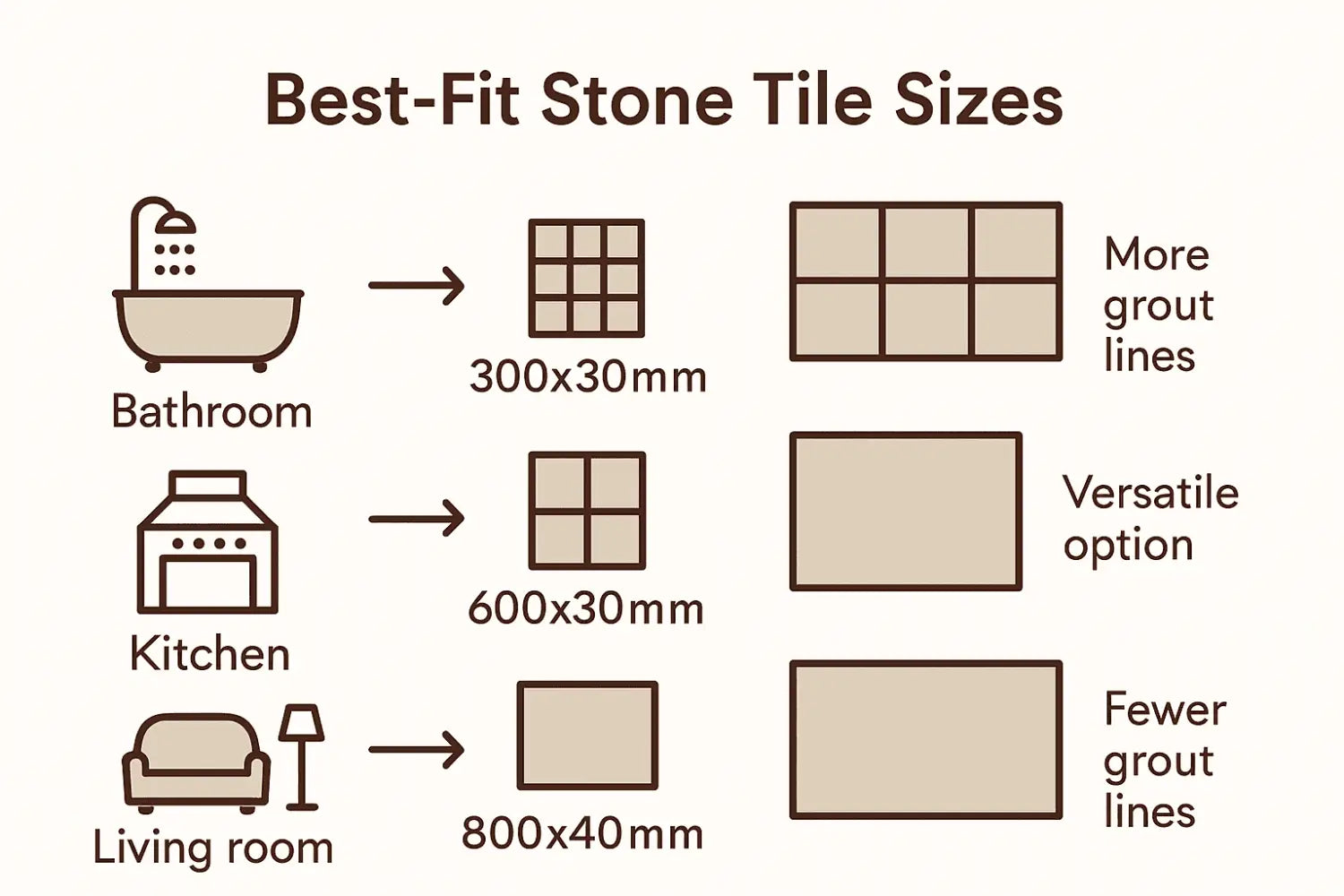
Rectangular tile configurations have gained significant popularity in recent years. Bathroom walls frequently showcase 600x300mm tiles, creating elegant visual lines and minimizing grout areas. In modern kitchens and open-plan living spaces, larger 600x1200mm tiles are trending, delivering a sleek, contemporary aesthetic that visually expands the room and reduces visual fragmentation.

When selecting marble or travertine tile sizes, professionals consider multiple factors beyond simple dimensions. The unique characteristics of marble and travertine tiles influence size selection, including natural color variations, veining patterns, and inherent structural properties. Smaller tiles work brilliantly in areas requiring intricate patterns, while larger formats create a sense of spaciousness and sophistication.
Pro Tip: Consider visual proportion and room scale when selecting tile sizes, ensuring the chosen format complements your space’s architectural characteristics.
Pro Installation Strategy: Always purchase 10-15% additional tiles to accommodate complex cuts, potential breakage, and future replacement needs.
How Tile Size Affects Installation and Design
Tile size plays a critical role in both aesthetic design and practical installation processes. The visual perception of space dramatically changes depending on the dimensions selected, with larger tiles creating an expansive feel and smaller tiles introducing intricate textural elements that can transform a room’s character.
Installation complexity varies significantly based on tile dimensions. Larger format tiles require meticulous subfloor preparation, precise leveling, and specialized installation techniques to prevent lippage and ensure a seamless appearance. Smaller tiles offer more flexibility with slight surface irregularities but demand more labor-intensive grouting and potentially more complex cutting around architectural features. Professionals must carefully evaluate the specific requirements of each project, considering factors like room geometry, lighting conditions, and intended visual impact.
The strategic selection of tile size can dramatically influence a space’s perceived dimensions and aesthetic harmony. Understanding tile size principles helps designers create visually balanced environments that feel both spacious and architecturally cohesive. Larger tiles tend to minimize grout lines, creating a more streamlined look, while smaller tiles provide opportunities for more intricate design patterns and can better accommodate curved or irregular surfaces.
Pro Tip: Consider room proportions and lighting when selecting tile sizes to maximize visual appeal and create the desired spatial perception.
Pro Installation Strategy: Always mock up tile layouts using cardboard templates to visualize the final design before purchasing and installing your stone tiles.
Matching Tile Sizes to Room Types and Uses
Selecting the right tile size requires careful consideration of each room’s unique characteristics and functional requirements. Bathroom and kitchen tile configurations demonstrate how strategic sizing can dramatically transform spatial perception and usability.
In bathroom environments, rectangular tiles measuring 600x300mm are particularly effective for wall applications, creating elegant vertical lines and minimizing grout areas. Smaller mosaic tiles work exceptionally well for shower floors, providing superior slip resistance and accommodating subtle contours. Kitchen spaces typically benefit from larger format tiles like 600x1200mm, which create a sense of expansiveness and reduce visual fragmentation, making the area feel more open and seamless.
Living areas and commercial spaces demand different tile sizing strategies based on traffic patterns and aesthetic goals. Versatile tile sizing options allow designers to create unique visual experiences, from intricate mosaic patterns in entryways to large-format tiles that create a luxurious, uninterrupted surface in open-plan environments. Hallways and high-traffic zones often require more durable, smaller tile formats that can withstand constant movement while maintaining visual interest.
Pro Tip: Always consider the room’s scale, lighting, and architectural features when selecting tile sizes to create a harmonious and visually compelling design.
Pro Installation Strategy: Create a paper template of your room to experiment with different tile layouts and sizes before making a final purchase.
Use this table to match tile sizes to specific room types for the best results:
| Room Type | Recommended Tile Size | Main Benefit | Key Consideration |
|---|---|---|---|
| Bathroom Walls | 600x300 mm | Elegant, vertical lines | Prevents excess grout |
| Shower Floors | Small mosaics | Enhanced safety, slip resistance | Adapts to slopes |
| Kitchen Floors | 600x1200 mm | Spacious, seamless look | Subfloor must be level |
| Entryways | 100x100 – 300x300 mm | Visual detail, durability | Handles high traffic |
| Living Areas | 600x600 mm or larger | Luxurious, unified surface | Avoids busy patterns |
Common Pitfalls When Selecting Tile Sizes
Selecting the wrong tile size can transform a potentially stunning design into a visual nightmare. Room perception and tile sizing represent a critical relationship that many homeowners and designers underestimate, leading to costly design mistakes that compromise aesthetic harmony.
One of the most frequent errors involves neglecting subfloor preparation, which becomes exponentially more crucial with larger tile formats. Uneven surfaces can cause significant installation challenges, potentially resulting in lippage, cracking, and premature tile failure. Larger tiles demand an absolutely level substrate, requiring extensive preparation and potentially additional leveling compounds to ensure a flawless installation. Small tiles offer more forgiveness with minor surface imperfections, while expansive tiles reveal every minute irregularity.
Perceptual misjudgments frequently derail tile selection strategies. Using small tiles in large rooms can create a visually cluttered appearance, making spaces feel fragmented and busy. Conversely, oversized tiles in compact areas can overwhelm the room, making it feel compressed and claustrophobic. Understanding dimensional proportions becomes essential for creating balanced, visually appealing environments that feel both spacious and intentionally designed.
Pro Tip: Always consider the room’s architectural proportions and natural light when selecting tile sizes to ensure optimal visual impact.
Pro Installation Strategy: Create a full-scale mock-up using cardboard or paper templates to visualize tile layouts before making a final purchasing decision.
Find the Perfect Stone Tile Size with Confidence
Choosing the right stone tile size can feel overwhelming due to important challenges like balancing room scale, installation complexity, and visual impact. The article explains how tile dimensions affect both design and durability while highlighting key considerations such as subfloor preparation and matching tile sizes to your specific room type. If you want to avoid costly mistakes and create a harmonious, timeless space, precise selection and quality materials are essential.
At Surfaces Galore, we specialize in premium natural stone tiles including marble and travertine, perfectly suited for any project size or style. Our expert guidance and nationwide shipping help designers, architects, contractors, and homeowners access authentic, durable stone that meets your exact needs. Whether you need small mosaics for intricate bathroom floors or large-format tiles to open up your kitchen, we offer unparalleled options tailored to your vision.
Discover the difference expert stone tile size advice and high-quality materials make for your home or commercial project today.
Experience our premium selection first hand 
Explore our collection now and take the next step toward achieving flawless stone tile installation by visiting Surfaces Galore. Elevate your design with the right tile size and expert support that turns your vision into reality.
Frequently Asked Questions
What are the standard sizes of stone tiles?
Most natural stone tiles typically range between 6 and 36 square inches, with thickness variations impacting structural integrity. Small formats range from 100x100 mm to 300x300 mm, medium formats from 300x300 mm to 600x600 mm, and large formats from 600x1200 mm and larger.
How does tile size affect installation?
Tile size significantly impacts the installation process. Larger tiles require careful subfloor preparation, precise leveling, and specialized installation techniques to prevent lippage and ensure a seamless appearance, while smaller tiles are more forgiving but demand more labor-intensive grouting.
What factors should I consider when choosing stone tile sizes?
Consider room dimensions, visual proportions, grout line preferences, and the intended application. Smaller tiles work well in compact spaces or for intricate designs, while larger tiles create a sense of expansiveness and minimize grout lines.
How can I ensure the proper fit of stone tiles in my space?
Measure your space carefully and create a mock layout using cardboard templates to see how different sizes will look and feel. Always purchase 10-15% more tiles than calculated to account for cuts, breakage, and future replacements.
Leave a comment