

Types of Travertine Explained: Style, Durability, Value

Over 60 percent of American homes feature some form of natural stone in their design, but few people realize how unique travertine truly is. This stone stands out not just for its rustic beauty but also for its unexpected versatility in both modern and traditional spaces. If you want to understand what makes travertine so popular among American homeowners and designers, you will discover essential facts that explain its origins, distinct qualities, and enduring appeal.
Table of Contents
- What Is Travertine Stone? Essential Facts
- Major Types Of Travertine Tiles And Slabs
- Finish Options: Honed, Polished, Tumbled, And Brushed
- Travertine Grades And Quality Differences
- Where Each Travertine Type Works Best
- Costs, Maintenance Needs, And Key Pitfalls
Key Takeaways
| Point | Details |
|---|---|
| Unique Composition | Travertine is a naturally occurring stone formed from calcium carbonate deposits, known for its durability and aesthetic appeal. |
| Finish Options | Various finishes like honed, polished, and tumbled provide different aesthetics and usability for interior and exterior applications. |
| Quality Grades | Travertine is graded into Premium and Commercial categories, influencing its visual characteristics and performance in design projects. |
| Maintenance Considerations | Regular sealing and careful cleaning are essential to maintain the stone’s integrity and prevent damage from environmental factors. |
What Is Travertine Stone? Essential Facts
Travertine is a remarkable natural stone with a fascinating geological origin, formed through intricate mineral precipitation processes. Characterized by its distinctive porous texture, travertine emerges from calcium carbonate deposits created by mineral-rich spring water over thousands of years.
Geologically, travertine develops in layers through a complex process where calcium carbonate slowly accumulates around mineral springs, hot springs, and limestone caves. The stone’s signature appearance comes from trapped carbon dioxide bubbles during formation, which create unique surface holes and cavities. These natural voids give travertine its distinctive, rustic aesthetic that architects and designers find incredibly appealing.
Travertine’s composition makes it incredibly versatile for both interior and exterior applications. Primarily composed of calcite, the stone ranges in color from soft ivory and beige to rich golden and walnut tones, offering designers and homeowners remarkable design flexibility. Its natural porosity means each travertine piece tells a unique geological story, with variations in texture, color, and pattern that cannot be replicated in manufactured materials.
Key characteristics of travertine include:
- Naturally occurring sedimentary rock
- Formed in mineral-rich water environments
- Highly durable building material
- Available in multiple color variations
- Unique, organic surface texture
At Surfaces Galore, we celebrate the raw beauty of natural stone like travertine, offering premium selections that bring authentic geological artistry directly into your design projects.
Major Types of Travertine Tiles and Slabs
Travertine tiles come in several distinct variations, each offering unique aesthetic and functional characteristics for design professionals and homeowners. Selecting the right travertine type requires understanding the subtle nuances of color, finish, and application potential.
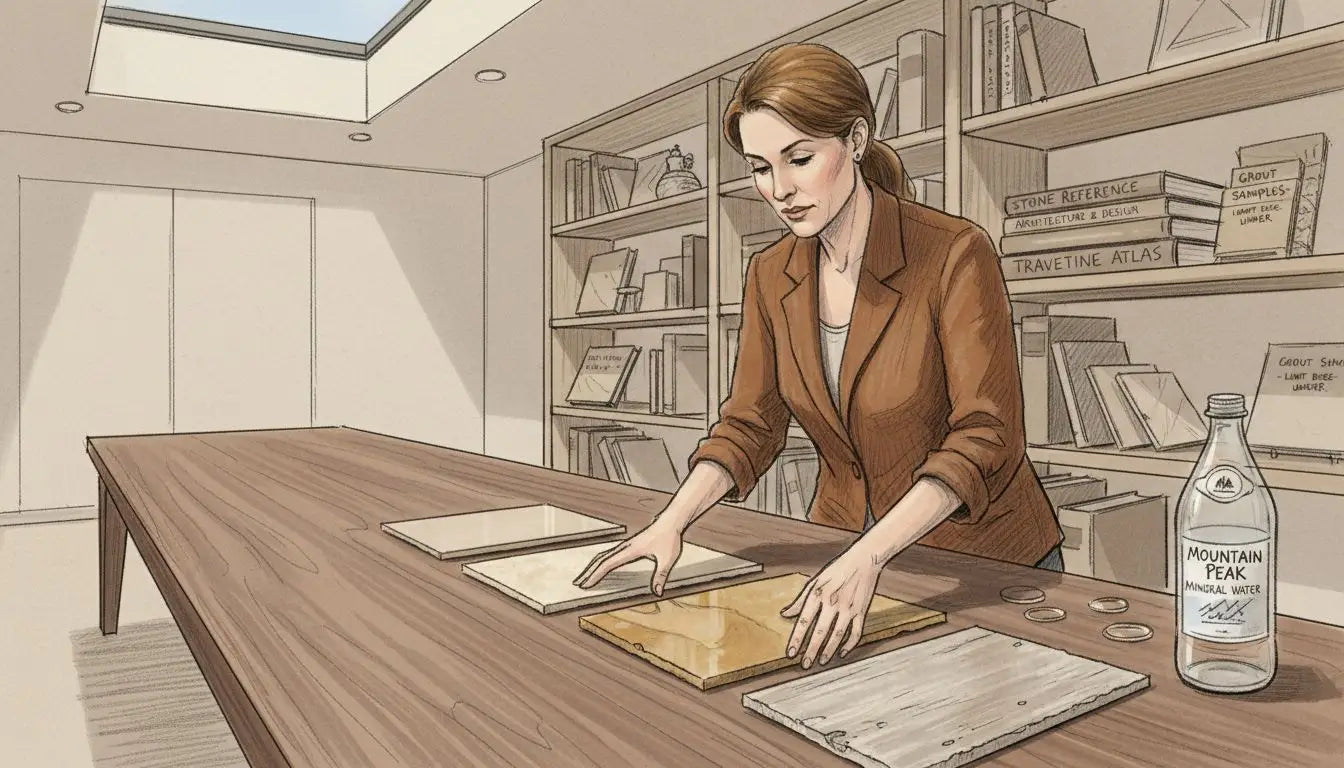
Classic travertine types include several primary categories that distinguish themselves through color, texture, and origin. The most popular variations are Ivory, Noce, Scabos, and Classic travertine, each presenting distinctive visual properties. Ivory travertine features light beige to cream tones with soft, understated patterns, making it ideal for creating bright, open spaces. Noce travertine presents rich brown and walnut color ranges, offering warmth and depth to interior design schemes.
Finish variations play a critical role in travertine’s appearance and performance. Homeowners and designers can select from several primary finish types:
- Filled and Honed: Smooth surface with holes filled, creating a uniform appearance
- Tumbled: Rough, aged look with rounded edges and natural texture
- Polished: High-gloss finish that reflects light and creates elegance
- Brushed: Subtle texture with minimal sheen, offering a natural stone appearance
- Saw-cut: Raw, unfinished look with prominent stone characteristics
The selection process for travertine involves considering factors like room usage, traffic patterns, aesthetic preferences, and maintenance requirements. At Surfaces Galore, we recommend consulting design professionals to match the perfect travertine type with your specific project needs, ensuring both beauty and long-term performance.
Finish Options: Honed, Polished, Tumbled, and Brushed
Travertine’s versatility shines through its remarkable range of finish options that transform its natural appearance, allowing designers and homeowners to customize the stone’s visual and tactile qualities. Each finish brings unique characteristics that dramatically impact the stone’s aesthetic and functional performance.
Honed finish represents a smooth, matte surface that provides a soft, understated elegance. This finish eliminates reflective qualities, creating a uniform, velvety texture that works beautifully in both contemporary and traditional spaces. Unlike polished surfaces, honed travertine maintains a more natural look while reducing visibility of scratches and wear. Polished finish, in contrast, delivers a high-gloss, mirror-like surface that reflects light and creates an immediate sense of luxury. This finish intensifies the stone’s natural color variations and provides a sleek, sophisticated appearance ideal for formal environments.
Alternative finishes offer even more design possibilities:
- Tumbled finish: Creates an aged, rustic appearance with softened edges
- Brushed finish: Produces a subtle, textured surface with minimal sheen
- Saw-cut finish: Presents a raw, industrial look with prominent stone characteristics
When selecting a travertine finish, consider factors like room traffic, maintenance requirements, and overall design aesthetic. At Surfaces Galore, our design experts can help you navigate these nuanced choices, ensuring your selected finish not only looks stunning but performs exceptionally in your specific environment.
Travertine Grades and Quality Differences
Travertine quality varies significantly, with grading systems that evaluate the stone’s structural integrity and aesthetic characteristics. Professional stone suppliers categorize travertine into distinct quality levels that impact both performance and visual appeal.
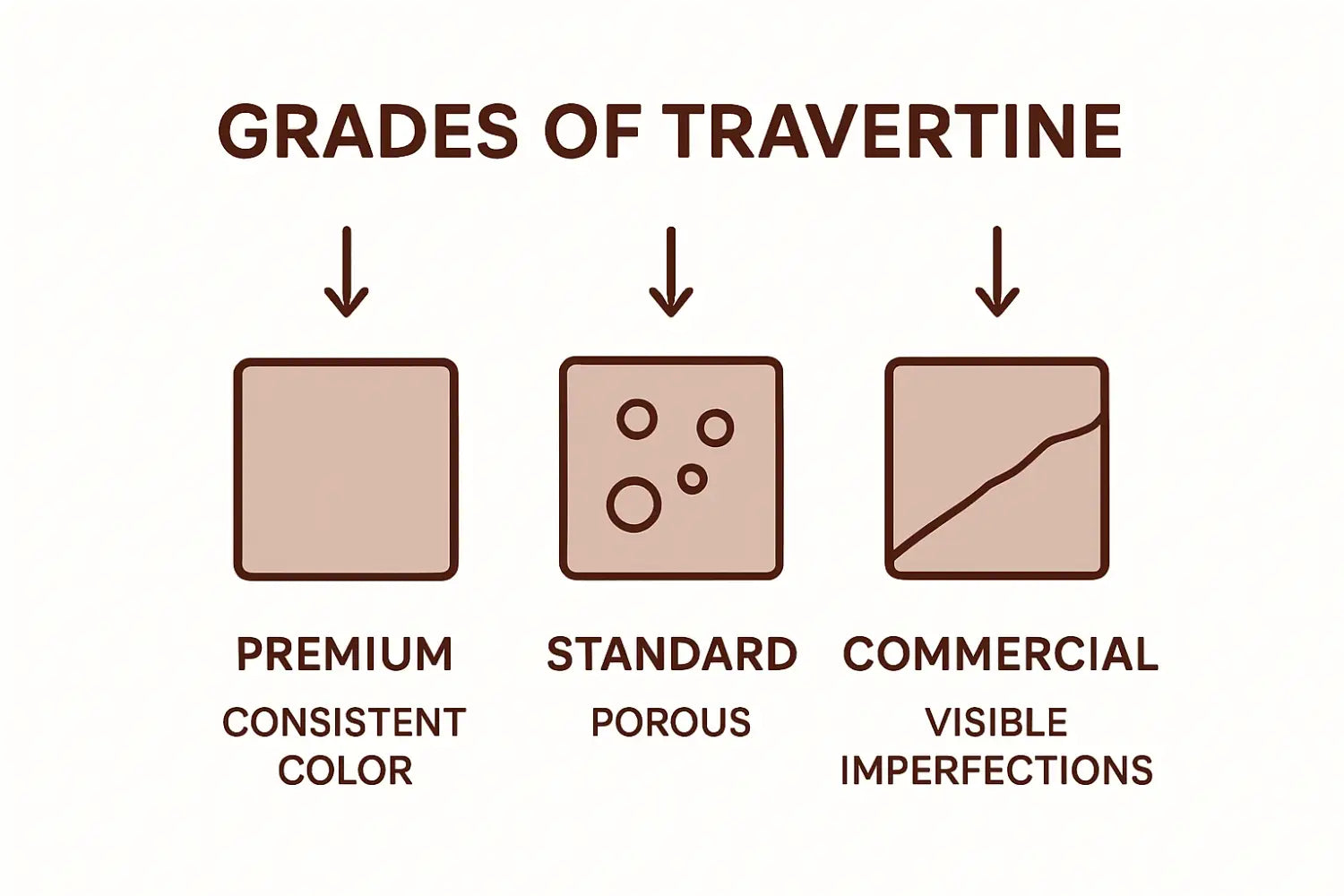
Premium Grade travertine represents the highest quality classification, characterized by minimal surface imperfections, consistent coloration, and exceptional density. These top-tier stones feature fewer natural holes, more uniform patterns, and superior structural integrity. Commercial Grade travertine, in contrast, includes more natural variations, with increased porosity and more prominent surface irregularities. These variations are not necessarily defects but rather natural characteristics that can add unique charm and authenticity to design projects.
The primary factors determining travertine quality include:
- Density: Measure of stone’s compactness and structural strength
- Porosity: Number and size of natural cavities within the stone
- Color Consistency: Uniformity of tone and pattern across the stone
- Surface Smoothness: Presence of natural imperfections or holes
- Structural Integrity: Resistance to cracking and long-term wear
At Surfaces Galore, we carefully curate travertine selections across different grades, ensuring that every stone meets our rigorous standards for beauty, durability, and performance. Our expert team helps clients understand these nuanced quality differences, guiding them to the perfect travertine for their specific design vision.
Where Each Travertine Type Works Best
Travertine’s versatility allows designers and homeowners to leverage specific color variations for different architectural applications. Understanding each type’s unique characteristics enables more strategic design decisions across residential and commercial environments.
Neutral Tone Travertines like Ivory and Beige excel in interior spaces, offering remarkable design flexibility. These classic colors work beautifully for kitchen floors, bathroom walls, and living room surfaces, providing a sophisticated neutral backdrop that complements multiple design styles. Dramatic Color Travertines such as Silver and Red serve different purposes, typically functioning as statement pieces or accent features that draw visual interest and create architectural drama.
Ideal applications for different travertine types include:
- Ivory Travertine: Kitchen flooring, bathroom walls, entryway surfaces
- Noce Travertine: Fireplace surrounds, exterior walkways, poolside areas
- Silver Travertine: Accent walls, decorative columns, outdoor kitchen designs
- Red Travertine: Artistic feature walls, landscape design elements, unique architectural highlights
At Surfaces Galore, our design experts help clients match travertine varieties to their specific aesthetic and functional requirements, ensuring each stone selection achieves maximum visual impact and performance.
Costs, Maintenance Needs, and Key Pitfalls
Travertine’s aesthetic appeal comes with specific considerations that homeowners and designers must carefully evaluate. Understanding the stone’s maintenance requirements and potential challenges is crucial for long-term satisfaction and performance.
Cost Factors for travertine vary widely, with prices ranging from $5 to $30 per square foot depending on grade, origin, and finish. Premium grades and imported varieties command higher prices, while commercial-grade stones offer more budget-friendly options. Maintenance demands represent a significant long-term investment, requiring regular sealing, careful cleaning, and proactive care to preserve the stone’s natural beauty and structural integrity.
Key maintenance and potential pitfall considerations include:
- Sealing: Required every 1-3 years to prevent staining
- Cleaning: Specialized pH-neutral stone cleaners mandatory
- Acid Sensitivity: Vulnerable to damage from vinegar, citrus, and harsh chemicals
- Scratch Susceptibility: Softer than granite, requires careful surface protection
- Moisture Vulnerability: Prone to water damage without proper sealing
At Surfaces Galore, our experts provide comprehensive guidance on travertine selection, helping clients understand the full lifecycle cost and maintenance requirements to make informed decisions that balance aesthetic desires with practical considerations.
Discover Your Perfect Travertine Style with Surfaces Galore
Choosing the right travertine tile means balancing style, durability, and value—challenges this article clearly highlights. Whether you are navigating the complexities of finish options like honed or tumbled, or weighing the impact of travertine grades on longevity and maintenance, selecting natural stone can feel overwhelming. You want authentic beauty that lasts without surprise costs or upkeep struggles.
At Surfaces Galore, we specialize in addressing these exact concerns. As a leading direct importer of premium travertine and marble, we offer expert guidance and a curated selection that makes finding your ideal stone simple and stress-free. From light Ivory to rich Noce, our authentic travertine collection lets you embrace nature’s unique textures with confidence. Explore our range and experience the difference between generic options and carefully sourced, high-quality materials.
Ready to elevate your project with travertine that fits your vision and lifestyle? Explore our full premium collection today at Surfaces Galore and learn more about choosing the perfect tile finishes and types at https://surfacesgalore.com.
Start your journey to timeless elegance now. Visit us online and connect with our design experts to find your flawless travertine solution and ensure your project’s success.
Frequently Asked Questions
What are the main types of travertine tiles?
The main types of travertine tiles include Ivory, Noce, Scabos, and Classic travertine, each offering unique color variations and visual properties suitable for different design styles.
How do different finishes of travertine impact its appearance?
Different finishes such as honed, polished, tumbled, and brushed significantly affect the aesthetic of travertine. A honed finish has a matte surface, a polished finish is high-gloss, while tumbled and brushed finishes provide rustic and textured looks.
What factors determine the quality of travertine?
The quality of travertine is determined by factors such as density, porosity, color consistency, surface smoothness, and structural integrity. Premium Grade travertine has fewer imperfections and better durability compared to Commercial Grade.
Where is travertine best suited for installation?
Travertine is ideal for a variety of applications including kitchen flooring, bathroom walls, fireplace surrounds, and outdoor spaces. Neutral tones like Ivory work well indoors, while dramatic colors can serve as statement features.
Leave a comment