

Why Marble Adds Value to High-End Renovations

Most American luxury homes feature premium marble surfaces that instantly signal high design standards and lasting value. Interior designers in Southern California know that marble’s unique crystalline structure creates an unmistakable play of light, elevating every room’s aesthetic appeal. With demand for sophisticated finishes rising, understanding marble’s timeless qualities and iconic origins helps designers make confident choices that set high-end renovations apart and drive client satisfaction.
Table of Contents
- Marble’s Enduring Allure And Core Qualities
- Types Of Marble Used In Luxury Design
- Architectural Impact Of Marble Finishes
- How Marble Elevates Home Resale Value
- Comparing Marble To Alternative Materials
- Data Sources On Value Increase With Marble
Key Takeaways
| Point | Details |
|---|---|
| Enduring Appeal of Marble | Marble is a unique, natural material that combines aesthetic beauty with durability, making it highly valued in luxury design. |
| Enhanced Property Value | Incorporating marble in high-visibility areas can significantly increase home resale value, appealing to potential buyers. |
| Diverse Varieties for Design | Different marble types offer a broad palette of colors and patterns, allowing designers to create sophisticated environments. |
| Consider Alternatives | Alternatives like quartz and porcelain offer cost-effective and practical solutions while still achieving a luxurious look alongside marble. |
Marble’s Enduring Allure and Core Qualities
Marble represents an extraordinary natural material with a heritage spanning thousands of years, prized for its exceptional aesthetic and structural qualities. Metamorphic rock formation creates marble through intense geological processes, resulting in a material that combines stunning visual appeal with remarkable durability.
The unique crystalline structure of marble allows it to absorb and reflect light in ways that create extraordinary depth and luminosity. Unlike manufactured materials, marble offers natural variation in color and pattern, with impurities creating distinctive veining and color gradients that make each stone installation truly unique. Professional designers appreciate marble’s ability to transform spaces, adding instant sophistication and timeless elegance to high-end residential and commercial environments.
Geological origins contribute significantly to marble’s remarkable properties. Marble formations emerge through metamorphic transformations of limestone, subjected to extreme heat and pressure over millions of years. These processes create a material with exceptional strength, workability, and aesthetic versatility. From pure white Carrara to rich black varieties, marble offers an extraordinary range of design possibilities that appeal to architects and interior designers seeking materials with both historical significance and contemporary relevance.
Pro tip: When selecting marble for renovations, always examine multiple stone slabs to understand the unique veining and color variations, ensuring you choose a piece that perfectly matches your design vision.
Types of Marble Used in Luxury Design
Luxury design demands exceptional marble varieties that offer unique aesthetic and functional characteristics. Distinctive marble types provide designers with an extraordinary palette of colors, patterns, and textures that transform spaces into extraordinary environments. Professional interior designers and architects carefully select marble based on its specific visual qualities, geological origin, and potential to elevate architectural and decorative elements.
Carrara marble stands as the quintessential luxury stone, renowned for its exceptional purity and historical significance. Carrara marble’s celebrated heritage traces back to Renaissance masters like Michelangelo, who prized its pristine white to blue-grey coloration and remarkable workability. Modern luxury designs continue to leverage Carrara’s timeless appeal, using it in high-end kitchen countertops, bathroom vanities, and elaborate floor installations that communicate sophistication and refined taste.
Beyond Carrara, global marble varieties offer remarkable diversity for discerning designers. Makrana marble from India, famously used in the Taj Mahal, provides stunning white surfaces with exceptional durability. Greek Parian marble, historically significant in classical sculpture, offers translucent qualities that create luminous architectural elements. Italian Statuary marble presents pure white surfaces with minimal veining, while Spanish Macael marble introduces dramatic grey and white patterns perfect for contemporary minimalist designs. Each variety brings unique geological characteristics that make marble an unparalleled material in luxury interior design.
Here’s a side-by-side look at major marble types and their signature features:
| Marble Variety | Geographic Origin | Key Visual Characteristic | Classical Use Example |
|---|---|---|---|
| Carrara | Italy | White with subtle blue-grey | Renaissance sculpture |
| Makrana | India | Pure white, strong durability | Taj Mahal construction |
| Parian | Greece | Translucent, fine texture | Classical Greek statuary |
| Statuary | Italy | Pure white, minimal veining | Luxury architecture |
| Macael | Spain | Dramatic grey and white mix | Contemporary flooring |
Pro tip: When selecting marble for high-end renovations, always request multiple stone samples to understand the complete range of color variations and veining patterns within a single marble type.
Architectural Impact of Marble Finishes
Marble represents a transformative architectural material that transcends mere decoration, serving as a critical design element that dramatically influences spatial perception and aesthetic quality. Marble’s architectural significance extends far beyond surface treatment, acting as a fundamental component that communicates luxury, sophistication, and timeless craftsmanship in high-end design environments.
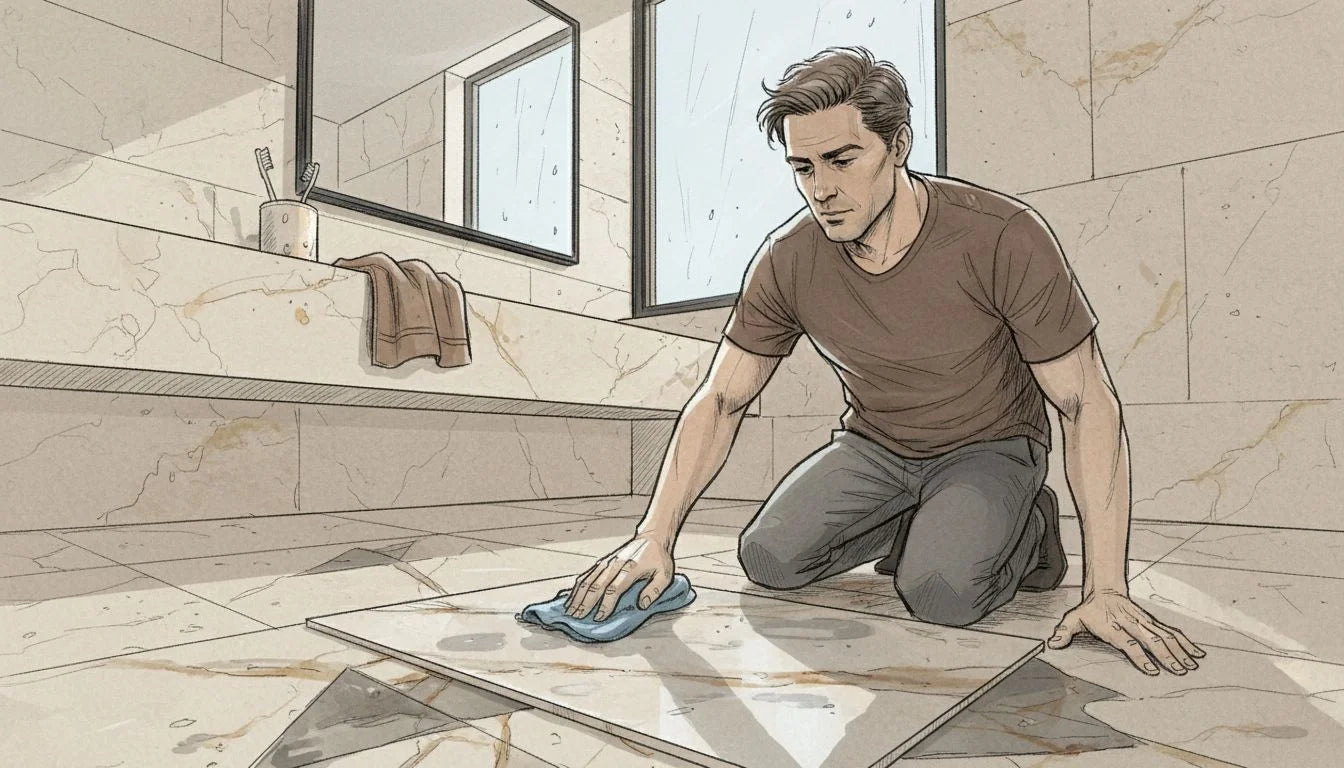
The unique light-refracting properties of marble create extraordinary visual depth and complexity in architectural spaces. Its crystalline structure allows light to penetrate and reflect in subtle, nuanced ways that synthetic materials cannot replicate. Professional architects strategically utilize marble finishes to generate dynamic visual experiences, transforming walls, floors, and structural elements into living canvases that change appearance throughout the day as natural and artificial lighting interact with the stone’s intricate surface.
Understanding marble’s architectural potential requires careful consideration of its physical characteristics and environmental interactions. Thermal weathering and structural performance play crucial roles in determining marble’s long-term viability in architectural applications. Designers must balance aesthetic desires with practical considerations, recognizing that while marble offers unparalleled beauty, it also requires specialized maintenance and protection strategies to preserve its integrity in high-traffic or environmentally challenging environments. Different marble finishes - such as polished, honed, or leathered - provide architects with nuanced tools for manipulating light, texture, and spatial perception.
Pro tip: When incorporating marble into architectural designs, always consult with stone specialists to understand the specific performance characteristics of your chosen marble variety and finish.
How Marble Elevates Home Resale Value
Marble has emerged as a strategic investment that dramatically enhances residential property values, transforming ordinary spaces into extraordinary environments that attract discerning buyers. Marble’s impact on home value extends beyond aesthetic appeal, representing a tangible financial strategy for homeowners seeking to maximize their property’s market potential.
In high-end real estate markets, marble installations serve as powerful signals of quality and sophistication. Kitchens and bathrooms featuring marble countertops, floors, and decorative elements consistently demonstrate higher appraisal values, with potential returns ranging from 70% to 85% of the original installation cost. Professional real estate appraisers recognize marble as a premium material that communicates meticulous maintenance, architectural refinement, and long-term durability to potential buyers, effectively positioning a home as a top-tier property in competitive markets.
Statistical evidence reveals that homes with strategic marble installations typically sell faster and command higher prices compared to properties with standard finishes. Marble’s inherent characteristics - including its timeless aesthetic, natural variation, and association with luxury - create an emotional connection with potential buyers. Sophisticated homebuyers perceive marble not just as a surface treatment, but as a testament to thoughtful design and quality craftsmanship. Specific marble applications like kitchen backsplashes, bathroom vanities, fireplace surrounds, and grand entryway floors can increase a home’s perceived value by creating focal points that distinguish the property from standard neighborhood offerings.
Pro tip: Prioritize marble installations in high-visibility areas like kitchen countertops and master bathroom vanities to maximize potential return on investment during resale.
Comparing Marble to Alternative Materials
While marble remains the gold standard for luxury design, modern alternatives offer compelling options for homeowners and designers seeking aesthetic versatility and cost-effectiveness. Solid surface materials present innovative solutions that balance performance, aesthetics, and budgetary constraints, challenging traditional perceptions about premium surface treatments.
Quartz, porcelain, and engineered stone have emerged as sophisticated marble alternatives, each offering unique advantages. Quartz surfaces provide remarkable durability and consistent patterning, mimicking marble’s visual complexity while delivering superior resistance to staining and scratching. Porcelain tiles offer lightweight, thin profile options with extensive design flexibility, allowing designers to achieve marble-like aesthetics at a fraction of the cost. These materials fundamentally differ from natural marble by providing more predictable performance and lower maintenance requirements.
Economic considerations play a significant role in material selection for high-end renovations. Natural marble typically ranges from $50 to $250 per square foot, whereas engineered alternatives like solid surfaces cost between $40 and $80 per square foot. This price differential does not necessarily compromise visual quality, as advanced manufacturing techniques now enable near-perfect marble replication. Professional designers increasingly recommend hybrid approaches that strategically incorporate marble in high-impact areas while utilizing more affordable materials in secondary spaces, maximizing both aesthetic appeal and budget efficiency.
Below is a comparison of marble versus leading alternative materials for high-end surfaces:
| Material | Durability Level | Maintenance Needs | Typical Cost per Sq. Ft. |
|---|---|---|---|
| Natural Marble | High, can etch | Sealing, regular care | $50 - $250 |
| Quartz | Very high | Low, easy cleaning | $60 - $140 |
| Porcelain | High, not porous | Minimal | $40 - $80 |
| Engineered Stone | High, less unique | Low, simple upkeep | $60 - $120 |
Pro tip: Consider using marble as an accent material in key focal points like kitchen islands or bathroom vanities, complementing more affordable materials to achieve a luxurious look without excessive expense.
Data Sources on Value Increase With Marble
Marble’s economic impact extends far beyond aesthetic appeal, with comprehensive market research providing concrete evidence of its substantial value enhancement in residential and commercial properties. U.S. natural stone market insights reveal remarkable growth trajectories that underscore marble’s increasing significance in high-end renovation strategies, with the market valued at approximately USD 438 million in 2023.
Detailed market analysis indicates a robust upward trend in marble consumption and valuation. Marble market projections forecast the U.S. marble and travertine market to reach an impressive 6.5 million tons and nearly $1.8 billion by 2035, representing a consistent growth rate of over 2% annually. This sustained expansion reflects not just aesthetic preferences, but tangible economic value that marble brings to residential and commercial real estate environments.
Statistical data demonstrates marble’s strategic importance in property valuation. Market consumption increased by 0.3% in 2024, with revenues rising nearly 2%, indicating growing demand across renovation and new construction sectors. Government initiatives supporting sustainable architecture further contribute to marble’s market expansion, signaling a broader recognition of its long-term value proposition. These trends validate marble’s role as more than a decorative material - it represents a calculated investment in property enhancement, with measurable financial returns for homeowners and developers.
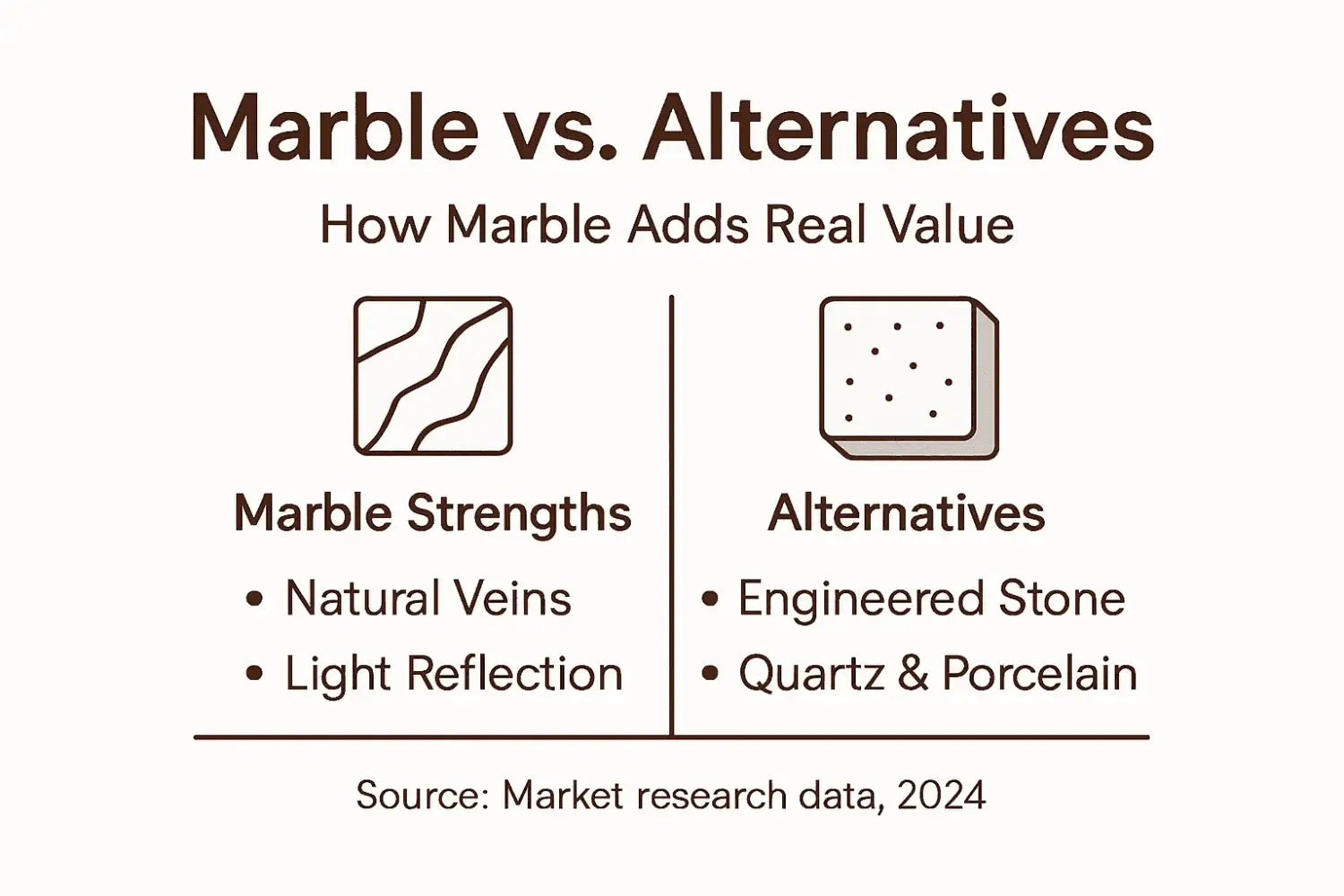
Pro tip: When evaluating marble investments, focus on market trends and regional demand to maximize potential return on your renovation project.
Elevate Your Renovation with Authentic Marble From Surfaces Galore
When upgrading your home, selecting the right marble that combines stunning natural variation with lasting durability is essential for maximizing value and style. This article highlights how marble’s unique crystalline structure and timeless appeal add sophisticated charm and high resale potential to luxury renovations. If you are facing challenges selecting premium marble that delivers both beauty and performance, Surfaces Galore offers a diverse collection of authentic natural stone directly imported from global sources. Our selection supports designers, architects, and homeowners seeking to transform spaces with elegant marble and travertine tiles, mosaics, and decorative pieces.
Discover how our carefully curated marble collections can help you achieve the perfect balance of aesthetic excellence and architectural integrity in your project. Visit Surfaces Galore today to explore our wide range of premium stone options. Act now to bring unparalleled sophistication and higher home resale value with genuine natural marble tailored to your vision.
Frequently Asked Questions
How does marble enhance the aesthetic appeal of a space?
Marble’s unique crystalline structure allows it to absorb and reflect light, creating depth and luminosity that synthetic materials cannot replicate. Its natural variation in color and veining adds sophistication and elegance to high-end renovations.
What are the benefits of using marble in home renovations?
Marble adds value by enhancing the overall aesthetic and perceived quality of the property. It also has durable characteristics, making it a long-lasting investment that can yield a higher return on resale.
How does marble compare to engineered stone in terms of durability and maintenance?
While both materials are durable, marble requires regular sealing and specialized maintenance to preserve its beauty and prevent etching, whereas engineered stone often has lower maintenance needs and higher resistance to stains and scratches.
What impact does marble have on home resale value?
Properties with marble installations, particularly in high-visibility areas like kitchens and bathrooms, can command higher prices and sell faster due to the premium perception associated with marble’s quality and craftsmanship.
Leave a comment