
Choosing the right travertine floor tile


Choosing the right travertine floor tile can feel overwhelming because there are so many colors and finishes available. This natural stone adds a timeless look to any room, but you need to pick the right one for your specific space. I have put together a list of 15 great options to help you find the perfect match for your home renovation project.
1. Classic Light Tumbled Travertine
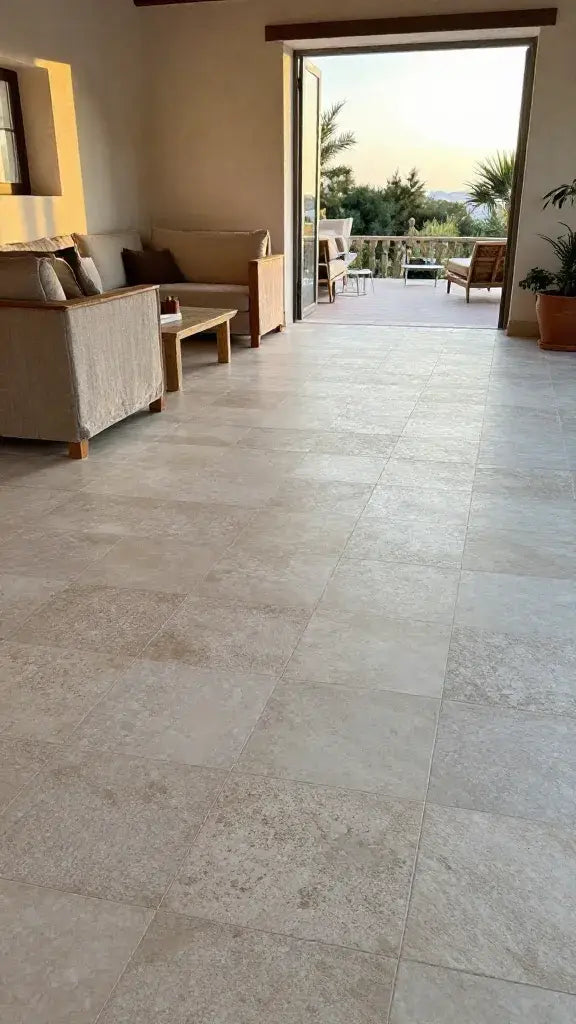
Choosing a floor that feels lived-in from day one helps avoid that stiff, showroom vibe that can make a house feel cold. Classic Light Tumbled Travertine is the go-to for anyone who wants their home to feel like a relaxed Mediterranean villa rather than a sterile modern box.
The "tumbled" part of the name refers to a process where the tiles are literally spun in a drum with stones and water. This rounds off the sharp edges and opens up the natural pits in the stone, giving it a soft, weathered texture that is incredibly forgiving. You won't have to stress about every little scratch or scuff because they just blend into the stone's existing character.
This specific variety features creamy beige and oatmeal tones that brighten up a kitchen or an entryway without looking washed out. Because the surface is matte and slightly textured, it's naturally slip-resistant and feels great under bare feet. It works best when you use a grout color that matches the stone to create a continuous, rustic look across the entire floor.
2. Polished Ivory Smooth Finish Tiles
| Feature | Polished Ivory | Honed Ivory |
|---|---|---|
| Surface Texture | Mirror-like shine | Matte and flat |
| Color Depth | Bright, vibrant cream | Muted, pale beige |
| Light Reflection | High reflection | Low reflection |
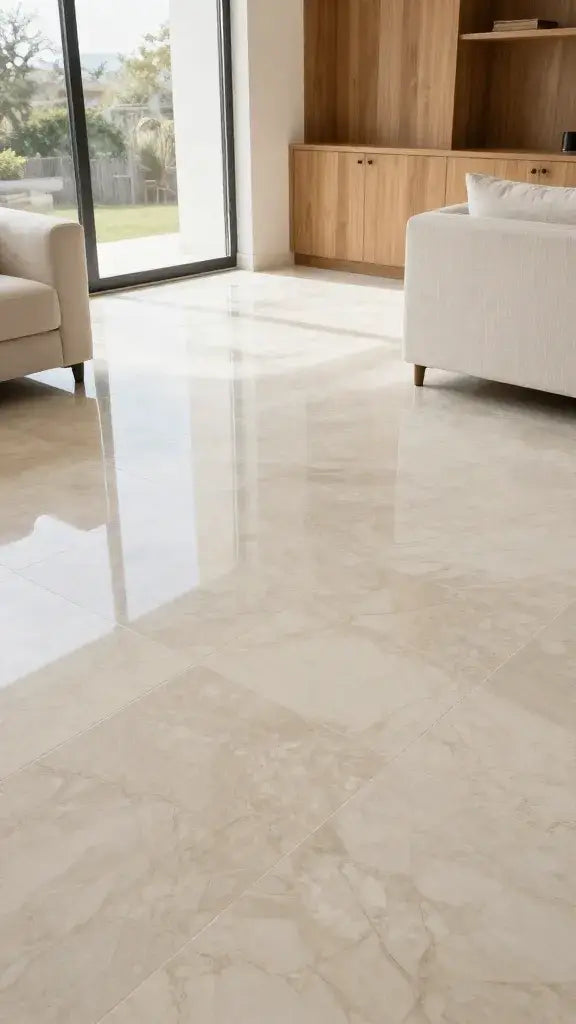
Imagine walking into a dark, narrow hallway that usually feels cramped and gloomy. Once you lay down polished ivory travertine, the entire space brightens up because the glossy surface bounces light into every corner.
These tiles are ground down until they are perfectly flat and then buffed to a high sheen. This process closes the natural pores of the stone, making it much easier to wipe away spills or dust.
You'll notice the cream and pale gold tones look much richer under a polished finish compared to a matte one. It creates a high-end look that feels more like a luxury hotel than a rustic farmhouse.
Keep in mind that the smooth surface can be quite slippery when it gets wet. It is a fantastic choice for a formal dining room or a main entryway, but you might want to skip it for a high-traffic bathroom.
3. Silver Grey Vein-Cut Patterns
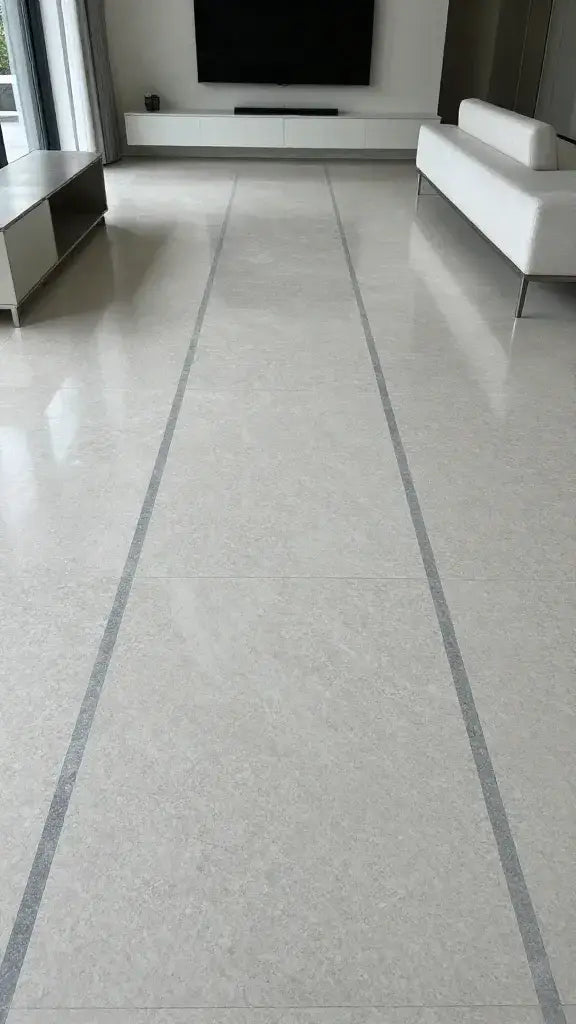
Silver grey vein-cut travertine is the best choice if you want a stone floor that looks like a piece of modern art. Unlike the circular clouds found in cross-cut slabs, this method slices with the grain to reveal long, straight lines of charcoal and pewter.
It creates a sense of direction in a room that makes narrow hallways feel much longer than they actually are. The cool tones work perfectly with stainless steel appliances or minimalist white furniture.
You'll notice that the natural banding creates a texture that hides dust and pet hair surprisingly well. It gives you that high-end linear aesthetic without the maintenance headaches of more porous stones.
I recommend choosing a honed finish for these tiles to keep the surface matte and sophisticated. This prevents the stone from looking too shiny or synthetic in bright overhead lighting.
4. Walnut Brown Honed Surface Slabs
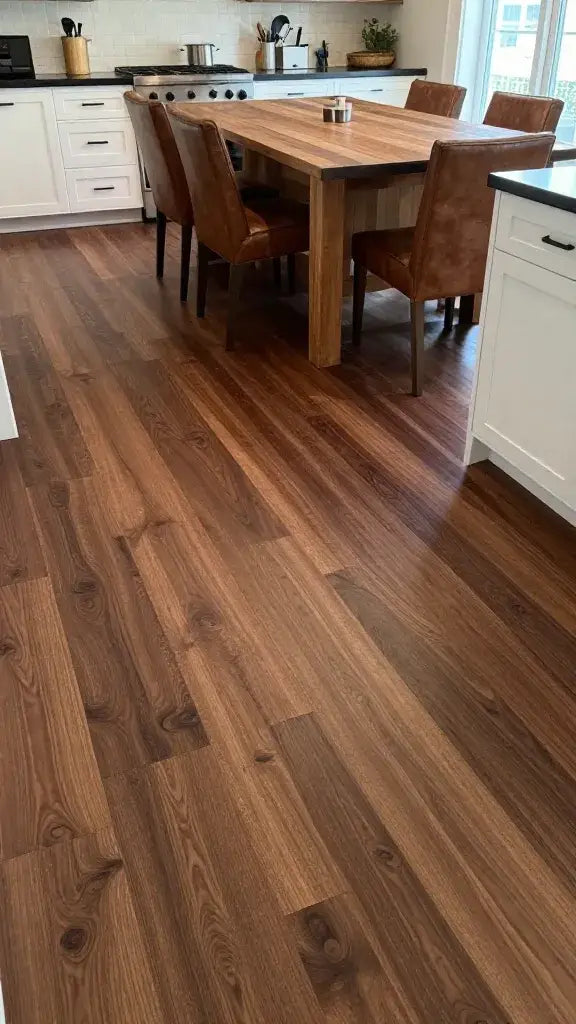
These slabs are the go-to choice if you're designing a high-traffic kitchen or a mudroom that sees lots of boots. The deep, chocolatey tones hide dirt and pet hair much better than lighter stones, while the honed finish provides a matte look that doesn't show scratches easily.
You won't have to worry about the constant glare or slippery surface often found with polished marble. The earthy walnut color adds a cozy, grounded feel to large open spaces that might otherwise feel cold or empty.
- Seal these slabs immediately after installation to protect the natural pores from kitchen spills like red wine or oil.
- Use large format pieces to minimize grout lines, which makes the floor look like a continuous sheet of natural stone.
- Pair them with cream-colored cabinetry or light oak furniture to prevent the room from feeling too dark.
It's a practical, hardworking floor that looks like a high-end architectural choice without the high-maintenance stress.
5. Rustic Scabos Multi-Color Tiles
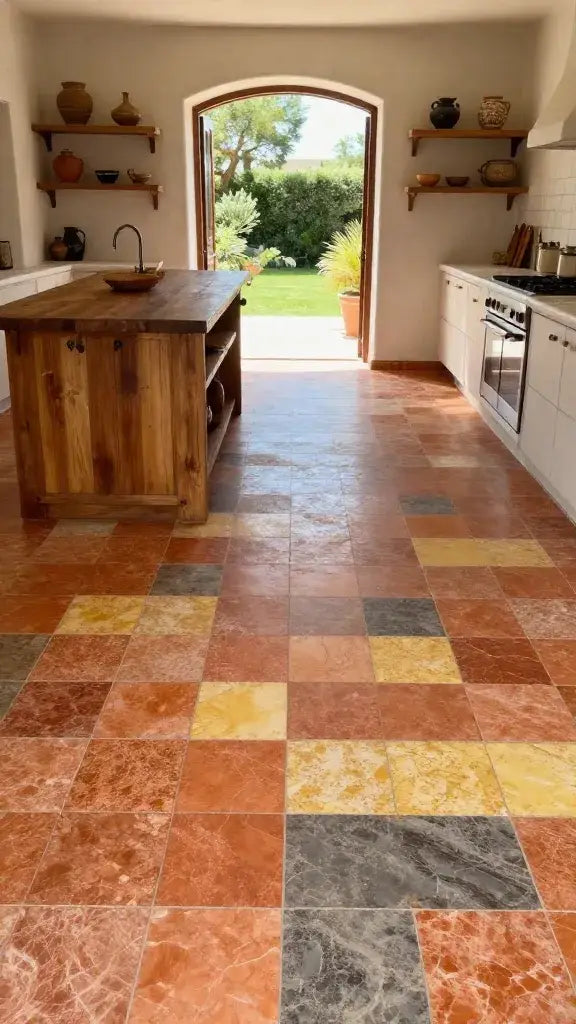
If you're looking for a floor that hides every bit of dirt and tells a story, Scabos is probably your best bet. It isn't for people who want a clean, uniform look because the color range is absolutely wild. You'll see deep terracotta oranges, charcoal grays, and creamy yellows all living on the same tile.
The "rustic" part of the name comes from the heavy honed and unfilled texture. It has these deep natural pits and craters that give it an ancient, weathered feel right out of the box. I love using these in mudrooms or kitchens where things tend to get messy, since the busy pattern is very forgiving.
Because the colors vary so much from one piece to the next, you really need to dry lay the tiles before you thin-set them down. This lets you balance the dark and light spots so you don't end up with a huge clump of orange in one corner. It's a bold choice, but it makes a room feel warm and lived-in immediately.
6. Gold French Pattern Layout Kits
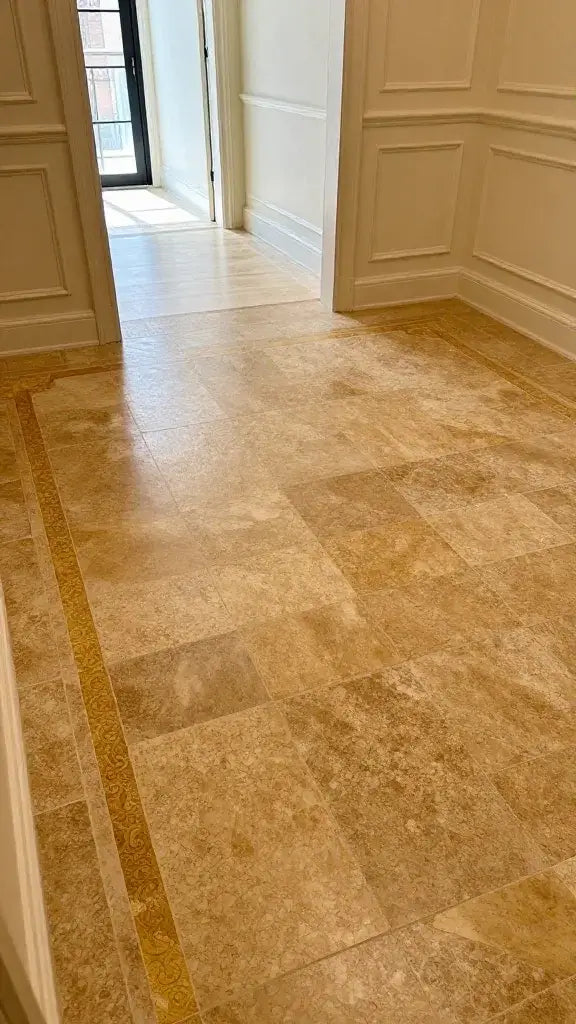
Gold travertine brings a warm, sun-drenched look to a room that feels much more inviting than standard beige. These kits use a specific chiselled edge to give the floor a rustic, aged appearance right out of the box.
The French pattern itself is a clever mix of four different tile sizes. This layout breaks up long grout lines, which makes small rooms feel significantly larger and more custom.
- The color variation ranges from deep honey tones to light ochre, so it hides dirt and pet hair incredibly well.
- Buying these as a kit ensures all tiles have the same thickness, which prevents tripping hazards during the installation process.
- The tumbled texture provides a natural slip resistance that makes it a smart choice for high traffic kitchens or mudrooms.
- Using a light colored grout helps the gold tones pop without making the floor look too busy or cluttered.
You'll notice that the natural pits in the stone add a lot of character. Most people choose to leave some of those small holes unfilled to keep that authentic, old world Mediterranean vibe.
7. Brushed Mocha Straight Edge Tiles
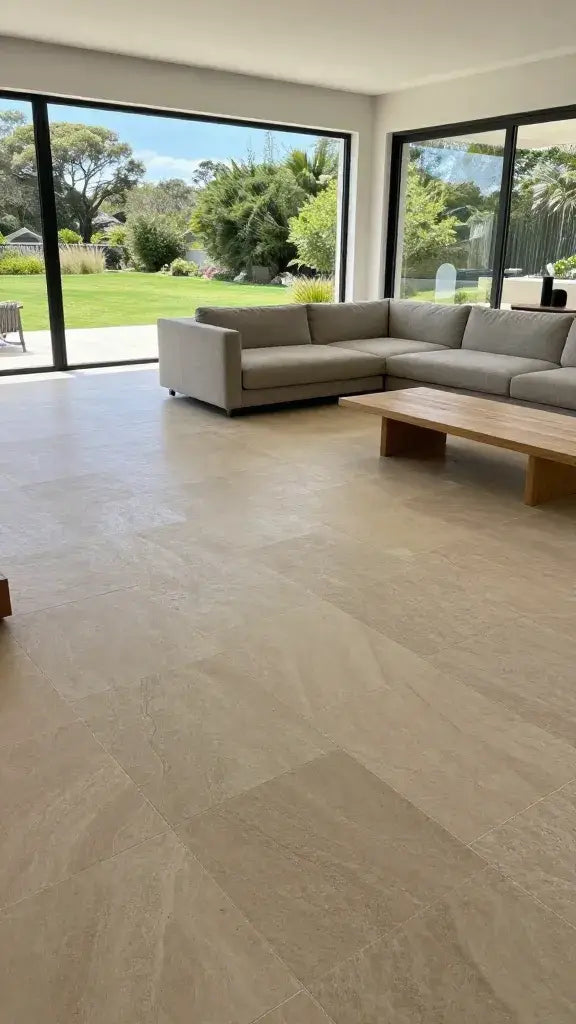
You might feel stuck between choosing a rustic tumbled finish or something more modern and sharp. Tumbled edges give you those wide grout lines and a weathered look that feels like an old European villa, but they can be a pain to keep clean because dirt loves to hide in the pits.
The Brushed Mocha with a straight edge offers a much cleaner alternative. The brushed surface still shows off the natural texture and deep coffee tones of the stone, but those crisp edges allow for tight grout lines. This creates a flat, smooth surface that feels much more current in a kitchen or main living area.
I usually recommend the straight edge if you want the warmth of travertine without the heavy Mediterranean vibe. It looks incredible when you use a matching grout color because the floor ends up looking like one solid, continuous piece of stone. It is the best way to get that high end architectural look while keeping the maintenance low.
8. Cream Split-Face Textured Wall Accents
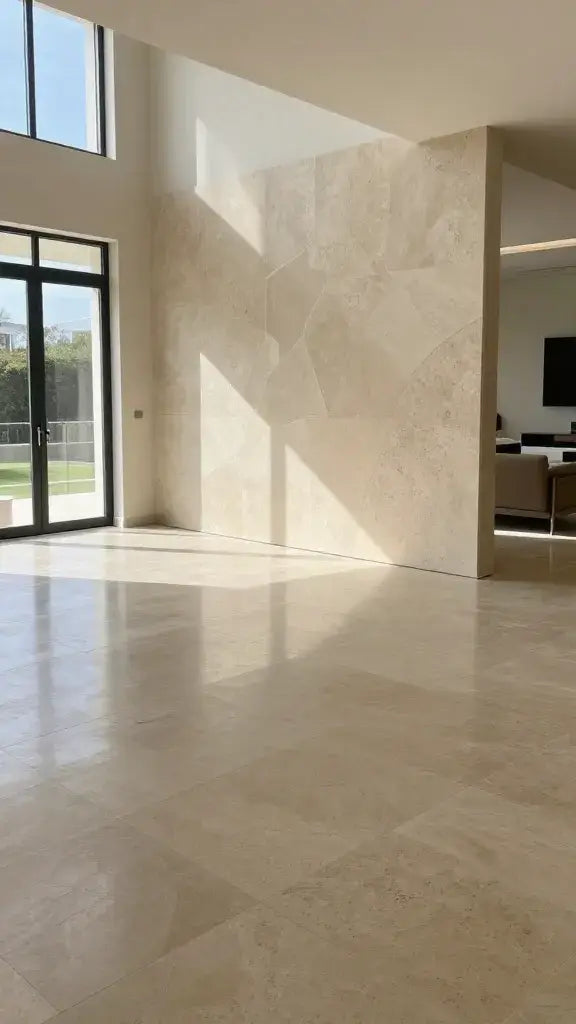
Flat surfaces can sometimes feel a bit cold or sterile in a large room. Adding a split-face texture solves this by introducing shadows and organic depth that catch the light at different angles throughout the day.
This specific style features travertine that has been snapped or "split" to reveal its jagged, natural interior rather than being ground smooth. The cream tones keep the rugged texture from feeling too heavy or overwhelming in a small space.
It works best on a focal point like a fireplace surround or a backsplash where you want a tactile, earthy vibe. Since the surface is uneven, you don't have to worry about perfectly lining up every edge to get a high-end look.
Keep in mind that this texture is a magnet for dust and kitchen grease because of the deep crevices. You'll want to use a high-quality penetrating sealer to make sure the stone doesn't absorb stains over time.
9. Large Format Seamless Beige Tiles
| Feature | Standard Tiles | Large Format |
|---|---|---|
| Typical Size | 12x12 or 16x16 inches | 24x24 or 24x48 inches |
| Grout Lines | Frequent and visible | Minimal and hidden |
| Visual Effect | Traditional grid pattern | Continuous stone slab look |
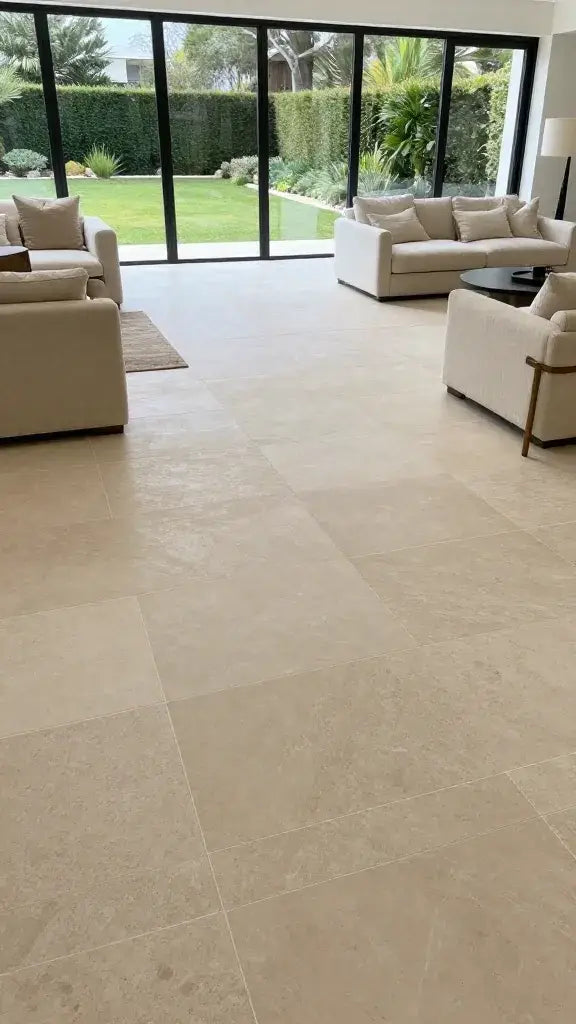
Imagine walking into a high end hotel lobby where the floor looks like one solid piece of stone. You can get that exact look in a living room by choosing honed and filled beige travertine in massive 24 by 48 inch slabs. Because these tiles are so big, you end up with very few grout lines to break up the natural movement of the tan and cream veins.
To make the floor truly look seamless, you should ask your installer to use a matching grout color that sits flush with the tile surface. This trick makes the gaps practically disappear from a distance. It is a smart choice for smaller rooms because fewer lines make the floor space feel much wider than it actually is.
Beige tones are particularly forgiving when it comes to hiding daily dust or pet hair. The neutral palette works well if you like to change your rugs or furniture every few years. You get the luxury of a seamless finish without the massive price tag of a custom poured floor or a single giant marble slab.
10. Cross-Cut Noce Earthy Tones
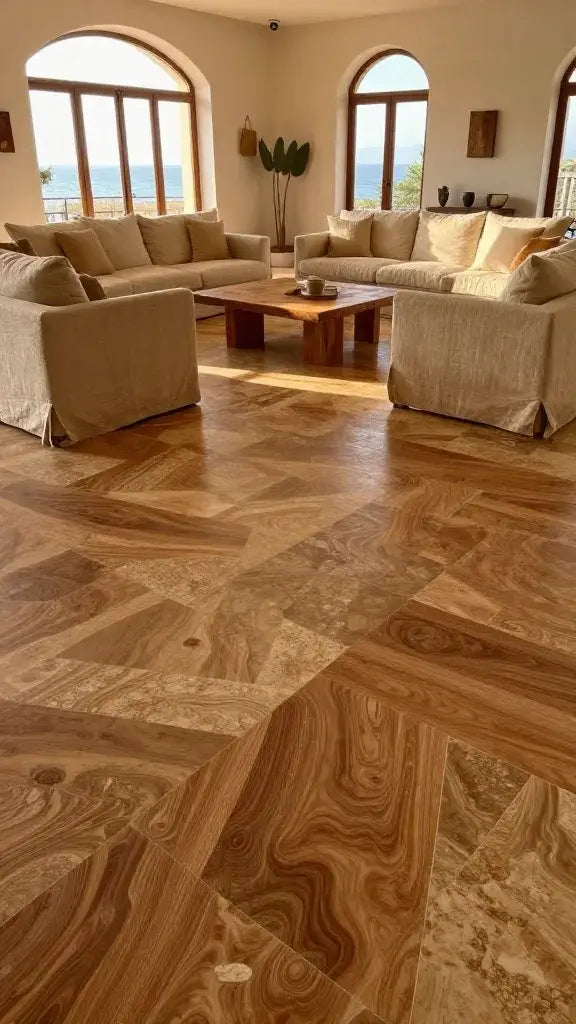
Cross-cut Noce is the best choice if you want your floors to look like they've been part of a Mediterranean villa for centuries. The cross-cutting technique slices the stone against the natural vein, which results in a swirling, flowery pattern rather than long stripes.
You get a rich palette of deep walnuts, burnt umbers, and coffee browns that hide dirt and pet hair remarkably well. It feels grounded and substantial underfoot, making it perfect for high traffic kitchens or cozy dens where you want a bit of warmth.
Because the tones are so saturated, this tile pairs beautifully with creamy white cabinetry or antique brass hardware. It adds an organic weight to a room that lighter stones just can't replicate. You'll find that the variation between individual tiles is quite high, so it creates a truly custom look that doesn't feel mass produced.
11. Filled and Honed Standard Grade
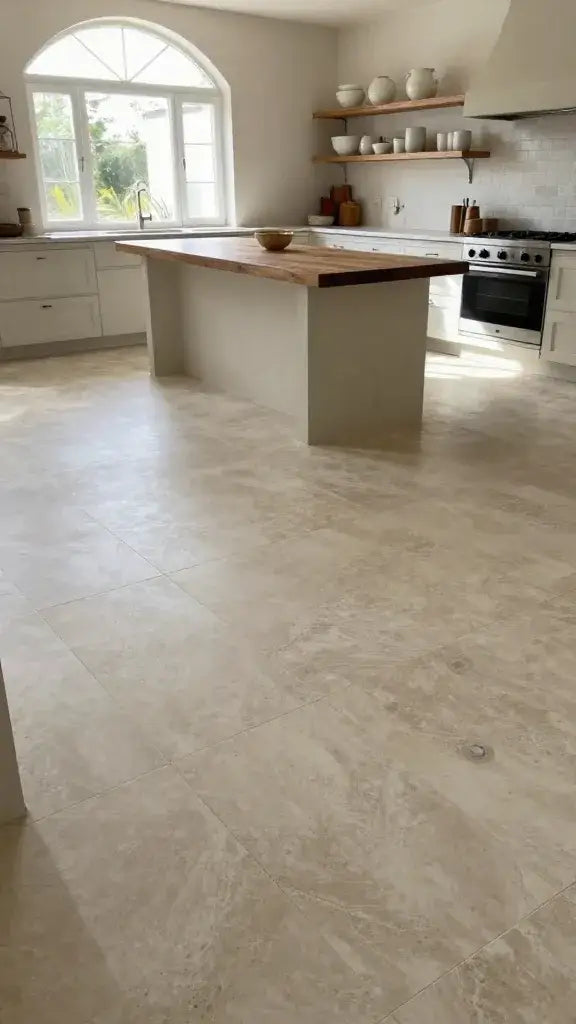
Standard grade travertine works best in high traffic areas like mudrooms or kitchens where you need a surface that handles daily abuse without costing a fortune. Since this grade allows for more natural pits and voids, manufacturers use a synthetic resin to fill those holes before honing the surface to a matte finish.
The result is a flat, smooth floor that feels great under bare feet but still shows off the stone's organic character. It gives you that classic Mediterranean look while keeping maintenance low since dirt can't get trapped in open pockets.
- Inspect the tile edges for small chips before installation to ensure a tight grout line.
- Use a penetrating sealer every few years to keep the filler from staining or popping out.
- Stick to neutral grout colors that match the filler resin for a unified, monolithic appearance.
- Avoid using acidic cleaners like vinegar which can eat away at both the stone and the resin filler.
This option strikes a smart balance between budget and durability for a busy family home.
12. Unfilled Natural Pit Surface Tiles
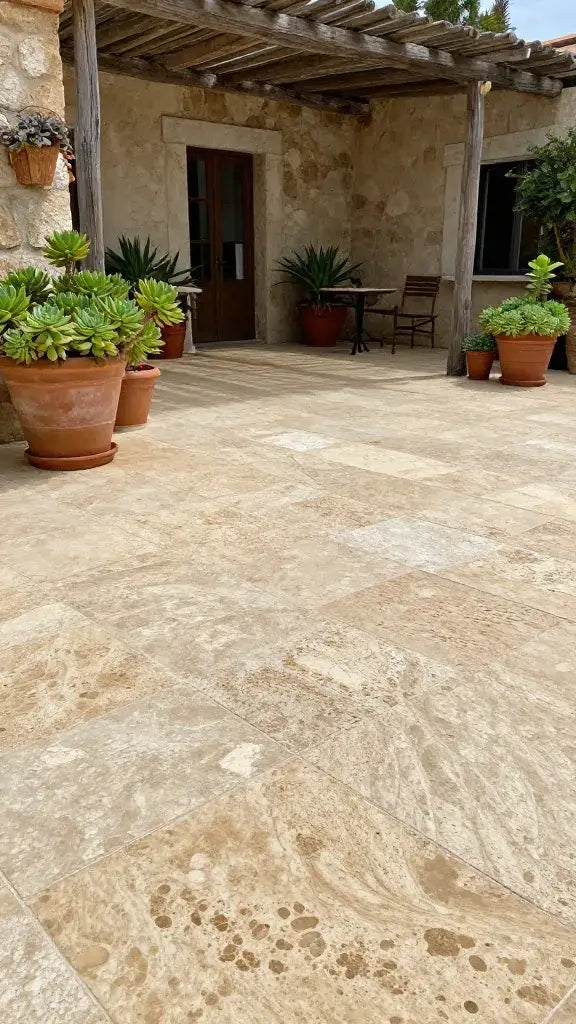
If you're looking for that raw, old world look, you really can't beat unfilled travertine. These tiles come with the natural voids and small pits that form when the stone is created, giving your floor a ton of character.
Most people worry about dirt getting trapped in the holes, but that's actually part of the charm for a rustic space. You'll see these most often in outdoor patios or mudrooms where a bit of grit doesn't ruin the vibe.
The texture is much more slip resistant than the filled versions, which makes it a smart choice for wet areas. You should know that the pits can vary in size from tiny pinholes to larger craters.
It feels incredibly sturdy underfoot and hides wear and tear better than a polished surface ever could. Just make sure you're okay with a look that feels a bit more rugged and unrefined.
Cleaning takes a little more effort since you might need a vacuum to get crumbs out of the deeper pits. However, the visual depth you get from those shadows and textures is worth the extra minute of housework.
13. Tuscan Blend Antique Style Pavers
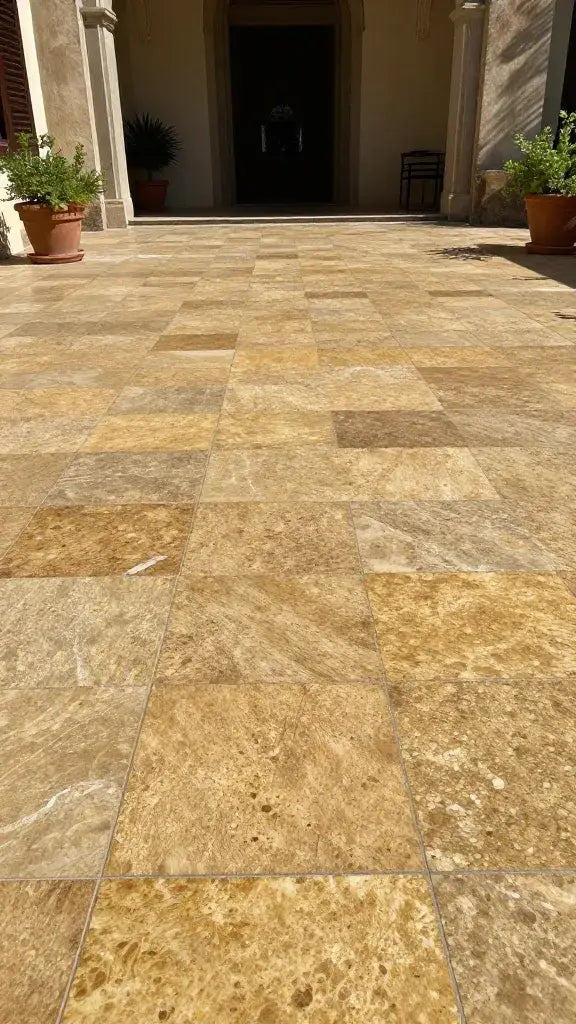
These pavers bring a heavy dose of character to your outdoor space with their warm gold and walnut tones. They look like they were pulled straight from an old Italian villa because of their heavily distressed edges and textured surfaces.
The real magic happens when you see them under direct sunlight. The natural pits and pores in the stone create shadows that give your patio a lot of visual depth, making even a new installation look like it has been there for decades.
- The tumbled finish rounds off sharp edges so they feel smooth under your bare feet.
- Variation in color hides dirt and footprints much better than a solid colored tile would.
- The thickness of these pavers makes them tough enough to handle heavy patio furniture without cracking.
- Natural slip resistance comes from the porous texture, which is great if you have a pool nearby.
You should expect a wide range of colors in every crate you order. Some pieces will be a deep tan while others lean toward a creamy beige, but that variety is exactly what creates the authentic rustic look.
14. Chiseled Edge Outdoor Porous Tiles
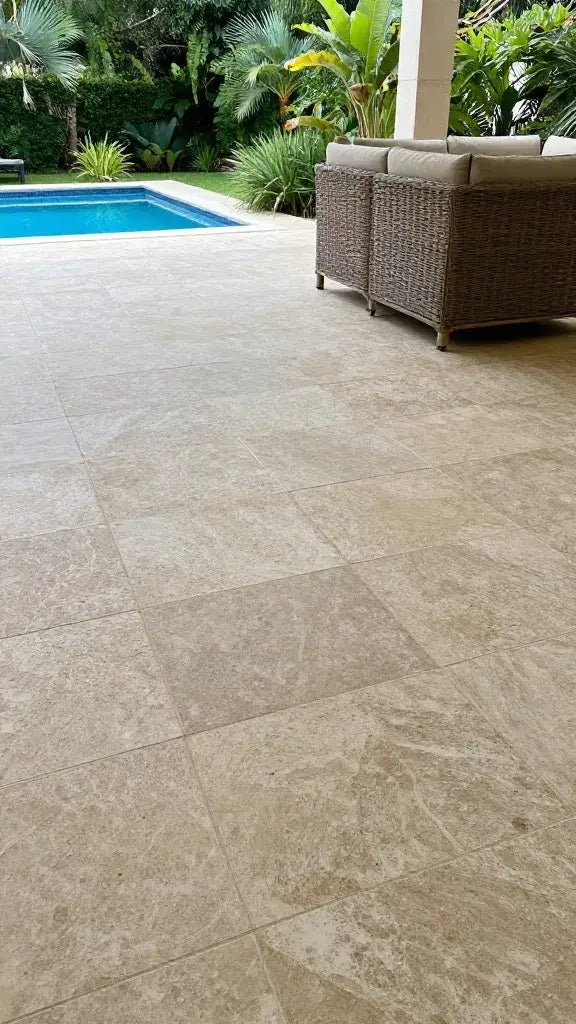
You can choose between a clean, saw-cut edge or a chiseled edge for your patio. Saw-cut tiles look modern and tidy, but they often lack the character needed to ground a rustic backyard space.
The chiseled look gives you those rough, irregular borders that make a brand new patio feel like it has been there for decades. These tiles are naturally porous, which means they stay cool under the sun and offer a non-slip surface even when wet from a pool splash.
I suggest going with the chiseled edge if you have a garden with lots of greenery or a natural pool shape. It hides small chips and wear much better than a straight edge would over time. You'll spend less time worrying about perfection and more time actually enjoying your outdoor space.
15. Miniature Hexagon Mosaic Floor Tiles
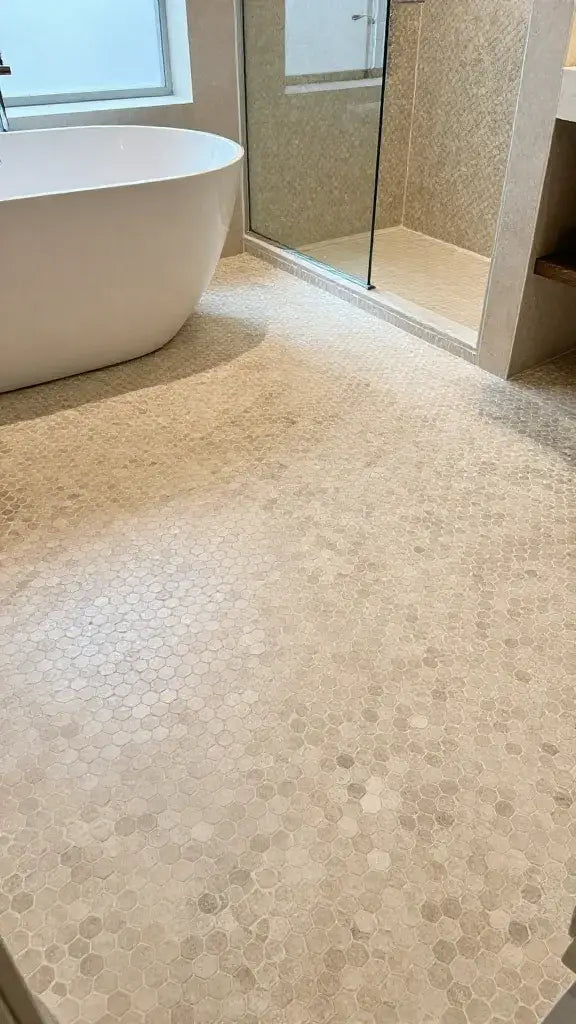
Small bathrooms often feel cramped and flat without a bit of texture to break up the space. These tiny hexagon mosaics are perfect for adding visual depth because the frequent grout lines provide natural slip resistance, making them a smart choice for wet shower floors.
The tiles usually measure about one inch across and come pre-mounted on mesh sheets. This setup saves you from the nightmare of placing every tiny piece by hand, though you'll still want to be precise with your layout to keep the honeycombs straight. The natural pits in the travertine give each little hex a unique personality that you just can't get with standard ceramic versions.
Try using a grout color that closely matches the stone to create a subtle, carpet-like effect across the room. If you want a more vintage look, choose a slightly darker grout to make the geometric pattern pop against the creamy tan tones. They work beautifully in a small powder room or as a textured border around larger field tiles.
Wrapping Up
Choosing the right travertine floor tile comes down to your personal style and how you use your space. We covered fifteen distinct looks to help you narrow down your search for the perfect stone. Now that you have a better idea of what is available, take your favorite options to a local showroom to see them in person. Your new floors will look great for years to come.

Leave a comment