
Marble Tile Matching Explained: Creating Cohesive Luxury

Even seasoned American interior designers know that a single mismatched marble tile can disrupt the elegance of an entire luxury renovation. In the competitive California market, premium kitchen and bathroom projects demand perfection in both visual harmony and technical detail. With over 65 percent of high-end homeowners prioritizing natural stone features, mastering expert marble tile matching gives you a true edge. This guide equips you with advanced strategies for seamless, sophisticated stone layout every time.
Table of Contents
- What Marble Tile Matching Really Means
- Types of Marble Tiles and Patterns
- Veining, Color, and Finish Coordination
- Best Layouts for Kitchens and Bathrooms
- Common Matching Mistakes to Avoid
- Designer Tips for Cohesive Spaces
Key Takeaways
| Point | Details |
|---|---|
| Marble Tile Matching | This involves strategically aligning marble tiles to enhance their natural beauty, focusing on techniques such as bookmatching and vein-matching to ensure visual continuity. |
| Types of Marble Tiles | Varieties like Carrara and Calacatta provide timeless elegance with unique veining and color, suitable for luxury interiors and different functional spaces. |
| Finish Coordination | The choice of finish impacts both aesthetic and practical aspects, with polished finishes offering vibrant looks and honed finishes providing slip resistance. |
| Layout Strategies | Effective tile layouts in kitchens and bathrooms emphasize both aesthetics and function, requiring careful consideration of tile size, orientation, and veining directions to create a cohesive design. |
What Marble Tile Matching Really Means
Marble tile matching is far more sophisticated than simply placing stone pieces side by side. At its core, this technique involves strategically arranging marble tiles to create a visually harmonious and luxurious design that highlights the stone’s natural beauty. Marble tile matching refers to the precise process of aligning marble slabs or tiles so that their intricate patterns, veins, and color gradients flow seamlessly across surfaces.
The art of matching involves several advanced techniques. Bookmatching is perhaps the most dramatic method, where adjacent marble tiles are positioned as mirror images of each other, creating a stunning symmetrical effect that looks like an open book. Another technique is vein-matching, where the natural stone’s veining is carefully aligned to create continuous, uninterrupted visual lines across different tiles or slabs. This approach is particularly effective in large installations like kitchen islands, shower walls, and feature walls where visual continuity matters.
Understanding marble’s inherent characteristics is crucial for successful matching. As a metamorphic rock composed of calcite or dolomite crystals, each marble slab presents unique patterns that require expert attention. Professional designers consider factors like veining direction, color variations, crystal structure, and overall stone character when selecting and positioning tiles. The goal is not just aesthetic alignment but creating a cohesive narrative that transforms a space from ordinary to extraordinary.
Pro tip: When selecting marble tiles, always request a full slab layout or mock-up to visualize how patterns will interact before final installation.
Types of Marble Tiles and Patterns
Marble tiles represent an exquisite range of natural stone options, each with distinctive characteristics that transform interior spaces. Varieties of marble encompass a rich palette of colors and patterns influenced by geological formations and mineral impurities. Classic Italian marbles like Carrara, Calacatta, and Statuario remain premier choices for designers seeking timeless elegance, offering nuanced color variations and intricate veining patterns that define luxury interiors.
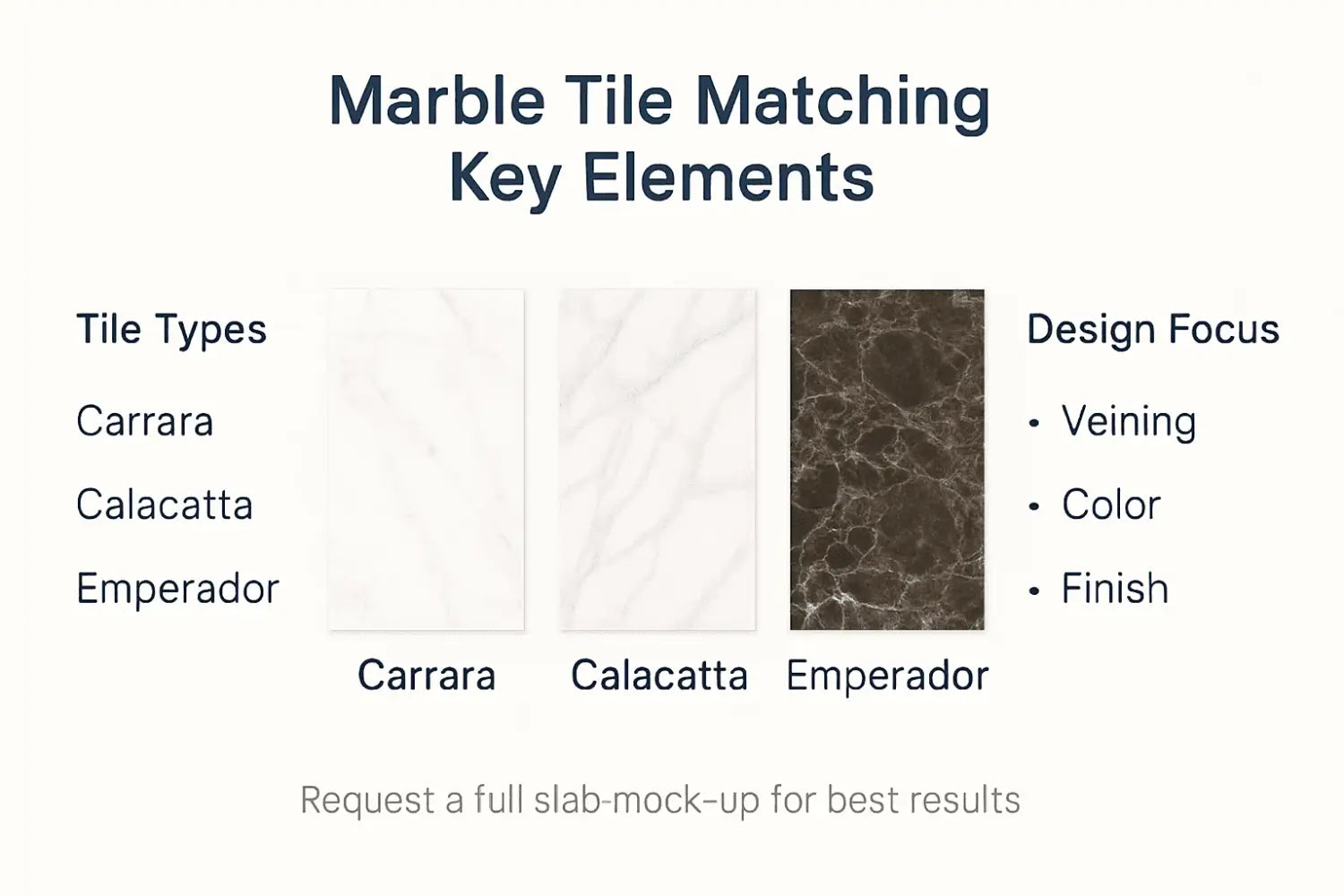
The world of marble tile patterns is incredibly diverse. Veining patterns represent the most recognizable style, featuring delicate lines that traverse the stone’s surface like natural brushstrokes. Breccia patterns present a more fragmented aesthetic, with angular stone fragments embedded in a fine matrix, creating a dramatic, almost mosaic-like appearance. Cloud-like formations and sporadic spots add additional textural complexity to marble tiles, ensuring each installation tells a unique visual story. Different marble tile finishes like polished, honed, and tumbled further enhance design possibilities, allowing designers to manipulate light reflection and surface texture.
Geological origin plays a critical role in marble tile characteristics. Regions around the world contribute distinctive marble varieties, each with unique color palettes and structural qualities. Mediterranean regions like Italy and Greece produce some of the most prized marbles, while quarries in Turkey, Spain, and the United States offer remarkable alternatives. Professional designers carefully select marble tiles not just for their visual appeal, but for their compatibility with specific design contexts, considering factors like room lighting, architectural style, and intended functional use.
Pro tip: Request marble tile samples in your specific room’s lighting conditions to accurately assess how patterns and colors will interact with your space’s unique environment.
Here’s a comparison of common marble tile patterns and their best applications:
| Pattern Type | Visual Impact | Best Room Application |
|---|---|---|
| Veining | Elegant flowing lines | Living rooms, kitchens |
| Breccia | Dramatic mosaic-like fragments | Feature walls, bathrooms |
| Cloud-like | Soft, subtle textures | Bedrooms, powder rooms |
| Spotting | Unique, attention-grabbing | Accent trims, entries |
Veining, Color, and Finish Coordination
Coordinating marble tiles is an intricate art that requires a deep understanding of how veining patterns, colors, and finishes interact to create a harmonious design. The visual complexity of marble begins with its veining, which acts as the fundamental design element that guides aesthetic decisions. These intricate lines can range from subtle, barely perceptible threads to bold, dramatic streaks that command attention, creating a natural roadmap for color and finish selection.

Color selection in marble tile coordination goes far beyond simple color matching. Mineral composition determines the marble’s color palette, presenting designers with a spectrum ranging from pristine whites and soft grays to dramatic greens, rich pinks, and deep blacks. Professional designers approach color coordination by considering not just the tile’s base color, but how different hues interact with room lighting, architectural elements, and surrounding design features. The goal is to create a cohesive visual narrative that feels both intentional and naturally occurring.
Finish selection represents the final layer of marble tile coordination, dramatically influencing the stone’s overall aesthetic and functional performance. Polished finishes reflect light dramatically, creating a luxurious, high-end appearance that highlights the marble’s intricate veining and color variations. Honed finishes offer a more subdued, matte look that provides subtle sophistication and better slip resistance. Tumbled finishes introduce a weathered, antique feel that works beautifully in more rustic or traditional design contexts. Each finish transforms the same marble tile into a completely different design element, allowing designers extraordinary flexibility in creating unique spatial experiences.
Pro tip: Always view marble tile samples under the exact lighting conditions of your intended space to accurately assess how veining, color, and finish will truly interact.
This table outlines the effects of marble finishes on appearance and performance:
| Finish Type | Visual Result | Practical Benefit |
|---|---|---|
| Polished | High sheen, vibrant look | Enhances colors; easy to clean |
| Honed | Matte, smooth surface | Slip resistance; subtle flair |
| Tumbled | Soft, aged texture | Rustic appeal; masks wear |
Best Layouts for Kitchens and Bathrooms
Selecting the optimal marble tile layout requires strategic consideration of both aesthetic and functional elements. Marble tile patterns like chevron, herringbone, and stacked grid offer designers powerful tools to transform kitchen and bathroom spaces, each creating a unique visual narrative. The chevron and herringbone layouts introduce dynamic movement and visual intrigue, while stacked patterns provide a clean, contemporary approach that emphasizes architectural precision and spatial continuity.
In kitchen environments, tile layout becomes particularly critical. Vein direction plays a pivotal role in creating seamless, sophisticated surfaces that elevate the entire design. Marble tile installations demand careful attention to veining patterns, especially for countertops and backsplashes where bookmatching and vein matching can produce dramatically elegant results. Professional designers often strategically align tiles to create continuous visual lines that make spaces feel larger and more cohesive, transforming ordinary surfaces into extraordinary design statements.
Bathroom tile layouts require additional nuanced considerations beyond pure aesthetics. Tile size, orientation, and pattern must harmonize with architectural elements while addressing practical challenges like moisture resistance and maintenance. Large-format marble tiles can create an illusion of expansiveness in smaller bathrooms, while smaller mosaic-style arrangements offer intricate visual texture. The key is balancing visual drama with functional performance, ensuring that the chosen layout not only looks spectacular but also withstands the demanding environment of bathrooms and kitchen spaces.
Pro tip: Always purchase 10-15% extra tiles beyond your measured space to account for cuts, potential breakage, and future replacements.
Common Matching Mistakes to Avoid
Designers and homeowners frequently encounter challenges when working with marble tiles, often making critical errors that compromise the overall aesthetic impact. Marble tile matching requires meticulous attention to detail, and understanding common pitfalls can help prevent costly design mistakes. One fundamental error is randomly placing tiles without considering their natural veining flow, which results in visually disjointed and fragmented surfaces that lack the elegant continuity marble is renowned for.
Bookmatching overuse represents another significant design misstep. While this technique can create dramatic visual statements, inexperienced designers often employ it excessively, especially in smaller spaces where the intense pattern can overwhelm the room’s natural balance. Professional designers understand that bookmatching should be strategic, used as a focal point rather than a blanket approach. Tile installation complexity extends beyond visual alignment, requiring careful consideration of shade variations, structural integrity, and precise mortar application to ensure a flawless final result.
Technical execution matters as much as aesthetic selection. Overlooking critical details like tile size variations, directional installation requirements, and natural shade gradations can sabotage even the most well-intentioned design. Proper preparation involves educating clients about marble’s inherent variations, selecting tiles from the same production batch to minimize unexpected color differences, and developing a comprehensive installation strategy that respects the stone’s unique characteristics. Successful marble tile matching demands a holistic approach that balances artistic vision with technical precision.
Pro tip: Always request multiple tile samples and create a full layout mock-up before final installation to identify and resolve potential matching issues.
Designer Tips for Cohesive Spaces
Creating a truly cohesive marble tile design requires strategic thinking that goes beyond simple material selection. Designing beautiful and functional spaces involves establishing a clear visual hierarchy where marble tiles serve as both aesthetic and functional elements. Professional designers recommend selecting a primary focal point in the room, such as a feature wall or statement countertop, and carefully coordinating marble tile veining and color to complement and enhance that central design element.
Color palette discipline emerges as a critical strategy for maintaining visual harmony. Rather than introducing competing patterns or excessive color variations, sophisticated designers limit their marble tile palette, using texture and finish variations to introduce visual depth and interest. Layered lighting becomes an essential technique in showcasing marble’s natural beauty, with strategic illumination highlighting the stone’s intricate veining and color gradations. Design principles for creative spaces emphasize the importance of adaptability, recommending that marble tile selections support both the aesthetic vision and functional requirements of each unique environment.
Understanding proportion and scale is fundamental to creating cohesive marble tile designs. Designers must consider not just the individual tile’s appearance, but how different tile sizes, orientations, and patterns interact within the broader spatial context. Repeated visual motifs, carefully aligned veining, and thoughtful tile placement can transform a simple surface into a sophisticated design statement that feels intentional and luxurious. The goal is to create a sense of flow and continuity that makes marble tiles feel like an integrated part of the architectural narrative, not just a decorative afterthought.
Pro tip: Create a comprehensive mood board with marble tile samples, surrounding materials, and lighting references to visualize the complete spatial composition before making final selections.
Elevate Your Space with Expert Marble Tile Matching Solutions
Achieving perfectly matched marble tiles is challenging because it demands expert attention to veining, color variations, and finish coordination. The article highlights common pitfalls like improper bookmatching and inconsistent veining alignment that can disrupt the luxurious flow of your design. At Surfaces Galore, we understand these complexities and offer a curated selection of premium marble and travertine tiles that make cohesive and elegant installations possible. Whether you need exquisite bookmatching slabs or a variety of finishes to suit your vision, our authentic natural stone supports your goal of creating timeless beauty.

Get started with confidence and transform your project into a cohesive luxury statement. Visit Surfaces Galore to explore our extensive collection and access expert guidance. Don’t let mismatched patterns or unexpected shade variations hold you back. Experience seamless marble tile matching by partnering with a trusted direct importer dedicated to quality, style, and nationwide shipping. Discover how every tile can tell a story by browsing our premium natural stone selection today.
Frequently Asked Questions
What is marble tile matching?
Marble tile matching involves strategically arranging marble tiles or slabs to create a visually harmonious design, aligning their patterns, veins, and colors for seamless flow across surfaces.
What are the different techniques used in marble tile matching?
Common techniques for marble tile matching are bookmatching, which creates a symmetrical effect by positioning tiles as mirror images, and vein-matching, which aligns the natural veining of adjacent tiles to maintain visual continuity.
How do I choose the right marble tile finish for my project?
Selecting a finish depends on your aesthetic and functional needs. Polished finishes create a shiny look and enhance colors, honed finishes offer matte sophistication, and tumbled finishes provide a rustic, aged appearance.
What are common mistakes to avoid when matching marble tiles?
Common mistakes include randomly placing tiles without considering their veining direction, overusing bookmatching in small spaces, and neglecting technical details like tile size variations and shade gradations during installation.

Leave a comment