
Stone Mosaic Patterns Explained: Timeless Luxury in Design

Selecting the perfect stone mosaic pattern for a luxury residence can challenge even the most seasoned California designer. Stone mosaics offer more than simple decoration. They reflect centuries of artistic innovation, from Roman floor mosaics to Byzantine gold patterns, and transform ordinary surfaces into exceptional statements. This guide highlights the rich history, technical artistry, and practical knowledge needed to harness the enduring appeal of stone mosaic patterns for elevated high-end renovations.
Table of Contents
- Defining Stone Mosaic Patterns And Misconceptions
- Popular Stone Mosaic Types And Styles
- Design Principles For Elegant Interiors
- Installation And Maintenance Best Practices
- Cost, Risks, And Common Pitfalls In Projects
Key Takeaways
| Point | Details |
|---|---|
| Complex Art Form | Stone mosaics are a sophisticated craft that involves careful selection of tesserae to create intricate designs. |
| Diverse Styles | Traditional and contemporary mosaics vary significantly in materials and themes, allowing for innovative design applications. |
| Installation Importance | Proper installation requires meticulous preparation and expertise to ensure durability and aesthetic quality. |
| Cost Considerations | Planning for project costs should account for material quality, skilled labor, and long-term maintenance needs. |
Defining Stone Mosaic Patterns and Misconceptions
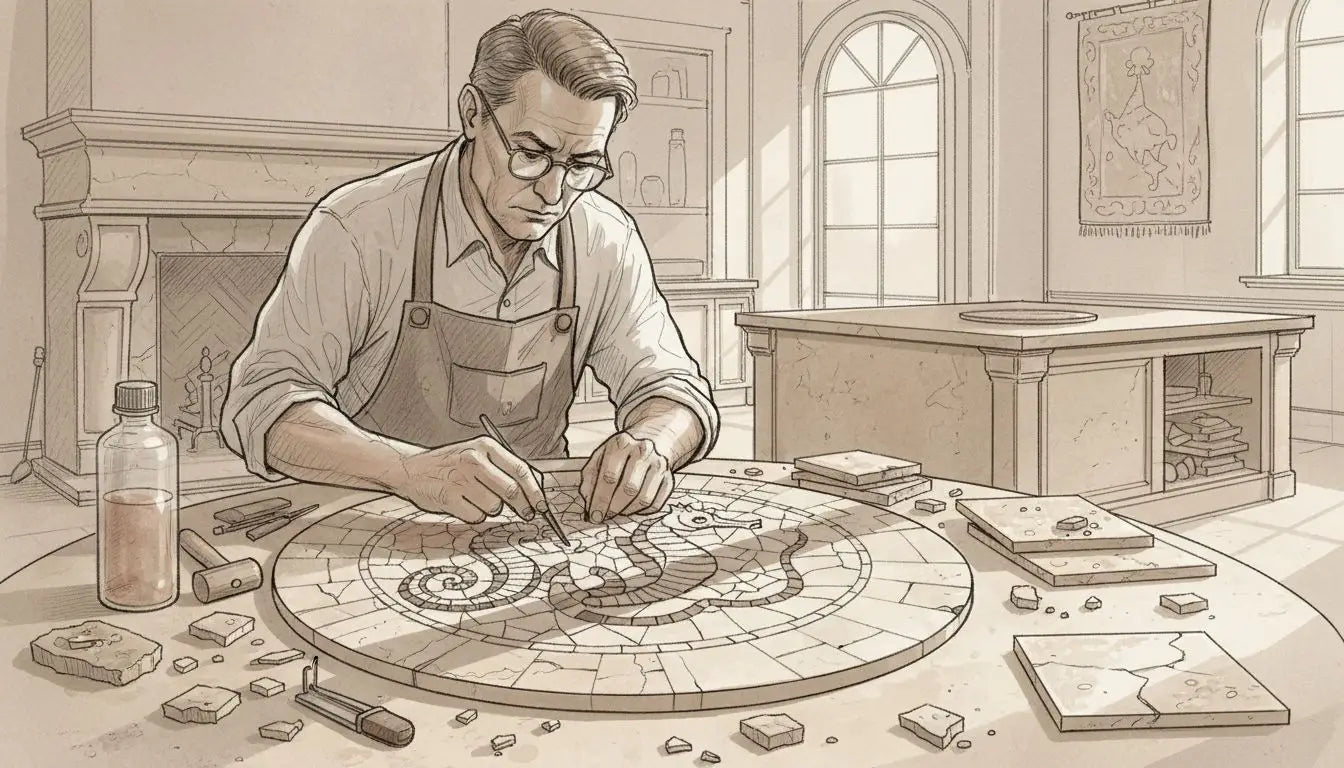
Stone mosaic patterns represent an intricate art form with roots stretching back thousands of years. Mosaic design techniques involve assembling small pieces called tesserae into complex visual compositions, transforming ordinary surfaces into extraordinary artistic statements.
Mosaics are far more than simple decorative elements. They represent a sophisticated craft where skilled artisans meticulously arrange stone, glass, and ceramic fragments to create stunning visual narratives. These designs can range from geometric precision to elaborate pictorial scenes, each piece carefully selected and positioned to achieve visual harmony.
Several common misconceptions surround stone mosaic patterns that deserve clarification:
- Mosaics are just decorative: In reality, mosaic art represents a complex fine art medium with deep cultural significance
- Mosaics are limited to floors and walls: Contemporary designers use mosaics in furniture, outdoor spaces, and even sculptural installations
- Stone mosaics are fragile: Properly constructed mosaics can be incredibly durable and resistant to wear
The true complexity of stone mosaic patterns lies in their technical execution. Craftspeople must carefully select tesserae, considering color, texture, translucency, and how each piece interacts with its neighbors. The grouting process is equally critical, providing structural integrity and creating visual cohesion across the entire design.
Pro tip: When selecting stone mosaic patterns, consider the overall design language of your space and choose tesserae that complement existing architectural elements.
Popular Stone Mosaic Types and Styles
Ancient mosaic traditions reveal a stunning diversity of stone mosaic styles that have evolved across civilizations. From intricate geometric patterns to elaborate figurative representations, stone mosaics represent a complex artistic language that transcends cultural boundaries.
Traditional stone mosaic types can be categorized based on their design complexity, material selection, and cultural origins:
- Geometric Mosaics: Precise patterns using symmetrical shapes and repetitive designs
- Figurative Mosaics: Narrative scenes depicting historical, mythological, or religious themes
- Naturalistic Mosaics: Representations of landscapes, animals, and botanical elements
- Architectural Mosaics: Decorative elements integrated into building surfaces and structures
Regional variations significantly influence mosaic design. Mediterranean cultures developed sophisticated techniques using small stone tesserae in complex arrangements, while Byzantine artisans specialized in creating luminous designs with gold and colored stones. Islamic traditions emphasized intricate geometric patterns that transformed architectural spaces into mesmerizing visual experiences.
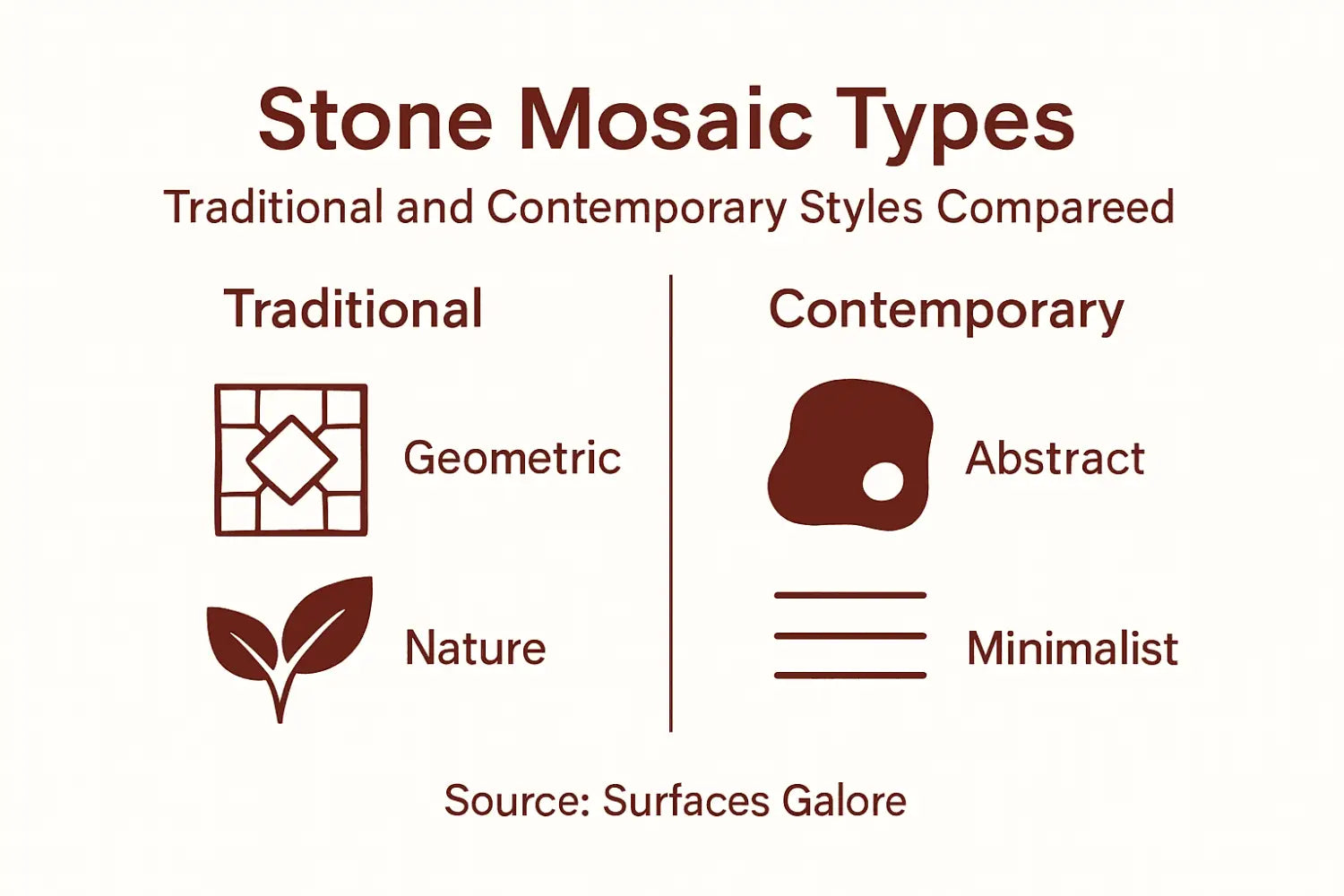
Contemporary stone mosaic styles continue to honor traditional techniques while pushing artistic boundaries. Modern designers experiment with unconventional materials, scale, and placement, transforming mosaics from decorative elements into bold artistic statements that challenge perception and create immersive spatial experiences.
Here’s a concise comparison of traditional and contemporary stone mosaic styles:
| Aspect | Traditional Stone Mosaics | Contemporary Stone Mosaics |
|---|---|---|
| Typical Materials | Natural stone, marble | Mixed stone, found objects |
| Themes | Geometric, figurative, cultural | Experimental, abstract, large-scale |
| Installation Sites | Walls, floors, architecture | Furniture, outdoor spaces, art pieces |
| Artistic Approach | Technique-focused, historical accuracy | Boundary-pushing, innovative design |
Pro tip: When selecting stone mosaic styles, consider how the pattern’s visual rhythm and color palette will interact with the surrounding architectural elements and lighting conditions.
Design Principles for Elegant Interiors
Roman mosaic design principles reveal sophisticated strategies for creating visually stunning interior spaces. These timeless techniques demonstrate how thoughtful material selection, color harmony, and strategic placement can transform ordinary environments into extraordinary experiences.
Elegant interior design with stone mosaics requires careful consideration of several fundamental principles:
- Color Harmony: Select stone tesserae with complementary color palettes
- Texture Balance: Combine smooth and rough stone surfaces for visual depth
- Spatial Proportion: Scale mosaic patterns to room dimensions
- Lighting Interaction: Position mosaics to maximize light reflection and shadow play
The strategic use of stone surface installations allows designers to create luxurious environments that transcend mere decoration. Techniques like polished versus honed finishes can dramatically alter a space’s visual temperature, with each approach offering unique aesthetic possibilities. Skilled designers understand how natural stone’s inherent variations can become powerful design elements that communicate sophistication and timeless elegance.
Modern interior design embraces stone mosaic patterns as more than decorative elements. They serve as narrative surfaces that communicate cultural refinement, personal taste, and architectural intention. By carefully selecting materials, understanding lighting dynamics, and respecting architectural context, designers can create immersive environments that feel both timeless and contemporary.
Pro tip: When designing with stone mosaics, always request material samples and observe them under the specific lighting conditions of your intended space to truly understand their visual potential.
Installation and Maintenance Best Practices
Mosaic conservation techniques demand meticulous attention to detail and specialized knowledge that goes far beyond simple surface installation. Professional installers understand that stone mosaic patterns require precise preparation, strategic implementation, and ongoing maintenance to preserve their aesthetic and structural integrity.
Key installation best practices include:
- Surface Preparation: Ensure completely level, clean, and structurally sound substrate
- Adhesive Selection: Use premium, stone-specific mounting materials compatible with tesserae
- Precision Alignment: Maintain consistent grout lines and minimal variance between pieces
- Environmental Assessment: Consider temperature, humidity, and potential structural movement
- Professional Tooling: Utilize specialized tools designed for delicate stone mosaic work
Long-term maintenance requires understanding mosaic conservation approaches that prioritize preservation without invasive interventions. Regular monitoring involves checking for signs of deterioration, managing environmental conditions, and addressing potential water infiltration risks. Professional conservators recommend minimal cleaning techniques that protect the stone’s natural characteristics while preventing potential damage.
Contemporary stone mosaic installations blend traditional craftsmanship with modern technological insights. Designers and installers now leverage advanced diagnostic tools, specialized adhesives, and conservation methodologies that extend the lifespan of intricate stone mosaic patterns. These approaches ensure that each installation remains a testament to both artistic vision and technical expertise.
Pro tip: Always document your stone mosaic installation with detailed photographs and material specifications to facilitate future maintenance and potential restoration efforts.
Cost, Risks, and Common Pitfalls in Projects
Stone mosaic installation complexities require comprehensive financial and strategic planning to mitigate potential risks and unexpected challenges. Designers and contractors must approach these projects with meticulous attention to detail and a holistic understanding of the technical and financial landscape.
Key cost and risk factors include:
- Material Expenses: Premium stone tesserae and specialized installation materials
- Labor Costs: Highly skilled artisan installation requiring expert craftsmanship
- Substrate Preparation: Potential structural reinforcement and surface leveling
- Design Complexity: Intricate patterns increasing time and material requirements
- Long-Term Maintenance: Ongoing conservation and preservation expenses
Potential safety hazards represent another critical consideration in stone mosaic projects. Silica dust exposure during cutting and installation demands strict safety protocols, while improper handling can lead to material damage and personal injury. Professional installers must invest in specialized protective equipment and follow rigorous workplace safety standards to mitigate these risks.
Common project pitfalls often stem from underestimating the intricate nature of stone mosaic installations. Inexperienced designers might select inappropriate stone types for specific environments, neglect critical thermal movement considerations, or fail to plan comprehensive long-term maintenance strategies. These oversights can dramatically increase project costs and compromise the aesthetic and structural integrity of the final installation.
For quick reference, here’s a summary of key cost and risk considerations for stone mosaic projects:
| Factor | Description | Project Impact |
|---|---|---|
| Material Quality | High-grade tesserae elevate result | Increases durability, raises cost |
| Skilled Labor | Expert installation required | Ensures precision, costs more |
| Maintenance Needs | Regular inspection vital | Reduces risk, adds ongoing cost |
| Safety Protocols | Advanced protection necessary | Prevents accidents, compliance required |
Pro tip: Always obtain comprehensive material and installation insurance, and budget at least 20% above initial project estimates to accommodate unexpected challenges and potential modifications.
Elevate Your Space with Timeless Stone Mosaic Elegance
Understanding the intricate beauty and technical demands of stone mosaic patterns can be a challenge. From selecting the perfect tesserae to ensuring flawless installation and maintenance, the process requires precision and expert guidance. Many professionals and homeowners struggle to find authentic, durable materials that bring both luxury and lasting value to their projects.
At Surfaces Galore, we understand these challenges and offer premium natural stone mosaics crafted from marble and travertine to meet the highest standards of quality and style. Our extensive collection helps you achieve the perfect balance of color harmony and texture balance essential to sophisticated designs. Whether you are a designer seeking materials that complement architectural elements or a homeowner looking to create a timeless interior, our carefully curated selection supports every vision.
Discover our premium stone mosaics and take the next step to transform your living or commercial space into a work of art today.
Explore our full range of elegant natural stone options at Surfaces Galore.
Ready to bring authentic, durable, and luxurious stone mosaics into your design? Visit Surfaces Galore now and contact our expert team to select materials that ensure your project’s success. Experience the difference that premium natural stone can make in delivering timeless beauty and lasting value.
Find inspiration and expert solutions for your mosaic projects at Surfaces Galore and start creating spaces that truly stand the test of time.
Frequently Asked Questions
What are stone mosaic patterns?
Stone mosaic patterns are intricate designs made by assembling small pieces of material called tesserae, often made from stone, glass, or ceramic, to create visually impressive compositions. They can range from geometric shapes to elaborate pictorial scenes.
How do I maintain stone mosaic installations?
Maintaining stone mosaics involves regular inspections for signs of wear, managing environmental conditions, and using minimal cleaning techniques that protect the stone’s natural characteristics while preventing potential damage.
Are stone mosaics durable?
Yes, properly constructed stone mosaics can be incredibly durable and resistant to wear. The durability depends on precise installation, quality materials, and ongoing maintenance.
What are the different types of stone mosaic styles?
Stone mosaic styles can be categorized into geometric mosaics, figurative mosaics, naturalistic mosaics, and architectural mosaics, each featuring unique designs that reflect different cultural origins and artistic traditions.

Leave a comment