

What Is a Mosaic Border? Creative Impact in Luxury Spaces

Choosing the right mosaic border can set the stage for a truly stunning California renovation. Many designers encounter the myth that mosaic borders are simple or outdated, yet these intricate patterns crafted from stone, glass, or ceramic offer powerful ways to shape sophisticated spaces. Discover how artistic complexity of mosaics transforms luxury kitchens and bathrooms, adding depth, style, and cultural distinction tailored to high-end interiors.
Table of Contents
- Mosaic Borders Defined And Common Myths
- Major Types Of Mosaic Border Designs
- How Mosaic Borders Enhance Interior Spaces
- Key Features, Materials, And Installation Tips
- Cost, Durability, And Maintenance Considerations
- Common Mosaic Border Mistakes To Avoid
Key Takeaways
| Point | Details |
|---|---|
| Mosaic Borders are Artistic Expressions | Mosaic borders involve intricate designs that require skill, transcending simplistic interpretations to showcase cultural narratives. |
| Material Selection is Crucial | Choosing appropriate materials influences aesthetic, durability, and maintenance, requiring careful consideration for optimal performance. |
| Installation Requires Precision | Proper installation techniques, including substrate preparation and adhesive selection, are essential for ensuring longevity and visual appeal. |
| Avoid Common Mistakes | Careful planning and execution are necessary to prevent common errors like uneven layouts and incompatible materials, which can compromise the project. |
Mosaic Borders Defined and Common Myths
Mosaic borders represent an ancient artistic technique of creating decorative patterns using precisely arranged small pieces of stone, glass, or ceramic. Historically significant art forms have transformed from traditional floor and wall decorations into sophisticated design elements in contemporary luxury spaces.
Contrary to popular misconceptions, mosaic borders are not simple pebble arrangements but intricate artworks requiring immense skill and precision. These design elements trace back thousands of years, with techniques evolving from Mesopotamian civilizations through Roman and Byzantine periods. Artistic complexity of mosaics challenges the myth that they are merely rudimentary decorative elements.
Modern mosaic borders leverage diverse materials like marble, travertine, glass, and ceramic to create stunning visual narratives. Designers now use these borders to define spaces, create visual transitions, and add sophisticated texture to kitchens, bathrooms, and living areas. Each mosaic border tells a unique story through its carefully selected materials, color palette, and geometric arrangement.
Pro tip: When selecting a mosaic border, consider how the color, texture, and pattern will interact with surrounding surfaces to create a harmonious design narrative.
Major Types of Mosaic Border Designs
Mosaic border designs encompass a rich tapestry of artistic styles, ranging from classical geometric patterns to intricate narrative compositions. Classical mosaic border techniques reveal extraordinary diversity, including geometric arrangements, cable motifs, and complex tesserae configurations that reflect cultural artistic traditions.
Roman mosaic borders exemplify sophisticated design approaches, utilizing techniques like opus tessellatum and opus vermiculatum. Roman border design styles frequently incorporated geometric patterns, interlocking shapes, and thematic elements depicting mythological scenes, animals, and everyday life. These borders served both decorative and narrative functions, transforming simple architectural elements into elaborate artistic statements.
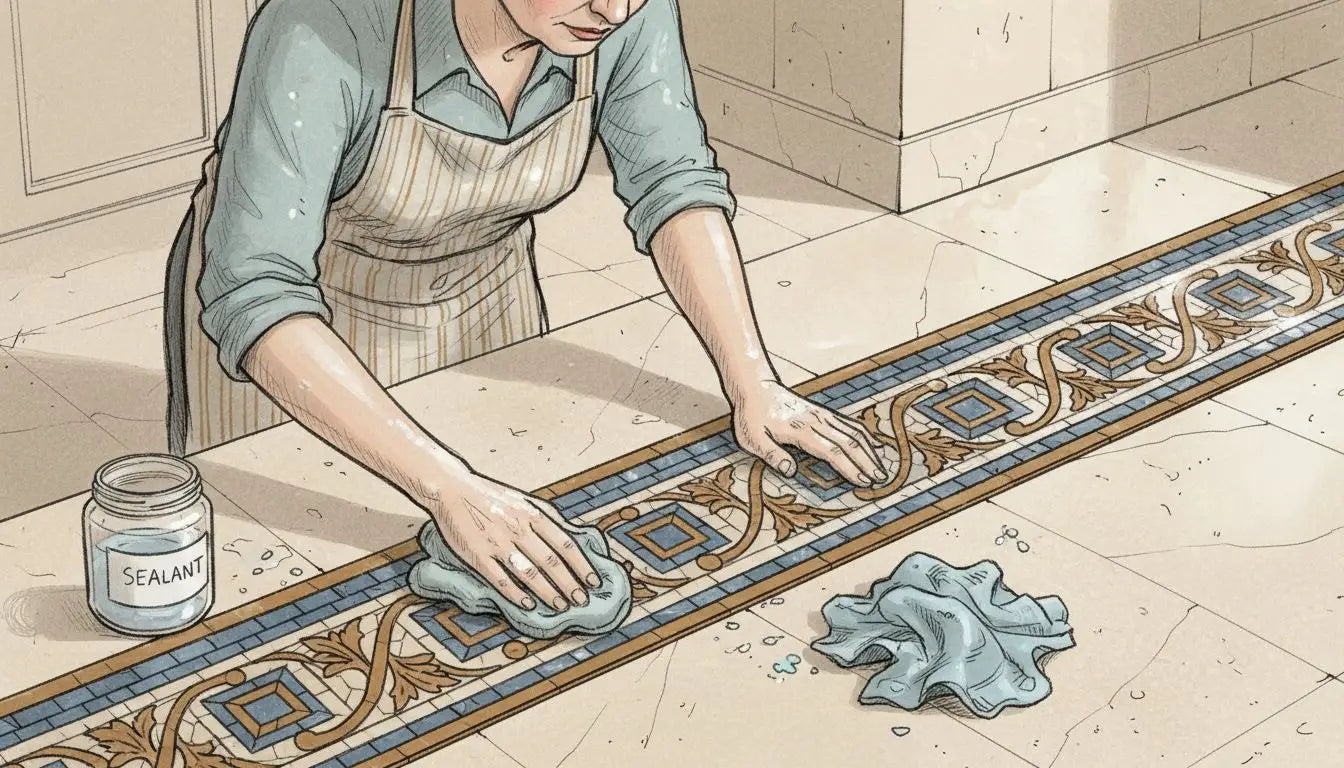
Contemporary mosaic border designs draw inspiration from historical techniques while introducing modern materials and aesthetic sensibilities. Designers now blend traditional approaches with innovative concepts, creating borders that range from minimalist linear patterns to complex, multi-dimensional arrangements using materials like marble, glass, ceramic, and mixed-media tesserae. These modern interpretations maintain the core artistic principles of mosaic design while pushing creative boundaries.
Pro tip: When selecting a mosaic border design, consider the visual dialogue between the border’s pattern and the surrounding architectural elements to create a harmonious and cohesive aesthetic experience.
How Mosaic Borders Enhance Interior Spaces
Mosaic borders are transformative design elements that dramatically elevate interior spaces, creating visual narratives and architectural depth. Roman mosaic border techniques historically demonstrated how intricate borders could frame spaces, guide visual perception, and contribute to a room’s overall aesthetic experience.
In luxury interior design, mosaic borders serve multiple sophisticated functions beyond mere decoration. They create visual transitions between different architectural elements, define spatial boundaries, and introduce layers of cultural and artistic complexity. Historical mosaic design principles reveal how these borders can unify diverse design elements while adding depth and symbolic meaning to interior environments.
Contemporary designers leverage mosaic borders as powerful storytelling tools, using carefully selected materials, colors, and patterns to communicate aesthetic intentions. These borders can visually expand spaces, create focal points, and introduce textural complexity that transforms ordinary surfaces into extraordinary design statements. Whether used in minimalist modern spaces or traditional luxury interiors, mosaic borders offer an unparalleled opportunity to infuse personality and artistic sophistication into architectural environments.
Pro tip: Select mosaic border designs that create visual dialogue with surrounding architectural elements, using color, texture, and pattern to establish a cohesive and harmonious interior narrative.
Key Features, Materials, and Installation Tips
Mosaic border design requires meticulous attention to detail and comprehensive understanding of material properties. Precise mosaic installation techniques involve carefully selecting appropriate tesserae, understanding substrate preparation, and implementing strategic placement methods that ensure durability and aesthetic excellence.
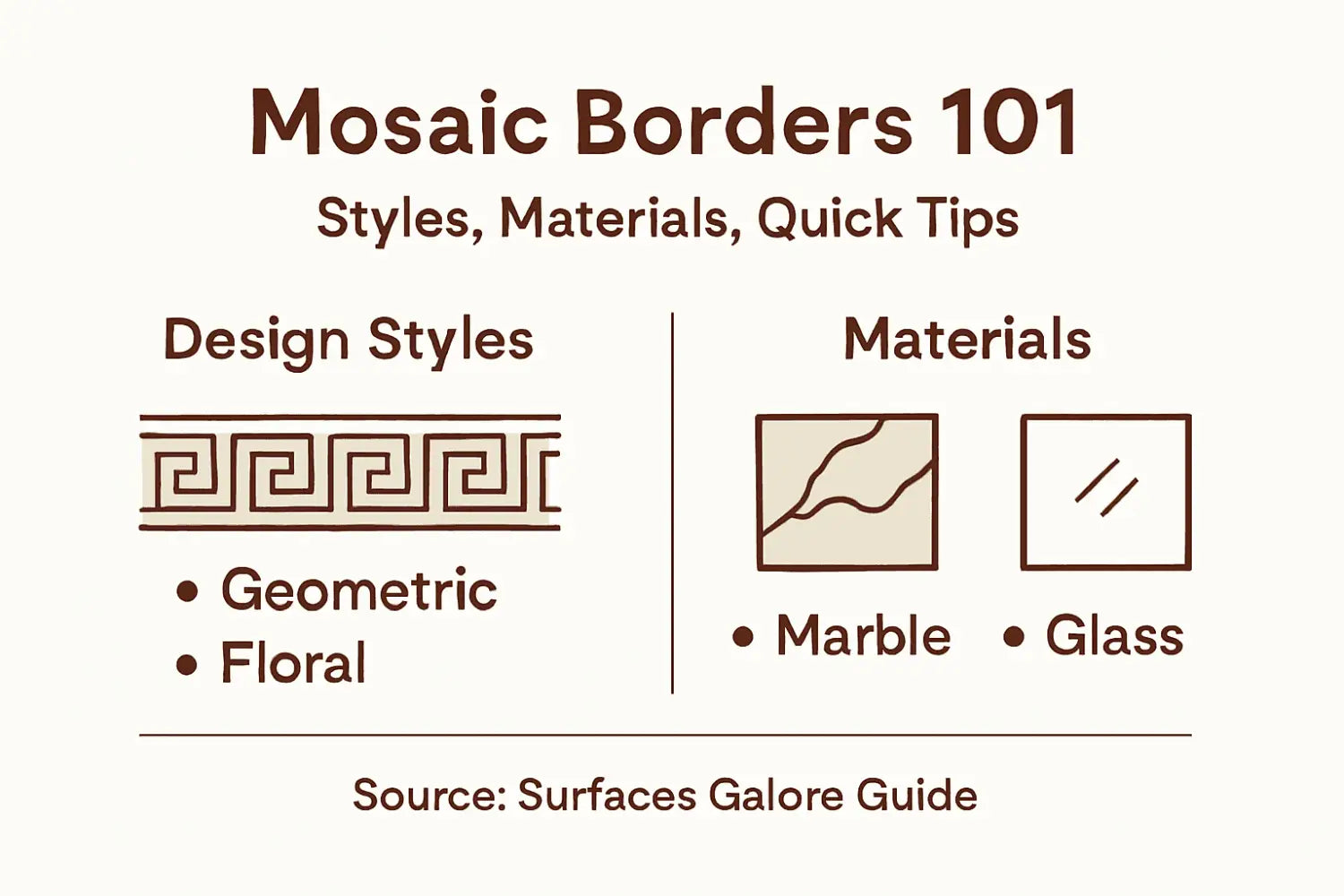
Professional designers utilize a diverse range of materials in mosaic border creation, including premium options like glass, natural stone, ceramic, and specialized smalto. Each material offers unique characteristics: glass provides luminosity, stone delivers natural texture, ceramic enables intricate color variations, and smalto creates rich, saturated color depth. Mosaic installation best practices emphasize critical steps such as thorough surface preparation, even adhesive application, precise tile positioning, and comprehensive grouting to guarantee long-lasting, visually stunning results.
Here’s a quick comparison of popular mosaic border materials and their unique advantages:
| Material Type | Key Visual Qualities | Durability | Typical Applications |
|---|---|---|---|
| Marble | Elegant veining, classic look | High | Bathrooms, floors |
| Glass | Reflective, vibrant colors | Moderate | Backsplashes, accents |
| Ceramic | Diverse patterns, smooth finish | High | Kitchens, showers |
| Smalto | Rich color, matte texture | High | Artistic wall borders |
The selection of mosaic border materials depends on several key considerations, including architectural context, intended visual impact, maintenance requirements, and budget constraints. Designers must evaluate factors like light reflection, color compatibility, durability, and potential wear patterns when choosing tesserae. Advanced installation techniques involve creating seamless transitions, maintaining consistent spacing, and ensuring structural integrity through professional-grade adhesives and precise cutting methods.
Pro tip: Always purchase 10% more mosaic material than your calculated project requirement to account for potential cuts, breakage, and design adjustments during installation.
Cost, Durability, and Maintenance Considerations
Mosaic border installations represent a significant investment that requires careful financial and long-term preservation planning. Mosaic conservation practices emphasize that durability depends not just on initial material quality, but on ongoing maintenance and strategic preservation techniques.
The cost spectrum for mosaic borders varies dramatically based on material selection, complexity of design, and installation expertise. Premium materials like natural stone, specialized smalto, and handcrafted glass tesserae command higher prices but offer exceptional longevity and aesthetic value. Installation durability factors reveal that professional substrate preparation, precise grouting, and selecting high-quality adhesives are critical investments that determine long-term performance and aesthetic integrity.
Maintenance strategies for mosaic borders require a proactive approach that balances aesthetic preservation with practical care. Designers and homeowners must implement regular cleaning protocols, avoid abrasive cleaning materials, address minor damages promptly, and periodically inspect grout lines and individual tesserae for potential wear. Different materials demand unique maintenance approaches: stone mosaics might require periodic sealing, glass mosaics need gentle cleaning to maintain luminosity, and ceramic tesserae benefit from pH-neutral cleaning solutions.
Pro tip: Budget approximately 15-20% above your initial mosaic border installation cost for professional maintenance and potential restoration work over the first decade of use.
Common Mosaic Border Mistakes to Avoid
Mosaic border design requires precision and strategic planning to avoid common pitfalls that can compromise aesthetic and structural integrity. Mosaic installation challenges frequently stem from seemingly minor errors that can dramatically impact the overall quality and longevity of the design.
One of the most critical mistakes designers encounter involves improper substrate preparation and adhesive selection. Uneven surface preparation can lead to irregular tesserae placement, creating unsightly gaps and compromising the border’s structural stability. Designers must carefully evaluate surface conditions, select appropriate adhesives, and ensure consistent application techniques to prevent future detachment or cracking.
Another significant error involves underestimating the complexity of design execution and material compatibility. Mosaic foundational techniques emphasize that tesserae size, shape, and material must harmonize with the overall design scale and architectural context. Inexperienced installers often choose overly intricate patterns without considering the practical limitations of their chosen materials, resulting in designs that are visually overwhelming or structurally unsound.
The following table summarizes the most common mistakes in mosaic border design and how to prevent them:
| Mistake | Typical Cause | Prevention Method |
|---|---|---|
| Uneven tesserae layout | Poor surface preparation | Level substrate meticulously |
| Incompatible materials | Lack of planning | Select suitable tesserae |
| Adhesive failure | Wrong product choice | Use mosaic-specific adhesives |
| Overly complex designs | Ignoring skill limits | Scale design to capability |
Pro tip: Invest in a professional consultation or mock-up installation to identify potential design and execution challenges before committing to a full mosaic border project.
Elevate Your Luxury Spaces with Exquisite Mosaic Borders
Dealing with the complexity of mosaic border design can be challenging. The article highlights key considerations such as selecting the right materials, mastering intricate patterns, and ensuring durability through proper installation. Achieving a harmonious blend of color, texture, and pattern demands access to premium natural stone and expert guidance. If you seek to infuse authentic elegance and lasting beauty into your interior spaces, understanding these pain points is essential.
At Surfaces Galore, we specialize in premium natural stone including marble and travertine mosaics that perfectly complement sophisticated mosaic border projects. Explore our collection of high-quality stones designed to bring your artistic vision to life with ease and confidence.
Transform your next luxury design challenge into an inspiring masterpiece by choosing authentic materials. Visit Surfaces Galore now to access beautiful mosaic tiles and decorative stones shipped nationwide. Start planning your project today and bring timeless impact to your interiors with expert-curated natural stone options.
Frequently Asked Questions
What are mosaic borders?
Mosaic borders are decorative patterns created using small pieces of materials like stone, glass, or ceramic, arranged meticulously to form intricate designs. They serve as artistic elements in interior spaces.
How do mosaic borders enhance luxury spaces?
Mosaic borders create visual transitions, define spatial boundaries, and introduce layers of texture and cultural complexity, dramatically elevating the aesthetics of luxury interiors.
What materials are commonly used in mosaic border designs?
Common materials for mosaic borders include marble, glass, ceramic, and smalto. Each material offers unique visual qualities and durability, catering to different design preferences.
What are some common mistakes to avoid when installing mosaic borders?
Common mistakes include improper substrate preparation, selecting incompatible materials, and underestimating design complexity. Ensuring careful planning and execution can prevent these issues.
Leave a comment