
Choosing Marble Slabs Explained: High-End Impact

Most American luxury homes feature marble surfaces that instantly elevate interior spaces, yet selecting truly premium marble slabs goes far beyond judging color and veining. For designers and architects working on high-end California projects, the stone’s geological origin, density, and crystalline structure all influence both visual impact and long-term durability. This guide reveals the critical characteristics and international standards that separate ordinary marble from world-class material, helping professionals achieve exceptional results for every client renovation.
Table of Contents
- What Defines Premium Marble Slabs
- Distinguishing Marble Types And Origins
- Veining, Color, And Slab Finishes Explained
- Evaluating Slab Quality And Sourcing
- Balancing Durability, Cost, And Application
- Common Pitfalls When Selecting Marble
Key Takeaways
| Point | Details |
|---|---|
| Understanding Premium Marble | Premium marble is defined by its tight crystalline structure, minimal porosity, and superior polishing capability, which influence quality and aesthetic appeal. |
| Assessment Criteria | Quality assessment involves evaluating physical properties like density and compressive strength, alongside visual characteristics such as consistency of color and veining. |
| Geological Origin Importance | The marble’s origin significantly impacts its value, with renowned quarries in Italy, Greece, and Turkey often producing higher-quality stone. |
| Avoiding Common Mistakes | Common pitfalls include overlooking material variations and environmental suitability; proper handling and installation techniques are also crucial to maintaining marble integrity. |
What Defines Premium Marble Slabs
Selecting premium marble slabs requires understanding their complex material characteristics beyond basic aesthetics. Marble’s metamorphic composition and crystalline structure determines its quality, durability, and visual appeal for high-end architectural applications.
True premium marble exhibits several distinctive traits that set it apart from standard stone selections. These characteristics include extremely tight crystalline structure, minimal porosity, superior polishing capacity, and remarkable color consistency. Professionals assess marble quality through rigorous standards like ASTM specifications for dimension stone, which evaluate critical physical properties such as absorption rates, density, compressive strength, and abrasion resistance.
Professional designers recognize premium marble through specific indicators. Key differentiators include:
- Uniform color and pattern distribution
- Minimal natural imperfections
- High-density crystalline composition
- Exceptional translucency
- Consistent thickness across the slab
- Limited color variations within the same batch
The geological origin of the marble significantly influences its premium status. Marble sourced from renowned quarries in regions like Italy, Greece, and Turkey often commands higher value due to their historical reputation for producing exceptional stone with unique mineral compositions.
Pro tip: Request detailed material certifications and conduct thorough visual inspections under professional lighting to accurately evaluate a marble slab’s true premium qualities.
Distinguishing Marble Types and Origins
Marble represents a complex geological marvel with diverse characteristics that fascinate architects and designers. Limestone transforms into marble through an extraordinary metamorphic process involving intense heat and pressure, creating a crystalline rock with unique visual properties and structural integrity.
Different marble varieties emerge from distinct geological origins, with each type carrying a unique narrative of mineral composition and formation. Carrara marble, famously quarried in northern Italy, exemplifies this remarkable transformation - originating from ancient marine organism shells that underwent millions of years of geological metamorphosis. Impurities like clay, iron oxide, and other minerals contribute to the stone’s distinctive coloration and veining patterns.
Marble classifications can be broadly understood through several key characteristics:
- Sedimentary Origin: Initial limestone composition
- Metamorphic Transformation: Recrystallization under geological conditions
- Mineral Impurities: Determining color and visual complexity
- Geological Region: Defining unique structural qualities
The most renowned marble types include:
- Carrara White (Italy)
- Calacatta Gold (Italy)
- Statuario (Italy)
- Nero Marquina (Spain)
- Emperador (Turkey)
Professional designers recognize that each marble type tells a geological story, with its origin deeply influencing its aesthetic and functional properties. The elegant narrative of marble’s formation can be traced through the timeless elegance of Italian marble, which has been prized since ancient Roman times.
Here is a quick reference comparing renowned marble types and their unique attributes:
| Marble Type | Country of Origin | Distinctive Features | Typical Application |
|---|---|---|---|
| Carrara White | Italy | Subtle veining, cool tones | Flooring, countertops |
| Calacatta Gold | Italy | Bold veining, warm hue | Luxury bathrooms, feature walls |
| Statuario | Italy | Dramatic contrast, bright base | Artistic installations |
| Nero Marquina | Spain | Deep black, linear veining | Accent pieces, fireplaces |
| Emperador | Turkey | Rich brown, irregular veins | Tabletops, wall cladding |
Pro tip: Always request detailed origin documentation and geological certification when selecting premium marble to ensure authenticity and understand the stone’s unique historical background.
Veining, Color, and Slab Finishes Explained
Marble’s aesthetic complexity emerges from its remarkable geological formation, where intricate mineral impurities create stunning visual patterns through recrystallization processes. The characteristic veining represents more than mere visual decoration - it tells a profound story of geological transformation, with each slab containing unique mineral signatures that define its individual character.
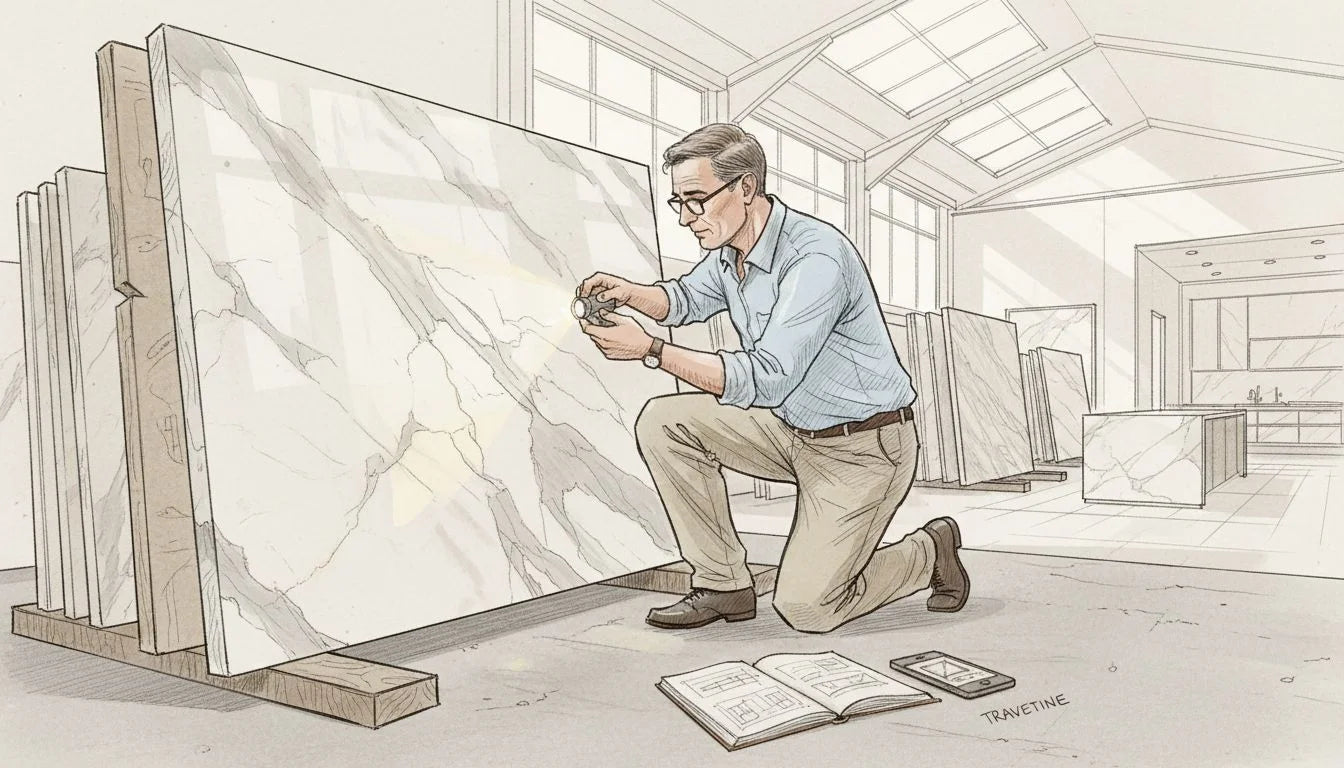
The color palette and veining of marble slabs result from specific mineral compositions. Architectural applications reveal marble’s diverse chromatic potential, ranging from subtle gray tones to dramatic pink, green, and black variations. These colors emerge from iron oxides, silica, and organic matter trapped during the stone’s metamorphic journey, creating intricate visual narratives within each slab.
Marble finishing techniques dramatically influence the stone’s final appearance and functional properties:
-
Polished Finish:
- Maximum reflectivity
- Enhances color depth
- Highlights intricate veining
-
Honed Finish:
- Matte surface
- Soft, understated appearance
- Reduces visible scratches
-
Brushed Finish:
- Textured surface
- Rustic, natural aesthetic
- Increased slip resistance
Surface Selection Criteria involve understanding how different finishes interact with light, space, and design intent. The unique allure of Statuario marble demonstrates how surface treatment can transform a stone’s visual narrative, revealing nuanced textures and color variations that speak to architectural sophistication.
This summary table illustrates how different marble finishes influence style and functionality:
| Finish Type | Visual Impact | Recommended Use | Maintenance Level |
|---|---|---|---|
| Polished | Highly reflective, vibrant | Formal interiors, reception | Regular cleaning needed |
| Honed | Matte, understated elegance | High-traffic areas, kitchens | Low to moderate |
| Brushed | Textured, rustic appearance | Wet zones, outdoor patios | Occasional deep cleaning |
Pro tip: Always examine marble slabs under multiple lighting conditions to fully appreciate the subtle interactions between finish, color, and veining.
Evaluating Slab Quality and Sourcing
Marble selection demands a sophisticated understanding of technical and aesthetic criteria. Rigorous industry standards define the precise parameters for high-quality dimension stone, establishing comprehensive guidelines that go far beyond visual appeal to ensure structural integrity and long-term performance.
Professional evaluators assess marble slabs through multiple critical dimensions, including physical properties, geological origin, and manufacturing standards. Comprehensive stone sourcing resources provide essential guidance for identifying premium marble, emphasizing the importance of understanding each slab’s unique characteristics, from quarry extraction to final fabrication.
Key evaluation criteria for premium marble slabs include:
-
Physical Properties:
- Compressive strength
- Density measurement
- Abrasion resistance
- Moisture absorption rate
-
Visual Characteristics:
- Consistency of color
- Uniformity of veining
- Absence of structural defects
- Natural mineral composition
-
Sourcing Considerations:
- Quarry reputation
- Extraction methods
- Sustainability practices
- Traceability of origin
Natural stone sourcing practices play a crucial role in determining a marble slab’s overall quality and ethical standards. Discerning designers understand that true premium marble transcends aesthetic beauty, encompassing responsible procurement and exceptional craftsmanship.
Pro tip: Request comprehensive quality certifications and conduct thorough visual and technical inspections before finalizing any marble slab selection.
Balancing Durability, Cost, and Application
Marble selection involves a nuanced calculation that extends far beyond aesthetic preferences. Durability represents a complex interplay of technical, economic, and performance factors, requiring designers to evaluate long-term value against immediate investment.
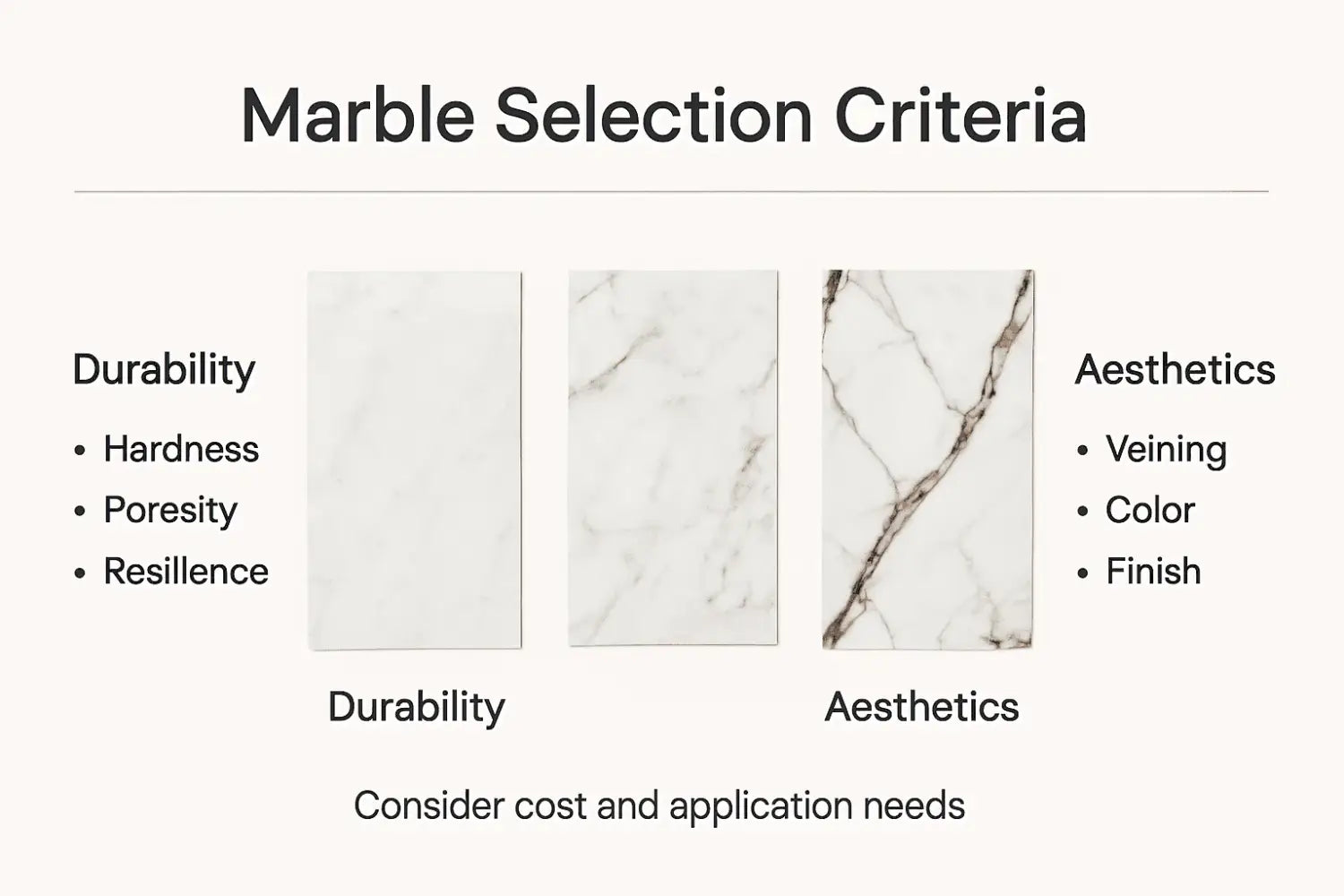
Marble’s inherent characteristics directly influence its suitability for different applications, with specific stone types demonstrating varying levels of resilience. Dolomitic marble, for instance, offers superior acid resistance compared to calcite marble, making it ideal for environments with higher chemical exposure or potential material degradation.
Key considerations in balancing durability, cost, and application include:
Cost Factors:
- Quarry origin
- Extraction complexity
- Transportation expenses
- Fabrication requirements
Durability Indicators:
- Compressive strength
- Moisture absorption rate
- Chemical resistance
- Surface hardness
Application-Specific Evaluation:
- Interior vs. exterior use
- Traffic intensity
- Maintenance requirements
- Environmental conditions
Professional designers understand that true value emerges from comprehensive lifecycle analysis. The most expensive marble is not necessarily the most appropriate, while the least expensive option might incur higher long-term maintenance costs.
Pro tip: Conduct a detailed cost-benefit analysis that considers maintenance, replacement frequency, and performance requirements before selecting a marble slab for your specific project.
Common Pitfalls When Selecting Marble
Marble selection demands meticulous attention to detail, with numerous potential missteps that can compromise both aesthetic and functional quality. Understanding marble’s inherent vulnerabilities is crucial for preventing premature material degradation, as seemingly minor oversights can lead to significant long-term performance issues.
Professional stone handling requires comprehensive safety and quality protocols that extend far beyond visual selection. Critical pitfalls include ignoring the fundamental differences between calcite and dolomitic marble, misunderstanding environmental sensitivity, and underestimating the complexity of proper transportation and installation.
Common selection mistakes professionals must avoid include:
Material Composition Errors:
- Overlooking marble type variations
- Ignoring acid resistance differences
- Failing to assess mineral impurities
- Misunderstanding porosity levels
Environmental Mismatches:
- Selecting inappropriate marble for specific conditions
- Neglecting weathering potential
- Underestimating chemical exposure risks
- Ignoring traffic and wear patterns
Handling and Installation Risks:
- Improper transportation techniques
- Inadequate storage practices
- Insufficient professional training
- Overlooking safety protocols
Professional designers recognize that marble selection transcends aesthetic preferences, requiring a holistic understanding of geological characteristics, performance limitations, and potential long-term challenges.
Pro tip: Consult multiple expert sources and request comprehensive material testing reports before finalizing any marble slab selection to mitigate potential performance risks.
Unlock the True Potential of Premium Marble for Your Next Project
Choosing high-quality marble slabs involves navigating complex factors like geological origin, veining patterns, and durability challenges. This article highlights critical pain points such as ensuring material authenticity, balancing cost with long-term performance, and avoiding common pitfalls like improper handling or environmental mismatches. If you want authentic marble with consistent color, exceptional veining, and guaranteed durability for your design vision, you need a trusted source that understands these nuances.
At Surfaces Galore, we specialize in providing premium marble slabs that meet rigorous quality standards while offering elegant natural stone options from renowned origins like Italy and Turkey. Our expertise in sourcing, combined with nationwide shipping, ensures you receive durable, beautifully finished marble tailored to your project needs.

Discover how our curated selection and transparent sourcing documentation can help you avoid costly mistakes and confidently select marble slabs that perfectly balance aesthetics, durability, and cost. Visit Surfaces Galore now to explore our premium marble collections and get personalized support from experts who value the timeless beauty and technical excellence you deserve.
Frequently Asked Questions
What factors should I consider when selecting premium marble slabs?
When selecting premium marble slabs, consider factors such as the crystalline structure, porosity, color consistency, and the presence of natural imperfections. Additionally, look for uniformity in color and thickness, as well as translucency for added visual appeal.
How do different finishes affect the appearance and functionality of marble?
Different finishes alter a marble slab’s appearance and performance. Polished finishes create a reflective surface that enhances color depth, while honed finishes have a matte look that’s less prone to showing scratches. Brushed finishes provide a textured, rustic aesthetic that improves slip resistance, making them suitable for wet areas.
What are the key types of marble, and how do their characteristics differ?
Key types of marble include Carrara, Calacatta, Statuario, Nero Marquina, and Emperador, each characterized by unique veining, color variations, and aesthetic qualities. For instance, Carrara is known for its subtle veining, while Calacatta features bold patterns. Understanding these differences helps in selecting the right marble for your project.
How can I ensure the quality of the marble I choose?
To ensure marble quality, request material certifications, assess physical properties such as density and compressive strength, and verify the geological origin and quarry reputation. Conduct thorough visual inspections under professional lighting to identify imperfections and inconsistencies before making a selection.

Leave a comment