
Why Choose Classic Marble Styles for Lasting Elegance

TL;DR:
- Classic marble offers timeless elegance with unique veining and light-reflecting properties.
- When properly sealed and maintained, marble is highly durable and can last over a century.
- Its high ROI and sustainability benefits make marble a wise investment for luxury renovations.
Marble has a reputation problem. Many homeowners assume it belongs only in grand Italian villas or that it’s simply too delicate for real daily life. That couldn’t be further from the truth. Classic marble has been the material of choice for centuries, and today’s installation techniques and sealing products have made it more practical than ever. With timeless elegance and unique natural veining that reflects light in ways no engineered stone can replicate, marble remains the gold standard for high-end kitchen and bathroom renovations. This guide breaks down the aesthetics, durability, investment returns, and care realities so you can make a truly informed choice.
Table of Contents
- The timeless appeal of classic marble styles
- Durability and longevity: How marble stands the test of time
- Sustainability, value, and ROI of classic marble
- Care, maintenance, and realistic expectations
- A designer’s take: What most articles miss about classic marble
- Let elegance last: Explore classic marble with SurfacesGalore
- Frequently asked questions
Key Takeaways
| Point | Details |
|---|---|
| Timeless beauty | Classic marble’s natural elegance enhances both traditional and modern spaces. |
| Remarkable durability | Properly maintained marble can last 50-100 years in kitchens and baths. |
| Strong investment | Marble boosts home value and often delivers up to 85% ROI on remodels. |
| Sustainable choice | Marble’s long lifespan and low manufacturing impact support eco-friendly design. |
| Realistic upkeep | Sealing marble and routine care are straightforward but necessary for lasting results. |
The timeless appeal of classic marble styles
Classic marble is natural limestone that has been transformed by heat and pressure over millions of years into a crystalline stone. The most popular varieties include Carrara, Calacatta, Statuario, and Nero Marquina, each with its own distinct veining pattern and color palette. Finishes range from polished (bright and reflective) to honed (matte and soft) to brushed (textured and aged). Each finish changes the stone’s entire character and suitability for different spaces.
What keeps marble at the top of designers’ material lists isn’t just beauty. It’s the fact that no two slabs are ever identical. Every installation is, by definition, one of a kind. That natural variation is something no factory can reproduce at scale, and experienced designers know it.
“Classic marble provides timeless elegance with unique natural veining and light-reflecting properties that enhance space brightness and adapt to various design styles.”
The design versatility of marble is genuinely hard to overstate. A slab of white Carrara with subtle gray veining works equally well in a sleek, minimalist bathroom as it does in a traditional kitchen with shaker cabinetry. Calacatta Gold, with its bold, dramatic veining, anchors a modern kitchen island without needing any other decorative element. The stone carries the room.
Here’s what makes marble visually irreplaceable in high-end spaces:
- Natural light reflection: The crystalline structure of marble scatters and reflects light, making spaces feel larger and brighter without additional fixtures.
- Unique veining: Every slab tells a geological story, giving each installation a bespoke quality that buyers and guests immediately notice.
- Color range: From pure white to deep black, warm cream to rich green, marble covers more of the design spectrum than most people realize.
- Pattern continuity: Bookmatched marble slabs create mirror-image patterns that become a true focal point in any room.
- Aging character: Unlike synthetic materials that look worn with age, marble develops a patina that many designers consider more beautiful than the original surface.
If you’re considering a feature wall, marble accent wall ideas offer some of the most impactful and cost-effective ways to introduce this material into a space without fully committing to floor-to-ceiling stone.
The classic marble elegance you see in century-old European architecture isn’t accidental. Architects chose it because they knew it would still look compelling long after trends had come and gone. That logic holds just as firmly in 2026.
Durability and longevity: How marble stands the test of time
Let’s address the elephant in the room: marble is a natural stone, and yes, it requires care. But calling it fragile misses the full picture entirely. When properly sealed and maintained, marble is a genuinely robust material that holds up in kitchens, bathrooms, and high-traffic corridors for generations.
Marble durability is measurable. With a compressive strength ranging from 8,000 to 14,000 psi and a documented lifespan of 50 to 100-plus years with proper maintenance, marble significantly outlasts most alternatives. For context, standard ceramic tile rarely survives 20 years in a busy kitchen before it looks dated or needs replacing.
Here’s how marble performance compares to common alternatives:
| Material | Lifespan | Compressive strength | Sealing required | Unique appearance |
|---|---|---|---|---|
| Marble | 50-100+ years | 8,000-14,000 psi | Yes, every 3-12 months | Yes, every slab unique |
| Quartz | 20-30 years | 3,000-5,000 psi | No | No, engineered pattern |
| Porcelain | 15-25 years | 1,500-3,000 psi | No | Limited, printed surface |
| Granite | 30-50 years | 15,000-20,000 psi | Yes, annually | Yes, natural variation |
Finish type matters more than most buyers realize. A polished finish shows etching more obviously because the acid reaction dulls the shine against the glossy background. A honed finish has a matte surface to begin with, so light etching blends in almost invisibly.
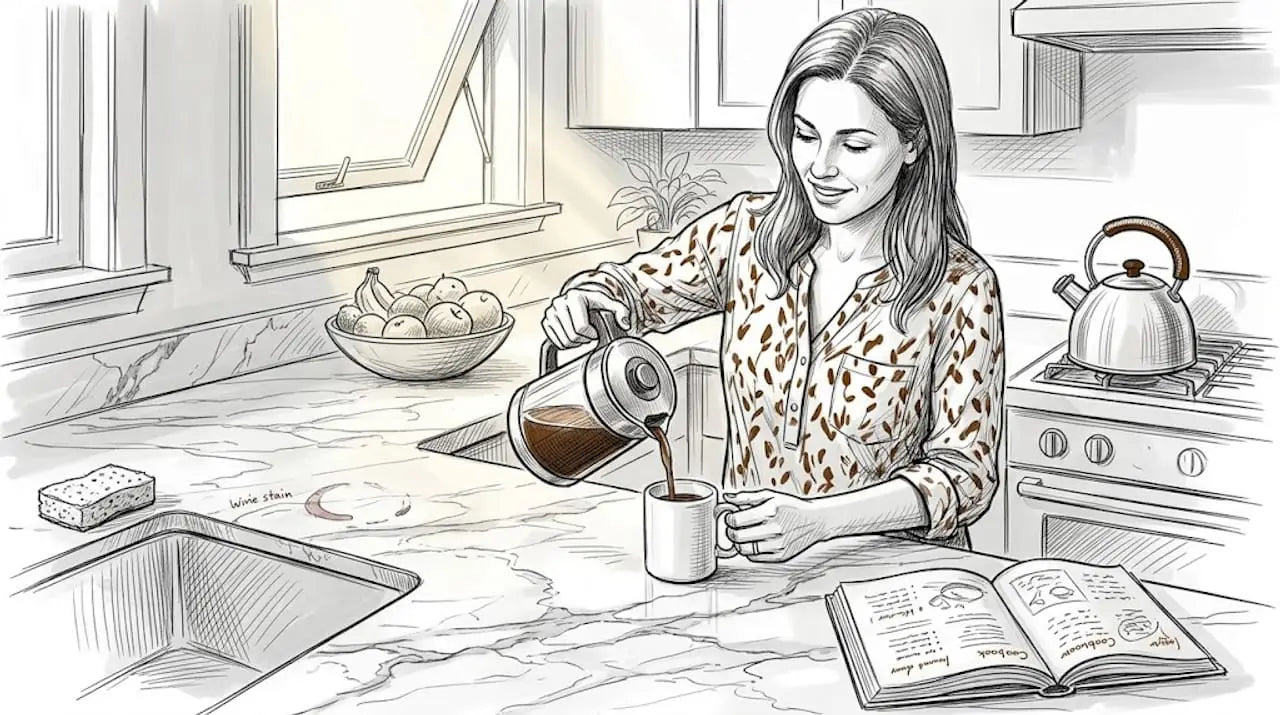
Pro Tip: In kitchens where lemon juice, vinegar, and wine are regular guests, choose a honed marble finish. It handles accidental acid contact far more gracefully than a polished surface, and the matte look is extremely popular in contemporary kitchen design right now.
The evidence for marble’s longevity isn’t just in data sheets. Grand Central Terminal in New York City, the U.S. Supreme Court building, and countless historic homes across New England all feature marble installations that are well over a hundred years old and still structurally sound. Marble’s track record speaks louder than any engineered stone’s warranty ever could. Exploring how marble adds value to a property becomes obvious when you understand it as a multi-generational material. And for those working on luxury projects in California, premium marble selections offer specific regional style profiles worth considering.
Sustainability, value, and ROI of classic marble
Beyond lasting beauty and function, what makes marble a smart investment for both your conscience and your finances?
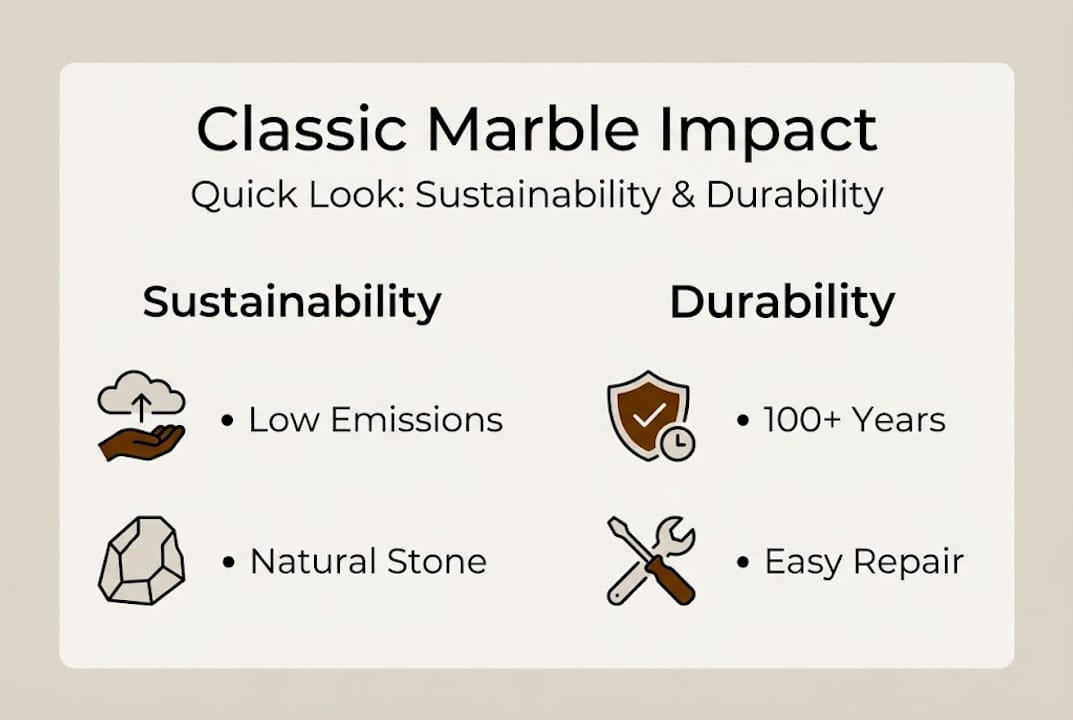
First, the financial case. ROI for marble renovations typically lands between 75 and 85 percent for luxury remodels, placing it among the highest-returning renovation categories in U.S. real estate. High-end buyers recognize marble immediately and associate it with quality craftsmanship and enduring taste. That perception drives both purchase interest and sale price.
The sustainability story is equally compelling. Natural marble requires no synthetic binders, resins, or plastic coatings. It’s quarried and cut, full stop. Compare that to engineered quartz, which bonds roughly 93% crushed stone with 7% polymer resins, adding manufacturing steps and materials that don’t biodegrade.
| Factor | Marble | Quartz | Porcelain |
|---|---|---|---|
| Manufacturing impact | Low (quarried, cut) | Moderate (resin binders) | High (kiln-fired, glazed) |
| Lifespan | 50-100+ years | 20-30 years | 15-25 years |
| Replacement frequency | Rare | Occasional | More frequent |
| Natural veining | Yes | No | No |
| Maintenance | Moderate | Low | Low |
As noted by marble vs. quartz comparisons from leading design authorities, marble excels in both natural beauty and sustainability relative to engineered alternatives, precisely because its longevity reduces the number of replacements over a home’s lifetime.
Key environmental advantages of natural marble include:
- No synthetic binders required in production, unlike quartz composites.
- Lower embodied energy compared to kiln-fired porcelain, which requires sustained high temperatures.
- Extreme durability means fewer replacements over decades, reducing total material waste.
- Natural origin means it doesn’t off-gas volatile organic compounds the way some manufactured surfaces can.
- Recyclability: Old marble can be repurposed as pavers, garden stone, or aggregate rather than ending up in a landfill.
When you account for marble’s impact on home value alongside its reduced replacement cycle and lower synthetic material input, the investment case becomes straightforward. It’s not just a beautiful surface. It’s a responsible one. For those looking at marble’s luxury positioning in premium markets, the ROI figures are often even stronger.
Care, maintenance, and realistic expectations
Even the most luxurious material needs thoughtful care. Here’s what it realistically takes to enjoy marble for decades.
The most important thing most people get wrong is using the wrong cleaner. Vinegar, citrus sprays, and many all-purpose bathroom cleaners are acidic, and acid etches marble on contact. It doesn’t stain it, it chemically dulls the surface. That damage is physical, not just cosmetic, and it’s why product selection matters enormously with this stone.
According to the marble care guide, marble is porous with an absorption rate between 0.5 and 2 percent, and sealing every 3 to 12 months is essential, with kitchens requiring more frequent attention than bathrooms or feature walls.
Here’s a straightforward maintenance routine for marble surfaces:
- Seal on installation and again every 3 to 6 months in kitchens, every 6 to 12 months in bathrooms. Use a penetrating impregnator sealer, not a topical coating.
- Clean daily with a soft cloth and warm water. For routine cleaning, a pH-neutral stone cleaner is the right tool every single time.
- Wipe spills immediately, especially red wine, coffee, citrus juice, or anything acidic. The sealer buys you time; it doesn’t make marble immune.
- Avoid all acidic or alkaline products. This includes vinegar, bleach, lemon-based sprays, and most commercial bathroom cleaners.
- Use cutting boards and trivets in the kitchen without exception. Marble can scratch from sharp knives and thermal shock from hot pans is a real risk.
- Polish or re-hone as needed. Light etching on polished marble can be addressed by a stone professional. Honed surfaces are far more forgiving and rarely need professional restoration.
Pro Tip: For marble sealing basics, do the water drop test once a year. Drop a small amount of water on the surface. If it beads up, your seal is holding. If it soaks in within a few minutes, it’s time to reseal. It takes five seconds and saves you from expensive repairs.
For deeper guidance on day-to-day care, marble maintenance tips and specific advice for cleaning marble floors are worth reviewing before your installation is even complete.
A designer’s take: What most articles miss about classic marble
Here’s what rarely gets said plainly: patina is not a flaw. In high-end design circles, the subtle aging of marble, the soft glow it develops after years of use, the slight dulling at wear points, is considered a mark of authenticity. It’s the same reason people pay more for worn leather than for brand-new vinyl. The material tells a story, and that story has value.
Most design content treats marble etching and patina as problems to prevent or fix. We’d argue the opposite: embrace them strategically. Place marble where its aging adds character rather than where it creates frustration. Bath vanities, fireplace surrounds, baking stations, and decorative walls are ideal because they see limited chemical exposure. For heavy-use countertop zones, honed finishes hide etching better and pair naturally with quartz in the prep and sink areas.
Modern surfaces can replicate the look of marble at a glance. None of them replicate the feeling of standing in a space where real geological history is embedded in your countertop. That irreplicability is what keeps marble relevant in premium marble perspective projects year after year.
Let elegance last: Explore classic marble with SurfacesGalore
If this article has clarified what classic marble can offer your project, the next step is seeing the material up close and finding the right fit for your vision.
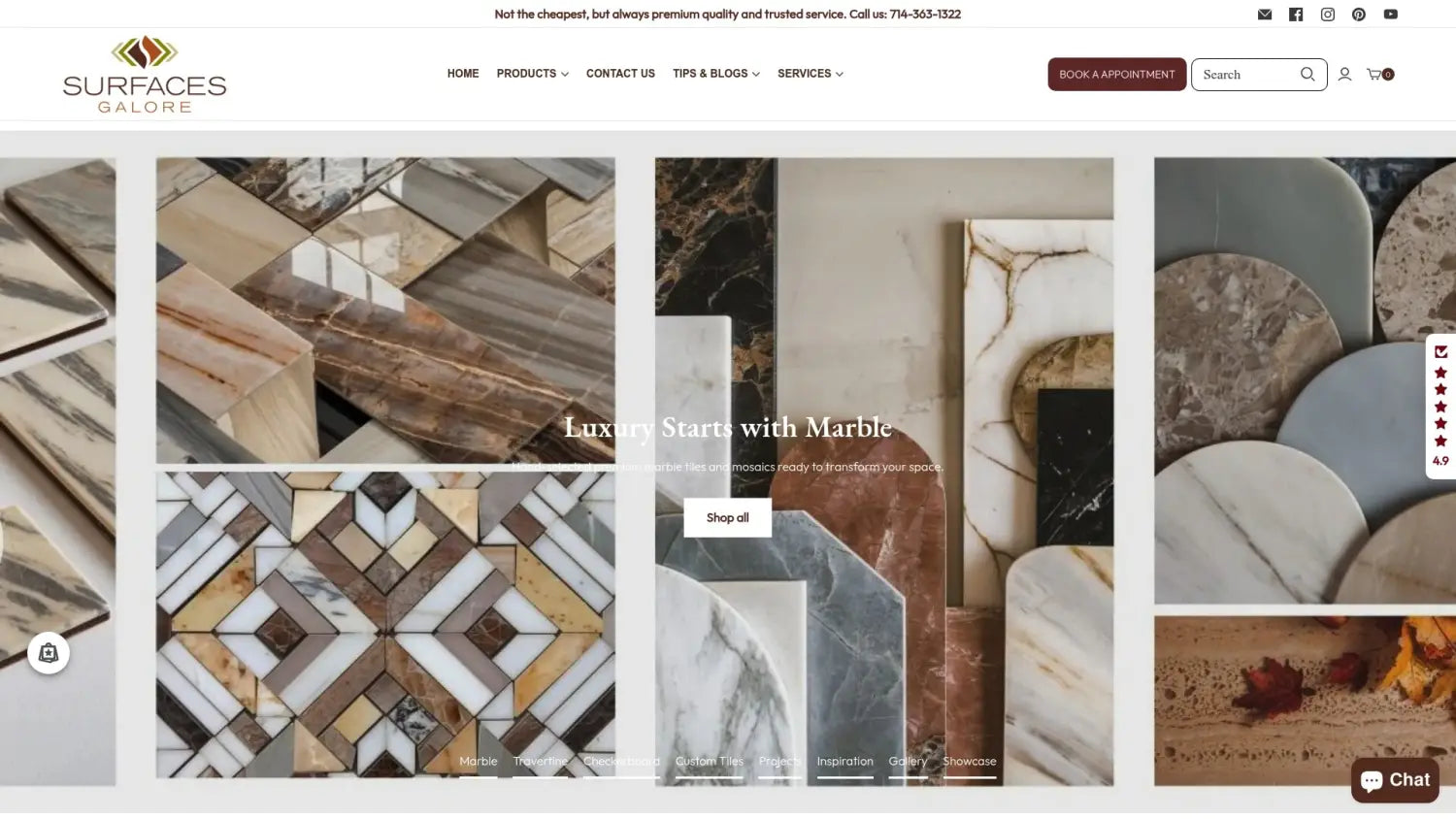
At Surfaces Galore, we import premium natural stone directly, which means you get authentic quality at prices that make sense for ambitious renovation budgets. Whether you’re a homeowner planning a bathroom remodel or a designer sourcing classic marble styles for a full kitchen renovation, our catalog covers the full spectrum of finishes, patterns, and formats. Explore marble renovation value resources on our site, or reach out to our team for personalized guidance on material selection, quantities, and shipping nationwide.
Frequently asked questions
What makes classic marble styles a good investment for my home?
Classic marble is recognized as a luxury feature that lifts property value, and marble ROI for remodels consistently lands between 75 and 85 percent in the high-end U.S. renovation market.
How often does marble need to be sealed in kitchens and bathrooms?
Sealing every 3 to 12 months is standard practice, with kitchens typically needing more frequent sealing because of higher exposure to food acids and cleaning products.
Is marble more sustainable than quartz or porcelain?
Yes, marble carries a lower manufacturing footprint than both quartz and porcelain, and its exceptional lifespan means fewer replacements over decades, which is a key part of marble’s sustainability advantage.
Can marble work in both modern and traditional designs?
Absolutely. Classic marble adapts to design styles ranging from traditional to contemporary, making it one of the few materials that genuinely crosses aesthetic boundaries without compromise.

Leave a comment