
Custom Limestone Tile Bulk Order: A Professional Guide

TL;DR:
- Large-scale limestone tile projects benefit from custom bulk orders, ensuring precise specifications, consistency, and volume discounts. Clear communication of project scope, batch fabrication from a single quarry vein, and detailed logistics planning are essential for cost-effective, timely procurement. Volume pricing and customized finishes surpass retail options, making bulk orders the ideal choice for upscale residential and commercial designs.
A custom limestone tile bulk order is a tailored procurement of natural stone tiles fabricated to exact project specifications and purchased at volume pricing for upscale residential and commercial construction. For interior designers, architects, contractors, and builders managing large-scale projects, this procurement model delivers three compounding advantages: precise dimensional control, design consistency across thousands of square feet, and per-unit cost structures that retail purchasing simply cannot match. Suppliers like Surfacesgalore, RBL Stone, and Citadel Stone have built their professional service models around this exact need, offering direct-from-quarry access to custom stone tiles at wholesale pricing that eliminates distributor markups.
What specifications and custom options are essential for a custom limestone tile bulk order?
Specification accuracy is the single most important factor in a successful bulk limestone tile order. Errors in dimensions, thickness, or finish type discovered after fabrication begins are expensive to correct and can delay entire project timelines by weeks.
Dimensions and thickness
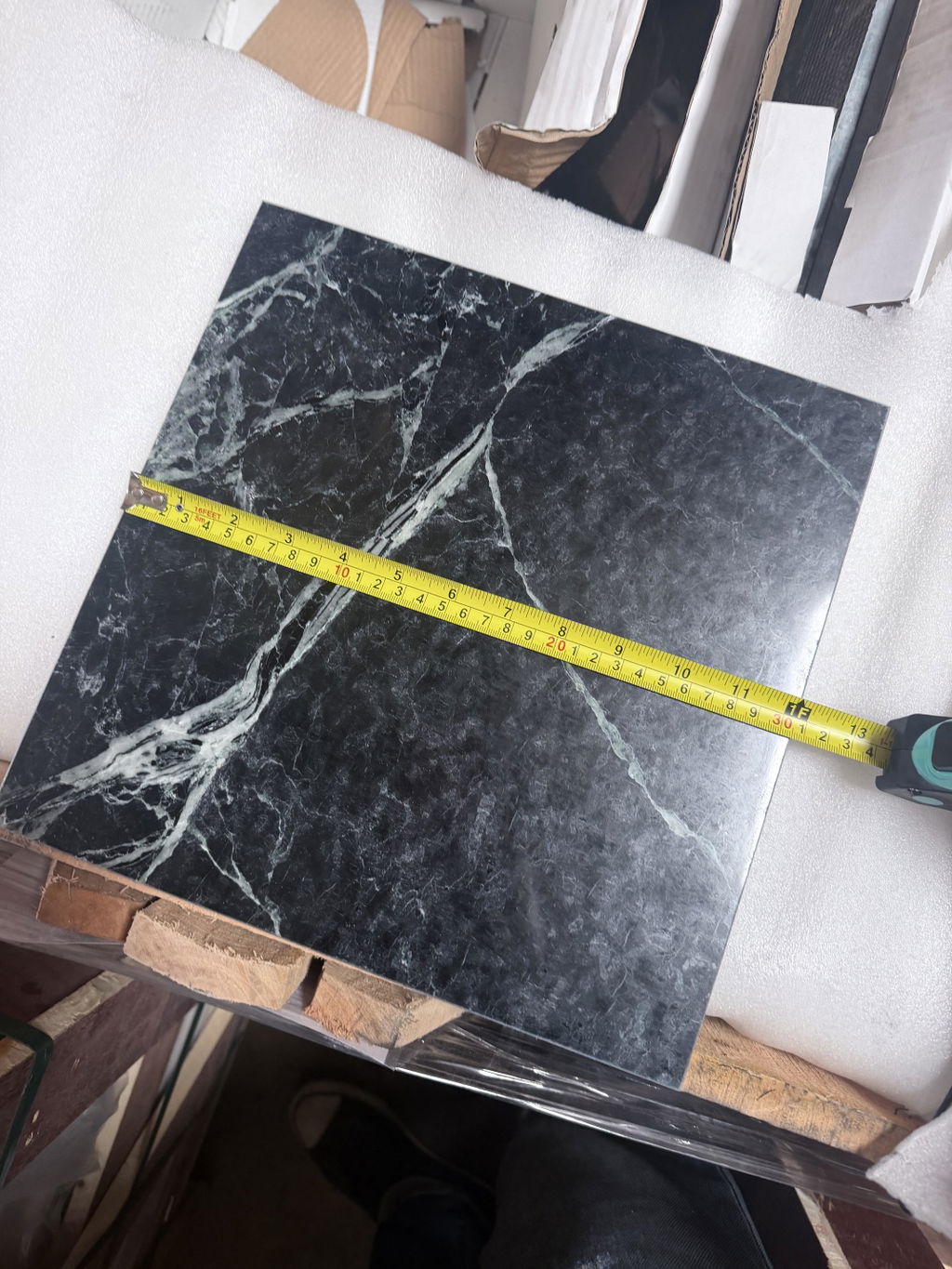
Tile sizes range from standard 12x12 inches up to jumbo format slabs at 36x36 inches or larger, with thickness typically falling between 15mm and 30mm depending on application. Floor tiles in commercial settings generally require 20mm or greater to handle foot traffic and subfloor variation. Wall cladding and feature applications can use thinner profiles at 15mm to reduce load and material cost. Specifying the wrong thickness for a commercial limestone flooring project is not a minor oversight. It can trigger structural review and costly reinstallation.
Finishes and edge profiles
The four finishes most commonly specified for large-scale limestone orders are honed, polished, tumbled, and leathered. Finishes like honed and leathered affect both the stone’s maintenance profile and its long-term aesthetic performance. Honed finishes offer a matte surface that hides scratches well, making them the preferred choice for hotel lobbies and high-traffic corridors. Polished finishes amplify the stone’s natural veining and color depth, ideal for feature walls and reception areas. Tumbled finishes create a weathered, artisan character suited to Mediterranean and transitional design schemes.
Edge profiles add another layer of specification. Options include straight cut, beveled, bullnose, and chiseled edges. Each profile changes how tiles read at transitions, thresholds, and borders. Reviewing a detailed tile edging guide before finalizing specs prevents costly last-minute changes during fabrication.
- Honed: Matte surface, low reflectivity, low maintenance for commercial use
- Polished: High gloss, amplifies natural veining, best for feature applications
- Tumbled: Aged, textured surface, suited to rustic and transitional interiors
- Leathered: Textured matte with slight sheen, hides fingerprints and water spots
- Bush-hammered: Rough, slip-resistant texture for exterior or wet applications
Batch fabrication for color consistency
Batch fabrication sourced from the same quarry vein minimizes color and texture discrepancies across large orders. This matters most in hotels, multi-unit residential buildings, and corporate campuses where visual uniformity across hundreds or thousands of tiles is non-negotiable. Requesting batch fabrication from a single production run is standard practice among experienced fabricators and should be written into every purchase specification.
Pro Tip: When finalizing your specification sheet, request physical samples from the exact batch run before production begins. A sample approved from a different quarry pull can result in visible color variation across your installed field.
How does volume pricing work for custom limestone tile orders?
Volume pricing for bulk limestone products is calculated against total project scope, not individual unit cost. This distinction changes how you should approach supplier conversations entirely.
The pricing model works as follows:
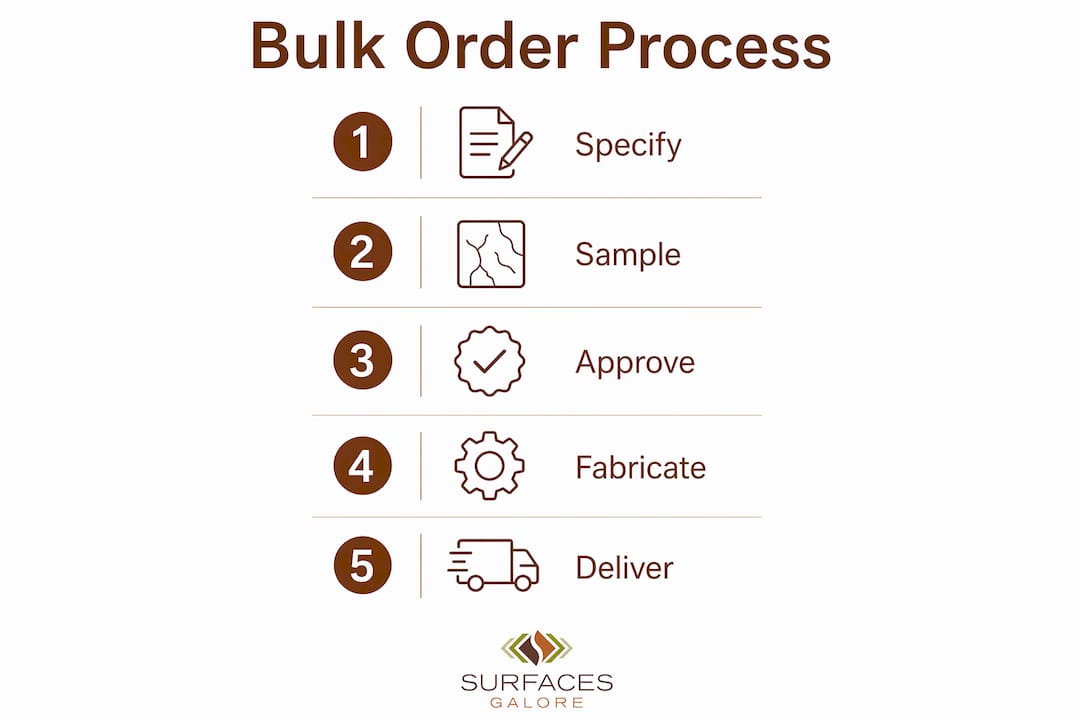
- Submit total project scope. Provide the supplier with total square footage, finish type, thickness, edge profile, and delivery phasing. A comprehensive project scope yields far better pricing than a per-unit price inquiry.
- Receive a fixed volume rate. The supplier calculates a per-unit rate based on material type, fabrication complexity, order volume, and logistics. This rate is then locked for the project duration.
- Lock pricing against market fluctuations. Once pricing is locked, it remains constant regardless of project expansion or raw material price changes in the market. For phased projects spanning 12 to 24 months, this protection is financially significant.
- Coordinate delivery terms. Delivery cost is factored into the volume quote. Specifying delivery phasing, site access limitations, and unloading requirements at the quoting stage prevents billing surprises later.
- Confirm batch production schedule. Volume orders require production scheduling. Confirming the fabrication timeline at the pricing stage aligns stone delivery with your construction schedule.
Key pricing factors that influence your volume rate include:
- Material origin and quarry grade
- Finish type (polished commands a premium over honed or tumbled)
- Total unit count and square footage
- Thickness and custom dimension requirements
- Delivery distance and site access conditions
“Defining project scope including delivery and phasing before requesting pricing is critical for budgeting and protects against price fluctuations.” — RBL Stone, Volume and Bulk Pricing
The financial case for volume pricing is direct. Retail stone pricing models do not accommodate large repeat fabrication needs, which means builders and contractors pay retail markup on every unit. Volume pricing removes that markup layer entirely and leverages order scale to reduce the per-unit rate. For a 10,000-square-foot commercial limestone flooring project, the difference between retail and volume pricing can represent tens of thousands of dollars in material cost alone.
Reviewing wholesale limestone tile alternatives before finalizing your supplier selection gives you a clearer picture of where volume pricing benchmarks sit in 2026.
What logistics and delivery considerations affect bulk limestone tile orders?
Logistics planning for large quantity limestone orders is where many projects encounter avoidable cost overruns. Stone is heavy, fragile in transit without proper packaging, and requires specific site conditions for safe unloading.

Packaging and logistics costs are significant for bulk stone orders and require export-grade crate packaging plus careful consideration of site access for truck types. Export-grade wooden crates protect tiles from vibration damage and moisture during long-distance transit. Skimping on packaging to reduce shipping cost is a false economy. A single cracked slab in a matched batch can require reordering from the same quarry run, which may no longer be available.
Key logistics factors to address before placing your order:
- Truck type and load capacity. Professional haulers move 12 to 25 tons per truckload depending on truck configuration. A full semi-truck requires a loading dock or forklift at the delivery site. Flatbed trucks offer more flexibility for sites without dock access.
- Site access assessment. Confirm whether your site can accommodate a semi-truck before scheduling delivery. Narrow access roads, low clearance structures, or soft ground conditions may require a smaller flatbed, which increases the number of trips and total delivery cost.
- Unloading equipment. Stone crates require a forklift or crane for safe unloading. Confirm equipment availability at the site before the delivery date.
- Phased delivery scheduling. For multi-phase projects or multi-site builds, coordinate delivery windows with your construction schedule to avoid storing large stone quantities on-site for extended periods.
- Storage conditions. If tiles must be stored on-site before installation, they require a covered, level surface. Improper storage causes edge chipping and moisture absorption that affects adhesion during installation.
Pro Tip: For large commercial projects, negotiate phased delivery terms at the time of order. This keeps your site organized, reduces storage risk, and allows you to inspect each delivery batch before the next one ships.
How to prepare and communicate project scope to get accurate bulk quotes
The quality of a bulk limestone tile quote is directly proportional to the quality of the project scope you submit. Vague inquiries produce vague pricing, and vague pricing produces budget surprises during construction.
A complete project scope submission for a bulk quote should include:
- Total square footage broken down by area (floors, walls, feature surfaces)
- Tile dimensions and thickness for each application zone
- Finish type specified per surface (honed for floors, polished for feature walls)
- Edge profile for all exposed tile edges and transitions
- Batch fabrication requirement explicitly stated
- Delivery phasing schedule with dates and site addresses
- Site access details including truck size limitations and unloading equipment available
- Project timeline from order placement to final installation date
How phased project schedules affect your quote is worth understanding in detail. A supplier quoting a single delivery to one site prices logistics differently than a supplier managing four phased deliveries to two sites over 18 months. Both are valid project structures, but only the second requires explicit coordination language in the quote. Leaving phasing details out of the initial scope inquiry means the quote you receive will not reflect your actual project cost.
Knowing how much extra tile to order is also part of scope preparation. Standard practice for custom stone is to order 10 to 15 percent overage to account for cuts, breakage, and future repairs. This overage should be included in your square footage calculation before submitting the quote request, not added as an afterthought after pricing is confirmed.
Clear communication on project timelines protects you as much as it helps the supplier. Fabrication of custom limestone tiles takes time, particularly for non-standard dimensions or specialty finishes. Submitting your scope with a realistic lead time requirement gives the fabricator room to source from the correct quarry batch and schedule production without rushing, which directly affects quality.
Bulk orders versus standard retail purchases: which makes sense for your project?
The decision between a custom limestone tile bulk order and retail purchasing is not a close call for any project exceeding 500 square feet. The differences in cost, customization, and consistency are structural, not marginal.
| Factor | Bulk custom order | Standard retail purchase |
|---|---|---|
| Per-unit cost | Volume rate, no retail markup | Full retail markup applied |
| Customization | Full: dimensions, finish, edge profile | Limited to stocked SKUs |
| Color consistency | Batch fabrication from same quarry vein | No batch guarantee |
| Minimum order | Typically 200 to 500 square feet | No minimum |
| Lead time | 4 to 12 weeks depending on fabrication | Immediate if in stock |
| Pricing stability | Locked for project duration | Subject to inventory pricing changes |
| Finish options | Honed, polished, tumbled, leathered, bush-hammered | Limited to stocked finishes |
Retail stone purchasing serves homeowners and small renovation projects well. For architects specifying a 15,000-square-foot hotel lobby or contractors building a 200-unit residential complex, retail purchasing creates three compounding problems. Per-unit cost is higher. Batch consistency is not guaranteed. And stocked SKUs rarely match the dimensional or finish requirements of a high-end design specification.
Luxury tile choices for upscale projects confirm that premium finishes and custom dimensions are the standard expectation in high-end residential and commercial design. Retail channels simply cannot deliver that level of specification control at scale.
Key takeaways
A successful custom limestone tile bulk order requires locking specifications, scope, and pricing before production begins, not after.
| Point | Details |
|---|---|
| Specify everything upfront | Submit dimensions, finish, edge profile, and batch requirements before requesting any quote. |
| Lock volume pricing early | Fixed volume rates protect your budget against raw material price changes across phased projects. |
| Plan logistics in detail | Confirm truck access, unloading equipment, and phased delivery terms at the quoting stage. |
| Batch fabrication is non-negotiable | Always request production from the same quarry vein to guarantee color and texture consistency. |
| Bulk beats retail at scale | Volume pricing removes retail markup and delivers customization that stocked SKUs cannot match. |
What I’ve learned from managing large limestone tile orders
After working closely with designers, architects, and contractors on natural stone procurement, the pattern that separates smooth projects from costly ones is almost always communication timing, not material selection.
The professionals who get the best results submit a complete specification package before they ask for pricing. They know their square footage, their finish preferences, their edge profiles, and their delivery constraints. They have reviewed tile finish options and made decisions before the first supplier conversation. That preparation compresses the quoting process and produces pricing that actually reflects the project.
The professionals who struggle tend to treat the quoting process as a discovery process. They ask for pricing before finalizing specs, then revise specs after receiving quotes, which invalidates the pricing. This cycle wastes weeks and creates friction with fabricators who are trying to schedule production runs.
One observation I find consistently underappreciated: finish selection has a larger impact on long-term maintenance than most designers account for at the specification stage. A polished limestone floor in a high-traffic commercial corridor looks extraordinary on day one and requires significantly more maintenance than a honed or leathered alternative. That conversation belongs in the specification phase, not after installation. Reviewing how limestone performs on walls and floors before finalizing finish specs is time well spent.
Phased delivery is another area where early planning pays dividends. Projects that coordinate delivery windows with construction milestones avoid the storage damage and site congestion that plague projects where all material arrives at once. It requires one additional conversation with your supplier at the quoting stage. That conversation is worth having.
— cihan
Source your next limestone project through Surfacesgalore
Surfacesgalore is a direct importer of premium natural stone based in Anaheim, California, shipping nationwide to designers, architects, contractors, and builders. The curated limestone tile collections include multiple finish options, custom dimension capabilities, and batch fabrication sourcing designed for professional-scale projects.
Trade account holders receive dedicated project consultation, competitive volume pricing, and coordinated nationwide delivery for both single-site and multi-site builds. Whether you are specifying commercial limestone flooring for a hotel renovation or sourcing custom stone tiles for a luxury residential development, Surfacesgalore offers the product depth and procurement support your project requires. Request samples, discuss your project scope, and get a volume quote by contacting the Surfacesgalore team directly.
FAQ
What is the minimum order size for a bulk limestone tile order?
Most professional limestone tile suppliers set minimum bulk order thresholds between 200 and 500 square feet. Orders below this threshold typically do not qualify for volume pricing and are processed at standard retail rates.
How long does fabrication take for custom limestone tiles?
Custom limestone tile fabrication typically takes 4 to 12 weeks depending on finish complexity, tile dimensions, and quarry availability. Non-standard dimensions and specialty finishes like bush-hammered or leathered surfaces require additional production time.
Why is batch fabrication important for large limestone tile orders?
Batch fabrication from the same quarry vein minimizes color and texture variation across large orders. Without batch sourcing, tiles from different production runs can show visible differences in tone and pattern that compromise design consistency.
What finishes are available for custom limestone tile bulk orders?
Standard finish options include honed, polished, tumbled, leathered, and bush-hammered. Finishes affect both aesthetics and maintenance requirements, so selection should align with the application environment and long-term care expectations.
How should I calculate square footage for a bulk limestone tile quote?
Calculate the total square footage of all surfaces receiving limestone tile, then add 10 to 15 percent overage for cuts, breakage, and future repairs. Submit this adjusted total when requesting a volume quote to receive accurate pricing that covers your full project scope.

Leave a comment