
Designing a timeless black and white natural stone floor

Key Takeaways
Creating a sophisticated floor design remains a cornerstone of luxury interior styling. Here are the central principles for achieving a high-end look with natural stone:
- The checkerboard pattern serves as a timeless element that creates visual drama and depth in any room.
- Authentic marble offers durability and unique veining that synthetic alternatives cannot replicate.
- Proper selection of finishes like honed or polished marble dictates the overall mood of the space.
- Regular sealing and maintenance routines are essential to preserve the luster of natural stone surfaces.
- Investing in high-quality materials from experts ensures a long-term increase in property marketability.
The timeless allure of black and white stone flooring
Exploring the history of classical checkerboard patterns
The history of the checkerboard pattern dates back to architectural traditions spanning centuries, where it was primarily used in European palazzos to denote prestige. This geometric layout creates a rhythmic visual flow that guides the eye through a space, emphasizing the surrounding architecture rather than overwhelming it. Today, designers continue to lean on this layout to anchor traditional and contemporary rooms alike, recognizing its ability to bring a sense of order to expansive floor plans. By utilizing natural stone, one honors this historic legacy while ensuring the material ages gracefully through decades of use.
Modern versus traditional interior design aesthetics
Modern interiors often favor clean lines and monochromatic palettes, yet the addition of black and white stone introduces a necessary textural shift to prevent spaces from feeling sterile. Traditional aesthetics, by contrast, utilize this combination to highlight ornate molding and period furniture, allowing the floor to serve as a grounding frame for the room. The versatility of pairing high-contrast stone allows designers to pivot between styles effortlessly, moving from minimalist modernism to layered, classic sophistication without needing to renovate the entire foundation.
The power of high-contrast design in luxury spaces
High contrast is a deliberate design choice that pulls attention toward the floor as a key architectural feature of the property. In luxury residential homes, this visual intensity commands presence in entryways and main living areas, dictating a sense of scale and importance. While some homeowners might search for black and white porcelain floor tiles for a simple budget project, those seeking true architectural prestige often turn to authentic marble for its deep, rich saturation that synthetic materials simply cannot mimic in high-light environments.
Achieving visual balance with natural stone elements
Maintaining balance requires careful selection of the veining and stone density to ensure the white and black tiles interact comfortably. If the veining is too chaotic on both tile types, the checkerboard effect may become visually jarring; instead, one should pair heavily veined pieces with more subtle varieties. This careful design consideration ensures that the floor remains a complementary element rather than a distracting one. When balanced correctly, the natural stone provides a weighted feeling of solid endurance that elevates the room's atmosphere.
(Wait, image placeholder below)

Selecting premium marble for your contrast pattern
Understanding the deep intensity of Nero Marquina marble
Nero Marquina marble is prized for its absolute deep black background, which provides the dark anchor in most high-end checkerboard designs. The contrast is driven by distinct, jagged white veining that wanders across the tile, giving it an organic feel that no man-made product can match. When sourcing these materials, Surfaces Galore ensures that every batch maintains the color consistency required for large-scale installations across boutique hotels and high-end estates.
Incorporating the sophisticated veining of Carrara marble
Carrara marble acts as the perfect white counterpoint, featuring soft, diffused gray veining that bridges the gap between deep black and pure white. This marble is iconic for a reason; its ability to reflect light while providing subtle natural variation makes it a favorite for grand foyers. The, sophisticated veining patterns found in Italian marble turn a standard checkerboard layout into a piece of art, as the organic movement softens the rigid geometry of the grid.
Combining diverse stone varieties for custom depth
Designers often look beyond simple black and white to incorporate specific stones that provide nuance to the pattern, such as Bardiglio gray or Calacatta Gold highlights. Mixing these varieties allows for a bespoke checkerboard that feels tailored to the color palette of the rest of the home. Consider these common stone combinations:
- Nero Marquina paired with Carrara for traditional high-contrast drama
- Atlantic Gray mixed with Bianco Dolomite for a softer, understated grayscale
- Ming Green integrated with darker marble for a unique, modern geometric twist
Evaluating the quality and origin of natural stone slabs
Evaluating stone requires understanding its source, as the highest-quality marble originates from well-known quarries that guarantee structural integrity. Importing direct-source material ensures that the stone maintains its density and resistance to cracking, which is crucial for high-traffic flooring. By working with a direct supplier, one can verify the slab's origin, ensuring that the stone is genuine, unadulterated marble that provides a lifetime of beauty.
Essential design applications for luxury interiors
(Wait, image placeholder below)
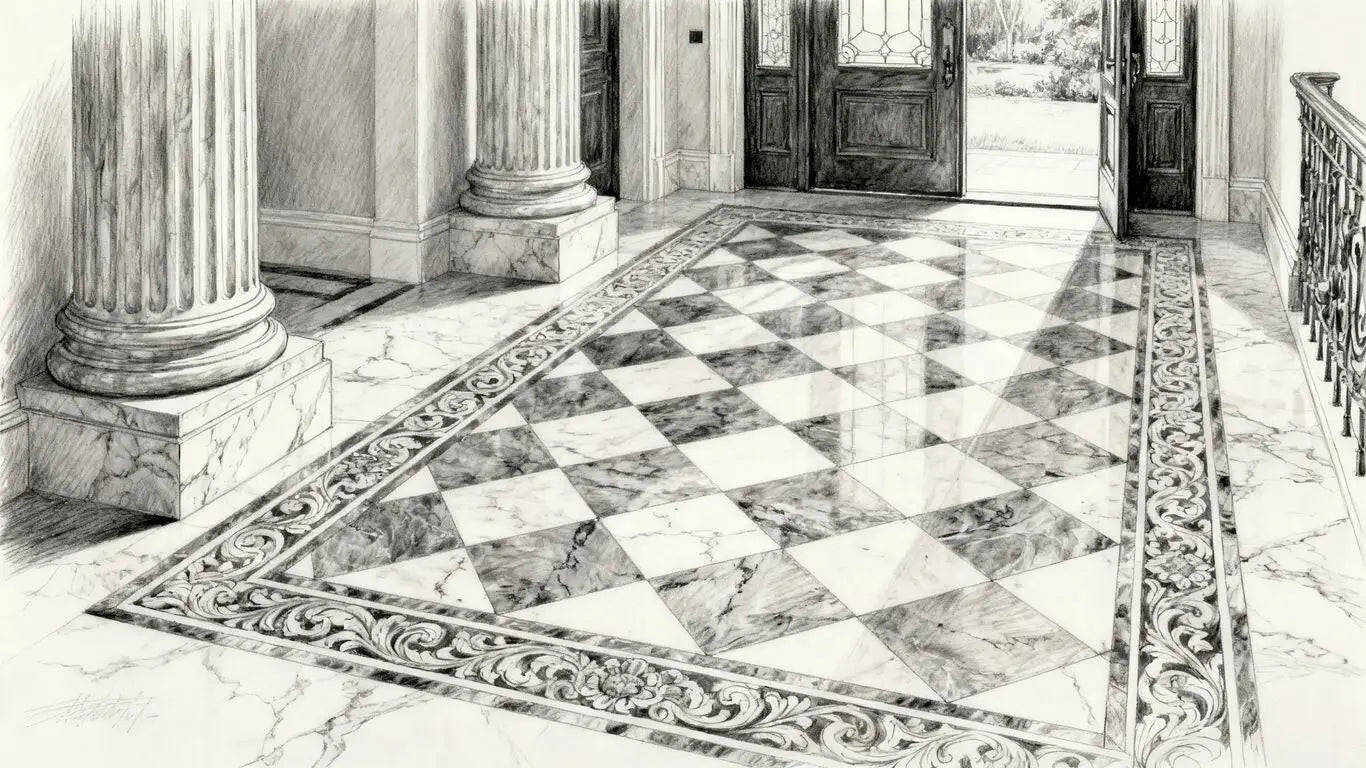
Elevating residential entryways and grand foyers
The entryway serves as the first impression of a home, and a stone checkerboard floor instantly establishes a tone of architectural significance. Using large-format marble tiles in a grand foyer creates an expansive look that feels both inviting and imposing. The, enduring nature of authentic marble ensures that even in high-traffic entry zones where footwear and outdoor weather arrive, the stone bleibt pristine with minimal upkeep.
Creating spa-inspired bathroom aesthetics with stone
A bathroom finished with natural stone feels like a private retreat, especially when geometric layouts are used to add visual interest. The, natural movement of marble is particularly effective in shower surrounds and around vanity areas, where the variation in stone adds warmth to otherwise crisp, cold surfaces. Pairing dark and light stones can define specific zones within a large bathroom, separating the vanity from the wet areas with elegance.
Defining sophisticated dining areas with geometric layouts
Dining rooms benefit from the structural stability and quiet luxury of a stone foundation, which does not require the same cleaning concerns as hardwood or carpet. A monochromatic geometric layout here allows the table settings themselves to shine without the floor fighting for attention. The following table provides a comparison of how different stone configurations affect the atmosphere of a dining room:
| Flooring Type | Primary Mood | Best For |
|---|---|---|
| Polished Nero/Carrara | High Contrast | Modern Formal |
| Honed Gray/White | Soft Subtle | Transitional Casual |
| Tumbled Travertine Mix | Rustic Earthy | Old World Estate |
Enhancing architectural prestige in commercial lobbies
Commercial spaces, including boutique hotels and gallery lobbies, utilize the heavy-wear capabilities of natural stone to signal to visitors that they have entered a premium establishment. By utilizing Surfaces Galore for these large-scale renovations, designers obtain consistent sizing and thickness that simplify the installation process. The longevity of marble ensures these high-traffic lobbies look just as polished five years after move-in as they did on day one.
Navigating stone finishes for functional beauty
Utilizing polished surfaces for high-gloss, reflective environments
Polished finishes are the hallmark of high-gloss, reflective spaces because they magnify the light within a room, making smaller entryways feel significantly larger. This finish effectively seals the stone surface, making it easier to wipe away spills in high-traffic commercial corridors. However, it requires a commitment to routine cleaning as the glossy finish will highlight any surface level dust or scuffs if left unattended for long periods.
Selecting honed finishes for a subtle, understated matte appearance
Honed surfaces offer a sophisticated, matte appearance that feels softer and more tactically comfortable underfoot than polished alternatives. They are excellent for spaces desiring a muted, modern aesthetic that feels less like a showroom and more like a home. Because they do not have a glass-like sheen, honed tiles mask minor scuffs better, which is a major advantage for busy families or homeowners who prefer a lived-in luxury feel.
Considering stone texture based on room traffic and usage
Texture is a functional necessity in high-traffic areas, as the slip resistance of the stone must be considered relative to footfall and moisture. For bathroom and kitchen areas, a slightly textured or honed edge adds grip, whereas foyers that remain mostly dry can support high-polish finishes without safety concerns. Understanding your specific usage scenario is critical before purchasing, as natural stone floors are a long-term architectural commitment.
Matching finishes to the specific porosity of the stone type
Different marbles possess varying levels of porosity, which affects how they should be finished and how they will handle stains over time. Dense stones like Nero Marquina accept high polishes very well, while more porous white stones may benefit from honed finishes to better manage the physical patina of the material. Always consult with Surfaces Galore experts about the specific requirements of your chosen stone to ensure the finish aligns with its geological makeup.
The investment value of authentic natural stone
(Wait, image placeholder below)
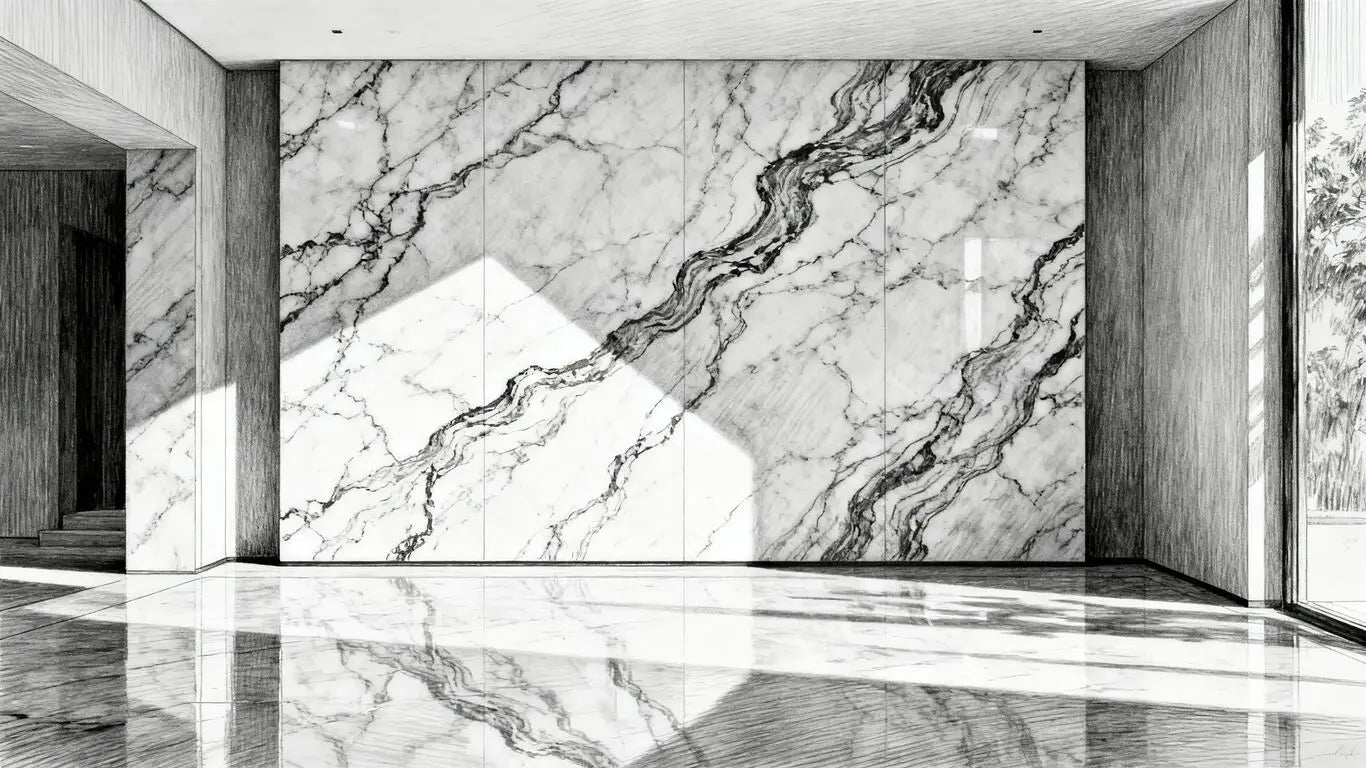
Prioritizing long-term durability over synthetic alternatives
Choosing authentic natural stone is an investment in durability that significantly outlives commercial-grade imitations. While some might consider black and white porcelain floor tiles as a cost-saving measure, true marble flooring offers structural resilience and a patina that only improves with time. Because individual tiles can be buffed or refinished decades later, the material serves as an enduring asset for the property, contributing to its permanent value.
Increasing property marketability with premium finishes
High-end finishes and premium natural stone materials are consistently linked to stronger resale values in the luxury real estate market. Potential buyers prioritize the timeless aesthetic of marble, viewing it as a move-in-ready upgrade that denotes quality construction throughout the home. Incorporating premium materials demonstrates attention to detail that sets a property apart, making the decision to go with natural stone a sound financial strategy for any renovation.
Appreciating the one-of-a-kind character of natural variations
Authentic stone provides an aesthetic uniqueness because every single tile contains its own history in the form of natural veining and fossil markings. Unlike mass-manufactured flooring where patterns repeat predictably, a marble installation displays a range of individual character that feels personal and exclusive. This element of uniqueness is the hallmark of luxury design and one of the primary reasons homeowners across the United States continue to choose natural stone over mass-produced alternatives.
Comparing the resilience of authentic marble against common flooring
While some surfaces might warp under humidity or fade under direct sunlight, marble maintains its color integrity and structural shape across decades. Even if the surface takes on slight signs of use, this is widely accepted as a beautiful, authentic patina that authenticates the space. Compared to common plastic or laminate flooring, authentic stone provides a sound-dampening quality and thermal mass that synthetic tiles simply cannot replicate in high-traffic use.
Expert tips for long-term stone floor maintenance
Recommended care routines for high-traffic natural stone
For high-traffic areas, regular dry sweeping with a soft-bristled broom is the most important daily habit to prevent scratches from grit. Grit and dirt act like sandpaper on polished surfaces, so establishing a routine that keeps the floor clear of tracking is essential. For thorough cleaning, use a PH-neutral stone cleaner that avoids the acidity which can etch the finish of the marble over time.
Establishing a regular sealing schedule for marble protection
Marble is porous, meaning it requires a protective sealant to act as a barrier against spills and deep-set staining. Depending on the room usage—kitchens versus dry entryways—sealing should occur every 12 to 24 months to ensure the stone maintains its resistance to moisture. This simple process locks in the original finish and protects the stone's vibrant color from fading or yellowing under daily use.
Understanding safe cleaning practices to prevent staining
Never use household acidic chemicals like lemon, vinegar, or harsh bleaches on marble floors, as these will permanently etch the surface. Instead, prioritize clean water and specialized mild soaps that are specifically designed for natural stone maintenance. If a spill happens, blot it immediately with a soft cloth rather than wiping, which can push liquids into the micro-pores of the stone.
Managing the long-term patina of authentic luxury surfaces
The long-term patina, or the slight softening of the finish after years of use, is a feature of natural stone that many enthusiasts embrace as a testament to the home's history. By maintaining the stone with buffing and proper sealing, you can decide whether you want to preserve the high-gloss factory finish or allow the stone to settle into a more natural, honed appearance as it ages. Regardless of your choice, professional care will keep the structural surface as sound as the day it was installed.
Conclusion
Designing with natural stone is a rewarding endeavor that brings unparalleled character and longevity to your living spaces, transforming simple floor plans into elegant environments that last for generations. By balancing classic geometric patterns with the deep, organic beauty of premium marbles like Nero Marquina and Carrara, you can create a floor that feels as timeless as it is bold. Whether you are ready to start a major foyer renovation or simply want to elevate a small powder room, remember that investing in high-quality, authentic materials is the key to achieving that signature look. For those ready to bring their vision to life, get in touch with our expert team today to request a quote, explore current stock, or get personalized advice on selecting the perfect marble for your specific project needs.
Frequently Asked Questions
Is a checkerboard floor still considered trendy?
The checkerboard pattern is a classic feature of European architecture that has remained relevant for centuries, serving as a staple in luxury design that transcends modern passing trends.
Can I use marble in high-traffic kitchen areas?
Yes, marble is an excellent choice for kitchens due to its durability, provided it is properly sealed and cleaned with natural, PH-neutral soaps to protect the surface from acidic spills.
How often does a natural stone floor need to be sealed?
Most natural stone floors require a fresh coat of high-quality stone sealant every 12 to 24 months, depending on the specific room usage and exposure to moisture.
Does marble require a different cleaner than regular tile?
Marble flooring must be cleaned using PH-neutral stone cleaners, as household acidic cleaners like vinegar or lemon-based sprays will permanently etch the marble's surface and dull its finish.
Can marble be installed in outdoor patios?
Specific types of marble and travertine are suitable for outdoor use, but it is important to select materials that are rated for external climates and ensure proper drainage and sealing have been addressed.
How does marble compare to synthetic floor options?
Natural marble provides unique veining, structural integrity, and long-term resale value that synthetic materials cannot reproduce, making it a superior investment for homes requiring high-quality architectural finishes.
Can I mix more than two types of stone?
Yes, combining multiple stone varieties is a popular way to customize depth and tonality in a checkerboard or geometric pattern, allowing for a truly unique look that matches your interior color palette.

Leave a comment