
How to Buy Travertine From a Direct Importer

TL;DR:
- Buying travertine directly from importers cuts material costs by up to 40% and ensures better quality control. Verifying importer legitimacy involves checking certifications, quarry source documentation, and visiting their facility, preventing buying from resellers. Understanding travertine grades and managing logistics properly help buyers select the right stone and successfully complete their projects.
Buying travertine from a direct importer is defined as purchasing natural stone tiles sourced straight from quarries, bypassing retail distributors and their markups. This approach cuts total material costs by 20% to 40% compared to retail channels, according to direct-to-consumer purchasing data. That savings gap is significant on any renovation project, whether you are tiling a master bath, a kitchen floor, or an outdoor patio. The key is knowing how to verify supplier legitimacy, understand travertine grades, and manage the logistics that come with direct sourcing. This guide covers every step, from vetting importers against ISO 9001 and ASTM standards to securing your slabs in writing.
How to buy travertine from a direct importer: the core process
A direct importer sources travertine straight from quarries in Turkey, Iran, Mexico, or Peru, then ships containers to a domestic warehouse or yard. No distributor sits between the quarry and you. That missing layer is where the price savings come from, and it is also where quality control either holds or breaks down.
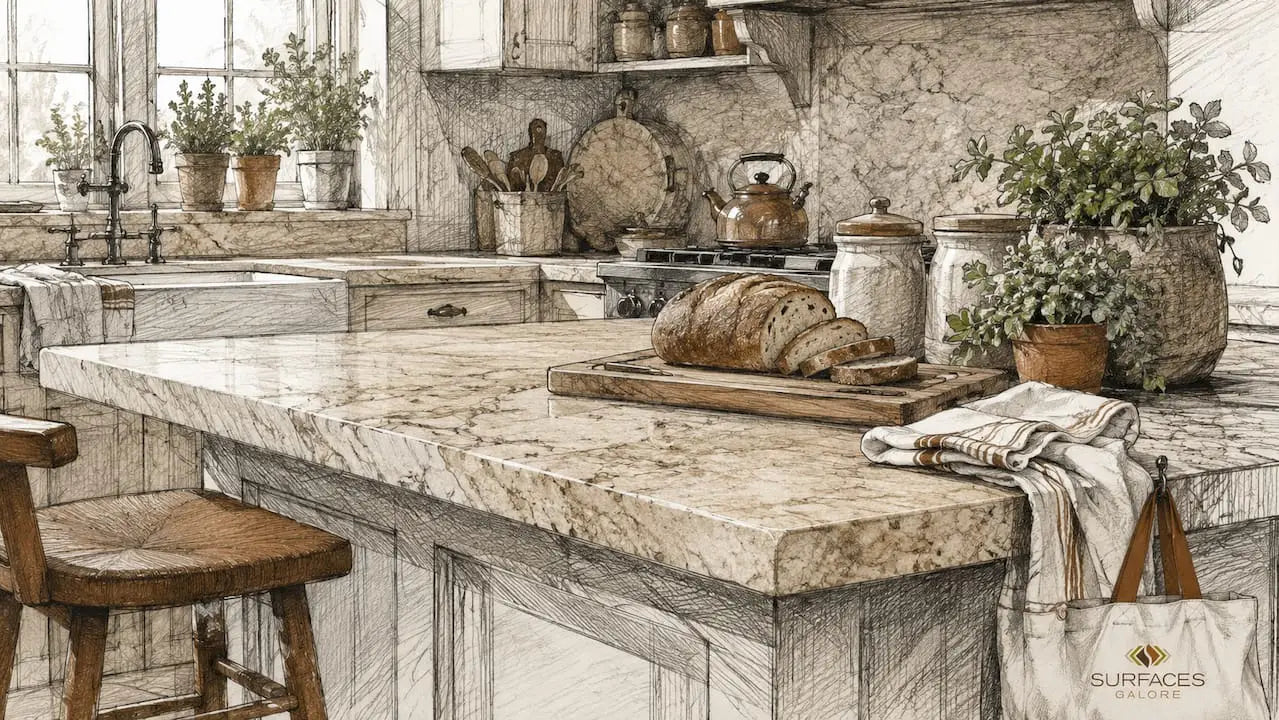
The industry term for this purchasing model is “direct stone sourcing.” The phrase “buying from a direct importer” describes the same thing from the buyer’s side. Both terms appear in renovation planning conversations, and both refer to the same supply chain structure.
Three things separate a true direct importer from a reseller. First, a direct importer can name the specific quarry where their stone originates. Second, they hold inventory in a commercial facility you can visit. Third, they provide ASTM lab reports and ISO 9001 certification on request. Resellers typically cannot do all three. Knowing this distinction protects you from paying importer prices for reseller service.
Surfacesgalore operates as a direct importer of premium travertine, marble, and limestone tiles, shipping nationwide from its Anaheim, California facility. That direct supply chain is what makes consistent quality and competitive pricing possible across its full catalog.
What are travertine grades and how do they affect quality and cost?
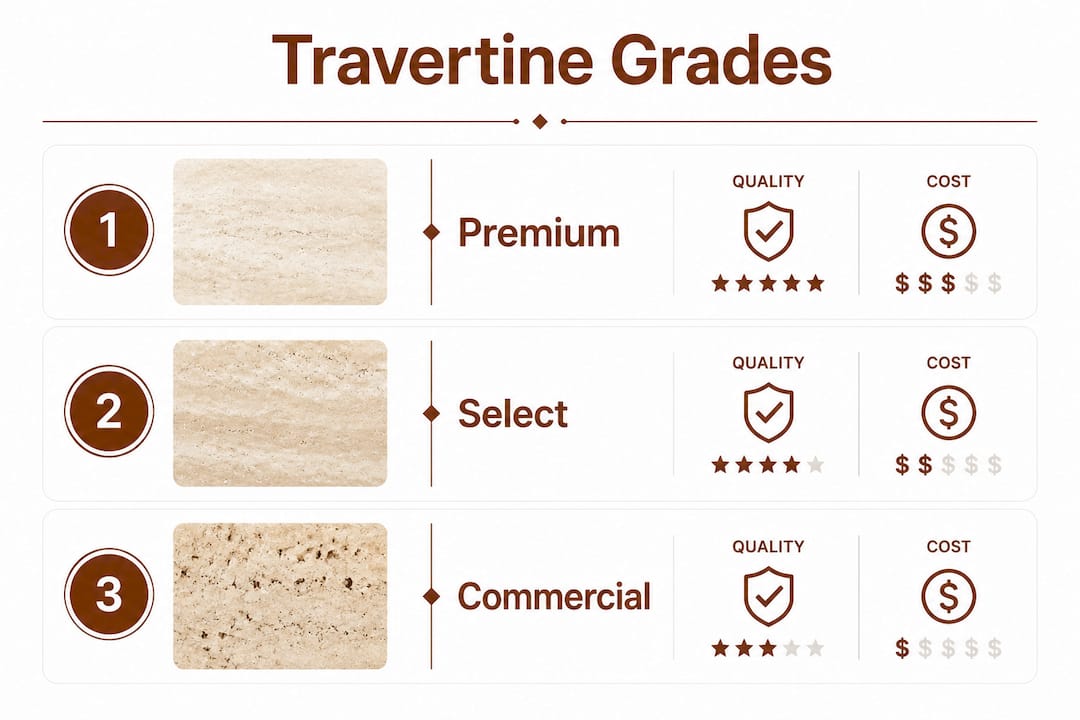
Travertine is categorized into three primary grades: Premium, Select, and Commercial. Each grade reflects a different level of consistency, fill quality, and aesthetic uniformity. Understanding these grades before you contact any supplier prevents costly mismatches between what you order and what arrives on site.
Premium grade
Premium grade travertine delivers the highest consistency in color, veining, and surface fill. Voids are minimal and tightly filled. This grade suits high-visibility interior applications such as master bathroom floors, feature walls, and formal living room flooring where uniformity matters. It carries the highest price per square foot, but the reduced waste factor on large projects often offsets that premium.
Select grade
Select grade balances cost and character. Tiles show more natural variation in color and veining, and some voids may be present but are filled. This grade works well for kitchens, secondary bathrooms, and mid-range residential projects. Travertine grades at the Select level represent the most popular choice among contractors managing renovation budgets without sacrificing appearance.
Commercial grade
Commercial grade is the most budget-friendly option. It carries higher variation in color, more visible voids, and less consistent fill. This grade suits outdoor applications, commercial spaces with high foot traffic, or projects where natural variation is a design feature rather than a flaw. The price per square foot is the lowest of the three, but installation labor costs can rise if tiles require more sorting and selection on site.
| Grade | Consistency | Best use | Relative cost |
|---|---|---|---|
| Premium | High | Interior feature areas | Highest |
| Select | Moderate | Kitchens, secondary baths | Mid-range |
| Commercial | Variable | Outdoor, high-traffic areas | Lowest |
- Premium: Minimal voids, tight fill, uniform color across tiles
- Select: Natural variation present, filled voids, good value for residential projects
- Commercial: Higher variation, suitable for outdoor or budget-conscious applications
Pro Tip: Request a minimum of three tiles from different boxes when ordering samples. Color and fill consistency vary across production batches, and a single sample tile will not reveal batch-level variation.
How do you verify a direct travertine importer’s legitimacy?
Verifying an importer’s legitimacy is the most critical step in the direct sourcing process. A supplier who cannot answer basic questions about their quarry relationships or certifications is almost certainly a reseller operating under an importer label.
Follow this sequence when evaluating any direct travertine supplier:
-
Confirm business registration and longevity. Request the company’s business registration number and verify it against state or county records. Suppliers with fewer than three years of operation carry higher risk of inconsistent supply or business closure mid-project.
-
Check for ISO 9001 certification. ISO 9001 is the international standard for quality management systems. An importer holding this certification has documented processes for sourcing, inspection, and delivery. ISO quality management in stone sourcing directly correlates with consistent product quality across shipments.
-
Verify the commercial address. A verified commercial address is non-negotiable. Use satellite imagery and Google Street View to confirm the facility is a warehouse or stone yard, not a residential property. A residential address signals a broker, not an importer.
-
Request ASTM lab reports. ASTM International publishes standards for natural stone, including C503 for marble and C1527 for travertine. A legitimate importer holds lab reports showing their stone meets these standards for absorption, density, and flexural strength.
-
Ask for quarry source documentation. True direct importers can identify the exact quarry where their travertine originates. If a supplier gives vague answers about sourcing, treat that as a red flag.
-
Evaluate responsiveness and sample quality. Send a sample request and time the response. Reliable importers respond within one to two business days and ship samples that represent actual inventory, not showroom-only display pieces.
-
Ask for references from past projects. Request contact information for two or three contractors or designers who have completed projects using that supplier’s travertine. A supplier unwilling to provide references has something to hide.
Pro Tip: Ask the supplier directly: “Can you tell me which quarry this travertine comes from and when your last container shipment arrived?” A confident, specific answer signals a real importer. A vague or deflecting answer signals a reseller.
Expert importers maintain long-term quarry relationships that give them priority access to consistent stone. That relationship matters most on large projects where color matching across multiple shipments is critical. A reseller cannot guarantee that consistency because they buy from whoever has inventory available.
What practical steps are involved in buying travertine direct?
Buying travertine direct as a homeowner or contractor requires more active involvement than ordering through a retail tile store. The savings are real, but so are the responsibilities. Direct buyers must handle transportation, insurance, and storage logistics independently, especially when purchasing without a contractor managing the process.
Here is what the direct buying process looks like in practice:
-
Visit the showroom or stone yard in person. Viewing full slabs rather than small samples gives you an accurate read on color variation, veining patterns, and surface quality. A 12-inch sample tile looks very different from a full slab under the same lighting conditions.
-
Select your slabs and document them. Photograph every slab you select, including any identifying tags or lot numbers. This documentation protects you if inventory is mixed or mislabeled before delivery.
-
Secure a written hold agreement. Slab hold policies vary by supplier. Without a written hold agreement specifying the duration and storage terms, your selected stone can be sold to another buyer. Insist on a signed document before leaving the yard.
-
Arrange transportation and insurance. Natural stone is heavy and fragile. Coordinate with a freight carrier experienced in stone delivery. Confirm that your homeowner’s or contractor’s insurance covers the stone during transit, or purchase separate cargo insurance for the shipment.
-
Align delivery timing with your installation schedule. Travertine should arrive no more than one to two weeks before installation begins. Storing stone on a job site for extended periods increases the risk of damage, theft, or moisture exposure.
-
Confirm payment terms in writing. Most direct importers require a deposit at order and the balance before or at delivery. Get the full payment schedule in writing, including what happens if delivery is delayed on the supplier’s end.
Pro Tip: Ask the supplier what their minimum order quantity is before you calculate your project needs. Some direct importers require full container orders, while others sell by the pallet or square foot. Knowing this upfront prevents budget surprises.
Modern direct importers generally allow homeowners and designers to visit and select stone without a contractor present. This is a significant shift from older industry norms. You do not need a contractor to access importer pricing, but you do need to be prepared to manage the coordination that a contractor would otherwise handle.
What are the most common pitfalls when buying travertine direct?
The most frequent mistake buyers make is confusing a reseller with a direct importer. Resellers often use language like “we import directly” without actually owning the supply chain. The test is simple: ask for quarry documentation and ASTM reports. A reseller cannot produce them.
Choosing the wrong finish for your application is a costly error that no amount of price savings can fix. Polished travertine looks stunning in a dry interior setting but becomes a slip hazard in a wet shower or outdoor area. Travertine finish selection should match the specific safety and aesthetic requirements of each space. Tumbled and brushed finishes provide the texture needed for outdoor patios, pool surrounds, and shower floors, while honed and polished finishes suit dry interior floors and walls.
Skipping sample inspection is another common error. A sample tile ordered online cannot replicate the experience of seeing a full slab under natural light. Color photographs on supplier websites are often taken under controlled lighting that flatters the stone. Always inspect physical samples before committing to a full order.
Overlooking contract terms creates problems at the worst possible moment, usually when your installation crew is on site and the stone has not arrived. Protect yourself with these contract elements:
- Written hold time with specific expiration date
- Delivery window with penalty clause for supplier delays
- Payment split: deposit at order, balance at confirmed delivery
- Return or replacement policy for damaged tiles on arrival
- Clear specification of grade, finish, size, and lot number
Building a long-term relationship with one direct importer also pays dividends beyond the first project. Importers with strong sourcing networks give repeat buyers access to premium stone blocks before they reach general inventory. That access is worth more than any single-transaction discount.
Key Takeaways
Buying travertine direct from a verified importer delivers meaningful cost savings and quality control, but only when buyers understand grades, vet suppliers rigorously, and manage logistics with written agreements.
| Point | Details |
|---|---|
| Direct sourcing saves 20%–40% | Purchasing from a direct importer cuts material costs compared to retail pricing. |
| Grade selection determines project fit | Premium, Select, and Commercial grades each suit different applications and budgets. |
| Verify ISO 9001 and ASTM reports | Legitimate importers provide certifications and lab reports that resellers cannot produce. |
| Secure slabs in writing | A signed hold agreement prevents your selected stone from being sold before installation. |
| Finish must match the application | Polished travertine suits dry interiors; tumbled and brushed finishes suit wet or outdoor areas. |
What I have learned from watching buyers source travertine direct
The buyers who get the best results from direct sourcing are not necessarily the ones with the biggest budgets. They are the ones who show up prepared. They visit the yard with a floor plan, a square footage calculation, and a list of specific questions. They know their grade, their finish, and their installation timeline before they walk through the door.
The biggest mistake I see repeatedly is buyers who treat the importer visit like a retail shopping trip. They browse, they pick something they like visually, and they leave without asking about quarry origin, lot consistency, or hold policies. Three weeks later, the stone arrives and the color is 15% warmer than the sample because it came from a different production run.
Seeing full slabs in person changes everything. A 3-inch sample chip cannot show you how a vein runs across a 24-by-24-inch tile, or how the fill color shifts under different lighting. Spending an extra hour at the yard selecting slabs personally is the single highest-return investment in the entire buying process.
The price savings from direct sourcing are real, but they come with a trade-off. You absorb the logistics coordination that a contractor or retail store would otherwise handle. For homeowners managing their first renovation, that coordination can feel like a lot. My honest advice: pair with a contractor for your first direct purchase, even if you are doing the sourcing yourself. Let them handle the freight and scheduling while you capture the price advantage.
The access to premium stone is the part that surprises most buyers. Direct importers with strong quarry relationships can show you blocks that never reach retail inventory. That is where the genuinely exceptional travertine lives, the pieces with rare veining, unusual color depth, or tight fill that makes a floor look like it belongs in a five-star hotel. You cannot find that stone at a tile showroom. You find it by building a relationship with the right importer.
— cihan
Surfacesgalore: premium travertine sourced direct
Surfacesgalore is a direct importer of premium natural stone, specializing in travertine, marble, and limestone tiles, mosaics, and decorative pieces. Based in Anaheim, California, Surfacesgalore ships nationwide to homeowners, contractors, and designers who want authentic stone at honest prices.
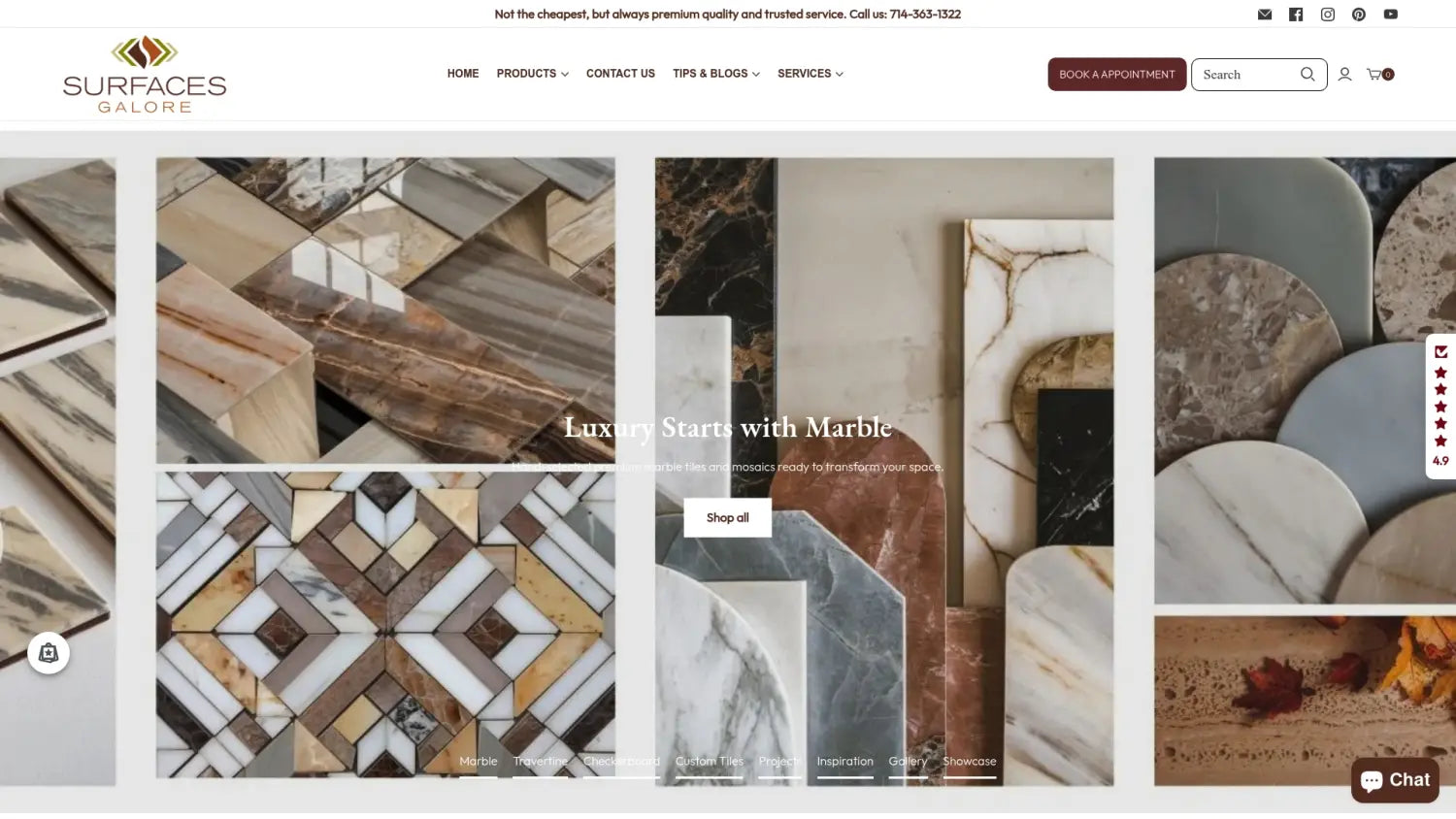
Every travertine collection at Surfacesgalore is sourced directly from vetted quarries, with consistent quality across grades and finishes. Whether you are planning a bathroom renovation, a kitchen floor, or an outdoor patio, the catalog covers Premium, Select, and Commercial options in honed, polished, tumbled, and brushed finishes. Browse the full travertine tile selection at Surfacesgalore and connect with the team for expert guidance on grade, finish, and quantity for your specific project.
FAQ
What is a direct travertine importer?
A direct travertine importer is a supplier who sources stone straight from quarries and sells it without a retail distributor in between. This structure reduces costs by 20% to 40% compared to standard retail channels.
How do I know if a supplier is a true importer or a reseller?
Ask for quarry source documentation and ASTM lab reports. A true direct importer can name the specific quarry and provide certified test results; a reseller typically cannot produce either.
What travertine grade is best for a bathroom floor?
Premium grade is the best choice for bathroom floors where color consistency and tight fill matter most. Select grade works well for secondary bathrooms where some natural variation is acceptable.
Do I need a contractor to buy travertine from a direct importer?
No. Most direct importers allow homeowners and designers to purchase without a contractor. However, buyers must independently coordinate transportation, insurance, and delivery scheduling.
What finish should I choose for an outdoor travertine application?
Tumbled or brushed finishes are the correct choice for outdoor areas, pool surrounds, and wet surfaces. These finishes provide the surface texture needed for slip resistance, while polished finishes are reserved for dry interior applications.

Leave a comment