

Learn 15 key factors for selecting Statuary White Marble, covering types like Arabescato Corchia and considerations for flooring.


Statuary white marble is one of the most famous stones in the world for a good reason. It looks incredible on a marble floor and adds instant value to your home. This guide explains fifteen things you need to know before buying. We will cover everything from durability to maintenance so you can choose the right slab for your project.
1. Authentic Italian Statuary Quarry Origins
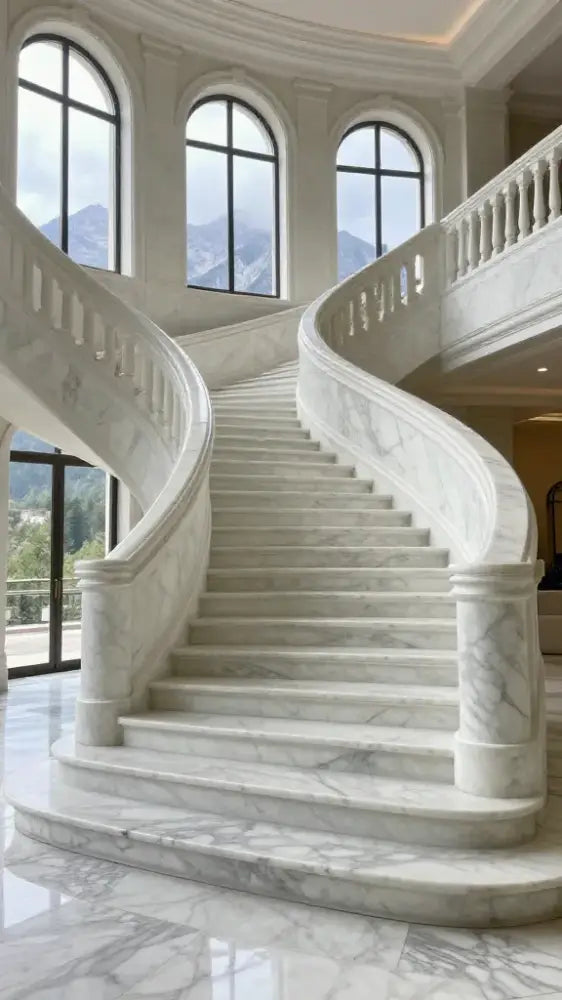
Getting the origin right is the difference between a lifelong investment and a costly mistake. If your slab doesn't come from the Carrara region in Italy, it simply isn't the real deal. Small quarries in the Apuan Alps produce the specific geological character that defines high end italian statuary.
Genuine stone from these historic sites has a distinct, bright white background that looks almost translucent under the right light. Many suppliers try to pass off lookalikes from other countries that have a muddy or grayish undertone. You should always ask to see the quarry certificates to ensure you're getting authentic italian statuary rather than a cheaper imitation.
When you visit the stone yard, look for the specific crispness in the veining that only comes from these Italian mountains. It's the unique mineral composition of this specific earth that creates the iconic contrast designers crave. Knowing exactly where your block was cut gives you peace of mind about its density and long term durability.
2. Background Brightness and Base Color Quality
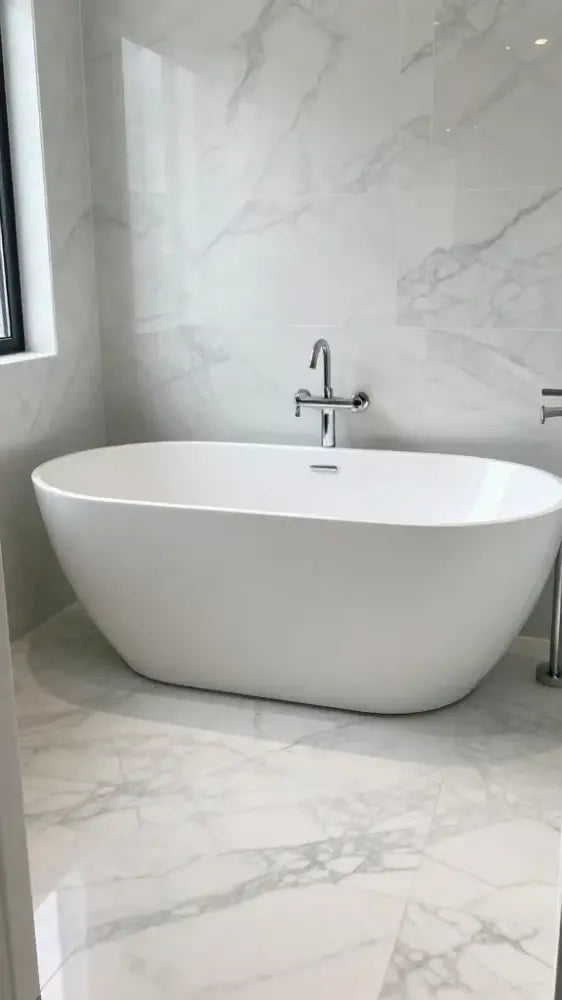
Imagine you're standing in a stone yard under bright fluorescent lights, looking at two slabs of Italian statuary marble. One slab looks like a fresh sheet of printer paper, while the other has a faint, muddy undertone that makes it look like it's been sitting in a dusty attic for years.
The background brightness is what separates a premium piece from a standard grade. High quality slabs should have a crisp, cool white base that makes the grey veins pop rather than blending into a murky greyish background.
| Feature | Premium Quality | Commercial Grade |
|---|---|---|
| Base Tone | Pure, bright white | Grey or yellow tint |
| Light Reflection | High luminosity | Dull or flat appearance |
| Clarity | Translucent depth | Opaque and cloudy |
You should check the stone's color in natural daylight if the warehouse allows it. Artificial lights can hide yellow oxidation or "creaming" that becomes very obvious once the marble is installed in your kitchen. Truly elite Italian statuary will maintain its brilliance even in low light settings without looking dingy.
3. Bold Gray Veining Patterns and Flow
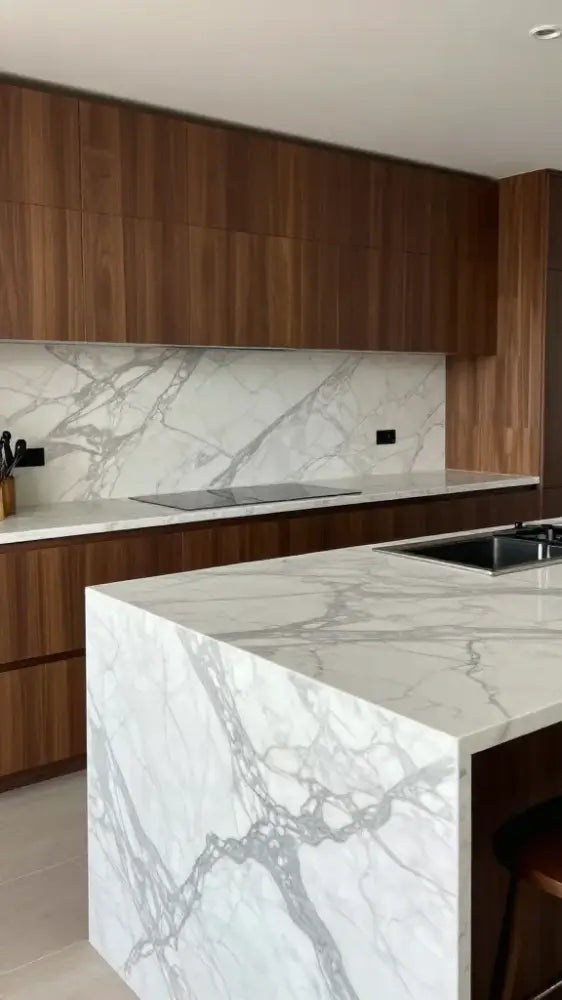
The soul of Statuary marble lies in its bold, thick veining that cuts across a bright white background. Unlike the softer, more muted lines found in Carrara, these patterns are dramatic and often look like fluid brushstrokes from a master painter.
You need to pay close attention to how these veins flow across the slab. Since this is a premium italian marble, the movement is often directional and creates a natural sense of energy in a kitchen or bathroom.
When you're looking at specific pieces, check for "islands" or breaks in the flow that might look awkward once installed. A high quality slab of italian marble should have a rhythmic, consistent pattern that makes a statement without feeling cluttered or messy.
The gray tones can range from charcoal to a soft charcoal, giving you plenty of room to match your hardware. Just remember that these bold lines will be the focal point of your entire room.
4. Distinction Between Statuary and Arabescato Corchia
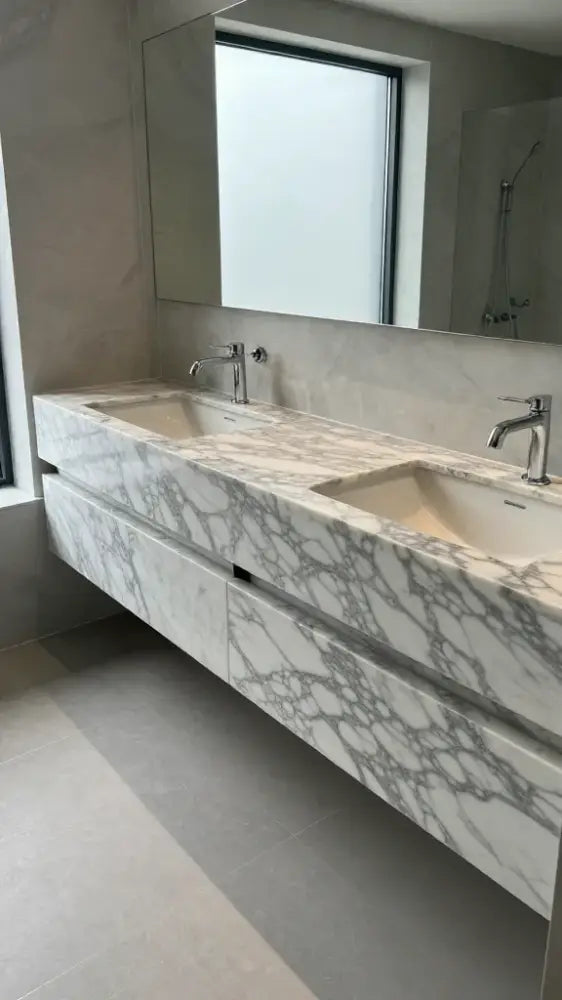
You should choose Statuary if you want a clean, minimalist background with bold, singular veins. Arabescato Corchia is much busier, featuring a heavy, rounded pattern that looks like small gray bubbles or "ovoli" across the slab.
While both are high end italian marble varieties from the Carrara region, they create very different moods in a kitchen or bath. Statuary feels more open and architectural, whereas the tight, interlocking rings of Arabescato provide a high energy texture that can dominate a small room.
- Check the background color, as Statuary usually has a brighter, cooler white base than Arabescato.
- Look for "brecciated" or broken stone patterns, which are a signature of Arabescato but absent in Statuary.
- Use Statuary for large kitchen islands where you want the white space to breathe.
- Select Arabescato Corchia if you want a dramatic, dark gray contrast that hides small spills better.
Picking the right italian marble depends on whether you prefer the quiet elegance of long veins or the intense, crowded beauty of a classic breccia pattern.
5. Evaluating Slab Thickness for Floor Durability
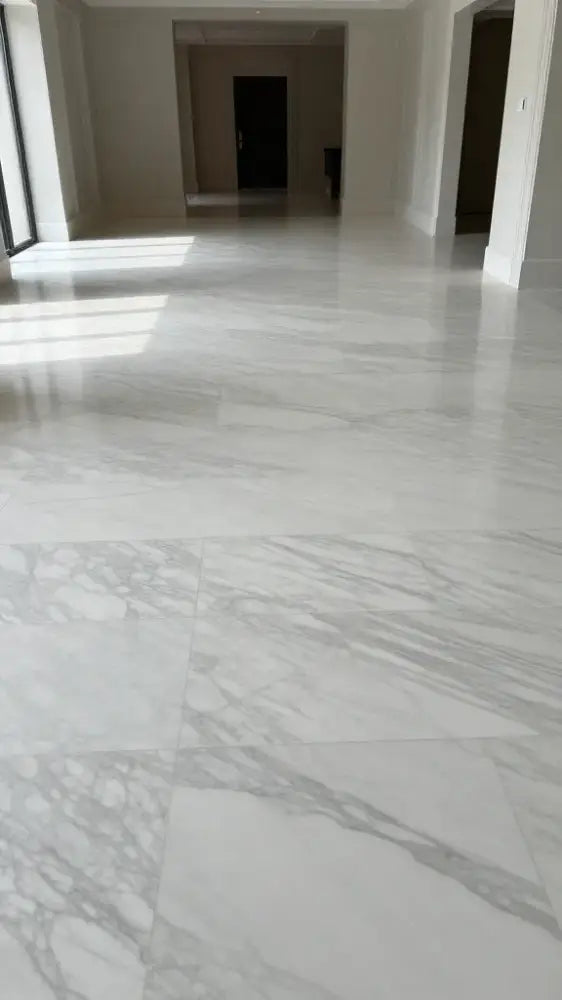
People often ask me if they can get away with thinner slabs to save a bit of money. For a marble floor, I always tell them that thickness is the one place you shouldn't cut corners. If the stone is too thin, it won't handle the weight of heavy furniture or the constant foot traffic of a busy home.
You'll usually see Statuary White in 2cm or 3cm options. While 2cm works great for wall claddings, I strongly recommend sticking to 3cm for your flooring needs. The extra mass provides a much better buffer against cracking and helps the stone stay level over time.
Thicker slabs also give you more room for future maintenance. Since marble is soft, you might want to professionally polish out scratches or etch marks ten years down the road. A 3cm marble floor can be refinished multiple times without losing its structural integrity or becoming dangerously thin.
Keep in mind that thicker slabs are significantly heavier, so you need to check your subfloor first. Make sure your joists can handle the added load before you commit to the purchase. It's a bit more work upfront, but it prevents the heartbreak of seeing your beautiful white marble develop stress fractures later on.
6. Symmetry with Bookmatched Marble Slabs
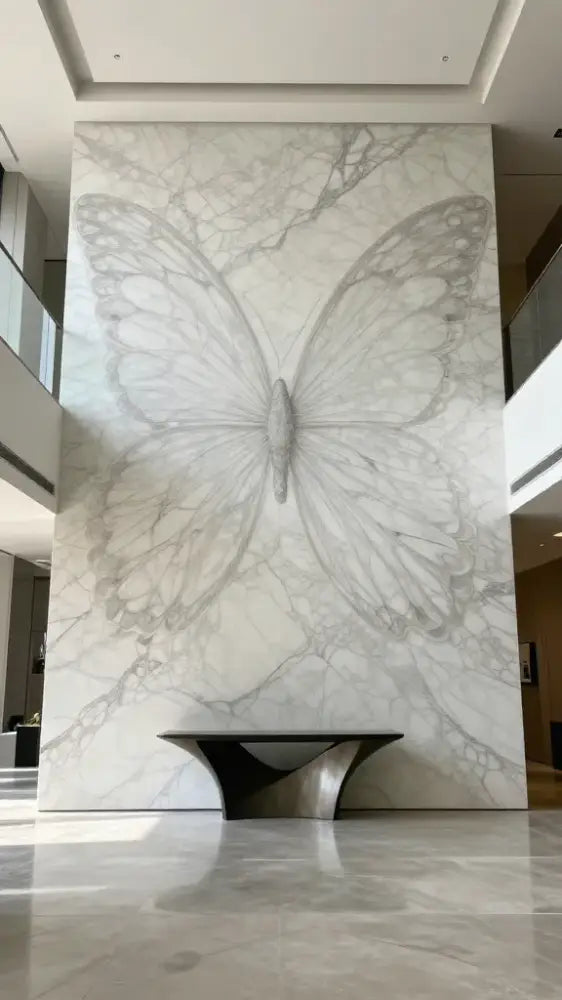
Bookmatching is a specific technique where two slabs are cut from the same block and polished on opposite sides. This creates a mirror image effect when you place them side by side, much like an open book.
For Statuary White marble, this process highlights those bold, gray veins that everyone loves. It makes a massive impact when used for a feature wall or a high end marble floor in a foyer.
- Continuous Veining: The lines flow across the seam to create a single, massive pattern that looks like a piece of art.
- Centerpoint Focus: You should place the meeting point in the center of the room to pull the eye toward the most symmetrical part of the stone.
- Waste Management: You have to buy the slabs in pairs, so plan your layout carefully to avoid wasting expensive material on odd corners.
- Installation Skill: Your contractor needs to be precise because even a quarter inch shift will ruin the visual alignment of the marble floor or wall.
The real magic happens when you find a slab with a "V" or "X" pattern in the natural veining. These shapes become the focal point of the entire room once they are mirrored.
7. Honed Versus Polished Surface Finishes
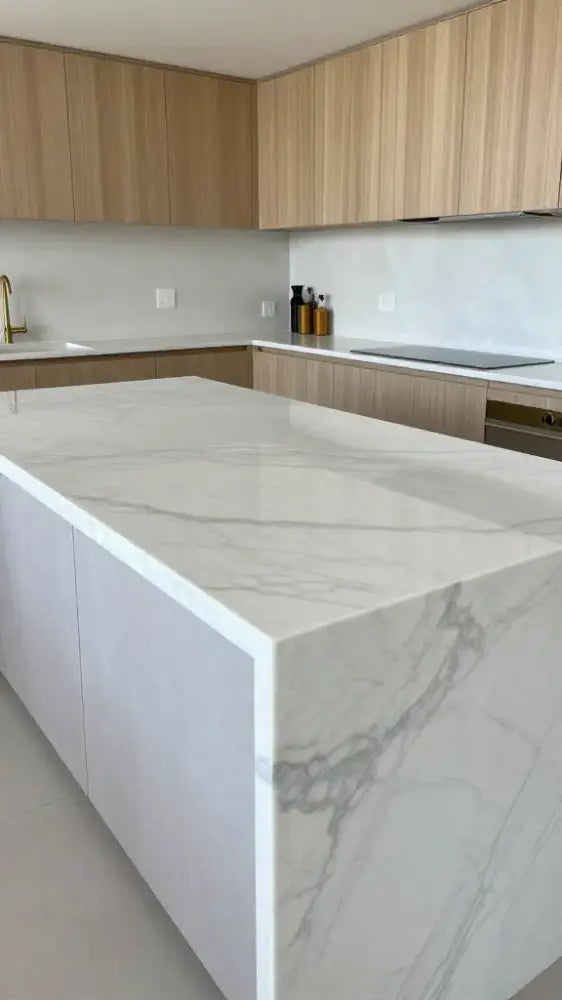
Deciding between a polished or honed finish depends entirely on how you live in your space. A polished surface gives that classic, high-shine look that makes the grey veining in arabescato corchia marble really pop. It feels luxurious and reflects light beautifully, but it shows every single water spot and scratch from daily use.
If you prefer a more muted, velvety feel, a honed finish is the way to go. This matte surface is much better at hiding the etching caused by acidic spills like lemon juice or wine. While it won't have that mirror-like reflection, it creates a grounded and organic atmosphere that feels modern yet timeless.
For high-traffic areas like kitchen islands, I usually recommend the honed finish. It’s far more forgiving when life happens, and you won't find yourself obsessing over tiny imperfections under the light. Save the high-gloss polish for a stunning bathroom vanity or a decorative wall where it can shine without being touched constantly.
8. Natural Fissures and Surface Integrity
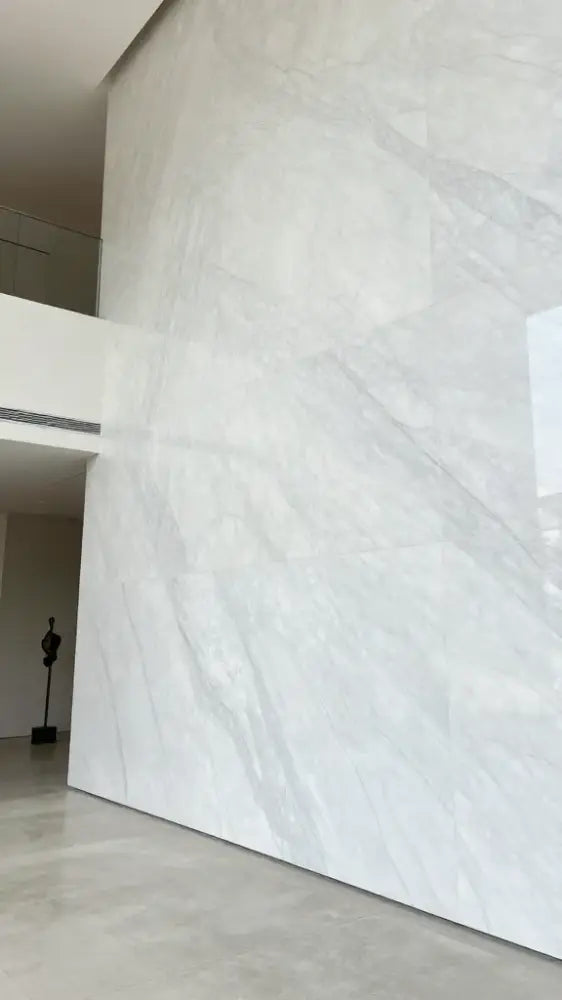
You need to look closely at the slab surface because what looks like a crack is often just a natural part of the stone. These tiny separations happen during the mountain formation process over millions of years. If you don't check for these early, you might end up with a piece that feels unstable or looks damaged once it's installed in your home.
A fissure is a narrow opening that follows the crystalline structure of the marble. Unlike a structural crack, a fissure doesn't always go all the way through the stone. You can test this by running your fingernail across the surface to see if it catches. If it feels smooth, it's likely just a harmless natural feature.
When you're looking at varieties like arabescato corchia marble, you'll notice more of these characteristics due to the heavy veining. Fabricators often fill these small voids with resin to make the surface perfectly flat. This process ensures the integrity of your countertop while keeping the raw beauty of the arabescato corchia marble intact. Just make sure the resin work is clean and matches the surrounding stone colors.
9. Comparing White Gray Vein Marble Varieties
| Marble Type | Vein Style | Base Color |
|---|---|---|
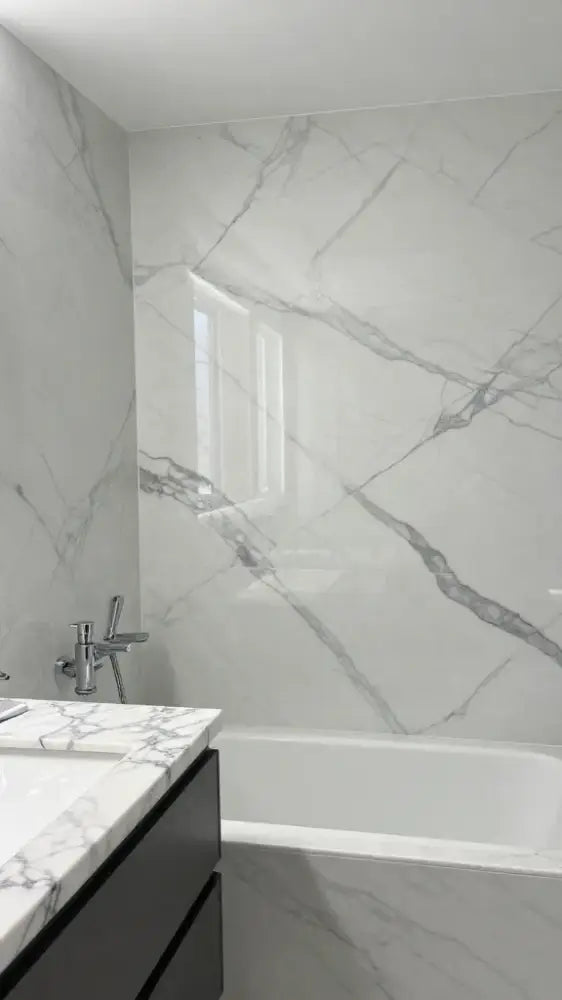
| Statuary | Thick, dramatic, and dark | Bright, crisp white |
| Carrara | Soft, blurry, and feathered | Cool, grayish white |
| Calacatta | Large, bold, and golden gray | Warm, milky white |
Imagine you're standing in a stone yard looking at two slabs that both look white from a distance. Once you get close, you'll see that a white gray vein marble like Carrara has a smoky, muted look that feels very traditional. Statuary marble stands out because the background is much whiter, making the dark gray veins pop with high contrast.
You need to decide if you want the stone to blend in or be the main event in the room. Carrara works well for large areas like bathroom floors where you want a quiet texture. Statuary is better for a kitchen island where those distinct gray lines can act as a piece of natural art.
Keep an eye on the undertones of each slab before you buy. Some varieties of white gray vein marble lean toward blue, while others have hints of taupe. Bringing a cabinet sample to the warehouse helps you see if the gray veins will actually match your paint colors.
10. Suitability for High Traffic Marble Floors
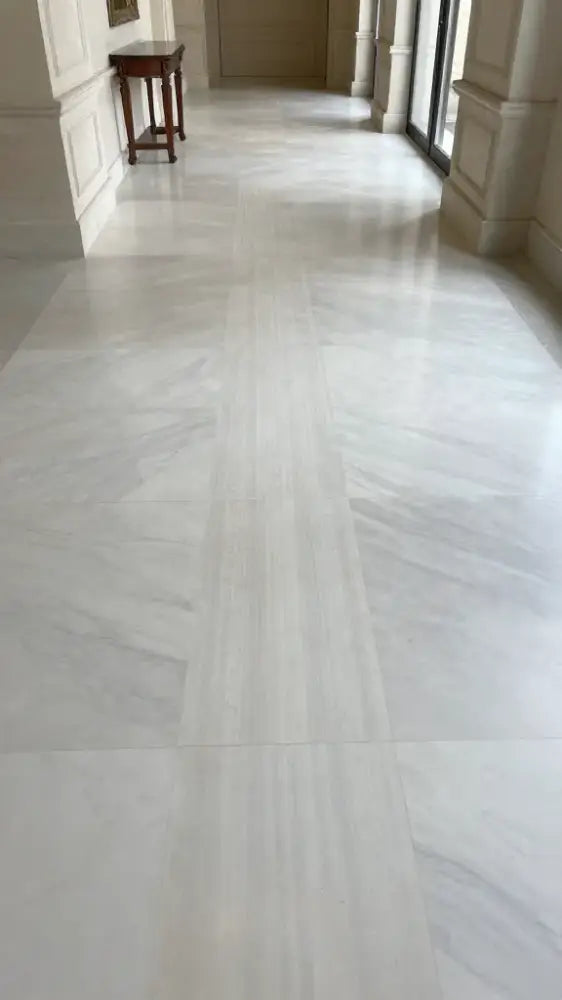
You probably shouldn't install this marble in your mudroom or a busy hotel lobby if you want it to stay pristine. Statuary White is a softer stone compared to granite or quartzite, meaning it shows wear and tear much faster in high volume areas.
The classic white gray vein marble look is stunning, but sand and grit on the bottom of shoes act like sandpaper on its polished surface. Over time, you'll notice a dull path forming where people walk the most, which can be a pain to buff out.
If you're set on using it in a hallway, consider a honed finish instead of a high gloss shine. This matte texture hides small scratches and etching much better than a reflective surface ever could.
I always tell people to use large rugs in transition zones to catch debris before it hits the stone. It's a beautiful white gray vein marble that lasts for decades, but it definitely requires a bit of babying in the busiest parts of your home.
11. Sealing Requirements for Stain Protection
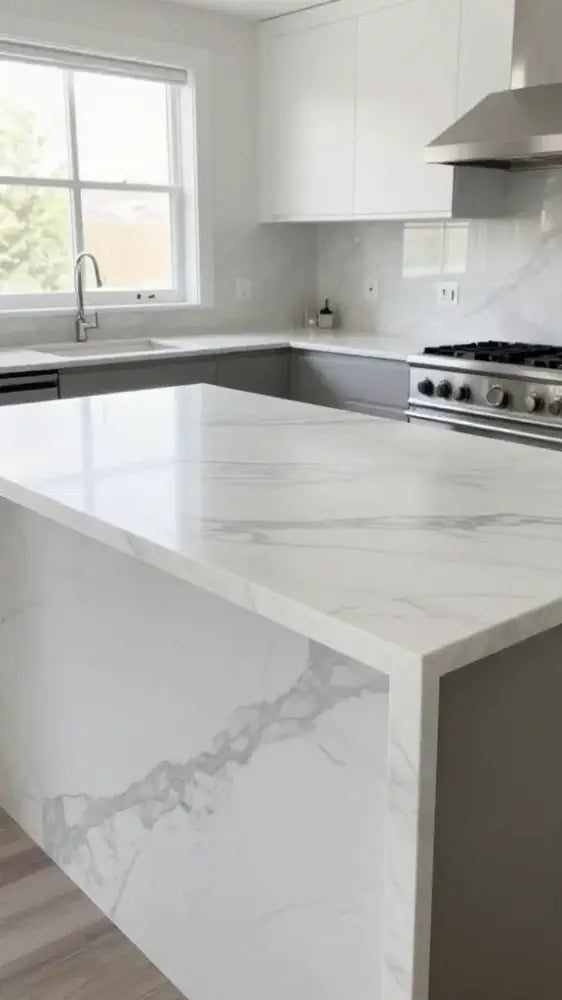
You need to treat Statuary White marble like a high maintenance luxury car if you want it to stay pristine. Because this stone has a high calcium carbonate content, it is naturally porous and drinks up liquids like coffee or red wine almost instantly.
Applying a high quality impregnating sealer is the only way to create a chemical barrier that stops spills from sinking deep into the white veins. You should plan to reapply this protection every six to twelve months depending on how much you actually use your counters.
- Test your sealer by dropping a bit of water on the surface to see if it beads up or soaks in.
- Always wipe up acidic spills like lemon juice or vinegar immediately, even if your marble is sealed.
- Use a solvent based sealer specifically designed for dense white marbles to prevent any yellowing over time.
Staying on top of this simple maintenance routine ensures your marble keeps its bright, crisp background without those frustrating permanent shadows from old spills.
12. Lighting Impact on Marble Reflectivity
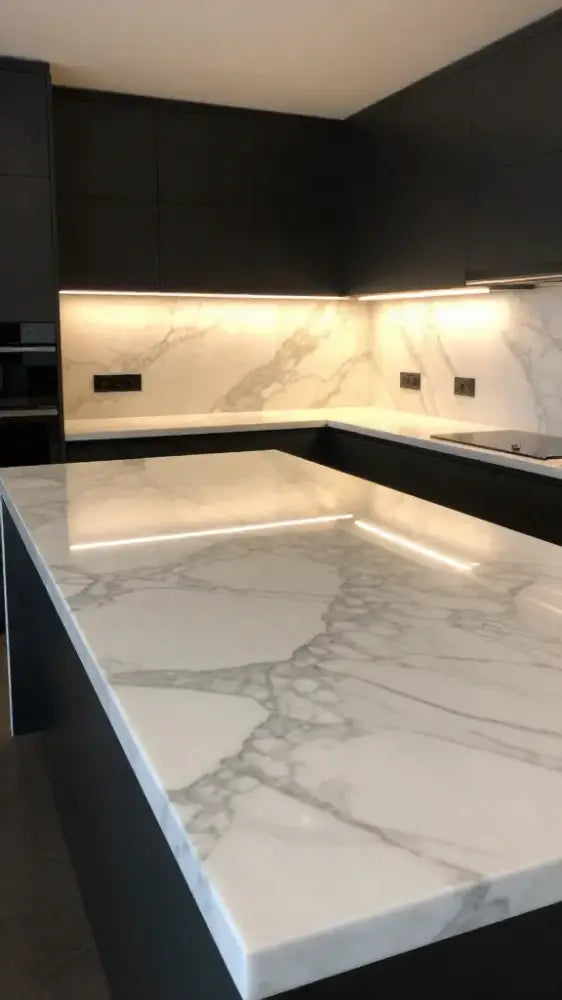
You might think your marble will look the same in your kitchen as it did in the showroom, but that's rarely the case. Statuary White has a high calcium content that makes it react like a mirror to whatever bulbs you hang above it.
If you use cool LED lights with a high Kelvin rating, the stone can start to look clinical or even slightly blue. On the other hand, warm incandescent bulbs bring out the creamy undertones in the white background, which can make the gray veining look muddy if you aren't careful.
The finish you choose changes the reflectivity even more than the color does. A polished finish creates sharp hot spots from recessed lighting that can actually hide the beautiful vein patterns under a layer of glare.
I usually suggest testing a sample piece under your actual home lighting at different times of the day. You'll notice the shadows in the stone's texture change as the sun moves, which is something you can't see in a warehouse. Natural light brings out the depth of the white, while artificial light focuses on the surface sheen.
13. Chemical Sensitivity and Etching Risks
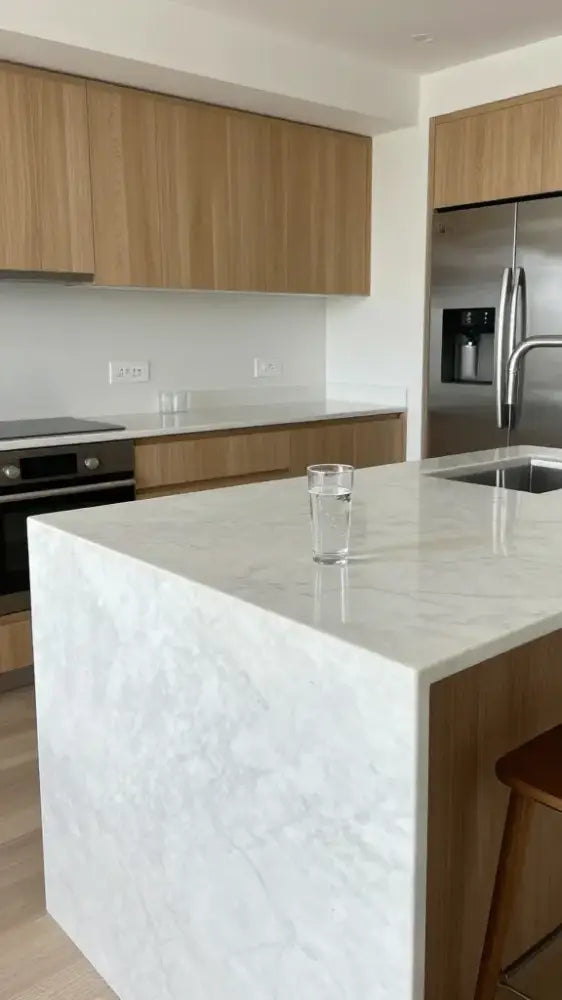
Statuary marble is almost entirely composed of calcium carbonate, which makes it highly reactive to anything acidic. When a lemon slice or a splash of vinegar hits the surface, it physically dissolves a tiny layer of the stone instantly.
This reaction leaves behind a dull, matte mark known as an etch, which people often mistake for a simple stain. Since Statuary has such a bright, clean white background, these flat spots stand out whenever the light hits your counters from an angle.
- Acidic food triggers: Common kitchen staples like tomatoes, citrus fruits, and wine will eat through the finish in seconds.
- Cleaning product damage: Most grocery store sprays contain citric acid or bleach that strip away the marble's natural shine.
- Sealer limitations: While sealers stop liquids from soaking in, they offer zero protection against the chemical burn of an etch.
- Honed finish benefits: Choosing a matte or honed surface makes these inevitable marks much less visible than they are on polished stone.
You can't really avoid etching if you actually use your kitchen, so it's best to view it as a developing patina. If a stray drop of salad dressing drives you crazy, this specific marble might feel like a high-maintenance burden.
14. Grout Color Matching for Seamless Layouts
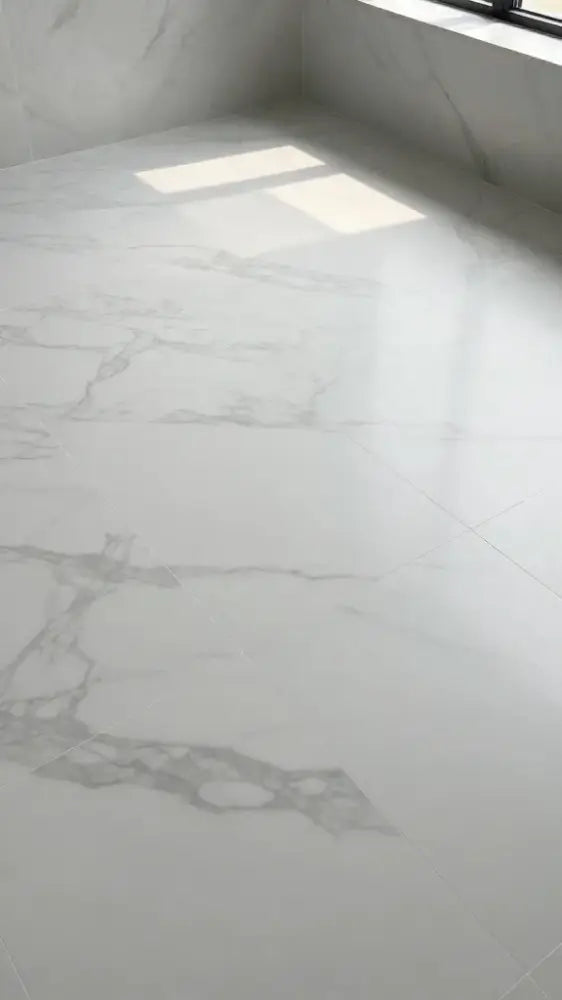
Picking the wrong grout can turn a stunning slab of Statuary marble into a grid of distracting lines. Some people choose a dark grey grout to highlight the stone's natural veining, but this often makes the floor look busy and chopped up.
On the other hand, many homeowners try to match the white base color exactly with a bright white grout. This usually backfires because white grout stains easily and makes every tiny installation flaw stand out.
I always recommend going with a soft cool grey or a pale silver tone instead. These shades blend into the shadows between tiles, which makes the layout look like one continuous piece of stone. It hides dirt much better than pure white while still letting the dramatic grey veins take center stage.
15. Long Term Value of Italian Marble
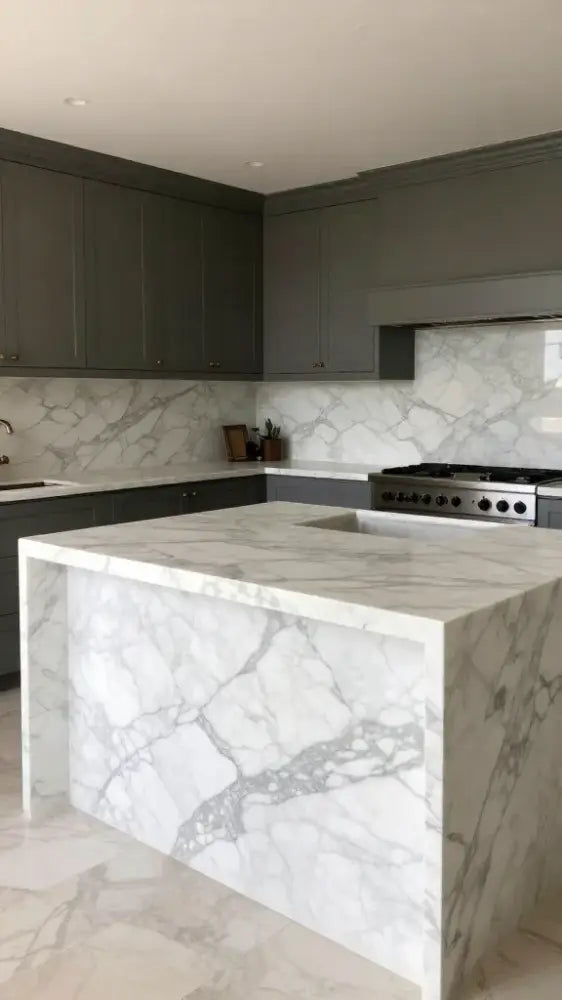
Think of Statuary White as a blue chip stock for your home. While the initial cost is higher than quartz or granite, you're paying for a material that historically holds its worth through decades of design trends.
Real estate agents will tell you that high end Italian marble is one of the few finishes that actually increases a property's resale price. Buyers recognize the prestige of authentic Carrara region stone, meaning you often recoup the investment when it's time to sell.
Unlike synthetic surfaces that can look dated or cheap after ten years, this marble develops a soft patina that many people find even more attractive over time. It doesn't end up in a landfill during a renovation because it's timeless. You can simply re-polish the surface every decade to make it look brand new again.
Wrapping Up
Choosing the right slab for your home is a big decision that requires a lot of thought. This list gives you the basic tools to pick a high quality stone like Italian marble without feeling overwhelmed by the technical details. Now that you know what to look for, you can confidently start shopping for your new marble floor. Good luck with your renovation project.
Leave a comment