
Marble Crystallization: Enhancing Surface Durability and Shine

Most American luxury homes feature marble surfaces that demand not just beauty but lasting strength. For California interior designers and contractors, keeping marble flawless under real-life use is a challenge. By understanding the science behind marble crystallization, you unlock methods proven to extend stone life and preserve that signature radiance. Bold solutions like these address common pitfalls while delivering a finish that suits the expectations of high-end residential clients.
Table of Contents
- What Marble Crystallization Really Means
- How The Crystallization Process Works
- Types Of Crystallization Methods Used
- Benefits And Limitations For High-End Projects
- Comparing Crystallization With Traditional Polishing
- Common Pitfalls And How To Avoid Damage
Key Takeaways
| Point | Details |
|---|---|
| Marble Crystallization Enhances Durability | This surface treatment transforms marble at a molecular level, resulting in a stronger and more resilient finish. |
| Chemical and Mechanical Techniques | Crystallization employs chemical interaction and mechanical processes which combine to enhance surface texture and protection. |
| Key Benefits and Challenges | Offers improved aesthetic appeal and durability while posing risks if not executed carefully, including potential moisture sensitivity. |
| Choosing the Right Method | Selection of crystallization method should be based on marble type and intended usage to ensure optimal surface restoration. |
What Marble Crystallization Really Means
Marble crystallization represents a sophisticated surface treatment technique designed to enhance the durability and aesthetic appeal of natural stone surfaces. At its core, this process involves transforming the marble’s surface at a molecular level, creating a stronger, more resilient finish that resists wear and maintains its luxurious appearance.
The science behind marble crystallization is rooted in geological principles. Marble itself is a metamorphic rock formed through intense heat and pressure, which causes carbonate rocks like limestone to recrystallize into an interlocking mosaic of crystals. During the crystallization process, specialized chemical compounds interact with the marble’s surface, generating a protective layer that effectively seals and strengthens the stone’s natural structure.
Technically, marble crystallization works by applying a unique chemical solution that reacts with the calcium carbonate in marble, producing a harder, more compact surface. This treatment fills microscopic pores and creates a smoother, more uniform finish that enhances the stone’s natural translucency and color depth. Professional stone restoration experts use specialized equipment and proprietary solutions to achieve this transformation, which can significantly extend the lifespan of marble surfaces in high-traffic areas.
Pro Tip: Always consult a professional stone restoration specialist before attempting marble crystallization to ensure proper technique and prevent potential surface damage.
How the Crystallization Process Works
The marble crystallization process is a precise scientific technique that involves multiple complex stages, transforming the surface of natural stone through strategic chemical interactions. At its fundamental core, this process mirrors the natural geological principles of crystal formation, but with carefully controlled parameters designed to enhance marble’s durability and aesthetic qualities.
Crystallization fundamentally occurs through two critical stages: nucleation and crystal growth, where specialized chemical solutions interact with the marble’s surface. During nucleation, molecules begin clustering into stable structures, creating microscopic points of transformation. The crystal growth phase follows, where these initial nuclei expand and integrate, filling microscopic pores and creating a more compact, resilient surface structure.
Professional stone restoration experts employ advanced chemical compounds specifically formulated to react with marble’s calcium carbonate composition. These solutions penetrate the stone’s surface, generating a chemical reaction that produces a harder, more uniform finish. The process involves precise temperature control, solution concentration, and application techniques that ensure even coverage and optimal crystallization. By strategically manipulating these variables, technicians can significantly enhance the marble’s resistance to scratching, staining, and everyday wear.

Pro Tip: Request a small test area demonstration before full marble crystallization to verify the desired finish and ensure compatibility with your specific stone surface.
Types of Crystallization Methods Used
Marble crystallization involves multiple sophisticated techniques, each designed to address specific surface restoration and enhancement needs. Professional stone restoration experts typically employ three primary methods: chemical crystallization, mechanical crystallization, and hybrid approaches that combine multiple technologies for optimal results.
Crystallization methods range from classical monomer attachment to advanced non-classical pathways, with each technique offering unique advantages for marble surface treatment. Chemical crystallization involves applying specialized solution compounds that react with the marble’s calcium carbonate structure, creating a protective molecular layer. Mechanical crystallization utilizes precision grinding and polishing equipment to mechanically transform the stone’s surface texture, smoothing microscopic imperfections and generating a more uniform finish.
Hybrid crystallization techniques represent the most advanced approach, integrating chemical reactions with mechanical processes. These methods typically involve multi-stage treatments where chemical solutions first penetrate the marble’s surface, followed by mechanical buffing and polishing. The result is a dramatically enhanced surface with improved hardness, reduced porosity, and increased resistance to scratching and staining. Advanced technicians carefully calibrate temperature, solution concentration, and application techniques to achieve optimal crystallization results tailored to specific marble types and intended use environments.
Pro Tip: Select a crystallization method based on your specific marble type, usage environment, and desired aesthetic outcome to ensure the most effective surface restoration.
Here’s a look at how the main marble crystallization methods differ in their application and outcomes:
| Method Type | Main Mechanism | Surface Result | Typical Application |
|---|---|---|---|
| Chemical Crystallization | Solution reacts with calcium | Smooth, glossy finish | Surface protection and shine |
| Mechanical Crystallization | Grinding and polishing tools | Even, refined texture | Remedy uneven surfaces |
| Hybrid Approach | Chemical + mechanical stages | Enhanced durability, luster | High-traffic, premium spaces |
Benefits and Limitations for High-End Projects
In high-end architectural and design projects, marble crystallization offers a complex array of strategic advantages and potential challenges that demand careful consideration by professionals seeking exceptional surface treatments. The process represents a sophisticated approach to stone restoration and enhancement, balancing aesthetic refinement with long-term durability requirements.
Marble’s inherent characteristics present both remarkable benefits and nuanced limitations in luxury construction applications, particularly when subjected to crystallization techniques. The primary advantages include dramatically improved surface hardness, enhanced scratch resistance, and a more uniform, luminous finish that amplifies the stone’s natural beauty. Professional designers appreciate how crystallization can transform potentially fragile marble surfaces into more resilient architectural elements capable of withstanding significant environmental stress.
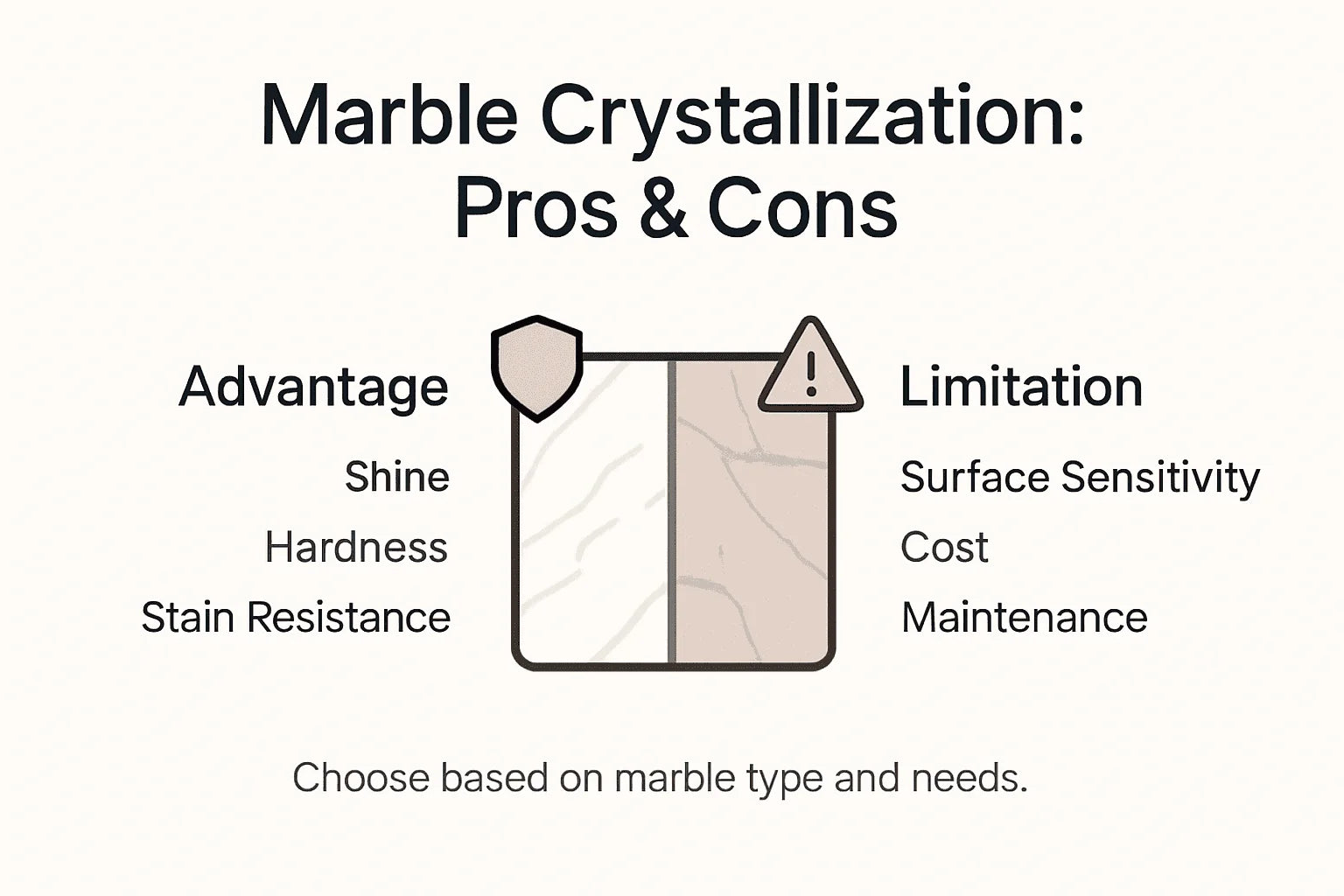
However, the crystallization process is not without its technical complexities. Salt crystallization and moisture interactions can potentially cause mechanical stress within porous stone materials, creating microscopic pressure that might compromise long-term structural integrity. Advanced crystallization methods must carefully balance chemical treatments with precise environmental controls to mitigate these risks. High-end projects require meticulous assessment of marble type, intended usage environment, and potential exposure to temperature fluctuations, chemical interactions, and mechanical stress to ensure optimal treatment outcomes.
Pro Tip: Conduct comprehensive material testing and environmental analysis before implementing marble crystallization to anticipate potential performance limitations and customize your treatment strategy.
The following summary highlights key benefits and limitations of marble crystallization in luxury projects:
| Aspect | Advantages | Limitations |
|---|---|---|
| Durability | Increased resistance to wear | Sensitive to moisture issues |
| Appearance | Intensified color, more luster | Risk of discoloration if misapplied |
| Maintenance | Easier cleaning, less frequent | Requires skilled application |
Comparing Crystallization With Traditional Polishing
Marble surface treatments represent a sophisticated spectrum of techniques, with traditional polishing and advanced crystallization offering distinct approaches to enhancing stone aesthetics and performance. While both methods aim to improve marble’s appearance and durability, their underlying mechanisms and long-term outcomes differ significantly, presenting unique advantages for design professionals.
Traditional polishing involves mechanical abrasion that smooths surfaces by removing microscopic peaks and valleys, creating a reflective finish through physical manipulation. In contrast, crystallization treatment applies chemical agents that promote growth of synthetic microcrystals on the marble surface, fundamentally transforming its molecular structure. This critical difference means that crystallization not only improves aesthetics but also enhances the stone’s intrinsic physical properties, offering superior long-term protection against wear, scratching, and environmental degradation.
The technical distinctions between these methods become particularly pronounced in high-traffic or demanding environments. Traditional polishing provides an immediate visual enhancement, generating a smooth and reflective surface through mechanical grinding and buffing. Crystallization, however, creates a hardened protective layer by chemically bonding synthetic calcium carbonate microcrystals to the marble’s surface. This process generates a more durable finish that maintains its luster longer, resists staining more effectively, and provides enhanced mechanical resistance compared to conventional polishing techniques.
Pro Tip: Evaluate your specific marble surface requirements by considering traffic intensity, environmental exposure, and desired maintenance frequency when selecting between traditional polishing and advanced crystallization techniques.
Common Pitfalls and How to Avoid Damage
Marble crystallization, while an advanced surface treatment technique, demands precision and expertise to achieve optimal results. Professionals must navigate a complex landscape of potential challenges that can compromise the integrity and aesthetic quality of marble surfaces if not carefully managed.
Impurities during crystallization can incorporate into the crystal lattice, causing defects that decrease surface quality and durability. The most common pitfalls include uneven chemical distribution, inappropriate solution concentrations, and inadequate environmental controls. These issues can lead to significant problems such as inconsistent surface texture, reduced hardness, and unexpected discoloration. Professional technicians must meticulously calibrate chemical compositions, monitor reaction temperatures, and ensure precise application techniques to mitigate these risks.
Crystallization processes are vulnerable to multiple technical challenges, including poor nucleation, slow crystal growth, and crystal aggregation/03%3A_Crystallization/3.06%3A_Step-by-Step_Procedures/3.6F%3A_Troubleshooting). Strategic prevention involves using high-quality seed crystals, maintaining consistent environmental conditions, and implementing rigorous quality control protocols. Technicians should conduct preliminary surface analysis, understand the specific marble’s mineral composition, and adjust crystallization parameters accordingly. Advanced practitioners often utilize specialized diagnostic tools to assess surface conditions and predict potential crystallization outcomes before initiating the treatment process.
Pro Tip: Always perform a small test area treatment and carefully document environmental conditions to establish a reliable baseline for full marble surface crystallization.
Elevate Your Marble Surfaces with Durable Elegance from Surfaces Galore
Marble crystallization enhances surface durability and shine but demands premium quality stone to maximize these benefits. If you seek natural stone that supports advanced treatments like crystallization for long-lasting beauty and resilience, trust Surfaces Galore. We specialize in authentic marble and travertine that stand up to high-traffic environments and sophisticated restoration techniques, ensuring your surfaces maintain their luminous finish and structural integrity.

Explore our exceptional collection of natural stone to find your perfect match for crystallization treatment. Visit Surfaces Galore now to access high-quality marble tiles and mosaics. Take the next step toward timeless elegance that combines natural beauty with the lasting protection discussed in this article.
Frequently Asked Questions
What is marble crystallization?
Marble crystallization is a surface treatment technique that enhances the durability and aesthetics of natural stone surfaces by transforming the marble’s surface at a molecular level, creating a stronger, more resilient finish.
How does the marble crystallization process work?
The process involves applying a specialized chemical solution that reacts with the calcium carbonate in marble, creating a harder, smoother surface through nucleation and crystal growth phases.
What are the benefits of marble crystallization compared to traditional polishing?
Marble crystallization provides superior long-term protection as it chemically bonds synthetic microcrystals to the marble surface, resulting in increased durability, resistance to scratching, and enhanced visual appeal compared to traditional polishing methods that primarily focus on mechanical abrasion.
Are there any limitations to marble crystallization?
Yes, while marble crystallization significantly improves durability and appearance, it can be sensitive to moisture issues and requires skilled application to avoid discoloration or inconsistencies in surface texture.

Leave a comment