

Marble patina: beauty, value, and care explained

TL;DR:
- Patina is a natural, valued aging process that adds character and warmth to marble surfaces.
- Maintaining or encouraging patina depends on finishes, cleaning routines, and environmental factors.
- Embracing patina instead of fighting it enhances marble’s beauty and longevity.
Most homeowners assume that marble should always look freshly polished, showroom-perfect, and flawless. That assumption misses something important. The subtle shifts in color, gloss, and texture that marble develops over time are not signs of neglect. They are signs of life. Patina, the natural aging process that transforms marble surfaces, is one of the most prized qualities in high-end interior design. Understanding it helps you make smarter decisions about which marble to choose, how to care for it, and whether to encourage or manage its evolution. This guide covers all of it.
Table of Contents
- What is marble patina?
- How patina affects marble aesthetics and value
- Developing, encouraging, or controlling marble patina
- Patina vs. etching, staining, and damage: what to look for
- Why embracing patina is smarter than constant perfection
- Explore more marble inspiration and resources
- Frequently asked questions
Key Takeaways
| Point | Details |
|---|---|
| Patina adds character | Marble patina develops naturally and creates a rich, unique look over time. |
| Patina boosts value | A well-developed patina can increase the aesthetic and resale appeal of marble surfaces. |
| Control the process | Choice of finish and maintenance lets you shape whether patina accelerates or slows down. |
| Distinguish flaws from patina | Recognize the difference between valuable patina and issues like etching or stains for proper care. |
What is marble patina?
Patina is not a defect. It is the gradual transformation of a marble surface through daily use, environmental exposure, and the natural chemistry of stone. Over time, foot traffic, cleaning routines, humidity, and even the oils from human hands leave their mark. The result is a surface that looks softer, warmer, and more layered than it did when first installed.
Visually, patina shows up as a gentle mellowing of the stone’s original gloss. Veining often becomes more pronounced. Colors shift slightly, usually toward warmer or more muted tones. The surface takes on what designers call “depth,” a quality that no factory finish can fully replicate. As marble maintenance experts note, patina results from natural wear, chemical changes, and environmental exposure on marble surfaces.
Here is a quick breakdown of what drives patina development:
- Foot traffic and friction: Repeated contact smooths microscopic surface peaks, creating a lived-in sheen
- Acidic exposure: Even mild acids from food, drinks, or cleaning products slowly alter the surface chemistry
- Humidity and temperature cycles: Expansion and contraction over seasons subtly shift the surface texture
- Cleaning products: Harsh or frequent cleaning strips sealers and accelerates surface changes
- Natural oils: Skin contact in high-touch areas like countertops builds a subtle, warm luster
Patina vs. damage: how to tell the difference
| Feature | Patina | Damage |
|—|—|—|
| Distribution | Even, gradual, across the surface | Localized, sudden, or irregular |
| Appearance | Soft color shift, subtle gloss change | Dull white marks, deep scratches, stains |
| Cause | Time and use | Acids, impact, or neglect |
| Reversibility | Largely permanent, adds character | Often repairable with professional help |
Pro Tip: If the change on your marble looks uniform and developed gradually, it is almost certainly patina. If it appeared suddenly after a spill or cleaning, investigate further before assuming it is natural aging.
How patina affects marble aesthetics and value
Patina does something remarkable to marble. It turns a cold, hard surface into something that feels almost alive. New marble has a clarity and brightness that is undeniably beautiful. But aged marble has character. The two are different experiences, and neither is objectively better. The key is knowing which one fits your project.
Designers have long understood patina’s visual effect on a space. A well-developed patina can increase perceived value and desirability of marble in interior design. That is not just aesthetics talking. Aged marble in heritage hotels, historic estates, and luxury residences commands premium prices precisely because the patina cannot be faked or rushed.
“Aged marble carries stories and character that new stone cannot replicate.”
Where does patina show up most powerfully in real projects?
- Heritage estates and historic hotels: Centuries-old marble floors with deep patina are considered irreplaceable. Restoration teams work to preserve, not erase, this quality
- Entryways and foyers: High-traffic zones develop patina faster, creating a welcoming warmth that polished stone alone cannot achieve
- Kitchen countertops: Honed marble in kitchens develops a beautiful patina from daily cooking activity, softening the look over time
- Bathroom floors: Regular moisture and foot traffic create a gentle, spa-like quality in aged marble floors
From a resale perspective, well-maintained marble with natural patina often reads as more authentic and valuable than marble that has been aggressively refinished. Buyers and appraisers recognize the difference. Choosing the right marble color selection from the start also plays a role, since some colors age more gracefully and develop richer patina than others.
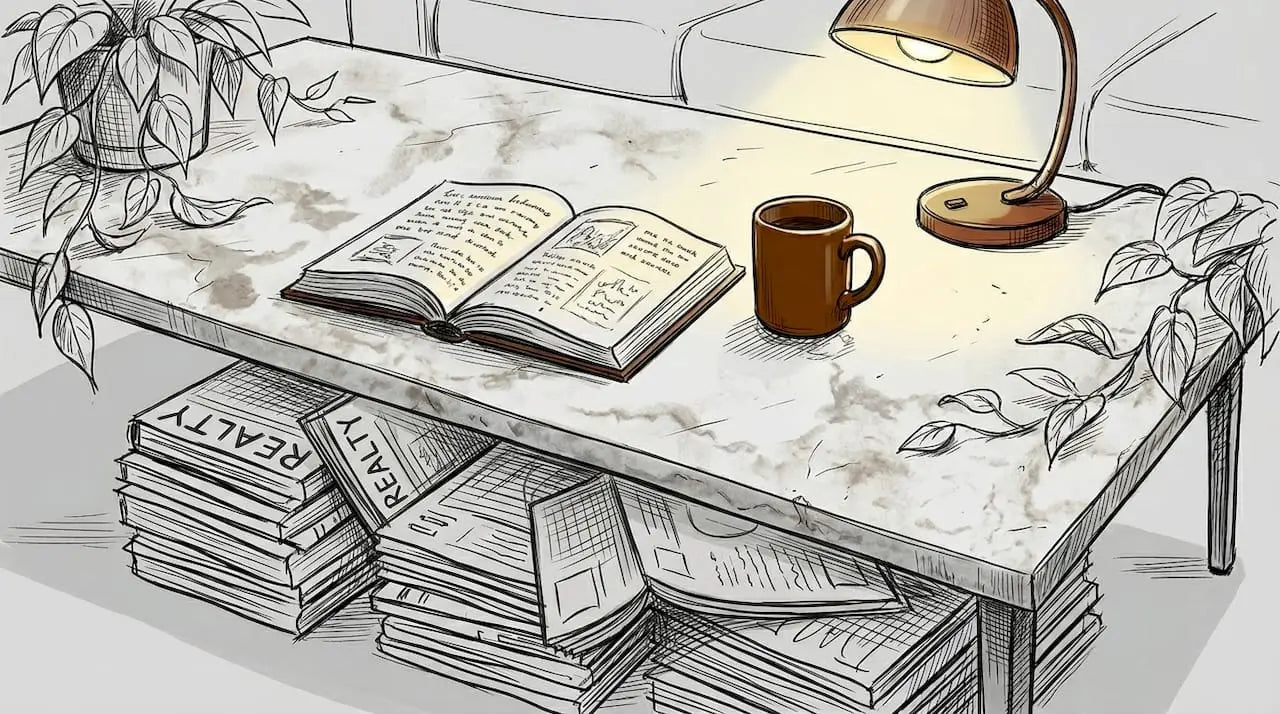
The finish you choose at installation matters enormously. Honed and brushed marble finishes tend to develop patina more visibly and attractively than polished finishes, which can look uneven as they age. Understanding this upfront saves you from surprises later.
Developing, encouraging, or controlling marble patina
Here is where things get practical. Patina is not entirely out of your hands. You have more influence over how it develops than most people realize.
Certain finishes and maintenance routines influence the rate and quality of patina development. If you want to encourage a natural, aged look, start with a honed or leathered finish rather than a high-polish one. These finishes are more open to absorbing the subtle changes that create patina. Avoid aggressive sealing schedules, and use gentle, pH-neutral cleaners for natural marble cleaning rather than heavy-duty products that strip the surface.
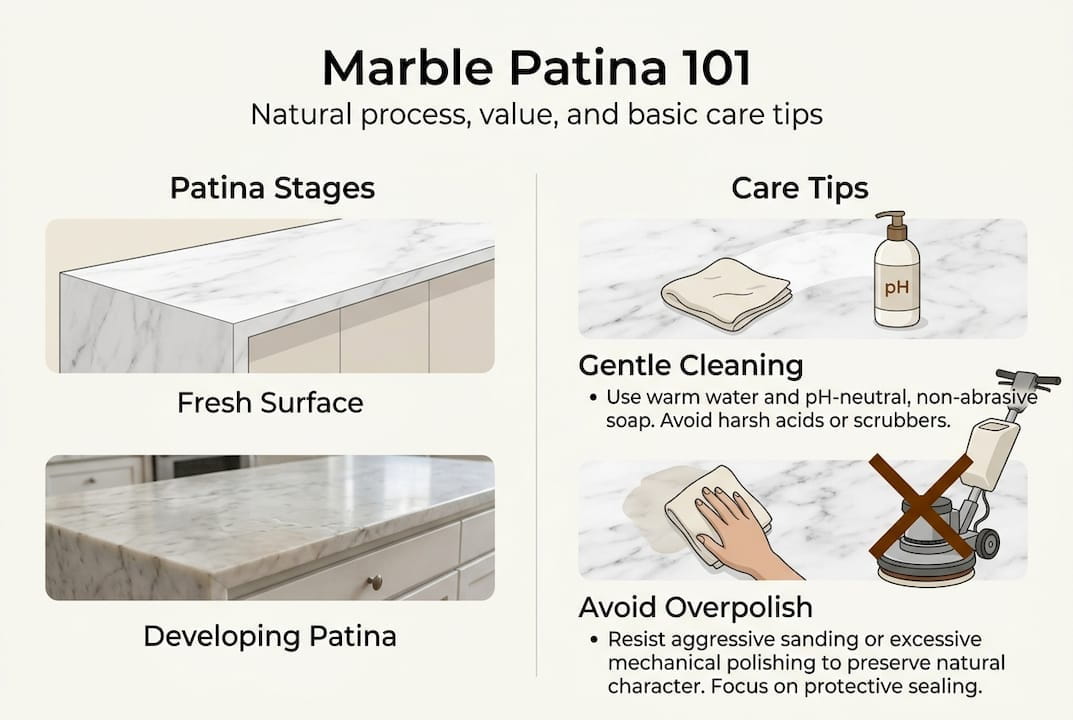
If you want to slow patina and keep your marble looking closer to its original state, the approach is the opposite. Regular using marble sealer applications create a barrier that reduces direct exposure to the factors that drive change. Wipe spills immediately. Use soft, non-abrasive cleaning tools. Avoid acidic cleaners entirely.
How to decide if patina is right for your project:
- Define your aesthetic goal. Do you want the marble to look the same in 20 years, or do you want it to evolve and deepen?
- Consider the location. High-traffic areas will develop patina regardless. Plan for it rather than fight it.
- Choose your finish intentionally. Honed finishes age more gracefully in most residential settings.
- Set a maintenance routine early. Consistent, gentle care shapes how patina develops far more than any single product.
- Consult a stone professional. Before making changes to an existing surface, get expert input on what is reversible and what is not.
If you are considering polishing marble to reset the surface, know that this can reduce patina but may also change the stone’s character in ways that are hard to undo.
Pro Tip: Talk to a stone specialist before refinishing marble that has developed a rich patina. What looks like wear to an untrained eye might be exactly what a designer would pay a premium to recreate.
Patina vs. etching, staining, and damage: what to look for
This is where many homeowners get confused, and understandably so. Patina, etching, and staining can all change the look of marble. But they are very different problems with very different solutions.
Marble etching, stains, and patina each have distinct causes and visual markers. Knowing which one you are dealing with determines whether you need to act or simply appreciate what you have.
Signs of real patina:
- Gradual, even change across the surface
- Soft reduction in gloss or a warm, mellow sheen
- Enhanced depth and veining visibility
- No specific location or cause you can point to
Signs of marble etching:
- Dull white or light marks, often ring-shaped
- Appear after contact with acidic substances (lemon juice, wine, vinegar)
- Surface feels slightly rough or different from surrounding areas
- More common on polished marble than honed
Signs of staining:
- Localized discoloration, often with a defined edge
- Color is darker or noticeably different from the surrounding stone
- Usually linked to a specific spill or substance
- Does not change the surface texture, only the color
Pro Tip: Etching and staining are problems to address. Patina is not. If you are unsure which you have, photograph the area and consult a professional before attempting any DIY treatment. Restoring shine incorrectly can cause more damage than the original issue.
Why embracing patina is smarter than constant perfection
We have worked with homeowners who spend years fighting their marble’s natural aging, applying aggressive treatments and refinishing repeatedly, only to end up with a surface that looks flat and lifeless. The irony is that what they were trying to erase was exactly what made the marble special.
Marble is a living material. It responds to its environment. That is not a flaw in the stone. It is the stone doing what stone does. The most beautiful marble spaces we have ever seen are not the ones that look frozen in time. They are the ones that show honest, well-managed wear.
The real risk of chasing perfection is over-treatment. Excessive polishing, harsh cleaning, and constant refinishing can actually shorten the lifespan of your marble and strip away the qualities that made you choose it in the first place. Marble longevity comes from working with the stone, not against it. Think of patina as the marble earning its place in your home. That perspective shift changes everything.
Explore more marble inspiration and resources
Ready to see your marble surfaces in a new light? Whether you are planning a renovation or refreshing an existing space, the right guidance makes all the difference.
At SurfacesGalore, we help homeowners and designers navigate every stage of a marble project, from selecting the right stone and finish to understanding long-term care. Our educational resources, including our detailed marble care guide, are built to give you confidence at every decision point. Explore our curated marble collections and connect with our team for personalized advice on bringing your vision to life with stone that only gets better with time.
Frequently asked questions
Does all marble develop patina over time?
Most natural marble surfaces develop patina as they age, but the rate and appearance depend on use, finish, and maintenance. Natural wear and environmental exposure influence how quickly and visibly this process unfolds.
Can you remove patina from marble if you want a newer look?
Some patina can be reduced with professional polishing, but deep changes are often permanent and add to the stone’s character. Polishing and surface treatments can reduce visible patina effects, though results vary by marble type and age.
Is there a way to speed up the patina process for an aged look?
Choosing a honed finish and minimal sealing can help cultivate patina more quickly, but results vary by marble type. Surface finishes influence the rate and character of patina development significantly.
How do you distinguish between patina and etching or staining?
Patina appears as a soft, overall change across the surface, while etching shows as dull or white marks and stains are localized and colored. Etching, stains, and patina have different causes and visual indicators that make them identifiable with a close look.
Leave a comment