

Marble slab selection: Stylish, affordable options for U.S. homes

TL;DR:
- Choosing high-quality marble with proper grading and sourcing ensures durability and long-term beauty.
- Top marble options like Carrara, Calacatta, and Statuario vary in cost, appearance, and suitability for different projects.
- Match marble types, finishes, and colors to your lifestyle and resale goals for the best renovation outcomes.
Choosing the right marble slab for your kitchen or bathroom renovation is one of the most impactful decisions you’ll make. The wrong choice can mean costly replacements, a mismatched aesthetic, or a surface that looks dull within a few years. The right choice, though, can elevate your entire home and add real resale value. This guide walks you through the key criteria, top marble options, a side-by-side comparison, and scenario-based recommendations so you can walk into any showroom or browse any website knowing exactly what you need.
Table of Contents
- Key criteria for selecting marble slabs
- Top marble slab options for kitchens and bathrooms
- Comparison of marble slabs: Quality, style, and cost
- Situational recommendations: Best marble slabs for your renovation
- Our take: What most buyers miss about marble slab selection
- Find your perfect marble slab with SurfacesGalore
- Frequently asked questions
Key Takeaways
| Point | Details |
|---|---|
| Selection criteria matter | Choosing the right marble starts with understanding grading, color, and finish. |
| Popular slab choices | Carrara, Calacatta, and Statuario offer different styles and price points for kitchens and baths. |
| Side-by-side comparison | Comparing quality, durability, and cost helps you find the best slab for your renovation. |
| Situational recommendations | The ideal marble slab depends on your project’s needs—traffic, style, and budget. |
Key criteria for selecting marble slabs
Before you fall in love with a slab’s appearance, you need to understand what separates a quality piece from one that will disappoint you down the road. The selection process is more structured than most people expect, and that’s actually good news. It means you can approach it with a checklist rather than guesswork.
Start with grading. Marble is graded from A to D based on consistency, porosity, and structural integrity. Grade and quality benchmarks define both the durability and the visual appeal of a slab. Grade A marble has tight, consistent veining with minimal fissures. Grade D, on the other hand, may need mesh backing and resin filling just to hold together during installation. For kitchens and bathrooms, Grade A or B is the smart starting point.
Next, consider color and pattern consistency. A single slab might look stunning in isolation, but if your countertop requires two or three slabs, you need them to flow together. Inconsistent veining or color shifts between slabs can make even a premium kitchen look patchy. This is why understanding marble slab types before you shop saves you from expensive surprises.
Finish type is another factor that shapes both look and function. Here’s a quick breakdown:
- Polished: High shine, reflects light beautifully, but shows fingerprints and etching more easily
- Honed: Matte finish, more forgiving in high-traffic areas, softer visual tone
- Brushed: Textured surface, great for floors and feature walls, hides wear well
- Leathered: Adds depth and texture, works well in contemporary kitchens
Pro Tip: Always view slabs under the same lighting conditions you have at home. A slab that looks warm and creamy under showroom lighting may appear cold and gray in your north-facing bathroom.
Finally, check the sourcing. Slabs from reputable quarries in Italy, Spain, and Turkey tend to have more consistent quality than those with vague or unverified origins. A good supplier will always be transparent about where their stone comes from. Use the marble grading guide as a reference when evaluating what you’re being shown.
Top marble slab options for kitchens and bathrooms
Once you know what to look for, you can compare the leading marble slab options for your renovation. There are dozens of marble varieties on the market, but a handful consistently deliver the best results for residential projects.
Carrara marble is the most widely used in American homes. It has a soft gray-white base with subtle, feathery veining. It’s relatively affordable and widely available, making it a go-to for budget-conscious renovators who still want authentic stone.
Calacatta marble is the premium choice. It features a bright white background with bold, dramatic veining in gold or gray. It’s rarer than Carrara, which drives up the price. For a luxury kitchen island or a statement bathroom wall, it’s hard to beat.
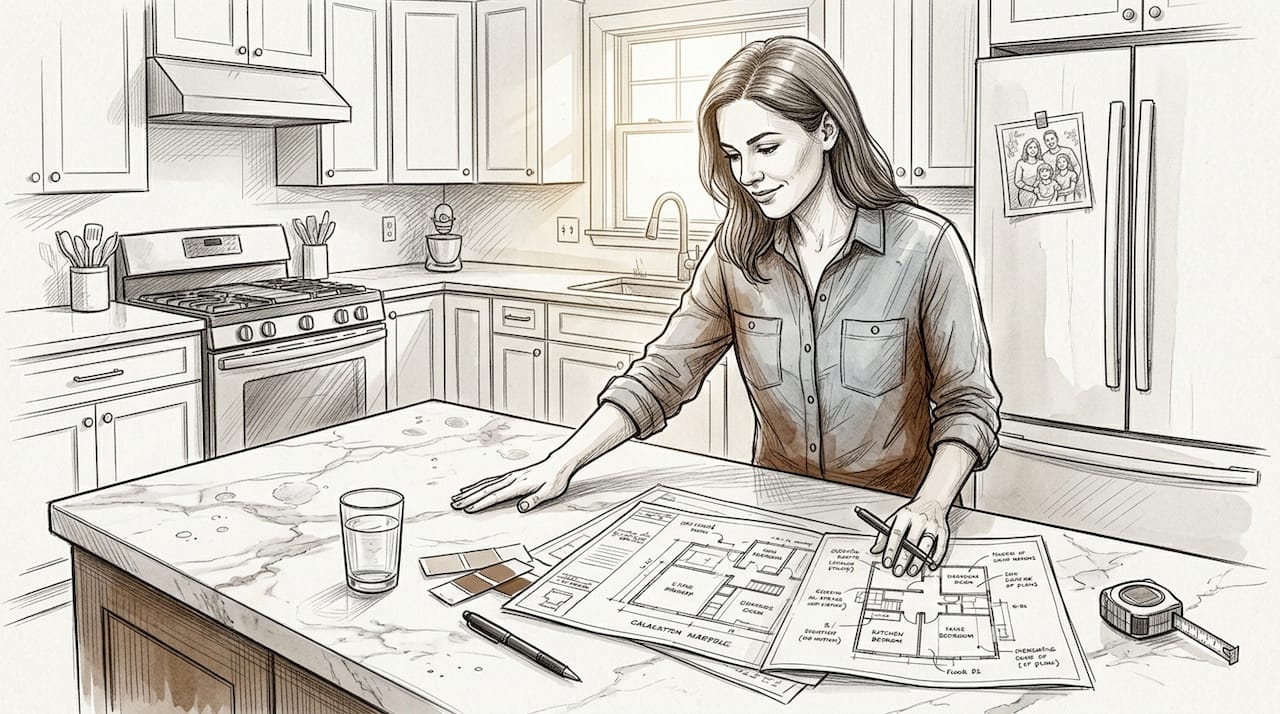
Statuario marble sits between the two. It has a whiter base than Carrara but less dramatic veining than Calacatta. Many designers consider it the most elegant option for large-format slabs.
Crema Marfil is a Spanish marble with warm beige tones and minimal veining. It’s one of the most forgiving options for high-traffic areas and pairs beautifully with wood cabinetry. Various marble classifications impact how each type performs in specific design contexts.
Nero Marquina is a striking black marble from Spain with sharp white veining. It’s bold, dramatic, and works well as an accent or feature surface.
Here’s a quick pros and cons snapshot:
- Carrara: Affordable, widely available, subtle look. Can etch and stain more easily.
- Calacatta: Stunning visual impact, high resale appeal. Premium price, less consistent supply.
- Statuario: Elegant and versatile. Less common, moderately expensive.
- Crema Marfil: Warm, durable, low-maintenance feel. Less dramatic visually.
- Nero Marquina: Bold statement piece. Harder to match and integrate.
Pro Tip: If your budget is tight, look at choosing marble slabs from less-publicized quarry regions. Turkish white marble, for example, often rivals Italian Carrara in appearance at a fraction of the cost.
For marble color selection, the rule of thumb is to match the undertone of your marble to your cabinetry and flooring. Warm marbles go with warm wood tones. Cool marbles work better with white or gray cabinetry.
Comparison of marble slabs: Quality, style, and cost
Now, let’s see how those top slab choices stack up side by side.
| Marble type | Grade | Origin | Durability | Avg. cost per sq ft | Best use |
|---|---|---|---|---|---|
| Carrara | A-B | Italy | Moderate | $40-$100 | Countertops, floors |
| Calacatta | A | Italy | Moderate | $100-$300 | Islands, feature walls |
| Statuario | A | Italy | Moderate | $80-$200 | Vanities, backsplashes |
| Crema Marfil | A-B | Spain | High | $30-$80 | Floors, shower walls |
| Nero Marquina | A | Spain | High | $50-$150 | Accents, feature walls |
Different marble slabs carry distinct value benchmarks depending on rarity, quarry location, and finish quality. Calacatta, for instance, commands a price premium of up to 200% over Carrara despite sharing a similar Italian origin, simply because of its rarer veining patterns.
When making your final buying decision, keep these smart strategies in mind:
- Buy slabs from the same quarry batch to ensure color consistency across multiple pieces
- For resale value, white and light-toned marbles consistently outperform darker options
- Honed finishes tend to age more gracefully in kitchens than polished surfaces
- Request full slab photos, not just sample chips, before committing to a purchase
For guidance on matching marble slabs across large surfaces, always ask your supplier for bookmatched pairs. Bookmatching means two adjacent slabs are opened like a book to create a mirrored veining pattern, which produces a seamless, high-end look on walls and islands.
If you want to stay current on pricing and trends, the marble selection tips resource covers what’s shifting in the market and how to get the best value in 2026.
Situational recommendations: Best marble slabs for your renovation
After comparing styles and costs, the next step is matching your slab to your specific project needs. Not every marble works in every situation, and knowing which type fits your scenario saves both time and money.
- High-traffic kitchen countertops: Go with Crema Marfil or a honed Carrara. Both handle daily use better than polished white marbles, and they’re easier to maintain without constant resealing.
- Spa-style bathroom: Calacatta or Statuario on the walls creates that editorial, hotel-bathroom look. Pair with a large-format honed tile floor for a cohesive feel.
- Budget-friendly upgrade: Turkish white marble or Crema Marfil gives you authentic stone at a price point that won’t derail your renovation budget. These are underrated options that perform beautifully.
- Statement kitchen island: Calacatta Gold or Statuario with bold veining makes the island the focal point of the room. Keep surrounding surfaces neutral so the slab gets the attention it deserves.
- Feature wall or fireplace surround: Nero Marquina or a bookmatched Calacatta creates a dramatic focal point. Matching marble slabs can improve luxury outcomes significantly in these applications.
Pro Tip: For bathrooms, consider engineered marble for wet areas like shower floors. It offers consistent color and better slip resistance than natural stone, while still delivering a polished look.
“The best marble slab isn’t the most expensive one. It’s the one that fits your lifestyle, your space, and your long-term maintenance reality. Choosing with intention always beats chasing trends.”
For inspiration on how marble is being used beyond countertops, modern marble uses covers creative applications that are reshaping residential design right now.
Our take: What most buyers miss about marble slab selection
Having covered matching slabs to your project, here’s the perspective home renovators rarely hear: the biggest mistake buyers make isn’t choosing the wrong color. It’s ignoring finish and source quality in favor of brand-name marble types.
Carrara and Calacatta are names, not guarantees. We’ve seen Grade C Calacatta that looked worse after two years than Grade A Carrara installed in the same kitchen. The finish matters just as much as the variety. A honed surface on a mid-range marble will often outperform a polished surface on a premium one in a busy household.
There’s also a resale value trap worth mentioning. Trendy slabs with extreme veining or unusual colors might photograph beautifully, but future buyers often prefer timeless, neutral options. Understanding marble surface finishes and how they age is something most renovation guides skip entirely. We think it’s one of the most practical things you can know before spending thousands of dollars on stone.
Buy for your life first, resale second. But when in doubt, go neutral, go Grade A, and go honed.
Find your perfect marble slab with SurfacesGalore
You’ve done the research. Now it’s time to see these slabs in real life and find the one that fits your project perfectly.
At SurfacesGalore, we import premium marble slabs directly from top quarries in Italy, Spain, and Turkey, which means you get authentic quality without the inflated markup. Whether you’re renovating a kitchen, designing a spa bathroom, or sourcing stone for a large residential project, our team can help you narrow down the right slab for your style, budget, and timeline. Browse our full marble collection online or reach out for a personalized consultation. We ship nationwide and work with homeowners, designers, and contractors every day.
Frequently asked questions
What are the main differences between Carrara and Calacatta marble?
Carrara marble typically has softer, more subtle veining and is more affordable, while Calacatta features a brighter white base with bold, dramatic veining. Various marble classifications impact which type suits your specific design goals.
Is engineered marble a good alternative to natural slabs?
Engineered marble offers consistent color and better durability at a lower cost, but it lacks the unique natural variations that make each stone slab one of a kind. Learn more about engineered marble compared with natural options before deciding.
How do I ensure a marble slab matches my renovation style?
Focus on grading, finish type, and color tone to align your slab with your kitchen or bath design. The criteria for choosing slabs cover exactly how to evaluate these factors together.
What’s the best way to spot quality in a marble slab?
Check for consistent grade, uniform surface finish, and even veining patterns, and always examine the slab in person when possible. Grade and quality benchmarks are the clearest indicators of long-term performance.
Leave a comment